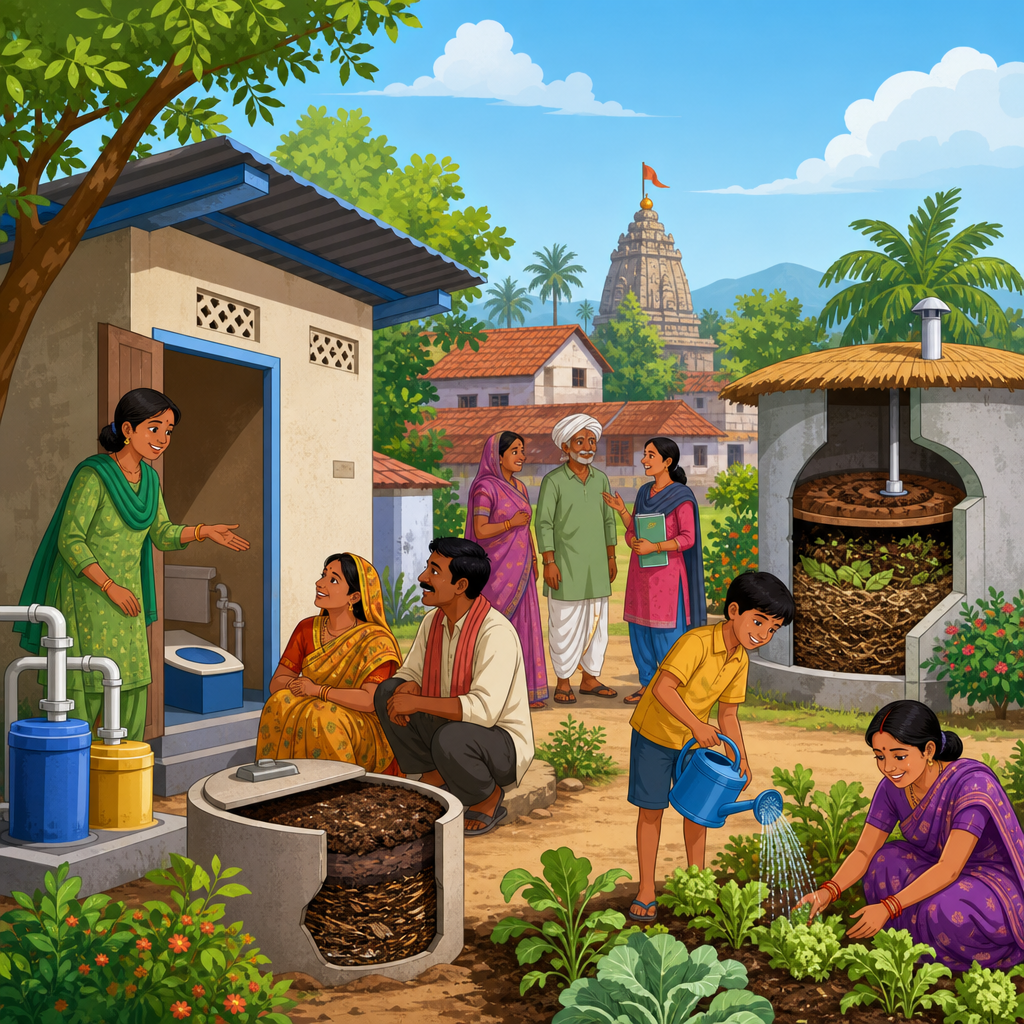
Overcoming cultural and social hurdles in sanitation projects is the difference between infrastructure that is abandoned and systems that communities protect, use, and improve for decades. In the EcoSan field, that lesson appears again and again: technical design matters, but local beliefs, daily habits, gender roles, land rights, trust in institutions, and perceptions of waste matter just as much. Ecological sanitation, often shortened to EcoSan, refers to sanitation systems designed to safely contain, treat, and reuse human excreta and wastewater as resources, usually for soil improvement, water conservation, or nutrient recovery. That includes urine-diverting dry toilets, container-based sanitation, composting toilets, decentralized wastewater treatment, and reuse models linked to agriculture. I have seen well-built projects fail because planners assumed people would automatically separate urine, empty chambers, or apply treated compost without hesitation. I have also seen modest pilots succeed because teams invested early in dialogue, user training, and social acceptance.
This matters because sanitation is never only about toilets. It is about public health, dignity, safety, school attendance, climate resilience, and local economies. According to the WHO and UNICEF Joint Monitoring Programme, billions of people still lack safely managed sanitation, and many installed systems do not deliver sustained use. EcoSan can reduce water demand, recover nutrients, and serve dense settlements, flood-prone areas, and regions with thin soils or failing sewers. Yet it asks communities to rethink what is clean, what is acceptable, and who is responsible for operation. This hub article brings together diverse EcoSan success stories and the common patterns behind them, so readers can understand what works across cultures and why.
Why Cultural and Social Barriers Decide Sanitation Outcomes
The most important social hurdle in sanitation projects is often not rejection of the toilet itself, but rejection of the behavior the system requires. A urine-diverting dry toilet only works when users place feces in the right vault, keep wash water out of dry chambers, add cover material consistently, and accept periodic emptying. In several East African and South Asian projects, teams discovered that households liked the privacy and convenience of the structure but quietly modified use patterns to fit familiar routines. Anal cleansing preferences, sitting versus squatting, taboos around handling excreta, and the stigma of storing waste near the home can undermine performance if they are not addressed directly in design.
Successful programs begin with social diagnosis rather than product rollout. That means formative research, household interviews, transect walks, gender-segregated focus groups, and observation of actual sanitation behavior. When practitioners ask basic questions early, failure rates drop. Who empties pits now? Who controls household spending? Are tenants allowed to alter structures? What words do people use for urine, feces, compost, and cleanliness? Is reuse acceptable for trees but not vegetables? In my project reviews, the strongest teams translated these answers into design choices: larger anal cleansing water drains, child-friendly interfaces, discrete access hatches for service crews, and storage protocols that minimized visual contact with treated material. Social fit is operational fit.
Another recurring barrier is status. In many communities, flush toilets symbolize progress, while dry or reuse-based systems are seen as temporary, poor, or rural. That perception can sink adoption even when sewers are unavailable and water is scarce. The response is not to argue against aspiration but to redefine it. Projects that frame EcoSan as modern, resource-efficient, climate-smart, and professionally serviced generally perform better than those framed around sacrifice. Good finishes, odor control, lighting, handwashing stations, and visible maintenance standards signal quality. People accept unconventional systems more readily when the user experience feels superior, not merely cheaper.
Diverse EcoSan Success Stories and the Lessons They Share
Diverse EcoSan success stories show that there is no single winning model; success comes from matching technology, service, and messaging to local realities. In eThekwini Municipality, South Africa, urine-diverting dry toilets were deployed in peri-urban and rural areas where conventional sewer expansion was impractical. The strongest outcomes emerged where municipality-led maintenance support, user education, and ongoing follow-up were built into the program. Early resistance often centered on odor fears and vault emptying. Over time, households that received practical demonstrations and responsive support reported better acceptance, especially when toilets were cleaner and safer than previous unimproved options. The lesson is clear: municipal legitimacy and aftercare can normalize unfamiliar sanitation.
In Uganda, EcoSan initiatives linked sanitation with agriculture by promoting treated compost and urine as inputs for crops. Adoption improved when farmers saw demonstration plots comparing maize or banana yields using nutrient recovery products versus no amendment. Abstract environmental messaging was less persuasive than visible crop performance and lower fertilizer costs. However, reuse acceptance was selective. Some users preferred applying treated material to fruit trees, fodder, or non-leafy crops first. Programs that respected this staged acceptance did better than those pushing immediate full reuse. Social change often follows a ladder: containment, familiarity, limited reuse, then normalized nutrient cycling.
In Haiti and parts of Kenya, container-based sanitation created another path around social hurdles. Instead of asking households to manage decomposition on-site, service providers collected sealed containers regularly and transported waste to treatment sites. This sharply reduced concerns about handling feces, space constraints, groundwater contamination, and landlord resistance in dense settlements. It also changed the user relationship from owning a toilet structure to subscribing to a sanitation service. That distinction matters. For many urban residents, reliability, cleanliness, and predictable collection are more important than the treatment technology behind the scenes. Where service logistics are strong, social acceptance can rise because daily inconvenience drops.
Sweden and Germany offer different but equally useful examples. In eco-villages, schools, and public buildings, urine diversion and source separation gained acceptance through environmental literacy, transparent monitoring, and clear operating protocols. These settings benefited from higher institutional capacity and strong sustainability norms, but the core lesson still transfers globally: people support systems they understand. Posting simple instructions, explaining nutrient loops, measuring odor and hygiene outcomes, and assigning named maintenance responsibility all increase trust. Successful sanitation projects make the invisible visible. They show users what happens after flushing, diverting, or collection, and that transparency reduces fear.
| Location | EcoSan approach | Main social hurdle | What improved acceptance |
|---|---|---|---|
| eThekwini, South Africa | Urine-diverting dry toilets | Concerns about odor and vault emptying | Municipal support, user training, follow-up visits |
| Uganda | Agriculture-linked EcoSan | Taboos around reuse of treated excreta | Demonstration plots and phased reuse messaging |
| Haiti and Kenya | Container-based sanitation | Fear of handling waste in dense settlements | Sealed containers and reliable collection service |
| Sweden and Germany | Source-separating systems | Need for confidence in nontraditional systems | Environmental education and transparent maintenance |
Community Engagement Methods That Actually Change Behavior
Community engagement in sanitation projects succeeds when it moves beyond one-off awareness campaigns. The strongest EcoSan programs use participatory design, co-creation workshops, pilot households, peer educators, and public troubleshooting sessions. I have found that pilot users are especially powerful when they are chosen carefully. They should not only be respected local figures; they should represent the users others watch closely, such as mothers of school-age children, landlords, farmers, teachers, and tenants. When these groups test a system and speak honestly about benefits and frustrations, the program earns credibility. Communities do not trust posters as much as they trust neighbors.
Language also matters more than many planners expect. Technical terms like dehydration, pathogen die-off, or nutrient recovery may be precise, but they rarely persuade on their own. Effective facilitators translate them into daily outcomes: less smell, fewer flies, safer children at night, lower fertilizer spending, less flooding from overflowing pits. At the same time, they do not hide the responsibilities involved. False promises destroy trust quickly. If cover material must be added daily, say so. If collection days are fixed, explain penalties for missed pickups. People accept duties more readily when requirements are explicit, fair, and supported by a service system.
Schools, women’s groups, and farmer cooperatives frequently become the social backbone of successful projects. School sanitation can shift family attitudes because children bring home new hygiene routines and ask practical questions adults may avoid. Women’s groups often identify design barriers that male engineers miss, including menstrual hygiene management, lock placement, lighting, and privacy from in-laws or neighbors. Farmer cooperatives can validate reuse by organizing field trials and discussing crop safety collectively rather than leaving households to test alone. The strongest programs create multiple trusted messengers instead of relying on a single NGO or municipal officer.
Designing for Gender, Status, Religion, and Daily Practice
Sanitation is intimate, so design mistakes quickly become social mistakes. Gender-sensitive sanitation projects account for safety, menstruation, pregnancy, caregiving, and who cleans facilities. A toilet that is technically sound but lacks internal water access, disposal options for menstrual materials, or a secure lock will be judged a failure by many users. In several low-income settlement upgrades, female users valued lighting, visible cleanliness, and manageable child use more than any abstract sustainability feature. That does not diminish ecological performance; it clarifies the adoption pathway. If the facility does not solve the user’s most immediate problem, resource recovery will not matter.
Religion and cultural purity norms require equal attention. In Muslim-majority settings, anal washing practices can affect dry toilet functionality unless designers include appropriate drainage or choose a wet-compatible EcoSan model. In Hindu, Buddhist, Christian, and Indigenous communities, perceptions of impurity, ancestral land, burial practices, or agricultural use can shape where toilets are placed and whether reuse is acceptable. The right approach is not to stereotype belief systems, but to ask communities and religious leaders how sanitation can align with local values. Projects have succeeded by framing reuse as stewardship of creation, by separating food and nonfood applications initially, or by designating service workers rather than household members for removal tasks.
Status and housing tenure also shape adoption. Tenants rarely invest in systems they do not control, and landlords often resist anything perceived as complicated. Shared facilities fail when cleaning responsibility is vague. For these reasons, urban sanitation projects increasingly combine hardware with service contracts, caretaker models, digital payment systems, and performance monitoring. A well-run shared or rented solution can outperform a poorly maintained household toilet. The social rule is simple: where responsibility is shared, accountability must be visible. Notice boards, collection schedules, caretaker names, and complaint channels prevent neglect from becoming normal.
From Pilot to Scale: Governance, Finance, and Long-Term Trust
Many sanitation projects succeed as pilots and fail at scale because the social compact changes. During pilots, households tolerate inconvenience to support innovation. At scale, they expect dependable service, spare parts, trained masons, responsive repairs, and fair tariffs. Governance therefore becomes a cultural issue as much as an administrative one. When users believe fees are arbitrary or services unreliable, trust collapses. Strong programs publish service standards, define maintenance roles, and monitor indicators such as fill rates, odor complaints, collection timeliness, and safe reuse compliance. These are not bureaucratic extras; they are the foundation of social legitimacy.
Financing models should match user psychology. Upfront toilet purchases can deter low-income households even when lifecycle costs are reasonable. Subscription models, output-based subsidies, revolving funds, and targeted support for vulnerable households often perform better because they spread risk. In container-based sanitation, recurring fees only work when collection is consistent and the value proposition is obvious. In rural EcoSan, agricultural revenue or fertilizer savings can offset costs, but only if treatment quality is trusted and market linkages exist. Programs should quantify the full chain, not just installation costs. Households judge sanitation value by convenience, safety, and reliability first, and by resource recovery second.
Long-term trust depends on measurable safety. The WHO Sanitation Safety Planning framework and ISO-aligned treatment and reuse practices help operators demonstrate that nutrient recovery is not guesswork. Pathogen reduction targets, storage times, moisture control, and restricted application protocols should be documented and explained in plain language. Communities do not need every laboratory detail, but they do need assurance that standards exist and are followed. The most durable EcoSan success stories combine social listening with technical discipline. If this hub supports your next case study review, use it to compare local beliefs, service models, and governance arrangements before choosing a system. That is how sanitation projects become accepted, safe, and lasting.
Frequently Asked Questions
Why do cultural and social factors matter so much in sanitation projects?
Cultural and social factors often determine whether a sanitation project becomes part of daily life or quietly falls out of use after installation. In many communities, sanitation behavior is tied to long-standing beliefs about cleanliness, privacy, gender, status, family roles, and the meaning of waste itself. A system that looks technically efficient on paper can fail in practice if it conflicts with how people are used to bathing, defecating, maintaining facilities, or separating household tasks. In EcoSan projects especially, where systems may involve urine diversion, composting, reuse of treated waste, or more active user participation, acceptance depends heavily on whether people understand the purpose of the design and feel comfortable with it.
Social dynamics also shape who uses a facility, who maintains it, and who has the authority to make decisions about it. Women, men, children, elderly residents, tenants, landowners, and marginalized groups may all experience the same sanitation system differently. If a toilet is technically sound but inconvenient for women at night, inaccessible for older adults, or socially inappropriate for shared family structures, usage can decline quickly. That is why successful sanitation planning goes beyond engineering. It requires listening carefully, identifying local norms early, and adapting designs and engagement strategies so the system fits real lives rather than expecting people to reshape their behavior overnight.
What are the most common social barriers that cause sanitation projects to struggle or fail?
Several recurring barriers appear across sanitation projects, and most are rooted in human realities rather than technical flaws. One major issue is stigma around human waste. In some settings, handling excreta in any form is associated with shame, impurity, or low social status, which can create resistance to EcoSan models that involve composting or safe agricultural reuse. Another common barrier is mistrust. Communities may distrust outside organizations, government agencies, contractors, or even previous project promises if earlier interventions were poorly maintained or abandoned. When trust is low, even a well-designed sanitation initiative can be viewed with suspicion.
Household decision-making is another frequent challenge. The person expected to use or clean a toilet is not always the person who controls spending, land access, or construction decisions. Gender roles can strongly affect whether sanitation facilities are practical and accepted. Privacy and safety concerns, especially for women and girls, are often underestimated. Shared facilities may also trigger conflict over cleaning responsibilities, cost sharing, and acceptable behavior. In addition, land tenure issues can undermine investment in sanitation if families do not have secure rights to the space where a facility would be built. There can also be resistance caused by habit. Open defecation or other long-standing practices may be deeply normalized, especially if they are perceived as easier, freer, or more hygienic than unfamiliar systems.
The projects that overcome these barriers usually do so by identifying them early instead of treating them as secondary issues. They conduct social mapping, involve local leaders without relying only on elites, test assumptions through community dialogue, and recognize that behavior change is gradual. Failure often happens when sanitation is framed as a simple construction task rather than a social transition that requires trust, dignity, practicality, and shared ownership.
How can project teams build community trust and encourage long-term adoption of EcoSan systems?
Trust is built when communities feel respected, informed, and genuinely involved in shaping the project. The first step is early engagement before designs are finalized. Instead of arriving with a fixed solution, strong project teams ask how people currently manage sanitation, what frustrations they face, what beliefs shape their choices, and what would make a new system acceptable. This shifts the project from something delivered to people into something developed with them. In EcoSan work, clear communication is especially important because the systems may operate differently from conventional toilets. People need practical explanations of how the system works, why certain user behaviors matter, and what benefits to expect in terms of health, water savings, resilience, fertilizer recovery, or reduced contamination.
Demonstration sites, peer learning, and visible local champions can make a major difference. When residents see a functioning system in a similar household, school, or community facility, the idea becomes more credible. It also helps to involve trusted actors such as health workers, teachers, women’s groups, farmer groups, religious leaders, and local masons, while being careful not to exclude quieter or less powerful voices. Transparency matters as well. Communities should understand costs, maintenance expectations, repair plans, and who is responsible for what after installation. Unrealistic promises are one of the fastest ways to damage trust.
Long-term adoption improves when training is practical, repeated, and tailored to different users. A one-time orientation is rarely enough. People need guidance on use, cleaning, maintenance cycles, safe handling practices, and troubleshooting. Feedback systems are equally important. If users can raise concerns and see them addressed quickly, confidence grows. Ultimately, adoption becomes durable when the sanitation system is not treated as a foreign technology but as a local asset that solves real problems and aligns with everyday routines, values, and livelihoods.
How should sanitation projects address gender roles, privacy, and dignity in different communities?
Gender, privacy, and dignity should be treated as core design and planning issues, not optional social add-ons. Sanitation is deeply personal, and facilities that ignore privacy or safety concerns often become underused regardless of their technical quality. Women and girls may need facilities that offer secure doors, lighting, menstrual hygiene support, adequate space for washing, and safe access at night. Men may have different habits and expectations around urination and shared facility use. Children, older adults, and people with disabilities may need adapted design features such as lower seat heights, handrails, ramps, stable flooring, or simpler maintenance requirements. If these realities are ignored, a project may appear complete but remain socially unusable for many intended users.
Project teams should gather input separately as well as collectively, because mixed public meetings do not always reveal sensitive concerns. Women, adolescents, sanitation workers, and marginalized groups may speak more freely in smaller, facilitated discussions. It is also important to understand who is expected to clean and maintain the facility, since sanitation labor is often unevenly distributed and can reinforce social inequities if left unaddressed. In some contexts, the issue is not only facility design but location: a toilet placed too far from the home, too close to a cooking area, or in a place considered socially inappropriate may be rejected.
Dignity also includes language and framing. Communities are more likely to engage when sanitation is discussed in terms of health, comfort, safety, convenience, environmental protection, and household pride rather than blame or shame. For EcoSan systems, respectful explanation of waste treatment and reuse is essential. People need to understand how risk is managed and why the system can be safe, without feeling pressured to abandon deeply held beliefs immediately. Good sanitation planning recognizes that dignity is not abstract. It is experienced through privacy, respect, inclusion, and the feeling that a system was designed for real people rather than idealized users.
What practical strategies help overcome resistance to using treated waste or resource recovery in EcoSan projects?
Resistance to treated waste reuse is common in EcoSan projects because the idea touches on health concerns, disgust reactions, religious beliefs, and social identity. The most effective response is not to dismiss those concerns but to engage them directly with evidence, demonstration, and choice. Project teams should explain the treatment process clearly, including how pathogens are reduced, what safety steps are required, how long materials are stored or processed, and what uses are appropriate afterward. Vague assurances are rarely convincing. People are more likely to accept resource recovery when they can see that risk management is serious, consistent, and locally monitored.
Demonstration plots and phased adoption often work better than immediate full-scale promotion. For example, communities may be more open to using treated outputs on non-food crops, trees, fodder, or soil restoration activities before considering food crops. Farmers may respond positively when they can compare yields, soil quality, or input savings in visible field trials. Trusted local users who can speak honestly about their experience are often more persuasive than external experts. It is also important to avoid making reuse mandatory. In some communities, acceptance of the sanitation system may grow faster than acceptance of agricultural reuse, and forcing both at once can create unnecessary resistance.
Terminology, handling procedures, and storage practices matter as well. People may respond differently when treated products are described in terms that reflect safety and utility rather than raw waste. Training should cover protective practices, timing, transport, and application methods, especially where reuse is part of the intended long-term value of the system. Above all, project teams should recognize that resource recovery is both a technical and cultural transition. Adoption strengthens when communities can move at a realistic pace, observe results, retain agency in how outputs are used, and trust that public health protections are non-negotiable.