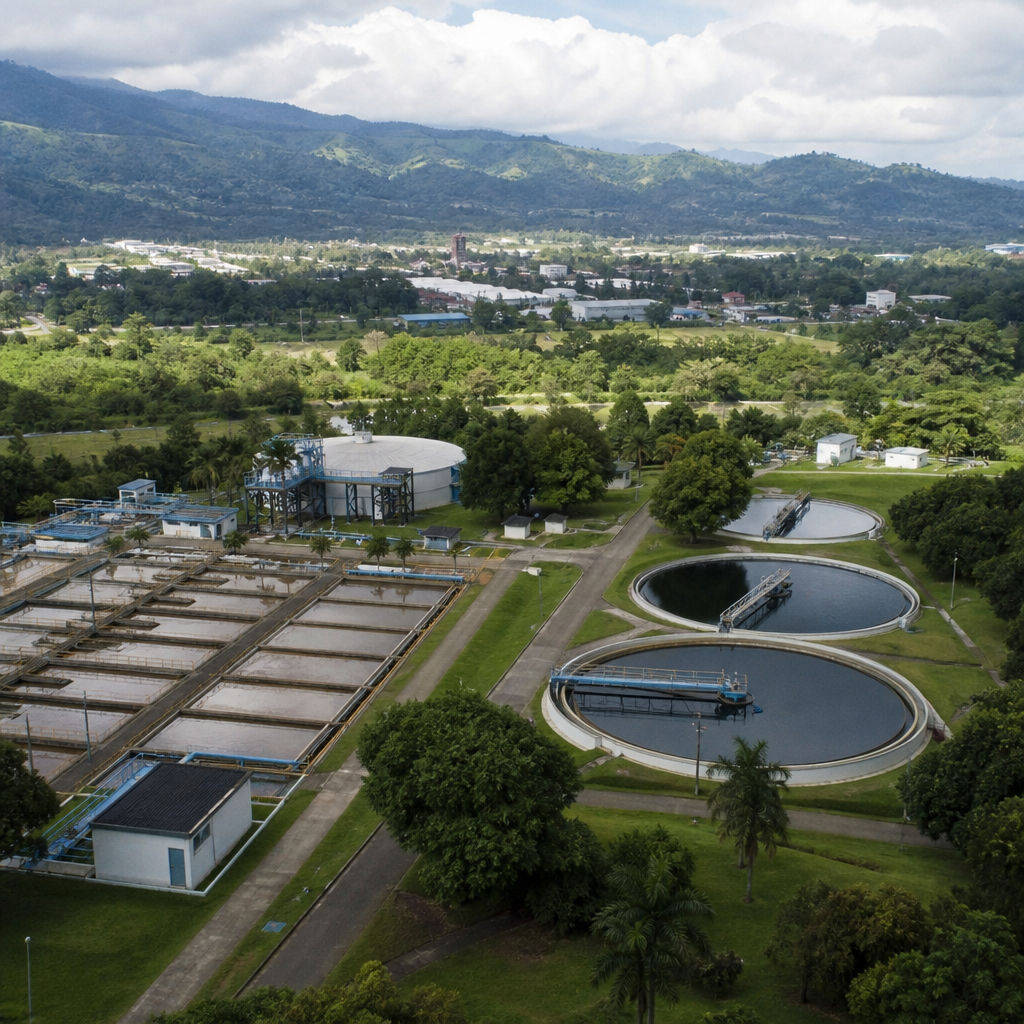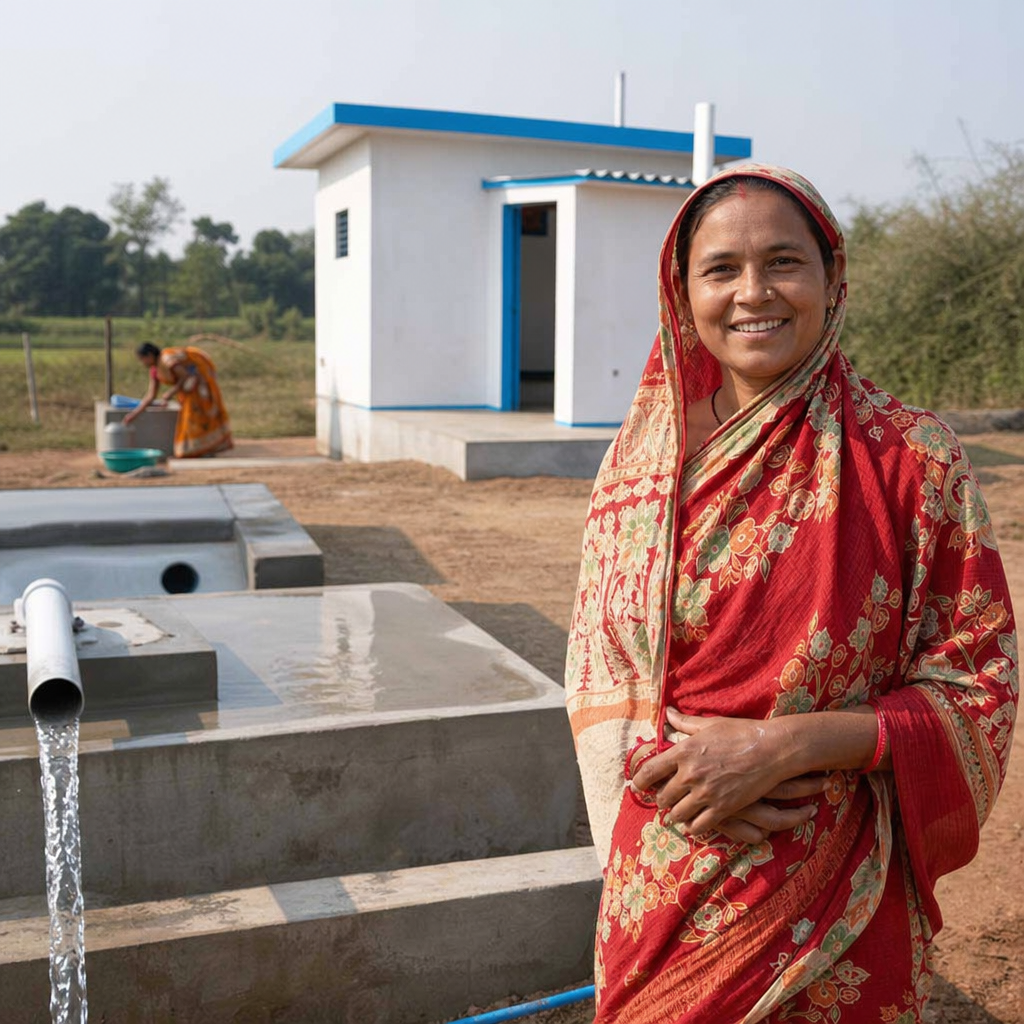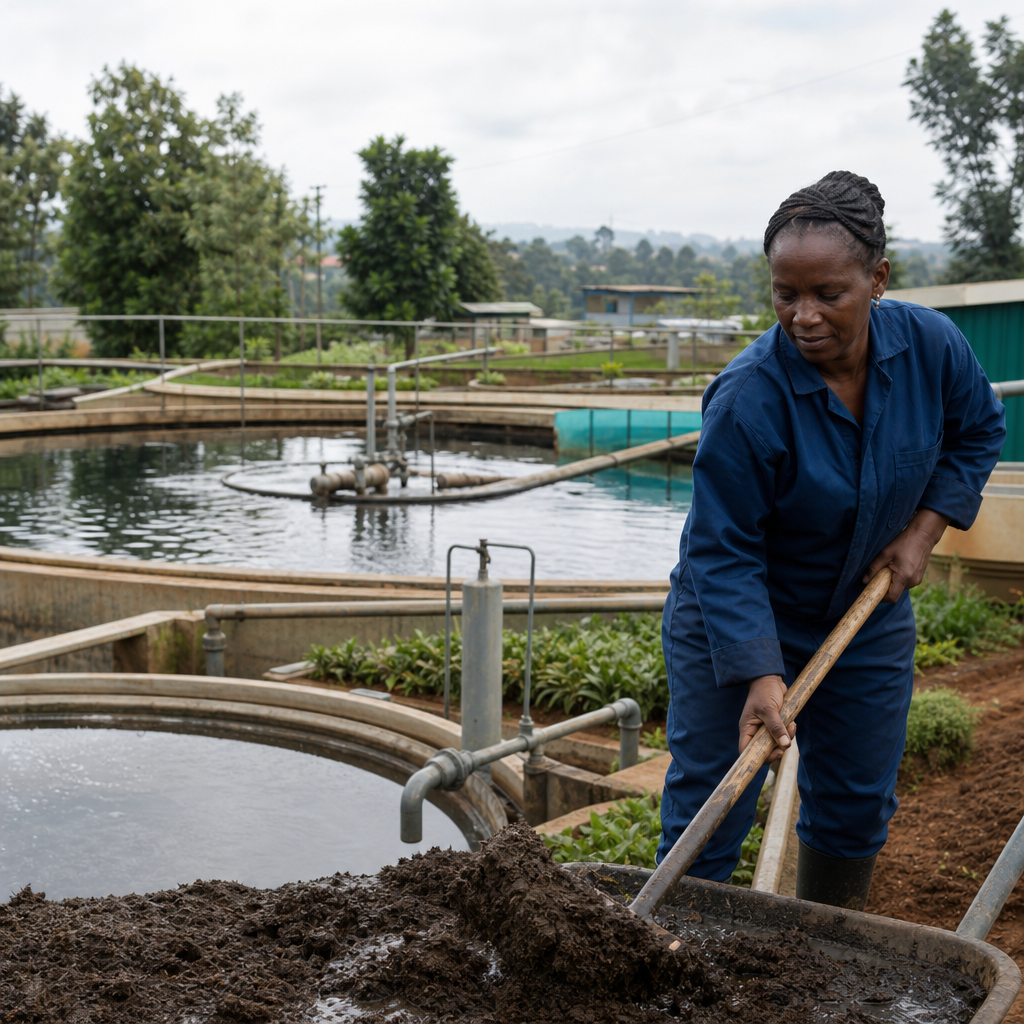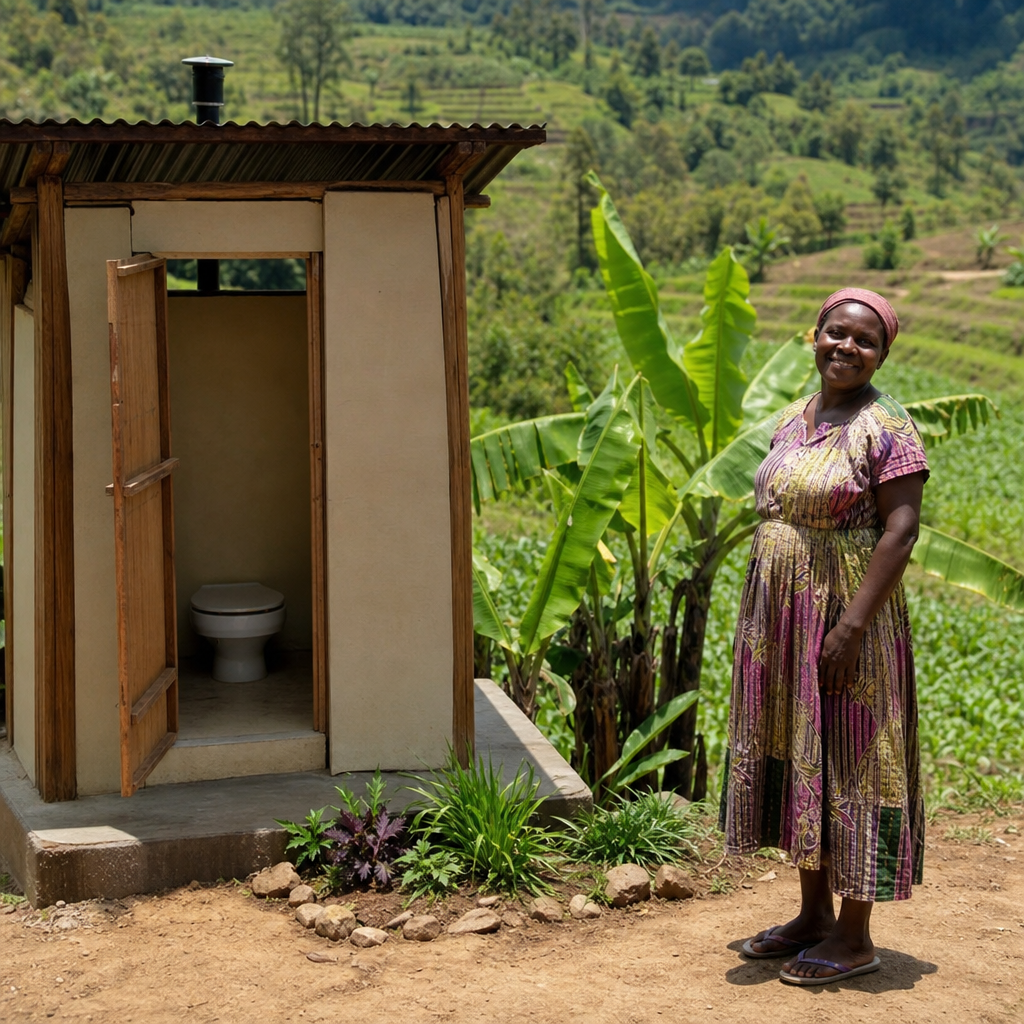
EcoSan and economic development in rural communities are tightly linked because sanitation is not only a health service but also a productive asset that shapes labor, land use, household spending, and local enterprise. EcoSan, short for ecological sanitation, refers to sanitation systems designed to safely recover nutrients, organic matter, water, or energy from human waste instead of treating excreta only as something to dispose of. In rural settings, that distinction matters. Where sewer networks are absent, fertilizer prices are volatile, and farms rely on fragile soils, EcoSan can reduce sanitation costs while creating usable outputs such as composted material, urine-based fertilizer, biogas feedstock, and reclaimed water. I have seen projects succeed when communities stop discussing toilets as isolated infrastructure and start treating them as part of the local economy. That shift changes procurement decisions, maintenance incentives, and willingness to pay.
Economic sustainability in EcoSan means the system can cover or justify its full life-cycle costs over time while continuing to deliver social and environmental value. It includes capital expenditure, operation and maintenance, emptying, transport, treatment, product processing, marketing, training, monitoring, and replacement. A system is not economically sustainable just because construction is cheap. It must remain affordable for households, manageable for local governments, and bankable enough for service providers to invest in. Rural communities especially need this wider lens because infrastructure budgets are thin, supply chains are weak, and one breakdown can push users back to unsafe open defecation or failing pits. The economic case for EcoSan therefore depends on whether resource recovery, lower health costs, greater farm productivity, and local jobs can offset ongoing expenses in a reliable way.
This matters now because many rural areas face three simultaneous pressures: sanitation deficits, rising input costs in agriculture, and climate stress that makes efficient nutrient and water management more important. According to WHO and UNICEF monitoring, billions still lack safely managed sanitation, with rural populations disproportionately affected. At the same time, phosphorus and nitrogen fertilizers remain expensive or hard to access in many low-income regions, and degraded soils reduce yields. EcoSan sits at the intersection of these problems. If designed well, it can improve containment and treatment, reduce pathogen exposure, recycle nutrients locally, and support small businesses in collection, composting, fabrication, and farm services. As the hub for economic sustainability in EcoSan, this article explains how value is created, where costs often undermine projects, what business models work in rural communities, and which practical conditions determine whether EcoSan contributes to lasting economic development.
How EcoSan creates economic value in rural communities
The clearest answer to the question “How does EcoSan support rural economic development?” is that it converts sanitation from a recurring public health liability into a system that can produce agricultural inputs, labor savings, and local service income. In conventional rural sanitation, costs are usually hidden. Families lose workdays from diarrheal disease, pay for pit emptying, rebuild collapsed latrines, or accept lower yields because nutrients leave the farm system. EcoSan changes that balance by separating, stabilizing, and reusing waste streams where feasible. Urine-diverting dry toilets, composting toilets, arborloo systems, and biodigesters are common examples, each with different economics. Urine contains much of the nitrogen and potassium excreted by households, while treated fecal matter can add organic carbon and phosphorus to soils if pathogen reduction standards are met.
In practice, the strongest economic gains usually come from combining several benefits rather than relying on one revenue stream. A farming household may spend less on chemical fertilizer, improve soil moisture retention through organic amendments, and avoid the expense of frequent pit reconstruction in flood-prone ground. A village service provider may earn income from toilet construction, routine collection, compost processing, and crop advisory services. Local masons, fabricators, transport workers, and extension officers all become part of the value chain. I have found that communities adopt these systems faster when the economics are explained in terms they already use: bags of fertilizer displaced, hectares treated, days of labor saved, and seasons before a structure needs major repair. That language makes benefits concrete and easier to compare with existing practices.
Health economics also matter. Poor sanitation suppresses productivity through disease, undernutrition, and school absenteeism. When households experience fewer infections, they lose fewer workdays and spend less on treatment. These savings are rarely recorded in project spreadsheets, but they are material. For rural economies dependent on seasonal labor, even a small reduction in illness during planting or harvest can have outsized effects on income. EcoSan should not be sold as a miracle technology, because outcomes depend on design, user behavior, and safe management. Still, where safe reuse is practical, the economic logic is stronger than many planners assume. Sanitation is then linked directly to farm performance, household resilience, and rural enterprise development rather than being treated as a stand-alone social cost center.
Cost structure and life-cycle economics
Any serious assessment of economic sustainability in EcoSan starts with life-cycle costing. Initial construction may include superstructure materials, slabs, urine diversion pedestals or pans, ventilation, vaults, collection containers, handwashing hardware, and site preparation. After installation, recurring costs include ash or cover material, cleaning supplies, minor repairs, replacement parts, protective equipment for handlers, transport, treatment, quality testing, and user training refreshers. Periodic costs are often underestimated: rebuilding doors, replacing storage tanks, repairing cracked vaults, or renewing pipes after ultraviolet exposure. In remote communities, transport can become the dominant cost, especially when systems require moving bulky material over poor roads. That is why onsite or near-site treatment models often outperform centralized schemes in rural areas.
Comparing options requires looking beyond upfront subsidy levels. A pit latrine may be cheaper to build than a urine-diverting dry toilet, yet become more expensive over ten years if pits fill quickly, contaminate shallow groundwater, or need rebuilding after heavy rains. Conversely, an EcoSan system can fail economically if the design is too complex, if spare parts are imported, or if households are unwilling to perform routine handling tasks. The right question is not “Which toilet is cheapest today?” but “Which sanitation service delivers the best outcomes at the lowest total cost per household over its useful life?” Standards from the sanitation planning field increasingly emphasize service chains rather than hardware alone, and that framing is essential here.
| Economic factor | Typical risk in rural EcoSan | Practical response |
|---|---|---|
| Capital cost | High price of specialized pans, tanks, or masonry | Use locally manufactured components and modular designs |
| Operating cost | Irregular purchase of cover material, cleaning supplies, or PPE | Bundle supplies through village cooperatives or service subscriptions |
| Transport | Long distances to treatment or farms raise unit cost | Favor decentralized treatment and clustered collection routes |
| User compliance | Poor separation or misuse reduces product quality | Provide repeated behavior training and simple, robust interfaces |
| Revenue realization | Recovered products have uncertain demand or low prices | Secure offtake agreements with farmers before scale-up |
| Maintenance | No budget for repairs leads to rapid decline | Create ring-fenced maintenance funds and local technician networks |
Discount rates, seasonality, and asset life all affect financial conclusions. For example, a donor-funded installation can look attractive until replacement costs arrive in year five and no reserve exists. I advise treating EcoSan like any other rural utility: estimate annualized capital cost, include depreciation, and model optimistic, expected, and conservative scenarios for reuse revenue. If the system only works under best-case assumptions, it is not economically sustainable. The strongest projects I have worked with were conservative on revenue, realistic on maintenance, and disciplined about assigning responsibility for each cost line from day one.
Resource recovery, farm productivity, and local markets
The most discussed economic benefit of EcoSan is resource recovery, but it needs careful handling to be real. Human excreta contains nutrients valuable to agriculture, especially nitrogen, phosphorus, and potassium. Urine diversion systems often make nutrient recovery simpler because urine can be stored and diluted for crop application, while fecal material requires longer treatment and stricter controls to reduce pathogens. In nutrient-poor rural areas, recovered products can partially substitute for purchased fertilizer or complement it. The value depends on crop type, soil condition, input prices, transport distance, and farmer confidence. A bag-equivalent comparison is useful: if treated urine and compost displace part of a farmer’s annual fertilizer purchase, that avoided expense is an economic gain even when no formal market transaction occurs.
However, agricultural value is not only about nutrient content. Compost-like outputs can improve soil structure, water infiltration, and moisture retention, which matters under drought conditions. In regions with sandy or degraded soils, that benefit may be as important as nutrient replacement because it stabilizes yields. I have seen farmers remain loyal to reuse products not because laboratory analysis looked impressive, but because crops tolerated dry spells better and soils became easier to work. Demonstration plots are therefore critical. A side-by-side maize, vegetable, or tree crop comparison often persuades farmers faster than abstract discussion of circular economy principles. Where extension officers document yield response and application guidance clearly, adoption improves markedly.
Market development remains the hardest part. Not every rural EcoSan product should be sold, and not every community needs a commercialized reuse chain. In some cases, direct household reuse is the most economical route. In others, especially where farms are nearby and cooperative structures exist, aggregated treatment and sales can work. Quality assurance is non-negotiable. Buyers need confidence in pathogen reduction, moisture content, packaging, and application instructions. Governments that regulate biosolids, compost, or fertilizer products create more predictable markets, though compliance can raise costs. The practical lesson is simple: resource recovery strengthens economic sustainability only when product quality, farmer demand, and logistics are managed as carefully as toilet construction itself.
Business models, financing, and employment effects
Rural EcoSan systems succeed economically when the business model fits local willingness to pay and local capacity. Several models are common. Households may own and manage their own systems with periodic technical support. A village entrepreneur may provide construction, collection, treatment, and product sales under a fee-for-service model. A cooperative can aggregate demand, purchase materials in bulk, and coordinate farm reuse. Public-private partnerships may work where local governments subsidize capital costs while private operators handle service delivery. None of these models is universally best. The choice depends on density, road access, farming patterns, local governance, and cultural acceptance of reuse.
Financing is often the decisive bottleneck. Grants can support market entry and demonstrations, but they rarely sustain long-term operations by themselves. Microfinance can help households spread construction costs, especially when repayments align with harvest cycles. Output-based aid has value where payments are linked to verified installation and sustained use, not merely hardware delivery. Some projects layer financing: public subsidy for public health benefits, household contribution for ownership, and private working capital for collection or processing enterprises. That blended approach reflects reality. Sanitation creates public value that markets alone may underprovide, yet full dependence on subsidy often weakens maintenance discipline. The strongest financial designs strike a balance between affordability and accountability.
Employment effects are one of EcoSan’s underrated strengths. Local masons can specialize in urine-diverting toilets, welders can fabricate pedestals or storage frames, transporters can serve collection routes, and trained operators can run composting or drying sites. Agricultural retailers may add recovered products to their offerings, while extension agents earn income from advisory services. These jobs are usually small and distributed, but that is precisely why they matter in rural development. Income circulates locally instead of leaking out through imported inputs or one-time construction contracts. Still, jobs created by unsafe handling should not be celebrated. Decent work requires training, protective equipment, vaccination where relevant, and enforceable operating procedures. Economic development in EcoSan is strongest when job creation is tied to professionalized service delivery rather than informal, poorly protected labor.
Governance, safeguards, and what makes systems last
No EcoSan program is economically sustainable without governance that protects health and keeps responsibilities clear. Rural projects fail when everyone assumes someone else will manage collection, training, or repairs. Clear service agreements, local bylaws, and monitoring routines reduce that ambiguity. Sanitation planning frameworks increasingly stress the full service chain from capture to reuse or disposal, and that is the right approach. If one link breaks, economic value disappears quickly. A toilet that users reject, a storage tank that leaks, or a treatment site with no market outlet can turn an asset into a burden. That is why governance is not an administrative add-on; it is core economic infrastructure.
Safeguards matter because unsafe reuse can destroy trust for years. Treatment protocols, withholding periods, crop restrictions where necessary, and routine inspections should be explicit. Public communication must be honest about limits. EcoSan is highly suitable in some hydrogeological and agricultural contexts, less so in others. Areas with very low acceptance of reuse, weak extension systems, or no feasible treatment oversight may need simpler containment-focused solutions first. I have learned that the most durable projects are not the most ambitious on paper. They are the ones that match technology complexity to local management capacity, establish predictable maintenance finance, and prove value through visible results over multiple seasons.
For rural communities, the central takeaway is that EcoSan can support economic development when sanitation is planned as a service and a resource system together. The main benefit is resilience: lower health losses, better nutrient cycling, stronger local enterprises, and reduced dependence on fragile external inputs. But these outcomes are earned, not automatic. Communities, implementers, and local governments should evaluate life-cycle costs, define operating roles, secure safe reuse pathways, and test business assumptions before scaling. Start with pilots linked to farms, schools, or cooperatives, measure costs and yields carefully, and refine the model before expansion. Done well, economic sustainability in EcoSan is not a side benefit. It is the foundation that turns rural sanitation into long-term local development. Explore the related articles in this topic cluster and use this hub to plan the next step.
Frequently Asked Questions
1. How does EcoSan contribute to economic development in rural communities?
EcoSan supports economic development by turning sanitation from a recurring cost into a system that can create measurable economic value. In many rural communities, poor sanitation reduces productivity through illness, lost workdays, school absenteeism, and higher medical expenses. When households and communities adopt ecological sanitation systems, they often see economic gains because healthier people can work more consistently, children miss fewer days of school, and family income is less likely to be diverted to preventable health treatment. That alone can have a strong effect on household resilience and long-term earning potential.
Beyond health, EcoSan can strengthen local livelihoods by recovering useful resources from human waste. Depending on the system design, treated outputs may include compost-like soil amendments, urine-based fertilizers, water for specific reuse applications, or even energy products in some contexts. For farming households, this can reduce dependence on purchased agricultural inputs and improve soil fertility, which is especially important where fertilizer prices are high or supply chains are unreliable. Lower input costs and improved yields can increase farm profitability, which then circulates money through the local economy.
EcoSan also creates opportunities for rural enterprise development. Local masons, technicians, transport providers, treatment operators, and small agricultural businesses can all participate in sanitation value chains. That means jobs are not limited to construction alone; they can extend to maintenance, collection services, treatment, packaging of safe reuse products, and farmer training. In that sense, EcoSan supports economic development not just by improving sanitation access, but by creating practical links between public health, agriculture, local services, and rural markets.
2. Why is EcoSan especially relevant in rural areas compared with conventional sanitation systems?
EcoSan is particularly relevant in rural areas because conventional sewer-based sanitation is often expensive, difficult to maintain, and poorly matched to dispersed settlement patterns. Rural communities frequently face long distances between homes, limited water availability, weak public service infrastructure, and constrained local budgets. In these conditions, centralized sewer networks and large treatment plants may be technically possible in some places, but they are often financially unrealistic or operationally unsustainable over time. EcoSan offers a different approach by focusing on decentralized systems that can be adapted to local geography, water conditions, farming practices, and household resources.
Another reason EcoSan fits rural settings is that many rural households already have a direct relationship with land, crops, and natural resource use. That makes the safe recovery of nutrients and organic matter more economically meaningful than it might be in purely urban settings. When sanitation outputs can be processed and reused safely in agriculture, the benefits become tangible: soils can improve, fertilizer purchases may decline, and households may gain a clearer reason to maintain the system properly. In communities where livelihoods depend on farming, these links can make sanitation investments easier to justify.
EcoSan is also relevant because it can be designed for flexibility. Systems can range from urine-diverting dry toilets to other low-water or resource-recovery models suited to specific environments. In flood-prone, water-scarce, rocky, or remote areas, that adaptability matters. The strongest rural EcoSan programs are not based on one universal technology, but on selecting systems that communities can afford, understand, maintain, and use with dignity. That local fit is a major reason EcoSan can perform better than conventional approaches in many rural development contexts.
3. Can EcoSan improve agricultural productivity and household income?
Yes, EcoSan can improve agricultural productivity and household income when systems are safely managed and appropriately integrated into local farming practices. One of the central ideas behind ecological sanitation is that human waste contains nutrients that would otherwise be lost. With proper treatment and handling, those nutrients can be returned to the soil, helping support plant growth. For rural households engaged in farming, this can reduce spending on commercial fertilizers and improve access to soil amendments, especially in areas where agricultural inputs are costly, scarce, or degraded soils are limiting productivity.
The income effect can come through several channels. First, lower spending on fertilizer or soil conditioners leaves more cash available for seeds, tools, school fees, or other household needs. Second, better soil health can contribute to improved crop performance over time, especially when EcoSan is combined with broader good farming practices such as composting, mulching, crop rotation, and water conservation. Third, some communities may develop microenterprises around treated sanitation products, including processing, transport, or sale of safe agricultural inputs where regulations and market conditions allow. These gains are not automatic, but they are very real when implementation is done well.
That said, the economic benefits depend on training, cultural acceptance, treatment quality, and clear safety protocols. EcoSan should never be promoted as a shortcut that ignores health risks. The value comes from safe reuse, not reuse at any cost. Communities need practical guidance on storage periods, treatment standards, crop restrictions where relevant, and hygienic handling. When those conditions are met, EcoSan can strengthen the agricultural base of rural economies while also improving sanitation outcomes, making it one of the more integrated development options available.
4. What challenges can limit the economic benefits of EcoSan in rural communities?
Although EcoSan has strong potential, its economic benefits are not guaranteed. One major challenge is inadequate operation and maintenance. A system that is poorly built, misunderstood, or neglected can fail to deliver health protection or resource recovery benefits. If households are not trained in correct use, separation, storage, treatment, and maintenance, the system may become inconvenient or unsafe, which reduces adoption and long-term value. In economic terms, that means the expected savings and productivity gains may never fully materialize.
Social acceptance is another important factor. In some communities, handling or reusing treated human waste may face cultural resistance, even if the process is safe. If users are uncomfortable with the technology or do not trust the treatment process, they may not use the system consistently or may avoid the reuse component entirely. That can weaken the economic case, especially where agricultural reuse is central to the model. Successful programs usually invest in community engagement, demonstration sites, trusted local leadership, and clear health communication rather than assuming acceptance will happen automatically.
There are also practical and institutional barriers. Upfront construction costs may be difficult for low-income households without financing support. Supply chains for parts and trained installers may be weak. Local governments may lack technical standards, monitoring systems, or supportive policies for reuse-based sanitation. Market demand for recovered products may be uncertain, and benefits may vary depending on soil conditions, crops, and farm size. For EcoSan to contribute meaningfully to economic development, it must be backed by good design, financing mechanisms, training, governance, and realistic expectations. The strongest results usually come when sanitation is treated as part of a larger rural development strategy rather than as a stand-alone hardware project.
5. What does a successful EcoSan program look like from an economic development perspective?
A successful EcoSan program goes beyond toilet installation and focuses on building a functioning local system that produces health, agricultural, and economic benefits over time. From an economic development perspective, success usually starts with choosing technologies that fit local conditions. That means considering water availability, soil type, climate, settlement density, income levels, cultural preferences, and agricultural practices. Systems should be affordable to build, simple enough to maintain, and designed with user dignity and convenience in mind. If people do not want to use the system, the broader economic goals will not be achieved.
Strong programs also include training, follow-up support, and local capacity building. Households need practical instruction on safe use and maintenance, while local artisans and service providers need technical skills to construct, repair, and support the systems. This creates local employment and reduces dependence on external actors. The most durable programs often involve cooperatives, farmer groups, women’s groups, local governments, schools, and health workers so that EcoSan becomes part of community development rather than an isolated intervention. Monitoring is also essential, both to maintain safety standards and to document results such as reduced illness, lower input costs, improved crop outcomes, and new business activity.
Economically successful EcoSan programs typically create multiple layers of value at once. Households spend less on illness and, in some cases, less on farm inputs. Farmers gain access to useful soil nutrients or organic matter. Local workers earn income from construction and maintenance services. Communities become more resilient because they are less dependent on expensive, centralized infrastructure that may never fully reach them. In the best cases, EcoSan helps rural communities convert a sanitation challenge into a development opportunity by linking public health improvement with agriculture, environmental stewardship, and local enterprise growth.