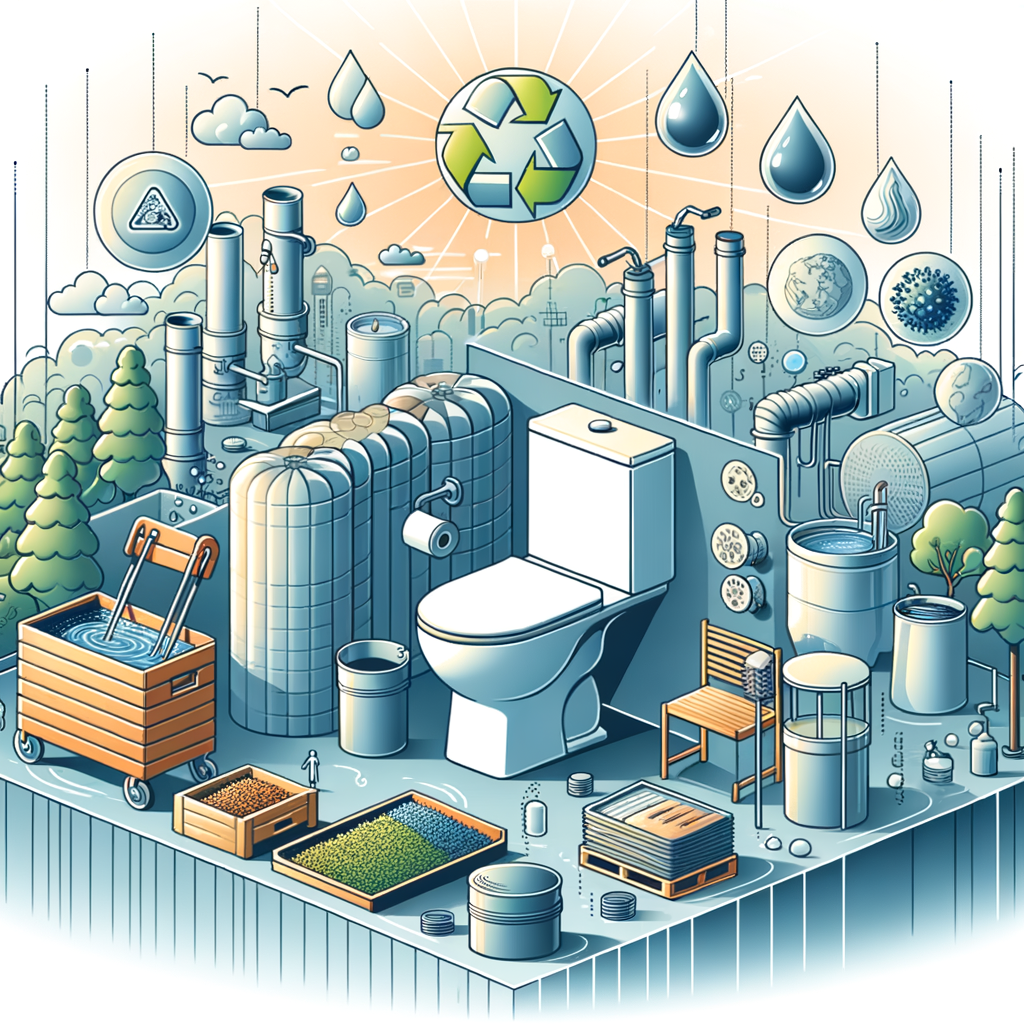
Ecological sanitation has moved from a niche development concept to a practical climate adaptation strategy, and global case studies now show why. EcoSan refers to sanitation systems that safely recover nutrients, conserve water, reduce pollution, and treat human waste as a resource rather than a disposal problem. In climate resilience terms, that matters because conventional sewerage depends on reliable water supplies, stable energy, expensive pipe networks, and treatment plants that often fail during floods, droughts, conflict, or power outages. I have worked on sanitation assessments where the first breakdown during a climate shock was not the toilet itself, but the wider service chain: water to flush, pumps to move sewage, roads to empty pits, and electricity to run treatment. EcoSan addresses that weak point by designing for local reuse, decentralized treatment, and lower dependence on vulnerable infrastructure.
Climate resilience means the ability of households, communities, and service systems to anticipate, absorb, recover from, and adapt to hazards such as extreme rainfall, sea level rise, heat, and prolonged drought. Sanitation is often overlooked in resilience planning, yet it directly affects disease control, groundwater quality, food security, and dignity. According to the WHO and UNICEF Joint Monitoring Programme, billions still lack safely managed sanitation, and climate change is making that gap more dangerous. Flooded pit latrines spread fecal contamination. Drought makes flush toilets impractical. Informal settlements face both land constraints and service exclusions. EcoSan can help in each of these contexts when systems are matched to local conditions, operated correctly, and supported by governance and market links. The strongest global EcoSan successes are not one-size-fits-all designs; they are adaptive models that combine engineering, behavior change, safe reuse, and long-term maintenance.
This hub article showcases global EcoSan successes by organizing what practitioners, city leaders, NGOs, and researchers can learn from real cases across Africa, Asia, Latin America, and Europe. It defines the core models, explains where they work best, and highlights the evidence behind their resilience value. It also serves as a gateway for deeper case study content under this subtopic, including school sanitation, dry toilet programs, nutrient recovery enterprises, post-disaster rebuilding, and citywide inclusive sanitation. The central lesson is clear: EcoSan works when it is treated as a full service system, not simply a toilet technology.
What EcoSan systems actually include and why that matters for resilience
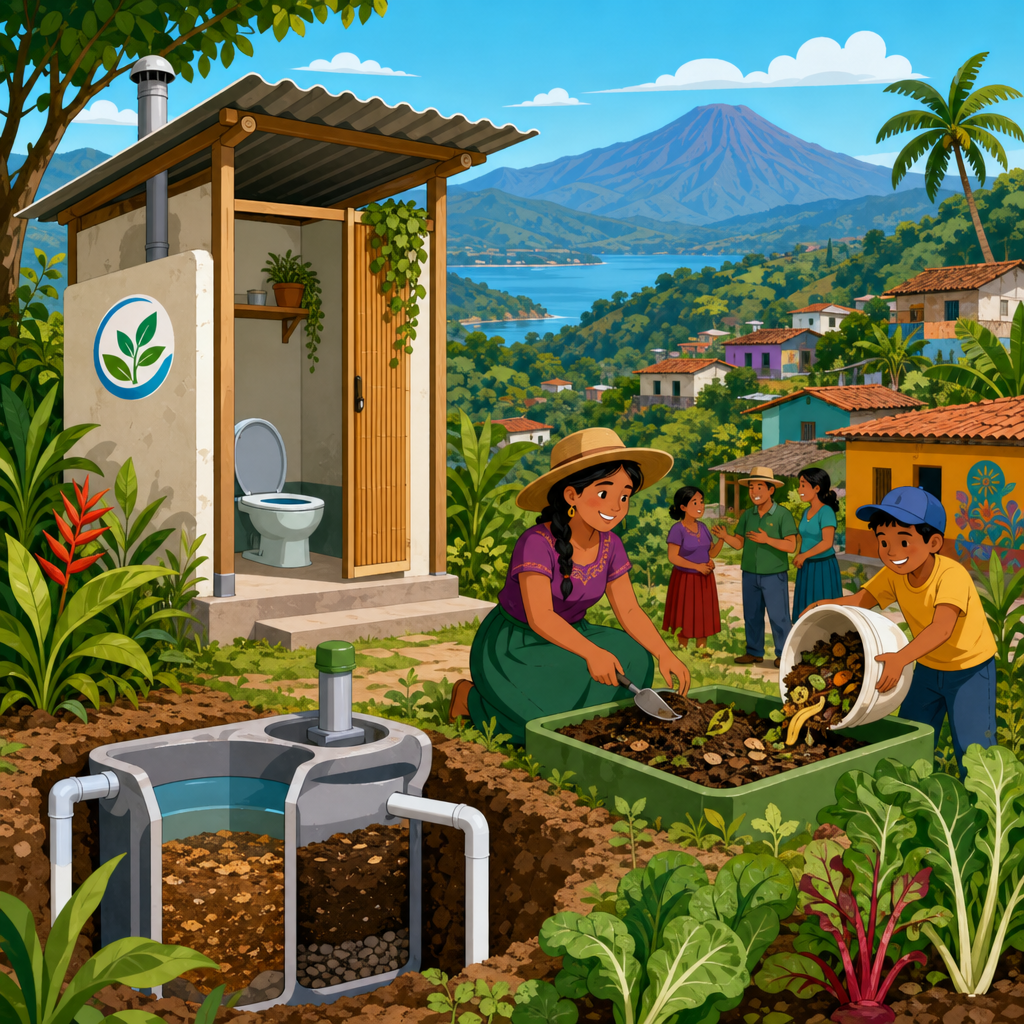
EcoSan is often reduced to urine-diverting dry toilets, but the category is broader. It includes urine diversion dehydration toilets, composting toilets, arborloos, container-based sanitation linked to resource recovery, and hybrid decentralized systems that separate, sanitize, and reuse excreta products. The technical principle is source separation and controlled treatment. Urine contains most of the nitrogen and a large share of the phosphorus excreted by humans, while feces carry most pathogens and organic matter. By separating flows, systems can reduce smell, speed drying, improve handling, and create more usable outputs. In water-scarce regions, that separation avoids the need for flushing. In flood-prone areas, raised or sealed systems reduce direct contamination compared with pits that overflow into streets and waterways.
From field experience, resilience hinges on the entire chain: user interface, storage, pathogen reduction, collection or emptying, transport if needed, end use, and institutional oversight. A technically sound toilet fails if ash or dry cover material is unavailable, if users are not trained, or if there is no market for treated products. The opposite is also true. Modest technologies can perform well when the service chain is consistent. This is why the most persuasive EcoSan case studies document not only installation numbers but operation quality, reuse rates, cost recovery, and environmental outcomes.
Lessons from East and Southern Africa: drought pressure and nutrient recovery
Several of the best known EcoSan experiences come from East and Southern Africa, where water stress, dispersed settlements, and soil nutrient depletion create strong conditions for reuse-based sanitation. In Zimbabwe, NGOs and local authorities promoted arborloos and urine-diverting systems in rural districts as a response to collapsing conventional services and chronic water scarcity. The arborloo model, a shallow pit used for a limited period and then planted with a tree after safe covering, showed an important resilience benefit: sanitation investment also produced fruit trees and soil improvement. Households could see a direct return, which improved acceptance more than hygiene messaging alone. The design was simple, but scaling depended on local masons, community facilitators, and seasonal timing for planting.
In Ethiopia, EcoSan pilots linked sanitation to agriculture by training farmers to use sanitized urine as fertilizer on maize and vegetables. Research from Addis Ababa University and international sanitation programs found that properly stored urine can substitute for part of synthetic fertilizer demand, especially where farmers face high input prices. That matters under climate stress because fertilizer supply chains are increasingly volatile, and degraded soils hold less moisture. Farmers reported yield benefits when application rates were controlled and timed correctly. The lesson is not that all sanitation products should go directly to fields, but that nutrient recovery becomes economically meaningful where agriculture is already central to livelihoods.
South Africa offers a different case. Municipal urine-diverting dry toilets were rolled out in eThekwini Municipality, especially in peri-urban and rural settlements where sewer extension was impractical. The program is often cited because it moved beyond pilots into public service delivery at scale. Performance was mixed, which makes it valuable. Where user education, maintenance support, and vault emptying guidance were strong, households benefited from reliable, waterless sanitation during drought. Where engagement was weak, some units were misused or abandoned. The practical takeaway is that climate resilience is not achieved by hardware distribution alone. It requires municipal budgeting for follow-up, clear responsibilities, and adaptation of designs to user preferences, including anal cleansing practices and household size.
South and Southeast Asia: dense settlements, flood risk, and service innovation
Asia demonstrates that EcoSan can work in both rural and urbanizing settings, but only when the social and spatial constraints are taken seriously. In Bangladesh, recurring floods and high groundwater tables make pit latrines especially vulnerable. Elevated or sealed sanitation options, including urine-diverting and composting models, have been trialed in chars and flood-prone villages. The strongest results came when systems were integrated with plinth raising, drainage improvements, and hygiene promotion rather than promoted as standalone toilets. After major flooding, communities with raised sanitation infrastructure had lower direct overflow risk than neighboring pit-dependent areas. This is a core resilience principle: sanitation adaptation should align with settlement-wide risk reduction.
In India, EcoSan has appeared in drought-prone states and in institutions such as schools, apartment blocks, and public facilities where water shortages make flush systems unreliable. Organizations including WASH Institute and local partners documented successful urine-diverting dry toilet projects in Tamil Nadu, with emphasis on user training and agricultural reuse. Some projects gained traction because they reduced tanker water demand in areas facing repeated summer shortages. However, institutional case studies show that caretaker management is decisive. In schools, toilets stayed functional when cleaning routines, storage protocols, and teacher oversight were formalized. Without that, even well-built systems deteriorated quickly.
Container-based sanitation and resource recovery models in places like Haiti and Madagascar, while not always labeled EcoSan locally, offer relevant lessons for dense settlements across Asia. These systems use sealable containers, regular collection, and off-site composting or treatment. They are highly relevant in flood-prone informal settlements where pits are unsafe and sewers absent. The resilience value is mobility and controlled containment. Service operators can continue collection after storms more easily than rebuilding damaged pits, provided roads remain passable and transfer logistics are planned.
| Region | Typical climate risk | EcoSan approach | Main resilience benefit |
|---|---|---|---|
| Southern Africa | Drought and water scarcity | Urine-diverting dry toilets, arborloos | Low water dependence and nutrient reuse |
| South Asia | Flooding and high groundwater | Raised or sealed dry systems | Reduced overflow and contamination risk |
| Urban informal settlements | Service disruption and land constraints | Container-based sanitation | Safe containment without sewers or pits |
| Andean and peri-urban zones | Water stress and poor soil fertility | Composting and urine reuse systems | Resource recovery and decentralized treatment |
Latin America and the Andes: linking sanitation to water security and farming
Latin America has produced some of the clearest examples of EcoSan as a response to both environmental vulnerability and weak conventional service coverage. In Mexico, dry toilets and urine-diverting systems have been implemented for decades in peri-urban and rural areas by organizations such as Sarar Transformación and local governments. What stands out in successful programs is the emphasis on social appropriation. Households were trained not only in use but in why separation, drying, and product handling mattered. Demonstration plots showed the value of recovered nutrients. In areas where water trucking was expensive or intermittent, families appreciated the immediate savings from not flushing.
The Andean region adds another dimension: altitude, water stress, and dispersed settlements. In Peru and Bolivia, EcoSan projects have supported schools and rural communities where sewer construction is unrealistic and pit emptying services are absent. Mountain environments are especially sensitive because poorly managed waste can contaminate limited water sources downstream. Properly designed dehydration vaults and composting systems reduce that risk, though only when moisture control is maintained. In several projects I have reviewed, the most common technical failure was urine leakage or rain intrusion into feces vaults, which slowed pathogen reduction and increased odor. The design lesson is straightforward: climate-resilient sanitation must also be weatherproof sanitation.
Latin American experience also shows the policy challenge. Projects often succeed during externally funded phases, then weaken when municipal ownership is unclear. The durable successes involve local supply chains, trained artisans, and integration into broader rural housing or watershed programs. That institutional embedding matters more than the specific superstructure design. EcoSan contributes to resilience when it becomes part of routine local service provision, not a stand-alone pilot.
What separates lasting success from short-lived pilots
Across global cases, five factors consistently separate durable EcoSan outcomes from projects that stall. First is context fit. Dry systems suit water-scarce or rocky areas, but in places with heavy water use habits or limited space for byproduct storage, another model may be better. Second is user-centered design. Toilet height, privacy, child use, menstrual hygiene management, and cleaning practices affect adoption as much as technical performance. Third is treatment discipline. Safe reuse depends on time, pH, temperature, moisture control, and handling protocols. WHO guidelines on the safe use of wastewater, excreta, and greywater remain a crucial reference.
Fourth is service governance. Someone must fund training, monitor performance, resolve complaints, and manage end products. In municipal programs, this often means sanitation departments working with agriculture or environment units rather than acting alone. Fifth is economic logic. Households and service providers need a reason to keep the system functioning. That reason may be water savings, fertilizer value, avoided emptying costs, improved flood safety, or compliance with land and environmental constraints. The strongest case studies quantify at least one of these benefits instead of relying on general claims.
For this hub on showcasing global EcoSan successes, the practical message is to read case studies through a systems lens. Ask what hazard was being addressed, what service chain was created, who paid for operation, how users were trained, and what measurable results followed. Those questions reveal whether a project is replicable or merely interesting.
How to use these global cases as a planning guide
Decision-makers should use EcoSan case studies as design references, not templates to copy without adaptation. Start with the climate hazard profile: drought, flooding, salinity intrusion, landslides, conflict disruption, or chronic water scarcity. Then map settlement form, cultural practices, construction capacity, and agricultural demand for recovered products. Compare these factors with documented cases from similar contexts. A flood-prone delta village can learn more from elevated dry sanitation in Bangladesh than from a desert project in Namibia. A peri-urban municipality planning non-sewered sanitation can learn from eThekwini’s service delivery experience, including its mistakes, more than from a one-year demonstration site.
This sub-pillar hub is designed to connect those comparisons. The related articles under Case Studies and Success Stories should be used to examine school-based examples, municipal programs, container-based models, nutrient reuse enterprises, and post-disaster sanitation recovery in greater detail. Together, they show that EcoSan is not a silver bullet, but it is a proven climate resilience option when matched carefully to local realities. The benefit is practical: communities gain sanitation that keeps working when water is scarce, infrastructure is fragile, and environmental risk is rising. If you are planning, funding, or evaluating sanitation in climate-vulnerable settings, use these global cases to build a full service model, then adapt it with rigor.
Frequently Asked Questions
1. Why is EcoSan increasingly seen as a climate resilience strategy rather than just an alternative sanitation model?
EcoSan is increasingly viewed as a climate resilience strategy because it addresses several of the core weaknesses that make conventional sanitation vulnerable during climate stress. Traditional sewer-based systems typically depend on continuous water supply, uninterrupted electricity, expensive centralized treatment infrastructure, and extensive underground pipe networks. In many regions, those conditions are becoming harder to maintain as communities face droughts, floods, storm damage, rising energy costs, and rapid urban growth. When sewerage systems fail, the result is often sewage overflows, contamination of water bodies, public health risks, and costly recovery efforts.
EcoSan systems, by contrast, are designed around resource recovery, local treatment, and lower dependence on external inputs. Many models use little or no water for transport, which makes them especially valuable in drought-prone or water-stressed areas. Because treatment and containment can happen close to the source, EcoSan can also reduce the risk of system-wide breakdowns caused by flood damage or infrastructure disruption. Global case studies repeatedly show that decentralized sanitation tends to be more adaptable in places where climate shocks are frequent and utility services are unreliable.
Another reason EcoSan matters for resilience is that it reframes human waste as a resource. Properly treated urine and fecal matter can contribute nutrients and soil-conditioning value, helping support agriculture, household food production, and local circular economies. In climate adaptation terms, that creates co-benefits: less pressure on freshwater, lower pollution loads, reduced fertilizer dependence, and stronger local self-reliance. This combination of sanitation, environmental protection, and livelihood support is exactly why EcoSan is now discussed not simply as a sanitation option, but as part of broader climate adaptation and resilience planning.
2. What lessons do global EcoSan case studies offer for communities facing drought, flooding, or fragile infrastructure?
Global EcoSan case studies show that context-specific design is one of the most important lessons. There is no single EcoSan model that works everywhere, but successful projects are usually those that match technology choice to climate conditions, settlement patterns, cultural preferences, maintenance capacity, and local agriculture. In drought-prone regions, urine-diverting dry toilets and other low-water systems have proven especially effective because they reduce dependence on scarce freshwater. In flood-prone areas, raised or sealed systems can help prevent contamination and maintain safer sanitation during high-water events. In locations where sewerage is unaffordable or repeatedly damaged, decentralized treatment offers a practical way to expand access without waiting for major infrastructure investment.
Another key lesson is that resilience is not created by hardware alone. The strongest examples from around the world combine technical design with community engagement, user training, clear management responsibilities, and long-term maintenance planning. Projects that treat EcoSan as a social system rather than just a toilet installation tend to perform better over time. Users need to understand how separation, storage, treatment, and reuse work. Local authorities or service providers need defined roles for emptying, monitoring, and safe handling. Without this institutional and behavioral foundation, even well-designed systems can fall into disuse.
Case studies also highlight the importance of demonstrating visible benefits. Communities are more likely to accept EcoSan when they see improved sanitation reliability, reduced water use, lower pollution, and practical reuse value in agriculture or landscaping. In many successful programs, trust was built gradually through pilot sites, farmer demonstrations, school-based education, and public health messaging. The global takeaway is clear: EcoSan works best when it is introduced as a locally managed resilience solution with health, environmental, and economic advantages that people can clearly recognize.
3. How does EcoSan compare with conventional sewerage when climate extremes disrupt water, energy, and public services?
During climate extremes, EcoSan often has a major advantage over conventional sewerage because it is less dependent on centralized systems that can fail all at once. Conventional sewerage requires large volumes of water to move waste, electricity to power pumping and treatment processes, and functioning pipelines that can be damaged by floods, erosion, subsidence, or overloaded storm conditions. If one part of the network breaks down, the consequences can spread quickly across entire neighborhoods or cities. Heavy rainfall can overwhelm sewers and treatment plants, while drought can make water-based sanitation difficult to operate affordably or consistently.
EcoSan systems generally reduce those vulnerabilities by decentralizing treatment and minimizing resource dependence. Dry or low-water systems can continue operating even when piped water is limited. Smaller, modular systems can be easier to repair or adapt after a climate event than large centralized facilities. Because waste is managed closer to the point of generation, there may be fewer opportunities for widespread transport-related failure. In practical terms, that can mean fewer sanitation outages, less sewage discharge into the environment, and better continuity of service during emergencies.
That said, EcoSan is not automatically superior in every setting, and global experience shows the comparison depends on management quality. A well-funded, climate-adapted sewer system can provide high service levels, especially in dense urban areas. But in many low-resource or rapidly changing environments, maintaining conventional sewerage at climate-resilient standards is extremely difficult and expensive. EcoSan’s strength lies in offering a flexible, lower-input, and often more climate-tolerant alternative where centralized systems are financially, environmentally, or operationally fragile. For many communities, the real question is not whether EcoSan replaces sewerage everywhere, but where it provides the most resilient and realistic sanitation pathway.
4. What are the biggest barriers to scaling EcoSan, and what do successful international examples do differently?
The biggest barriers to scaling EcoSan are usually not technical limitations alone, but a mix of policy, perception, financing, and operational challenges. In many countries, sanitation regulations were written around conventional sewerage and may not fully recognize decentralized resource-recovery systems. That creates uncertainty around approvals, safety standards, service responsibilities, and reuse practices. Financing can also be a barrier, especially when public investment frameworks favor large infrastructure projects over smaller distributed systems, even if the distributed systems are more appropriate for climate resilience.
Public acceptance is another major issue. Because EcoSan changes how people think about waste, storage, handling, and reuse, it can face resistance if introduced without education and engagement. Concerns about odor, hygiene, convenience, or cultural acceptability can undermine adoption, even when the systems are technically sound. In addition, many projects struggle because they underinvest in operation and maintenance. Toilets may be installed, but collection systems, treatment protocols, spare parts, monitoring, and user support are not sustained. This is one reason some early EcoSan initiatives delivered mixed results.
Successful international examples do several things differently. First, they establish clear governance structures so everyone understands who is responsible for maintenance, inspection, emptying, treatment, and reuse. Second, they back implementation with training, public communication, and demonstration projects that build confidence. Third, they embed EcoSan within broader systems such as climate adaptation plans, water scarcity strategies, agricultural nutrient management, or informal settlement upgrading. Finally, they use evidence: health safeguards, environmental monitoring, cost comparisons, and user feedback all help show decision-makers that EcoSan is not a temporary workaround, but a viable service model. The most effective scaling efforts treat EcoSan as infrastructure plus service delivery plus public trust.
5. What should policymakers, planners, and development agencies take away from global EcoSan experience for future climate adaptation efforts?
The main takeaway for policymakers, planners, and development agencies is that sanitation should be treated as a frontline climate resilience issue, not a secondary public works concern. Global EcoSan experience shows that sanitation systems fail when they are overdependent on water, energy, large centralized assets, and assumptions of environmental stability. Climate adaptation planning therefore needs to include sanitation models that can function under disruption, recover resources, and protect health even when conditions are unstable. EcoSan offers a practical framework for doing that, especially in water-scarce regions, peri-urban settlements, disaster-prone areas, and communities underserved by conventional networks.
A second important lesson is that planning must be integrated across sectors. EcoSan is most valuable when decision-makers connect sanitation with water security, food systems, public health, environmental protection, and local economic resilience. Nutrient recovery can reduce dependence on imported fertilizers. Water-saving sanitation can support adaptation in drought-prone areas. Reduced pollution can protect fragile ecosystems and downstream water users. These cross-sector benefits make EcoSan more than a sanitation intervention; they position it as part of a circular and climate-aware development strategy.
Finally, future efforts should focus on enabling conditions rather than isolated pilots alone. That means updating standards and regulations, funding long-term service models, supporting local enterprises and utilities, investing in training and monitoring, and designing for user acceptance from the beginning. Global case studies suggest that EcoSan has the greatest impact when it is institutionalized, not just experimented with. For climate adaptation agendas, the message is straightforward: resilient sanitation systems must be flexible, decentralized where appropriate, resource-conscious, and grounded in real local capacity. EcoSan has already demonstrated those qualities in multiple settings, and its relevance is only growing as climate pressures intensify.