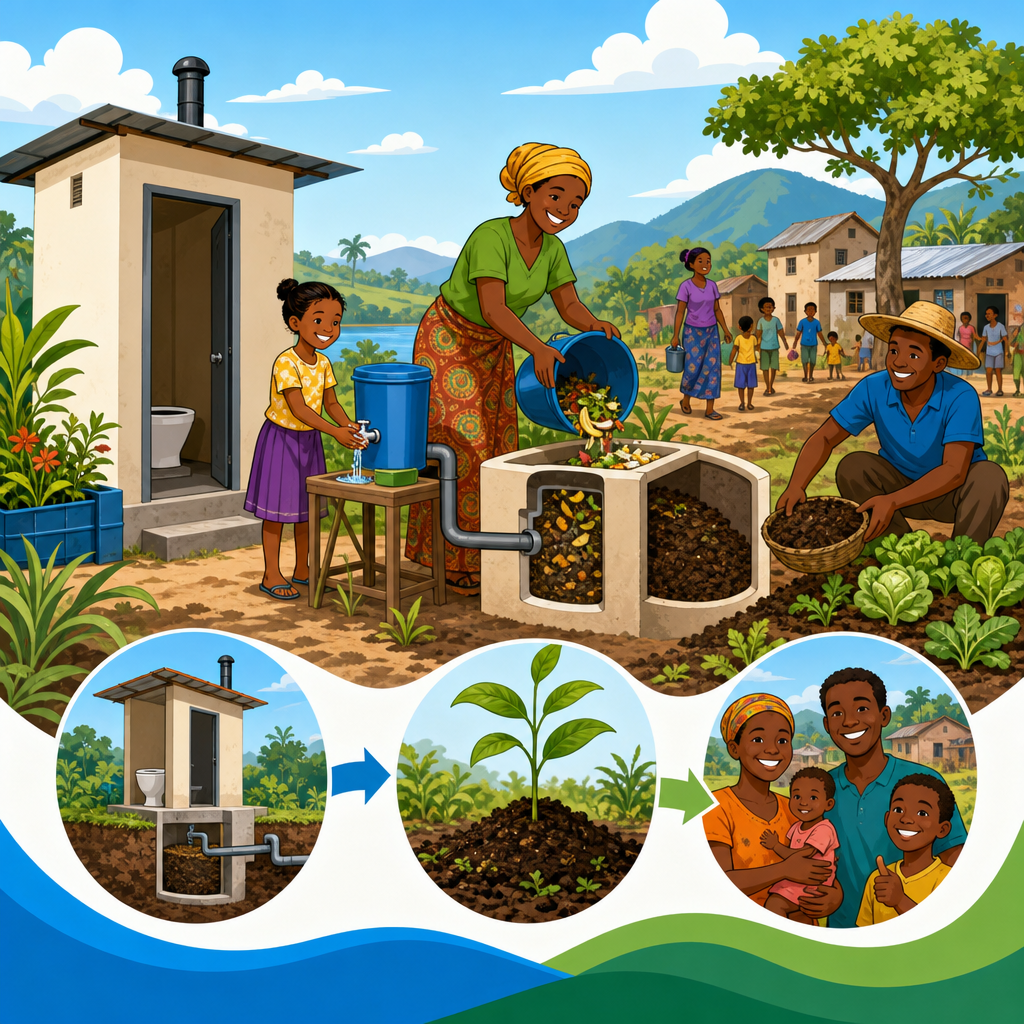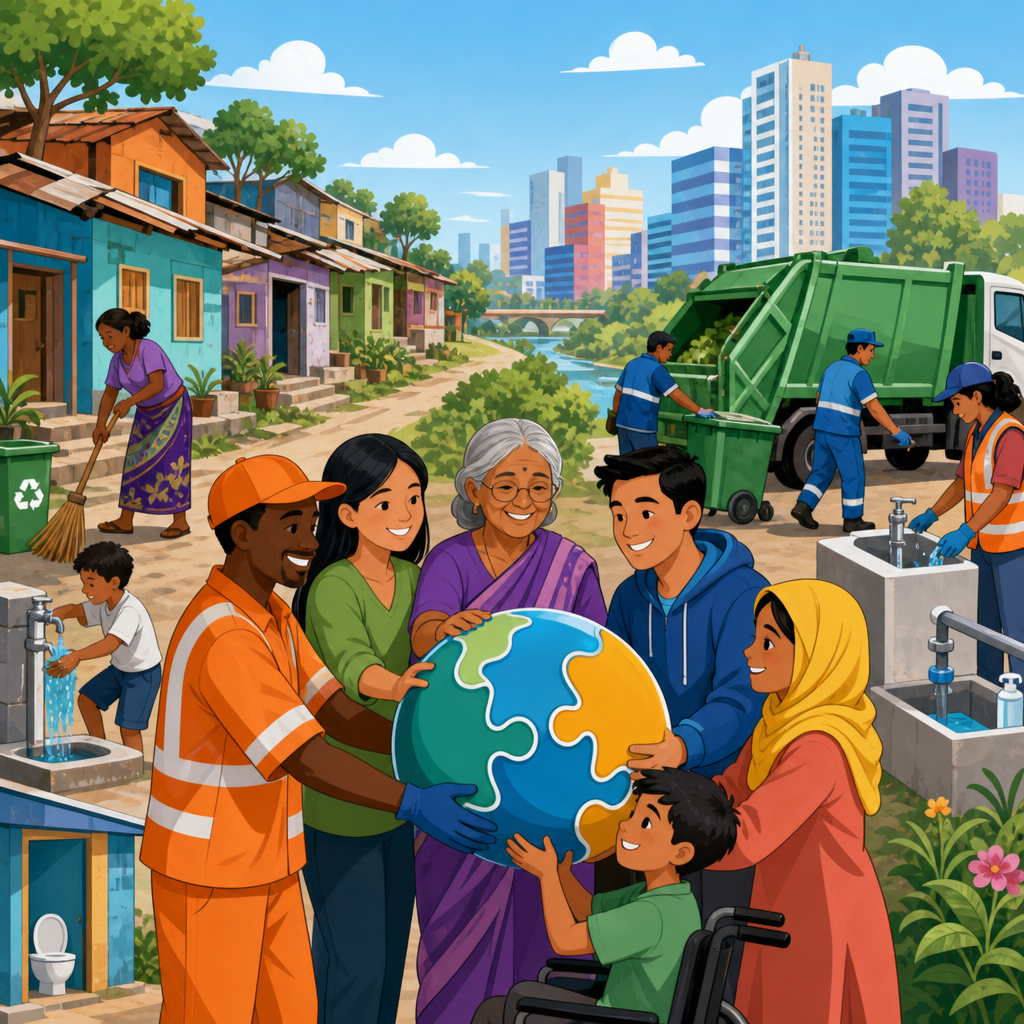
Sanitation and social equity are inseparable because the people with the least political power usually face the highest exposure to unsafe toilets, polluted water, and untreated waste. In work across municipal service planning and community sanitation projects, I have repeatedly seen the same pattern: when sanitation systems are designed only for engineering efficiency, they often fail the residents who most need reliable access. This is why eco-sanitation, often shortened to EcoSan, matters. EcoSan refers to sanitation approaches that safely recover water, nutrients, or energy from human waste while protecting health and the environment. Instead of treating excreta only as a disposal problem, EcoSan treats it as a resource stream that can be managed locally or regionally.
Social equity in sanitation means fair access, fair affordability, fair safety, and fair participation in decision-making. A settlement does not have equitable sanitation simply because toilets exist on paper. The service must be usable by women, children, older adults, people with disabilities, renters, informal workers, and residents without legal land tenure. It must also protect sanitation workers, who are often invisible in policy discussions despite carrying the greatest occupational risks. The divide becomes obvious in diverse communities, where geography, income, culture, and legal status shape who gets sewer connections, who relies on shared toilets, and who is left with unsafe pits or open defecation.
This hub article examines how global EcoSan successes have helped bridge that divide. It focuses on what actually worked, why certain models delivered results, and where limitations remained. Across cities, refugee settings, peri-urban settlements, schools, and water-scarce rural regions, successful EcoSan programs share a few traits: they respond to local constraints, they build trust through visible public health gains, and they connect sanitation outcomes to livelihoods, agriculture, resilience, and dignity. For readers exploring case studies and success stories, this page provides the practical framework. It shows how ecological sanitation can improve inclusion when technology, governance, financing, and community ownership are aligned from the start.
What makes EcoSan effective in diverse communities
EcoSan works best when it solves more than one problem at the same time. In dense informal neighborhoods, it can reduce pressure on expensive sewer expansion by using container-based systems, urine-diverting dry toilets, or decentralized treatment. In drought-prone regions, it can conserve water through dry or low-flush designs. In farming communities, it can recover nutrients and organic matter that would otherwise be lost. The equity advantage comes from flexibility. Conventional sewerage has major public health benefits where networks are feasible, but in many low-income or topographically difficult areas, extending sewers can take decades. EcoSan can provide a safe service sooner if operations, maintenance, and reuse are handled properly.
From direct field observation, the strongest projects began with a service model rather than a toilet model. That distinction matters. A urine-diverting toilet without reliable maintenance, user training, and a plan for fecal sludge treatment is not a sanitation success. A modest toilet paired with routine collection, safe transport, pathogen reduction, and productive reuse can be transformative. The World Health Organization sanitation safety planning framework and the ISO 30500 family for non-sewered sanitation systems have reinforced this point by emphasizing end-to-end risk management. The lesson from successful EcoSan case studies is clear: inclusion depends on the entire sanitation chain, from containment to treatment to reuse or disposal.
Another reason EcoSan performs well in diverse communities is that it can be adapted to different social realities. Shared facilities can work in markets or compounds if cleaning responsibilities, lighting, and payment systems are transparent. School sanitation improves when designs address menstrual health management, privacy, and handwashing, not just latrine numbers. Refugee and displacement settings benefit when units can be deployed quickly and serviced without extensive pipe infrastructure. These are not secondary details. They determine whether women use facilities after dark, whether children attend school consistently, and whether households trust the system enough to pay for it.
Global EcoSan case studies that changed sanitation outcomes
Several widely documented examples show how EcoSan can produce measurable health, environmental, and equity gains. In Durban, South Africa, eThekwini Municipality implemented urine-diversion dry toilets in peri-urban areas where conventional sewer connections were financially and geographically difficult. The municipality paired installation with user education and ongoing municipal support. The approach was not perfect, and maintenance expectations sometimes exceeded what households were prepared for, but it delivered basic sanitation access to many residents who otherwise would have waited years for networked service. The case remains important because it demonstrated that municipalities can formalize non-sewered sanitation instead of treating it as a temporary failure.
In Haiti, SOIL developed a container-based EcoSan model that served dense urban households in places where unstable land conditions and limited infrastructure complicated pit or sewer solutions. Waste was collected regularly in sealed containers and transported to composting sites, producing soil amendments after controlled treatment. What makes this case especially relevant to social equity is the service design. Households received a managed sanitation service, not just a product, and workers were integrated into a safer collection and processing chain than manual pit emptying. The model also created local jobs and gave city authorities a practical option for neighborhoods that formal utility planning had long neglected.
In Uganda and Kenya, schools and community institutions have used urine-diverting dehydration toilets and other ecological sanitation systems to address overcrowded latrines, odor, and nutrient loss. Where these projects succeeded, they did so because school management committees were trained, handwashing was integrated, and reuse of treated products was linked to school gardens or nearby farms. Where they failed, the common reasons were equally instructive: no budget for upkeep, weak user orientation, and poor ventilation or vault management. These contrasting outcomes show why hub discussions on sanitation and social equity must look beyond installation numbers. Long-term functionality is the metric that matters.
In Sweden and Germany, source separation pilots and nutrient recovery initiatives have influenced broader debates about circular sanitation. These higher-income examples differ from low-income settings, but they still matter globally because they helped validate urine separation, phosphorus recovery, and decentralized treatment as legitimate engineering pathways rather than fringe experiments. Their contribution to equity is indirect yet significant: once standards, monitoring methods, and treatment protocols are established in one context, they become easier to adapt elsewhere. That transfer of technical legitimacy has helped EcoSan gain support from utilities, donors, and regulators that might otherwise dismiss non-sewered systems.
How EcoSan advances social equity in practice
EcoSan advances social equity by reducing exclusion at multiple points in the sanitation chain. First, it can lower the entry barrier for underserved communities. A fully sewered connection requires major capital expenditure, legal tenure clarity, and long construction timelines. A well-managed non-sewered EcoSan service can reach renters, informal settlements, flood-prone neighborhoods, and remote villages faster. Second, it can reduce recurring burdens on women and girls. In many communities, women bear the consequences of poor sanitation through unpaid caregiving, time spent seeking privacy, and increased exposure to harassment. Facilities designed with locks, lighting, proximity, and menstrual hygiene features can materially change daily life.
Third, EcoSan can improve occupational justice for sanitation workers. Conventional sanitation discussions often ignore the workers who empty pits, transport sludge, or clean communal toilets. In several successful programs, containerization, mechanical emptying, personal protective equipment, vaccination protocols, and formal employment terms reduced direct exposure to pathogens. This is an equity issue, not simply an operational one. No sanitation system is socially just if it shifts health risks from users to low-paid workers. The strongest global examples made worker safety part of the system design and budget from day one.
Fourth, EcoSan can create value through nutrient and resource recovery. Treated compost, dried fecal matter under controlled conditions, recovered urine nutrients, biogas, and reclaimed water can support agriculture, landscaping, or local energy use where regulations allow. That value rarely covers the full cost of service, and claims to the contrary are usually unrealistic. However, even partial revenue or in-kind agricultural benefit can improve affordability and strengthen community acceptance. In practice, the biggest social equity gain is not profit. It is resilience: households and municipalities gain a sanitation option that functions even when water is scarce, power is unreliable, or centralized expansion is delayed.
Lessons from successful EcoSan programs
The most consistent lesson from global EcoSan successes is that governance matters as much as technology. Projects succeed when responsibilities are explicit. Who cleans the facility, who empties containers or vaults, who monitors pathogen reduction, who pays for transport, and who responds when a unit fails? Weak answers to these questions predict failure. Strong programs use service agreements, municipal oversight, trained operators, and clear user communication. They also collect data on fill rates, downtime, odor complaints, pathogen indicators, and customer retention. Sanitation equity improves when managers treat residents as service users with rights, not beneficiaries who should be grateful for any facility.
A second lesson is that affordability must be designed carefully. Free construction can produce high initial uptake but poor long-term maintenance if no operating budget follows. Full cost recovery from very low-income households usually fails unless the service is heavily subsidized or cross-subsidized. The practical middle ground is blended finance: public funding for capital costs, donor or climate finance for innovation, and modest user fees for operation where households can pay. In my experience, the best pricing systems are predictable, transparent, and linked to service quality. Residents will often pay for reliability and cleanliness; they resist paying for systems that are dirty, unsafe, or inconsistently serviced.
| Program element | What successful projects did | Equity impact |
|---|---|---|
| Technology choice | Matched design to water scarcity, density, soil, and user habits | Reduced exclusion caused by one-size-fits-all infrastructure |
| Operations | Funded routine collection, cleaning, repairs, and treatment | Improved reliability for low-income users |
| Worker protection | Formalized jobs, PPE, training, and safer handling systems | Lowered health risks for frontline labor |
| Community engagement | Used co-design, demonstrations, and local feedback loops | Raised acceptance across diverse cultural groups |
| Reuse pathway | Applied standards for composting, storage, or nutrient recovery | Built trust and created local value |
A third lesson is that community engagement must go beyond awareness campaigns. The phrase community participation is often used loosely, but effective participation means residents influence siting, design details, access rules, payment mechanisms, and grievance processes. This is especially important in diverse communities where caste, ethnicity, migration status, disability, or tenancy shape who gets heard. In one recurring pattern, projects that consulted only formal leaders overlooked tenants and women, leading to underuse or conflict. By contrast, programs that tested prototypes, ran user orientation, and revised designs based on direct feedback had much higher acceptance and functionality.
Barriers, tradeoffs, and what future case studies should examine
EcoSan is not a universal answer, and serious articles should state that plainly. Some systems require more user interaction than flush toilets, and households may reject them if maintenance feels burdensome or culturally unfamiliar. Reuse can face regulatory hurdles, market resistance, or legitimate health concerns if treatment is inconsistent. In dense urban areas, decentralized systems still need land for treatment or transfer stations. Odor, fly control, and poor vault management can quickly undermine trust. These are not minor implementation details; they are the difference between a respected service and a failed pilot that reinforces skepticism.
Future case studies should therefore document not only success stories but also cost structures, failure points, and adaptation over time. Readers need to know the annual operating cost per household, the pathogen reduction method used, the number of years the system remained functional, and how responsibilities shifted when initial donor support ended. They also need evidence on gender outcomes, disability access, school attendance, worker safety, and environmental indicators such as groundwater protection or nutrient recovery rates. Without this level of detail, sanitation storytelling becomes advocacy without accountability.
The next frontier is integration. The most promising EcoSan programs connect sanitation to fecal sludge management, climate adaptation, food systems, and inclusive urban planning. They align with citywide inclusive sanitation principles, use risk-based management, and treat informal areas as permanent service territories rather than temporary anomalies. For practitioners building a case studies and success stories library, that is the core benefit of this sub-pillar hub: it organizes global EcoSan successes around practical lessons that can be transferred. Bridging the sanitation divide requires systems that are technically sound, financially credible, and socially fair. Study the strongest examples closely, compare their service models, and use those lessons to build sanitation that reaches everyone.
Frequently Asked Questions
Why are sanitation and social equity so closely connected in diverse communities?
Sanitation and social equity are deeply connected because access to safe toilets, clean water, drainage, and waste treatment is never distributed evenly when communities face poverty, discrimination, insecure housing, or weak political representation. In many cities and rural settlements, the households with the least influence over public decisions are often the same households living nearest contaminated waterways, relying on shared or unsafe toilets, or paying more for poor-quality informal services than wealthier residents pay for reliable infrastructure. That imbalance creates a cycle in which health risks, missed work and school days, personal safety concerns, and long-term economic hardship all reinforce one another.
From a planning perspective, sanitation is not just a technical issue of pipes, treatment plants, and toilet designs. It is also a governance issue, a land-use issue, a public health issue, and a question of dignity. When decision-makers focus only on engineering efficiency or cost recovery, they can overlook whether women feel safe using facilities at night, whether people with disabilities can access toilets independently, whether migrants and informal residents are legally eligible for service, or whether cultural norms make a system difficult to use in practice. Social equity brings those realities to the center of sanitation planning.
That is why equitable sanitation requires more than expanding coverage on paper. It means asking who is still excluded, who bears the hidden burdens, and who has a voice in design and maintenance decisions. In diverse communities, effective sanitation systems must be responsive to differences in income, tenure status, age, gender, disability, and geography. When those factors are taken seriously, sanitation becomes not only safer and more sustainable, but also fairer and more resilient for everyone.
What does equitable sanitation look like in practice?
Equitable sanitation in practice means that services are designed to work for the full range of people who actually use them, not just the easiest populations to serve. That includes residents of informal settlements, renters, people in remote or flood-prone areas, older adults, children, people with disabilities, and households that cannot afford large upfront connection fees. A truly equitable approach looks beyond basic infrastructure counts and instead asks whether people have reliable, safe, affordable, and dignified access every day.
In real terms, this may involve multiple service models rather than a single standardized solution. Dense urban neighborhoods may require shared facilities with strong maintenance systems, fecal sludge management, and safe collection logistics where sewer expansion is unrealistic. Rural communities may benefit from decentralized systems tailored to local soils, water availability, and cultural preferences. Schools and public facilities may need gender-sensitive layouts, menstrual hygiene support, handwashing access, lighting, and privacy features. Equity also depends on operation and maintenance. A toilet that exists but is unusable, inaccessible, unsafe, or unaffordable is not an equitable sanitation service.
Equitable sanitation also requires meaningful participation. Communities should not be invited in only after major decisions have already been made. Residents need to be involved early in identifying barriers, shaping design choices, and setting service priorities. Local knowledge often reveals practical issues that outside planners miss, such as seasonal flooding patterns, safety concerns for women and girls, or the social tensions that can undermine shared facility management. When service providers combine technical expertise with genuine community engagement, sanitation systems are far more likely to succeed over time.
How can EcoSan help bridge sanitation gaps in underserved communities?
EcoSan, or ecological sanitation, can help bridge sanitation gaps by rethinking waste not simply as a disposal problem, but as a resource management challenge linked to water, soil health, and local livelihoods. In settings where conventional sewer systems are too expensive, water-intensive, or difficult to maintain, EcoSan approaches can offer practical alternatives that reduce contamination, conserve water, and create more flexible sanitation options. This can be especially important in underserved communities where infrastructure budgets are limited and centralized systems may take many years to arrive, if they arrive at all.
One of EcoSan’s major strengths is its adaptability. Depending on local conditions, EcoSan systems may include urine-diverting dry toilets, composting approaches, decentralized treatment, and methods for safely reusing treated nutrients in agriculture or landscaping. These systems can be valuable in areas with water scarcity, weak sewer networks, rocky terrain, flood risk, or dispersed settlements. Because they often operate at household or community scale, they can reduce dependence on large, capital-intensive infrastructure and provide incremental pathways to safer sanitation.
That said, EcoSan is not automatically equitable just because it is environmentally innovative. For EcoSan to bridge social divides, it must be introduced with careful attention to affordability, user training, maintenance responsibilities, cultural acceptance, and public health safeguards. Communities need clear guidance on operation, safe handling, and long-term upkeep. Local governments and practitioners also need to avoid treating low-income areas as experimental spaces for systems that would not be supported elsewhere. When EcoSan is implemented responsibly, with strong community participation and institutional backing, it can become a powerful tool for expanding dignified sanitation while advancing environmental sustainability and local resilience.
What are the biggest barriers to fair sanitation access, even when cities invest in infrastructure?
One of the biggest barriers is that infrastructure investment often does not translate into inclusive service delivery. A city may report progress based on new sewer lines, treatment capacity, or toilet construction, yet many residents still remain unserved because they live in informal settlements, lack legal tenure, cannot afford connection fees, or are located in areas that are considered too difficult or too costly to reach. In these cases, technical expansion happens, but social exclusion remains built into the system.
Another major barrier is fragmented governance. Sanitation responsibilities are frequently split across multiple agencies handling water, drainage, public health, housing, solid waste, and environmental regulation. When these institutions do not coordinate well, communities fall through the cracks. For example, toilets may be built without a plan for emptying sludge, drainage may be improved without protecting nearby water sources, or public facilities may be installed without funding for cleaning and repairs. The result is a system that looks complete on paper but fails in daily use.
Affordability, stigma, and limited representation also play a large role. Even relatively low service fees can be prohibitive for households with unstable incomes. Women, people with disabilities, minority groups, and residents of marginalized neighborhoods are often underrepresented in planning discussions, which means their priorities are not fully reflected in the final design. In some communities, sanitation workers themselves face dangerous conditions and social stigma, which further weakens service quality and accountability. Addressing these barriers requires more than construction budgets. It requires policy reform, inclusive governance, targeted subsidies, strong maintenance systems, labor protections, and better measures of success that capture whether people are actually being served safely and fairly.
What should policymakers, planners, and community leaders do to create more inclusive sanitation systems?
First, they should start with an equity-centered assessment rather than a one-size-fits-all infrastructure plan. That means mapping who lacks service, who faces the highest health and safety risks, and which groups are systematically excluded by cost, location, disability, legal status, or social discrimination. Data should be disaggregated as much as possible so that underserved populations are visible in decision-making. Without that foundation, investments tend to flow toward areas that are easiest to serve rather than those with the greatest need.
Second, leaders should support a broader menu of sanitation options. Inclusive sanitation rarely depends on a single technology. In many contexts, the most effective strategy is a mix of sewers, decentralized treatment, well-managed shared facilities, fecal sludge management services, and EcoSan approaches where appropriate. The goal is not to promote one model everywhere, but to match solutions to local realities while maintaining strong standards for safety, dignity, environmental protection, and long-term serviceability. Financing models should also be designed with equity in mind, including targeted subsidies, phased connection costs, and support for operation and maintenance.
Third, community engagement must be treated as core infrastructure, not as a public relations step. Residents should help identify priorities, review design options, and shape management systems. Policymakers and planners should also invest in accountability mechanisms such as service monitoring, transparent budgeting, complaint channels, and clear maintenance responsibilities. Finally, they should recognize sanitation workers and frontline community organizations as essential partners. When inclusive planning, practical technology choices, public health safeguards, and community leadership come together, sanitation systems are far more likely to reduce inequality rather than reproduce it.