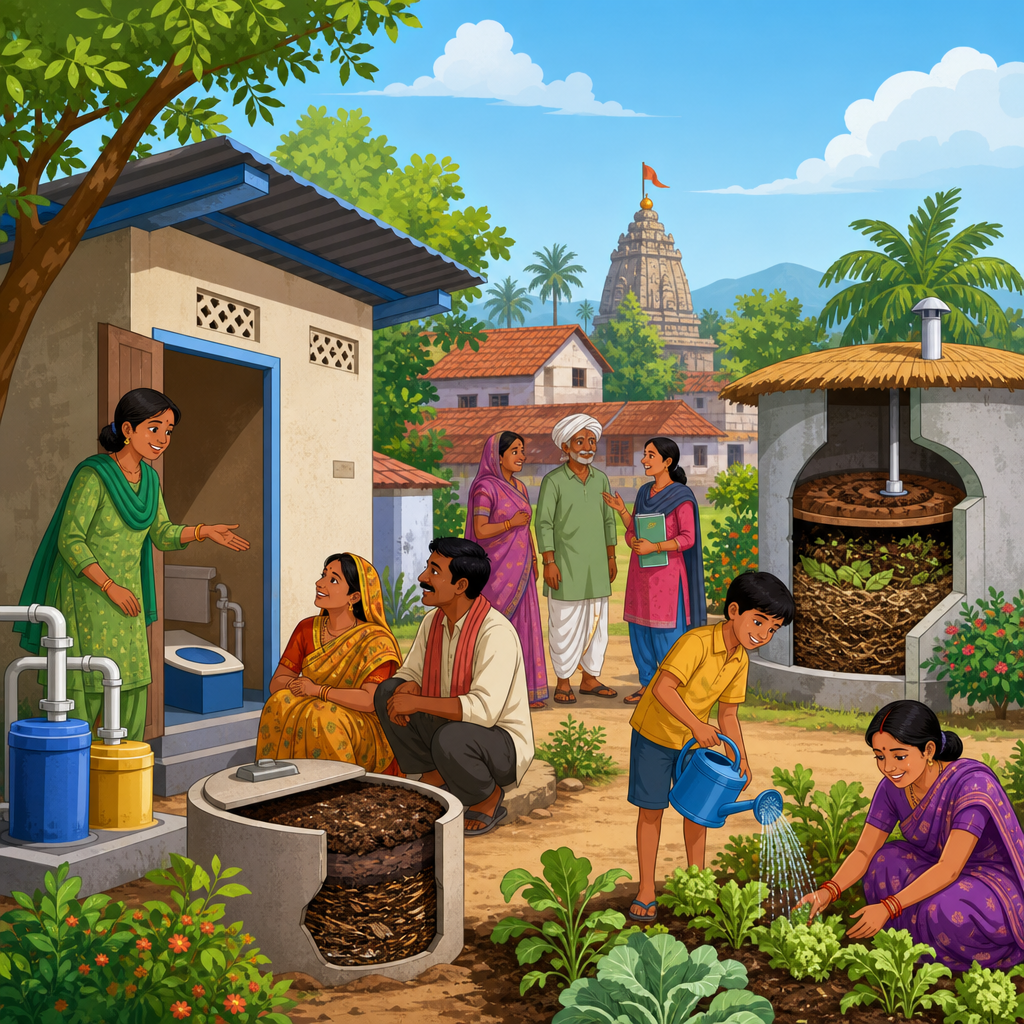
Culturally sensitive EcoSan approaches in India show that sanitation systems succeed not simply when they are technically sound, but when they align with local beliefs, daily routines, gender roles, water availability, and community institutions. Ecological sanitation, often shortened to EcoSan, refers to sanitation systems designed to safely contain, treat, and reuse nutrients and organic matter from human excreta, typically through urine diversion, composting, dehydration, or other low-water methods. In practice, EcoSan aims to protect groundwater, reduce pathogen exposure, recover nutrients for agriculture, and lower dependence on sewer networks that are costly to build and maintain. I have seen projects fail because engineers treated toilets as hardware alone, and I have seen them thrive when communities helped shape every detail, from pan design to messaging around reuse. That difference matters enormously in India, where sanitation intersects with caste, purity norms, farming economics, monsoon conditions, and rapid urban growth.
India provides some of the most instructive EcoSan case studies in the world because it contains every sanitation challenge at once: water stress in arid districts, flood-prone coastal belts, dense informal settlements, rural farming communities, tribal regions, and peri-urban areas with weak fecal sludge services. Conventional flush systems are not always feasible or desirable in these settings. Septic tanks are often poorly designed, soak pits can contaminate groundwater, and sewer expansion remains uneven. EcoSan offers an alternative, but only when adapted to social realities. A urine-diverting dry toilet that ignores squatting preferences, anal cleansing practices, or concerns about handling compost will likely be abandoned. A culturally sensitive design, by contrast, can improve acceptance, maintenance, and long-term reuse. This article serves as a hub for showcasing global EcoSan successes through the lens of India, drawing out the principles, outcomes, and lessons that connect local case studies to broader sanitation practice.
Why cultural fit determines EcoSan success
The most important lesson from Indian EcoSan initiatives is straightforward: user acceptance is a design parameter, not a post-installation communication task. Cultural sensitivity in sanitation means understanding how people perceive cleanliness, impurity, privacy, menstruation, child feces, shared facilities, and farm inputs. It also means recognizing who cleans toilets, who decides household spending, and who controls land where treated material might be used. In several projects I have reviewed, the technical package looked excellent on paper, yet households rejected it because the toilet height felt unfamiliar, the superstructure lacked privacy for women, or the maintenance instructions conflicted with long-established practices.
India’s diversity makes this especially important. In parts of rural Tamil Nadu and Kerala, farmer interest in nutrient recovery created a practical entry point for EcoSan messaging. In water-scarce regions of Rajasthan and Gujarat, low-water sanitation resonated because women already bore the burden of fetching water. In Odisha and parts of Andhra Pradesh, acceptance improved when projects addressed ritual concerns openly and used demonstration plots to show that sanitized urine and compost could be handled safely. Where implementers ignored social context, toilets were converted into storage rooms or used inconsistently. Where they built trust through repeated engagement, behavior change held.
Cultural fit also affects how success should be measured. Counting installed toilets is not enough. Strong EcoSan programs track regular use, correct urine diversion, ash or cover material application, vault switching, compost maturation time, user satisfaction, and safe agricultural reuse. They also monitor whether women, elderly users, children, and people with disabilities can use the system comfortably. The projects that deserve to be called success stories are the ones that integrated these realities from the beginning and maintained support well after construction ended.
Case study patterns from rural India
Rural India has generated some of the clearest examples of culturally responsive EcoSan. In villages where agriculture shapes daily life, nutrient recovery can make sanitation more tangible than abstract health messaging. Programs supported by organizations such as UNICEF, local NGOs, and district administrations found that farmers were more open to urine-diverting toilets when they could see crop response in banana, coconut, maize, and kitchen garden plots. This mattered because reuse transformed excreta from a taboo-only subject into a resource discussed in practical terms like yield, soil health, and fertilizer costs.
One recurring pattern came from South India, where double-vault urine-diverting systems were promoted in selected villages. Households were trained to add ash after defecation, keep urine and feces separate, and switch vaults after filling. The mature contents of the resting vault were then handled after sufficient dehydration and storage. Acceptance was strongest where masons received proper training and where households got repeated follow-up visits during the first year. In projects without that support, urine diversion plates were often misaligned, wash water entered feces chambers, and odor problems undermined confidence.
Another pattern involved linking EcoSan with self-help groups and local leadership. Women’s groups often became the most reliable advocates because they understood the value of privacy, safety at night, and reduced water use. In some villages, public meetings led by respected community figures helped normalize discussion around reuse. Instead of framing the system as a radical departure, facilitators connected it to familiar ideas of composting biomass, conserving water, and improving farm productivity. This reduced resistance and made operation feel manageable rather than alien.
| Location pattern | Main challenge | Culturally sensitive response | Observed result |
|---|---|---|---|
| Water-scarce rural districts | Flush systems impractical | Promote low-water or dry designs with women-led messaging | Higher acceptance where water savings were visible |
| Farming communities | Taboo around reuse | Use crop demonstrations and farmer champions | Greater willingness to apply treated urine and compost |
| Flood-prone settlements | Pit contamination risk | Raised vaults and sealed chambers adapted to high water tables | Better environmental protection and continuity of service |
| Dense peri-urban areas | Limited space and weak sludge services | Shared management rules and compact urine-diverting models | Mixed results, strongest where caretaking was formalized |
Odisha, Tamil Nadu, and Kerala: practical lessons from implementation
Odisha offers important lessons because several sanitation initiatives there experimented with alternatives in areas where groundwater vulnerability and rural poverty made conventional options difficult. In communities exposed to frequent contamination from poorly managed pits, EcoSan systems were introduced with a strong emphasis on safety barriers and user training. The projects that performed best did not rely on one-time awareness campaigns. They used household counseling, wall charts explaining vault switching, and local monitors who could quickly correct errors. That operational discipline is often what separates a working EcoSan system from one that merely exists on paper.
In Tamil Nadu, practical adaptation was central. Users commonly preferred squatting pans and expected toilets to be easy to wash, so designs had to manage anal cleansing water without flooding the feces vault. Some projects incorporated separate drains for wash water or design tweaks that reduced misuse. Where these details were ignored, systems became wet, smelly, and difficult to empty safely. I have found that many critiques of EcoSan are really critiques of poor detailing. When the interface matches local habits, user confidence rises sharply.
Kerala’s experience highlighted another key issue: literacy and environmental awareness alone do not guarantee acceptance of resource recovery. Even in communities open to ecological ideas, households wanted assurance that treated products were safe and socially acceptable to use. Demonstration gardens helped, but so did references to established guidance from the World Health Organization on safe reuse and from sanitation resource centers on storage times and handling precautions. People responded when facilitators explained pathogen reduction clearly, acknowledged risks honestly, and avoided exaggerated promises.
Across these states, one lesson stands out. EcoSan works best when implementation teams treat software and hardware as equally important. Software includes social mobilization, mason training, user manuals in local languages, agricultural extension support, and a realistic maintenance plan. Hardware includes correct slope, ventilation, durable urine-diversion components, sealed vaults, and strong superstructures. Weakness in either side erodes the whole system.
Urban and peri-urban adaptation: where EcoSan meets density and informality
Urban India is often discussed in terms of sewers, septic tanks, and fecal sludge management, yet EcoSan has a role in niches where water is scarce, space is constrained, or conventional infrastructure fails to keep pace. Informal settlements, construction labor colonies, peri-urban fringes, schools, and institutions have all tested variants of urine diversion and low-water sanitation. Results are more mixed than in rural settings because shared use complicates responsibility. A household toilet can rely on one family’s routines. A shared block needs cleaning contracts, fee collection, spare parts, and rule enforcement.
Still, urban case studies matter because they reveal the management conditions under which EcoSan can function at scale. In peri-urban communities on the edges of growing cities, I have seen compact systems perform reasonably well when a resident association or local entrepreneur handled oversight. Problems emerged when nobody owned maintenance. Urine pipes clogged, cover material ran out, and users reverted to behaviors better suited to flush toilets. The lesson is not that EcoSan cannot work in urban areas; it is that institutional design matters as much as toilet design.
School sanitation provides another useful example. Girls’ privacy, menstrual hygiene needs, cleaning schedules, and teacher involvement all influence outcomes. EcoSan school toilets have succeeded where there was a reliable budget for caretaking and where students were taught how the system worked. They failed where cleaning staff were uninformed or where facilities lacked water for handwashing, even if the toilet itself was low-water. This reinforces a broader point for all sanitation systems: user interface, operations, and hygiene services must be planned together.
Design choices that respect habit, dignity, and safety
Culturally sensitive EcoSan design starts with listening. In India, that means asking practical questions before selecting technology. Do users squat or sit? How is anal cleansing done? Is ash or dry soil readily available? Is there enough space to store compost safely? Will households accept handling treated material, or is a service model needed? Is the area flood-prone? Are there elderly users who need steps, handrails, or wider doors? These questions sound basic, yet they are routinely skipped in top-down projects.
Good design then translates those answers into visible features. Squatting pans should feel familiar. Superstructures must provide privacy, especially for women and adolescent girls. Ventilation should control odor without making the toilet dark or insecure. Urine-diverting components need to be robust and easy to clean; fragile imported parts often fail because replacement supply chains are weak. Where users wash with water, the design must separate cleansing water from feces treatment. Where reuse is planned, storage chambers should make safe emptying possible without direct fresh contact.
Safety is not only technical. It is also social. If a design implies that one caste group or one gender will handle the end products without consent, resistance is inevitable. Successful projects discuss labor and ownership early, sometimes creating service arrangements so no household is pressured into a role it rejects. This is one reason participatory planning is not a soft add-on; it is a risk-control measure. It surfaces objections before they become abandonment.
What India’s EcoSan case studies teach the wider world
India’s EcoSan experience offers lessons that travel well beyond national borders. First, sanitation technology should be selected through context assessment, not ideology. EcoSan is not a universal replacement for sewers or septic systems, but it is highly effective in settings with water scarcity, shallow groundwater, rocky terrain, flood risk, or agricultural demand for nutrients. Second, reuse only becomes real when there is a trusted pathway from toilet to field. That requires training, storage protocols, and often collaboration with agriculture departments or local farmer networks.
Third, long-term support is nonnegotiable. The strongest case studies included post-construction visits, refresher training, and local repair capacity. Fourth, dignity drives adoption. Households may appreciate water savings and fertilizer value, but privacy, convenience, smell control, and social acceptability decide daily use. Finally, success stories should be documented honestly. Not every project worked. Some struggled with maintenance, some with stigma, and some with weak supply chains. Those failures are useful because they identify the operational conditions needed for better outcomes.
As a hub for showcasing global EcoSan successes, India stands out not because every initiative succeeded, but because the country’s projects make the success factors unusually visible. They show that sanitation is infrastructure, public health, behavior change, and local culture woven together. If you are evaluating EcoSan for rural development, climate resilience, school sanitation, or nutrient recovery, start with these case study lessons: design for actual habits, train beyond installation day, prove safety with evidence, and build management systems that last. That is how culturally sensitive EcoSan moves from pilot to durable public value. Explore the related case studies in this series to compare models, outcomes, and implementation strategies across regions.
Frequently Asked Questions
1. What does “culturally sensitive” mean in the context of EcoSan in India?
In the Indian context, “culturally sensitive” EcoSan means designing and managing sanitation systems in ways that fit local social norms, religious beliefs, household habits, and community power structures rather than assuming one technical model will work everywhere. EcoSan systems may be effective on paper, but adoption often depends on whether people feel comfortable using them, cleaning them, maintaining them, and discussing the reuse of treated waste products. In many communities, ideas about purity, pollution, caste, gendered labor, and the acceptable handling of human excreta strongly influence sanitation choices. A culturally sensitive approach takes these realities seriously from the beginning.
In practice, this can involve adapting toilet design to local preferences for squatting or sitting, ensuring privacy and safety for women and girls, addressing concerns about odor and cleanliness, and carefully framing conversations around nutrient reuse so they do not conflict with local beliefs. It also means engaging the people who will actually use and maintain the system, including women, elders, farmers, school staff, and local leaders. Case studies from India repeatedly show that EcoSan works best when implementation teams listen first, co-design with communities, and make room for local knowledge. The result is not just a toilet or treatment unit, but a sanitation system that people trust, use consistently, and can sustain over time.
2. Why are case studies from India important for understanding EcoSan success?
Case studies from India are especially valuable because they reveal how sanitation outcomes are shaped by everyday realities that are easy to overlook in top-down planning. India includes enormous diversity in climate, language, religion, settlement type, water access, agricultural practices, and social organization. A system that performs well in a dry rural district may fail in a flood-prone area, and a model accepted in one cultural setting may be rejected in another. Case studies make these differences visible by showing how real communities responded to specific EcoSan interventions over time.
They also help move the discussion beyond purely technical performance. A toilet can be well engineered and still go unused if it is inconvenient, socially unacceptable, or poorly maintained. Indian case studies often highlight practical factors such as whether households received training on urine diversion, whether maintenance responsibilities were clearly assigned, whether reuse products were accepted by farmers, and whether local governance institutions supported long-term operation. They show what happened when implementers addressed community concerns respectfully, and what happened when they did not. For policymakers, NGOs, researchers, and local governments, these lessons are critical because they demonstrate that successful EcoSan is as much about social fit, behavior change, and local ownership as it is about design specifications.
3. What social and cultural factors most affect whether EcoSan systems are accepted in Indian communities?
Several interrelated factors influence acceptance. One of the most important is how communities perceive the handling of human waste. In many areas, direct contact with excreta is seen as deeply undesirable or even taboo, which can create resistance to systems that require households to manage composting chambers, dehydrated fecal matter, or urine collection. Caste dynamics can also shape expectations around who is supposed to clean sanitation facilities, making it essential to avoid designs that unintentionally reinforce stigma or place an unfair burden on already marginalized groups. Religious ideas, family customs, and notions of ritual purity may affect whether reuse of treated products is considered acceptable, particularly for food crops.
Gender also plays a major role. Women and girls often have distinct sanitation needs related to privacy, menstrual hygiene, safety at night, and convenience during caregiving work. If these needs are ignored, even technically sound systems may be underused. Daily routines matter as well: households need toilets that fit their water-use habits, cleaning practices, and available space. In some places, people prefer systems that resemble familiar latrines, while in others they may be open to newer designs if training is strong and benefits are clear. Community leadership, trust in implementing organizations, and the presence of local champions can further shape acceptance. Overall, the most successful Indian EcoSan examples are those that recognize sanitation as a social practice embedded in culture, not just an infrastructure challenge.
4. How do water availability and local livelihoods influence EcoSan design choices in India?
Water availability is one of the strongest reasons EcoSan has attracted attention in parts of India. In water-scarce regions, conventional flush toilets may be impractical because they require a steady water supply and often depend on sewerage networks or frequent desludging services that are not available. Low-water or dry EcoSan systems, including urine-diverting and composting approaches, can offer a more suitable alternative where groundwater is limited, tanker water is expensive, or households already ration water carefully. However, simply introducing a low-water system is not enough; it must match what people are willing and able to use every day. If a design is too unfamiliar, difficult to clean, or perceived as unhygienic, water savings alone will not ensure adoption.
Livelihoods are equally important. In agrarian communities, there may be greater interest in the potential reuse of treated urine or compost as soil inputs, especially where fertilizer costs are high. But this depends on whether farmers trust the safety and usefulness of those products, whether storage and treatment are managed correctly, and whether local cropping systems make reuse practical. In fishing villages, peri-urban settlements, schools, or densely built communities, different priorities may apply, such as space constraints, seasonal migration, institutional maintenance, or waste transport logistics. Case studies from India show that EcoSan design works best when linked to local economic realities: what people grow, how much water they have, who manages household sanitation, what services exist nearby, and whether there is real capacity to operate the system after the initial project ends.
5. What lessons do Indian EcoSan case studies offer for future sanitation programs?
The clearest lesson is that sanitation programs should begin with community engagement, not end with it. Indian EcoSan case studies consistently show that early dialogue, participatory planning, and repeated user training are essential. People need to understand how the system works, why certain behaviors matter, and what benefits they can realistically expect. Programs that treat communities as passive recipients often struggle with misuse, abandonment, or poor maintenance. By contrast, initiatives that involve households, local masons, self-help groups, teachers, panchayat leaders, and farmers from the start are more likely to create systems that are understood, accepted, and maintained.
A second major lesson is the importance of long-term support. EcoSan is not simply a one-time construction project; it is a service system that depends on maintenance routines, monitoring, troubleshooting, and continued trust. Training should be practical and repeated, especially where urine diversion, chamber switching, dehydration, or compost handling are new concepts. Programs should also anticipate social concerns around dignity, caste, labor, and reuse rather than assuming technical demonstrations will automatically overcome them. Finally, Indian case studies suggest that flexibility matters. There is no single “best” EcoSan model for the entire country. The most effective future programs will adapt technology to local culture, climate, institutions, and livelihoods while maintaining strong public health safeguards. That combination of social responsiveness and technical rigor is what makes EcoSan both credible and sustainable.