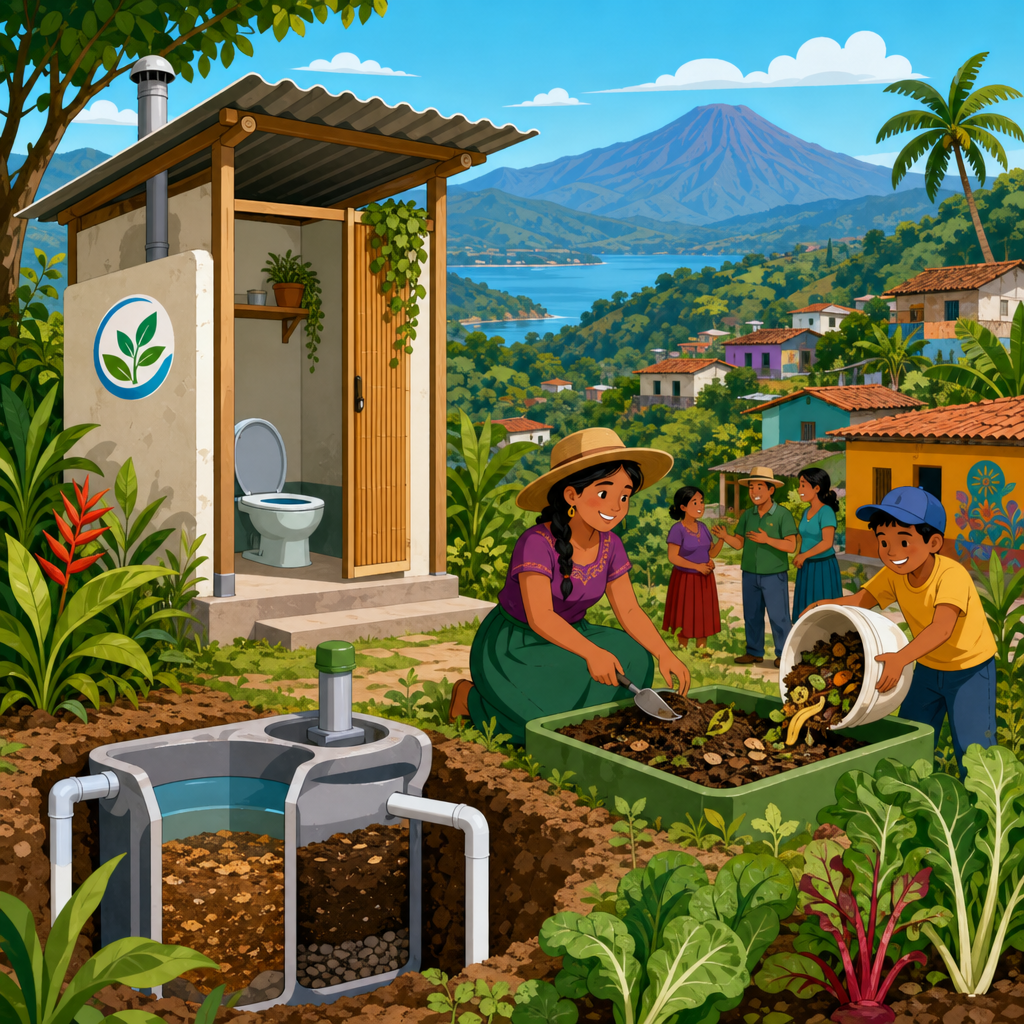
Leveraging local knowledge for sanitation solutions in Africa is the difference between infrastructure that fails after commissioning and systems that communities maintain, trust, and expand. In this field, local knowledge means practical understanding held by households, masons, farmers, pit emptiers, women’s groups, teachers, and municipal officers about soil, water, customs, labor patterns, affordability, and reuse. EcoSan, short for ecological sanitation, is an approach that treats human waste as a resource stream to be safely managed, sanitized, and, where appropriate, returned to productive use through nutrients, organic matter, water recovery, or energy. Across Africa, the strongest sanitation case studies do not begin with imported hardware. They begin with context: where groundwater sits in the rainy season, who empties pits, what users will clean, how tenants share costs, which crops can use compost, and what regulations permit.
This matters because sanitation challenges in Africa are diverse and fast changing. Dense informal settlements need compact, service-based systems that work without sewers. Flood-prone towns need toilets that protect groundwater and stay usable during storms. Dryland communities need low-water designs. Farming districts can benefit from nutrient recovery if health safeguards, storage times, and market acceptance are built in. I have seen projects with technically sound toilets stall because designers ignored anal cleansing habits, inheritance rules around land, or the distance farmers would travel for compost. I have also seen modest designs succeed when local artisans adapted slabs, ventilation, urine diversion, and collection schedules to fit daily routines. This hub article showcases global EcoSan successes through an African lens, drawing lessons from proven programs and explaining how subtopics within this case studies cluster connect.
What successful EcoSan programs in Africa have in common
Successful ecological sanitation programs share a consistent pattern: they solve a service problem, not just a toilet problem. That means they address containment, user behavior, operation and maintenance, collection or emptying, treatment, safe reuse or disposal, and financing as one chain. In Durban, South Africa, urine-diverting dry toilets were deployed in peri-urban areas where conventional sewer expansion was impractical. The lesson was not simply that urine diversion works. It was that long-term performance depended on user training, local manufacturing of pedestals and slabs, household follow-up, and municipal support for repairs and replacement parts. In Kampala and other East African cities, container-based and decentralized sanitation pilots showed that high-density areas can achieve safer outcomes when providers collect waste regularly and process it off-site into compost or fuel products. The operational model mattered as much as the superstructure.
Another common factor is adaptation to local environmental conditions. In regions with high water tables, lined pits and raised toilets often outperform standard pit latrines because they reduce contamination risks and structural collapse. In arid zones, urine-diverting dry toilets can make sense because they minimize water demand and produce a drier material that is easier to store and sanitize. However, these systems only work if households understand ash or cover material dosing, vault switching schedules, and cleaning methods. Programs in Ethiopia, Malawi, and Uganda have repeatedly shown that when local extension workers and artisans explain these details in familiar language, acceptance rises. When training is superficial, misuse follows quickly. A featured lesson from global EcoSan success stories is therefore simple: the most resilient sanitation systems are designed around local practices, then strengthened by clear service routines and accountability.
How local knowledge improves design, adoption, and long-term use
Local knowledge improves sanitation design by revealing constraints that maps and engineering drawings miss. Soil type determines whether pits collapse, whether infiltration is safe, and how foundations should be built. Household composition affects queue times, cleaning responsibilities, and wear on doors, hinges, slabs, and vent pipes. Religious norms and privacy expectations shape orientation, screens, and separate access for men and women in schools or markets. In one peri-urban settlement project I worked on, residents rejected an early shared toilet design because entrances faced a busy path and women said they felt exposed at night. After the orientation changed, door latches improved, and a community caretaker was appointed, usage increased sharply without changing the core technology.
Adoption also improves when programs recognize local economic logic. Many households cannot afford large up-front payments but can manage predictable weekly or monthly sanitation fees. That is why service models often outperform one-time subsidy models in dense settlements. Pit emptying enterprises in Senegal, Ghana, and Kenya have shown that customers value reliability, clean work, and fixed prices more than the lowest possible cost. Farmers, meanwhile, are more likely to accept composted biosolids or urine-derived fertilizers when products are standardized, odor is controlled, transport is convenient, and agronomic results are demonstrated on familiar crops. Local knowledge tells providers which crops matter, which seasons drive demand, and which messengers farmers trust. Extension officers, cooperative leaders, and respected lead farmers often do more for market acceptance than technical brochures.
| Country or context | Local knowledge applied | EcoSan result | Transferable lesson |
|---|---|---|---|
| Durban, South Africa | User training on urine diversion, ash use, and vault management | Higher functionality in water-scarce, off-grid areas | Technology must be paired with household support |
| Kampala informal settlements | Regular collection aligned with tenant payment habits | Safer sanitation where pits and sewers were impractical | Service reliability drives adoption in dense areas |
| Rural Ethiopia | Use of local masons and extension workers | Better construction quality and sustained use | Trusted local intermediaries reduce misuse |
| Farming districts in Uganda | Crop trials with compost and urine products | Greater farmer acceptance of resource recovery | Reuse markets need visible proof, not assumptions |
Case studies that show global EcoSan successes in practice
Among the most cited global ecological sanitation examples, Sweden and Germany often appear because they advanced urine diversion, source separation, and nutrient recovery standards early. Their direct transfer to African settings is limited by climate, housing form, labor costs, and regulation, but the principles remain relevant: separate resource streams early, simplify downstream treatment, and design for user compliance. In African case studies, the most valuable examples are hybrid rather than copied models. eThekwini Municipality’s long-running dry sanitation program demonstrated that municipal stewardship can support non-sewered sanitation at scale when maintenance, communication, and procurement are institutionalized. This matters for hub readers because it links to subtopics on municipal delivery models, maintenance systems, and policy frameworks.
Elsewhere, SOIL in Haiti is not in Africa, but it offers a useful success story for African practitioners studying container-based sanitation and compost production. The model integrates household collection, transport logistics, thermophilic composting, pathogen reduction, and branded agricultural products. African cities from Nairobi to Freetown can draw lessons on route density, customer service, and end-product quality control. Sanergy in Kenya added another important case study by combining franchised toilets, waste collection, and conversion into animal feed inputs, fuel, and organic fertilizer through a structured service chain. The key lesson from these global EcoSan successes is that recovery value alone does not sustain a sanitation business. Collection efficiency, treatment consistency, regulatory alignment, and user trust are the real foundations. Resource recovery strengthens economics, but only after the basics of service delivery are disciplined and repeatable.
Technology choices: matching systems to settlement type and climate
There is no single best sanitation technology for Africa. The correct choice depends on density, water availability, flood risk, tenure, local supply chains, and who will operate the system. Urine-diverting dry toilets are useful in water-scarce or rocky areas where pits are difficult and sewers unaffordable. Twin-vault systems can support safe storage and eventual reuse, but they require disciplined switching and cover material use. Container-based sanitation works well in dense informal settlements because sealed containers remove the need for deep pits, but it requires a capable operator, route planning, transfer stations, and dependable customer payments. Septic tanks and lined pits may still be the best interim option in some peri-urban areas, especially if paired with scheduled desludging and fecal sludge treatment. Decentralized wastewater treatment can suit institutions, markets, and housing compounds where flows are predictable and land exists for treatment units.
Climate shapes every decision. In flood-prone coastal cities, raised toilets, watertight containment, and rapid-emptying services can reduce overflow and contamination. In high-rainfall areas, drying chambers need better ventilation and moisture control, and composting timelines may lengthen. In dryland regions, systems that minimize water use and preserve nutrients have clear advantages, but only if dust, heat, and cleaning preferences are considered. I advise teams to map seasonal stresses first: rain intensity, groundwater rise, access road conditions, and labor migration. A toilet that works in January but becomes inaccessible in April is not a success. That practical perspective is central to showcasing EcoSan success stories honestly. Good case studies explain not only what worked, but where, for whom, in which season, under what management arrangement, and at what recurring cost.
Health, safety, and regulation: turning reuse into a credible practice
Resource recovery attracts attention, but health protection determines whether ecological sanitation earns public trust. Safe reuse requires barriers that reduce pathogen exposure during storage, handling, transport, treatment, and application. The World Health Organization guidelines on sanitation and safe use of wastewater, excreta, and greywater remain essential reference points because they emphasize multiple barriers rather than a single treatment claim. In practice, that can include urine storage periods, controlled composting temperatures, drying times, worker protective equipment, handwashing facilities, restricted crop application, and clear messaging to users and farmers. If one barrier is weak, others must compensate. Programs that skip this discipline often face odor complaints, product rejection, or regulatory pushback.
Regulation is also a business issue. Municipal bylaws, fertilizer standards, land use approvals, and occupational health rules can either unlock or block EcoSan scale. Kenya, South Africa, Rwanda, and Uganda have each seen progress where local authorities engaged early with sanitation enterprises and researchers to define acceptable treatment and end-use pathways. Testing matters here. Products need evidence on moisture content, nutrient levels, pathogen reduction, and contaminant risks if they are to reach farms, landscaping markets, or fuel buyers. Households do not need laboratory reports to use a toilet, but investors, regulators, and bulk purchasers often do. The best sanitation case studies therefore include governance details: who licensed the service, what standards were used, how monitoring worked, and how incidents were handled. That level of transparency turns a pilot into a model others can adapt with confidence.
Financing, local enterprises, and the path from pilot to scale
Most sanitation pilots fail at scale for financial rather than technical reasons. Capital grants can fund construction, but recurring costs for collection, maintenance, treatment, spare parts, customer support, and monitoring remain. The African EcoSan successes worth studying combine multiple revenue streams: household service fees, municipal payments for public health outcomes, donor-backed start-up capital, carbon or climate-linked funding in some cases, and sales of compost, briquettes, insect protein inputs, or other byproducts where markets are real. The sequence matters. Early on, user fees and public finance usually carry the model. Resource recovery revenue tends to grow later, once product quality, logistics, and demand are proven.
Local enterprises are essential because they understand customer behavior and can iterate quickly. Masons can standardize slabs that fit local cleaning habits. Pit emptying teams can redesign carts for narrow lanes. Women-led groups often manage school or market sanitation blocks with better fee collection and hygiene oversight than external contractors. Digital tools help too. Mobile money reduces cash leakage. Route optimization software cuts collection costs. Simple dashboards tracking fill levels, missed pickups, complaints, and repair times make managers accountable. For readers exploring this case studies and success stories hub, the key takeaway is practical: scaling sanitation in Africa depends on local knowledge translated into service design, regulation, and financing. Study the success stories closely, then follow the linked subtopics on technology, business models, reuse standards, and municipal partnerships to build solutions that last.
Local knowledge is not a soft add-on to sanitation planning; it is the operating system that makes ecological sanitation work in African realities. The strongest examples from across Africa and other regions show the same pattern: understand user habits, match technology to place, build a complete service chain, protect health with multiple barriers, and create a financing model that survives beyond the pilot phase. When those pieces come together, EcoSan can reduce pollution, conserve water, recover nutrients, create local jobs, and extend safe sanitation to places where conventional sewers remain unrealistic for decades.
As a hub for showcasing global EcoSan successes, this page should guide readers toward detailed case studies, comparisons of technology options, and practical lessons on policy, enterprise, and reuse. The main benefit is clarity. Instead of chasing one universal toilet design, decision-makers can identify patterns that transfer well and avoid mistakes that repeat across projects. Use these lessons to assess your own context, ask sharper questions about operation and maintenance, and prioritize systems that communities can actually sustain. Then explore the related articles in this subtopic to turn examples into action.
Frequently Asked Questions
Why is local knowledge so important when designing sanitation solutions in Africa?
Local knowledge is essential because sanitation systems only work well when they fit the environmental, social, and economic realities of the people who use and maintain them. In many African contexts, households and local practitioners already understand critical details that outside planners may miss, such as how soil behaves during rainy seasons, where groundwater rises, which areas flood, what materials are available, how much labor families can contribute, and what cultural norms shape toilet use. That knowledge directly affects whether a latrine collapses, whether a toilet is accepted by women and children, whether pit emptying is feasible, and whether reuse practices can be managed safely.
It also improves long-term sustainability. A facility may look technically sound on paper, but if it is too expensive to repair, too difficult to empty, poorly aligned with local customs, or built with materials that cannot be sourced locally, it often falls into disrepair. By contrast, when households, masons, farmers, pit emptiers, teachers, women’s groups, and municipal officers contribute to planning, the result is usually more practical and more durable. Communities are more likely to trust a system they helped shape, understand how to maintain it, and adapt it over time as conditions change. In short, local knowledge turns sanitation from a one-time construction project into a working service that communities can manage and expand.
What does EcoSan mean, and how can it benefit African communities?
EcoSan, or ecological sanitation, is an approach that treats human waste not simply as something to dispose of, but as a resource that can be safely managed, treated, and in some cases reused. The core idea is to protect human health while recovering value from nutrients and organic matter, especially in places where fertilizer is costly, water is limited, or conventional sewer systems are impractical. Depending on the local setting, EcoSan systems may separate urine and feces, reduce water use, improve treatment at household or community level, and support safe reuse in agriculture or landscaping.
For many African communities, the potential benefits are significant. EcoSan can reduce contamination of groundwater and surface water, especially in dense settlements or areas with high water tables. It can offer alternatives where pit latrines fill quickly, where desludging services are limited, or where sewer expansion is too expensive. In farming areas, treated outputs may help improve soil fertility if managed according to clear health and safety standards. Just as importantly, EcoSan encourages a more complete sanitation chain, from containment and treatment to handling and reuse, rather than focusing only on toilet construction. However, EcoSan is not automatically suitable everywhere. Its success depends on careful design, user training, cultural acceptance, safe handling practices, and a strong understanding of local conditions. That is why local knowledge is so central to making EcoSan work in practice.
How can communities contribute to sanitation planning and decision-making?
Communities can contribute at every stage of sanitation planning, and their involvement should go far beyond being asked to approve a finished design. Effective participation starts with understanding how people currently manage sanitation, hygiene, water access, child care, menstruation, farming, and waste handling in daily life. Households can identify which options are affordable and realistic. Women and girls can explain safety, privacy, menstrual hygiene, and nighttime access concerns that are often underrepresented in technical planning. Local masons can advise on construction methods and materials that perform well in local soil and climate conditions. Pit emptiers and sanitation workers can highlight operational issues, including access routes, emptying frequency, hazards, and equipment needs. Farmers can help determine whether reuse products would be practical and acceptable.
Strong sanitation planning often includes community mapping, household consultations, demonstration units, feedback meetings, and pilot projects before large-scale rollout. This process helps identify hidden risks early, such as flood-prone plots, resistance to shared facilities, challenges for people with disabilities, or unrealistic maintenance expectations. It also helps build local ownership. When people see that their knowledge influences decisions, they are more likely to use facilities correctly, contribute to upkeep, and advocate for improvements. Municipal leaders and service providers also benefit, because they get more accurate information and can target investments more effectively. The most successful sanitation programs treat communities not as passive beneficiaries, but as co-designers and long-term partners.
What are the biggest challenges to scaling sanitation solutions based on local knowledge?
One major challenge is that local knowledge is highly specific. What works in one district may not work in another because of differences in climate, soil type, settlement density, land tenure, water availability, livelihood patterns, and cultural expectations. This makes scaling more complex than simply replicating the same toilet model across a region. Programs must be flexible enough to adapt designs and service models while still maintaining quality, safety, and cost control. That requires time, skilled facilitation, and institutions willing to listen and learn rather than impose fixed assumptions.
Another challenge is that local knowledge is not always equally heard. Women, low-income households, people with disabilities, informal settlement residents, and frontline sanitation workers may have crucial insights but limited influence in formal planning processes. If those voices are excluded, sanitation systems can reinforce inequality or fail to meet real needs. There are also technical and regulatory challenges. Even when communities support reuse-based or decentralized solutions, governments may lack clear standards for treatment, transport, reuse, and monitoring. Financing is another barrier, since many sanitation systems fail not because the design is wrong, but because there is no reliable funding for maintenance, emptying, repairs, training, or behavior change support. Scaling local-knowledge-based sanitation therefore requires inclusive governance, practical standards, local capacity building, and financing models that support the full sanitation service chain, not just initial construction.
How can governments, NGOs, and service providers use local knowledge more effectively in sanitation programs?
They can start by making local assessment a standard part of project design rather than an optional consultation exercise. That means gathering structured input from households, traditional leaders, women’s groups, schools, health workers, masons, pit emptiers, and municipal staff before selecting technologies or setting targets. It also means paying attention to what people actually do, not just what they say they prefer. Observing water use, pit filling rates, seasonal movement, construction practices, and reuse habits often reveals practical constraints that surveys alone miss. Good programs translate this information into design choices, such as raised toilets in flood-prone areas, adaptable interfaces for children and older adults, service access points for emptiers, or treatment options that match local agricultural demand.
Beyond planning, organizations should invest in local capacity so communities can maintain and improve systems over time. Training local masons, artisans, operators, and sanitation entrepreneurs is especially important because they are the people who keep infrastructure functioning after external projects end. Governments and NGOs should also test solutions through pilots, document results, and refine approaches based on user experience and operational data. Clear safety guidelines, especially for fecal sludge management and EcoSan reuse, are critical for protecting public health while encouraging innovation. Finally, effective use of local knowledge requires humility and partnership. The goal is not to romanticize tradition or reject engineering expertise, but to combine technical standards with lived experience. When institutions do that well, sanitation programs become more resilient, more trusted, and far more likely to deliver lasting health and environmental benefits.