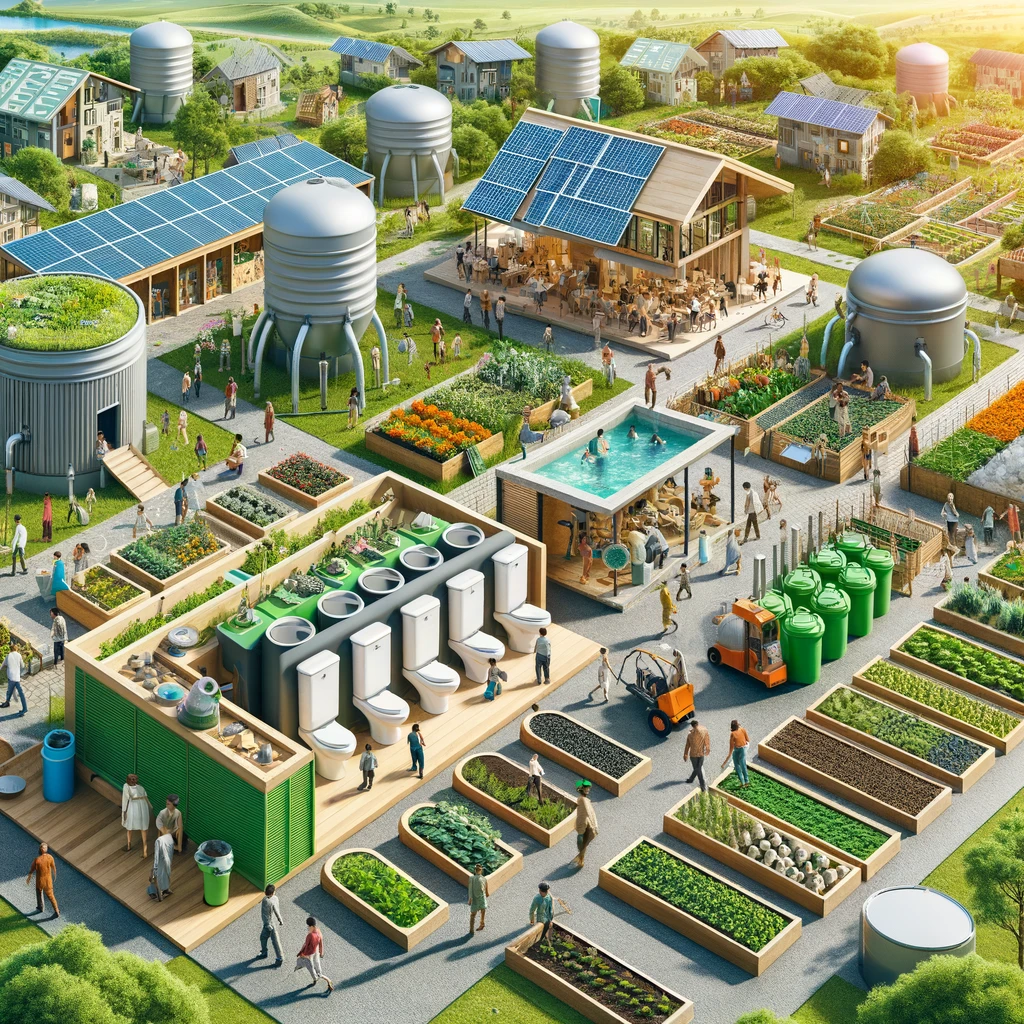
Ecological sanitation (EcoSan) has emerged as a sustainable solution to addressing sanitation challenges, especially in regions where traditional methods fall short. Unlike conventional approaches that often lead to contamination of water sources and waste valuable nutrients, EcoSan emphasizes the safe recycling of human excreta into resources such as fertilizer and biogas. This approach not only protects environmental health but also converts waste into valuable by-products.
Implementing EcoSan strategies at the community level, however, requires substantial investment and coordination. For communities, especially those in developing regions, the initial costs can be prohibitively high. Thus, innovative financing models are crucial to bridge the gap between concept and implementation. These models can be tailored to attract diverse funding sources, distribute financial risks, and promote community engagement and ownership.
The initial stages of implementing EcoSan should focus on mobilizing resources and securing funding. Having a stable financial foundation allows communities to build and maintain EcoSan systems effectively. This article delves into several innovative financing models that can support community-based EcoSan projects, including microfinance, public-private partnerships (PPPs), crowdfunding, social impact bonds, and grants and subsidies. By exploring these avenues, we can offer practical pathways for communities to advance their sanitation infrastructure sustainably.
Microfinance Solutions
Microfinance can play a significant role in supporting EcoSan projects at the community level. Originally designed to provide financial services to low-income individuals or those without access to typical banking, microfinance now extends to small-scale enterprises and social projects. For EcoSan, microfinance institutions (MFIs) can offer loans to individuals, groups, or cooperatives that wish to implement EcoSan solutions.
One successful model is the formation of community savings groups, where members pool their resources to create a loan fund. These groups can provide peer-supported financing for EcoSan projects, ensuring that even the poorest households can participate. The repayment terms are usually flexible and tailored to the borrowers’ income cycles, which is crucial for ensuring their ability to repay without falling into debt traps.
Microfinance also promotes a sense of ownership and responsibility among community members. When individuals invest their money into the system, they are more likely to be committed to its success, maintenance, and sustainability. While microfinance on its own may not cover the full cost of EcoSan projects, it significantly reduces the financial barriers and complements other funding sources.
Public-Private Partnerships (PPPs)
Public-Private Partnerships (PPPs) encapsulate collaboration between government entities and private sector companies to finance, build, and operate projects that serve public needs. For EcoSan projects, PPPs can be an effective financing model because they leverage the strengths and resources of both sectors.
The government’s role typically includes providing policy support, regulatory frameworks, and sometimes land or initial funding. In contrast, the private sector brings in additional capital, technical expertise, and efficient management practices. This synergy can result in higher quality, more sustainable EcoSan systems that benefit the whole community.
For example, a private company might invest in the construction of EcoSan facilities while the local government offers subsidies or tax incentives. In return, the company could receive a portion of the revenue generated from biogas production or the sale of compost. Such arrangements not only reduce the financial burden on the public sector but also ensure long-term engagement of the private sector, contributing to the project’s sustainability.
Crowdfunding Platforms
The rise of digital technology has given birth to innovative fundraising mechanisms, including crowdfunding. Crowdfunding platforms enable communities to raise small amounts of money from a large number of people, usually via the internet. This model harnesses the power of collective small contributions to achieve significant financial goals.
For EcoSan projects, crowdfunding can be particularly effective in raising awareness and attracting support from outside the community. Platforms like Kickstarter, GoFundMe, and Indiegogo can host campaigns centered around EcoSan initiatives, with detailed explanations of the project’s impact and benefits. By sharing compelling stories and visuals, communities can attract donors who are passionate about environmental and social issues.
Moreover, successful crowdfunding campaigns often generate media buzz, further raising awareness and potentially attracting additional funding from larger donors or institutions once they notice the public interest and support. This model also fosters a sense of global community, as people from different parts of the world contribute to a common cause.
Social Impact Bonds (SIBs)
Social Impact Bonds (SIBs) are an innovative financing tool that connects social outcomes with financial returns. They involve multiple stakeholders, including investors, service providers, and government agencies, working together to achieve specific social outcomes. For EcoSan projects, SIBs can provide upfront capital from investors to implement the project, which is then repaid by the government once predetermined outcomes are achieved.
The repayment is typically conditioned on the achievement of specific metrics, such as reductions in waterborne diseases, increased fertilizer production, or enhanced community health indicators. This result-based approach ensures that the funding is directly tied to the project’s success, creating a strong incentive for all parties involved to strive for effective implementation and outcomes.
SIBs also shift the financial risk from the government to the private investors, making it a particularly attractive model for public-sector engagement in EcoSan projects. These bonds have been successfully used in various sectors, and their application to EcoSan could unlock new funding streams and drive significant social and environmental benefits.
Grants and Subsidies
Grants and subsidies can provide crucial financial support for establishing EcoSan projects, especially in low-income regions where other funding models may fall short. Various international organizations, non-profits, and governments offer grants aimed at promoting environmentally sustainable practices.
For example, organizations like the Global Environment Facility (GEF), the Bill and Melinda Gates Foundation, and the World Bank have initiated programs that fund water and sanitation projects, including EcoSan. These grants often come with technical assistance, which can be invaluable in ensuring the projects are designed and implemented effectively.
While grants do not require repayment, they often come with specific requirements for transparency, accountability, and measurable outcomes. Subsidies, on the other hand, can lower the cost of materials and services required for EcoSan projects, making them more affordable for communities. Governments can provide subsidies for constructing EcoSan facilities, purchasing necessary equipment, or even for ongoing maintenance costs.
Conclusion
Implementing EcoSan at the community level necessitates innovative and diverse financing strategies to overcome initial cost barriers and sustain long-term operations. By leveraging models such as microfinance, public-private partnerships, crowdfunding, social impact bonds, and grants and subsidies, communities can mobilize the necessary resources to realize EcoSan projects.
Each financing model offers unique advantages and can be tailored to fit the specific needs and contexts of different communities. Combining these models can also mitigate risks and enhance the robustness of funding strategies, ensuring that communities do not rely on a single source of financing.
Ultimately, the success of EcoSan implementation hinges not only on securing initial funding but also on fostering community engagement, ownership, and capacity building. Innovative financing can be the catalyst that transforms vision into reality, creating a sustainable and hygienic environment that benefits everyone.