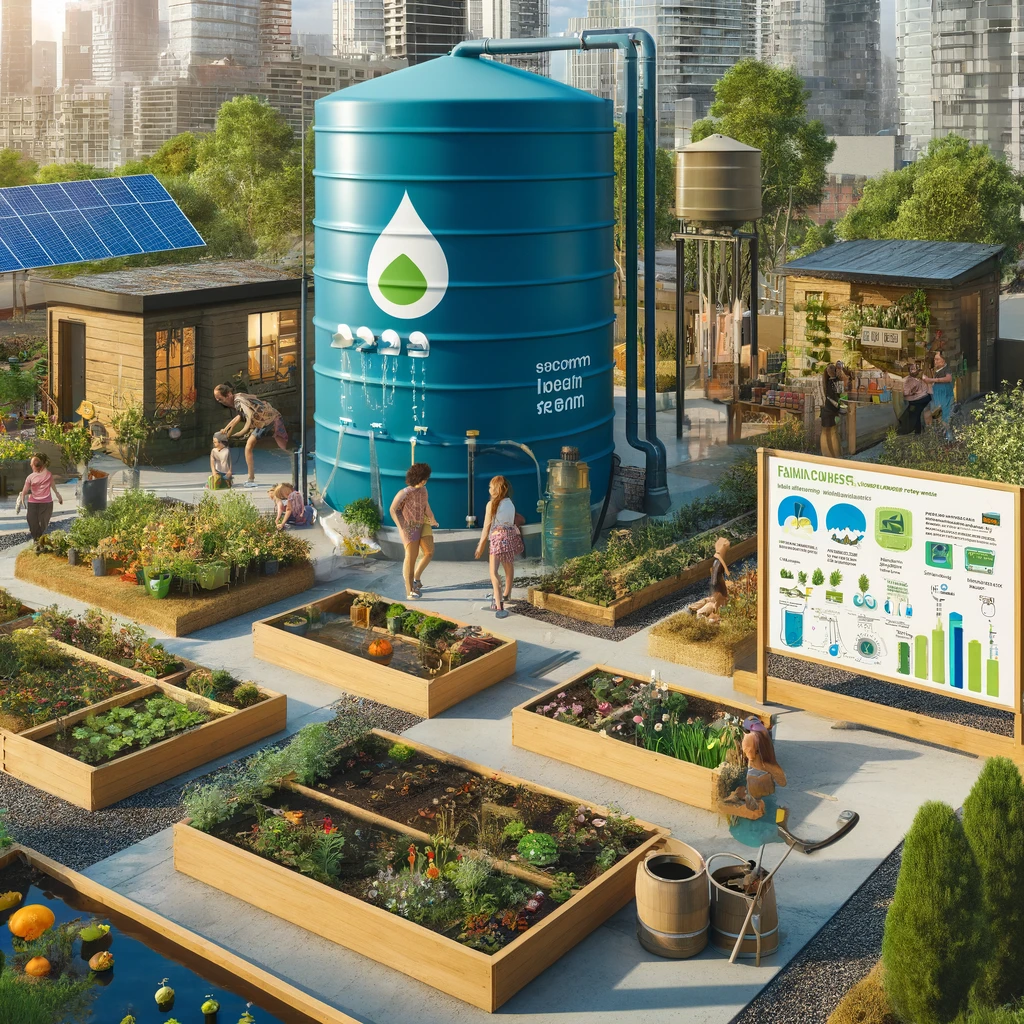
Ecological sanitation (EcoSan) is a sustainable approach to sanitation that focuses on preventing pollution, promoting resource recovery, and improving public health while emphasizing minimal environmental impact. As global water and sanitation challenges grow more complex, innovative technological solutions have become essential. Among these solutions, membrane bioreactors (MBRs) have emerged as a promising technology within the realm of EcoSan.
Membrane bioreactors combine conventional biological treatment processes with membrane filtration to provide high-quality effluent suitable for reuse. This technology is particularly relevant in the context of EcoSan as it aligns with the principles of resource recovery, pollution prevention, and sustainability. In this article, we will delve into the intricacies of MBR technology within ecological sanitation, exploring its mechanisms, benefits, challenges, and future potential.
What is a Membrane Bioreactor?
A membrane bioreactor (MBR) is a wastewater treatment process that combines a suspended growth bioreactor with a membrane filtration step. The bioreactor treats wastewater biologically by breaking down organic matter using microorganisms. Subsequently, the membrane filtration step separates the treated effluent from the mixed liquor suspended solids (MLSS).
MBRs can be classified into two main types:
- Submerged MBRs: The membranes are submerged directly in the biological reactor. Aeration is provided to both mix the sludge and scavenge the membranes.
- Side-stream MBRs: The membranes are installed outside the reactor, and mixed liquor is pumped through the membranes at high pressure. Though effective, they consume more energy compared to submerged MBRs.
The membranes used in MBR systems can be made from various materials such as polymers or ceramics, and they typically feature pore sizes ranging from 0.1 to 0.4 microns, allowing them to effectively remove suspended solids, bacteria, and even some viruses.
Benefits of Membrane Bioreactors in Ecological Sanitation
Adopting MBRs in EcoSan projects offers numerous advantages. These benefits underscore the feasibility of integrating MBR technologies into sustainable sanitation solutions:
- High-Quality Effluent: The membrane filtration process yields high-quality effluent with significantly reduced levels of suspended solids and pathogens, making it suitable for non-potable reuse applications like irrigation and toilet flushing.
- Space Efficiency: MBR systems require smaller footprints compared to conventional wastewater treatment plants, making them ideal for urban areas or regions with limited space.
- Flexibility and Scalability: MBRs can be easily tailored to suit varying treatment capacities by adjusting membrane modules and adding or removing reactor volume.
- Resource Recovery: Sludge generated from MBR processes can be managed more efficiently and reused as fertilizers or soil conditioners, promoting a circular economy approach.
- Environmental Protection: By producing high-quality effluent, MBRs protect natural water bodies from pollution, thus preserving aquatic ecosystems.
Challenges of Membrane Bioreactor Implementation
While membrane bioreactors offer significant benefits, their implementation in EcoSan requires addressing several challenges:
- High Costs: The initial capital investment for MBR systems can be considerably higher compared to traditional treatment systems. The cost of membranes, energy consumption, and maintenance further add to the overall operational expenses.
- Membrane Fouling: Fouling is a critical issue in MBRs, where particulates and organic matter clog the membranes, reducing their efficiency and lifespan. Regular cleaning and maintenance are necessary to manage fouling effectively.
- Energy Requirements: The aeration and membrane filtration processes in MBRs are energy-intensive, which can limit their application in resource-constrained settings.
- Complex Operation and Maintenance: The advanced technology used in MBRs requires skilled labor for operation and maintenance, which may pose challenges in regions lacking technical expertise.

Case Studies and Success Stories
Several successful implementations of MBR technology in EcoSan initiatives demonstrate its potential:
1. Global EcoSan Program in Developing Countries: Organizations like the Bill & Melinda Gates Foundation have supported the integration of MBRs in rural sanitation projects across Africa and South Asia. These projects have demonstrated significant improvements in wastewater treatment and resource recovery, contributing to better public health and environmental sustainability.
2. Urban Implementation in Europe: In densely populated urban areas in Europe, MBRs have been deployed successfully to treat combined sewer overflows and municipal wastewater, reducing pollution loads to water bodies and enabling water reuse for non-potable purposes.
3. Decentralized Treatment Solutions in the United States: MBR systems have been effectively used as decentralized wastewater treatment solutions for small communities, remote areas, and specific industrial applications, highlighting their flexibility and adaptability.
Future Prospects and Innovations
Ongoing research and development aim to enhance the performance, cost-effectiveness, and sustainability of MBR technologies. Some emerging trends and innovations include:
- Energy-efficient membranes: Researchers are developing new membrane materials and configurations that minimize energy consumption and extend membrane life.
- Smart monitoring and automation: Advances in sensor technology and automation are enabling real-time monitoring and control of MBR systems, optimizing their performance and reducing operational costs.
- Hybrid Systems: Combining MBRs with other treatment technologies, such as anaerobic digestion or constructed wetlands, can enhance overall treatment efficiency and resource recovery potential.
- Decentralized and modular designs: Modular and decentralized MBR systems are being developed to provide flexible, scalable solutions for varied wastewater treatment needs, from small communities to large cities.
These innovations will likely address some of the existing challenges, making MBRs even more viable for widespread use in EcoSan projects.
Conclusion
As we navigate the complexities of global water and sanitation challenges, membrane bioreactors represent a cutting-edge solution that aligns with the principles of ecological sanitation. By combining biological treatment with advanced membrane filtration, MBRs offer high-quality effluent suitable for reuse, reduced environmental impact, and efficient resource recovery. However, the successful implementation of MBR technologies in EcoSan requires addressing challenges such as high costs, membrane fouling, and energy requirements.
With continued research, technological advancements, and strategic investments, the future of MBRs in EcoSan looks promising. The key to unlocking their full potential lies in fostering collaboration among policymakers, engineers, scientists, and local communities. As we work together to refine and deploy these innovative solutions, MBR technologies have the potential to significantly contribute to a more sustainable, healthier, and resilient future for communities worldwide.
In summary, membrane bioreactors are at the forefront of EcoSan technologies, offering a powerful combination of efficiency, sustainability, and adaptability. Their role in shaping the future of sanitation is undeniable, and their continued development will be instrumental in addressing the pressing water and sanitation challenges of our time.