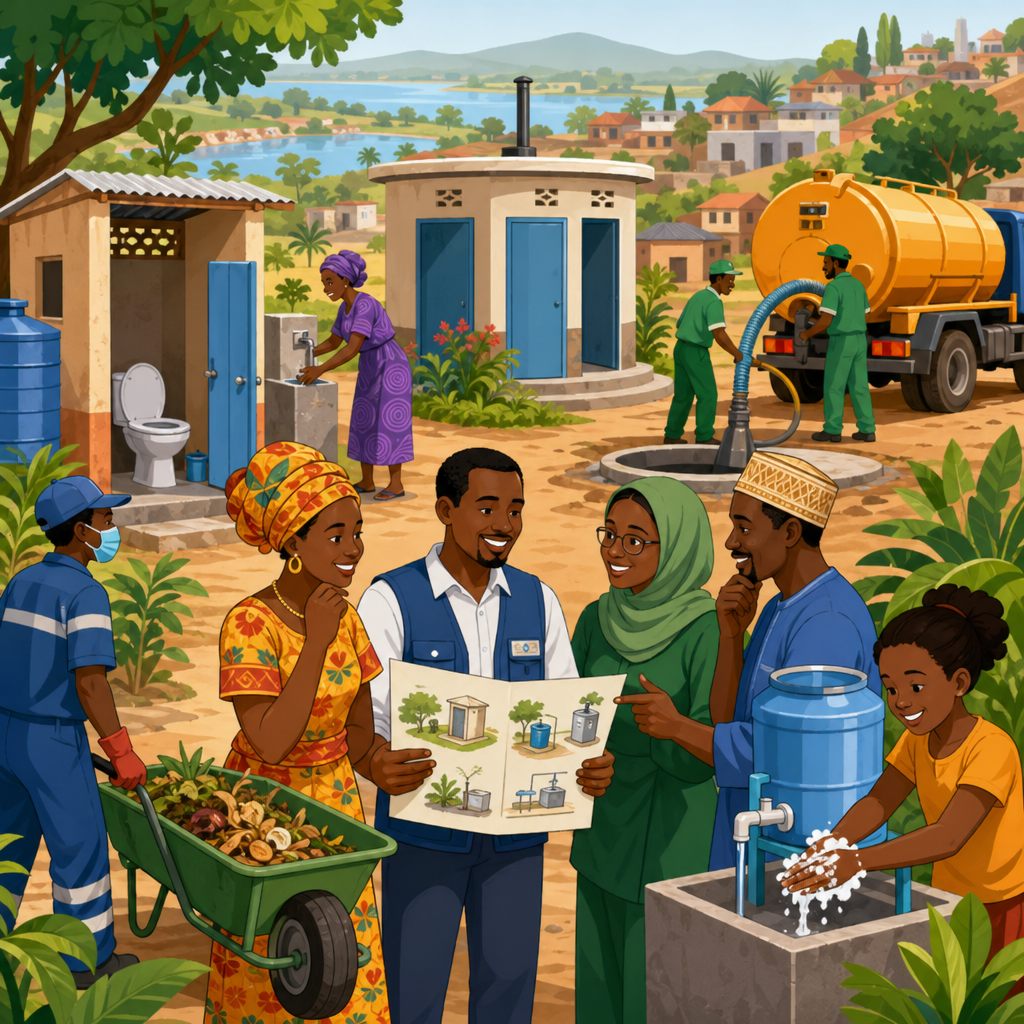
Peru’s journey towards environmental sanitation excellence is a practical story of how policy, geography, community behavior, and engineering decisions come together in real settings. In this context, environmental sanitation means the systems and practices that safely manage human waste, wastewater, solid waste, drainage, and hygiene conditions to protect health and ecosystems. EcoSan, short for ecological sanitation, goes a step further by treating human excreta as a resource that can be safely recovered, reused, or returned to the soil rather than simply discarded. Peru matters as a case study because few countries combine such sharp contrasts: dense coastal cities, high-altitude Andean settlements, flood-prone Amazon communities, mining corridors under water stress, and informal peri-urban neighborhoods expanding faster than conventional sewer networks can reach them.
I have worked on sanitation content and project evaluations long enough to see the same pattern repeat: infrastructure alone rarely solves sanitation failures, but well-designed systems paired with local ownership can change public health outcomes quickly. Peru illustrates that lesson with unusual clarity. Across the country, municipalities, NGOs, utilities, schools, and rural water committees have tested urine-diverting dry toilets, composting toilets, decentralized wastewater treatment, fecal sludge management models, and hygiene education campaigns. Some projects delivered durable gains in dignity, water savings, and nutrient recovery. Others struggled because maintenance plans were weak, user training was rushed, or institutions treated pilot sites as stand-alone demonstrations instead of parts of a service chain.
This hub article examines lessons from EcoSan implementations in Peru and explains why they matter for practitioners, local governments, donors, and community leaders. It is designed as the central reference point for related case studies and success stories under this subtopic. The core question is straightforward: what has Peru learned about building sanitation systems that are technically sound, socially accepted, financially realistic, and environmentally protective? The answer includes design choices for climate and terrain, gender-sensitive facility planning, behavior change methods, reuse protocols, regulatory alignment, monitoring indicators, and realistic lifecycle costing. Peru’s experience shows that environmental sanitation excellence is not a single technology. It is a disciplined approach to service delivery grounded in context, safety, and long-term management.
Why Peru Became a Valuable EcoSan Laboratory
Peru became a valuable testing ground for ecological sanitation because conventional sewer expansion could not keep pace with settlement patterns or environmental constraints. On the arid coast, cities such as Lima face chronic water scarcity, making flush-dependent sanitation expensive and resource intensive. In the Andes, steep terrain, dispersed housing, and cold temperatures complicate sewer construction and treatment performance. In the Amazon, high groundwater tables and seasonal flooding can render pits unsafe and difficult to empty. These conditions pushed implementers to evaluate alternatives that use little or no water, operate without large pipe networks, and allow safe treatment close to the point of generation.
National development priorities also played a role. Peru has spent decades trying to close rural sanitation gaps while reducing child diarrheal disease, stunting, and environmental contamination. Programs supported by ministries, municipalities, international NGOs, and development banks increasingly recognized that access figures alone were not enough. A toilet that is abandoned after one rainy season does not deliver sanitation. A latrine that contaminates shallow groundwater undermines health. A dry toilet that households do not understand will not be used correctly. EcoSan projects entered this policy space as a way to test service models built around resilience, local materials, lower water demand, and resource recovery.
Several implementation contexts stand out. In highland communities, urine-diverting dry toilets offered an option where piped water was limited and composting could support agriculture if managed safely. In peri-urban settlements, decentralized systems reduced dependence on delayed trunk infrastructure. In schools, separated facilities and handwashing components improved attendance and dignity, especially for girls. The lesson from Peru is not that one EcoSan technology outperformed all others. It is that good outcomes were strongest where technology selection matched hydrogeology, culture, willingness to operate the system, and the capacity of institutions to provide follow-up support.
Core Lessons from EcoSan Implementations
The most important lesson from Peru is that sanitation must be designed as a service chain, not a construction project. That chain includes user interface, containment, treatment, transport where needed, safe reuse or disposal, maintenance, financing, and monitoring. Projects that funded toilets but ignored ash supply, vault emptying, replacement parts, or user retraining often lost performance within two or three years. By contrast, stronger programs mapped every operational step, assigned responsibilities, and budgeted for post-construction support.
Another lesson is that social acceptance is engineered as carefully as the hardware. Households need a clear reason to shift behavior, whether that reason is privacy, safety for children, reduced smell, cleaner yards, lower water use, or agricultural value from treated products. I have repeatedly seen project teams underestimate how much practical coaching users need during the first six months. In Peru, successful facilitators used demonstrations, home visits, local champions, school engagement, and simple visual instructions placed inside cubicles. They addressed common concerns directly: where does urine go, why add dry cover material, how long before compost is safe, and what happens when one vault fills?
Peru also demonstrated the importance of climate-responsive design. Cold Andean conditions slow pathogen die-off and composting, so storage times and vault sizing must reflect temperature realities. In flood-prone zones, raised structures and sealed containment are critical. Ventilation design affects odor and fly control, while superstructure quality affects sustained use. Poorly built doors, weak slabs, and dark interiors often did more to discourage use than the treatment concept itself.
| Lesson | What worked in Peru | Common failure point |
|---|---|---|
| Technology fit | Matching dry or decentralized systems to water-scarce, steep, or flood-risk areas | Copying one design into unsuitable terrain |
| User training | Repeated household coaching, school education, visual instructions | One-time orientation at handover |
| Operations | Defined roles for ash supply, cleaning, vault switching, emptying | No maintenance plan or budget |
| Reuse safety | Storage periods, protective equipment, restricted crop application | Informal reuse without protocols |
| Institutional support | Municipal follow-up, rural committees, NGO technical assistance | Pilot projects abandoned after construction |
A final cross-cutting lesson is that monitoring should measure functionality and safe management, not only coverage. Peru’s best implementations tracked use rates, cleanliness, odor complaints, handwashing availability, vault fill times, treatment compliance, and whether households continued correct practices after external support tapered off. Those metrics reveal whether a sanitation intervention is actually protecting health and the environment.
Technology Choices and Performance in Different Regions
Urine-diverting dry toilets became one of the most visible EcoSan options in Peru because they reduce water demand and create separate flows that are easier to manage. When built and used correctly, urine is diverted to a sealed container or infiltration system, while feces are collected in alternating vaults with dry cover material such as ash, lime, or sawdust. Separation reduces moisture, improves odor control, and supports safer storage and decomposition. In Andean communities, this model fit places where water hauling made flush systems unrealistic. However, success depended on details: squatting pan geometry, vent pipe height, roof integrity, and simple instructions for children and older adults.
Composting toilets and dehydrating toilets offered similar advantages but required disciplined operation. Where households understood the drying process and accepted periodic vault handling, outcomes were strong. Where users added wash water or organic waste inconsistently, the system could become wet, smelly, and unpopular. In my reviews of similar projects, the difference usually came down to follow-up support rather than the concept itself.
Decentralized wastewater treatment systems also have a place in Peru’s sanitation landscape, especially in peri-urban settlements, institutions, and clustered rural sites. Options such as baffled reactors, planted gravel filters, and small-bore sewers can reduce pollution loads without waiting for large centralized treatment works. Their value is highest where municipal utilities face capital constraints or where topography makes conventional expansion costly. Yet these systems require routine desludging, operator training, and influent control. They are not maintenance free, and projects failed whenever that reality was ignored.
Fecal sludge management is another decisive area. Many sanitation schemes in Peru, including improved pits and septic systems, still depend on safe emptying and treatment. EcoSan lessons therefore connect with the broader sanitation service chain. A municipality that promotes on-site systems must also consider how sludge will be transported, treated, and regulated. Without that downstream plan, environmental gains are temporary. This is especially relevant in fast-growing peri-urban areas where informal emptying can contaminate drains, rivers, or vacant land.
Community Adoption, Behavior Change, and Governance
Community adoption in Peru improved when implementers treated sanitation as a social contract rather than a donated asset. Rural water and sanitation committees, known in many areas through local governance structures, helped define responsibilities for upkeep and conflict resolution. Municipal participation mattered because households were more likely to trust systems that had local government backing, inspection, and a route for technical support. Projects led entirely from outside sometimes produced attractive infrastructure but weak long-term ownership.
Behavior change methods worked best when they connected sanitation to daily priorities. Mothers responded to child health and cleaner play spaces. Farmers were interested in soil improvement if safety rules were clear and agronomic value was demonstrated honestly rather than exaggerated. School programs created strong spillover effects because children carried messages home about handwashing, toilet use, and cleanliness. Teachers also identified practical barriers adults missed, such as cubicle height, lighting, menstrual hygiene needs, and whether younger students could use the interface correctly.
Gender and inclusion are essential governance issues, not secondary design notes. Facilities that ignore menstrual hygiene management, privacy, handwashing access, and nighttime safety are less likely to be used consistently. Older adults and people with disabilities may need handrails, seat adaptations, wider doors, or ramps. Peru’s stronger case studies recognized these needs early. The weaker ones treated them as optional upgrades and saw lower usage as a result.
Governance also affects scale. Pilots often succeed because NGOs provide intensive support, but municipal systems need repeatable models. That means standard drawings adjusted for local conditions, procurement guidance, operator training modules, tariff or subsidy logic, and supervision checklists. Peru’s broader lesson is clear: environmental sanitation excellence depends on institutions that can manage thousands of small decisions after the ribbon-cutting ceremony ends.
Health, Environmental, and Economic Outcomes
When EcoSan systems in Peru functioned as intended, the benefits were tangible. Reduced open defecation and improved containment lowered human contact with pathogens. Better siting and sealed designs protected groundwater more effectively than unmanaged pits in sensitive areas. Water-saving systems were especially valuable on the coast, where every avoided flush reduced pressure on scarce supplies. In agricultural communities, safely treated excreta products had potential value as soil amendments, though nutrient recovery only works when storage, handling, and crop restrictions follow health guidance.
Economic performance should be judged over the lifecycle, not only at installation. Dry systems can be cheaper than sewer extension in dispersed or difficult terrain, but they still require spending on maintenance, training, replacement components, and periodic rehabilitation. Households also bear time costs related to cleaning, cover material management, and vault switching. Those burdens must be acknowledged honestly. In return, communities may avoid water bills associated with flush systems, reduce disease-related costs, and improve productivity through cleaner living conditions and fewer disruptions.
Peru’s experience also underscores the environmental cost of failed sanitation. An abandoned toilet is not neutral infrastructure; it often pushes households back to unsafe practices. That is why durability, use, and service continuity matter more than headline coverage numbers. The strongest projects created measurable benefits because they planned for long-term operation from the beginning.
What Future Programs Should Replicate
Future sanitation programs in Peru should replicate five features from the best EcoSan implementations. First, start with rigorous local assessment: water availability, soil conditions, flood risk, settlement density, cultural preferences, and institutional capacity. Second, choose technologies that households can realistically operate, not systems that look innovative on paper. Third, budget for at least a year of post-construction support, including retraining, inspection, and troubleshooting. Fourth, formalize safe reuse or safe disposal pathways with clear protocols. Fifth, measure sustained functionality, user satisfaction, and environmental protection, then use those findings to refine the next phase.
Peru’s journey towards environmental sanitation excellence shows that progress is built through adaptation, not imitation. EcoSan implementations have succeeded where they respected local conditions, combined hardware with behavior change, and treated sanitation as an ongoing public service. They have struggled where projects chased construction targets without planning for operation, safety, or user confidence. For practitioners across the case studies and success stories landscape, Peru offers a disciplined blueprint: design for context, support people after installation, and manage the entire sanitation chain. Use this hub as the starting point for deeper case studies, and apply these lessons to build systems that remain safe, usable, and trusted for years.
Frequently Asked Questions
1. What does environmental sanitation mean in Peru’s context, and why is it so important?
In Peru, environmental sanitation refers to the full set of services, infrastructure, and everyday practices that protect public health and the environment by safely managing human waste, wastewater, solid waste, stormwater drainage, and hygiene conditions. It is not limited to toilets or sewer pipes alone. It includes how wastewater is collected and treated, how solid waste is stored and disposed of, how drainage systems reduce stagnant water and flooding, and how households, schools, and communities maintain hygienic habits. In a country with coastal cities, Andean highlands, and remote Amazonian settlements, environmental sanitation is especially important because each region faces very different risks, technical constraints, and service needs.
The importance of sanitation in Peru is both immediate and long term. At the household level, better sanitation reduces exposure to pathogens that cause diarrhea, parasitic infections, and other preventable diseases. At the community level, it improves school attendance, workplace productivity, dignity, and safety, particularly for women, children, older adults, and people with disabilities. At the environmental level, proper sanitation reduces contamination of rivers, groundwater, soils, and coastal waters. This matters greatly in Peru, where many communities depend on local water sources for drinking, irrigation, fishing, and daily life. Strong sanitation systems also support broader development goals by making cities more resilient, rural services more sustainable, and public investments more effective over time.
2. Why has Peru’s path toward sanitation improvement been challenging across different regions?
Peru’s sanitation journey has been shaped by geography as much as by policy. The country includes dense urban areas on the coast, high-altitude communities in the Andes, and widely dispersed populations in the Amazon basin. Each of these settings creates different engineering, financial, and operational realities. In large cities, the challenge may center on expanding aging sewer networks, treating growing volumes of wastewater, and preventing pollution from reaching rivers or the ocean. In mountain areas, steep slopes, rocky soils, cold temperatures, and scattered settlements can make conventional sewer systems expensive or impractical. In Amazonian communities, flooding, high groundwater levels, remoteness, and transportation constraints can complicate the construction and maintenance of sanitation infrastructure.
There are also institutional and social factors that affect progress. Building infrastructure is only one part of the equation; long-term sanitation success depends on operation, maintenance, local management capacity, user acceptance, and reliable financing. Some projects perform well during installation but struggle later if spare parts are unavailable, technical support is limited, or residents were not fully involved in the planning process. Cultural preferences, land tenure conditions, and levels of trust in public institutions can also influence whether sanitation systems are used correctly and maintained consistently. Peru’s experience shows that sanitation improvement is not a one-size-fits-all exercise. The most effective progress comes when policies are flexible enough to accommodate local conditions and when engineering choices are matched to community behavior, climate realities, and service capacity.
3. How do policy and community behavior work together to improve environmental sanitation in Peru?
Policy provides the framework, but community behavior determines whether sanitation systems truly deliver health and environmental benefits. In Peru, national and local policies can set service standards, allocate investment, define technical guidelines, and establish responsibilities for municipalities, utilities, and public agencies. These policies help create structure and accountability, especially when they encourage coordinated action across water, sanitation, public health, housing, education, and environmental management. Good policy can also support rural and peri-urban areas that may otherwise be overlooked by conventional infrastructure models.
At the same time, sanitation outcomes depend heavily on how people use, maintain, and value the systems put in place. A well-designed toilet or wastewater solution will not achieve its purpose if users do not understand maintenance requirements, if handwashing is inconsistent, or if waste is disposed of unsafely elsewhere on the property. Community participation matters at every stage, from selecting a suitable technology to setting management rules and monitoring performance. In Peru, successful sanitation efforts often involve local education, behavior change communication, school-based hygiene promotion, and active participation by neighborhood leaders or community water committees. When people see sanitation not as an external project but as a shared public good tied to health, dignity, and environmental protection, adoption and long-term sustainability improve significantly. Peru’s progress illustrates that policy and behavior are not separate tracks; they are mutually reinforcing parts of the same sanitation system.
4. What role does EcoSan play in Peru’s sanitation future?
EcoSan, or ecological sanitation, offers an important alternative or complement to conventional sanitation in parts of Peru where water scarcity, difficult terrain, limited sewer access, or nutrient recovery opportunities make traditional approaches less suitable. The core idea behind EcoSan is that human excreta should not automatically be treated as waste to be discarded. Instead, when managed safely, it can be processed into useful resources such as soil amendments or nutrients for agriculture. This approach can reduce water use, lower pressure on centralized sewer infrastructure, and promote a more circular relationship between sanitation and food systems.
In the Peruvian context, EcoSan can be particularly relevant in rural Andean areas, water-stressed communities, and locations where decentralized solutions are more realistic than expensive network expansion. However, its success depends on more than technical installation. EcoSan requires careful design, strong user training, safe handling protocols, regular maintenance, and cultural acceptance. People need confidence that the system is hygienic, practical, and worth the effort. Authorities and project teams must also ensure that reuse practices meet health standards and do not create new risks. When implemented thoughtfully, EcoSan can support environmental sanitation excellence by turning a disposal problem into a managed resource stream. It represents a shift from linear sanitation models toward systems that are more adaptive, sustainable, and locally appropriate.
5. What lessons can other countries learn from Peru’s journey toward environmental sanitation excellence?
One of the clearest lessons from Peru is that sanitation success comes from aligning technology with context rather than forcing the same model everywhere. Countries facing similar diversity in climate, topography, or settlement patterns can learn from the need to match solutions to local realities. Centralized wastewater systems may be appropriate in some urban settings, while decentralized treatment, improved onsite sanitation, or EcoSan models may work better in remote or resource-constrained areas. Peru’s experience highlights that planning should begin with actual user needs, environmental risks, and long-term management capacity, not just construction targets.
Another important lesson is that sanitation should be treated as an integrated public health and environmental strategy, not merely an infrastructure sector. Lasting improvement depends on governance, financing, operations, hygiene promotion, education, and community ownership. It also depends on recognizing that sanitation affects water quality, ecosystem health, urban resilience, and social equity. Peru’s journey shows that progress is often incremental, requiring adaptation, monitoring, and learning over time. Countries can take from this example the value of combining policy direction, engineering realism, and meaningful public participation. Environmental sanitation excellence is not achieved through a single project or technology; it is built through systems that people can maintain, trust, and improve as conditions change.