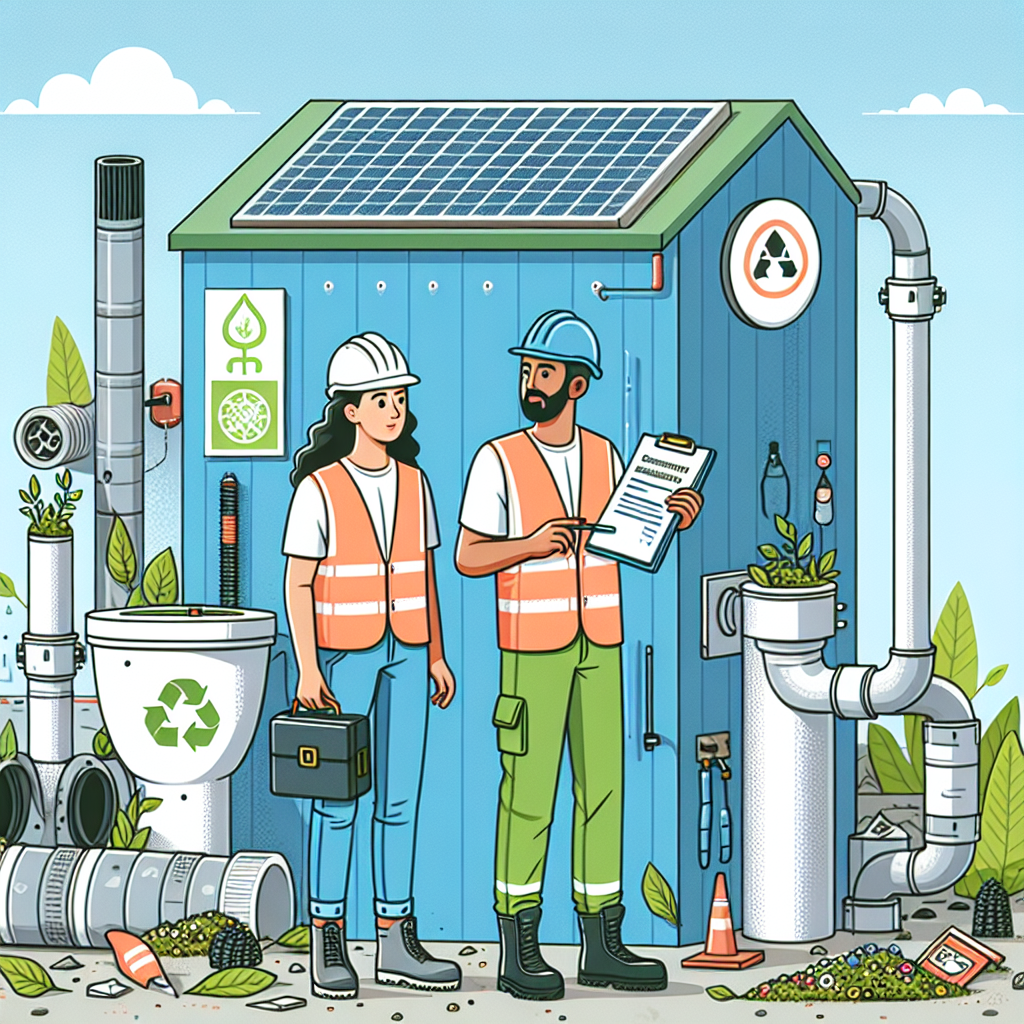
Ecological sanitation (EcoSan) offers an innovative approach to sanitation that aims to manage human waste in a way that harnesses its resource value. Unlike conventional sanitation systems that treat waste as a problem to be disposed of, EcoSan embraces the principles of sustainability, nutrient recovery, and resource efficiency. The implementation of EcoSan solutions can greatly impact public health, environmental sustainability, and even economic development. However, like any significant infrastructure project, EcoSan implementation demands rigorous quality assurance and standards to ensure its efficacy, reliability, and social acceptance.
Introduction
The central premise of EcoSan is to close the loop between sanitation and agriculture by recovering nutrients from human waste and reintegrating them into ecosystems as soil conditioners or fertilizers. This holistic approach addresses multiple global challenges, from water scarcity and food security to climate change and human dignity. However, to unlock the full potential of EcoSan systems, meticulous planning, implementation, and continual assessment are essential. Quality assurance in EcoSan not only guarantees that the systems operate effectively under various conditions, but it also ensures compliance with health and environmental regulations. Establishing robust standards provides a framework that harmonizes the efforts of different stakeholders, from engineers and policymakers to community members and non-governmental organizations (NGOs).
Importance of Quality Assurance in EcoSan
The importance of quality assurance in EcoSan implementation cannot be overstated. First, it ensures that the systems are built to endure and perform optimally under local conditions. Rigorous quality assurance processes encompass everything from the choice of materials to the construction methodology and the operation phases. This consistency reduces the likelihood of system failures, which can undermine user confidence and participation. Another critical aspect is public health safety. By adhering to stringent quality standards, EcoSan systems can prevent the contamination of water sources and soil, thus safeguarding community health. Appropriate design and maintenance are crucial to minimizing pathogen transmission and ensuring that the by-products of EcoSan systems, such as compost or treated urine, are safe for agricultural use. Lastly, effective quality assurance fosters community trust and boosts adoption rates. When community members see that EcoSan systems are reliable and beneficial, they are more likely to engage fully and use the systems as intended. This level of user buy-in is essential for the long-term sustainability of EcoSan projects.
Developing Standards for EcoSan
Developing standards for EcoSan systems is a multi-faceted process that involves input from various disciplines, including engineering, public health, and environmental science. Collaborations with international organizations such as the World Health Organization (WHO) and the International Organization for Standardization (ISO) can provide invaluable guidelines and best practices. The first step in developing standards is to conduct comprehensive research to understand the specific needs and challenges of the target community. This research should encompass local environmental conditions, cultural practices, and socio-economic factors. Once the fundamental parameters are understood, draft guidelines can be developed that address critical aspects like design, materials, construction techniques, and maintenance protocols. These draft guidelines should then be subjected to rigorous testing and refinement. This iterative process ensures that the standards are not only theoretically sound but also practically viable. Field trials and pilot projects can provide essential data on system performance and user feedback, which can then be used to make necessary adjustments.
Training and Capacity Building
An indispensable component of quality assurance in EcoSan implementation is training and capacity building. The success of EcoSan projects depends not only on the robustness of the technology but also on the knowledge and skills of those who implement and maintain the systems. Training programs should target a wide range of stakeholders, including engineers, construction workers, local government officials, and community members. These programs should cover all aspects of EcoSan technology, from the science behind human waste treatment and nutrient recovery to practical skills in system construction and maintenance. Capacity building initiatives should also include training on monitoring and evaluation techniques. Knowing how to assess system performance and identify potential issues early on can prevent small problems from becoming significant setbacks. Establishing local maintenance teams with the necessary technical knowledge ensures that the systems remain operational and effective in the long run.
Monitoring and Evaluation
Continuous monitoring and evaluation are pivotal for ensuring that EcoSan systems meet quality standards and continue to operate efficiently. Effective monitoring involves regular inspections and data collection on various performance metrics, such as nutrient recovery rates, pathogen removal efficiency, and user satisfaction. Evaluation should not be a one-time activity but an ongoing process that allows for the identification of trends and potential areas for improvement. Using modern tools and technologies, such as remote sensors and data analytics, can enhance the effectiveness of monitoring efforts. These tools enable real-time data collection and analysis, providing timely insights that can guide maintenance and improvement actions. Participatory evaluation methods that involve community members can also be highly beneficial. These methods empower users to take an active role in the management of EcoSan systems, fostering ownership and responsibility.
Challenges and Solutions
Implementing EcoSan systems comes with its own set of challenges. One of the most common challenges is the initial resistance from communities due to cultural taboos around human waste. Overcoming this resistance requires thoughtful community engagement and education to illustrate the benefits of EcoSan systems. Another significant challenge is funding and resource allocation. Building and maintaining EcoSan systems require financial investment, which may be a barrier in resource-constrained settings. Governments and NGOs can collaborate to secure funding and provide subsidies where necessary. Technical challenges, such as adapting EcoSan systems to varied environmental conditions, also need to be addressed. Innovative design solutions and materials that can withstand diverse climates and usage patterns are crucial. Research and development in this area can provide new insights and advancements that make EcoSan systems more adaptable and resilient.
Conclusion
The successful implementation of EcoSan systems hinges on robust quality assurance and the establishment of comprehensive standards. These elements ensure that EcoSan solutions are reliable, safe, and effective, which in turn fosters community trust and promotes widespread adoption. Developing tailored standards that take into account local conditions, coupled with rigorous testing and refinement, sets the foundation for quality EcoSan systems. Training and capacity building equip stakeholders with the necessary skills and knowledge to construct, maintain, and evaluate these systems effectively. Continuous monitoring and evaluation, supported by modern technologies and participatory methods, ensures the long-term functionality and success of EcoSan projects. As the world faces growing challenges related to water scarcity, food security, and environmental degradation, EcoSan presents a viable solution that aligns with sustainable development goals. By prioritizing quality assurance and standards, stakeholders can unlock the full potential of EcoSan systems, contributing to healthier communities and a more sustainable planet.