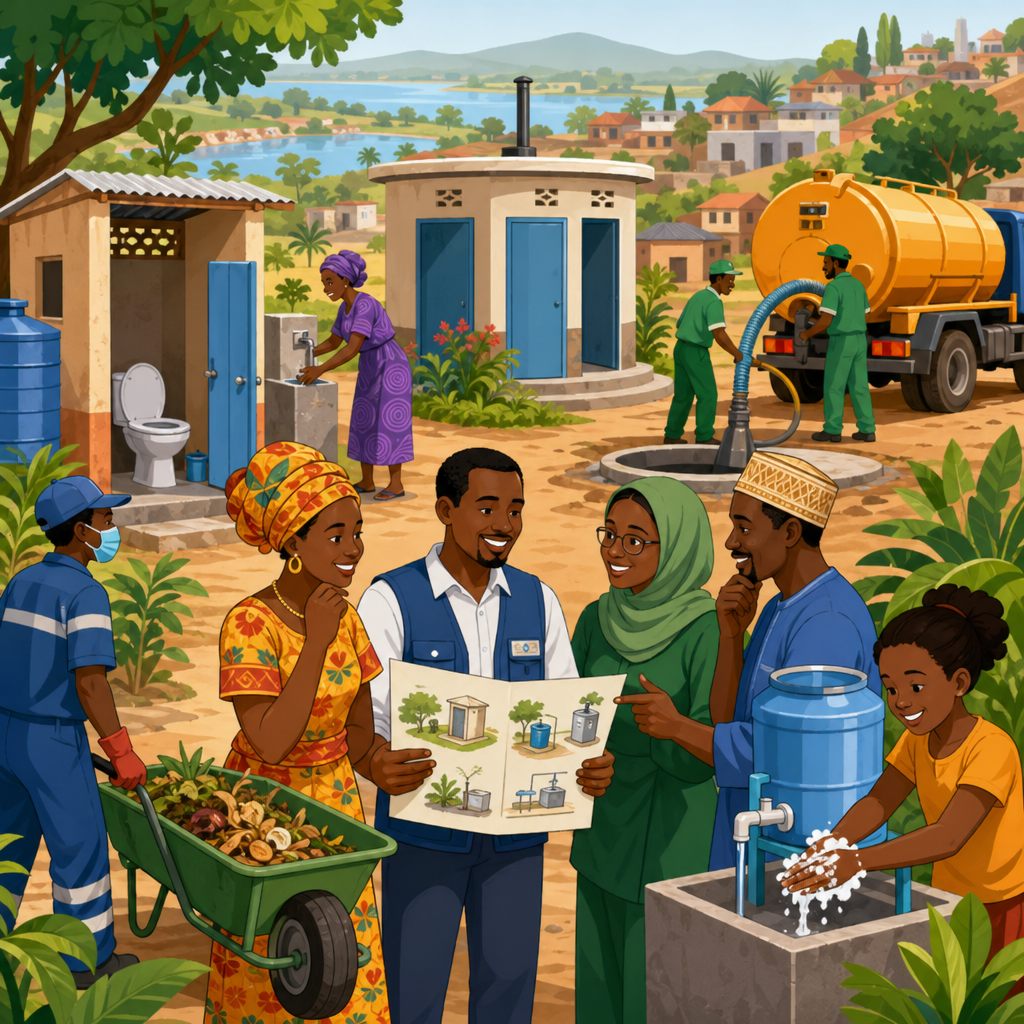
In an era where sustainability and innovation drive important societal changes, the intersection of technology and tradition illuminates promising pathways for addressing global challenges. One such domain experiencing transformative strides is sanitation—an essential component of human health, dignity, and social development. Ecological sanitation, often abbreviated as EcoSan, integrates these cutting-edge advancements with age-old practices to create sustainable sanitation solutions. These systems not only optimize waste management but also promote resource recovery, ultimately contributing to environmental preservation and enhanced public health. In this increasingly interconnected world, EcoSan solutions embody the dynamic potential of technology meeting tradition. Delving deep into these innovative approaches reveals how EcoSan is not merely about sanitation but is a holistic strategy to harness renewable resources and empower communities. From composting toilets to urine diversion systems, the initiatives born from EcoSan principles are diverse, robust, and deeply rooted in traditional understanding, marrying modern technological acumen with age-old sustainability practices. Through innovative EcoSan solutions, the sanitation sector is embarking on an exciting journey toward a future where waste is not a dilemma, but a resource, capturing the essence of a circular economy.
Understanding EcoSan: A Symbiosis of Tradition and Technology
Ecological sanitation is a forward-thinking approach that respects the wisdom embedded in traditional methods of waste management, adapting these methods with today’s technological advancements to align with contemporary ecological demands. At its core, EcoSan is designed to close the loop of nutrients, purifying waste and reintroducing it into nature in a safe, sustainable, and beneficial way. Traditional practices like composting have been pivotal for centuries in recycling nutrients back into the soil. Today, these age-old insights are augmented by advanced technologies that sanitize waste more effectively and offset the infrastructure’s carbon footprint.
Composting toilets, for example, which have roots in ancient Chinese and Roman practices, have been technologically enhanced to optimize decomposition rates and minimize odor, making them more applicable in urban environments. Modern urine-diversion toilets are based on historical sanitation principles from various cultures that separated waste streams to facilitate reuse and resource recovery. Contemporary EcoSan solutions build upon these practices with advancements in materials and design, ensuring systems are user-friendly and effective in diverse environments, from densely populated cities to rural communities with limited access to sanitation infrastructure.
Technological Innovations Fueling EcoSan Solutions
Technological advancements play a critical role in amplifying the effectiveness and efficiency of EcoSan solutions, providing communities with sustainable and practical sanitation alternatives. One exemplary development includes the integration of sensor technology within composting systems. These sensors monitor humidity and temperature, providing real-time data that helps optimize composting conditions, enabling the timely intervention to ensure efficient processing without human oversight.
Moreover, advancements in material science have led to the development of durable and sustainable sanitation hardware. Modern materials offer longevity and reduce ecological footprints by requiring less frequent replacement and allowing for eco-friendly disposal methods. These materials ensure that the sanitation systems are biodegradable or recyclable, adhering to the principles of a circular economy. In addition, solar power has been harnessed to provide energy-efficient solutions, such as solar-powered incineration toilets, which can transform human waste into sterile ash using minimal energy, a testament to sustainable sanitation innovation that honors traditional knowledge.
The Role of Community Engagement and Cultural Sensitivity
Technology in sanitation cannot thrive without genuine community engagement and respect for cultural practices. Successful EcoSan projects are those that are tailored to fit the cultural, economic, and environmental contexts of the community. Participatory approaches that involve local communities in planning, decision-making, and management are critical for ensuring that these systems are correctly implemented and maintained.
Cultural sensitivity further emphasizes the importance of understanding and respecting local practices and beliefs concerning sanitation. Solutions that harmonize with community beliefs are more likely to be accepted and maintained over time. Training programs that equip locals with the skills to manage and repair EcoSan systems ensure long-term sustainability and empowerment, transforming the technological solution into a community-owned asset. This mutual exchange enhances community resilience and reinforces the critical role of tradition in contemporary technological solutions.
Case Studies: Successful Implementation of EcoSan Systems
Various successful case studies illustrate the impactful implementation of EcoSan systems worldwide, offering a template for how these innovative designs can be replicated and adapted. In Sweden, a leader in sustainable living, urine-diverting toilets have been successfully integrated into many households, showcasing a model for nutrient recovery. The diversion and subsequent use of urine as a fertilizer has contributed significantly to reducing the country’s dependency on chemical fertilizers, demonstrating ecological efficiency on a national scale.
In Kenya, the use of portable compost toilets in rural areas has provided a safe and sustainable sanitation solution in resource-scarce settings. These systems are championed for their simplicity and reliance on locally available materials, promoting the notion that effective EcoSan systems do not necessitate a high cost or complexity, but can indeed be rooted in the principles of innovation meeting tradition.
In densely populated urban areas like Dhaka, Bangladesh, implementing community-centric sludge management systems has underscored the importance of multi-faceted EcoSan approaches. These systems employ advanced treatment technologies that detoxify and convert waste into usable, safe compost, highlighting technology’s role in managing waste sustainably and enhancing urban sanitation infrastructure.
Challenges and Future Prospects of EcoSan Systems
Despite their innovative potential, EcoSan systems encounter several challenges that must be navigated to realize their full impact. Financial constraints, resistance to adopt new technologies, and limited infrastructure in certain regions pose significant barriers. Education and awareness-raising are critical to overcoming misconceptions about ecological sanitation’s efficacy and importance. Where traditional methods form the base of sanitation practices, integrating modern technologies must be carried out with regard to existing cultural dynamics to ensure acceptance.
However, the prospects are encouraging. With increased investment and international collaboration, EcoSan systems are poised to scale, delivering wide-reaching benefits. Encouragingly, international organizations, governments, and NGOs are increasingly aware of the dual role that EcoSan systems can play in achieving environmental and public health objectives. Continued research and technological innovation will remain pivotal in refining and diversifying these systems, fitting them seamlessly into more varied cultural and geographic contexts. Future systems might further integrate digital technologies like artificial intelligence to achieve smarter waste processing, elevating efficiency and autonomy to new heights.
Conclusion
EcoSan represents a fusion of traditional practices and modern technological advances, responding to the compelling need for sustainable sanitation solutions in a world grappling with climate change, resource scarcity, and growing populations. It opens doors to a world where waste becomes a valuable resource, aligning with circular economy principles and promoting healthier ecosystems and communities. While challenges exist in the adoption and implementation of EcoSan systems, the gains—ranging from ecological to socio-economic—are profound.
By fostering community engagement, respecting traditional practices, and leveraging cutting-edge technology, EcoSan systems not only embrace but exemplify sustainable development, providing key insights for other sectors to follow. As we move forward in seeking ways to live harmoniously with our environment, EcoSan will undoubtedly stand as a testament to the power of technology meeting tradition, championing the creation of sustainable, resilient communities globally.
Frequently Asked Questions
1. What exactly is Ecological Sanitation (EcoSan), and how does it differ from traditional sanitation methods?
Ecological Sanitation (EcoSan) is an innovative approach to waste management that challenges traditional sanitation methods by integrating sustainable practices and technology. While conventional systems often involve water-intensive processes, resulting in wastewater that can contaminate the environment, EcoSan is fundamentally designed to prevent pollution, conserve resources, and transform waste into useful by-products. This includes the recovery and reuse of nutrients found in human waste, turning it into safe fertilizers or biogas, thereby closing the nutrient loop. Traditional methods, such as flushing toilets, largely focus on transporting waste away from the source, typically to a treatment facility, relying heavily on water and leading to potential environmental degradation. EcoSan, on the other hand, aligns with environmental sustainability and human health by promoting closed-loop systems and minimizing water use. It incorporates concepts from both cultural practices, such as composting, and modern advancements like anaerobic digestion technology.
2. How does technology enhance the effectiveness of EcoSan systems, and what role does tradition play?
Technology is a cornerstone of EcoSan systems, offering innovative solutions for waste treatment and conversion. Technologies such as biogas digesters, composting toilets, and urine-diverting dry toilets (UDDTs) enable the transformation of waste into valuable resources like energy and fertilizers. Intelligent systems monitor processes, optimize operations, and ensure safety standards are met, increasing the viability and efficiency of EcoSan solutions. These technologies elevate sanitation from merely a waste disposal issue to a resource management opportunity. On the flip side, tradition plays a crucial role by providing foundational principles that respect natural processes and cultural practices. For instance, composting has been used for centuries as a natural way to enrich soil, and many cultures have long utilized waste organically in agriculture. Technology and tradition together ensure that EcoSan solutions are not only efficient and sustainable but also culturally acceptable and adaptable to local contexts.
3. What are the environmental benefits of adopting EcoSan solutions?
EcoSan solutions significantly mitigate environmental impact by promoting the recycling and safe disposal of waste. They reduce water usage, which is particularly important in water-scarce areas, by utilizing methods that minimize or eliminate the need for water in waste processing. By converting waste into biogas or fertilizers, EcoSan systems contribute to a circular economy, reducing the need for synthetic fertilizers and lowering methane emissions associated with untreated waste. Furthermore, these systems prevent the contamination of water bodies usually affected by traditional wastewater discharge, thereby protecting aquatic ecosystems and preserving biodiversity. The reduction in greenhouse gas emissions due to the avoidance of chemical fertilizers and controlled waste decomposition furthers the environmental agenda, combating climate change while enhancing soil health and agricultural productivity, ultimately linking environmental sustainability with economic growth.
4. Are EcoSan systems suitable for urban as well as rural areas, and if so, how are they implemented differently?
EcoSan systems are versatile and suitable for both urban and rural contexts, though their implementation varies. In rural areas, where there is often more space available, simpler solutions like compost toilets or integrated biogas systems are common. These systems can be community-managed, leveraging local materials and traditions to maintain operations. They serve small populations sustainably with low capital investment. In urban settings, the challenge is integrating EcoSan into existing infrastructure while catering to higher population densities. Here, advanced technologies and centralized systems like treatment facilities that can handle the increased volume and complexity of waste streams are essential. Urban EcoSan systems may include decentralized sanitation units coupled with biogas plants that handle sewage from multiple households or even neighborhoods. These systems require more sophisticated management and potentially greater initial investment but offer powerful benefits in reducing the strain on municipal services and environmental resources.
5. What are the potential social and economic impacts of implementing EcoSan solutions in communities?
The social and economic impacts of EcoSan are profound and multi-dimensional. Socially, EcoSan supports public health by reducing pathogen exposure and improving sanitation conditions, consequently decreasing the incidence of sanitation-related diseases. This improvement in community health can lead to increased productivity and reduced healthcare costs, enhancing overall quality of life. Economically, EcoSan solutions provide opportunities for entrepreneurs and communities by generating resources like organic fertilizers and renewable energy, fostering local economies, and creating jobs in manufacturing, installation, and maintenance of systems. They also offer cost savings by reducing the infrastructure demands on municipal sewage systems. Moreover, EcoSan systems empower communities by promoting self-reliance through local management and operation. Educational programs often accompany EcoSan projects, building capacity and raising awareness about sustainable practices, ultimately ingraining a culture of sustainability that benefits both current and future generations.