Sanitation is often described as a public health service, yet it is equally an economic system shaped by infrastructure finance, labor markets, urban planning, resource recovery, and household purchasing power. In the global economy of sanitation, money flows from public budgets, donor programs, tariffs, landlords, manufacturers, transport operators, farmers, and utilities, creating a chain of costs and value that extends far beyond the toilet. When that chain is inefficient, cities absorb disease burdens, productivity losses, water contamination, and rising treatment expenses. When it works, sanitation supports healthier workers, more resilient neighborhoods, cleaner waterways, and new markets for compost, biogas, recycled water, and sanitation services.
EcoSan, short for ecological sanitation, is a family of approaches that treats human waste as a resource stream rather than only a disposal problem. In practice, that includes urine diversion, composting toilets, container-based sanitation, fecal sludge treatment linked to agriculture, blackwater reuse, and nutrient recovery systems that turn nitrogen, phosphorus, organic matter, and energy into useful products. I have worked with sanitation business cases where the most important question was not technology selection alone, but whether the full service chain could pay for itself over time without sacrificing safety. That is why economic strategies in EcoSan matter: they determine whether pilots become durable services, whether recovery products find real buyers, and whether low-income households are included rather than priced out.
This hub article maps the main economic trends and prospects shaping sanitation worldwide, with a focus on EcoSan. It explains how the market is structured, what cost drivers matter most, where revenue can realistically come from, and which policy tools improve viability. It also clarifies a key point often missed in public debate: sanitation rarely succeeds as a single-product market. It performs better as a blended service economy, where user fees, public subsidy, carbon value, agricultural demand, and municipal regulation work together. Understanding that blended model is essential for governments, utilities, investors, NGOs, and businesses planning the next generation of sanitation systems.
How the sanitation economy is structured
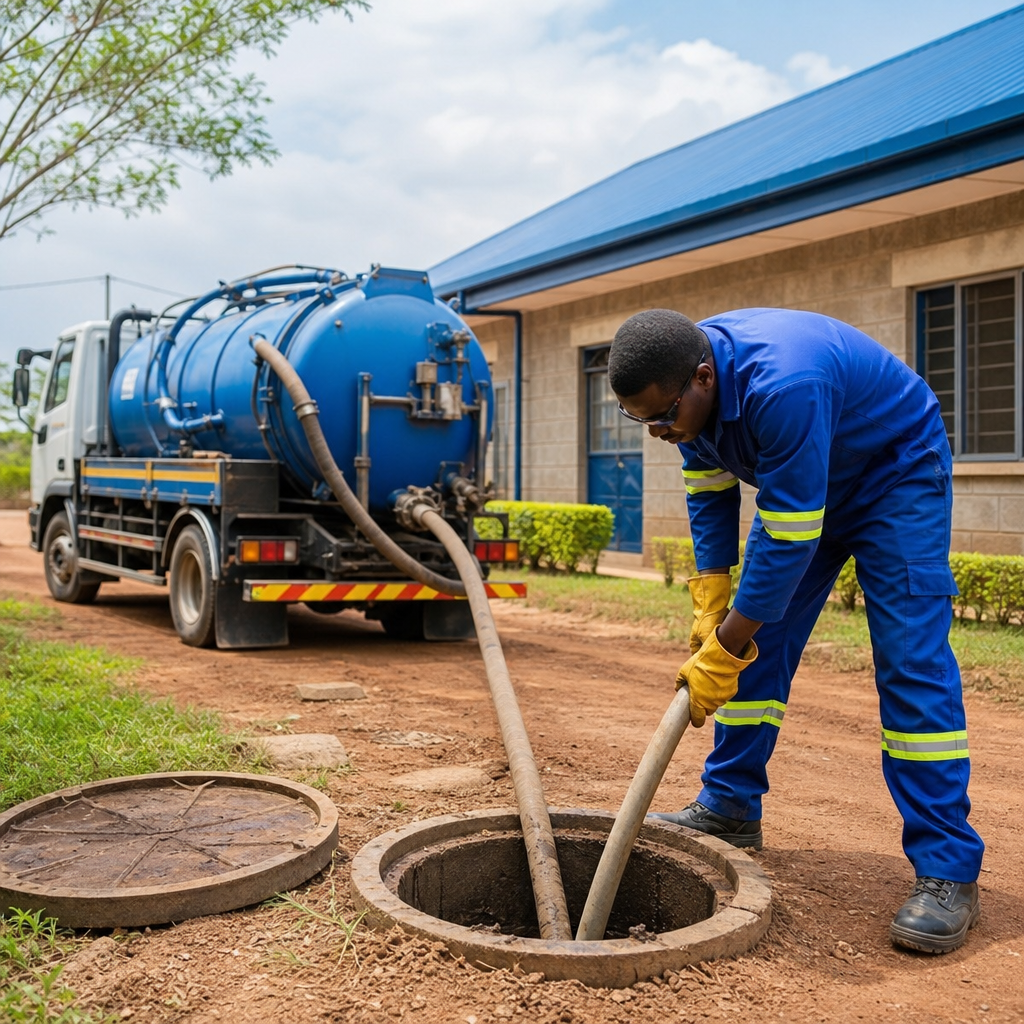
The sanitation economy includes the entire service chain: containment, emptying, transport, treatment, reuse, disposal, regulation, and customer support. In sewered systems, costs are concentrated in network construction, pumping, wastewater treatment, and long-term maintenance. In non-sewered systems, especially in fast-growing cities across Africa and South Asia, costs are spread across household toilet construction, pit or tank emptying, haulage, treatment, and safe end use or disposal. EcoSan modifies this chain by designing systems to separate waste streams and capture value earlier, which can reduce water use, lower treatment loads, and create products with market value.
Global demand is large because sanitation deficits remain large. According to WHO and UNICEF joint monitoring, billions of people still lack safely managed sanitation, and hundreds of millions use unimproved or shared facilities that leave waste unmanaged. That service gap represents both a public failure and a market opportunity. However, sanitation demand is not like demand for mobile phones or packaged food. Households often buy the visible front-end toilet but underpay for the invisible back-end service chain. That mismatch is one reason fecal sludge management has become a major economic priority: the toilet is not the service unless waste is safely removed and treated.
EcoSan sits within this broader market as a strategic subset, most relevant where water is scarce, sewers are unaffordable, nutrients are valuable, or decentralized treatment makes more sense than centralized plants. The economic logic is strongest where transport distances are manageable, agricultural users are nearby, and institutions can enforce basic quality standards for recovered products. It is weaker where land is expensive, cultural acceptance is low, or product off-take is uncertain. Good strategy begins by matching the model to local conditions rather than assuming every sanitation problem can be solved by either sewers or composting alone.
Core economic strategies in EcoSan
Economic strategies in EcoSan are built around reducing lifecycle cost while increasing recoverable value. The first strategy is source separation. Urine-diverting systems can reduce pathogen mixing and concentrate nutrients in streams that are cheaper to process into fertilizer products. The second strategy is decentralized treatment. Instead of transporting diluted waste over long distances, systems treat material near the point of generation, often lowering capital intensity and avoiding major pipe networks. The third strategy is service bundling, where sanitation operators combine toilet provision, collection, treatment, and product sales into one business model, improving customer retention and cash flow visibility.
A fourth strategy is cross-subsidization. In several urban sanitation programs, higher-income users, commercial premises, or municipal funds absorb part of the cost for poorer households because the public benefits of safe sanitation justify shared financing. A fifth strategy is product diversification. Relying only on compost sales is risky; stronger models combine multiple outputs such as compost, briquettes, biogas, insect protein feed, or treated water for landscaping and industrial use. A sixth strategy is formalization of informal operators. In many cities, pit emptiers and sludge transporters already provide critical services, but they operate with weak regulation, unsafe practices, and unstable pricing. Bringing them into licensed systems increases reliability and improves tax and fee collection.
| Strategy | Main economic benefit | Best-fit context | Primary limitation |
|---|---|---|---|
| Source separation | Lower treatment cost and nutrient recovery | Water-scarce areas, new developments | User behavior and maintenance demands |
| Decentralized treatment | Avoids large sewer capital costs | Peri-urban growth zones, small towns | Needs strong local operations |
| Service bundling | Predictable recurring revenue | Container-based or managed onsite systems | High logistics discipline required |
| Cross-subsidization | Improves affordability and inclusion | Municipal or utility-led programs | Depends on policy commitment |
| Product diversification | Reduces dependence on one buyer market | Agricultural and energy-linked systems | More complex operations |
These strategies work best when planners use full-cost accounting. In my experience, many sanitation pilots look profitable only because they exclude behavior change, customer support, replacement parts, sludge quality monitoring, or market development for reuse products. A credible EcoSan business case includes capital expenditure, operations and maintenance, compliance, residual disposal, and the cost of building trust with customers and buyers. It also distinguishes financial return from economic return. A composting toilet franchise may have modest private margins but still produce strong social returns by reducing disease, flood pollution, and groundwater contamination.
Investment trends, financing models, and public policy
Sanitation finance has shifted from hardware-focused grants toward mixed models that combine public capital, concessional debt, climate finance, utility revenues, and private operations. This shift matters for EcoSan because decentralized systems often need catalytic support in the early years but can sustain portions of the service chain through recurring fees and product sales. Development banks increasingly fund citywide inclusive sanitation, a framework that recognizes sewered and non-sewered systems as complementary. That has created more space for fecal sludge treatment plants, transfer stations, scheduled desludging, and resource recovery facilities within official municipal investment plans.
Public policy remains the most important market maker. Governments set building codes, effluent standards, sludge regulations, land-use rules, fertilizer approvals, and tariff policies that determine whether EcoSan can scale. For example, if compost derived from treated biosolids cannot receive a clear quality classification, agricultural buyers hesitate. If utilities are not allowed to recover sanitation costs through tariffs or taxes, service quality deteriorates. If municipalities fail to designate legal discharge points, transporters dump illegally because the private incentive favors speed over compliance. Strong policy does not eliminate market discipline; it creates the conditions under which responsible operators can compete.
Several financing models are especially relevant. Output-based aid ties subsidy to verified service delivery, which can work well for toilet installation or treatment volumes. Results-based climate finance is emerging where methane reduction, nutrient recovery, or avoided wastewater energy use can be measured. Blended finance can reduce risk for first-of-a-kind resource recovery facilities, especially where commercial lenders view sanitation as unfamiliar. Microfinance helps households invest in toilets, but it is less effective for back-end service chains unless paired with municipal planning. The most durable systems usually combine household contribution, local government support, and a regulated operating model rather than depending on donor funding alone.
Market opportunities in reuse, circularity, and local enterprise
The strongest long-term prospect in EcoSan is circular value creation, but it must be grounded in real market demand. Agriculture is the most cited opportunity because human waste contains nutrients that can substitute for synthetic fertilizer, especially phosphorus and nitrogen. Yet recovered products only sell when they are safe, consistent, affordable, and easy to apply. Farmers compare nutrient concentration, transport cost, odor, pathogen risk, and timing of nutrient release. That means pelletized fertilizers, co-compost blended with organic waste, or struvite recovery can outperform raw compost even if processing costs are higher, because the product better matches buyer expectations.
Energy recovery is another growth area. Anaerobic digestion can produce biogas for cooking, electricity, or heat, while dried sludge can be turned into fuel briquettes or used in co-processing for cement kilns. These pathways are attractive where fuel markets are strong and moisture content can be managed cost-effectively. I have seen projects fail because developers assumed biogas revenue would carry the entire business. In reality, digestion economics depend on feedstock stability, gas utilization equipment, maintenance capacity, and a buyer or captive use case. Energy can be a valuable revenue stream, but rarely the only one.
Local enterprise opportunities are substantial across the sanitation chain. Small firms can manufacture urine-diversion pans, run collection routes, maintain decentralized treatment units, market compost to peri-urban farmers, or digitize customer scheduling and payments. Container-based sanitation has shown how service design can turn sanitation into a subscription business, particularly in dense informal settlements where pits are impractical and sewers absent. Digital tools now support route optimization, mobile money billing, asset tracking, and treatment plant reporting, reducing leakage and improving accountability. The broader lesson is clear: sanitation jobs are created not only in construction but in recurring service operations, quality control, logistics, and product distribution.
Risks, constraints, and what will shape future prospects
Despite its promise, EcoSan faces four recurring constraints: social acceptance, regulatory ambiguity, uneven unit economics, and operational discipline. Households may resist handling separated waste streams or distrust reuse products. Regulators may apply wastewater rules to decentralized systems in ways that are impractical or unclear. Operators may discover that transport and labor costs erase expected margins. And systems that look robust on paper can fail if lids, seals, vents, storage containers, or collection intervals are poorly managed. Sanitation is unforgiving of weak operations because small lapses quickly become health risks.
Future prospects depend on how well cities and investors respond to these realities. Climate stress will increase interest in water-saving sanitation and nutrient recovery. Urban expansion will keep favoring non-sewered and hybrid models in areas where pipe networks cannot keep pace. Carbon markets may modestly improve project economics, especially for methane avoidance, but they will not replace sound fee and subsidy design. Better data will matter as much as better technology. Utilities and municipalities need cost benchmarks, treatment performance records, customer churn data, and product off-take contracts to make rational decisions. The next decade will reward sanitation systems that are measurable, service-oriented, and integrated with agriculture, energy, and solid waste planning.
The global economy of sanitation is no longer only about building toilets; it is about financing complete services and capturing value without compromising safety. EcoSan offers practical economic strategies where conventional sewer expansion is too slow, too expensive, or poorly matched to local resource conditions. The most successful models treat sanitation as a managed service, not a one-time installation, and they combine public support with disciplined operations, credible regulation, and realistic reuse markets. Source separation, decentralized treatment, cross-subsidies, and diversified revenue streams can all improve resilience when they are chosen for the right context.
For decision-makers working in the economic aspects of sanitation, the main takeaway is simple: viability comes from the whole system. A toilet, a treatment unit, or a compost product is never enough by itself. Strong sanitation economics depend on lifecycle costing, verified service delivery, market-tested end products, and policy rules that reward safe behavior. Use this hub as the starting point for deeper work on financing, fecal sludge management, reuse markets, utility reform, and inclusive business models. The opportunity is substantial, but success belongs to those who design for operations, affordability, and long-term value from the beginning.
Frequently Asked Questions
1. Why is sanitation considered part of the global economy, not just a public health service?
Sanitation is part of the global economy because it operates through interconnected financial, industrial, and labor systems that extend well beyond the construction of toilets or sewer networks. Every sanitation service depends on capital investment, maintenance spending, regulation, land use decisions, transport logistics, technology supply chains, and the ability of households, businesses, and governments to pay for services over time. Public budgets may fund treatment plants, donors may subsidize expansion, private firms may manufacture pipes, pumps, and toilets, landlords may pass sanitation costs into rents, and small operators may earn income from pit emptying, transport, or waste processing. In other words, sanitation creates and depends on markets.
It also generates broad economic effects. Efficient sanitation reduces disease burden, lowers healthcare spending, improves school attendance, raises worker productivity, protects tourism and real estate values, and supports more predictable urban growth. Poor sanitation does the opposite: it increases medical costs, depresses labor output, damages water resources, and forces cities to spend more on emergency responses and environmental cleanup. Because sanitation affects public finance, employment, household expenditure, industrial procurement, and agricultural reuse opportunities, it should be understood as a productive economic system as much as a health intervention.
2. What are the main economic components in the sanitation value chain?
The sanitation value chain includes every stage from user access to final treatment, disposal, or reuse, and each stage carries distinct costs, revenue possibilities, and governance challenges. At the front end are household and institutional investments in toilets, containment systems, plumbing, and connections. These costs are often paid by families, landlords, employers, schools, or public agencies, and affordability at this stage strongly influences whether people adopt safe sanitation in the first place.
Next come service and operational components such as cleaning, pit emptying, septic tank maintenance, sewer collection, pumping, transport, treatment, and monitoring. These activities rely on workers, fuel, vehicles, spare parts, utilities, and management systems. In many low- and middle-income settings, small-scale private operators play a major role in moving waste through the system, especially where sewer networks are incomplete. Their work is economically essential, even if it is poorly regulated or socially undervalued.
The final component is end-use or end-disposal. Treated sludge and wastewater can sometimes be converted into compost, soil conditioners, energy, industrial water, or agricultural inputs, creating opportunities for resource recovery. However, these opportunities only become financially meaningful when treatment quality, transport reliability, market demand, and regulation all align. If one link fails, the whole chain becomes inefficient. That is why sanitation economics is not just about building infrastructure; it is about making each step financially viable, socially accepted, and operationally coordinated.
3. What major trends are shaping the global sanitation economy today?
One major trend is the shift from infrastructure-only thinking to service-chain thinking. Policymakers and investors increasingly recognize that sanitation outcomes depend not only on building toilets or treatment plants, but on financing the entire system that connects containment, collection, transport, treatment, and safe reuse or disposal. This has led to greater attention to fecal sludge management, decentralized systems, peri-urban service models, and business approaches that can work where full sewering is too expensive or slow to expand.
A second trend is the growing focus on blended finance and more diversified funding structures. Governments continue to play a central role, but sanitation is increasingly supported through combinations of public capital, development finance, donor grants, climate-related funding, utility revenues, user tariffs, microfinance, landlord investment, and private service contracts. This reflects a practical reality: sanitation rarely pays for itself entirely through tariffs, especially in lower-income communities, so sustainable financing often requires multiple sources.
A third trend is the rise of circular economy thinking. More cities and utilities are exploring how treated wastewater and sludge can be reused for energy generation, irrigation, fertilizer products, or industrial applications. While resource recovery does not solve every financing gap, it can improve cost recovery and create new markets when systems are well designed. At the same time, digital tools are improving route planning, payment collection, customer management, and service monitoring, making informal or fragmented systems more visible and efficient.
Finally, climate resilience and urbanization are becoming central economic drivers. Rapid city growth is increasing demand for sanitation infrastructure, especially in informal settlements and fast-expanding secondary cities. Meanwhile, floods, droughts, and heat stress are forcing governments to redesign systems to withstand environmental shocks. These pressures are making sanitation a more strategic investment category, tied not only to health and dignity but also to economic resilience, water security, and long-term urban competitiveness.
4. Why does inefficient sanitation create such large economic losses for cities and countries?
Inefficient sanitation creates economic losses because its failures ripple across multiple sectors at once. When waste is not safely contained, collected, transported, and treated, communities experience higher rates of diarrheal disease, parasitic infections, undernutrition, and other health problems. That drives up healthcare costs for families and governments, while also reducing productivity through missed workdays, lower physical capacity, and weaker educational outcomes for children. These losses are not abstract. They directly affect labor markets, household income, and public budgets.
Cities also pay an infrastructure penalty. Poor sanitation contaminates drains, rivers, groundwater, and public spaces, which increases the costs of water treatment, flood management, environmental rehabilitation, and emergency maintenance. Informal dumping and system blockages can shorten the life of public assets and undermine investments in roads, housing, and commercial development. In dense urban areas, sanitation failures can reduce land values, discourage tourism, and make industrial and residential expansion more costly. That means sanitation inefficiency functions like a drag on urban productivity.
At the national level, these effects accumulate into slower economic growth and greater inequality. Low-income households often pay more per unit of safe service when formal systems are absent, because they rely on expensive informal providers or repeated coping costs. Meanwhile, sanitation workers may operate in unsafe, low-status jobs with limited protections, reducing the sector’s overall efficiency and social sustainability. In short, inefficient sanitation is expensive not because the service itself is costly, but because neglect shifts hidden costs onto health systems, workers, women and caregivers, ecosystems, and city finances.
5. What are the future prospects for the global sanitation economy?
The future prospects are significant, but they depend on whether countries treat sanitation as a long-term economic system rather than a one-time construction challenge. Demand will continue to grow because of urbanization, population growth, rising consumer expectations, industrial development, and climate pressure on water and waste systems. This creates major opportunities for infrastructure developers, utilities, equipment manufacturers, digital service providers, engineering firms, waste transport operators, and resource recovery businesses. It also creates space for innovation in financing, including targeted subsidies, performance-based contracts, impact investment, and household credit for sanitation improvements.
One promising area is the expansion of inclusive service models that better serve low-income and informal urban communities. Rather than waiting for universal sewer coverage, many cities are investing in hybrid systems that combine onsite sanitation, transfer stations, treatment hubs, and regulated private operators. If managed well, these systems can generate employment, improve service reliability, and reduce health and environmental losses at lower cost than conventional network expansion alone. This is especially relevant in rapidly growing cities where infrastructure needs outpace public budgets.
Another strong prospect lies in linking sanitation to broader development agendas such as climate adaptation, water reuse, energy transition, and food system resilience. Treated wastewater can help address water scarcity, while biosolids and sludge-derived products can support soil restoration or energy generation in some contexts. These opportunities will not replace the need for public investment, but they can improve the economic case for modern sanitation systems.
Overall, the outlook is strongest where governments strengthen regulation, improve cost recovery without excluding the poor, professionalize the workforce, support local private participation, and plan sanitation alongside housing, drainage, and water supply. The global sanitation economy is likely to become more visible, more technologically enabled, and more integrated with urban development and environmental policy. The core prospect is clear: when sanitation is financed and managed well, it does not merely prevent disease; it supports stronger cities, healthier labor markets, and more resilient economic growth.