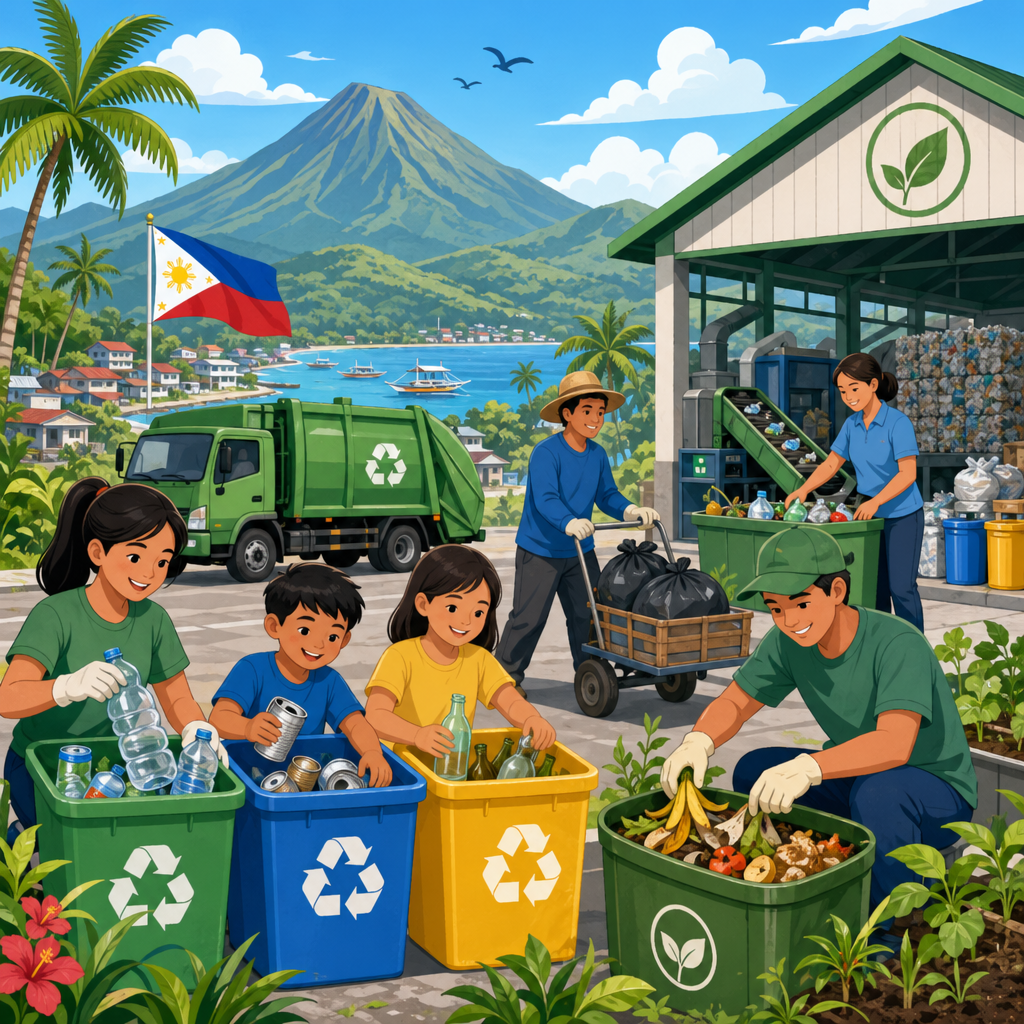
Transforming water management in Odisha and Andhra Pradesh requires more than new pipes, pumps, or treatment plants. It demands a shift in how communities, utilities, planners, and farmers value water, sanitation, nutrients, and local ecosystems as one connected system. In this hub article on showcasing global EcoSan successes, EcoSan refers to ecological sanitation: approaches that safely recover water, nutrients, and energy from human waste rather than treating sanitation only as disposal. Water management includes drinking water supply, wastewater treatment, stormwater control, groundwater recharge, irrigation efficiency, and fecal sludge management. Odisha and Andhra Pradesh matter because both states combine fast urban growth, climate stress, cyclone exposure, groundwater pressure, and large rural populations. I have worked on sanitation and water planning projects where the hardest lesson was simple: isolated infrastructure fails, but circular systems endure. These states now offer practical examples of how decentralized treatment, reuse, source separation, faecal sludge treatment plants, wetland restoration, and community-led governance can improve resilience, public health, and farm productivity at the same time. Their experiences also connect to a wider global story. From Sweden’s urine diversion research to South Africa’s decentralized sanitation pilots and India’s own faecal sludge management reforms, the strongest results come when institutions design for recovery, not waste. This article maps the major themes, lessons, and replicable models, serving as a hub for deeper case studies on EcoSan success stories across regions.
Why EcoSan matters for water-stressed coastal states
Odisha and Andhra Pradesh face a distinctive water management challenge: they experience both water scarcity and water excess. Seasonal droughts, saline intrusion in coastal aquifers, flooding during cyclones, and contamination from poorly managed sewage often occur within the same district. Traditional sanitation systems, especially septic tanks without proper desludging and discharge controls, can pollute drains, canals, ponds, and shallow groundwater. In peri-urban areas, expanding households outpace sewer networks, creating a gap that centralized systems alone cannot close. EcoSan matters here because it reduces freshwater demand, limits nutrient losses, and creates local reuse options. In practical terms, that means treated wastewater for landscaping or agriculture, composted biosolids for soil conditioning, and urine-derived nutrients as fertilizer where regulations and acceptance allow. It also means reducing the transport burden on already stretched municipalities.
The strongest water management programs in these states now combine centralized and decentralized solutions. In smaller towns, faecal sludge treatment plants have become especially important because most households rely on on-site containment. Odisha was an early leader through statewide planning for faecal sludge and septage management, backed by scheduled desludging and city-level service delivery models. Andhra Pradesh has advanced reuse-oriented wastewater thinking through urban development projects, irrigation linkages, and village sanitation initiatives tied to water security. The larger lesson is clear: water management improves when sanitation is treated as a resource stream, not an end-of-pipe problem.
Odisha’s shift from sanitation gaps to resource recovery
Odisha’s progress stands out because it moved beyond toilet construction to the less visible but more decisive layers of service delivery. Cities such as Bhubaneswar and smaller urban local bodies adopted structured faecal sludge management frameworks, including containment mapping, desludging protocols, treatment infrastructure, and operator roles. This matters because a toilet only protects health when the full chain works: capture, emptying, transport, treatment, and safe reuse or disposal. In field reviews, I have repeatedly seen towns celebrate coverage numbers while sludge still reaches water bodies untreated. Odisha’s stronger municipalities addressed that operational gap.
A notable success factor has been the use of faecal sludge treatment plants designed for the realities of non-sewered towns. These plants often use drying beds, planted gravel filters, co-composting, or other low-energy processes better suited to variable sludge characteristics than conventional sewage treatment alone. The technology choice is not glamorous, but it is appropriate. It lowers operating costs, simplifies maintenance, and allows treated outputs to be considered for landscaping, forestry, or agriculture under controlled conditions. The state’s approach also benefited from partnerships among urban local bodies, technical support organizations, and development agencies that helped standardize planning templates, procurement, and operator training.
Another strength in Odisha has been linking sanitation to watershed and public health goals. Where drains previously carried mixed greywater and sludge into ponds, interventions that improved desludging and treatment reduced localized contamination risks. Better sludge management protects not only downstream users but also workers, especially emptying operators who are often exposed to unsafe handling conditions. Resource recovery becomes credible only when worker safety, treatment performance, and end-use quality are all monitored together.
Andhra Pradesh’s integrated water management opportunity
Andhra Pradesh approaches water management from a broader basin and agriculture perspective, which creates a useful foundation for EcoSan integration. The state’s irrigation systems, aquaculture zones, expanding municipalities, and industrial corridors put heavy pressure on surface water and groundwater alike. In such contexts, wastewater reuse is not a niche idea; it is a strategic necessity. Cities that treat sewage and septage to reliable standards can offset freshwater use in parks, construction, industry, and selected agriculture. That frees higher-quality water for domestic supply and reduces pollution loads entering rivers and tanks.
What makes Andhra Pradesh especially important for a global EcoSan hub is its potential to combine decentralized sanitation with circular nutrient management at scale. Rural and peri-urban settlements can benefit from twin-pit systems, urine diversion in suitable contexts, biodigesters for institutional settings, and decentralized wastewater treatment systems where sewer expansion is impractical. In practice, no single model fits every settlement. High water table zones need different containment choices than dry inland mandals. Dense coastal settlements may prioritize compact treatment and reuse. Schools, hostels, markets, and bus terminals are strong candidates for modular systems because user loads are concentrated and maintenance can be assigned clearly.
The state’s development trajectory also makes monitoring and governance critical. Reuse only works when quality standards, asset management, and user confidence are strong. A plant that runs well for six months and then fails due to power costs, poor desludging schedules, or missing spare parts does not transform water management. Andhra Pradesh’s opportunity lies in building financially sustainable service chains with measurable outcomes.
What global EcoSan success stories teach these states
Global EcoSan experience shows that technology succeeds only when institutions, incentives, and user behavior align. Sweden’s long-running research on urine diversion demonstrated that nutrient recovery can be scientifically sound, but social acceptance, storage protocols, logistics, and regulation determine scale. Germany and Switzerland advanced source separation and resource recovery through strong engineering standards and consistent operation. South Africa tested urine-diverting dry toilets in water-scarce areas, revealing both the promise of low-water sanitation and the importance of maintenance support and user training. In Kampala, Dakar, and several South Asian cities, faecal sludge management improved fastest when municipalities formalized emptying markets and invested in treatment sites matched to actual sludge volumes.
For Odisha and Andhra Pradesh, the lesson is not to copy a foreign design blindly. The lesson is to adopt the principles that consistently work: close the service chain, match technology to local operating capacity, create a viable reuse market, and monitor outcomes. EcoSan is strongest when it solves a local problem clearly. In a drought-prone block, the value may be water reuse. In a fertilizer-cost-sensitive farming belt, nutrient recovery may matter most. In a cyclone-prone municipality, decentralized systems that keep operating during infrastructure disruptions may deliver the greatest resilience.
| Theme | Global lesson | Application in Odisha and Andhra Pradesh |
|---|---|---|
| Service chain | Containment, transport, treatment, and reuse must be planned together | Schedule desludging and connect urban local bodies to treatment capacity |
| Technology fit | Low-energy systems outperform complex plants in many secondary towns | Use drying beds, planted filters, DEWATS, and modular reuse units where suitable |
| Resource recovery | Recovered products need quality control and buyers | Link compost, treated water, and biosolids to landscaping and agriculture |
| Governance | Clear operator responsibility improves uptime | Define municipal contracts, tariffs, testing schedules, and safety protocols |
| Community acceptance | User education determines adoption | Explain health protection, odor control, and practical farm benefits in plain language |
Technologies and models that actually work on the ground
The most effective water management systems in these states are usually hybrids. Centralized sewers are appropriate in dense cores where networks already exist or can be extended economically. Outside those zones, decentralized wastewater treatment systems, faecal sludge treatment plants, constructed wetlands, and well-managed on-site sanitation often deliver better returns per rupee. DEWATS, popularized in many Asian settings, can treat greywater or blackwater using anaerobic baffled reactors, planted gravel filters, and polishing ponds with relatively low energy demand. Constructed wetlands are particularly valuable where land is available and municipalities can commit to routine vegetation and flow management.
For institutions, biodigesters and modular treatment packages can reduce untreated discharge while creating biogas or treated effluent for non-potable reuse. For households, twin pits remain one of the most practical forms of rural ecological sanitation because they enable in-situ decomposition and safer handling after resting periods when designed and used correctly. Urine diversion can be highly effective in specific agricultural or water-scarce contexts, but it requires stronger user engagement than standard pour-flush systems. In my experience, projects fail when promoters present a technology as universally superior. The better approach is to define the settlement type, sludge profile, water availability, land constraints, operator skill, and intended reuse pathway before choosing the system.
Digital tools now improve performance as well. GIS-based containment mapping, desludging route optimization, flow metering, laboratory dashboards, and mobile grievance systems help local governments move from reactive service to managed service. These tools are not replacements for field staff; they make fieldwork accountable.
Finance, governance, and community adoption
Water management transformations endure only when financing and governance are realistic. Capital grants can build plants, but operating expenditure decides whether they keep protecting water sources three years later. Successful programs in Odisha and promising models in Andhra Pradesh increasingly rely on blended finance: public investment for infrastructure, user charges or sanitation taxes for recurring services, viability gap support where needed, and private participation for desludging or plant operations under performance-based contracts. This structure works best when municipalities know their customer base, service intervals, and treatment volumes.
Governance must also align departments that usually work separately. Urban water supply teams, sanitation cells, public health engineers, agriculture officers, pollution control boards, and local elected bodies all influence outcomes. If treated effluent is to be reused, end users need predictable quality and delivery. If composted sludge is to reach farms, certification, transport, and extension support matter. Worker safety is non-negotiable: mechanized emptying, personal protective equipment, vaccination, confined-space protocols, and emergency response plans are essential.
Community adoption depends on trust and visible benefits. Households accept regular desludging more easily when service windows are predictable, prices are posted publicly, and complaint channels work. Farmers adopt reused products when demonstration plots show results on yield, soil texture, or fertilizer savings. Schools and women’s groups often become powerful messengers because they connect sanitation quality to health, dignity, and local water cleanliness. The communication task is straightforward: explain what enters the system, how it is treated, what standards apply, and why reuse is safe only under those conditions.
The road ahead for a stronger case study hub
Odisha and Andhra Pradesh demonstrate that transforming water management is not a single flagship project but a portfolio of service reforms, practical technologies, and local reuse markets. The most important takeaway from global EcoSan successes is that circular sanitation becomes credible when it improves everyday operations: fewer contaminated drains, safer desludging, more reliable treatment, lower freshwater demand, and productive reuse of recovered resources. Odisha shows how statewide faecal sludge management frameworks can lift secondary towns. Andhra Pradesh shows why reuse-oriented planning, agricultural linkages, and decentralized models deserve far greater attention in rapidly changing regions.
As a hub for case studies and success stories, this article sets up the core questions every deeper article should answer. What problem was solved first: pollution, water scarcity, sludge overflow, or fertilizer cost? Which institutional arrangement kept the system running? What treatment standard enabled reuse? How were users persuaded, operators trained, and costs recovered? Those are the details that separate a pilot from a durable public service. For planners, utilities, researchers, and development practitioners, the benefit is clear: these examples offer proven paths to protect water while recovering value from waste. Explore the linked case studies next and use them to design projects that fit local realities, not textbook assumptions.
Frequently Asked Questions
What does “transforming water management” mean for Odisha and Andhra Pradesh?
Transforming water management in Odisha and Andhra Pradesh means moving beyond a narrow focus on infrastructure and treating water as part of a larger, interconnected system. In practical terms, it is not only about installing new pipelines, borewells, pumps, drains, or treatment plants. It is about improving how water is sourced, used, reused, protected, and valued across households, farms, towns, and ecosystems. In both states, water challenges are shaped by a mix of rapid urban growth, seasonal rainfall, groundwater stress, flooding in some regions, water scarcity in others, and the ongoing need for better sanitation services. A transformative approach recognizes that drinking water, wastewater, stormwater, soil health, public health, and agricultural productivity are all closely linked.
This is where integrated thinking becomes essential. When communities and local governments plan water and sanitation together, they can reduce pollution loads, improve public health outcomes, and recover resources that would otherwise be wasted. For example, wastewater and fecal sludge can be safely treated and converted into useful products such as compost, soil conditioners, irrigation water, or biogas, depending on the local context and technology used. That shift changes sanitation from a disposal problem into a resource opportunity. It also helps reduce pressure on freshwater supplies by encouraging reuse where appropriate and safe.
For Odisha and Andhra Pradesh specifically, transformation also means building systems that are resilient to local conditions. Coastal belts, cyclone-prone zones, drought-affected inland areas, and dense urban settlements all require different strategies. The most effective solutions are often decentralized, locally managed, and designed around how people actually live and work. This includes stronger community participation, better utility management, smarter regulation, farmer engagement, and the use of data to guide decisions. In short, transforming water management means creating a system that is healthier, more circular, more climate-resilient, and more equitable for everyone who depends on it.
What is EcoSan, and why is it relevant to water and sanitation in these states?
EcoSan, or ecological sanitation, is an approach that views human waste not simply as something to dispose of, but as a resource that can be safely managed to recover water, nutrients, and sometimes energy. Instead of relying entirely on conventional systems that transport waste away and treat it at the end of the pipe, EcoSan focuses on closing nutrient and water loops. That can include technologies and service models that separate waste streams, support safe treatment, enable reuse in agriculture, and reduce contamination of rivers, soils, and groundwater. The core idea is straightforward: sanitation should protect health while also preserving resources and supporting local ecosystems.
This approach is highly relevant in Odisha and Andhra Pradesh because both states face overlapping pressures related to water availability, sanitation access, agricultural demand, and environmental protection. Agriculture remains a major water user, and farmers often depend on declining or unreliable water sources. At the same time, many urban and peri-urban areas struggle with wastewater management, fecal sludge treatment, and pollution entering nearby water bodies. EcoSan offers a framework for addressing several of these issues together. By safely recovering nutrients such as nitrogen and phosphorus from sanitation systems, it can help support soil fertility. By treating and reusing water where feasible, it can reduce pressure on freshwater resources. By managing waste closer to where it is generated, it can also be useful in areas where centralized sewerage is incomplete or impractical.
EcoSan is not a single technology, and that is part of its strength. It can include urine diversion systems, composting or dehydration toilets in specific settings, decentralized wastewater treatment, fecal sludge treatment with resource recovery, co-composting, and biogas generation. The right solution depends on population density, cultural preferences, affordability, land availability, maintenance capacity, and local regulations. In the context of a broader water management strategy, EcoSan matters because it encourages policymakers, utilities, and communities to think in circular terms. Rather than wasting water and nutrients and then paying to clean up the damage, EcoSan helps create systems that are safer, more efficient, and better aligned with long-term environmental and economic sustainability.
How can communities, utilities, planners, and farmers work together to improve water management outcomes?
Meaningful water management reform succeeds when it is collaborative, because no single group controls the entire system. Communities influence water use, sanitation practices, maintenance behavior, and local acceptance of new solutions. Utilities and service providers manage supply, treatment, distribution, and operational reliability. Planners shape land use, drainage patterns, infrastructure investments, and regulatory priorities. Farmers are central because agriculture drives water demand and can also benefit directly from treated wastewater, nutrient recovery, and better soil management. When these groups operate in isolation, water systems become fragmented. When they coordinate, the benefits multiply.
A practical starting point is shared planning at the local or district level. This means bringing together municipal officials, panchayat representatives, water boards, sanitation departments, agricultural extension teams, public health experts, and user groups to map water flows and identify pressure points. They can assess where water is being over-extracted, where wastewater is entering the environment untreated, where flooding or contamination occurs, and where reuse opportunities exist. With that information, they can design interventions that work across sectors rather than shifting problems from one place to another. For example, a fecal sludge treatment facility can be planned not only as a sanitation investment, but also as a source of soil amendment for nearby agriculture if treatment quality and logistics are properly managed.
Community trust and participation are also essential. Many promising sanitation and reuse initiatives fail not because the technology is flawed, but because users were not involved early enough. Households need clear communication about safety, convenience, cost, and benefits. Farmers need assurance that recovered products meet standards, improve productivity, and are worth adopting. Utilities need training, sustainable revenue models, and operational support so systems keep functioning after installation. Planners need data and accountability mechanisms to track performance. When all of these actors are aligned, water management becomes more adaptive and durable. The result is not just better infrastructure, but better governance, healthier ecosystems, and stronger long-term outcomes for both urban and rural areas.
What are the main benefits of treating water, sanitation, nutrients, and ecosystems as one connected system?
Seeing water, sanitation, nutrients, and ecosystems as one connected system creates benefits that are broader and more lasting than isolated projects can achieve. The first major benefit is public health protection. When sanitation is poorly managed, untreated sewage and sludge contaminate drinking water sources, soils, drainage channels, and surface water bodies. This increases the risk of diarrheal disease, parasitic infections, and other health burdens. Integrated management reduces those exposures by making sure waste is safely contained, treated, and either disposed of or reused in a controlled way. That protects communities while also improving the quality of local water bodies and reducing downstream pollution.
The second major benefit is resource efficiency. Water that is used once and discarded represents a lost opportunity, especially in regions facing seasonal scarcity or rising demand. Nutrients that are flushed away can contribute to pollution, while farmers spend money on synthetic fertilizers. An integrated approach recovers value from these waste streams. Treated wastewater can support irrigation, landscaping, industrial processes, or groundwater recharge in certain contexts. Recovered organic matter and nutrients can help improve soil structure and fertility when safely processed and applied. In this way, sanitation systems can contribute to agricultural resilience rather than remaining a cost center alone.
A third benefit is ecological resilience. Rivers, wetlands, tanks, coastal zones, and groundwater systems all suffer when polluted discharges and unmanaged runoff overwhelm natural processes. Integrated water management reduces these pressures by considering the health of ecosystems as part of service delivery, not as an afterthought. Healthier ecosystems, in turn, provide flood buffering, water purification, biodiversity support, and climate resilience. Finally, there is an economic benefit. Systems that reuse resources, reduce contamination, lower treatment burdens, and improve agricultural productivity can create long-term savings and local value. This systems approach helps Odisha and Andhra Pradesh build water strategies that are not only technically sound, but also financially smarter, socially fairer, and environmentally stronger.
What can policymakers and local institutions do to scale successful EcoSan and integrated water management models?
To scale successful EcoSan and integrated water management models, policymakers and local institutions need to focus on enabling conditions, not just pilot projects. Many good initiatives remain small because the surrounding systems for regulation, finance, operations, and public acceptance are weak. A strong first step is to embed circular water and sanitation principles into state and local planning frameworks. That includes recognizing fecal sludge management, wastewater reuse, nutrient recovery, decentralized treatment, and ecosystem protection as legitimate parts of mainstream water policy. Clear guidelines and standards are essential so that recovered water and nutrient products are safe, monitored, and trusted by users.
Financing is another critical area. Capital funding alone is not enough. Local bodies and utilities need viable business and service models that support operation, maintenance, staffing, desludging logistics, quality testing, and community outreach. Policymakers can help by creating blended finance options, performance-based incentives, and procurement systems that reward long-term functionality rather than one-time construction. They can also support local innovation by encouraging context-specific solutions instead of imposing a single model everywhere. What works in a dense urban municipality may not be suitable for a coastal village or a drought-prone inland district.
Institutional capacity matters just as much as