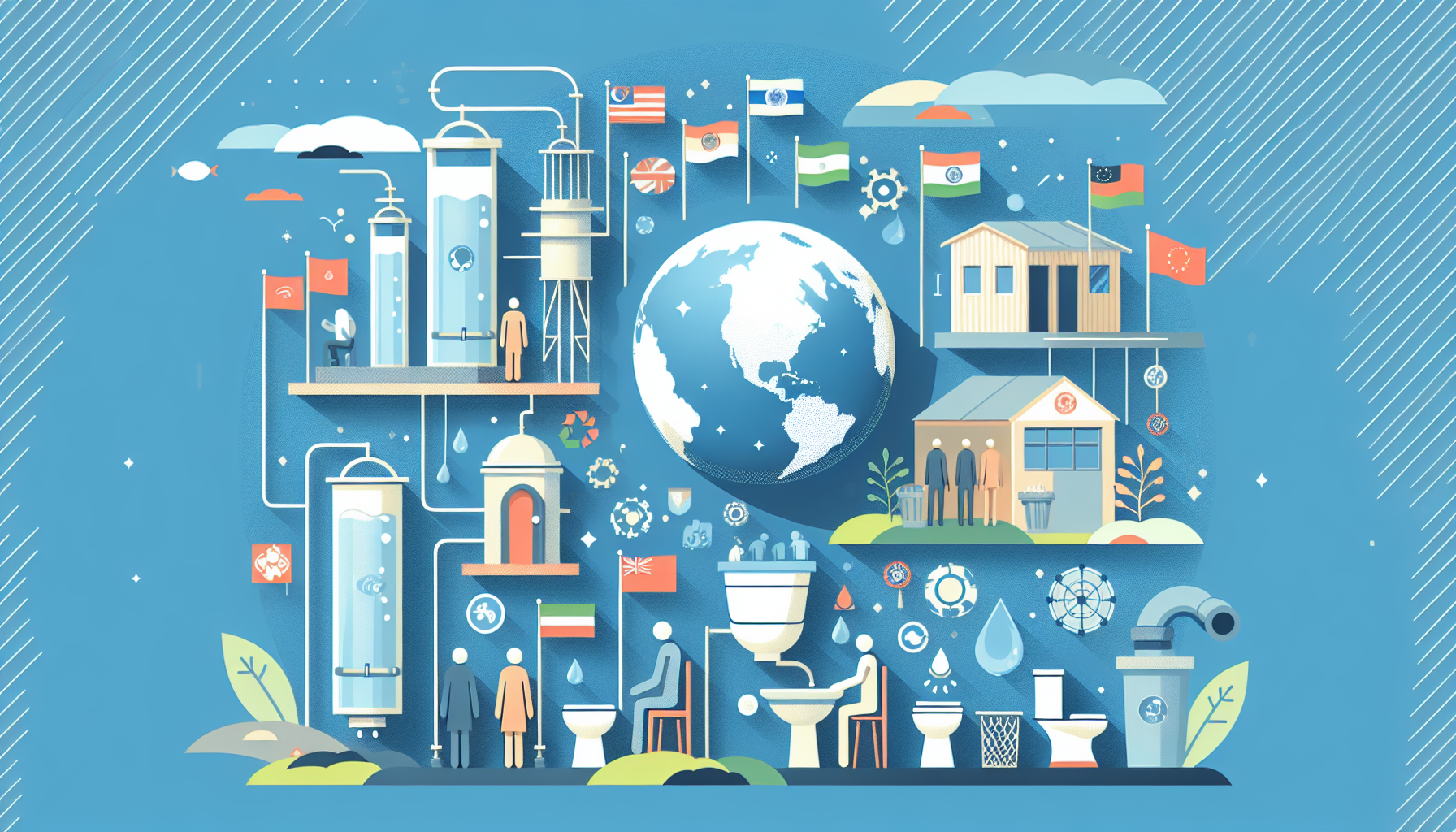
Success in sanitation depends on systems that protect health, conserve water, recover resources, and fit local realities, and the Philippines offers some of the most instructive examples in Asia. In this context, sanitation means the safe management of human waste across the full chain, from toilet access and containment to emptying, transport, treatment, reuse, and final disposal. Ecological sanitation, often shortened to EcoSan, goes further by treating waste as a resource stream that can produce fertilizer, soil conditioner, water savings, and even energy when conditions allow. I have worked on sanitation content and project analysis long enough to see a recurring pattern: the most durable gains come from projects that align engineering with behavior change, local government ownership, and financing that survives the pilot stage.
The Philippines matters because it combines rapid urbanization, dispersed island geographies, typhoon exposure, groundwater dependence, and large populations living in dense settlements where conventional sewer expansion is slow and expensive. According to global monitoring by WHO and UNICEF’s Joint Monitoring Programme, safely managed sanitation remains uneven across low and middle income settings, especially where fecal sludge management is underdeveloped. The Philippine experience shows how municipalities, utilities, nonprofits, schools, and social enterprises can close those gaps through decentralized treatment, container based approaches, urine diversion, citywide inclusive sanitation planning, and stronger desludging services. These are not abstract ideas. They affect diarrheal disease risk, child growth, school attendance, flood resilience, tourism, and the quality of rivers and coastal waters that communities rely on for food and livelihoods.
As a hub for showcasing global EcoSan successes, this article uses Philippine projects to illustrate what effective sanitation looks like in practice and why these lessons travel well to other countries. Some initiatives emphasize resource recovery, such as composting or nutrient reuse. Others show that success begins earlier, with regular septic tank desludging, ordinances, customer education, and treatment plants designed for local sludge characteristics. The central point is simple: sanitation improves fastest when projects address the entire service chain rather than just toilet construction. That is why the strongest Philippine case studies are valuable reference points for readers exploring citywide sanitation, school sanitation, climate resilient sanitation, and fecal sludge management around the world.
Why Philippine sanitation case studies matter globally
Philippine sanitation projects deserve attention because they solve problems that many countries share. Much of the population uses on-site systems, especially septic tanks, yet many tanks are undersized, poorly built, or never desludged. In coastal cities and peri-urban barangays, leakage from damaged containments can contaminate groundwater and drainage channels. Expanding sewers everywhere is rarely affordable, so cities need hybrid solutions: improved septic systems, scheduled desludging, transfer stations, fecal sludge treatment plants, and targeted sewers where density justifies them. This is the essence of citywide inclusive sanitation, a framework increasingly promoted by the World Bank, the Bill & Melinda Gates Foundation, and sector institutions because it focuses on outcomes for everyone, not only households reached by sewers.
The Philippines has also produced credible examples of collaboration across sectors. Local government units create ordinances and tariffs. Water districts operate desludging trucks and treatment plants. Development partners support feasibility studies, standards, and capital investment. Community organizations help households understand why sanitation fees matter and how proper containment protects wells and floodwater quality. In my experience reviewing sanitation programs, this institutional mix is often the difference between a pilot that looks impressive for a year and a service that keeps running after donor funding ends.
Global readers can use Philippine cases as a map. If you want evidence on school based urine diversion toilets, there are examples. If you want operational lessons on scheduled desludging linked to utility billing, there are examples. If you want to understand how social enterprises serve informal settlements without sewers, there are examples. Together, they form a practical library of EcoSan success that supports deeper reading across related case studies in this topic cluster.
From toilets to treatment: the rise of fecal sludge management
One of the most important shifts in the Philippines has been the move from toilet counting to fecal sludge management. For years, many programs measured success by the number of household toilets constructed. That metric matters, but it misses the question that determines public health impact: where does the waste go next? Philippine cities increasingly answered that by investing in scheduled desludging and treatment. Baliwag Water District in Bulacan became a widely cited example after introducing regular septic tank desludging and operating a septage treatment facility under a utility led model. Households paid through water bills, which improved cost recovery and normalized sanitation as an ongoing public service rather than a one-time purchase.
Other cities followed versions of this model. Dumaguete City, San Fernando, and utilities in Metro Manila expanded septage management planning under tighter regulation from the Department of Environment and Natural Resources and the Clean Water Act framework. The practical lesson is that treatment plants alone do not create sanitation outcomes. Utilities need route planning, customer databases, truck fleet maintenance, discharge controls, laboratory monitoring, and clear service intervals. When these pieces are in place, desludging rates rise, illegal dumping falls, and treatment plants receive more consistent loads.
EcoSan principles still apply within fecal sludge management. Treated biosolids can be composted or co-composted where regulations, pathogen reduction, and market demand support safe reuse. Even where direct agricultural reuse is limited, improved sludge treatment reduces environmental loading and creates options for future resource recovery. The Philippine cases show that sanitation success often starts with disciplined operations before it expands into full circular economy models.
Resource recovery in practice: EcoSan pilots and community adaptation
Resource recovery has appeared in the Philippines in both formal pilots and community scale adaptations. Several school and community projects introduced urine diverting dry toilets or composting toilets in water stressed or off-grid settings, especially where septic installation was difficult or expensive. These systems separate urine and feces at source, reduce odor when properly maintained, and create a pathway for nutrient recovery after treatment. In island and upland areas, that can be a meaningful advantage because water delivery is costly and conventional sewerage is unrealistic.
Not every EcoSan pilot became a large program, and that nuance matters. The strongest projects succeeded when users were trained in ash or cover material application, chambers were sized correctly, and local governments or schools assigned specific maintenance responsibilities. Where those conditions were weak, facilities often fell into disuse despite sound engineering. I have seen this pattern repeatedly in sanitation case reviews: a toilet technology cannot compensate for unclear operations. Philippine pilots are useful precisely because they make that lesson visible.
Social enterprises and nonprofit organizations have also tested service models for dense informal settlements, including container based sanitation linked to off-site treatment or composting. These models can outperform poorly maintained shared latrines because they reduce the need for deep pits in flood-prone ground and can be serviced frequently. The larger insight for global EcoSan readers is that reuse does not have to begin with large treatment plants. It can start with controlled collection, safe processing, and a realistic end market for compost or soil amendment products.
What the most effective projects have in common
Across Philippine sanitation projects, several design features appear again and again. They are the practical markers of success for any EcoSan program, whether the project is a school toilet block, a city septage utility, or a community composting initiative.
| Success factor | What it looks like in practice | Philippine relevance |
|---|---|---|
| Clear service chain | Containment, collection, transport, treatment, and reuse are all defined | Critical where septic tanks dominate and sludge often goes unmanaged |
| Local government ownership | Ordinances, budget lines, enforcement, and assigned staff | Essential because city and municipal governments shape sanitation compliance |
| Utility or operator discipline | Billing systems, truck schedules, preventive maintenance, lab testing | Seen in stronger septage programs such as utility led desludging services |
| User training | Households and schools know how to use, clean, and report problems | Especially important for urine diversion and composting systems |
| Financial viability | Tariffs, cross-subsidies, or blended finance cover recurring costs | Prevents projects from collapsing after donor support ends |
| Safe reuse standards | Pathogen reduction, handling protocols, realistic end markets | Builds trust in compost, biosolids, and other recovered products |
The importance of financing cannot be overstated. Households usually underestimate sanitation operating costs because the consequences of failure are dispersed across public health and the environment. Successful Philippine programs make costs visible and manageable. A small monthly sanitation charge added to a water bill is often easier to sustain than irregular, high out-of-pocket emptying fees. For poorer communities, targeted subsidies or public financing remain necessary, especially for first-time containment upgrades.
Another common trait is adaptation to climate and geography. The Philippines faces intense rainfall, flooding, and storm surges, so sanitation infrastructure must account for infiltration, access interruptions, and the risk of overflow during disasters. Raised toilet designs, sealed containments, resilient transfer logistics, and emergency desludging plans are not optional extras. They are core design requirements. This is one reason Philippine sanitation stories are so relevant internationally: they show how EcoSan and fecal sludge systems can be designed for places where climate stress is already part of everyday operations.
Lessons for schools, informal settlements, and secondary cities
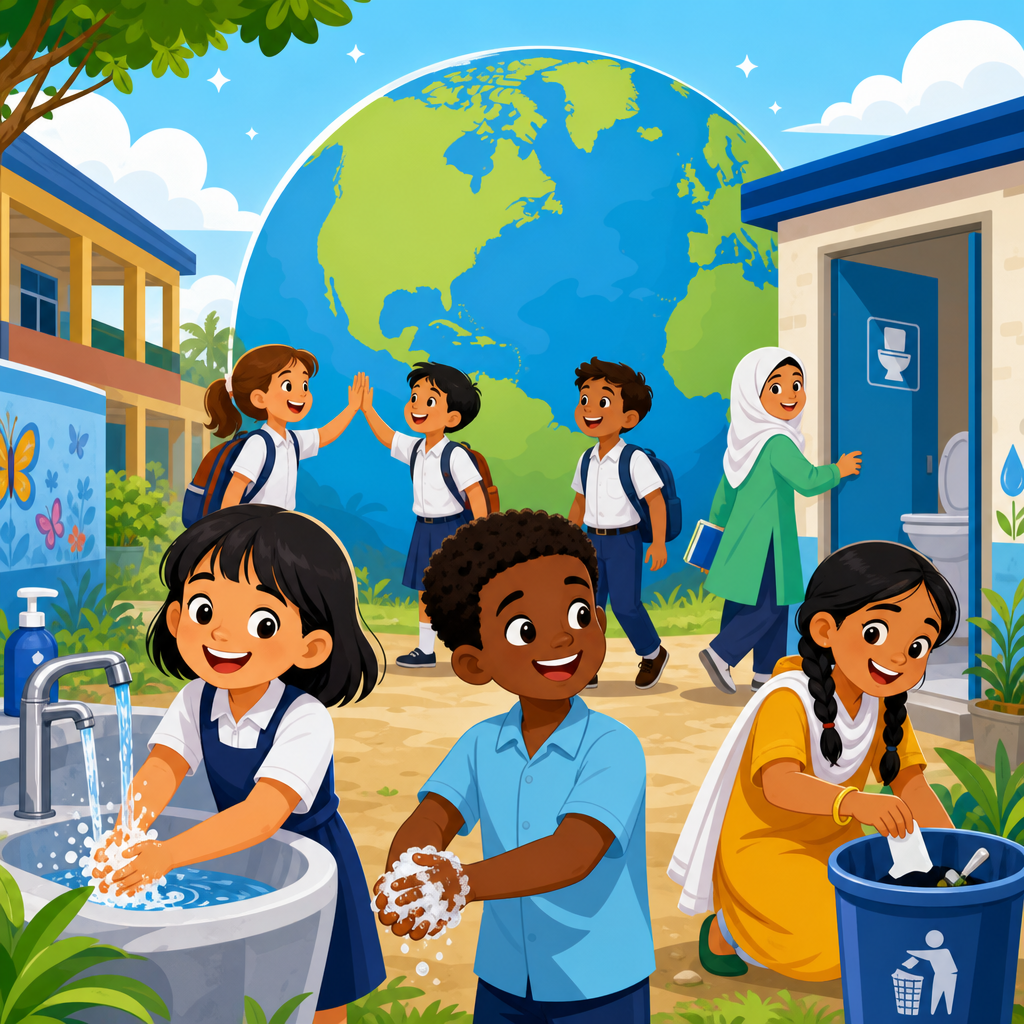
Schools are often the best starting point for EcoSan because they combine infrastructure with daily hygiene education. In the Philippines, school sanitation projects have shown that toilet design, handwashing access, menstrual hygiene support, and cleaning accountability must be planned together. A technically sound dry toilet will still fail if no one manages consumables, odor control, or student orientation. Where principals and parent groups took ownership, facilities lasted longer and became teaching tools for water conservation and nutrient cycles.
Informal settlements require different logic. Land tenure may be uncertain, plots may be too small for compliant septic systems, and flooding may make pits unsafe. In these settings, shared sanitation, container based collection, or compact communal systems can outperform household toilets that cannot be emptied safely. The key is service reliability. Residents will not keep paying for sanitation that is dirty, inaccessible at night, or inconsistent during floods. Philippine community pilots highlight the need for frequent servicing, trusted local operators, and designs that protect women, children, and older adults.
Secondary cities may have the clearest path to rapid improvement. They are large enough to justify utility management but small enough to redesign systems before sanitation failures become entrenched. Many Philippine water districts serving secondary cities have shown that septage management can be institutionalized with ordinances, customer education, and phased capital investment. For global readers comparing case studies, this is a major takeaway: midsized cities are often the fastest place to demonstrate sanitation transformation at scale.
How this hub connects to wider global EcoSan success stories
The Philippine experience is best understood as part of a broader international shift toward sanitation systems that are inclusive, service oriented, and resource conscious. Similar lessons appear in container based sanitation enterprises in Kenya, urine diversion work in parts of East Africa, co-composting initiatives in Bangladesh, and citywide fecal sludge reforms in India. The details vary, but the fundamentals remain stable: sanitation works when institutions are accountable, users understand the system, and treatment or reuse is built into operations from the beginning.
As the hub page for this subtopic, this article points readers toward the case study questions that matter most. Which model fits dense informal settlements? What tariff structure supports regular desludging? When does urine diversion outperform septic systems? How should municipalities evaluate reuse markets for compost or biosolids? Philippine projects provide grounded answers because they sit at the intersection of engineering, governance, and daily household behavior. They are not perfect, and some pilots stalled, but that makes them more useful, not less. Real success stories include constraints, redesigns, and lessons learned under pressure.
The clearest takeaway is that success in sanitation is not a single technology. It is a managed service with public health goals, environmental safeguards, and realistic operations. The Philippines demonstrates that meaningful progress is possible through utility led septage programs, school based EcoSan systems, community adaptation in difficult terrain, and governance that treats sanitation as essential infrastructure. For anyone exploring global EcoSan successes, these projects offer practical proof that better sanitation can be affordable, scalable, and resilient when the whole service chain is designed to work. Use this hub as your starting point, then explore the related case studies to compare models, costs, and outcomes in greater detail.
Frequently Asked Questions
1. What makes sanitation projects in the Philippines successful?
Successful sanitation projects in the Philippines tend to work because they address the entire sanitation chain rather than focusing only on toilet construction. In practice, that means looking at access, containment, safe emptying, transport, treatment, reuse where appropriate, and final disposal. Projects that make a lasting difference are usually designed around real local conditions, including population density, flood risk, water availability, household income, land constraints, and the capacity of local governments and service providers. This systems-based approach is especially important in the Philippines, where communities range from dense urban settlements to remote island and rural areas, each with different sanitation challenges and opportunities.
Another major factor is strong local ownership. The most effective Philippine sanitation initiatives often involve city governments, barangays, utilities, non-government organizations, and communities from the beginning. When residents understand how sanitation affects health, dignity, and neighborhood cleanliness, they are more likely to use and maintain facilities properly. At the same time, successful projects usually include practical financing and operations plans, not just infrastructure. That means there is a clear arrangement for who will empty septic tanks, where sludge will be treated, how treatment facilities will be funded, and how service quality will be monitored over time. In short, success comes from pairing technical solutions with governance, behavior change, and long-term service delivery.
2. How does ecological sanitation fit into Philippine sanitation projects?
Ecological sanitation, or EcoSan, fits the Philippine context because it expands the idea of sanitation beyond waste disposal and reframes human waste as a potential resource stream. Instead of seeing sanitation only as a matter of getting waste away from households, EcoSan emphasizes safe containment, treatment, and the possible recovery of nutrients, organic matter, water, or energy. This can be particularly relevant in places where centralized sewerage is limited, water is scarce or costly, and local agriculture can benefit from treated by-products. In these settings, EcoSan approaches can help communities reduce pollution while also creating value from materials that would otherwise become a public health hazard.
That said, EcoSan works best when it is carefully matched to user needs and local management capacity. Philippine projects that apply EcoSan principles successfully typically invest in training, public education, and ongoing monitoring so that systems are used correctly and treatment standards are maintained. The goal is not simply to install a specialized toilet or treatment unit, but to create a complete, safe, and accepted service model. When done well, EcoSan can support cleaner waterways, lower environmental impact, reduced reliance on water-intensive sanitation systems, and improved circularity in local resource use. Its real value lies in proving that sanitation can protect health and support sustainability at the same time.
3. Why is fecal sludge management so important in the Philippines?
Fecal sludge management is critical in the Philippines because many households and businesses rely on septic tanks or other on-site sanitation systems rather than full sewer connections. If those systems are not regularly emptied, safely transported, and properly treated, the result can be leakage into soil, drainage systems, rivers, and coastal waters. That contamination increases the risk of diarrheal disease, environmental degradation, and pollution of water sources used for washing, fishing, or even drinking. In flood-prone communities, the risks become even more serious, as poorly contained waste can spread rapidly during storms and inundation events.
Projects making a difference in the Philippines often stand out because they strengthen fecal sludge management as a public service. This includes scheduled desludging programs, licensed vacuum truck operators, treatment plants designed for septage and sludge, and local ordinances that clarify responsibilities and standards. These efforts matter because sanitation does not end at the toilet. A household may appear to have adequate sanitation on paper, but if the contents of its septic tank are dumped untreated or left to overflow, the health and environmental benefits are lost. By investing in fecal sludge management, Philippine cities and municipalities are closing one of the most important gaps in sanitation service delivery and showing how practical improvements can deliver measurable public health outcomes.
4. What are some of the biggest challenges sanitation projects face in the Philippines?
One of the biggest challenges is the wide diversity of settings that sanitation projects must serve. Solutions that work in a highly urbanized city may not suit an informal settlement, a remote upland village, or a small island municipality. Space constraints, high groundwater tables, seasonal flooding, weak drainage, and limited access to treatment infrastructure all affect what kind of sanitation systems are feasible. Financial limitations also remain a major issue. Many local government units and households face difficulty covering the full costs of construction, operation, maintenance, desludging, and treatment, especially when sanitation competes with other urgent development priorities.
Institutional and behavioral barriers can be just as significant as technical ones. In some areas, responsibilities for sanitation are fragmented across agencies, making planning and implementation slower and less coordinated. Public awareness can also be uneven, with some households viewing sanitation as a private concern rather than a shared public health issue. In addition, infrastructure alone cannot guarantee results if maintenance is neglected or if service providers lack training and enforcement is weak. The most effective Philippine projects respond to these challenges by combining engineering with policy support, public communication, operator capacity building, and realistic service models that can continue functioning after pilot funding ends. That is often the difference between a short-lived project and a genuine sanitation success story.
5. What can other countries learn from sanitation successes in the Philippines?
Other countries can learn that sanitation progress does not always depend on one large, centralized solution. The Philippine experience shows the value of flexible, context-specific approaches that improve sanitation step by step while keeping the whole service chain in view. This includes strengthening septic and fecal sludge management systems, introducing decentralized treatment where appropriate, building partnerships between local governments and utilities, and exploring EcoSan models that support resource recovery. These examples demonstrate that meaningful gains can come from improving service quality, regulation, and maintenance just as much as from building new facilities.
A second important lesson is that sanitation succeeds when it is treated as both a public health priority and a local service business. Philippine projects that endure are often those with clear institutional roles, community engagement, cost recovery strategies, and measurable performance standards. They recognize that sanitation is not a one-time construction effort but an ongoing service that must be planned, financed, monitored, and adapted over time. For policymakers, practitioners, and development partners elsewhere, the message is clear: invest in systems, not just structures. When sanitation is designed to fit local realities while protecting health, conserving water, and recovering resources where possible, it becomes far more resilient, scalable, and effective.