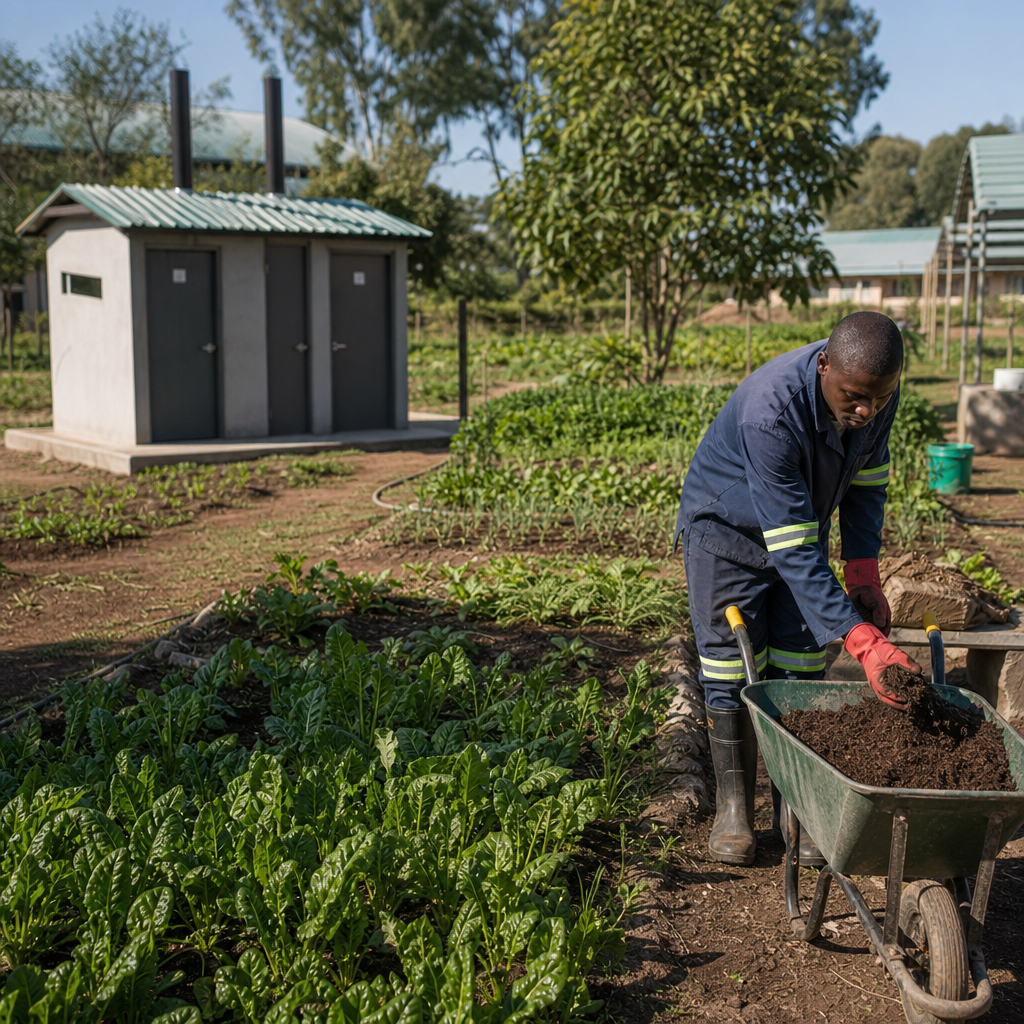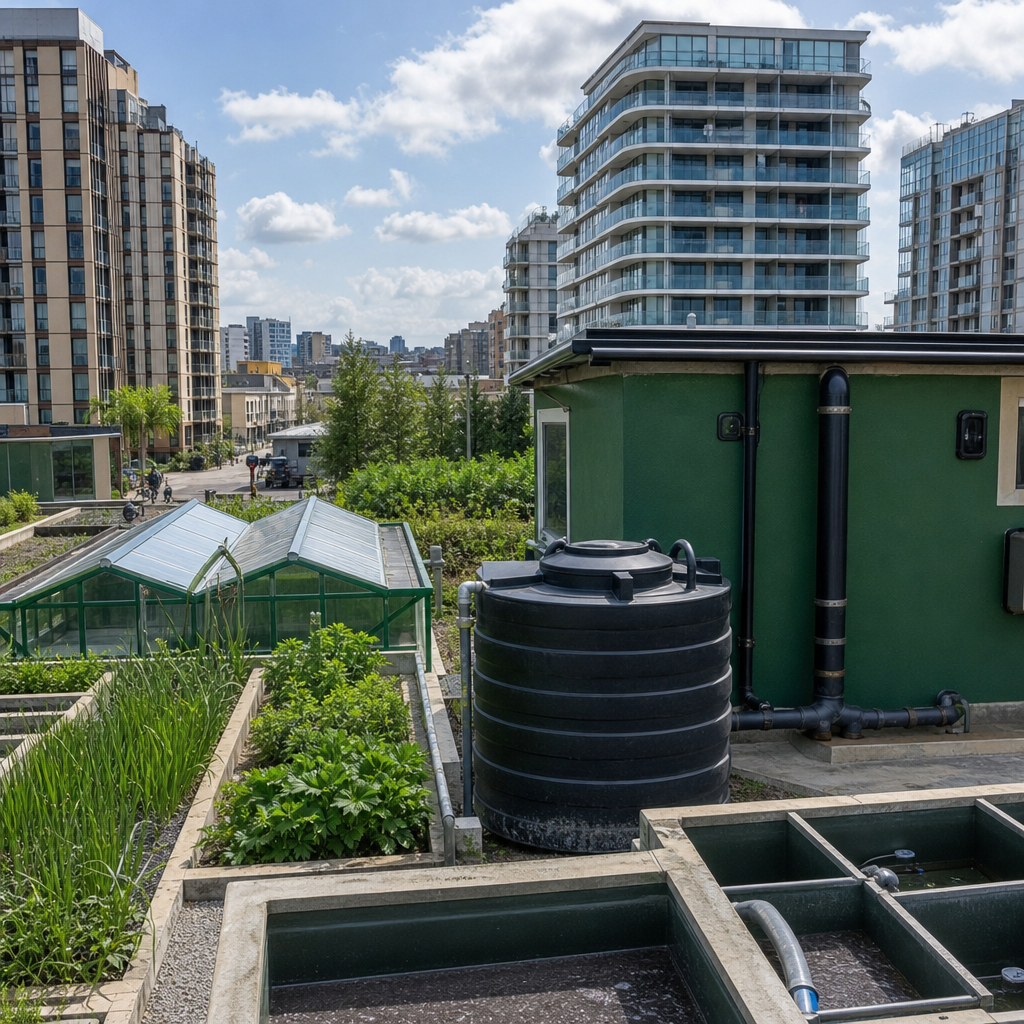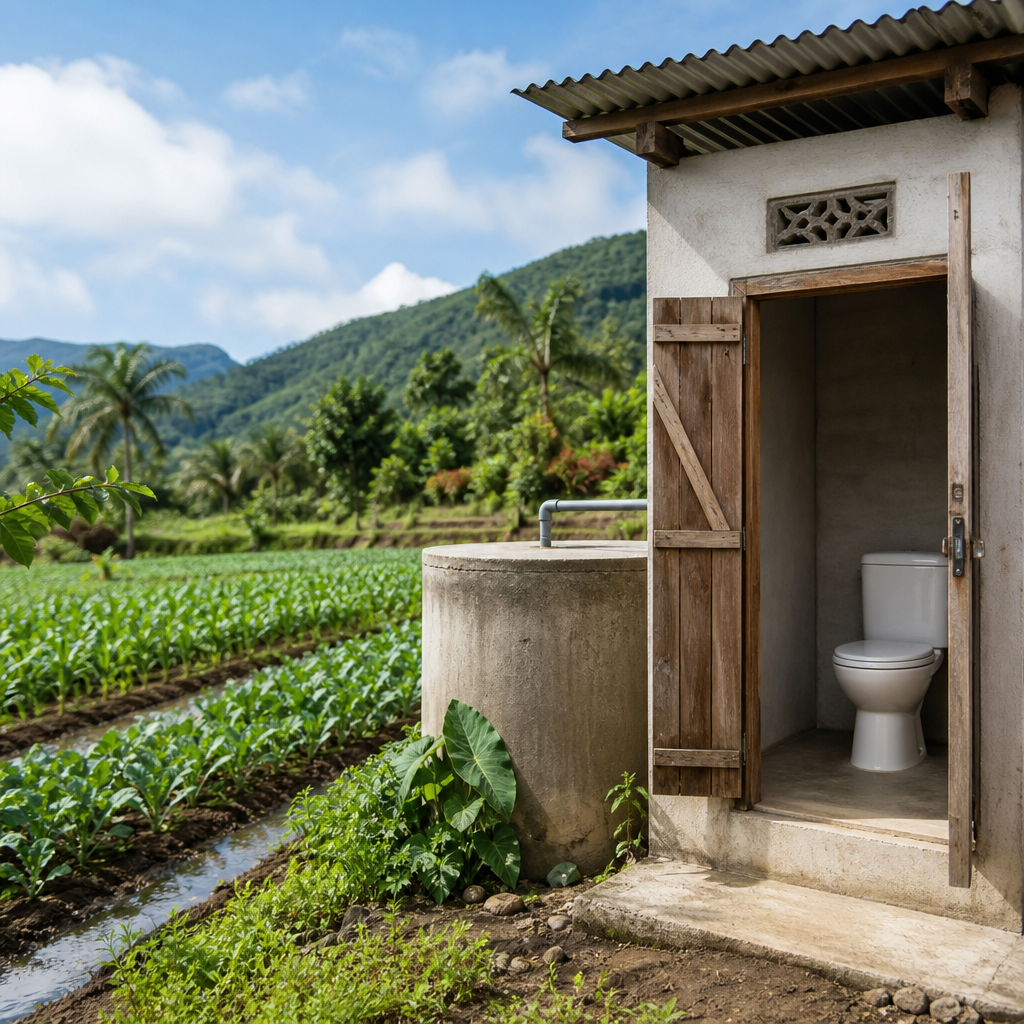
Sanitation is often discussed as a public health service, but in sustainable agricultural development it is also an economic system that shapes soil fertility, farm productivity, rural incomes, and resource security. In practice, sanitation includes the safe capture, transport, treatment, and reuse or disposal of human waste, household wastewater, and organic byproducts. Sustainable agricultural development means producing food and fiber in ways that protect ecosystems, maintain profitability, and preserve resources for future generations. When these two systems are linked through ecological sanitation, or EcoSan, waste stops being a liability and becomes a managed input for farming, landscaping, and local enterprise.
I have worked on projects where farmers paid high prices for synthetic fertilizer while nearby towns struggled with failing pit latrines and overloaded wastewater ponds. That disconnect is expensive. Nutrients leave households, contaminate water, and then farmers buy replacements in the form of urea, diammonium phosphate, and potash. EcoSan addresses this inefficiency by recovering nitrogen, phosphorus, potassium, organic matter, and water from sanitation streams and returning them to production. It also reduces the economic damage caused by diarrheal disease, groundwater pollution, crop losses from degraded soils, and the rising volatility of fertilizer markets.
The economic case matters because agriculture already operates under pressure from climate change, water scarcity, input inflation, and land degradation. The Food and Agriculture Organization has long emphasized nutrient cycling, soil organic carbon, and efficient water use as foundations of resilient farming. Sanitation directly affects all three. Properly treated fecal sludge, composted biosolids, source-separated urine, and reclaimed water can improve soil structure, support crop growth, and reduce dependence on imported inputs. However, the value is only realized when systems are designed around safety, logistics, market demand, regulation, and farmer trust.
This article serves as a hub for Economic Strategies in EcoSan by explaining where value is created, what financing models work, which risks must be managed, and how decision-makers can build viable sanitation-to-agriculture systems. It covers cost recovery, nutrient markets, business models, public policy, and implementation lessons from both low-income and middle-income settings. The core point is simple: sanitation is not only a cost center. Managed well, it becomes productive infrastructure that supports sustainable agriculture, protects health, and strengthens local economies.
Why sanitation matters to agricultural economics
Sanitation affects agriculture through four economic channels: nutrients, water, labor productivity, and environmental risk. First, nutrients contained in excreta and organic wastewater streams have measurable agronomic value. Human urine contains most of the nitrogen and a significant share of the phosphorus and potassium excreted by households. Fecal matter contributes organic carbon and slower-release nutrients when adequately treated. In areas where fertilizer prices spike because of energy costs, currency weakness, or import bottlenecks, these recovered resources can stabilize farm budgets.
Second, treated wastewater and reclaimed water can extend irrigation supplies. This is especially important in peri-urban agriculture, where vegetable growers often face competition for freshwater. Third, improved sanitation reduces illness, which protects farm labor capacity and lowers household medical costs. Lost workdays, child stunting, and contamination-related disease all weaken agricultural productivity over time. Fourth, sanitation lowers environmental cleanup costs by reducing nitrate leaching, pathogen discharge, and eutrophication that can damage fisheries, irrigation canals, and rural water points.
These benefits are not automatic. Poorly managed reuse can spread pathogens, heavy metals, or organic contaminants. That is why standards matter. The World Health Organization guidelines on safe use of wastewater, excreta, and greywater, along with national biosolids regulations, provide the basic risk management framework. From an economic perspective, compliance is not bureaucracy for its own sake. It protects market confidence. Farmers, buyers, retailers, and regulators will not support reuse products unless safety, quality, and traceability are credible.
Economic strategies in EcoSan: where value is created
Economic Strategies in EcoSan start with a simple question: who pays, who benefits, and when? In most conventional sanitation systems, costs are front-loaded and benefits are diffuse. Municipalities pay for collection and treatment, while the value of recovered nutrients is rarely captured. EcoSan changes the equation by identifying products and services that can generate revenue or reduce costs. The most common value streams are fertilizer replacement, soil amendment sales, irrigation water substitution, carbon and methane reduction, avoided desludging expenses, public health savings, and job creation in collection, processing, testing, and distribution.
Source separation is one of the clearest examples. Urine-diverting dry toilets allow nitrogen-rich urine to be collected separately, often with lower treatment costs than mixed waste streams. Where regulations allow use after storage or treatment, the recovered liquid can substitute for mineral nitrogen in maize, fodder, and horticulture. Fecal solids can be composted with crop residues or other bulking agents to produce a marketable amendment, although transport costs and quality control must be managed carefully. In dense settlements, container-based sanitation can make resource recovery more predictable because feedstock quality is less diluted and collection routes are planned.
Value also appears in avoided losses. A town that stops raw sewage from entering irrigation canals may prevent downstream crop rejection, livestock disease, and groundwater contamination. A farmer cooperative that applies treated biosolids to depleted soils may lower fertilizer demand while improving water-holding capacity, reducing drought sensitivity. These are real economic gains even if no separate product is sold. In project appraisal, they should be counted alongside direct revenue.
| EcoSan strategy | Main economic benefit | Typical challenge | Practical example |
|---|---|---|---|
| Urine diversion | Low-cost nutrient recovery, especially nitrogen | User adoption and storage logistics | Peri-urban maize growers replacing part of urea demand |
| Composted fecal sludge | Soil amendment sales and organic matter restoration | Pathogen control and transport costs | Municipal compost sold to tree crop nurseries |
| Wastewater reuse | Irrigation water security and nutrient substitution | Treatment reliability and crop restrictions | Vegetable belts using polished effluent for non-leafy crops |
| Black soldier fly or co-composting integration | Multiple products from organic waste streams | Operational complexity and feedstock consistency | City sanitation hubs linked to feed and compost businesses |
Business models that connect sanitation and farming
No single business model fits every location. The right model depends on settlement density, farm size, existing sanitation infrastructure, land values, regulation, and the distance between waste generation and agricultural demand. I usually group viable models into four categories: utility-led recovery, private service chains, cooperative aggregation, and hybrid public-private platforms.
In utility-led recovery, a municipality or water utility treats sludge or wastewater and sells compost, biosolids, or reclaimed water. This model works best where the utility already controls treatment assets and can spread compliance costs across many users. It is common in middle-income cities with wastewater plants and peri-urban farming zones. The main advantage is scale and regulatory visibility. The weakness is that many utilities are not structured to market agricultural products, so stock can accumulate unless partnerships are in place.
Private service chains are common where on-site sanitation dominates. Enterprises collect fecal sludge from pits or septic tanks, transport it to treatment sites, and sell the resulting products. This can work well if tipping fees, service fees, and product sales are combined. Product revenue alone rarely covers the full chain at early stages. In several markets, the businesses that endure are the ones that treat compost or larvae products as one income stream among several, not the only one.
Cooperative aggregation is useful where farmer groups can guarantee demand. A cooperative may contract with a sanitation provider, pre-purchase compost, or jointly invest in localized treatment and curing facilities. This reduces market uncertainty and lowers last-mile distribution costs. Hybrid models often perform best: the public sector finances health-protective infrastructure, private operators handle collection and processing, and farmer organizations anchor offtake. That structure aligns incentives across sanitation service delivery and agricultural use.
Financing, pricing, and cost recovery
One of the biggest mistakes in EcoSan planning is assuming that recovered products will fully finance sanitation. In most cases, sanitation is a public good with positive externalities, so some level of public finance, cross-subsidy, or concessional capital is justified. The smarter question is how much of the lifecycle cost can be offset through resource recovery and how to allocate costs fairly. Capital expenditure includes toilets, transfer stations, trucks, drying beds, composting pads, digesters, storage tanks, laboratories, and monitoring systems. Operating expenditure includes collection labor, fuel, bulking agents, personal protective equipment, testing, packaging, and extension support.
Pricing should reflect both product value and competing alternatives. If composted sludge delivers slow-release nutrients and organic matter, it should be benchmarked not only against bagged fertilizer but also against manure, compost, and the cost of soil degradation. Farmers will compare price per unit of available nutrient, transport cost per ton, ease of application, and crop response. This is why pelletization, bagging, and moisture control can matter economically: they reduce handling costs and improve user confidence.
Blended finance is often the most realistic route. Grants can support pilots, public health safeguards, and behavior change. Development finance can fund treatment infrastructure. Commercial finance may support scalable service operations once demand is proven. Results-based financing can reward safe collection volumes or verified reuse outputs. Carbon finance is possible in some cases, especially where methane emissions are reduced, but it should be treated as upside, not the business foundation.
Tariff design also matters. Households may pay for sanitation as a service, while farmers pay for the recovered product. That dual-revenue structure is usually healthier than trying to recover all costs from one side. Transparent accounting is essential because underpriced disposal and unpriced pollution distort the market against safe reuse solutions.
Implementation barriers and how successful programs overcome them
The barriers are rarely technical alone. Social acceptance, regulation, logistics, and product consistency are the real differentiators. Farmers will not buy a product they do not trust. Consumers and retailers may reject crops if they believe sanitation-derived inputs were used unsafely. Regulators may hesitate if standards are unclear. Transport can erase value quickly, especially for wet, low-density materials. And if treatment is inconsistent, one bad batch can damage the market for years.
Successful programs solve these issues systematically. They start with end-use planning before building treatment capacity. They choose crops and use cases that match the risk profile, such as forestry, fodder, energy crops, or orchards before moving into higher-scrutiny food markets. They test for pathogens, nutrient content, moisture, and where relevant heavy metals. They create simple quality grades. They work with extension agents to run side-by-side field trials that show yield response in local conditions. Demonstration matters more than brochures.
I have seen projects improve adoption dramatically by changing packaging rather than changing chemistry. Loose compost in an open pile signals waste. Clean bags with nutrient analysis, application guidance, and batch numbers signal an agricultural input. The same principle applies to reclaimed water. Farmers want reliable supply schedules, filtration appropriate for their irrigation systems, and clear crop-use rules. Operational discipline builds trust, and trust creates demand.
Policy, metrics, and the future of sanitation-linked agriculture
Policy determines whether EcoSan remains a pilot concept or becomes part of agricultural development strategy. Governments should align sanitation regulation, fertilizer rules, water reuse standards, and agricultural extension. In many countries these sit in separate ministries with little coordination, which creates delays and contradictory requirements. Clear end-of-waste criteria, licensing pathways, and product standards reduce investor uncertainty and protect public health at the same time.
Metrics should track more than tons treated. The right dashboard includes safe containment coverage, collection efficiency, treatment compliance, nutrient recovery rates, product sales, farmer adoption, crop response, groundwater indicators, and cost recovery by revenue stream. Lifecycle assessment and material flow analysis are especially useful because they show where nutrients are lost and where interventions create the highest return. Digital tools such as GIS route planning, weighbridge data, remote tank monitoring, and QR-based batch traceability can improve both economics and oversight.
Looking ahead, the strongest opportunities are in peri-urban regions where sanitation demand and agricultural demand are physically close. Fertilizer volatility, phosphorus scarcity concerns, and water stress will keep increasing the strategic value of recovery systems. At the same time, stricter food safety expectations will reward operators that invest in testing, traceability, and fit-for-purpose treatment. The winning model is not waste disposal with a green label. It is integrated infrastructure designed to protect health while producing verified agricultural value.
Sanitation has a decisive role in sustainable agricultural development because it closes nutrient loops, protects water resources, reduces disease burdens, and creates new income streams across rural and peri-urban economies. Economic Strategies in EcoSan work best when planners treat sanitation and agriculture as one connected system rather than two separate sectors. The practical lesson is clear: value comes from safe design, reliable operations, realistic financing, and markets built around farmer needs. Product quality, logistics, and regulation matter just as much as treatment technology.
For this sub-pillar hub, the main takeaway is that sanitation-linked agriculture succeeds when decision-makers map every step of the value chain, from containment and collection to processing, marketing, and on-farm use. Direct revenues from compost, biosolids, urine-based fertilizers, or reclaimed water are important, but avoided health costs, reduced fertilizer imports, better soil function, and water security are equally important economic outcomes. The strongest programs combine public investment in safety with private and cooperative participation in service delivery and offtake.
If you are building strategy in this area, start with a local nutrient and market assessment, identify the safest high-demand reuse options, and design financing around full lifecycle costs rather than product sales alone. Then connect sanitation operators, farmer groups, regulators, and extension services early. Done well, sanitation becomes productive infrastructure for agriculture, not a sunk cost. Use this hub as your starting point for deeper work on pricing, business models, regulation, and farm adoption within Economic Strategies in EcoSan.
Frequently Asked Questions
1. How does sanitation directly support sustainable agricultural development?
Sanitation supports sustainable agricultural development by connecting public health, environmental protection, and farm resource management into one practical system. In agricultural communities, sanitation is not only about toilets and waste removal; it includes the safe collection, transport, treatment, and final reuse or disposal of human waste, household wastewater, and other organic byproducts. When these materials are poorly managed, they can contaminate irrigation water, degrade soils, spread disease, reduce labor productivity, and increase household and farm costs. When they are safely managed, they can become part of a circular economy that strengthens agricultural systems.
One of the most important links is soil fertility. Treated organic waste can return nutrients such as nitrogen, phosphorus, potassium, and organic matter to the land, reducing dependence on expensive synthetic inputs and improving soil structure over time. Better soil structure supports water retention, root development, and microbial activity, all of which are essential for resilient crop production. In water-scarce regions, properly treated wastewater can also supplement irrigation supplies, helping farmers maintain production while reducing pressure on freshwater sources.
Sanitation also affects farm profitability and rural incomes indirectly through health outcomes. Poor sanitation contributes to diarrheal disease, parasitic infections, and chronic exposure to pathogens, which weakens labor availability and lowers worker productivity during planting, weeding, harvesting, and post-harvest handling. Healthier households are more able to invest time and resources in productive farming activities, education, and market participation. In that sense, sanitation is both an agricultural input and a foundation for rural economic stability.
Just as important, effective sanitation reduces environmental damage. It helps prevent nutrient runoff, groundwater contamination, and the uncontrolled release of waste into fields, waterways, and grazing areas. That matters because sustainable agricultural development depends on protecting the ecosystems that farming relies on. In short, sanitation directly supports sustainability by improving resource efficiency, protecting health, recovering nutrients, and helping agricultural systems remain productive and profitable over the long term.
2. Can human waste and wastewater really be reused safely in agriculture?
Yes, but only when reuse is handled through proper treatment, monitoring, and management. Human waste and household wastewater can contain valuable nutrients and water, but they can also carry pathogens, pharmaceutical residues, and contaminants if not processed correctly. Safe reuse depends on sanitation systems that are designed to reduce health risks at every step: capture, storage, transport, treatment, application, and crop handling. The goal is not simply to reuse waste, but to transform it into a safe and useful agricultural resource.
There are several proven pathways. Treated biosolids, composted excreta, digestate from anaerobic digestion, and reclaimed wastewater can all be used in agricultural settings under the right conditions. Treatment methods such as composting, drying, digestion, settling, filtration, and disinfection can significantly reduce pathogens and stabilize organic material. The choice of method depends on climate, infrastructure, crop type, local regulations, and the end use. For example, water intended for irrigation of non-food crops or tree crops may require different standards than water used on vegetables eaten raw.
Safe reuse also requires operational controls beyond treatment itself. These include timing applications to avoid harvest periods, selecting appropriate crops, using irrigation methods that minimize contact with edible plant parts, training workers in hygiene, and testing treated materials for quality. In many cases, multi-barrier approaches are the most effective. That means combining treatment with safer application methods, field restrictions, protective equipment, and food safety practices to lower risk comprehensively.
When managed well, reuse can deliver major benefits. It can reduce fertilizer costs, improve soil organic matter, increase water availability, and decrease pollution from untreated discharge. However, the key principle is that reuse must be planned, regulated, and monitored. Safe agricultural reuse is not a shortcut around sanitation; it is the result of good sanitation. Communities that treat waste as a managed resource rather than an uncontrolled hazard are far better positioned to build productive, resilient, and environmentally sound farming systems.
3. What are the economic benefits of improved sanitation for farmers and rural communities?
Improved sanitation creates economic value in ways that are both immediate and long term. At the household level, better sanitation reduces disease, lowers medical expenses, decreases time lost to illness, and improves the ability of family members to work consistently on farms or in related enterprises. In rural communities where agriculture depends heavily on family labor, even small improvements in health can have a meaningful effect on planting schedules, livestock care, harvesting efficiency, and post-harvest processing. Healthier workers are more productive, and healthier children are more likely to attend school rather than miss time because of preventable illness.
At the farm level, sanitation can reduce input costs and improve resource efficiency. Treated organic waste can supplement or partially replace commercial fertilizers, especially where nutrient recovery systems are locally available and affordable. Reclaimed wastewater can provide a more reliable irrigation source in areas facing seasonal scarcity or competition for freshwater. These savings can improve margins, especially for smallholders who are highly exposed to fertilizer price volatility and drought risk. In addition, better-managed waste systems can create local enterprises in collection, transport, treatment, composting, biogas production, and input distribution.
There are broader economic benefits as well. Poor sanitation can undermine rural markets by contaminating water supplies, damaging local ecosystems, and increasing the burden on health systems. It can also reduce the marketability of agricultural products if buyers perceive a food safety risk. By contrast, improved sanitation can strengthen value chains by supporting cleaner production, safer food handling, and compliance with quality standards. This is increasingly important as retailers, processors, and export markets place more emphasis on traceability, environmental performance, and public health safeguards.
Over time, sanitation investments can also improve land value, community resilience, and public infrastructure efficiency. Villages and farming regions with reliable sanitation and waste management systems are often better able to attract development funding, agro-processing investment, and support services. So while sanitation is sometimes viewed only as a cost center, in sustainable agriculture it is more accurately understood as productive infrastructure: it protects labor, recovers resources, lowers environmental risk, and helps build a more stable rural economy.
4. What are the main environmental risks when sanitation is weak in farming areas?
When sanitation is weak in farming areas, environmental risks multiply quickly because waste moves through the same land, water, and biological systems that agriculture depends on. Untreated or poorly contained human waste can seep into groundwater, wash into rivers and ponds, or be deposited directly in fields and open spaces. Household wastewater may carry detergents, pathogens, grease, nutrients, and chemicals that alter soil and water quality. In areas with livestock, weak sanitation can compound existing nutrient loads and create severe pollution hotspots. The result is a cycle where agricultural landscapes are asked to absorb waste without the treatment or controls needed to do so safely.
One major risk is water contamination. Farmers often rely on shallow wells, streams, canals, and small reservoirs for irrigation, livestock, and household use. If these sources become contaminated with fecal matter or untreated wastewater, they can spread disease and reduce the suitability of water for both agricultural and domestic needs. Excess nutrients can also trigger eutrophication, leading to algal blooms, oxygen depletion, and damaged aquatic ecosystems. This weakens biodiversity and can reduce the availability of clean water over time.
Soil degradation is another serious concern. While organic matter can be beneficial when properly treated, raw or inadequately treated waste can introduce pathogens, salts, heavy metals, and persistent contaminants that harm soil biology and crop performance. Repeated misuse may reduce soil quality, disrupt microbial balance, and create long-term food safety concerns. Poor sanitation can also increase odors, pest breeding, and greenhouse gas emissions, especially where waste accumulates in unmanaged pits, drains, or open dumping sites.
These environmental risks are not separate from agricultural sustainability; they are central to it. Productive farming depends on healthy soils, reliable water, functioning ecosystems, and community trust in food safety. Weak sanitation undermines each of those foundations. That is why sustainable agricultural planning increasingly treats sanitation as part of landscape management, climate adaptation, and natural resource governance. Preventing pollution at the source is far more effective and less costly than trying to restore degraded land and water after contamination has occurred.
5. What does a sustainable sanitation strategy look like in an agricultural development plan?
A sustainable sanitation strategy in an agricultural development plan is integrated, locally appropriate, and designed for long-term operation rather than short-term installation. It starts by recognizing that sanitation systems must work across the entire service chain: capture, containment, emptying, transport, treatment, and safe reuse or disposal. Too often, plans focus on access to toilets alone, without considering what happens afterward. In rural agricultural settings, that gap can lead to leakage, unsafe dumping, or missed opportunities to recover nutrients, water, and energy. A strong strategy addresses the full system from the beginning.
It also aligns sanitation with agricultural realities. That means understanding seasonal labor patterns, water availability, settlement density, soil conditions, crop types, and local market demand for recovered products such as compost, biosolids, or biogas slurry. In some communities, decentralized treatment and composting may be the most practical approach. In others, small-scale wastewater reuse, fecal sludge management services, or cooperative treatment facilities may be more effective. The best strategy is rarely