Sustainable Drainage Systems, often shortened to SuDS, are engineered approaches that manage rainfall where it falls, slow runoff, improve water quality, and reduce pressure on sewers and rivers. In practice, they combine hydrology, landscape design, soil science, and civil engineering to mimic natural drainage patterns disrupted by roofs, roads, and compacted ground. When I have worked on urban water projects, the most successful schemes were never just pipes hidden underground; they were connected surface systems that treated stormwater as a resource, not a waste product. That distinction matters because conventional drainage moves water away quickly, while sustainable drainage systems control quantity, quality, amenity, and biodiversity at the same time.
The technology behind sustainable drainage systems has advanced quickly in the last decade. Designers now use permeable pavements with calibrated sub-bases, smart flow controls with telemetry, rain gardens engineered for pollutant capture, blue-green roofs that store and evapotranspire water, and digital models that predict performance during intense storms. These innovations intersect directly with broader EcoSan thinking, especially when drainage is integrated with water reuse, nutrient recovery, decentralized treatment, and climate-resilient urban planning. In that wider context, cutting-edge EcoSan technologies are not limited to toilets or sanitation hardware. They include site-scale water loops, source control, nature-based treatment trains, and monitoring systems that connect stormwater, wastewater, and landscape infrastructure into one resilient network.
This topic matters because cities face a converging set of risks: heavier downpours, aging combined sewers, polluted waterways, urban heat, and land scarcity. According to widely applied guidance such as the CIRIA SuDS Manual and stormwater principles used across Europe, North America, and Australia, runoff should be managed as close to source as possible and controlled through a hierarchy of prevention, infiltration, attenuation, conveyance, treatment, and discharge. That hierarchy is now central to planning policy, flood risk strategy, and sustainable urban design. For readers exploring cutting-edge EcoSan technologies, this article serves as the hub: it explains the core components, the newest tools, real applications, and the limitations that determine what works on the ground.
Core Principles and Technology Foundations
Sustainable drainage systems work by reproducing the water balance that existed before development. In undeveloped landscapes, a portion of rainfall infiltrates into soil, some evaporates or is used by vegetation, and only part runs off into streams. Development reverses that balance by replacing absorbent surfaces with impermeable cover. The result is faster runoff, higher peak flows, sewer surcharge, erosion, and pollutant wash-off from traffic areas and roofs. SuDS technologies correct that shift through source control, detention, retention, filtration, infiltration, and controlled release. The best designs use multiple linked components, often called a treatment train, so each element performs a defined hydraulic and water-quality function.
Key technologies include permeable pavements, bioretention systems, swales, detention basins, infiltration trenches, filter drains, ponds, wetlands, green roofs, and underground attenuation tanks. Permeable pavement stores runoff in a graded aggregate layer and either infiltrates it to subsoil or drains it slowly to a downstream control. Bioretention cells use engineered media, mulch, and deep-rooted planting to filter suspended solids, metals, hydrocarbons, and nutrients. Swales convey water on the surface while promoting infiltration and sedimentation. Constructed wetlands add longer residence times and biological uptake, making them especially useful where water quality targets are strict. Smart controls, including sensors and actuated valves, increasingly adjust storage dynamically in response to weather forecasts, creating extra flood capacity before a storm arrives.
In EcoSan-linked projects, I have seen the strongest performance when drainage is planned alongside decentralized water management. For example, runoff from lightly contaminated roofs can be diverted to cisterns for landscape irrigation, while overflow passes through rain gardens before entering a pond or wetland. This arrangement reduces potable water demand, improves drought resilience, and lowers discharge volumes. The important nuance is that not every runoff source is suitable for reuse. Water from high-traffic roads or industrial yards typically needs stronger pretreatment because sediments, oils, zinc, copper, and de-icing salts can make direct reuse risky. Sustainable drainage systems therefore depend on source classification as much as on hardware selection.
How EcoSan and SuDS Converge in Advanced Water Management
Exploring cutting-edge EcoSan technologies requires understanding that sanitation and drainage are increasingly designed as one urban metabolism. EcoSan approaches focus on closing loops: conserving water, recovering resources, minimizing pollution at source, and using decentralized treatment where it offers practical value. Sustainable drainage systems support those goals by intercepting stormwater before it overloads sewers or dilutes treatment processes. In combined sewer cities, every cubic meter of rain kept out of the foul network can reduce overflow risk and improve treatment plant stability. In separate sewer systems, distributed drainage treatment can stop pollutants reaching receiving waters in the first place.
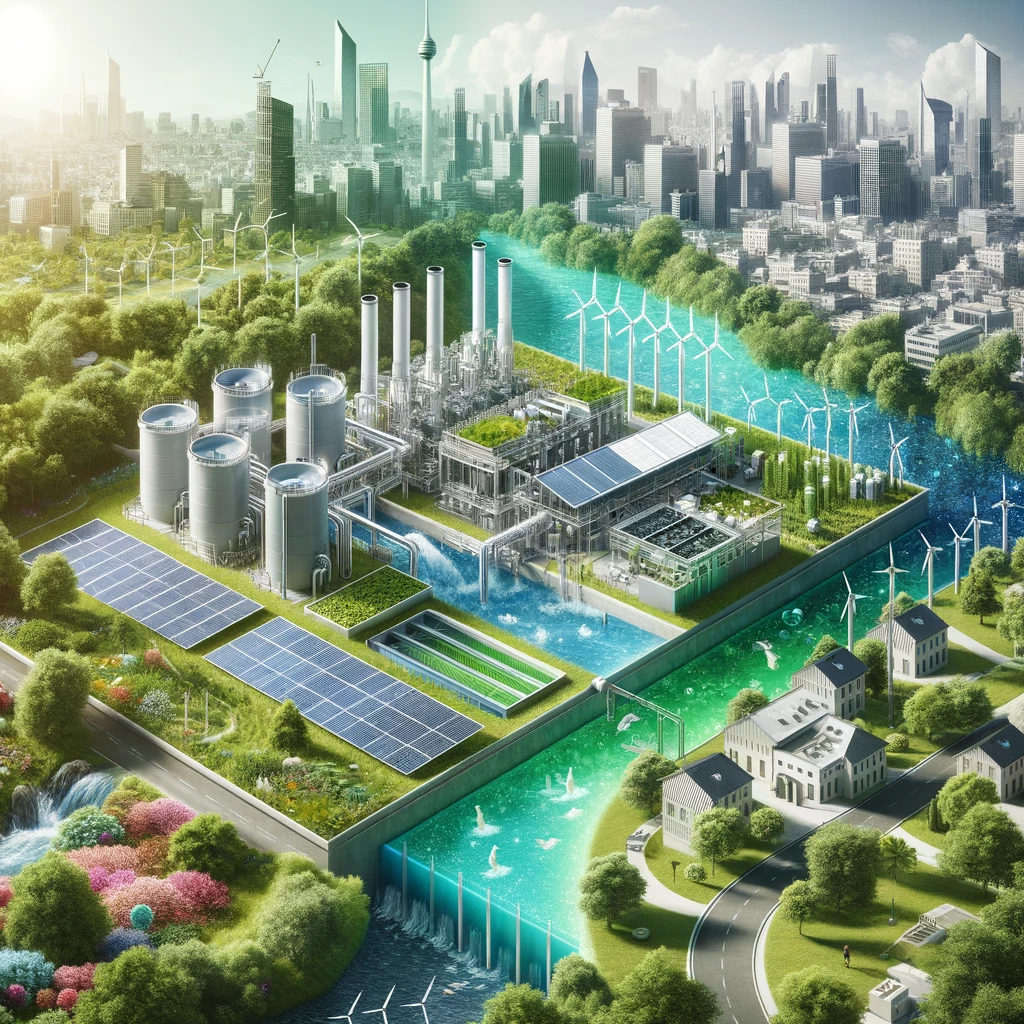
A useful way to think about the convergence is by scale. At building scale, green roofs, rainwater harvesting, and smart cisterns reduce runoff and supplement non-potable demand. At street scale, tree pits, trench drains, and permeable paving create distributed retention. At district scale, wetlands, storage basins, and monitored outlet controls regulate cumulative discharge. At catchment scale, digital twins and sensor networks optimize operations across assets. This scaling matters because EcoSan technologies often fail when they are treated as isolated products rather than coordinated systems. A composting toilet, a vacuum sewer, or a greywater unit may be effective on its own, but wider resilience appears when drainage, reuse, sanitation, and landscape infrastructure are planned together.
The overlap is especially strong in water-sensitive urban design and sponge city programs. These models prioritize infiltration, storage, evapotranspiration, and visible water landscapes. They also create opportunities to pair stormwater with urban agriculture, habitat corridors, and cooling strategies. In dense developments, for instance, rooftop blue-green systems can delay discharge, support planting, and provide reused water for irrigation. In peri-urban settlements, decentralized wetlands can polish greywater while also receiving treated stormwater from open channels. The lesson from practice is clear: sustainable drainage systems become more valuable when they are not treated only as flood infrastructure, but as platforms for circular water management.
Leading Technologies, Performance, and Real-World Applications
The most effective sustainable drainage systems use technologies matched to site constraints, pollutant loads, maintenance capacity, and regulatory targets. No single option is universally best. Below is a practical comparison I use when discussing early-stage selection with design teams and asset owners.
| Technology | Primary Function | Best Use Case | Key Limitation |
|---|---|---|---|
| Permeable pavement | Infiltration, storage, first-flush treatment | Car parks, low-speed streets, courtyards | Performance drops if clogged by fines without maintenance |
| Bioretention or rain garden | Filtration, pollutant removal, peak flow reduction | Streetscapes, commercial sites, housing plots | Needs careful planting and underdrain design in poor soils |
| Swale | Conveyance, sedimentation, infiltration | Road verges, campuses, industrial estates | Requires land width and may not suit constrained urban cores |
| Green roof | Rainfall retention, evapotranspiration, thermal benefit | Dense urban buildings with limited ground space | Structural loading and access constraints can be significant |
| Constructed wetland | Storage, polishing treatment, habitat creation | Parks, business parks, edge-of-town developments | Needs footprint, water balance analysis, and mosquito management |
| Smart detention tank | Controlled release using sensors and valves | Retrofits, high-value urban sites, network optimization | Depends on power, telemetry, and operational oversight |
Permeable pavement is one of the most mature technologies and, when designed correctly, one of the most misunderstood. The pavement surface is only part of the system. Performance depends on aggregate gradation, geotextile choice, subgrade permeability, and overflow routing. On a retail site retrofit I reviewed, surface ponding was initially blamed on material failure, but the true cause was sediment tracked from adjacent landscaping and poor vacuum sweeping. After maintenance and edge stabilization, infiltration rates recovered substantially. This is a typical lesson: many SuDS failures are maintenance failures, not technology failures.
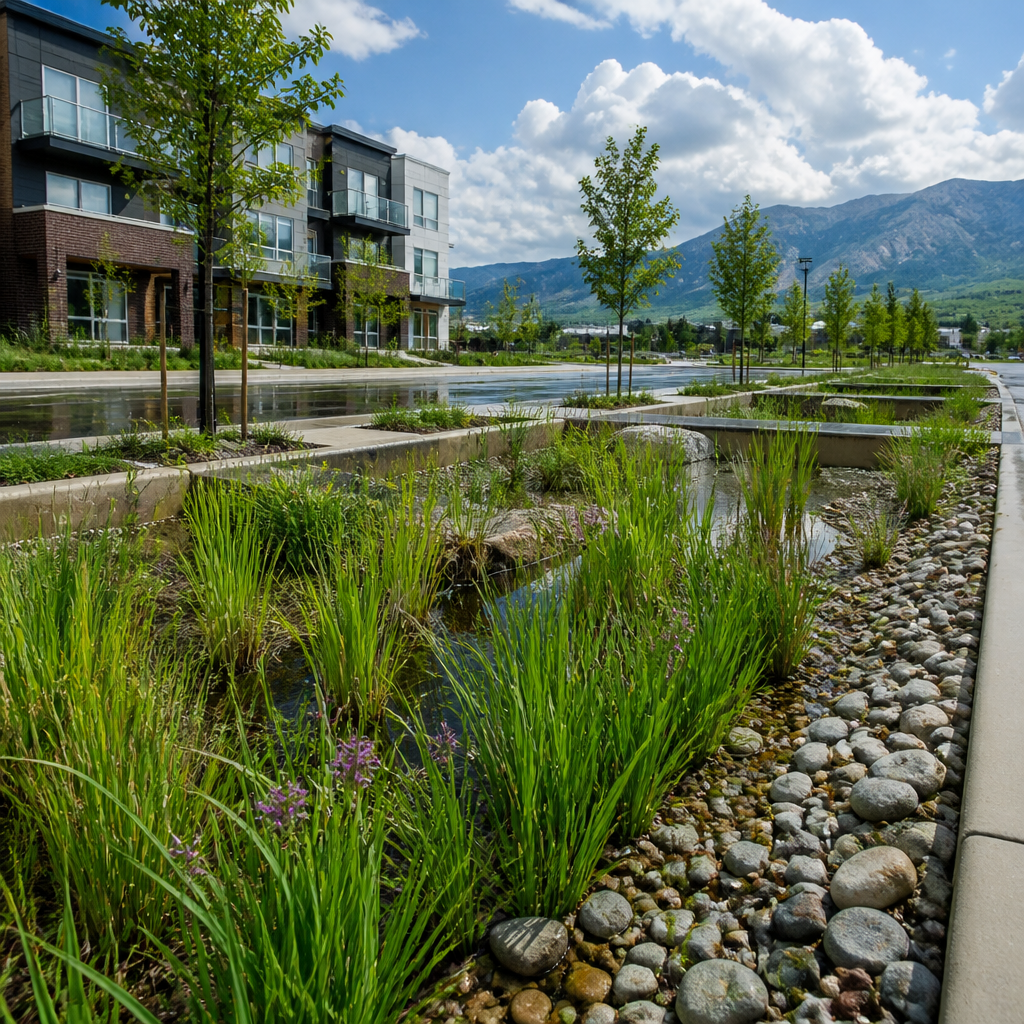
Bioretention systems are advancing rapidly because engineered media can now be tailored for hydraulic conductivity and pollutant capture. Some mixes target phosphorus sorption; others optimize vegetation support and denitrification. Underdrained systems with internal water storage can improve treatment while still draining between storms. In streets with high metal loads from braking and tire wear, bioretention cells can remove a significant share of suspended solids and associated contaminants before discharge. They also improve urban design quality, which helps public acceptance. A bare concrete headwall rarely wins community support; a planted rain garden usually does.
Smart systems represent the most significant recent shift in sustainable drainage systems technology. With level sensors, weather APIs, low-power telemetry, and automated outlet controls, detention basins and tanks can be emptied strategically before a forecast storm, then held longer after an event to enhance settlement or downstream protection. Utilities and municipalities in the United States, the Netherlands, Singapore, and the United Kingdom have tested this approach to increase effective storage without excavating larger basins. However, smart drainage is not a substitute for good hydraulic design. If gravity overflows, emergency spillways, and fail-safe positions are ignored, a connected system can create new operational risks.
Constructed wetlands remain highly valuable where land is available and multiple benefits are required. They can attenuate flow, support biodiversity, and improve water quality through sedimentation, plant uptake, microbial action, and sunlight exposure. They are especially useful downstream of pretreatment devices that reduce coarse solids. Green roofs, meanwhile, are indispensable in dense city districts where ground-level space is scarce. Extensive roofs reduce annual runoff volume and moderate small to medium rainfall events, though they are less effective during prolonged saturated conditions. For EcoSan-oriented developments, combining green roofs with rainwater storage and visible overflow routing creates a robust layered system rather than relying on any single asset.
Planning, Modeling, Maintenance, and Common Design Errors
Good sustainable drainage systems begin with site investigation, not product selection. Designers need rainfall data, soil infiltration testing, groundwater levels, utility surveys, contamination history, topography, catchment areas, and realistic maintenance assumptions. Software such as EPA SWMM, InfoDrainage, MicroDrainage, and PCSWMM helps test peak flow control, storage volumes, exceedance routing, and long-term water balance. In advanced projects, these models are linked with GIS, BIM, and asset databases so teams can compare alternatives over the life of the scheme. Modeling should not stop at a single design storm. Climate uplift, blocked inlets, seasonal groundwater rise, and operational failure scenarios need to be examined explicitly.
The most common design error is placing too much faith in underground storage while neglecting source control. Tanks can be necessary, especially on constrained urban sites, but they add little ecological value and often become expensive liabilities if inspection access is poor. Another frequent mistake is assuming infiltration is feasible everywhere. Clay soils, shallow bedrock, contamination plumes, or high groundwater can rule it out or require lined systems. I have also seen schemes underperform because pretreatment was omitted upstream of infiltration devices, allowing fine sediments to migrate and clog void spaces. Small details matter: kerb openings, forebays, level spreaders, check dams, and overflow weirs often determine whether a system works reliably.
Maintenance is not optional. Sustainable drainage systems need inspection schedules, sediment removal, vegetation management, inlet clearing, and periodic rehabilitation. The exact regime varies by asset type, but the principle is consistent: design for maintainability from day one. That means safe access, visible flow paths, straightforward replacement of components, and clear ownership. Without those basics, even a well-modeled scheme can decline quickly. For hub readers exploring cutting-edge EcoSan technologies, this is the critical takeaway: innovation succeeds when operational reality is built into the concept. If you are evaluating solutions for a project, start with the water balance, map the treatment train, and choose technologies your site team can actually maintain.
Sustainable drainage systems are no longer niche landscape features; they are essential infrastructure for climate resilience, water quality protection, and circular urban water management. The most effective schemes combine proven components such as permeable pavement, rain gardens, swales, wetlands, and green roofs with newer tools like smart controls, telemetry, and integrated modeling. When these systems are planned in concert with broader EcoSan strategies, they do more than prevent flooding. They support reuse, reduce sewer stress, improve urban habitats, and make developments more adaptable to drought and extreme rainfall.
The central lesson is straightforward. Technology matters, but system design matters more. A successful scheme matches runoff source, soil conditions, space, pollutant risk, regulation, and maintenance capacity. It uses a treatment train, includes safe exceedance routes, and accepts tradeoffs honestly. Surface features may need land, smart systems need oversight, and infiltration is not always possible. Yet the alternatives of rapid runoff, polluted discharge, and oversized grey infrastructure are increasingly costly and less resilient.
As a hub for exploring cutting-edge EcoSan technologies, this article provides the foundation for deeper study into site-scale reuse, decentralized treatment, nutrient recovery, and digitally managed water infrastructure. Use it to frame the right questions on your next project: what water can be slowed, stored, cleaned, reused, or kept out of the sewer entirely? Answer those questions early, and sustainable drainage systems will deliver benefits far beyond drainage alone. Continue to the connected subtopics and turn principles into practical design decisions today.
Frequently Asked Questions
What are Sustainable Drainage Systems (SuDS), and how do they differ from conventional drainage?
Sustainable Drainage Systems, or SuDS, are designed to manage rainwater as close as possible to where it lands rather than moving it away as quickly as possible through underground pipes. Conventional drainage networks typically prioritize rapid collection and discharge, which can increase peak flows in rivers, overload sewers, and carry pollutants directly into watercourses. SuDS take a different approach. They slow runoff, store water temporarily, encourage infiltration into the ground where conditions allow, and treat pollution through natural physical, chemical, and biological processes.
In practical terms, SuDS often include features such as permeable paving, swales, detention basins, rain gardens, infiltration trenches, green roofs, filter strips, and ponds or wetlands. These components can be linked in a treatment train, meaning water passes through several stages of control and cleansing before it is discharged, reused, or infiltrated. That layered approach is one of the reasons SuDS are so effective in both urban and rural settings.
The key difference is that SuDS are not just drainage infrastructure. They are multifunctional systems that combine engineering performance with environmental and social value. A well-designed scheme can reduce flood risk, improve water quality, recharge groundwater, support biodiversity, create attractive public space, and make developments more resilient to intense rainfall. Instead of hiding water management underground, SuDS often make it visible, manageable, and beneficial to the wider landscape.
How do SuDS reduce flooding and improve water quality?
SuDS reduce flooding primarily by controlling the speed, volume, and pathway of runoff. When rain falls on hard surfaces such as roofs, roads, car parks, and compacted ground, it can run off very quickly and create sharp peaks in flow. Those peaks are what often contribute to local surface water flooding and downstream river surges. SuDS break up that rapid response by intercepting water, spreading it out, slowing it down, and holding it temporarily in storage features before it leaves the site.
Different SuDS components perform different hydraulic functions. Green roofs absorb and delay rainfall at roof level. Permeable pavements allow water to pass into a sub-base where it can be stored and released gradually. Swales and filter strips convey water slowly across vegetated surfaces. Basins and ponds provide storage during storms and release water at controlled rates. Infiltration systems allow water to soak into the ground where soil and groundwater conditions are suitable. Together, these features reduce pressure on sewer systems and help prevent too much water arriving in one place at one time.
Water quality improvement is another major strength of SuDS. Runoff from developed areas often contains sediments, hydrocarbons, heavy metals, nutrients, litter, and other contaminants. As water moves through SuDS, many of these pollutants are removed through sedimentation, filtration, adsorption to soils, plant uptake, and microbial breakdown. For example, a vegetated swale can trap sediment, while a wetland can support biological processes that reduce nutrient loads. The result is cleaner water entering rivers, lakes, and groundwater systems. This makes SuDS especially valuable in areas where water bodies are already under pressure from urban pollution or combined sewer overflows.
What technologies and design features are commonly used in modern SuDS projects?
Modern SuDS projects use a wide range of technologies and landscape-based features, selected according to site constraints, rainfall patterns, ground conditions, land use, maintenance capacity, and regulatory requirements. Some of the most common components include permeable pavements, which allow runoff to infiltrate through the surface into a stone storage layer; rain gardens, which are shallow planted depressions that collect and filter runoff; swales, which are vegetated channels that slow and convey water; detention basins, which store water temporarily during storm events; retention ponds and wetlands, which hold water for longer periods and provide both treatment and habitat; and green roofs, which reduce runoff from buildings while adding thermal and ecological benefits.
Infiltration technologies are particularly important where the soil is suitable and groundwater risks are understood. These can include soakaways, infiltration trenches, and infiltration basins. Where infiltration is limited, lined systems and controlled outfalls may be used instead. Flow control devices such as orifice plates, vortex controls, and weirs are often incorporated to regulate discharge rates. Below-ground geocellular storage tanks may also be used when space is constrained, although they are generally most effective when combined with surface features that deliver visible amenity and water quality benefits.
Technology in SuDS is not limited to physical assets. Digital tools increasingly support design, monitoring, and maintenance. Hydraulic modeling helps engineers predict runoff behavior and optimize storage volumes. Water quality sampling and sensor systems can be used to assess performance over time. In larger developments, smart controls may adjust storage and release based on forecast rainfall, creating more adaptive drainage networks. Even with these advances, the most successful schemes usually rely on a simple principle: combining robust engineering with natural processes and landscape integration. That is what makes SuDS both technically effective and practical over the long term.
Where can SuDS be applied, and are they suitable for dense urban environments?
SuDS can be applied in almost any setting, from new housing developments and commercial sites to schools, highways, industrial estates, parks, and retrofit urban streetscapes. They are highly adaptable because they can be scaled and configured in many ways. In greenfield developments, SuDS can often be planned from the beginning as part of the site layout, making it easier to preserve natural drainage pathways and allocate space for features such as basins, swales, and wetlands. In existing urban areas, SuDS can be retrofitted into available spaces such as verges, courtyards, parking areas, roof surfaces, and public realm improvements.
Dense urban environments do present challenges, but they are not a reason to rule SuDS out. Limited land availability, buried utilities, contaminated ground, traffic loading, and existing drainage connections can all complicate design. However, urban SuDS solutions are now widely used and can be very effective when carefully detailed. Permeable paving can be integrated into streets and parking bays. Tree pits can be engineered to receive and treat runoff. Rain gardens can fit into curb build-outs or pocket landscapes. Blue roofs and green roofs can provide source control on buildings where ground space is scarce. Modular systems make it possible to create distributed storage across a site rather than relying on one large feature.
The main point is that SuDS are not a single product or a one-size-fits-all method. They are a design philosophy supported by a toolkit of options. In urban settings, the best results usually come from combining small interventions across the site so that each element performs part of the overall drainage function. This distributed approach can significantly reduce runoff volumes and improve resilience while also delivering visual and environmental improvements in places where traditional drainage would offer none of those added benefits.
What should be considered for SuDS maintenance, long-term performance, and project success?
Maintenance is essential to the long-term success of any SuDS scheme. While SuDS are often described as natural or low-impact systems, they are still engineered assets and need clear management plans. The exact maintenance needs depend on the features used, but common tasks include removing litter and sediment, inspecting inlets and outlets, cutting vegetation, managing invasive species, replacing mulch in planted areas, checking flow controls, and ensuring permeable surfaces do not become clogged. These activities are usually straightforward, but they must be planned from the start rather than treated as an afterthought.
Long-term performance depends heavily on good design, construction quality, and asset ownership. A SuDS feature that is poorly located, undersized, badly connected, or built with the wrong materials may underperform no matter how strong the original concept was. Equally, a system with unclear maintenance responsibility can degrade over time. Successful projects typically define who will inspect, fund, and manage each element, whether that is a local authority, water company, management company, landowner, or another body. Access for maintenance crews, health and safety considerations, and realistic lifecycle costs should all be built into the scheme early in the design process.
Project success also depends on treating SuDS as part of place-making rather than just drainage compliance. The strongest schemes align hydraulic performance with landscape character, biodiversity goals, user experience, and climate resilience. They are coordinated across disciplines, with engineers, planners, landscape architects, ecologists, and maintenance teams contributing at the right stages. When that happens, SuDS can outperform conventional drainage not only in flood management and water treatment, but also in creating healthier, more attractive, and more adaptable environments. That broader value is exactly why SuDS have become such an important part of modern water-sensitive design.