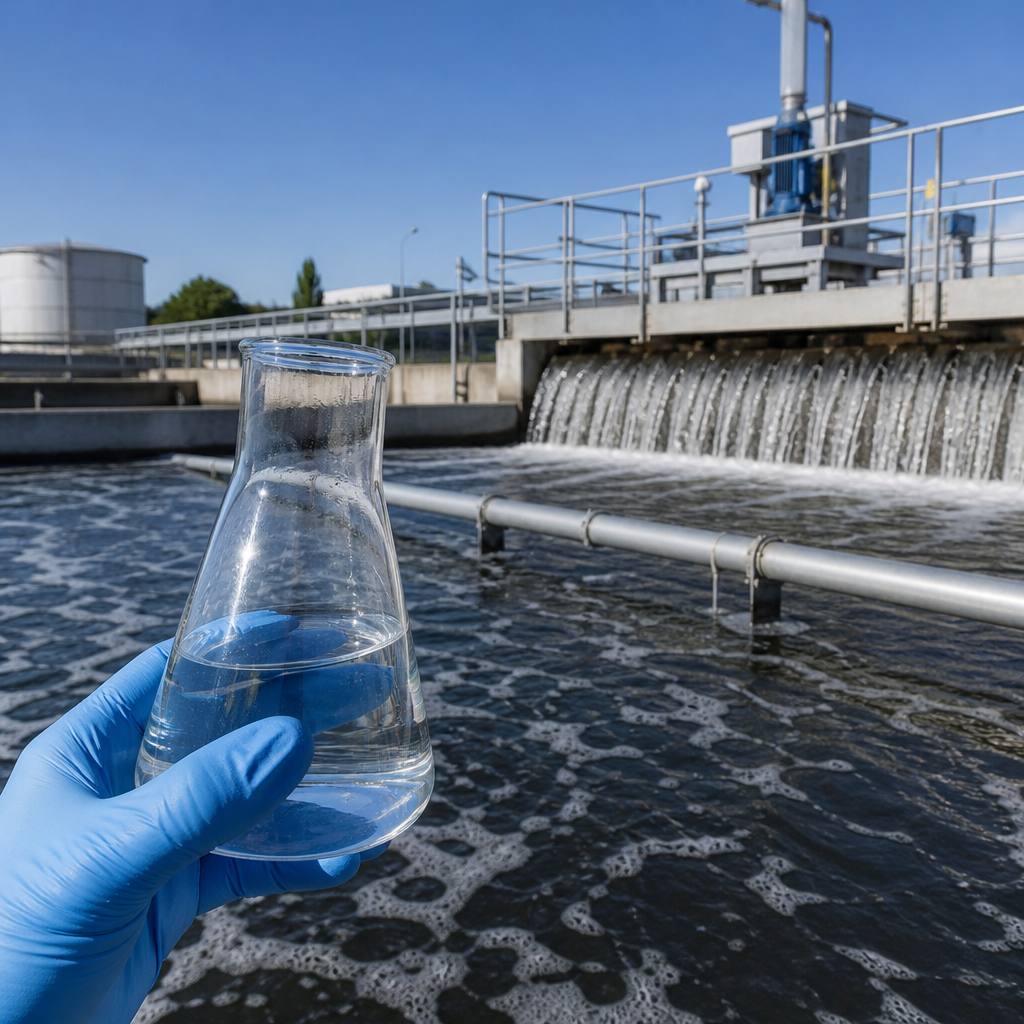
Nanotechnology in wastewater treatment is reshaping how engineers, utilities, and sanitation planners remove contaminants, recover resources, and design resilient EcoSan systems. In practical terms, nanotechnology refers to materials and structures engineered at roughly 1 to 100 nanometers, where surface area, reactivity, electrical behavior, and adsorption capacity differ sharply from bulk materials. Wastewater treatment includes the physical, chemical, and biological processes used to remove solids, pathogens, nutrients, metals, and emerging pollutants from sewage, greywater, industrial effluent, and decentralized sanitation streams. EcoSan, short for ecological sanitation, extends that mission by treating waste as a resource stream, emphasizing water reuse, nutrient recovery, energy efficiency, and reduced environmental harm.
I have worked with treatment teams evaluating membranes, adsorbents, and pilot polishing units, and the pattern is consistent: conventional plants still do most of the heavy lifting, but nano-enabled components increasingly solve the hardest problems at the margins. They target contaminants that slip through standard activated sludge, sand filtration, or chlorination, including pharmaceuticals, PFAS precursors, dyes, arsenic, chromium, and antibiotic-resistant microorganisms. They also improve compact, decentralized systems where land, energy, and operator attention are limited. That matters because rapid urbanization, water scarcity, stricter discharge permits, and public concern over micropollutants are pushing treatment performance beyond twentieth-century design assumptions.
This article serves as a hub for exploring cutting-edge EcoSan technologies through the lens of nanotechnology. It explains the main material classes, where they fit in treatment trains, what benefits they offer, and where the limitations remain. It also connects nano-enabled treatment to broader sanitation goals such as source separation, fecal sludge management, nutrient capture, and safe water reuse. For utilities, researchers, policy teams, and sustainability leaders, the central question is no longer whether nanotechnology has relevance in wastewater treatment. The useful question is where it delivers measurable value, under what operating conditions, and how to deploy it without creating new risks or unsustainable costs.
What nanotechnology does differently in wastewater treatment
The defining advantage of nanomaterials is surface-driven performance. Because nanoparticles and nanostructured media expose far more active area per unit mass than conventional media, they can adsorb, catalyze, separate, or disinfect more efficiently. Carbon nanotubes, graphene oxide, nano-iron, titanium dioxide, zinc oxide, silver nanoparticles, and metal-organic frameworks are among the most studied examples. In wastewater applications, these materials are rarely used as stand-alone miracles. They are embedded in membranes, fixed on supports, blended into beads, coated onto media, or used in hybrid reactors to improve selectivity, flux, regeneration, or antimicrobial action.
Three treatment functions dominate current adoption. First, adsorption captures dissolved contaminants onto highly active surfaces. This is especially relevant for heavy metals such as lead, cadmium, mercury, and arsenic, along with dyes and some pharmaceuticals. Second, catalysis breaks down contaminants chemically, often under light or with oxidants. Titanium dioxide photocatalysis is the classic example, generating reactive species that degrade organics and inactivate microbes. Third, nano-enabled membranes improve size exclusion, surface charge interactions, and fouling resistance. Nanofiltration and thin-film composite membranes can remove salts, natural organic matter, color, pathogens, and many trace contaminants more effectively than older membrane designs.
In EcoSan systems, that performance matters because treatment goals are broader than discharge compliance. A decentralized reuse system may need low-energy polishing before irrigation. A urine-diverting setup may require targeted nutrient recovery without introducing hazardous chemical residuals. A fecal sludge treatment line may need compact pathogen barriers in places where chlorination is inconsistent. Nano-enabled processes can help because they are modular, often fast acting, and increasingly compatible with resource recovery. The best implementations are not isolated gadgets. They are integrated steps inside treatment trains designed around influent quality, operator skill, local supply chains, and end-use standards for reclaimed water or recovered products.
Key nanomaterials and where each one fits
Different nanomaterials solve different wastewater problems, and choosing the right one depends on the contaminant profile. Nanoscale zero-valent iron is widely used for reductive transformation and adsorption, especially for chlorinated compounds, chromium, arsenic, and some industrial pollutants. Iron oxide nanoparticles are strong candidates for phosphate and arsenic capture and can be magnetically recoverable when engineered properly. Carbon-based materials, including graphene oxide and carbon nanotubes, offer high adsorption capacity for organic micropollutants and can improve membrane conductivity and strength. Silver nanoparticles are potent antimicrobials, though concerns about leaching and ecotoxicity limit where they should be used.
Titanium dioxide remains one of the most researched photocatalysts because it is chemically stable, relatively inexpensive, and effective under ultraviolet light. Researchers often modify it with dopants or pair it with other semiconductors to shift activity closer to visible light, which makes solar-assisted treatment more practical. Zinc oxide performs similarly in some oxidative processes but can be less stable under certain conditions. More advanced materials, including metal-organic frameworks and nanocomposites, are being explored for selective adsorption of nutrients, PFAS, and dissolved organics. These are promising, but they are often still constrained by scale-up complexity, regeneration chemistry, and long-term stability in real wastewater matrices.
| Nanomaterial | Primary function | Best-fit contaminants | Main limitation |
|---|---|---|---|
| Nanoscale zero-valent iron | Reduction and adsorption | Chromium, arsenic, chlorinated compounds | Passivation and recovery challenges |
| Iron oxide nanoparticles | Adsorption | Phosphate, arsenic, metals | Capacity drops in complex wastewater |
| Graphene oxide or carbon nanotubes | Adsorption and membrane enhancement | Pharmaceuticals, dyes, organics | Cost and potential release concerns |
| Titanium dioxide | Photocatalytic oxidation | Organic micropollutants, pathogens | Often needs UV and post-separation |
| Silver nanoparticles | Disinfection | Bacteria and some biofilms | Leaching, toxicity, regulatory caution |
In practice, immobilization is usually the difference between a lab success and an operationally credible system. Free nanoparticles can be hard to recover and may introduce environmental risk if discharged with sludge or effluent. That is why the strongest designs attach active materials to ceramic supports, polymer fibers, activated carbon, silica matrices, magnetic carriers, or membrane skins. Immobilization reduces release risk, supports regeneration, and fits utility procurement logic better than dosing loose nanomaterials into mixed wastewater. When teams evaluate technologies for EcoSan use, this point is decisive: performance data from clean water tests mean little unless the material remains stable, recoverable, and active in the presence of solids, competing ions, and variable pH.
Nano-enabled membranes, sensors, and hybrid systems
Membranes are where nanotechnology has moved closest to routine implementation. Nanofiltration, reverse osmosis, forward osmosis, membrane distillation, and membrane bioreactors increasingly use nanostructured layers or additives to raise permeability and lower fouling. Fouling is the operational enemy because it drives energy use, chemical cleaning, and downtime. By adding hydrophilic nanoparticles, antimicrobial coatings, or smoother active layers, manufacturers can reduce cake buildup and biofilm formation. In water reuse projects, I have seen nano-enhanced membrane polishing make the difference between technically acceptable effluent and consistently reliable recycled water that operators trust day after day.
Membrane bioreactors are especially relevant to EcoSan and decentralized treatment because they combine biological degradation with physical separation in a compact footprint. Nano-enabled variants can improve flux, solids retention, and resistance to microbial fouling. This matters for dense settlements, commercial campuses, hospitals, and remote facilities where land is scarce but reuse demand is high. Nanocomposite ceramic membranes are attracting attention because they tolerate harsh cleaning better than many polymeric membranes. Although capital costs are higher, lifespan and cleaning resilience can justify them in difficult industrial or high-strength sanitation applications.
Nanosensors are another emerging frontier. Real-time monitoring is a weak link in many sanitation systems, especially decentralized ones. Sensors built with nanostructured electrodes or coatings can improve sensitivity for ammonia, nitrate, phosphate, heavy metals, pathogens, and redox conditions. Better monitoring supports safer reuse because operators can detect process drift before effluent quality collapses. For example, a compact treatment unit serving a housing complex can use sensor-guided controls to trigger backwash, adjust aeration, or divert off-spec water. That kind of intelligence is essential if advanced EcoSan systems are going to scale beyond demonstration projects.
Hybrid systems are often the most practical route. A treatment train might pair anaerobic digestion for energy recovery, conventional biological treatment for bulk COD removal, nano-adsorbents for phosphorus capture, and membrane polishing for reuse. Another design might use source separation, struvite recovery, and then photocatalytic oxidation for residual pharmaceuticals. Nanotechnology performs best when it handles the contaminants or operating constraints that conventional processes struggle with. It should not be expected to replace screening, sedimentation, digestion, or nutrient management basics. It is a precision tool, and the strongest case for it is made when it upgrades an already sound treatment architecture.
How nanotechnology supports cutting-edge EcoSan goals
EcoSan is not only about cleaner effluent. It is about closing loops. Nanotechnology contributes when it improves water reuse, nutrient recovery, pathogen control, and treatment decentralization without undermining affordability or environmental safety. For greywater reuse, nano-enabled membranes and adsorbents can remove surfactants, color, odor compounds, and trace organics to produce water suitable for flushing or irrigation. For blackwater and fecal sludge, antimicrobial nanocoatings and advanced oxidation can strengthen pathogen barriers where retention times are short. For urine-diversion systems, nanostructured sorbents can help capture phosphorus or polish recovered nutrient streams before agricultural use.
One of the strongest examples is phosphate recovery. Excess phosphorus in discharged effluent drives eutrophication, yet phosphorus is also a finite agricultural resource. Iron-based nanomaterials and tailored sorbents can selectively bind phosphate from side streams, after which it may be desorbed or incorporated into recovery products. In parallel, magnesium-based approaches can support struvite precipitation, producing a slow-release fertilizer when chemistry is controlled correctly. The EcoSan value is obvious: instead of paying only to remove a pollutant, the system recovers a nutrient that has local agricultural relevance.
Another important use case is decentralized reuse in water-stressed regions. Compact systems serving resorts, schools, peri-urban neighborhoods, or industrial parks need reliable polishing technologies that can tolerate variable flows. Nano-enabled membranes and photocatalytic modules fit this niche because they can be containerized, automated, and tuned to meet nonpotable reuse standards. However, successful deployment depends on maintenance discipline, spare parts access, and sludge or concentrate management. In my experience, the projects that last are the ones that budget for operator training and consumables from the start, not the ones that assume advanced materials will compensate for weak operations.
Limits, safety concerns, and what deployment requires next
The biggest barrier to widespread adoption is not scientific promise. It is implementation realism. Nanomaterials that perform brilliantly in synthetic wastewater often lose efficiency in real effluent because dissolved organic matter, suspended solids, hardness, and competing ions block active sites or foul surfaces. Regeneration chemicals can be expensive or hazardous. Membrane gains may be offset by concentrate disposal challenges. Some materials remain too costly for municipal scale, especially in low-resource settings. These are not reasons to dismiss nanotechnology in wastewater treatment, but they are reasons to evaluate life-cycle cost, embodied energy, and operational complexity with the same rigor used for contaminant removal data.
Safety and regulation also matter. The possibility of nanoparticle release into effluent, biosolids, soils, or receiving waters is a legitimate concern, particularly for silver, certain carbon nanomaterials, and poorly immobilized particles. Risk assessment should cover worker exposure during manufacture, handling, cleaning, and media replacement, not just end-of-pipe discharge. Established methods such as life-cycle assessment, material flow analysis, and leach testing should be standard in procurement and pilot design. Regulatory frameworks are still evolving, so utilities and developers need conservative design choices, documented monitoring plans, and preference for immobilized or recoverable materials whenever possible.
The path forward is clear. Pilot under real conditions, compare against conventional benchmarks, measure total cost of ownership, and match the technology to a specific treatment bottleneck. The most credible opportunities today include membrane enhancement for reuse, selective adsorbents for nutrients and metals, catalytic polishing of persistent organics, and sensor integration for decentralized control. For anyone building a roadmap under Technological Innovations and Research, this hub should guide the next questions: which contaminants matter most, which treatment train already exists, what resource recovery target is valuable, and what operational capacity is available? Answer those well, and nanotechnology becomes not a buzzword, but a practical new frontier worth pursuing.
Frequently Asked Questions
1. What is nanotechnology in wastewater treatment, and why is it considered a new frontier?
Nanotechnology in wastewater treatment involves the use of materials, coatings, membranes, and engineered structures designed at the nanoscale, typically between 1 and 100 nanometers, to improve how contaminants are detected, captured, degraded, or separated from water. At this scale, materials often behave very differently from their conventional forms. They can have much higher surface area, stronger adsorption properties, unique catalytic activity, and enhanced electrical or antimicrobial behavior. These characteristics make them especially useful in treating complex wastewater streams that contain nutrients, pathogens, heavy metals, pharmaceuticals, dyes, industrial chemicals, and emerging contaminants that are difficult to remove with traditional methods alone.
It is considered a new frontier because it expands what wastewater systems can do beyond simple pollutant removal. Nanotechnology supports more selective treatment, faster reaction rates, lower chemical demand, and better integration with advanced treatment trains. For example, nanomaterials can be embedded in membranes to reduce fouling, used as catalysts to break down persistent organic compounds, or applied as adsorbents to capture trace contaminants at very low concentrations. In EcoSan and resource-oriented sanitation planning, this matters because treatment is no longer just about disposal. It is increasingly about water reuse, nutrient recovery, energy efficiency, resilience, and protecting public health under tighter regulatory standards and growing water stress.
In practical engineering terms, nanotechnology is not necessarily a standalone replacement for existing treatment systems. More often, it enhances physical, chemical, and biological processes already used in wastewater treatment plants, decentralized sanitation systems, industrial pretreatment, and reuse applications. That ability to improve performance while enabling more compact, efficient, and targeted treatment is why nanotechnology is attracting attention from utilities, engineers, researchers, and planners worldwide.
2. How do nanomaterials actually help remove contaminants from wastewater?
Nanomaterials help remove contaminants through several core mechanisms, and their effectiveness comes from the fact that nanoscale design can greatly increase contact between the material and the pollutants in water. One major mechanism is adsorption. Nanomaterials such as carbon nanotubes, graphene-based materials, metal oxides, and nanoscale zeolites can attract and bind pollutants onto their surfaces. This is particularly useful for removing heavy metals like lead, arsenic, cadmium, and chromium, as well as organic pollutants such as pesticides, dyes, and certain pharmaceutical residues.
Another important mechanism is catalysis. Some nanoparticles, including titanium dioxide and zero-valent iron nanoparticles, can accelerate chemical reactions that break contaminants into less harmful compounds. In advanced oxidation processes, nanocatalysts may help generate reactive species that degrade persistent organics that conventional biological treatment struggles to remove. This has important implications for dealing with micropollutants, endocrine-disrupting compounds, and industrial wastewater constituents that can pass through standard treatment systems.
Nanomaterials also improve membrane treatment. When incorporated into filtration membranes, they can increase permeability, improve selectivity, reduce biofouling, and enhance mechanical strength. In practical terms, that can mean better removal of pathogens, suspended solids, salts, and dissolved contaminants with lower energy penalties or longer membrane life. Silver nanoparticles, for instance, have been studied for antimicrobial properties, while graphene oxide and other nanostructures are being explored for next-generation filtration performance.
In biological systems, nanotechnology can also play a supporting role by improving microbial stability, electron transfer, or nutrient capture under specific operating conditions. For sanitation planners and treatment designers, the key point is that nanomaterials can be tailored to target particular contaminants or process limitations. Instead of relying on a one-size-fits-all treatment approach, nanotechnology opens the door to more precise, application-specific solutions across municipal, industrial, and decentralized wastewater systems.
3. What are the main benefits of using nanotechnology in wastewater treatment and EcoSan systems?
The main benefits of nanotechnology in wastewater treatment include higher removal efficiency, better performance against hard-to-treat pollutants, improved process intensification, and greater flexibility in system design. Conventional wastewater treatment is effective for many bulk pollutants such as suspended solids and biodegradable organics, but it may struggle with trace contaminants, toxic metals, antibiotic residues, nutrient polishing, and pathogen control under variable operating conditions. Nanotechnology helps close those gaps by providing more reactive, selective, and efficient treatment tools.
For EcoSan systems, the benefits are especially important because these systems often aim to recover value rather than simply discard waste. Nanotechnology can support cleaner water reuse, safer effluent discharge, and more reliable treatment in compact or decentralized settings. It can also contribute to nutrient management by improving separation and polishing stages that protect downstream reuse pathways. In settings where space, water availability, or energy supply are limited, nanoscale-enabled treatment units may help reduce footprint and improve operational performance.
Another major benefit is resilience. Wastewater composition can fluctuate widely depending on industrial discharge, stormwater intrusion, population patterns, and source separation strategies. Nanotechnology-enhanced membranes, adsorbents, and catalytic systems can offer more robust performance under changing conditions, especially when integrated into hybrid treatment trains. This is increasingly relevant as utilities face climate stress, stricter discharge limits, and rising public expectations around water quality and circular resource management.
There are also potential lifecycle advantages. If properly designed and managed, nanomaterials may reduce chemical consumption, shorten treatment time, improve removal at lower concentrations, and support automation or smart monitoring through nanosensors. While not every application is commercially mature, the broader promise is clear: nanotechnology can help wastewater treatment become more efficient, more adaptive, and more aligned with modern sustainability goals, including water reuse, public health protection, and resource recovery.
4. Are there any risks or challenges associated with nanotechnology in wastewater treatment?
Yes, and this is an important part of the conversation. While nanotechnology offers major performance advantages, its adoption must be guided by careful risk assessment, sound engineering, and clear regulatory oversight. One of the primary concerns is the potential release of nanoparticles into treated effluent, sludge, or the broader environment. Because nanomaterials can behave differently from larger particles, researchers and regulators are closely studying their toxicity, persistence, mobility, and interaction with aquatic organisms, soil systems, and human health pathways.
Another challenge is operational and economic practicality. Some nanomaterials perform extremely well in laboratory conditions but are more difficult to scale in real wastewater, where water chemistry is variable and foulants are abundant. Wastewater is a complex matrix containing solids, organics, salts, microbes, and competing contaminants, all of which can reduce performance or complicate material recovery. In addition, production costs, regeneration requirements, disposal methods, and long-term durability all influence whether a nanotechnology solution is feasible for municipal utilities or decentralized sanitation programs.
There are also questions around standardization and regulation. Because nanotechnology spans many material types and treatment functions, performance metrics and safety protocols are not always uniform across applications or regions. Engineers and utilities need reliable data on removal efficiency, life-cycle impacts, maintenance requirements, and end-of-life management before making large-scale investments. This is particularly important in public infrastructure, where technologies must be dependable, cost-justified, and compatible with existing treatment standards.
The good news is that these challenges are not reasons to avoid nanotechnology altogether. Rather, they highlight the need for responsible implementation. The most promising path forward is often controlled integration, where nanotechnology is used in immobilized forms, embedded in membranes or composite media, or applied in well-contained reactor systems. With proper design, monitoring, and regulation, many of the benefits can be captured while minimizing environmental and operational risks.
5. What does the future of nanotechnology in wastewater treatment look like?
The future of nanotechnology in wastewater treatment is likely to be defined by smarter integration, safer materials, and stronger alignment with circular water management. Instead of viewing nanotechnology as an isolated innovation, the industry is moving toward hybrid systems that combine nanoscale materials with biological treatment, membrane processes, electrochemical systems, advanced oxidation, and digital monitoring tools. This integrated approach is especially promising because wastewater challenges are rarely solved by a single unit process. More often, the goal is to build treatment trains that are efficient, adaptable, and targeted to local water quality, reuse goals, and infrastructure constraints.
One important trend is the development of multifunctional materials. Future nanomaterials may be designed not only to remove contaminants but also to resist fouling, self-regenerate, support nutrient recovery, or enable real-time sensing. This could significantly improve plant control and reduce operating costs. Nanosensors, for example, may help utilities detect pathogens, toxic spikes, or process failures faster and more accurately, allowing operators to respond before compliance issues or public health risks escalate.
Another likely direction is safer-by-design innovation. Researchers are increasingly focused on creating nanomaterials that deliver high treatment performance while reducing concerns about toxicity, persistence, or uncontrolled release. Immobilized nanocomposites, recoverable magnetic nanoparticles, and durable membrane-embedded materials are all part of this broader shift toward practical and responsible deployment. As regulatory frameworks mature, utilities and sanitation planners will have better guidance on when and how these technologies should be used.
For EcoSan and long-term water resilience, the future role of nanotechnology could be transformative. It may help communities treat wastewater to higher reuse standards, recover valuable resources more effectively, and operate decentralized systems with greater reliability