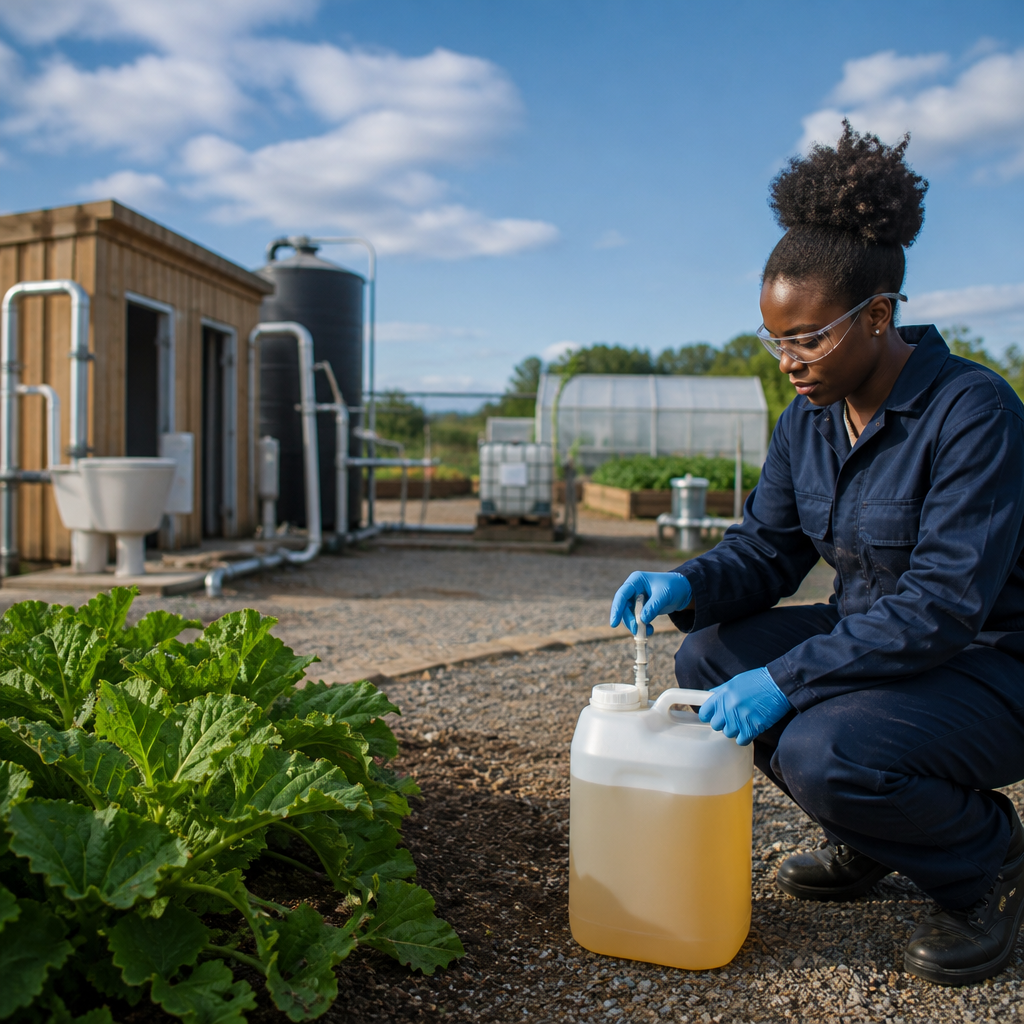
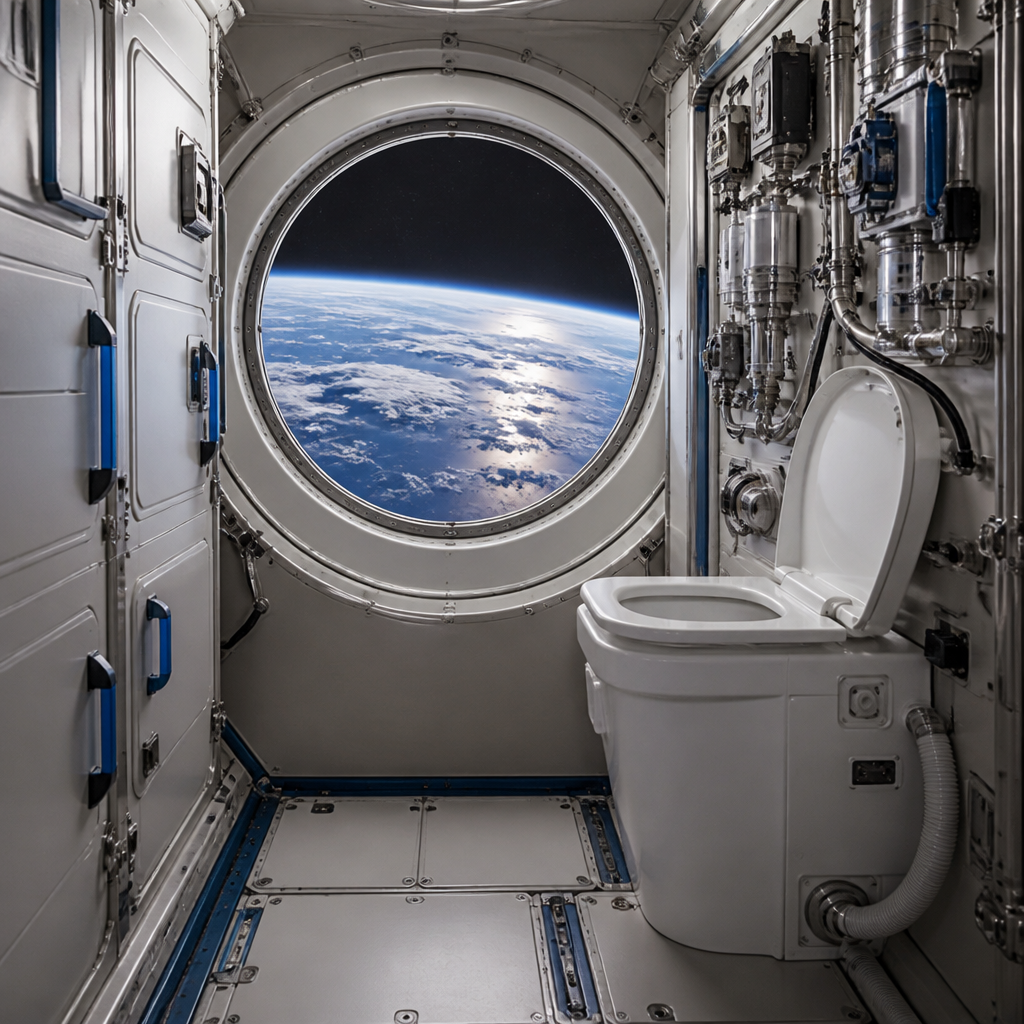
EcoSan in space turns sanitation from a routine utility into a mission-critical life-support function, because every drop of water, every gram of waste, and every square centimeter of habitable volume must be managed with precision. Ecological sanitation, usually shortened to EcoSan, refers to systems that treat human waste as a resource stream rather than something to be discarded. In terrestrial settings, that often means separating urine and feces, recovering nutrients, reducing water use, and preventing pollution. In spacecraft, lunar habitats, and Mars analog stations, the same principles apply under harsher constraints: microgravity, radiation, closed-loop resource limits, strict mass budgets, and zero tolerance for contamination.
I have worked on sanitation and water-reuse planning for remote facilities, and the core lesson carries directly into space systems: toilets are not isolated fixtures. They are interfaces between human health, environmental control, water recovery, maintenance labor, and mission architecture. If sanitation fails on Earth, a site becomes unpleasant. If sanitation fails in orbit or on a long-duration mission, crew safety, air quality, potable water recovery, and schedule integrity are all threatened at once. That is why space agencies increasingly evaluate sanitation within the broader framework of in-situ resource utilization, regenerative life support, and habitat resilience.
This matters now because human spaceflight is shifting from short missions to sustained habitation. The International Space Station proved that water recovery can reach high efficiency, with urine and humidity condensate processed into potable water. NASA, ESA, JAXA, and commercial station developers are now designing systems for longer stays with smaller resupply margins. Lunar surface missions under Artemis, private space stations, and eventual Mars transit demand sanitation that uses less water, needs fewer spare parts, controls odor and pathogens reliably, and recovers value from waste. EcoSan technologies answer those needs by emphasizing separation, stabilization, reuse, and system integration.
For readers exploring technological innovations and research, this hub article maps the major EcoSan technologies for extreme environments, explains what already works, and highlights where innovation is accelerating. It also points toward the central design question every mission team must answer: how do you transform unavoidable human waste into safe outputs, useful inputs, and minimal operational burden?
Why sanitation becomes a life-support technology in extreme environments
In extreme environments, sanitation is inseparable from life support because waste handling affects water supply, microbial control, crew time, and hardware reliability. A conventional flush toilet is impossible in most spacecraft because gravity cannot move liquids downward, large water volumes are unacceptable, and untreated waste cannot simply be discharged. Space sanitation systems therefore rely on airflow, vacuum-assisted transfer, containment, and highly engineered interfaces. The Universal Waste Management System developed for NASA missions, for example, reduced mass and volume compared with previous space toilets while improving ergonomics and compatibility across vehicles. Those gains matter because launch costs, habitat volume, and crew adaptability all influence mission success.
Closed environments magnify contamination risks. A minor leak that would be manageable in a terrestrial utility room can aerosolize droplets, foul filters, or spread microbes through ventilation in microgravity. Odor control also has a technical basis, not a cosmetic one. Volatile compounds indicate decomposition pathways and can degrade crew comfort, interfere with sensors, or signal containment failures. In polar stations, submarines, and desert research outposts, I have seen maintenance teams judge the quality of a system by one simple metric: how little unplanned attention it demands. Space crews need the same reliability, but with fewer repair options and much higher consequences.
The design criteria are therefore unusually strict. Systems must minimize water demand, tolerate variable crew use, prevent pathogen spread, operate under vibration and off-nominal gravity, and interface with resource recovery hardware. They also must support gender-inclusive ergonomics, easy cleaning, and predictable maintenance. A sanitation technology that recovers nutrients beautifully in a lab is still unsuitable if it clogs easily, requires daily calibration, or exposes crew to biohazards during cartridge changes. The best EcoSan designs for space win by balancing recovery efficiency with operational simplicity.
Core EcoSan principles adapted for orbit, lunar bases, and Mars missions
EcoSan in extreme environments rests on four principles: source separation, water minimization, safe treatment, and resource recovery. Source separation means collecting urine, feces, and hygiene wastewater as distinct streams whenever possible. Urine contains most recoverable nitrogen and potassium, while feces hold much of the organic carbon and phosphorus. Keeping them separate reduces treatment complexity and can prevent the formation of problematic precipitates such as struvite in pipes if chemistry is controlled properly. Separation also supports targeted sterilization rather than forcing one oversized process to handle every waste type.
Water minimization is the second principle. Dry or near-dry collection methods outperform flush systems where water is expensive to launch or recover. Vacuum transport, urine funnels, rotating separators, absorbent liners, and mechanical dewatering all reduce liquid loads. Safe treatment is the third principle, covering pathogen inactivation, odor suppression, and stabilization for storage. Technologies include drying, alkaline treatment, supercritical oxidation concepts, membrane processing, and thermal methods such as pyrolysis. The fourth principle is resource recovery: reclaiming water, nutrients, and energy carriers that support habitat operations. On Mars, for instance, recovered nutrients could eventually supplement food production systems, while dried solids might feed thermal conversion units that generate gases or char for secondary uses.
These principles are not speculative abstractions. They already guide how engineers evaluate tradeoffs in equivalent system mass, a standard metric that converts mass, volume, power, cooling, and crew time into a comparable mission cost figure. A device that weighs less but needs constant crew servicing may lose to a heavier automated unit. Likewise, a toilet that captures urine efficiently but complicates downstream distillation may not be optimal within the total habitat loop. EcoSan succeeds in space when the full chain, from user interface to final reuse, is designed as one integrated system.
Current technologies enabling waste capture, stabilization, and water recovery
The most mature space sanitation technologies focus on collection and water recovery. Modern spacecraft toilets use airflow to direct waste into collection hardware, replacing gravity with controlled suction. Urine is typically routed to storage or processing units that feed water recovery systems. On the ISS, urine processing has historically involved distillation under reduced pressure, followed by polishing steps in the broader water processor. NASA has pursued brine concentration improvements to recover more water from residual waste streams, because each additional percentage point lowers resupply demand and improves mission autonomy.
Fecal waste remains more challenging. On short missions it can be stored, dried partially, and returned or discarded, but long-duration habitats need better stabilization. Drying reduces mass, odor, and microbial activity. Compaction lowers storage volume. Chemical pretreatment can inhibit microbial growth, though chemical consumables add logistics burdens. Some research programs are studying torrefaction and pyrolysis to convert solids into sterile char, condensable liquids, and gases. These thermal pathways are attractive because they reduce pathogen risk and may yield byproducts useful for further processing, but they require careful control of energy input, emissions, and residue handling.
Membrane technologies also play a growing role. Forward osmosis, membrane distillation, and vapor compression can help extract water from difficult waste streams. In remote terrestrial installations, membrane fouling is often the factor that separates promising pilots from dependable operations. That same reality applies in space, where maintenance windows are tighter and replacement inventory is limited. Engineers therefore pair membranes with pretreatment, robust monitoring, and conservative operating envelopes. Reliability is not glamorous, but in sanitation it is the decisive innovation.
| Technology | Main purpose | Primary advantage | Key limitation |
|---|---|---|---|
| Airflow-assisted vacuum toilet | Waste capture in microgravity | Low water use and controlled containment | Needs precise airflow management and crew training |
| Urine distillation and polishing | Water recovery | High recovery supports closed-loop supply | Brine management remains difficult |
| Fecal drying and compaction | Stabilization and storage | Reduces odor, mass, and microbial activity | Does not fully recover nutrients by itself |
| Pyrolysis or torrefaction | Thermal conversion of solids | Sterilizes waste and reduces storage volume | Energy demand and gas cleanup complexity |
| Membrane-based water extraction | Residual moisture recovery | Can improve total loop efficiency | Fouling and maintenance sensitivity |
Emerging research in nutrient recovery, bioprocessing, and closed-loop habitat design
The next frontier in EcoSan technologies is shifting from disposal efficiency to circular resource use. Urine is especially valuable because it contains urea, ammonium, phosphorus, sulfur, and trace minerals. On Earth, source-separated urine can be stabilized and processed into fertilizers such as struvite or concentrated nutrient solutions. In space, the same chemistry could support hydroponics or bioregenerative life-support systems, provided contaminants such as pharmaceuticals, excess salts, and cleaning residues are controlled. Researchers are exploring electrochemical oxidation, ion exchange, selective adsorption, and precipitation reactors to recover nutrients while producing cleaner water streams.
Bioprocessing is another active area. Anaerobic digestion is well established terrestrially, but microgravity, low feed volumes, and process instability complicate direct transfer to spacecraft. Even so, hybrid bioreactors may become viable for lunar or Mars habitats where partial gravity and longer occupancy improve operating conditions. Certain microbial consortia can transform organic waste into methane, carbon dioxide, and stabilized digestate. Methane could be used as a fuel precursor in specific architectures, while carbon dioxide can feed plant growth systems. The challenge is maintaining stable biology under radiation, variable load, and strict contamination control requirements.
In my experience, the strongest concepts are those that combine simple front-end separation with modular downstream processing. A habitat might use a robust dry toilet and urine diversion unit today, then add nutrient recovery modules as mission duration increases. That phased approach mirrors how remote communities adopt sanitation upgrades on Earth: first protect health, then improve recovery, then optimize economics. Space systems benefit from the same sequencing. It limits early mission risk while preserving a pathway toward genuinely regenerative sanitation infrastructure.
Design lessons from Earth analogs and what they reveal about future space systems
Extreme terrestrial environments provide the best practical lessons for EcoSan in space. Antarctic research stations deal with isolation, seasonal resupply, freezing conditions, and strict environmental protection under the Antarctic Treaty System. Submarines operate in closed atmospheres with limited storage and rigorous hygiene rules. Mining camps, disaster-response sites, and desert field laboratories routinely confront water scarcity, maintenance constraints, and mixed user populations. Across these settings, the successful sanitation systems share three traits: they separate waste streams early, keep operator tasks simple, and include clear failure-mode planning.
One recurring lesson is that human factors matter as much as process engineering. A technically elegant urine-diversion system fails if users cannot align properly while suited, fatigued, or adapting to partial gravity. A maintenance procedure fails if gloves, fasteners, and access panels are awkward in confined spaces. NASA’s iterative toilet design work reflects this reality. Crew feedback on fit, restraint, airflow cues, acoustic comfort, and cleaning steps is not secondary; it is central to system performance. When people use sanitation hardware incorrectly, downstream treatment suffers immediately.
Another lesson is that sterilization alone is not enough. A system can kill pathogens and still create operational problems if it produces corrosive condensate, sticky residues, or hard mineral scale. Struvite scaling is a classic example in urine systems, caused by magnesium, ammonium, and phosphate precipitation under favorable pH conditions. Engineers combat it with chemistry control, flush strategies, material selection, and line design. These practical details rarely make headlines, yet they determine whether a promising EcoSan technology will survive beyond a prototype.
How to evaluate EcoSan technologies for extreme environments
The best way to evaluate EcoSan technologies is to score them against mission-specific criteria rather than chasing a universal solution. Start with mission duration, crew size, gravity level, and resupply assumptions. Then assess water recovery rate, pathogen reduction, power demand, mass, consumables, maintenance time, fault tolerance, and compatibility with agriculture or other reuse systems. Equivalent system mass remains useful, but it should be paired with reliability metrics such as mean time between failures, repair complexity, and spare-part dependence.
Decision-makers should also ask direct operational questions. Can the system be cleaned safely in a spacesuit-adjacent environment? What happens during a power outage or airflow loss? Does the process create brines, ash, or concentrated chemicals that need secondary treatment? Are sensors robust enough to detect failure early? Can one module be isolated without shutting down the entire sanitation chain? These questions turn sanitation selection from a procurement exercise into risk management.
For organizations building research agendas in technological innovations and research, this hub topic is best explored through linked subtopics: urine diversion technology, fecal drying and thermal treatment, membrane water recovery, nutrient reclamation chemistry, human factors in toilet design, and sanitation integration with bioregenerative life support. Together they form the roadmap for sanitation systems that are lighter, safer, and more regenerative than anything used in previous eras of spaceflight.
EcoSan in space is no longer a niche thought experiment. It is a practical engineering field at the intersection of sanitation, life support, resource recovery, and habitat design. The essential idea is simple: treat waste as a controlled resource stream, not an endpoint. In extreme environments, that approach reduces water demand, strengthens mission resilience, and opens pathways to nutrient and energy recovery that become increasingly valuable as missions get longer and farther from Earth.
The strongest technologies today are those that already solve immediate operational problems: airflow-assisted waste capture, urine processing, drying, compaction, and careful containment. The most promising innovations are pushing beyond containment toward circularity through nutrient recovery, membrane refinement, modular thermal conversion, and integration with food production systems. None of these options is perfect. Every design carries tradeoffs in power, crew time, complexity, and byproduct management. But the direction is clear. Future lunar and Mars habitats will need sanitation systems that recover more, waste less, and fail more gracefully than legacy hardware.
If you are building out your understanding of technological innovations and research, use this hub as the starting point for deeper study into each enabling technology. Map the sanitation chain from user interface to final reuse, compare options at the system level, and focus on reliability as much as recovery. That is how EcoSan becomes not just possible in space, but indispensable.
Frequently Asked Questions
1. What does EcoSan mean in the context of space missions?
In space, EcoSan refers to ecological sanitation systems designed to recover value from human waste while protecting crew health and conserving critical mission resources. Instead of treating urine, feces, and hygiene wastewater as disposal problems, EcoSan approaches view them as inputs for a tightly managed life-support loop. That can include recovering water for reuse, capturing nutrients that may support food production, reducing the need for expendable supplies, and minimizing the total mass that must be launched from Earth.
This matters because spacecraft and planetary habitats operate under extreme constraints. Water is limited, storage volume is scarce, and waste cannot simply be flushed away into a municipal treatment system. Every subsystem must justify its mass, power demand, maintenance burden, and reliability. EcoSan in space therefore goes beyond basic sanitation. It becomes part of environmental control and life support, linking toilets, air management, water recycling, microbial safety, odor control, and possibly even agriculture into one integrated system.
The space version of EcoSan is also more technically demanding than most Earth-based applications. Systems must function in microgravity or reduced gravity, prevent floating droplets and particles, contain pathogens, operate with minimal crew time, and remain dependable over long missions where resupply is limited or impossible. In short, EcoSan in space is about turning sanitation into a closed-loop engineering function that supports survival, sustainability, and mission endurance.
2. Why is sanitation considered a mission-critical life-support function in extreme space environments?
Sanitation is mission-critical in space because failure affects far more than comfort. A breakdown in waste handling can quickly threaten water quality, cabin air, crew health, equipment function, and mission operations. On Earth, sanitation failures are serious but often isolated by infrastructure, redundancy, and the ability to repair or replace systems quickly. In space, the habitat itself is the entire environment. If sanitation is compromised, contamination can spread through the same limited air and water systems the crew depends on to stay alive.
Waste also interacts directly with the mass and energy economics of a mission. Stored waste takes up valuable volume, generates odor, may release gases, and can create biological hazards if not stabilized. At the same time, discarded waste can represent a loss of water, carbon, nitrogen, phosphorus, and other useful materials. When missions extend from days to months or years, throwing those resources away becomes increasingly impractical. That is why advanced sanitation is closely tied to regenerative life-support strategies, where recovery and reuse are more important than one-way disposal.
Extreme environments raise the stakes even further. Microgravity changes how liquids and solids behave, making separation and transport difficult. Lunar dust or Martian dust can complicate habitat cleanliness and maintenance. Reduced gravity affects plumbing assumptions, and remote operations mean repairs may have to be performed by astronauts with limited spare parts. Because of all this, sanitation in space is not a background utility. It is a core system that must be engineered with the same seriousness as air supply, thermal control, and water recycling.
3. How can EcoSan technologies recover water and nutrients from waste in space?
EcoSan systems in space typically begin with source separation, especially separating urine from feces as early as possible. Urine contains most of the recoverable nitrogen and a significant share of the water in human excreta, while feces contain organic matter, carbon, phosphorus, and a different microbial profile. Keeping these streams separate simplifies treatment, improves efficiency, and reduces the risk of forming difficult sludge mixtures. Source separation also aligns with spacecraft engineering, where distinct handling pathways can be optimized for fluid recovery, solids stabilization, and contamination control.
Water recovery often relies on a mix of physical and chemical processes. Urine can be processed through distillation, membrane systems, catalytic oxidation, or other advanced treatment methods to recover water suitable for polishing into potable quality. Hygiene wastewater may also be filtered and recycled. The challenge is not just extracting water, but doing so while controlling scaling, fouling, volatile contaminants, and microbial growth. In a closed habitat, treatment systems must consistently produce safe recycled water without introducing harmful compounds into either the water loop or the cabin atmosphere.
Nutrient recovery is more complex but highly promising for long-duration missions. Nitrogen can potentially be captured from urine in stable forms, while phosphorus and potassium may be recovered from solid or liquid streams for use in plant growth systems. Fecal solids may undergo drying, stabilization, or biochemical conversion processes that reduce pathogen risk and transform waste into safer, more manageable material. In future lunar or Martian habitats, these recovered nutrients could help support bioregenerative agriculture, reducing dependence on resupply. The overall goal is to convert waste from a liability into a controlled resource stream that supports water security, food production, and system resilience.
4. What engineering challenges make EcoSan systems difficult to design for spacecraft and planetary habitats?
The biggest engineering challenge is that space sanitation must work reliably in environments where normal gravity cannot be assumed. On Earth, many toilets and treatment systems depend on gravity for flow, settling, drainage, and phase separation. In orbit, fluids cling to surfaces, droplets float, and solids do not settle in predictable ways. Designers must rely on airflow, pressure differentials, rotating equipment, specialized geometries, and carefully controlled interfaces to move waste where it needs to go without leaks, aerosols, or cross-contamination.
Another major challenge is balancing closure with safety. The more a system recovers and reuses, the more it must carefully control pathogens, trace contaminants, and chemical byproducts. A closed-loop EcoSan design has to manage odors, corrosion, clogging, biofilms, maintenance access, sensor reliability, and user variability, all while operating within strict constraints on mass, volume, power, and noise. Crew time is also a critical design parameter. A technically elegant system that requires frequent cleaning, calibration, or troubleshooting may be unacceptable in practice because astronauts have many other mission duties.
Planetary habitats add another layer of complexity. A Moon or Mars base may have partial gravity, long operating durations, exposure to dust, thermal extremes, and limited resupply. Systems may need to interface with local habitat infrastructure, agricultural modules, and storage or processing units for recovered materials. Redundancy becomes essential, but redundancy adds mass and complexity. The best EcoSan technologies for space therefore tend to be those that are robust, modular, repairable, and tolerant of off-nominal conditions. Engineering success is not just about maximizing recovery rates. It is about achieving dependable performance under harsh conditions with minimal risk to crew and mission.
5. Could EcoSan in space influence sanitation technologies back on Earth?
Yes, and that is one of the most exciting aspects of the field. Space-driven EcoSan innovation often produces solutions for places on Earth where water is scarce, infrastructure is limited, or waste treatment must be decentralized. Technologies designed for spacecraft must be compact, efficient, low-water, and highly resource-conscious. Those same qualities are valuable in remote communities, disaster response settings, military operations, polar research stations, dense urban buildings, and off-grid developments. In that sense, space can act as a demanding test bed for next-generation sanitation systems.
One likely area of crossover is ultra-efficient water recovery. Treatment systems that can reclaim water from difficult waste streams using minimal consumables have clear value in drought-prone regions and high-cost infrastructure environments. Another is nutrient recovery. If space systems can safely capture nitrogen and phosphorus in stable, usable forms, that knowledge can help improve circular sanitation models on Earth, where nutrient pollution and fertilizer dependency are major concerns. Advances in sensors, automation, microbial monitoring, and fault-tolerant design may also improve the reliability of distributed sanitation systems in challenging terrestrial settings.
Just as important, space EcoSan reinforces a broader mindset shift. It frames sanitation not as a hidden disposal service, but as a resource management discipline tied to water, food, energy, and public health. That systems-thinking perspective is increasingly relevant on Earth as communities confront climate stress, population growth, and the need for more circular infrastructure. So while the engineering details may differ, the core lesson travels well: when resources are limited, smart sanitation is not optional. It is foundational.