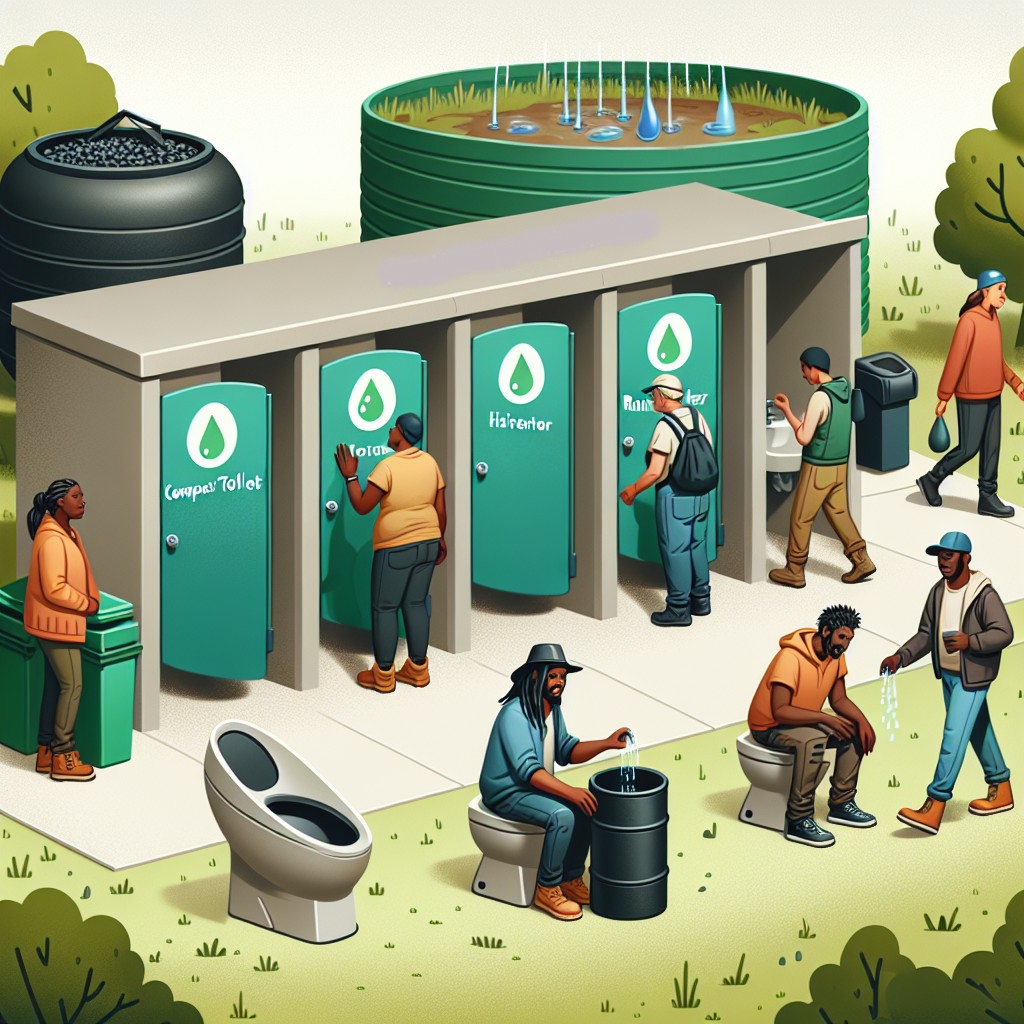
Homelessness is a significant global issue, with sanitation being one of the most pressing challenges faced by this vulnerable population. Traditional sanitation solutions often fail to address the unique needs of homeless individuals, leading to severe health and environmental consequences. Ecological sanitation (EcoSan) offers a sustainable and innovative approach to meet these needs effectively. This article explores how EcoSan can transform sanitation for the homeless, providing both ecological and human benefits.
Understanding EcoSan
Ecological sanitation, or EcoSan, is an approach that treats human waste as a valuable resource rather than mere waste. It involves the separation, treatment, and reuse of urine and feces. The key principles of EcoSan include resource recovery, separation at source, the no-waste concept, localization, and sustainability.
Resource Recovery: EcoSan systems focus on recovering valuable nutrients, energy, and water from human waste, which can then be reused in agriculture and other applications.
Separation at Source: By separating urine and feces at the source, EcoSan systems can treat each waste stream differently, improving the efficiency of nutrient recovery and pathogen removal.
No Waste Concept: EcoSan operates on the principle that waste can be repurposed as a valuable resource, thus minimizing environmental contamination.
Localization: These systems often rely on decentralized solutions, which reduce the need for extensive infrastructure and promote community involvement.
Sustainability: EcoSan practices aim to be environmentally sustainable by conserving water and energy and reducing emissions.
Benefits of EcoSan for the Homeless
EcoSan systems provide numerous benefits that make them ideal for addressing the sanitation needs of the homeless population:
1. Health and Hygiene: EcoSan systems reduce the spread of sanitation-related diseases by providing safe and hygienic ways to manage human waste. This minimizes environmental contamination and protects public health, leading to lower rates of illness and reduced healthcare costs.
2. Environmental Sustainability: Traditional sanitation systems require significant amounts of water and energy. In contrast, EcoSan systems conserve water and energy by recycling waste and reducing the ecological footprint of sanitation. This helps mitigate climate change by reducing methane emissions from untreated waste and decreasing the need for energy-intensive fertilizer production.
3. Economic Advantages: EcoSan systems can reduce costs associated with water treatment, sewage infrastructure, and synthetic fertilizers. The reuse of treated waste products locally can create economic opportunities, particularly in agriculture. This is beneficial for homeless communities engaged in urban farming or gardening.
4. Empowering Vulnerable Populations: Access to proper sanitation is crucial for the dignity and empowerment of homeless individuals. EcoSan systems can be designed to meet gender-specific needs, providing safe and private facilities that enable women and girls to manage their sanitation needs with dignity. This leads to better educational and economic opportunities, contributing to gender equity.

Technologies Used in EcoSan
EcoSan systems employ various technologies to achieve efficient waste management and resource recovery:
Urine-Diverting Toilets (UDTs): These toilets separate urine from feces, allowing for the collection and treatment of each waste stream separately. Urine, rich in nitrogen and phosphorus, can be used as a fertilizer, while feces can be composted.
Composting Toilets: These systems convert human waste into compost through aerobic decomposition, producing a nutrient-rich soil amendment.
Biogas Digesters: Anaerobic digesters treat human waste to produce biogas, which can be used for cooking or electricity generation, and digestate, a nutrient-rich fertilizer.
Constructed Wetlands: Engineered ecosystems use natural processes to treat wastewater, making it safe for reuse or discharge.
Dry Toilets: Also known as dehydrating or desiccating toilets, these systems remove moisture from feces, significantly reducing volume and pathogen load, and producing a stable end product.
Case Studies: EcoSan in Action
Uganda: Transforming Sanitation in Rural Communities In rural Uganda, EcoSan systems have significantly improved public health and agricultural productivity by converting waste into valuable compost. This has led to increased crop yields and reduced costs for chemical fertilizers, demonstrating EcoSan’s potential in resource-limited settings.
India: Empowering Women through EcoSan In India, EcoSan projects have focused on providing gender-sensitive solutions that ensure privacy and safety. These projects have empowered women by improving their health, increasing school attendance, and providing opportunities for economic participation.
Sweden: Innovative EcoSan Solutions Sweden has successfully integrated EcoSan systems into urban settings, separating and treating waste at the source. The resulting biogas is used for energy production, and the compost enriches agricultural soils, highlighting EcoSan’s adaptability to different contexts.
Challenges and Opportunities
Despite the clear benefits, several challenges hinder the widespread adoption of EcoSan:
Cultural Acceptance: In many cultures, handling human waste is considered taboo, making it difficult to promote EcoSan practices. Education and community engagement are crucial to overcoming these barriers.
Initial Costs: The installation of EcoSan systems can be costly, posing a barrier for low-income communities. However, the long-term benefits often outweigh the initial investment.
Maintenance: EcoSan systems require regular maintenance and monitoring to ensure their effectiveness. This necessitates training and resources for local communities.
Addressing these challenges presents opportunities for innovation and collaboration. Raising awareness about the benefits of EcoSan, engaging communities in the design and implementation of EcoSan projects, and building strong partnerships can support the successful adoption of these systems .
Conclusion
EcoSan offers a sustainable and equitable solution to the sanitation needs of the homeless. By transforming human waste into valuable resources, EcoSan systems promote health, dignity, and environmental sustainability. The successful implementation of EcoSan can significantly contribute to global equity, ensuring that everyone, regardless of their socio-economic status, has access to safe and dignified sanitation. With concerted efforts, EcoSan can play a pivotal role in creating a more equitable and sustainable world.