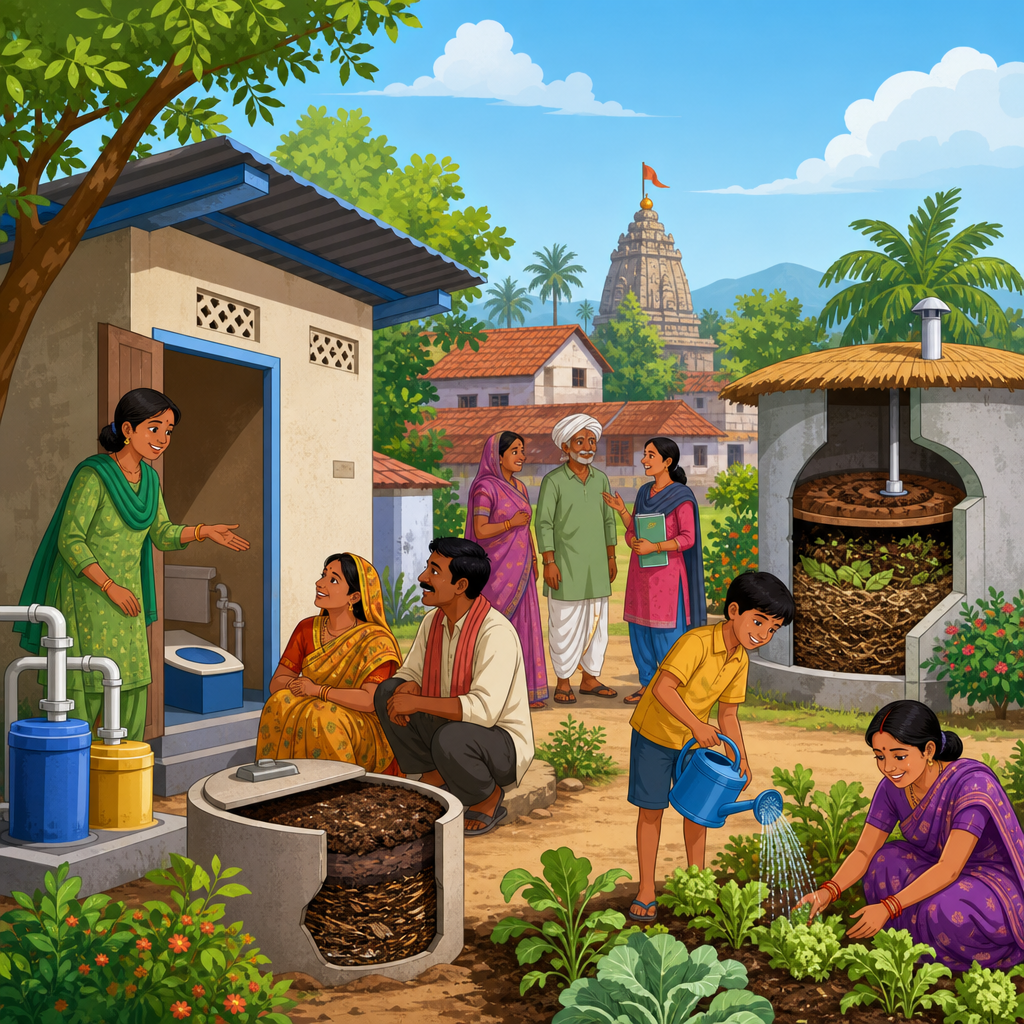
Addressing sanitation in dense urban populations demands more than building toilets. It requires systems that work where land is scarce, sewer networks are overloaded, budgets are tight, and public health risks spread quickly. In this context, ecological sanitation, often shortened to EcoSan, refers to sanitation approaches that safely separate, treat, and reuse nutrients, water, and organic matter rather than treating human waste only as something to dispose of. I have seen urban projects succeed only when planners matched technology to neighborhood realities: tenancy patterns, groundwater levels, collection logistics, cultural preferences, and the economics of maintenance. This matters because dense cities generate concentrated sanitation failures. One broken pit, blocked drain, or overflowing septic tank can affect thousands of residents through contaminated water, flies, odors, and unsafe working conditions for sanitation laborers. Well-designed EcoSan systems can reduce pathogen exposure, recover resources, lower water demand, and create service models that fit informal settlements as well as formal housing. This hub article examines diverse EcoSan success stories and the lessons they offer across compact settlements, apartment districts, schools, markets, and refugee-style urban extensions where conventional sewer expansion is slow or unrealistic.
Why dense cities need ecological sanitation options
Dense urban populations create a sanitation paradox. Demand is highest where space for pits, soakaways, or treatment units is lowest. Conventional sewerage remains important, but in many cities it cannot expand fast enough to reach low-income settlements, steep hillsides, flood-prone neighborhoods, or peri-urban zones growing beyond municipal plans. EcoSan matters here because it can decouple safe sanitation from full sewer dependence. Urine-diverting dry toilets, container-based sanitation, decentralized fecal sludge treatment, biogas-linked community toilets, and source-separation systems all reduce pressure on water supply and allow staged infrastructure growth.
The strongest success stories start with a service chain, not a toilet design. In practice, households care about privacy, cleanliness, cost, and convenience. Municipalities care about compliance, land use, and public health. Operators care about collection frequency, labor safety, route efficiency, and treatment reliability. EcoSan works in cities when all three interests align. In eThekwini, South Africa, urine-diverting dry toilets demonstrated that waterless sanitation could serve areas where sewer extension was impractical, while municipal support for maintenance guidance and vault management shaped long-term usability. In Nairobi and other East African cities, container-based approaches showed that sealed waste collection can outperform unsafe pits in high water table areas and narrow informal lanes. These examples prove the central point: dense urban sanitation is a systems problem, and ecological sanitation succeeds when service design is treated as seriously as infrastructure.
What makes an urban EcoSan case study a true success
Not every pilot is a success story, and dense cities expose weak designs quickly. A true urban EcoSan success combines five outcomes: user acceptance, safe containment, reliable collection or treatment, measurable public health protection, and financial durability. When I assess projects, I look for indicators that go beyond installation counts. Are toilets still functioning after two or five years? Are diversion chambers being used correctly? Is fecal sludge reaching a licensed treatment site? Are operators using gloves, masks, and transfer equipment that meet occupational safety expectations? Are reuse products actually sold or applied under controlled conditions?
Urban success also depends on governance. Programs perform better when responsibilities are explicit. Households should know what they clean and what they report. Service providers should know their collection schedule and quality standards. Municipal regulators should define treatment targets using recognized references such as World Health Organization reuse guidance, ISO 30500 performance thinking for non-sewered sanitation systems, and national fecal sludge management rules. The projects most worth studying are those that moved from donor-backed demonstration to routine service. They usually blended tariffs, municipal support, and private operations instead of relying on one funding stream. That pattern repeats across the strongest EcoSan case studies.
Container-based sanitation in informal settlements
One of the most practical EcoSan models for dense urban neighborhoods is container-based sanitation. Instead of relying on pits that fill, leak, or cannot be emptied safely, households use a toilet connected to sealed containers that are collected on a scheduled basis and transported for treatment. This model is especially valuable in settlements with rocky ground, flooding, high groundwater, or homes packed too closely for pits and septic systems. In my experience, it solves the problem that defeats many low-cost sanitation interventions: there is simply nowhere safe for waste to go on-site.
Haiti offers one of the clearest urban examples. SOIL developed container-based household toilets paired with regular collection and off-site composting. The important lesson was not only the toilet itself, but the entire chain: customer service, route planning, container exchange, pathogen reduction, and compost quality control. In dense neighborhoods where vacuum trucks cannot enter and pit emptying is dangerous or illegal, this model reduced exposure risks significantly. Similar approaches in Kenya and Ghana demonstrated that users will pay for reliable, odor-controlled service when the toilet is cleaner and more private than shared alternatives. The operational challenge is route density and transfer logistics. Collection costs fall when many customers are served in compact areas, but service quality drops quickly if scheduling slips. The best case studies therefore invested in data tracking, local depots, and strict handling protocols.
Urine-diverting dry toilets and nutrient recovery in water-stressed cities
Urine-diverting dry toilets, often called UDDTs, separate urine and feces at the point of use. In dense urban environments, that separation creates two advantages. First, it reduces moisture in the fecal chamber, which lowers odor, improves handling, and supports dehydration or composting pathways. Second, it opens the door to nutrient recovery because urine contains much of the nitrogen and potassium excreted by humans. Where water scarcity or fragile sewer systems limit conventional options, UDDTs can provide safe sanitation with minimal water demand.
South Africa’s municipal experience remains instructive. In eThekwini Municipality, large-scale deployment of urine-diverting dry toilets occurred in areas where flush systems were not feasible. The record is mixed, which is precisely why it is valuable as a case study hub topic. Success depended heavily on user training, follow-up support, and realistic expectations about vault emptying and ash or dry cover use. Where households understood operation and where maintenance support existed, systems performed well. Where communication was weak, misuse increased. The lesson for dense settlements is straightforward: UDDTs are not plug-and-play products. They require behavior-centered design, hardware suited to tight indoor spaces, and a credible plan for collection or safe on-site management of dried solids and urine. When those conditions are present, they deliver water savings and nutrient recovery that sewered systems often waste.
Shared facilities, school blocks, and market sanitation
Dense cities rely heavily on shared sanitation, even though many standards do not classify it as basic household sanitation. That makes shared EcoSan facilities a critical urban case study category. In schools, markets, transit hubs, and tightly packed rental compounds, the success question is whether shared systems can be kept clean, safe, and financially maintained. The answer is yes, but only with professional management. Community toilets linked to biogas digesters in India and East Africa have shown that high-use facilities can offset energy costs for cooking or lighting, while reducing open defecation and uncontrolled dumping. However, digesters only work when feedstock, water balance, grit control, and desludging are managed consistently.
School EcoSan projects provide another valuable set of lessons. Programs in Uganda, Kenya, and parts of Zambia demonstrated that urine diversion and composting can work in schools when teachers incorporate hygiene routines and caretakers are clearly assigned. The educational effect is significant: children learn handwashing, source separation, and resource recovery in daily practice. Yet many school systems failed after installation because budgets covered construction but not cleaning supplies, replacement parts, or caretaker wages. For urban planners, the takeaway is precise. Shared EcoSan succeeds when it is treated as an ongoing public service, not a one-time capital project.
Comparing urban EcoSan models and their best-fit conditions
Different dense urban settings need different sanitation pathways. The table below summarizes the models that appear most often in successful city case studies and the conditions where each tends to perform best.
| EcoSan model | Best-fit urban condition | Main strength | Main management challenge |
|---|---|---|---|
| Container-based sanitation | Informal settlements, flood zones, high groundwater, narrow access lanes | Safe off-site removal without pits or sewers | Collection logistics and tariff recovery |
| Urine-diverting dry toilets | Water-scarce areas, low sewer feasibility, stable user training support | Low water use and nutrient separation | User compliance and vault management |
| Biogas-linked shared toilets | Markets, schools, transit hubs, compounds with high daily throughput | Energy recovery from concentrated waste streams | Operator skill, feed consistency, sludge handling |
| Decentralized fecal sludge treatment with reuse | Cities with many pits or septic tanks but weak central treatment | Improves end-of-chain safety and enables compost or fuel products | Regulation, haulage coordination, product quality assurance |
The practical value of this comparison is strategic. City leaders do not need a single universal model. They need a portfolio matched to topography, tenure, utility coverage, and willingness to pay. The best urban sanitation plans mix options rather than forcing one technology onto every neighborhood.
Business models, regulation, and treatment economics
Many EcoSan stories are framed as technical innovation, but long-term performance usually comes down to business model discipline. In dense urban areas, recurring revenue is essential because sanitation is a service, not a product. Container-based operators need predictable subscription income. Shared toilet managers need cleaning budgets, attendants, and payment systems that prevent under-maintenance. Fecal sludge treatment plants need gate fees, municipal contracts, or sales from compost, dried biosolids, black soldier fly larvae feed chains, or biogas to cover operations.
Reuse can help, but it rarely finances the full system on its own. That is a critical point often missed in early pilots. Compost sales may support part of treatment costs, especially where peri-urban agriculture is nearby, but transport, certification, and seasonal demand limit margins. Urine can substitute for fertilizer under controlled conditions, yet storage, dilution guidance, and farmer acceptance must be addressed. The strongest city examples therefore combine public health funding with commercial discipline. Regulations also matter. Municipal bylaws that recognize non-sewered sanitation, license operators, and require safe discharge or treatment create the certainty needed for investment. Without that framework, good pilots remain isolated. With it, they scale into citywide sanitation services.
Lessons from diverse EcoSan success stories
Across varied geographies, the same lessons appear repeatedly. First, dense urban sanitation improves when planners map the whole service chain from toilet interface to final reuse or disposal. Second, user training is not optional, particularly for urine diversion and shared facilities. Third, collection and treatment data matter. Operators that track fill levels, missed pickups, contamination rates, and worker incidents solve problems faster and build regulator confidence. Fourth, occupational safety must be designed in from the start through sealed containers, personal protective equipment, transfer stations, and vaccination protocols where appropriate. Fifth, city governments play a decisive enabling role by setting standards, allocating land for treatment, and integrating non-sewered solutions into sanitation master plans.
These case studies also show where caution is needed. EcoSan does not eliminate the need for treatment; it changes how treatment is organized. Reuse only benefits public health and resource efficiency when pathogen reduction is verified and product handling is controlled. Social acceptance cannot be assumed, especially in apartment settings where residents expect flush toilets. And no system should be selected because it seems cheaper on paper. Dense urban conditions punish under-designed operations. The central benefit, however, is substantial: EcoSan expands the sanitation toolbox for places where conventional infrastructure alone cannot keep pace. For city officials, utilities, NGOs, and social enterprises building a subtopic strategy around diverse EcoSan success stories, the next step is practical. Study the service chain, compare models honestly, and choose solutions that residents can use safely every day.
Frequently Asked Questions
Why is sanitation in dense urban populations more complex than simply building more toilets?
In dense urban areas, sanitation is a systems challenge, not just an infrastructure checklist. A toilet is only the starting point. Once waste is collected, it must be safely contained, transported, treated, and either disposed of or reused without creating new health risks. In many cities, especially fast-growing informal settlements and low-income neighborhoods, land is limited, roads are narrow, sewer networks are incomplete or overloaded, and drainage systems are already under stress. That means a toilet installed without a reliable downstream solution can quickly become unusable, overflow during storms, contaminate groundwater, or force unsafe manual handling.
Population density also amplifies the consequences of failure. When many households live close together, even a small sanitation breakdown can expose large numbers of people to pathogens through shared toilets, floodwater, drains, food preparation areas, and children’s play spaces. Public health risks spread faster because contact points are everywhere. Add tight municipal budgets, weak maintenance systems, and irregular service delivery, and it becomes clear that sanitation planning must include operations, financing, regulation, user behavior, and long-term treatment capacity. In practice, successful urban sanitation depends on the full service chain working together, from household access to treatment and safe end use or disposal.
What is ecological sanitation, or EcoSan, and how does it fit into high-density urban environments?
Ecological sanitation, often called EcoSan, is an approach that treats human waste not only as something to remove, but as a resource that can be safely managed, treated, and reused. The core idea is to separate waste streams when useful, reduce contamination, recover nutrients and organic matter, and in some systems also conserve or reuse water. This can include urine diversion, composting or dehydration processes, container-based systems, and treatment models that turn waste into soil conditioners, fertilizers, energy inputs, or other usable products when health safeguards are met.
In high-density urban settings, EcoSan can be valuable because it offers alternatives where conventional sewer expansion is too expensive, technically difficult, or simply unrealistic in the short term. Dense settlements often lack the space, pipe gradients, treatment capacity, and funding needed for standard sewered systems. EcoSan models can reduce water use, lower pressure on overloaded sewers, and create more flexible service options for neighborhoods where centralized infrastructure cannot keep pace. That said, EcoSan is not a one-size-fits-all fix. It works best when collection, treatment, monitoring, user education, and reuse markets are carefully designed. In urban environments, the strongest projects are usually the ones that combine practical service logistics with strict public health controls and clear maintenance responsibilities, rather than relying on the toilet technology alone.
Can EcoSan realistically improve public health in crowded cities?
Yes, EcoSan can improve public health in crowded cities, but only when it is implemented as a complete and professionally managed sanitation service. The public health value comes from interrupting disease transmission pathways. When waste is safely contained, kept out of drains and floodwater, handled with proper protective measures, and treated to reduce pathogens before reuse or disposal, the risks of diarrheal disease, parasitic infection, environmental contamination, and neighborhood exposure decline significantly. This is especially important in crowded urban areas, where open dumping, leaking pits, and overflowing shared toilets can affect entire communities very quickly.
However, the key word is safely. Poorly managed reuse, inconsistent collection, or incomplete treatment can undermine the health benefits and create justified public concern. That is why strong EcoSan programs focus on measurable treatment standards, operator training, routine maintenance, user instructions, and regulatory oversight. They also pay attention to practical issues like odor control, handwashing access, menstrual hygiene, child-friendly use, and the reliability of collection schedules. In other words, EcoSan improves health not because it is labeled ecological, but because it can create a safer, more controlled sanitation chain in places where conventional approaches are failing or unavailable.
What are the biggest barriers to improving sanitation in dense urban neighborhoods, and how can cities overcome them?
The biggest barriers are usually not limited to technology. Space constraints are a major obstacle because many dense neighborhoods have little room for pits, septic systems, access roads, or treatment facilities. Financial limitations matter just as much, since both households and municipalities may struggle to cover construction, collection, treatment, and maintenance costs. Existing sewer systems may already be overloaded, while informal settlements may not be legally recognized enough to receive full infrastructure investment. Governance problems also play a major role: unclear responsibilities, weak enforcement, fragmented service providers, and poor coordination between water, sanitation, drainage, housing, and health agencies can all stall progress.
To overcome these barriers, cities generally need a mix of technical, financial, and institutional solutions. That can include decentralized treatment, fecal sludge management, transfer stations, scheduled desludging, shared or communal systems with clear maintenance contracts, container-based sanitation in very constrained areas, and EcoSan models where reuse adds value and reduces system pressure. On the policy side, cities need realistic planning frameworks that include informal areas rather than ignoring them. They also need financing models that support low-income users, performance standards for private operators, and public health regulations that are actually enforced. Perhaps most importantly, successful sanitation improvements are usually designed around how neighborhoods really function, not how planners assume they function on paper. Community engagement, local service capacity, and long-term maintenance planning are what turn a pilot project into a durable urban solution.
What does a successful sanitation strategy for dense urban populations usually include?
A successful strategy usually includes much more than one preferred toilet type or one infrastructure model. It starts with understanding the local sanitation chain from end to end: household access, containment, collection or conveyance, treatment, and final disposal or safe reuse. In dense urban populations, the best strategies are often blended systems. Some districts may be served by conventional sewers, others by simplified sewers, decentralized treatment, managed on-site sanitation, fecal sludge services, or EcoSan-based resource recovery. The point is not ideological purity. The point is to choose solutions that match density, land availability, water supply, flood risk, soil conditions, road access, and institutional capacity.
Successful strategies also include clear operations and maintenance plans, because sanitation systems fail most often after installation, not at ribbon-cutting. There must be defined responsibilities for cleaning, repairs, emptying, transport, treatment, and monitoring. Affordability mechanisms are also essential so low-income residents are not forced back into unsafe practices. Public health protections should be built into every stage through handwashing facilities, safe worker practices, pathogen reduction targets, and oversight of any reuse systems. Finally, the strongest urban sanitation programs measure results. They track service reliability, user satisfaction, environmental contamination, treatment performance, and health outcomes. That is how cities move from short-term sanitation projects to resilient sanitation systems that actually protect people in crowded environments.