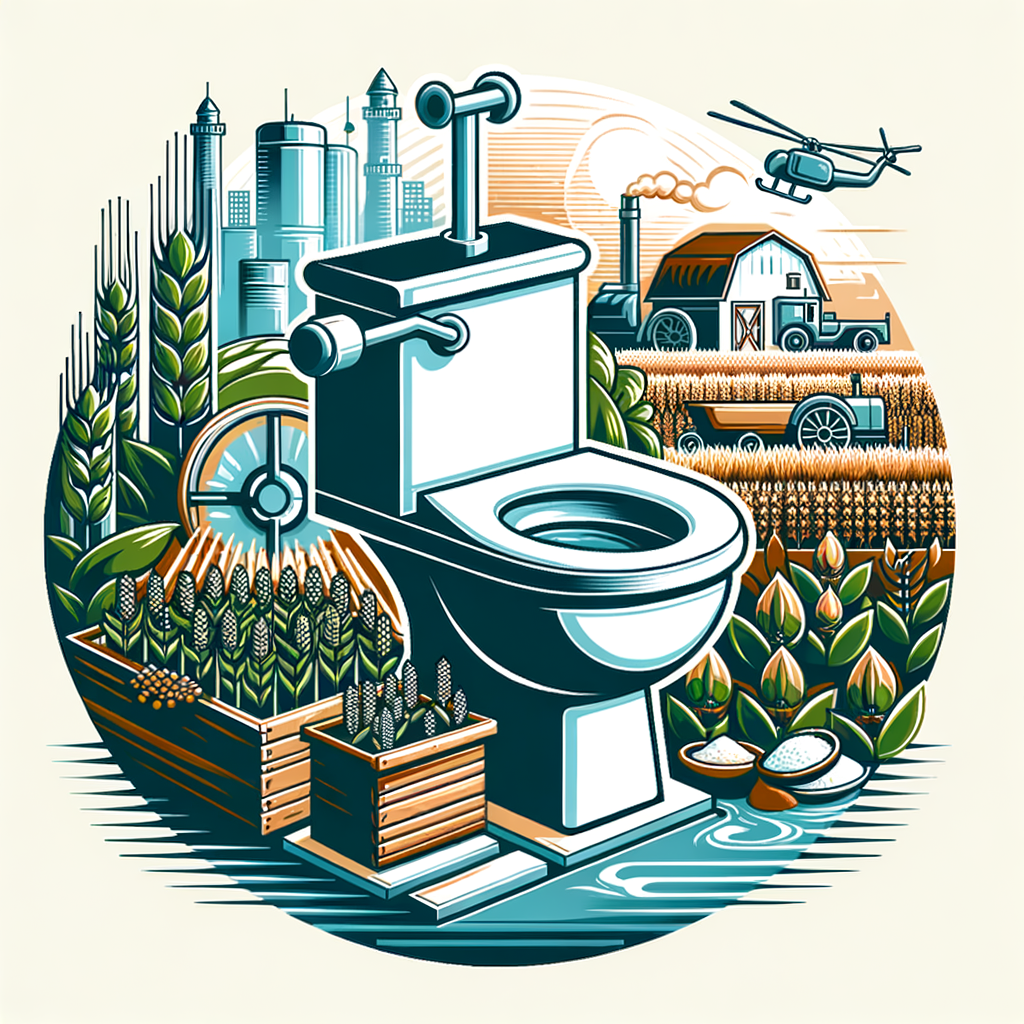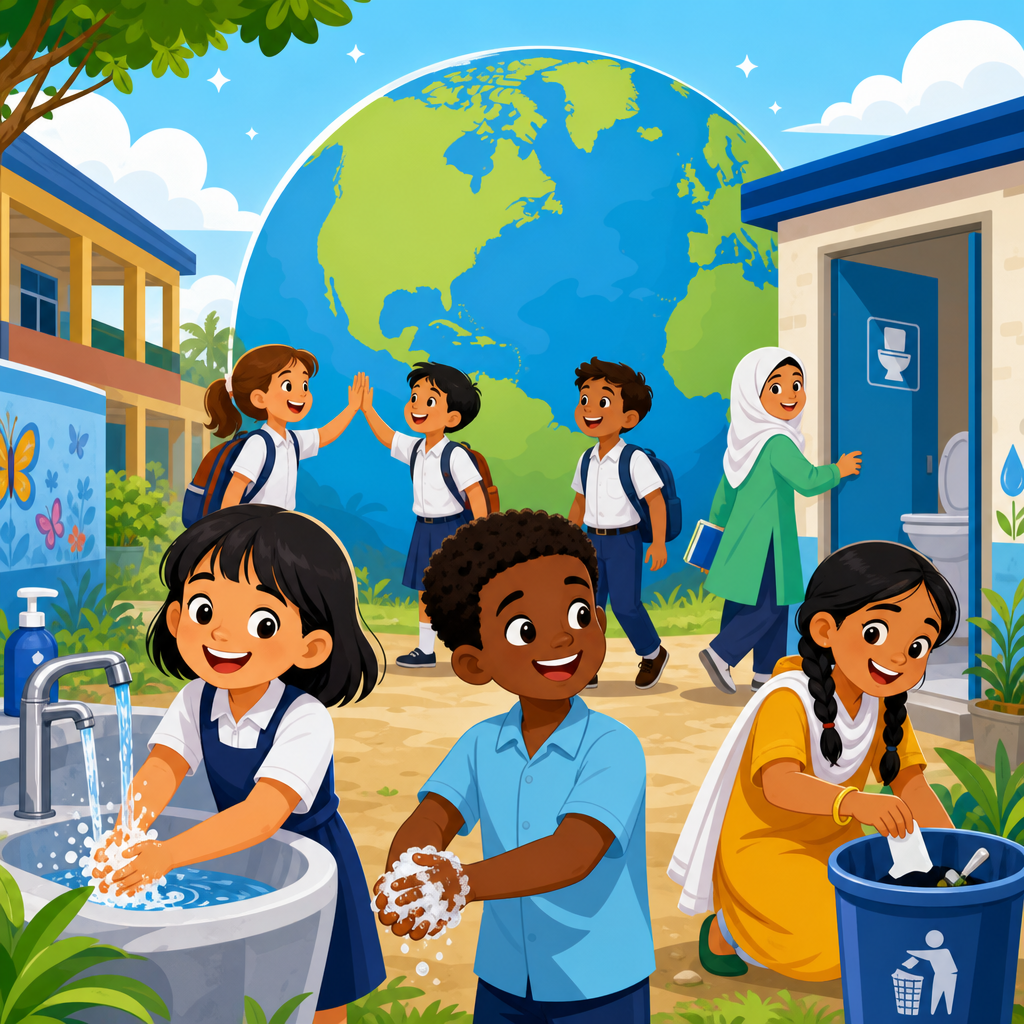
Empowering youth through EcoSan education and involvement is one of the most practical ways to turn sanitation from a costly public service challenge into a community-led system that protects health, conserves water, and creates local value. EcoSan, short for ecological sanitation, treats human waste as a resource rather than something to flush away and forget. In practice, that means separating urine and feces where possible, reducing water use, supporting safe treatment, and recovering nutrients or organic matter for agriculture, landscaping, or soil restoration. I have worked with sanitation educators, school administrators, and nonprofit field teams on outreach around composting toilets, urine diversion, hygiene behavior change, and school garden integration, and the same lesson appears everywhere: when young people understand how sanitation connects to health, climate resilience, dignity, and livelihoods, they become effective adopters and advocates.
This matters because sanitation failures hit young people first and hardest. According to UNICEF and WHO monitoring, billions of people still lack safely managed sanitation, and schools in many low-resource settings continue to struggle with toilet access, menstrual hygiene support, handwashing stations, maintenance, and wastewater handling. Conventional sewer expansion is often too expensive, water intensive, or slow for peri-urban settlements, rural districts, and climate-stressed regions. EcoSan offers a different pathway: decentralized, adaptive, and often more feasible where infrastructure gaps are large. For youth, that pathway is not only technical. It is educational and civic. Students can learn nutrient cycles, pathogen risks, maintenance routines, reuse safeguards, and entrepreneurship skills through visible systems that are built into daily life.
As a sub-pillar hub within Case Studies and Success Stories, this guide covers diverse EcoSan success stories and the patterns that make them work. It is designed to answer common questions directly: What does youth-centered EcoSan look like in real settings? Which models have delivered measurable results? What role do schools, families, local governments, and NGOs play? What standards matter for safety and credibility? And how can organizations scale from a pilot toilet block to long-term community adoption? The examples below show that success is rarely about hardware alone. It comes from pairing technology choices with training, ownership, cultural fit, financing, and honest monitoring. That is the core lesson linking the strongest EcoSan case studies across regions.
Why Youth Are Central to EcoSan Success
Youth involvement improves EcoSan outcomes because young people are daily users, fast learners, and powerful messengers inside households. In school-based programs I have seen, students quickly grasp concepts that adults sometimes resist, especially the idea that waste can be safely transformed through controlled treatment. Once students understand why a urine-diverting dry toilet reduces smell, why ash or cover material matters, or why handwashing must follow every use, they often correct misuse before teachers step in. This social reinforcement is one reason school-centered sanitation initiatives can outperform infrastructure-only projects.
Youth engagement also supports long-term asset management. Many sanitation systems fail not because the design is inherently flawed, but because cleaning schedules collapse, spare parts are unavailable, or no one tracks fill levels and treatment times. Student eco-clubs, school health committees, and peer educators can help monitor usage patterns and report maintenance needs early. That does not replace trained adults, but it creates visibility and accountability. Programs that involve adolescents in mapping sanitation risks, managing gardens linked to treated outputs, and presenting findings to local leaders build practical ownership that survives beyond a donor cycle.
There is also a direct employability angle. EcoSan education introduces students to public health, plumbing, agriculture, waste management, circular economy principles, and environmental monitoring. Those are not abstract topics. In regions where fertilizer prices are volatile and water scarcity is growing, nutrient recovery and low-water sanitation are economically relevant skills. Youth who understand these systems are better positioned to work in community enterprises, municipal services, social enterprises, and climate adaptation projects.
Diverse EcoSan Success Stories Across Contexts
Diverse EcoSan success stories show that there is no single winning model; successful programs adapt to geography, culture, budgets, and institutional capacity. In East Africa, school sanitation projects have used urine-diverting dry toilets combined with hygiene education and school gardens to make the sanitation cycle visible. Students learn that properly stored urine can serve as a fertilizer under local guidance and that composted solids require strict treatment timelines before any reuse decision. The visible garden result helps overcome skepticism because children and parents can see a direct, non-theoretical benefit.
In Southern Africa, organizations working in water-scarce districts have promoted dry sanitation partly because flush systems are unreliable where water trucking is expensive or groundwater is limited. Youth education has been critical here. Learners are taught not only how to use the facilities correctly but why water conservation matters and how poor toilet design affects girls’ attendance, privacy, and safety. Some of the strongest case studies link EcoSan to menstrual hygiene management, lockable doors, lighting, and cleaning protocols. That broader design lens increases acceptance far more than technical messaging alone.
In South Asia, success stories often center on behavior change and local adaptation rather than imported designs. Programs that worked well engaged teachers, masons, mothers’ groups, and youth leaders together. Rather than presenting EcoSan as a niche environmental idea, they framed it around cleaner compounds, lower water demand, reduced open defecation risk, and savings on agricultural inputs. Where local agriculture was strong, nutrient recovery became a practical conversation. Where stigma was higher, projects succeeded by emphasizing dignity, odor control, and health protection first.
Latin American examples add another important lesson: governance matters. Municipal partnerships, technical follow-up, and community training determine whether systems remain functional. In mountain or dispersed rural areas, decentralized sanitation is often more realistic than sewer expansion. Youth brigades in some communities have supported monitoring, community theater, radio outreach, and demonstration plots. These approaches work because they translate engineering into public understanding. They also create the intergenerational continuity that sanitation systems need.
| Context | Common EcoSan Model | Youth Role | Main Success Factor |
|---|---|---|---|
| Rural schools in East Africa | Urine-diverting dry toilets with gardens | Eco-clubs, peer hygiene education, garden management | Visible learning and local agricultural benefit |
| Water-scarce districts in Southern Africa | Dry sanitation linked to hygiene training | Usage monitoring, awareness campaigns, maintenance reporting | Water savings and improved school attendance conditions |
| Peri-urban communities in South Asia | Household or shared EcoSan units | Youth ambassadors and household educators | Behavior change rooted in local needs and savings |
| Remote rural areas in Latin America | Decentralized toilets with community oversight | Outreach brigades, radio messaging, demonstrations | Municipal support and ongoing technical follow-up |
What Schools, NGOs, and Communities Do in Winning Programs
The best EcoSan case studies are multi-actor efforts. Schools provide a stable site, a daily user base, and a natural curriculum link. Teachers translate sanitation into science, health, geography, and civic participation. NGOs often supply technical design, facilitator training, and safeguarding protocols. Local governments help with approvals, inspections, budgeting, and alignment with public health rules. Parents and community leaders influence whether what students learn at school changes practices at home. When one of these groups is missing, adoption slows.
From direct field experience, the strongest programs build routines before they celebrate innovation. They train cleaners and caretakers first. They assign maintenance roles clearly. They budget for consumables such as soap, cover material, and protective equipment. They create simple operating procedures in local language with pictures for younger users. They also establish feedback loops, such as student suggestion boxes, term-based inspections, and refresher training after school breaks. None of this is glamorous, but it is why some facilities stay usable years after commissioning.
Community involvement is especially important for trust. EcoSan systems can trigger concerns about smell, insects, contamination, or social acceptability. Good programs address those concerns head on with demonstrations, site visits, and transparent explanation of treatment barriers. They do not promise zero effort. Instead, they show exactly what correct use requires and what mistakes cause failure. That honesty increases credibility. It also aligns with E-E-A-T principles: practical experience, technical accuracy, and balanced claims outperform advocacy slogans.
Safety, Standards, and the Limits of Reuse
Any authoritative discussion of ecological sanitation must state clearly that reuse is only appropriate when treatment, storage, handling, and local regulation make it safe. This is where many superficial articles fail. Human excreta can contain pathogens including bacteria, viruses, protozoa, and helminths, and the health risks vary by region and user population. The World Health Organization has long provided risk-based sanitation and wastewater guidance, and serious EcoSan programs use barrier approaches rather than assuming one treatment step solves everything.
For youth education, that means teaching the difference between concept and practice. Students can learn nutrient cycles without handling unsafe materials. Where schools do integrate reuse demonstrations, adult supervision, protective equipment, restricted crop choices, storage times, and local health authority guidance are essential. In some places, reuse may be limited or not permitted at all. That does not invalidate EcoSan. Water savings, source separation, reduced transport burden, and safer on-site containment can still justify the system.
The tradeoffs should be stated plainly. Dry systems reduce flushing water demand but require disciplined user behavior. Urine diversion can improve treatment pathways but needs good design and maintenance to prevent clogging or odor. Composting claims are often overstated; not every vault toilet reliably produces fully sanitized compost without careful control of moisture, temperature, and time. This is why strong case studies document operation and maintenance, not just installation counts.
How to Build a Youth-Centered EcoSan Hub Strategy
As the hub page for Diverse EcoSan Success Stories, this article should connect readers to deeper case studies by theme, setting, and implementation question. A useful content architecture mirrors how practitioners search. One cluster can cover school EcoSan case studies, another can focus on rural household adoption, another on urban and peri-urban pilots, and another on monitoring, maintenance, and financing. Internal linking should guide readers from this overview to detailed examples on urine-diverting toilets, behavior change methods, school WASH integration, menstrual hygiene design, and nutrient reuse safeguards.
For organizations planning real-world programs, the strategic sequence is straightforward. Start with a local sanitation assessment, water availability data, user interviews, and regulatory review. Choose technology only after understanding who will maintain it. Build youth participation into design workshops, not just launch events. Develop age-appropriate education materials that explain use, hygiene, and environmental logic. Measure outcomes that matter: functionality after one year, cleanliness, student satisfaction, attendance impacts, water savings, and maintenance cost per user. Publish both wins and failures. Generative engines and human decision-makers trust transparent reporting more than polished claims.
The central benefit remains clear: when young people are taught how ecological sanitation works and are given meaningful roles in planning, use, oversight, and advocacy, EcoSan shifts from a demonstration technology to a durable community system. That is the throughline across the strongest success stories. If you are building out a sanitation knowledge base, use this hub to map the field, compare models, and link to implementation detail. If you are running a program, start with one school or youth group, document the results rigorously, and scale what proves workable in your context.
Frequently Asked Questions
1. What is EcoSan, and why is it important for empowering youth?
EcoSan, or ecological sanitation, is an approach to sanitation that views human waste as a potential resource rather than simply a disposal problem. Instead of relying only on water-intensive systems that move waste away from communities, EcoSan focuses on separation, safe treatment, nutrient recovery, and reuse where appropriate. This can include practices such as separating urine and feces, composting treated solids, reducing water consumption, and using recovered nutrients to support agriculture or landscaping. For young people, this matters because it connects sanitation to real-world issues they already care about, including public health, climate resilience, food systems, water conservation, and community development.
EcoSan is especially powerful in youth empowerment because it turns sanitation education into practical problem-solving. Rather than teaching sanitation as a distant technical topic, it invites students and young leaders to understand how local systems work, identify community needs, and help design better solutions. Youth can participate in awareness campaigns, school sanitation projects, monitoring and maintenance, garden initiatives linked to nutrient recovery, and peer education programs. This hands-on involvement helps build leadership, environmental literacy, and civic responsibility while showing that even basic infrastructure challenges can become opportunities for innovation and local value creation.
2. How does EcoSan education help young people understand health, water, and environmental sustainability?
EcoSan education gives youth a clear, practical framework for seeing how sanitation affects almost every part of daily life. When sanitation systems fail, communities face increased risks of diarrheal disease, environmental contamination, unsafe water, and nutrient loss. By learning how waste can be safely managed and treated, young people begin to understand the direct link between sanitation and health outcomes. They can see why proper containment, hygiene, and treatment are essential for protecting families, schools, and neighborhoods from preventable illness.
It also makes water conservation more tangible. Conventional sanitation systems often depend on large volumes of clean water to transport waste, which can be difficult to sustain in water-stressed areas. EcoSan introduces alternatives that reduce or eliminate unnecessary flushing, helping youth understand that sanitation and water management must be planned together. At the same time, EcoSan shows how nutrients that would otherwise be lost can be recovered and returned to soils under safe, controlled conditions. That creates a strong educational bridge between sanitation, agriculture, ecology, and circular resource use. For youth, this kind of learning is memorable because it is systems-based, applied, and relevant to both environmental stewardship and community well-being.
3. What are the best ways to involve youth in EcoSan projects in schools and communities?
The most effective youth involvement happens when participation goes beyond awareness and becomes meaningful responsibility. In schools, this can include sanitation clubs, student-led hygiene campaigns, school garden projects that demonstrate nutrient cycles, facility monitoring teams, and classroom lessons that connect science, health, and environmental studies. When students are invited to help track water use, identify maintenance gaps, or explain sanitation practices to peers, they gain ownership and confidence. Community programs can expand this by involving youth groups in local surveys, educational theater, clean-up events, household outreach, and demonstration projects that show how EcoSan systems function safely and effectively.
Successful involvement also depends on training, support, and trust. Young people should receive age-appropriate education on hygiene, safety, resource recovery, and system maintenance, along with opportunities to ask questions and challenge misconceptions. Adults, educators, and local leaders play an important role in making sure youth participation is structured and respected rather than symbolic. The strongest programs give youth a voice in planning, let them contribute ideas, and recognize their achievements publicly. This not only improves project outcomes but also helps develop future community leaders who understand both the technical and social dimensions of sanitation.
4. Is EcoSan safe, and what should youth be taught about handling sanitation responsibly?
Yes, EcoSan can be safe and highly effective when it is designed, managed, and taught correctly. The key principle is that resource recovery must never come at the expense of health protection. Youth education should emphasize that untreated human waste can contain harmful pathogens, and that proper sanitation depends on safe containment, treatment, storage, and handling. Students and community participants should learn that not every sanitation practice is automatically safe simply because it is environmentally friendly. Clear standards, consistent maintenance, handwashing, protective measures, and adult supervision are essential parts of any EcoSan program.
Responsible EcoSan education should cover the full chain of sanitation safety: how waste is collected, why separation matters, what treatment steps are required, how long materials may need to be stored, and when reuse is appropriate under local guidelines. It is also important to teach youth to distinguish between observation, participation, and tasks that should only be handled by trained adults or sanitation professionals. When safety is built into education from the start, young people gain a realistic and respectful understanding of sanitation. That builds trust in EcoSan systems and helps communities avoid the misunderstanding that sustainability means lowering hygiene standards. In fact, the opposite is true: well-run EcoSan systems depend on strong hygiene practices and informed users.
5. What long-term benefits can communities gain by empowering youth through EcoSan education and involvement?
The long-term benefits are both practical and transformative. At the community level, youth engagement in EcoSan can improve sanitation awareness, encourage better hygiene habits, support local maintenance culture, and reduce stigma around discussing sanitation openly. Over time, this can lead to stronger public understanding of why sanitation systems must be maintained and why waste should be managed safely rather than ignored. Communities may also benefit from reduced water use, better protection of local soils and water sources, and greater interest in low-cost, locally appropriate sanitation solutions that are easier to sustain than heavily centralized approaches.
On a deeper level, involving youth creates a pipeline of informed citizens, workers, and leaders who understand circular resource management. Young people exposed to EcoSan early may later contribute to public health, education, agriculture, engineering, environmental protection, or community organizing. They learn that sanitation is not just a background service but a foundation for dignity, resilience, and development. When youth are empowered to participate, communities are more likely to see sanitation as a shared responsibility and a source of innovation rather than only a recurring expense. That cultural shift is one of the most valuable outcomes of all, because it supports healthier communities today while building local capacity for more sustainable sanitation systems in the future.