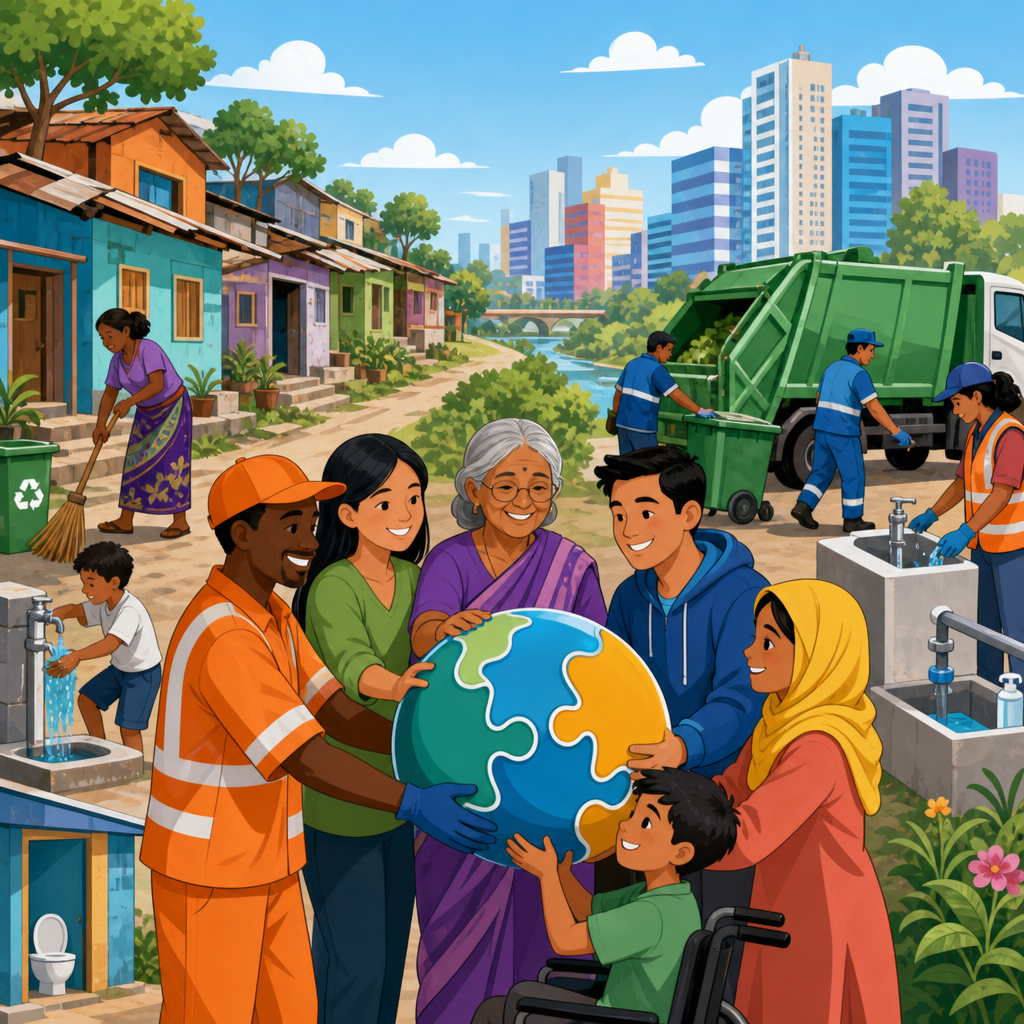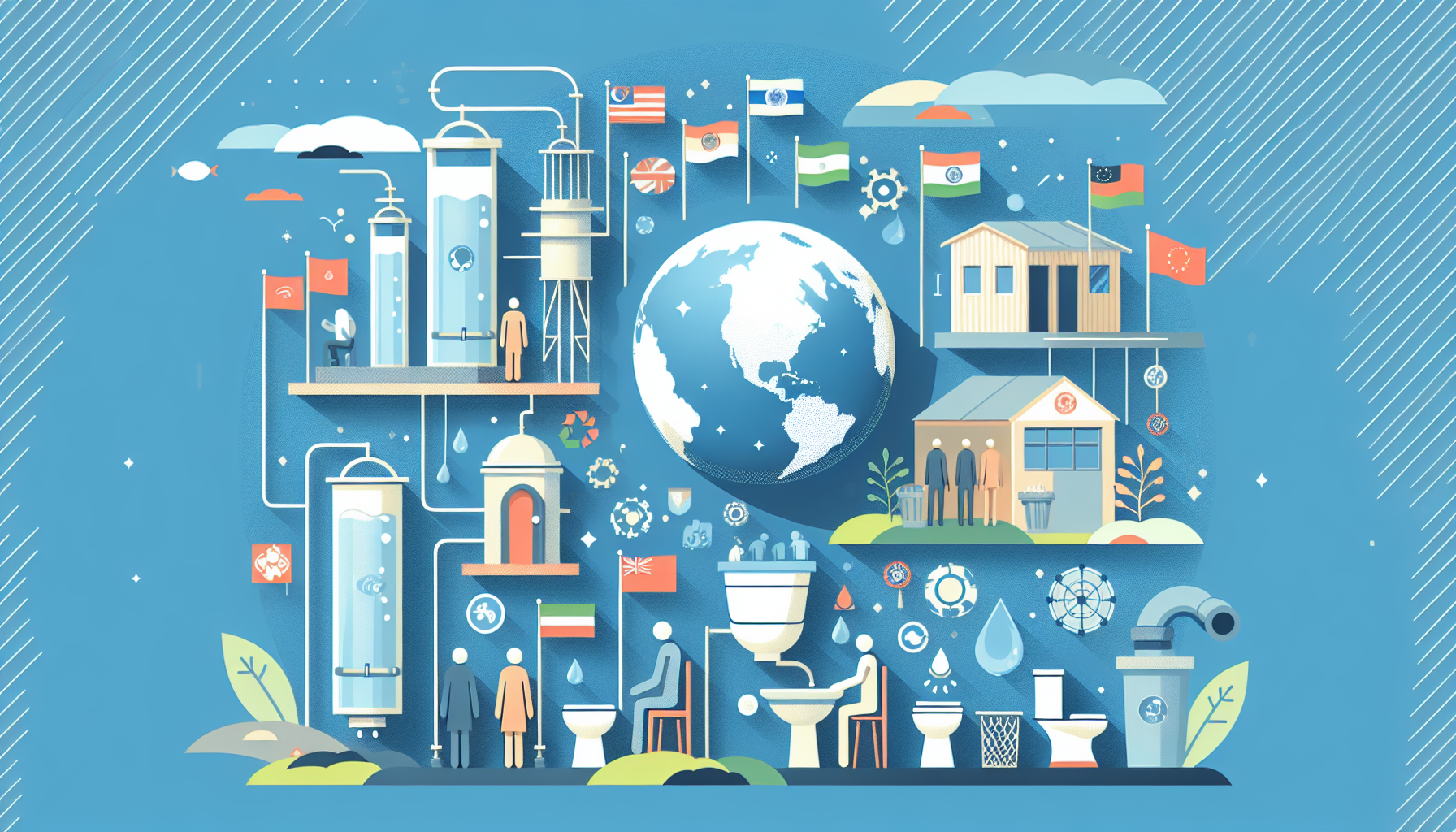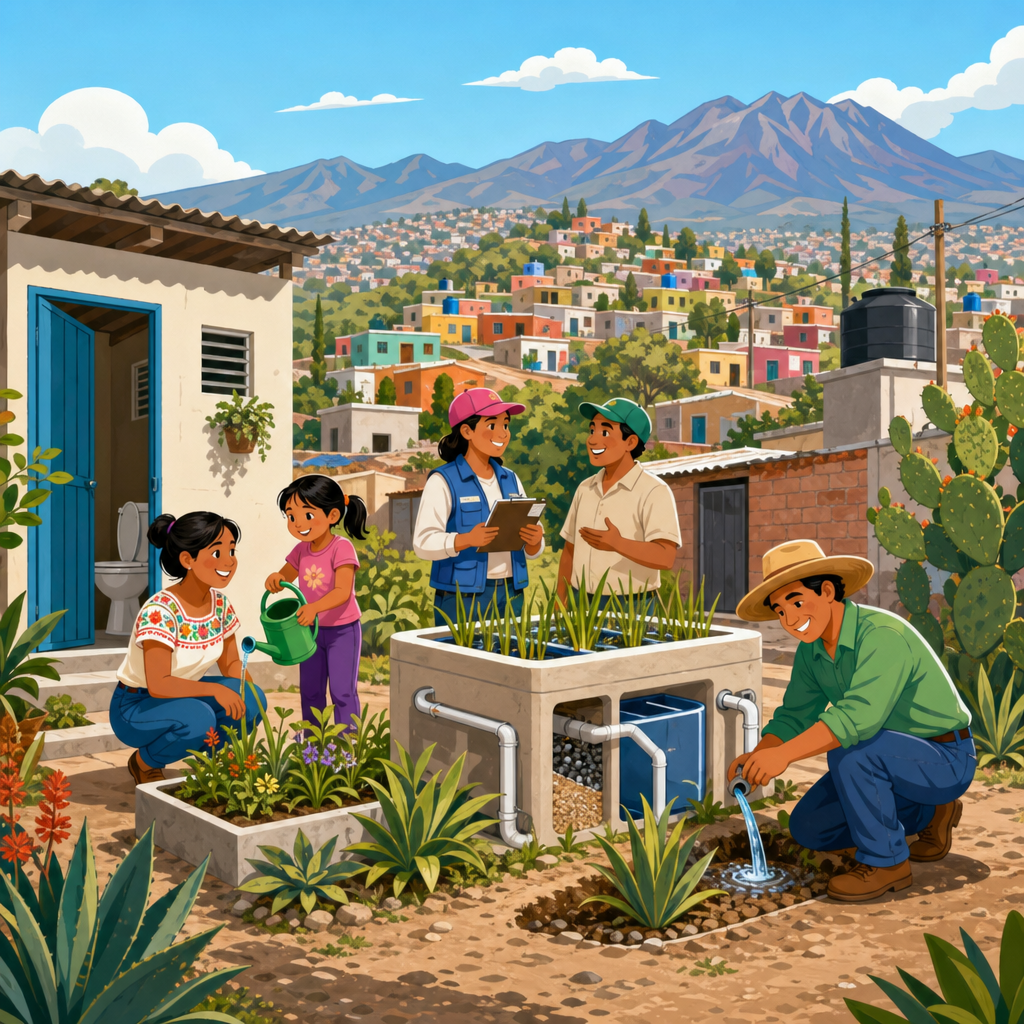
Building sustainable sanitation in Mexico’s peri-urban areas requires more than toilets, pipes, or treatment plants; it requires systems that fit fast-growing settlements where public services arrive late, land tenure is often uncertain, water is scarce, and households cannot wait years for conventional sewerage. Peri-urban areas sit between city and countryside. They usually expand faster than municipal infrastructure plans, creating a sanitation gap marked by leaking pits, informal discharges, expensive desludging, and contamination of drains, wells, and streams. Sustainable sanitation means managing human waste in ways that protect health, conserve water, recover resources where practical, and remain affordable to operate over time. In Mexico, this matters acutely because metropolitan growth around cities such as Oaxaca, Puebla, Guadalajara, Mérida, and the Valley of Mexico has pushed low-income communities into zones with fragmented governance and uneven service coverage. I have seen projects succeed only when technology choice, community acceptance, financing, and long-term maintenance are designed together. This hub article examines how ecological sanitation solutions have worked in Mexico’s peri-urban settings, what conditions made them succeed, and which lessons connect local case studies to broader global examples. It also serves as a gateway for deeper articles on decentralized treatment, urine diversion, faecal sludge management, greywater reuse, and community-led operation models.
Why peri-urban Mexico needs a different sanitation model
Conventional sewer systems struggle in peri-urban Mexico for straightforward technical and financial reasons. Settlements may be dispersed, roads unpaved, topography irregular, and housing self-built in stages. Extending centralized networks into such areas is capital intensive, often requiring pumping, easements, and treatment capacity far from the users who need service now. Even where sewers are eventually planned, households may spend a decade relying on cesspits or improvised soakaways. In many municipalities, water supply is intermittent, making flush systems unreliable and increasing the risk of blockages. The result is a cycle of underperformance: households pay for poor sanitation, municipalities face public health complaints, and nearby ecosystems absorb untreated waste.
That is why sustainable sanitation in Mexico’s peri-urban areas increasingly centers on decentralized and resource-oriented approaches. Ecological sanitation, commonly shortened to EcoSan, treats excreta and wastewater as materials to be safely managed and, where appropriate, reused rather than simply disposed of. The practical toolkit includes urine-diverting dry toilets, composting or dehydrating toilets, septic systems improved with proper soakage or filters, biodigesters, constructed wetlands, condominial sewers, simplified solids-liquid separation, and organized faecal sludge management. The best systems are not chosen because they sound innovative. They are chosen because they match local constraints: water availability, plot size, soil type, willingness to maintain equipment, access for desludging trucks, and the ability of local institutions to monitor performance.
Mexico offers especially useful case studies because it combines strong civil society networks, experienced social enterprises, and diverse climates. Organizations such as SARAR Transformación, together with municipal actors, universities, and community groups, have helped adapt ecological sanitation from a niche idea into a practical service model in many communities. Their work demonstrates a key point: sustainable sanitation is not one product. It is a service chain from user interface to treatment, safe handling, reuse or disposal, financing, and accountability.
What successful EcoSan case studies in Mexico actually look like
The most instructive Mexican examples share several features. First, they solve an immediate service problem for households excluded from sewer expansion. Second, they reduce water demand. Third, they include user training, because toilets that require ash, sawdust, or chamber rotation fail when families are not shown exactly how to use them. Fourth, they plan for the downstream stage, especially emptying, drying, composting, or transport. In Oaxaca and surrounding regions, urine-diverting dry toilets gained traction where water scarcity and rocky terrain made pits impractical. These systems separate urine and feces at the source, reducing odor and supporting dehydration of solids. When maintained correctly, they offer a durable household sanitation option that avoids blackwater generation entirely.
Another set of examples comes from peri-urban communities where on-site systems are combined with small-scale treatment. Settler areas on the edges of medium-size cities often use septic tanks, but performance improves significantly when tanks are correctly sized, linked to grease traps where needed, and followed by anaerobic filters or wetlands. I have worked on assessments where households considered septic systems “finished infrastructure,” yet the real gains came only after the treatment train was completed and sludge removal schedules were established. This is a common lesson from Mexico and from global EcoSan programs in Bolivia, Peru, South Africa, and India: sanitation outcomes depend less on the toilet alone than on the full chain being managed.
There are also hybrid success stories. In some Mexican peri-urban settlements, schools or community centers adopt dry sanitation first, creating a demonstration effect that lowers resistance among households. Once people see that toilets can be odor-controlled, hygienic, and acceptable to women and children, uptake improves. This pattern mirrors global evidence from demonstration-led sanitation programs, where public buildings become trust anchors for new technologies. Successful projects measure acceptance not just by installation numbers, but by continued use after one, three, and five years.
Core technologies that work best in peri-urban conditions
Choosing the right technology starts with a simple question: what problem must the system solve under real conditions? In dense peri-urban zones with low and intermittent water supply, urine-diverting dry toilets remain one of the strongest options. They eliminate flushing demand, avoid filling pits in high water-table areas, and produce a drier material that is safer to manage after sufficient storage. However, they need consistent user behavior, regular addition of dry cover material, and cultural acceptance around handling by-products. They are rarely the best choice where tenants move frequently or where no one will take responsibility for upkeep.
Septic tanks with improved effluent treatment suit areas where households have enough water for flushing and enough land for a post-treatment step. Biodigesters can reduce solids accumulation and generate a more stabilized effluent, but they are not a substitute for final treatment. Constructed wetlands are effective for polishing wastewater and are especially useful at shared or institutional scale, provided there is land, flow control, and maintenance for vegetation and clogging. Condominial or simplified sewerage can work in compact neighborhoods where households agree to shallow, smaller-diameter networks that lower costs compared with conventional sewers. This model has succeeded in Latin America because it aligns engineering with affordability and phased urbanization.
| Option | Best fit | Main benefit | Key limitation |
|---|---|---|---|
| Urine-diverting dry toilet | Water-scarce, rocky, or dispersed settlements | Very low water use and source separation | Requires user discipline and by-product management |
| Improved septic plus filter or wetland | Households with flush toilets and available space | Familiar user experience with better treatment | Needs desludging and proper effluent management |
| Biodigester system | Homes or clusters seeking reduced sludge and simple operation | Compact primary treatment | Effluent still needs safe discharge or polishing |
| Condominial sewerage | Dense settlements with collective agreement | Lower-cost networked sanitation | Needs strong local coordination and downstream treatment |
The correct choice is usually determined by settlement density, water access, terrain, and governance capacity, not by ideology. Systems endure when they are maintained with local skills and local supply chains. That is why the most credible Mexico case studies pair hardware with training, follow-up visits, and a realistic operations plan.
Lessons from global EcoSan successes that apply directly to Mexico
Global EcoSan experience offers several durable lessons. One is that reuse can motivate adoption, but health protection must govern every decision. In rural and peri-urban projects from Sweden-supported programs, West Africa, and the Andes, urine reuse in agriculture has shown value because urine contains nitrogen, phosphorus, and potassium in plant-available forms. Yet successful programs standardize storage times, dilution guidance, crop restrictions where needed, and hygiene practices. Mexico can benefit from the same discipline, especially in peri-urban horticulture and household gardens, but only when extension support is present.
A second lesson is that women’s experience is often the decisive factor in whether a sanitation intervention becomes normal daily infrastructure or an abandoned pilot. Privacy, menstrual hygiene management, nighttime safety, child usability, and cleaning burden must shape design from the beginning. Projects that ignored these concerns frequently recorded low use despite technically sound installations. In contrast, strong programs in Latin America and southern Africa adjusted superstructure size, ventilation, handwashing access, and user interface details based on household feedback. The best Mexican examples do the same.
A third lesson is institutional. Municipalities do not need to do everything alone, but they must define service responsibility clearly. Where NGOs install systems without a maintenance framework, performance often declines after the donor cycle ends. The stronger model is a partnership in which municipalities support regulation and monitoring, communities manage day-to-day tasks, and trained local enterprises provide construction, repairs, sludge handling, or compost processing. This distributed service model is particularly relevant in peri-urban Mexico, where formal utilities may not reach informal neighborhoods but local actors can still sustain decentralized services.
Financing, governance, and community adoption
The central financial question is not only capital cost; it is lifecycle cost. A cheap toilet that fails in two years is expensive sanitation. A more durable system with training, spare parts, and scheduled servicing is usually the better investment. In Mexican peri-urban settings, successful financing often blends household contribution, municipal subsidy, and external support for initial capacity building. Households who contribute cash, labor, or materials typically show stronger ownership, but the contribution must be calibrated to income realities. Asking low-income families for full upfront payment usually depresses adoption.
Governance is equally important. Someone must be responsible for inspections, complaint handling, desludging arrangements, and environmental compliance. In practice, this may involve a municipality, a water committee, a neighborhood association, or a contracted microenterprise. The exact form matters less than clarity. I have seen technically excellent systems lose credibility because residents had no phone number to call when vents broke, chambers filled, or greywater drains clogged.
Community adoption depends on communication that is practical rather than promotional. People want honest answers to concrete questions: Will it smell? Can children use it? What happens in the rainy season? How often do chambers fill? Is the material safe? Can tenants manage it? Programs that answer these questions directly and show functioning examples perform better than those relying on posters or abstract environmental messaging. This is why demonstration homes, school units, and peer visits are so effective in peri-urban Mexico.
How this hub connects the broader case study series
As a hub for showcasing global EcoSan successes, this article frames the themes readers should explore next. Detailed companion articles can examine urine-diverting dry toilets in Mexico and Central America, decentralized wastewater treatment in peri-urban Latin America, faecal sludge management models that close the service gap where sewers are absent, and school sanitation projects that shift community norms. Other pieces should compare peri-urban case studies from Mexico with experiences in Lima’s water-stressed outskirts, Bolivia’s highland settlements, and informal expansions around African secondary cities. Those comparisons are valuable because they reveal which lessons transfer well and which depend on climate, law, or market structure.
The core takeaway across the series is consistent: sustainable sanitation in Mexico’s peri-urban areas succeeds when the solution matches settlement realities and when the entire sanitation chain is planned as a service, not a one-time construction project. EcoSan approaches have already demonstrated that water-saving, decentralized, and resource-conscious systems can deliver reliable results where conventional sewer expansion is too slow or too costly. For practitioners, municipal leaders, NGOs, and community organizers, the next step is clear: study the strongest case studies, choose technologies based on local conditions, and build maintenance and governance into the project from day one.
Frequently Asked Questions
Why is sanitation in Mexico’s peri-urban areas different from sanitation in established urban neighborhoods?
Sanitation in peri-urban areas is fundamentally different because these communities are growing faster than formal infrastructure can keep up. Unlike established urban neighborhoods, where land tenure is usually clear, road layouts are formalized, and utility networks are already planned or installed, peri-urban settlements often develop incrementally. Families may build first and wait years for piped water, drainage, or sewer connections. In that gap, households rely on whatever sanitation option is immediately available, which can include poorly built pit latrines, septic tanks without proper treatment, informal discharge to drains, or systems that overflow during rain.
In Mexico, this challenge is intensified by water scarcity, irregular service delivery, and the legal uncertainty that can surround land ownership or occupancy. Municipalities may hesitate to invest in conventional sewerage where plots are unregularized, yet residents still need safe sanitation every day. That means sanitation planning cannot depend solely on large, centralized systems that take years to finance, design, and construct. Instead, peri-urban sanitation must account for limited water, variable densities, difficult topography, affordability constraints, and the fact that services often need to function before full urbanization is complete. Effective solutions are therefore more flexible, phased, and locally adapted than the standard citywide sewer model.
What makes a sanitation system truly sustainable in fast-growing peri-urban communities?
A sustainable sanitation system is one that continues to protect health, water resources, and dignity over time while remaining realistic for local households and local governments to operate. In peri-urban Mexico, sustainability is not just about building infrastructure; it is about choosing service models that match the actual conditions on the ground. A system is more likely to succeed when it uses water efficiently, can be maintained with local capacity, remains affordable for residents, and does not depend on uninterrupted public investment that may never arrive. In practice, this often means combining technical performance with social acceptance, institutional clarity, and long-term financing.
For example, a technically advanced treatment plant is not sustainable if it is too costly to run, if it requires specialized maintenance that no local operator can provide, or if households cannot connect to it. Likewise, a low-cost on-site option is not sustainable if sludge is never safely emptied and treated. True sustainability includes the entire service chain: containment, collection, transport, treatment, and safe reuse or disposal. It also includes resilience to drought, flooding, and population growth. In peri-urban settings, the best systems are often modular and adaptable, allowing communities to improve step by step rather than waiting for a single large project. This kind of staged approach can close the sanitation gap sooner while still supporting future upgrades as neighborhoods become more formalized and denser.
Are conventional sewers always the best solution for peri-urban sanitation challenges?
No, conventional sewers are not always the best solution, even though they are often treated as the default aspiration for urban sanitation. In peri-urban areas, conventional sewerage can be difficult to justify because it requires high upfront investment, reliable water supply, formal street layouts, and long-term institutional capacity for operation and maintenance. Many peri-urban settlements in Mexico do not yet have those conditions. Roads may be narrow or unfinished, homes may be dispersed or irregularly arranged, and municipal budgets may not support rapid network expansion into newly settled areas. If a sewer network is planned but delayed for years, communities remain exposed to unsafe sanitation in the meantime.
Alternative or transitional approaches can often deliver safer outcomes more quickly. These may include improved septic systems, decentralized wastewater treatment, condominial or simplified sewer designs, urine-diverting dry toilets in water-scarce areas, or container-based and managed on-site services in very difficult contexts. The key is not to reject sewers outright but to choose the most appropriate service level for current conditions while keeping future integration in mind. In some places, conventional sewers will eventually make sense as density increases and service networks mature. But in many peri-urban areas, insisting on a full sewer solution from the start can unintentionally delay action. A better strategy is to prioritize systems that can work now, reduce contamination immediately, and evolve as the settlement becomes more established.
How do water scarcity and informal land conditions affect sanitation planning?
Water scarcity changes the entire sanitation equation. Systems that depend on large volumes of flush water may be impractical where households receive intermittent supply, rely on tanker deliveries, or store water in small household tanks. In such settings, sanitation technologies must be designed around efficient water use or minimal water dependence. Otherwise, toilets may not function properly, sewers may clog, and households may abandon systems they cannot reliably operate. Water scarcity also raises the stakes for protecting groundwater and surface water, because contamination from leaking pits, poorly designed septic tanks, or untreated discharges can compromise already limited local water sources.
Informal or uncertain land tenure creates another layer of complexity. When residents lack legal titles or live in settlements undergoing regularization, public agencies may delay permanent investments, and service providers may be reluctant to extend networks. Yet these same communities still face immediate public health risks from unsafe sanitation. That is why peri-urban sanitation planning must be pragmatic. It should focus on service delivery rather than waiting for ideal legal or planning conditions. This can include solutions that are movable, incremental, decentralized, or community-managed, as well as policies that permit investment in basic sanitation even before full tenure regularization is complete. The most effective planning frameworks recognize that sanitation is a public health necessity, not a reward that should arrive only after every legal and administrative issue has been resolved.
What should governments, utilities, and communities prioritize to build lasting sanitation systems in peri-urban Mexico?
The first priority is to treat sanitation as a complete service chain rather than a one-time construction project. Governments and utilities need to map where peri-urban growth is occurring, identify the specific sanitation risks in those zones, and select solutions based on density, water availability, soil conditions, flood risk, household income, and likely settlement growth. This means moving beyond a single-technology mindset and creating service packages that may include on-site containment, scheduled desludging, decentralized treatment, simplified sewers, and clear plans for eventual system upgrades. Reliable operation and maintenance must be built in from the start, not added later as an afterthought.
The second priority is financing and governance. Even relatively low-cost sanitation systems fail when no one is clearly responsible for management, tariff collection, sludge transport, treatment performance, or household support. Municipalities, state agencies, utilities, and community organizations need defined roles, realistic budgets, and enforceable service standards. Communities should also be involved early, because user preferences, trust, and willingness to pay influence whether systems are used properly and maintained. Public communication is especially important in peri-urban areas, where households may have prior experience with failed installations or inconsistent public services.
Finally, lasting sanitation requires a phased, inclusive approach. Instead of waiting for ideal citywide infrastructure, decision-makers should prioritize immediate risk reduction while building pathways to higher service levels over time. That could mean improving unsafe pits today, organizing fecal sludge management tomorrow, and preparing selected zones for decentralized or networked systems as densities rise. The most successful peri-urban sanitation strategies in Mexico will be the ones that combine technical realism, social equity, environmental protection, and institutional continuity. In short, lasting systems are built not only with engineering, but also with planning, trust, and the ability to adapt as communities change.