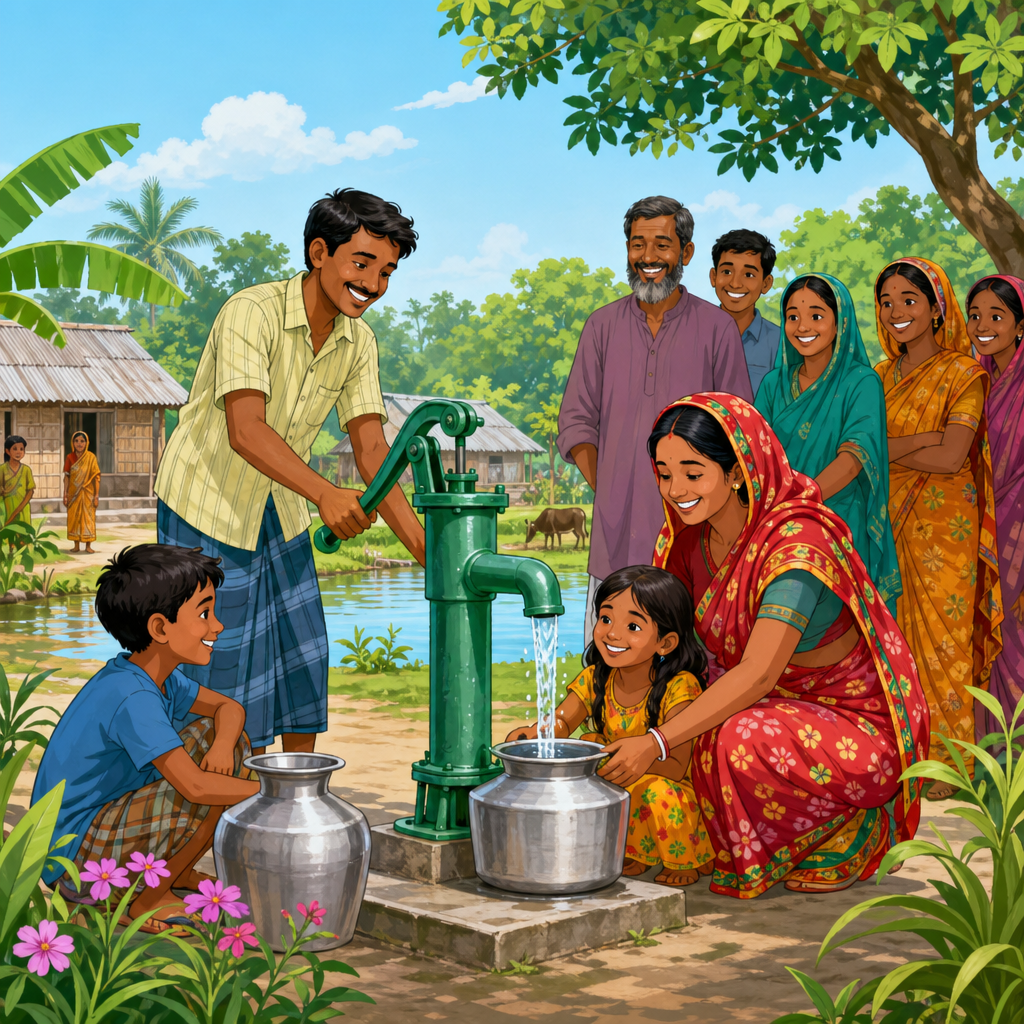
Community-led water success in rural Bangladesh shows how locally managed sanitation and water systems can outperform short-lived infrastructure projects when communities own the design, maintenance, and rules. In this sub-pillar hub on showcasing global EcoSan successes, Bangladesh offers one of the clearest case studies because it combines high population density, flood risk, groundwater contamination, and strong traditions of collective action. EcoSan, or ecological sanitation, treats human waste as a resource to be safely contained, composted, reused, or separated from water rather than simply flushed away. In rural Bangladesh, that idea intersects with rainwater harvesting, pond sand filters, arsenic-safe water points, twin-pit latrines, urine diversion pilots, and village water committees. I have worked with WASH program evaluations where the technical solution mattered less than whether local mechanics, teachers, women’s groups, and union parishad leaders were involved from the first meeting. That lesson is central here. Rural water success is not just about pipes, pumps, and toilets. It is about governance, financing, behavior change, and climate adaptation working together over years. Bangladesh matters globally because its rural communities have repeatedly turned severe constraints into practical, replicable models that other low-resource regions can study, adapt, and scale with confidence.
Why rural Bangladesh became a proving ground for community-led water and EcoSan
Rural Bangladesh faced a convergence of pressures that forced innovation. Surface water was often microbially unsafe. Millions of shallow tubewells installed from the 1970s onward reduced diarrheal disease but later revealed naturally occurring arsenic contamination in many aquifers. Seasonal flooding damaged infrastructure, while saline intrusion affected some coastal zones. In this context, no single technology could solve every village’s needs. Communities and implementing agencies had to match options to hydrogeology, income levels, land availability, and local habits.
That is why Bangladesh became a proving ground for community-led water success. Organizations such as BRAC, WaterAid Bangladesh, Dhaka Ahsania Mission, Practical Action, UNICEF-supported programs, and government agencies including the Department of Public Health Engineering helped communities establish water user groups, train caretakers, map safe and unsafe sources, and monitor functionality. Instead of assuming a centrally managed utility model, many rural projects depended on village institutions. Communities collected small user fees, appointed pump mechanics, kept spare parts, and created rules for equitable access.
EcoSan fit this environment because conventional sewerage is rarely feasible in dispersed rural settlements. Where groundwater levels are high and flooding is frequent, poorly built pits can contaminate nearby water sources or overflow. Ecological sanitation approaches, including raised latrines, twin-pit pour-flush systems, composting designs, and fecal sludge reuse in agriculture, offered ways to reduce risk and recover nutrients. Not every pilot succeeded, but the strongest programs adapted technology to culture instead of forcing households to adapt to rigid designs. That flexibility explains why Bangladesh is repeatedly cited in sector learning on rural sanitation and safe water management.
What community-led water success looks like in practice
A successful rural water system in Bangladesh usually has five features. First, the source is locally appropriate: a deep tubewell in an arsenic-prone area, a protected rainwater system where salinity is high, or a treated community source where household options are unreliable. Second, the village knows who is responsible for operations and maintenance. Third, women and poorer households are represented in decisions, because they bear much of the burden when systems fail. Fourth, hygiene and sanitation are addressed alongside water access. Fifth, there is a financing mechanism, even if modest, to cover repairs.
I have seen projects fail because a donor delivered hardware but no management structure. In contrast, the more resilient Bangladeshi examples put institutions first. A school may host a rainwater harvesting tank, but a management committee tracks cleaning schedules and protects first-flush devices. A deep tubewell may serve several para, or hamlets, but users agree on hours, contributions, and who contacts mechanics. A union-level support structure often matters too, because village committees alone may struggle with major repairs or water quality testing.
One important lesson is that success is measured by sustained use, not inauguration. A handpump that still produces safe water after five monsoons is a better achievement than a larger system abandoned after one breakdown. Similarly, an EcoSan toilet matters only if households understand ash use, pit resting periods, safe emptying, and the value of treated compost. Community-led models work because they convert technical systems into social systems with routines, incentives, and accountability.
Technologies that delivered results in different rural contexts
Bangladesh’s strongest case studies rarely rely on a single device. They combine water supply, sanitation, and treatment choices based on local conditions. In arsenic-affected districts, deep tubewells tapping safer aquifers became a major response, especially when communities were trained to identify red-marked unsafe wells and green-marked safer ones. Where geography allowed, piped schemes fed by deep boreholes improved convenience and reduced queue time for women and girls. In coastal belts, rainwater harvesting gained importance because both shallow groundwater and surface sources could be saline.
On the sanitation side, twin-pit latrines became especially valuable because they allow one pit to rest and decompose while the other is in use. When built above flood level and paired with behavior change, they reduce pathogen exposure and produce a safer soil-like material for handling after sufficient time. More experimental EcoSan systems, including urine-diverting dry toilets, demonstrated nutrient recovery potential, though adoption depended heavily on user training and cultural acceptance. In many villages, simpler adaptations outperformed advanced designs because maintenance demands were lower.
| Rural challenge | Common Bangladesh response | Why community management mattered |
|---|---|---|
| Arsenic in shallow groundwater | Deep tubewells, source testing, well labeling | Users needed rules, testing awareness, and maintenance funds |
| Flooding and high water tables | Raised platforms, elevated latrines, twin-pit systems | Construction quality and seasonal upkeep required local oversight |
| Salinity in coastal areas | Rainwater harvesting, pond sand filters, managed community storage | Committees organized cleaning, allocation, and safe storage practices |
| Poor sanitation and nutrient loss | EcoSan pilots, compost reuse, improved pit management | Households needed training, acceptance, and safe emptying protocols |
Pond sand filters are another notable example. They treat pond water through graded sand media and can serve areas where groundwater is unsuitable. Yet they are maintenance sensitive. Without community agreements on protecting the pond catchment, cleaning the filter bed, and preventing contamination at collection points, performance drops quickly. The Bangladeshi experience is clear: the technology is only as durable as the local management around it.
How social mobilization turned hardware into durable service
The most important driver of success was not engineering alone. It was organized participation. In many high-performing villages, facilitators used courtyard meetings, participatory mapping, and household visits to build a shared understanding of contamination pathways. Families learned that a safe well could be undermined by poor fecal sludge practices, open defecation nearby, or unhygienic storage in the home. This systems view changed behavior more effectively than one-way health lectures.
Women often became the backbone of these programs. Because they manage water collection, child care, and household hygiene, their practical knowledge improved siting decisions and daily management rules. Where women were excluded, water points were more likely to be inconveniently located or poorly monitored. I have reviewed committee records showing that fee collection and cleanliness compliance improved when women held treasurer or caretaker roles. That is not symbolic inclusion; it is operationally smart design.
Local government engagement also mattered. Union parishads could legitimize committees, mediate disputes, and connect villages to public funds or technical support. School involvement was equally useful. Students carried hygiene messages home, and school WASH facilities created visible standards for handwashing and toilet maintenance. In some successful programs, trained local entrepreneurs supplied rings, slabs, spare parts, and pit emptying services, creating a rural sanitation market instead of dependency on project delivery. This market-building element is essential for scale because donor-funded distributions alone cannot sustain district-wide service.
Evidence from Bangladeshi case studies and what they teach other countries
Bangladesh’s progress in sanitation is widely documented. Over the past two decades, open defecation declined dramatically, supported by community mobilization, local production of low-cost latrines, and sustained public messaging. Access figures vary by source and year, but the direction is consistent: rural sanitation coverage improved significantly faster when behavior change and supply chains advanced together. Water safety has been more complex because arsenic, salinity, and climate pressures require continuous adaptation, yet many district-level examples show that local governance improves functionality rates.
Programs in arsenic-prone areas taught a crucial lesson: testing and retesting are non-negotiable. A tubewell is not safe because it looks clean. It is safe only when the aquifer depth, installation quality, and water quality data support that conclusion. Community members trained to read labels and understand contamination patterns made better decisions about which sources to use. In coastal zones, projects that combined rainwater harvesting with household safe storage outperformed those that distributed tanks without user education. In flood-prone char areas, raised latrine designs succeeded when masons were trained locally and households understood why plinth height mattered.
For other countries, the transferable lesson is not to copy a specific Bangladeshi device without adaptation. The real export is the model: diagnose local risk, choose modular technologies, invest in village governance, create maintenance pathways, and monitor water quality and use over time. That is how community-led water success becomes durable rather than performative.
Limits, tradeoffs, and the future of EcoSan in rural Bangladesh
Bangladesh’s success story is real, but it is not uniform. Some community committees become inactive. Some water points fail for lack of spare parts. Some EcoSan designs are rejected because households prefer familiar pour-flush toilets, dislike handling composted material, or lack space for separate chambers. Climate change adds further strain through stronger cyclones, inundation, drought spells in some regions, and shifting salinity patterns. Rural out-migration can weaken the volunteer base that community systems depend on.
These limits do not invalidate the model; they clarify what the next generation of programs must improve. First, community management works best with higher-level technical backstopping. District or upazila support for water testing, major repairs, and performance audits reduces the burden on volunteers. Second, sanitation programs need stronger links to fecal sludge management, especially where pit emptying is increasing. Third, future EcoSan scale-up should prioritize designs that fit user preferences and agricultural value chains. If compost or treated excreta is meant to be reused, extension services and safety guidance should be involved, not just WASH staff.
Digital monitoring is also changing the picture. Mobile reporting tools can track pump failures, committee finances, and chlorine stocks more quickly than paper records alone. Climate-resilient design standards, including raised platforms and protected storage, should now be considered baseline practice in exposed areas. The core principle remains unchanged: when rural communities in Bangladesh control decisions, understand risks, and receive reliable technical support, water and sanitation systems last longer and protect health more effectively. For anyone studying global EcoSan successes, this hub points to the central lesson. Lasting progress comes from community ownership paired with practical engineering, not from infrastructure delivered in isolation. Explore the related case studies in this series to see how these Bangladesh lessons compare with successes in Africa, South Asia, and Latin America.
Frequently Asked Questions
Why is rural Bangladesh often highlighted as a leading example of community-led water success?
Rural Bangladesh is frequently highlighted because it brings together some of the hardest water and sanitation conditions in one place, then shows how community ownership can still produce strong results. Many villages face seasonal flooding, high population density, limited public infrastructure, and groundwater contamination issues such as arsenic exposure. In settings like this, conventional top-down projects often struggle because systems break, maintenance budgets disappear, or local households are not fully included in decisions about how facilities should work. Community-led models have proven more durable because villagers help choose technologies, organize responsibilities, and establish shared rules for use, cleaning, repairs, and financing.
What makes Bangladesh especially important in the EcoSan conversation is that success did not come simply from installing hardware. It came from social organization. Communities that participated in planning and oversight were often better able to protect water points, maintain toilets, manage drainage, and adapt systems to local flood conditions. This matters because ecological sanitation depends on more than infrastructure alone. EcoSan approaches work best when people understand nutrient cycles, safe waste handling, and the local environmental benefits of treating sanitation as a resource system rather than a disposal problem. Bangladesh offers a compelling case study because collective action, practical problem-solving, and local accountability helped translate those ideas into lasting daily practice.
How does community ownership improve water and sanitation systems compared with short-term infrastructure projects?
Community ownership improves outcomes because it changes a project from something delivered to people into something managed by them. Short-term infrastructure projects can create immediate gains, but they often weaken over time if no one is clearly responsible for upkeep, fee collection, repairs, or fair access. In rural Bangladesh, locally managed systems have often performed better because communities establish practical governance around the infrastructure. That can include water user groups, sanitation committees, rotating maintenance duties, shared emergency funds, and clear rules about who monitors cleanliness, who reports breakdowns, and how decisions are made when conditions change.
This governance dimension is critical in flood-prone and resource-constrained areas. A hand pump, latrine block, drainage channel, or waste treatment unit is not successful simply because it was built; it is successful if it remains functional, safe, and trusted over time. When communities own the design process, they are more likely to choose solutions suited to local soils, seasonal water levels, household income patterns, and cultural habits. They are also more likely to prevent misuse and respond quickly when damage occurs. In many cases, community-led systems outperform externally driven projects precisely because local people are present long after donors and contractors leave. They understand the context, notice problems early, and have direct incentives to keep systems working.
What role does EcoSan play in improving water resilience in rural Bangladesh?
EcoSan, or ecological sanitation, plays an important role by reframing sanitation as part of a larger environmental and water management system. Instead of treating human waste only as something to remove and discard, EcoSan seeks to safely contain, treat, and in some cases reuse nutrients while protecting water sources from contamination. In rural Bangladesh, this approach is especially relevant because traditional sanitation failures can quickly pollute ponds, shallow wells, and floodwaters. Where flood risk is high and groundwater vulnerability is a concern, poorly designed sanitation systems can worsen disease exposure and undermine drinking water safety.
EcoSan-oriented systems can support resilience by reducing direct contamination pathways and encouraging safer waste management practices. For example, elevated or flood-adapted toilet designs, separated waste streams, improved composting approaches, and stronger local awareness about sanitation-water links can all help communities manage risk more effectively. Just as important, EcoSan encourages ongoing stewardship. Communities that understand why sanitation design matters are more likely to maintain facilities properly, monitor local impacts, and connect sanitation with agriculture, soil health, and public health outcomes. In Bangladesh, that systems-thinking perspective is valuable because water challenges are rarely isolated. Flooding, hygiene, waste, drainage, and water source protection all influence one another, and EcoSan provides a framework for addressing them together.
What challenges do rural Bangladeshi communities face when managing local water and sanitation systems?
Even strong community-led systems face serious challenges. Flooding can damage toilets, contaminate storage areas, and disrupt access to clean water for days or weeks at a time. Groundwater contamination, including arsenic in some areas, complicates decisions about which water sources are truly safe. High settlement density means that sanitation failures can affect many households quickly, while poverty can limit the ability of families to contribute money for repairs or upgrades. In some villages, land scarcity also makes it difficult to site sanitation facilities in ways that reduce contamination risks and maintain privacy and convenience for users.
There are also social and institutional challenges. Community management works best when participation is broad and inclusive, but power imbalances can influence who gets heard in planning meetings and whose needs are prioritized. Women, low-income households, and marginalized groups may have different sanitation and water priorities that need explicit attention. Technical support is another factor. Communities can manage a great deal locally, but some problems require outside expertise, especially when dealing with water testing, arsenic mitigation, advanced repairs, or system redesign after extreme weather. The most successful examples from Bangladesh usually combine local leadership with support from NGOs, public health workers, or government agencies. That balance helps communities remain in control while still accessing the technical knowledge and resources needed for long-term success.
What lessons can other countries learn from community-led water success in rural Bangladesh?
One of the biggest lessons is that durable water and sanitation progress depends on institutions at the community level, not just physical assets. Other countries can learn that local ownership should begin at the design stage, not after construction is complete. When residents help define the problem, compare options, set contribution rules, and assign maintenance roles, infrastructure is more likely to remain functional and socially accepted. Bangladesh shows that even in difficult conditions, collective management can create resilience if systems are tailored to local realities and supported by clear accountability.
Another major lesson is that sanitation and water should be approached as linked systems. Rural Bangladesh demonstrates that communities do better when they protect water sources, improve sanitation, plan for floods, and organize maintenance as part of one strategy rather than isolated projects. This is especially relevant for EcoSan initiatives, which depend on sustained behavior, safety practices, and environmental awareness. Finally, the Bangladesh experience shows that scale does not require abandoning local control. Replication works best when outside organizations support training, monitoring, financing, and technical standards while leaving room for communities to adapt solutions themselves. That combination of local agency and strategic support is one of the clearest reasons the Bangladeshi case remains so influential in global discussions of sanitation and water resilience.