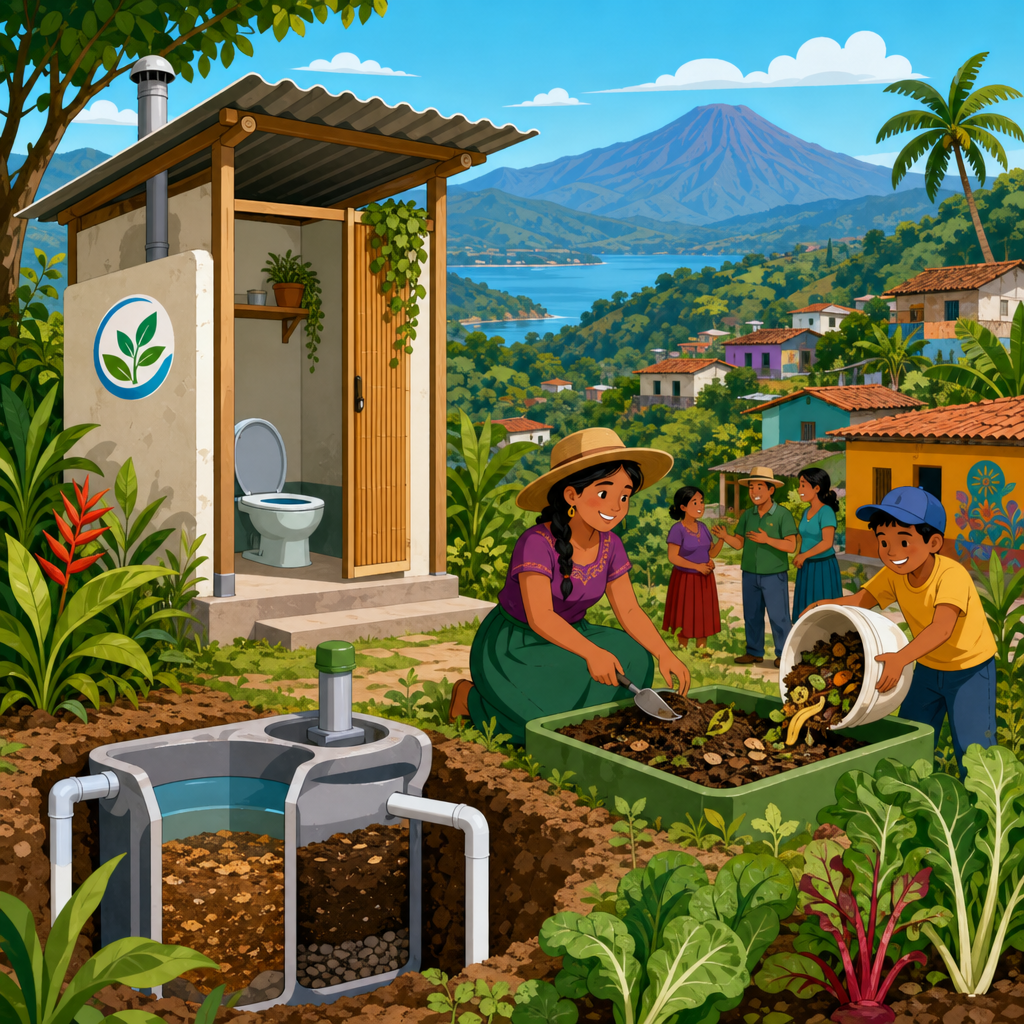
Ecological sanitation, commonly shortened to EcoSan, is a sanitation approach that treats human waste as a resource rather than an unavoidable disposal problem, and Latin America offers some of the clearest proof that this idea can work at community scale. In practice, EcoSan includes urine diversion dry toilets, composting toilets, decentralized wastewater treatment, greywater reuse, and nutrient recovery systems designed to protect water, public health, and soil fertility at the same time. I have seen projects succeed when engineers, municipalities, and residents stop treating toilets as isolated fixtures and start planning complete nutrient and water cycles. That shift matters in Latin America because the region combines water stress, peri-urban growth, rural service gaps, high fertilizer costs, and ecosystems that are easily damaged by untreated sewage. Conventional sewer expansion remains important, but it is expensive, energy intensive, and often unrealistic in remote settlements, informal neighborhoods, mountainous terrain, flood-prone zones, and drought-affected communities. EcoSan provides another pathway. This hub article on showcasing global EcoSan successes focuses on Latin America as a practical laboratory where sustainable sanitation has moved from pilot concepts to replicable models. It explains what has worked, where the limits are, and why the region’s lessons matter for policymakers, NGOs, utilities, researchers, and communities comparing sanitation options today.
What EcoSan looks like in Latin America
Across Latin America, EcoSan rarely appears as a single technology. It is usually a package built around source separation, safe treatment, local reuse, and community management. In the Andean highlands, urine-diverting dry toilets have been used because cold climates, water scarcity, and dispersed settlements make sewer systems difficult to maintain. In semi-arid parts of northeast Brazil and northern Mexico, dry sanitation and greywater reuse help households stretch limited water supplies. In peri-urban settlements around cities such as Lima or Cochabamba, decentralized treatment can reduce contamination where sewer networks lag behind population growth. The common principle is simple: keep excreta streams separate when possible, sanitize them reliably, and return nutrients or water to productive use under controlled conditions.
The main technologies include urine diversion dry toilets, ventilated vault toilets, composting chambers, constructed wetlands, biodigesters, septic upgrades, and small-bore decentralized treatment systems. Urine contains most of the nitrogen and a large share of phosphorus and potassium excreted by humans, so separating it early makes nutrient recovery more efficient. Fecal matter, when properly dehydrated, composted, or otherwise sanitized, can become a soil amendment for forestry, landscaping, or agriculture, depending on local regulation and risk management. Greywater from bathing or washing can often be filtered and reused for irrigation. These systems are not low-tech by definition. Good EcoSan depends on careful design, user training, pathogen reduction targets, operation plans, and monitoring. When those pieces are weak, projects struggle. When they are strong, communities gain sanitation, water resilience, and local fertilizer value from the same investment.
Why the region became a proving ground
Latin America became a proving ground for sustainable sanitation because the need is structural, not temporary. Many countries in the region made major gains in urban sanitation coverage over the past three decades, yet persistent inequalities remain in rural, indigenous, hillside, and peri-urban areas. At the same time, several countries face recurring drought, groundwater depletion, and river pollution from untreated or partially treated wastewater. Conventional sewerage can cost several times more per household than decentralized systems when terrain is difficult or densities are low. Utilities also face high energy costs, leakage, and treatment plant underperformance. In that context, EcoSan is attractive not because it is fashionable, but because it can solve multiple constraints at once.
Another reason is agriculture. Farmers across the region have been exposed to fertilizer price volatility, especially for phosphorus and imported nitrogen products. Nutrient recovery from sanitation is not a full substitute for commercial fertilizer at national scale, but at community level it can meaningfully reduce input costs. Countries with strong traditions of community water committees and participatory rural development have also found it easier to integrate EcoSan into broader local governance. Programs in Bolivia, Peru, Ecuador, El Salvador, and Mexico have shown that sanitation adoption improves when residents help select technology, define maintenance rules, and link toilet use to visible benefits such as cleaner yards, lower water hauling burdens, and productive home gardens. These are the operating conditions that turned Latin America into an important source of EcoSan case studies for the rest of the world.
Case studies that shaped the regional conversation
Some of the most cited EcoSan experiences in Latin America come from Bolivia, Peru, Mexico, and Brazil, where projects moved beyond isolated demonstration units. In Bolivia, NGOs and local governments supported urine-diverting dry toilets in highland communities where freezing temperatures and scarce water made pour-flush systems unreliable. The strongest programs paired toilet construction with long-term hygiene education and agricultural training, so households understood both safe handling and reuse value. In Peru, mountainous villages and desert settlements tested dry sanitation as a response to water scarcity and difficult topography. Successful sites typically included trained local masons, standard maintenance routines, and regular follow-up visits during the first year, when user habits are formed. Mexico contributed important work on composting sanitation in indigenous and rural communities, particularly through civil society organizations that adapted designs to local building materials and cultural practices.
Brazil broadened the discussion by linking ecological sanitation to semi-arid resilience and decentralized wastewater treatment. In the northeast, household-level dry toilets and greywater systems were often integrated with cistern programs and family farming, making sanitation part of wider water security planning. Elsewhere, constructed wetlands and biodigesters demonstrated that EcoSan principles also apply where waterborne systems remain in use but resource recovery can be improved. These examples matter because they show EcoSan is not one fixed product. A high-altitude village, a desert fringe settlement, and a flood-prone peri-urban district will not use the same design. The transferable lesson is methodological: start with local hydrogeology, climate, settlement pattern, and user preference, then match technology to context rather than forcing a standard sewer model everywhere.
What the strongest projects have in common
After reviewing and working around sustainable sanitation programs, I have found that durable success depends less on hardware and more on system discipline. The projects that last usually share the same operational features.
| Success factor | Why it matters | Latin American example |
|---|---|---|
| User-centered design | People maintain systems they understand and accept | Rural Mexico projects adapted toilet layout for local customs and household size |
| Reliable follow-up | Most failures happen after installation, during early use | Andean programs with quarterly visits had better vault management and cleaner facilities |
| Local supply chains | Replacement parts and trained masons reduce downtime | Peruvian municipalities that trained builders scaled faster than donor-built pilots |
| Clear reuse protocols | Resource recovery only works when storage and handling rules are explicit | Bolivian communities using stored urine on non-leafy crops improved acceptance |
| Institutional ownership | Someone must fund monitoring, desludging, and education | Brazilian semi-arid programs linked sanitation to municipal rural development offices |
The opposite pattern is equally clear. Projects fail when toilets are installed as a construction target rather than a service model. Common breakdowns include poor urine diversion because pans are badly aligned, odor caused by excess moisture, ash or cover material not being available, reuse promised without agronomic guidance, and no budget for refresher training. Social acceptance is also decisive. Residents need privacy, convenience, and confidence that the system is clean and safe. Messaging that focuses only on environmental ideals usually performs worse than messaging tied to everyday gains such as less water hauling, fewer flies, lower contamination near homes, and a productive garden. EcoSan works best when it is normalized as practical infrastructure, not marketed as a moral sacrifice.
Public health, water, and agriculture benefits
The clearest benefit of EcoSan in Latin America is reduced contamination where untreated sewage would otherwise enter soil, streams, or shallow groundwater. In communities without sewers, pit latrines near wells can create direct health risks, especially in high water table or flood-prone areas. Properly managed urine-diverting or composting systems reduce that pathway by containing waste and treating it before reuse or final application. Decentralized wastewater treatment can also lower organic loads and pathogen exposure compared with direct discharge. These gains are strongest when sanitation is paired with handwashing, safe child feces management, and reliable operation practices. No toilet technology alone eliminates disease risk, but well-managed EcoSan can substantially improve local environmental health conditions.
Water savings are another major advantage. Dry or low-water systems are particularly valuable in arid and semi-arid zones, where households may buy delivered water or spend hours collecting it. Replacing flush demand with dry sanitation preserves scarce potable water for drinking, cooking, and hygiene. Agriculture gains come from nutrient recovery and soil improvement. Stored urine can supply nitrogen and potassium for crops when applied at appropriate rates, while sanitized composted material can improve soil structure and moisture retention. This is especially relevant for smallholder farmers facing degraded soils and volatile input markets. The benefit should not be exaggerated: recovered nutrients require careful application, and not every crop or market accepts reuse products equally. Still, where guidance is good, EcoSan can turn sanitation from a recurrent liability into a modest but real productive asset.
Barriers, tradeoffs, and the lessons from failure
EcoSan is effective, but it is not effortless. The biggest barrier in Latin America is often institutional, not technical. Many sanitation regulations were written around sewerage and septic systems, leaving uncertainty about approval, inspection, and reuse standards for dry toilets or nutrient recovery. Municipal officials may support pilots but hesitate to scale technologies they do not fully understand. Financing is another challenge. Capital costs for household EcoSan units can be manageable, yet long-term programs still require funds for training, monitoring, behavior change, and occasional rehabilitation. Donor-backed projects often underbudget these softer components, then report disappointing adoption rates.
Cultural fit must also be taken seriously. Some households reject dry sanitation because they associate it with poverty or because maintenance expectations conflict with daily routines. In dense urban neighborhoods, storage space for cover material or compost handling can be limited. In very wet climates, keeping vault contents sufficiently dry may be difficult without strong design and ventilation. Reuse can trigger understandable concerns about pathogens and food safety, especially if extension services are weak. The lesson from failed projects is not that EcoSan does not work. It is that sanitation systems must align with climate, land use, regulation, user behavior, and municipal capacity. Where those conditions are absent, improved septic systems, condominial sewers, or hybrid decentralized treatment may be better choices. The strongest practitioners in the region are pragmatic: they treat EcoSan as one proven option within an inclusive sanitation strategy, not as a universal replacement for sewers.
How this hub connects global EcoSan success stories
Latin America is central to the wider story of showcasing global EcoSan successes because the region demonstrates how sustainable sanitation can move from concept to policy relevance. The case studies here connect directly to broader themes explored across this subtopic: adaptation to water scarcity, sanitation in informal settlements, school sanitation models, nutrient recovery for agriculture, decentralized treatment for small towns, and governance systems that support long-term maintenance. Lessons from Bolivia’s highlands can inform mountain communities in Asia. Brazil’s semi-arid integration of sanitation, household water storage, and family farming has relevance for African drylands. Mexico’s community-led design adaptations offer transferable methods for indigenous and rural contexts globally. Peru’s experience in difficult topography shows where decentralized planning can outperform conventional expansion.
For readers using this page as a hub, the practical takeaway is to compare success stories by operating conditions rather than by country name alone. Ask four questions. What problem was primary: water scarcity, pollution, cost, or terrain? What treatment and reuse pathway was chosen? Who owned maintenance and monitoring after installation? What evidence showed sustained use after the first year? Those questions reveal whether a project is genuinely replicable. EcoSan in Action: Sustainable Solutions in Latin America shows that sustainable sanitation succeeds when infrastructure, behavior, and institutions are designed together. If you are building a program, researching policy, or evaluating technologies, use these case studies as decision tools, then explore the connected success stories across this hub to identify the model that fits your context best.
Frequently Asked Questions
What is EcoSan, and why is it especially relevant in Latin America?
Ecological sanitation, or EcoSan, is a sanitation model built around a simple but transformative idea: human waste should be managed as a valuable resource, not just something to flush away and forget. Instead of relying only on conventional sewer systems and centralized treatment plants, EcoSan uses approaches such as urine diversion dry toilets, composting toilets, decentralized wastewater treatment, greywater reuse, and nutrient recovery to protect human health while conserving water and returning nutrients to the soil. This matters because conventional sanitation often treats water, waste, and agriculture as separate systems, while EcoSan recognizes that they are deeply connected.
In Latin America, EcoSan has gained attention because the region includes many communities where centralized sewer expansion is expensive, geographically difficult, or simply too slow to meet urgent needs. Rural villages, informal urban settlements, peri-urban neighborhoods, mountainous areas, and drought-prone regions often need solutions that are affordable, resilient, and practical at the local level. EcoSan fits that need well because many of its systems can operate with low water use, reduced infrastructure costs, and stronger community control.
It is also especially relevant because many parts of Latin America face overlapping challenges: water scarcity, river and groundwater contamination, unequal access to sanitation, and declining soil fertility in agricultural areas. EcoSan addresses all of these at once by reducing pathogen exposure, cutting pollution loads, and recovering nutrients such as nitrogen and phosphorus that can be reused productively. That combination of public health protection and resource recovery is what makes EcoSan more than a toilet technology. It is a broader sustainability strategy that supports environmental protection, local livelihoods, and long-term sanitation access.
How do EcoSan systems work in practice at the community level?
At the community level, EcoSan works by separating waste streams, treating them safely, and reusing the outputs where appropriate. For example, urine diversion dry toilets collect urine and feces separately. This improves hygiene, reduces odor, and makes treatment easier because urine is typically lower in pathogens and rich in nutrients, while feces can be composted or dehydrated for safe handling after proper treatment. Composting toilets follow a similar principle, using time, ventilation, and organic cover material to stabilize waste and reduce pathogens. These are not improvised systems when properly designed; they are engineered sanitation solutions with clear operational procedures.
Beyond toilets, EcoSan can include decentralized wastewater treatment systems for blackwater and greywater. These may use anaerobic baffled reactors, planted gravel filters, wetlands, biofilters, settling tanks, or other low-energy treatment units located near the point of generation. Greywater from sinks, showers, and laundry can often be treated separately and reused for irrigation or landscaping, reducing freshwater demand. In community settings, this decentralized design is important because it avoids the need for extensive sewer networks and allows treatment to be scaled according to local population size and site conditions.
Successful community-scale implementation depends on more than the hardware. It requires user training, maintenance routines, monitoring, safe reuse guidelines, and local ownership. Households need to understand how to use systems correctly, when to add dry material, how storage and treatment periods work, and why separation of waste streams matters. Community leaders, municipal partners, and local technicians often play a central role in management. When these institutional and educational elements are in place, EcoSan systems can function reliably and deliver measurable benefits in sanitation coverage, water savings, nutrient recovery, and environmental protection.
What are the main environmental and public health benefits of EcoSan in Latin America?
The environmental benefits of EcoSan are significant, especially in regions where untreated or poorly treated wastewater contaminates rivers, lakes, and groundwater. Because many EcoSan systems reduce or eliminate the need for water-based flushing, they help conserve freshwater in areas facing seasonal drought, over-extraction, or weak water infrastructure. Decentralized treatment and source separation also reduce the amount of pollution entering natural waterways. That means lower nutrient loading, fewer pathogens in surface water, and reduced pressure on ecosystems that are already vulnerable to urban growth and agricultural runoff.
From a public health perspective, the most important benefit is safer management of human waste. Poor sanitation spreads diarrheal disease, intestinal parasites, and other infections through contaminated water, soil, food, and hands. EcoSan systems are designed to interrupt those transmission pathways by containing waste, supporting treatment close to the source, and minimizing direct contact with untreated material. When systems are correctly maintained, they can reduce open defecation, decrease exposure to sewage, and improve overall hygiene conditions for households and neighborhoods.
Another major advantage is nutrient recovery. Human urine and treated organic matter contain plant nutrients that can support agriculture, home gardens, reforestation, and soil improvement when reused according to safety standards. In farming communities across Latin America, this can reduce dependence on synthetic fertilizers, lower input costs, and strengthen local nutrient cycles. That benefit links sanitation directly to food production and land restoration. In other words, EcoSan does not just remove waste from sight; it helps convert a sanitation challenge into a resource management opportunity, which is one reason it is considered such a powerful sustainability approach.
What challenges can make EcoSan projects difficult, and how are those challenges usually addressed?
EcoSan projects can face technical, social, financial, and institutional challenges. One common issue is the assumption that installing toilets is enough. In reality, EcoSan requires a full service chain: correct design, user education, regular maintenance, safe storage or treatment, and a realistic plan for reuse or final handling. If any link in that chain is weak, performance can suffer. For example, poor ventilation, lack of cover material, inadequate training, or irregular maintenance can lead to odors, pest problems, or reduced user acceptance. These are usually not failures of the concept itself, but of implementation quality and long-term support.
Social acceptance is another important factor. Sanitation habits are deeply cultural, and some households may initially resist systems that require behavior changes or involve the idea of reusing treated human-derived materials in agriculture. The most effective response is participatory planning. Communities need to be involved early in decision-making, not just informed after designs are complete. Demonstration projects, local champions, clear health messaging, and visible evidence of benefits all help build trust. When people see that systems are clean, practical, dignified, and beneficial, acceptance usually increases.
Institutional and policy barriers can also slow adoption. In some places, building codes, sanitation regulations, or municipal funding systems still favor conventional sewer-based models, even where those models are unaffordable or unsuitable. EcoSan projects often succeed best when local governments, NGOs, engineers, health workers, and community organizations collaborate on standards, training, and monitoring. Financing models matter too. Upfront costs may be manageable, but communities still need plans for maintenance, spare parts, and technical assistance. Strong projects address these issues from the beginning by treating EcoSan as a long-term public service system, not a one-time infrastructure donation.
Can EcoSan realistically be scaled across Latin America, or is it only suitable for small pilot projects?
EcoSan can absolutely be scaled, but the key is understanding what “scale” really means. It does not necessarily mean one uniform technology deployed everywhere. Latin America is geographically, culturally, and economically diverse, so scalable EcoSan is usually about scaling a sanitation approach rather than copying a single toilet model. In one region, that may mean urine diversion dry toilets for water-scarce rural households. In another, it may involve decentralized wastewater treatment and greywater reuse for peri-urban settlements. Elsewhere, nutrient recovery and composting systems may be integrated into agricultural communities. The scalable element is the framework: source separation, water conservation, safe treatment, resource recovery, and local management.
There is strong evidence that EcoSan can move beyond pilots when projects are embedded in policy, training, and service delivery systems. Pilot projects often succeed technically but stall when they are not connected to local institutions. Real scale happens when municipalities adopt supportive regulations, schools and training centers develop local expertise, supply chains for construction and maintenance are available, and communities have access to long-term technical support. In that sense, scaling EcoSan is as much about governance and capacity building as it is about engineering.
It is also worth noting that many Latin American sanitation challenges cannot be solved quickly through centralized infrastructure alone. Budget limits, difficult terrain, informal settlement patterns, and climate pressures create a strong case for decentralized, adaptable solutions. EcoSan offers that flexibility. When implemented thoughtfully, it can complement existing sanitation systems, extend service to underserved communities, and improve resilience in places where water and infrastructure constraints are intensifying. So while pilot projects are often the starting point, EcoSan is not limited to them. It is a practical pathway toward broader, more sustainable sanitation coverage across the region.