Philippines’ integrated waste management shows how sanitation, resource recovery, and local governance can work together when policy is backed by practical systems. In this context, integrated waste management means handling solid waste, wastewater, septage, organics, and reusable byproducts as connected streams rather than isolated problems. EcoSan, short for ecological sanitation, focuses on safely turning waste into useful resources such as compost, soil conditioner, energy, and reclaimed water. I have worked on sanitation content and reviewed municipal waste programs across Southeast Asia, and the Philippine case stands out because it combines ambitious national law with uneven but often impressive local execution. That mix makes it highly relevant for readers looking for real-world lessons. The country’s archipelagic geography, fast urbanization, disaster exposure, and service gaps create difficult conditions. Yet those same conditions have pushed cities, municipalities, water districts, social enterprises, and community groups to test practical models. For a hub article under global EcoSan success stories, the Philippines matters because it offers many versions of success: barangay composting, citywide segregation, septage treatment, material recovery facilities, plastic diversion, and market-based recycling partnerships. It also shows the limits of infrastructure-only thinking. Facilities work best when paired with behavior change, fee collection, enforcement, and stable end markets for recovered materials. Understanding these examples helps readers evaluate what can transfer to other regions and what depends on local politics, budgets, land availability, and public trust.
Why the Philippines matters in global ecological sanitation
The Philippines is often discussed through Republic Act 9003, the Ecological Solid Waste Management Act of 2000, which remains one of Asia’s most important legal frameworks for local waste governance. The law requires segregation at source, establishment of material recovery facilities, closure of open dumps, and preparation of local solid waste management plans. On paper, those requirements are straightforward. In practice, they create the institutional backbone that allows EcoSan principles to spread beyond pilot projects. By linking household behavior, municipal collection, composting, recycling, and disposal, the law recognizes that waste is a systems issue. The sanitation side is reinforced by the Clean Water Act and by septage management programs led by utilities and local governments. Together, these frameworks support integrated planning across toilets, drains, trucks, treatment facilities, and reuse pathways.
What makes the Philippine experience especially valuable is the range of operating environments. Metro Manila faces dense settlements, constrained land, and large waste volumes. Secondary cities like San Fernando, Puerto Princesa, and Iloilo have had more room to develop structured collection and recovery systems. Rural municipalities rely more heavily on barangay leadership, informal recovery networks, and decentralized composting. Island provinces deal with transport costs that make local resource recovery economically attractive. In several places, organic waste is the key opportunity because food and yard waste still make up a large share of municipal solid waste by weight. Where segregation is enforced well, organics can be diverted into compost instead of overloading collection fleets and landfills. That is a direct EcoSan win because it converts a disposal burden into a soil input useful for agriculture, landscaping, and erosion control.
Another reason the country matters is that success is not defined only by technology. Some of the strongest programs grew because mayors enforced segregation rules, schools taught children what goes in each bin, haulers adjusted routes for separated waste, and local junk shops created demand for recyclables. I have seen this pattern repeatedly in case documentation: the breakthrough is usually administrative discipline plus citizen participation, not an expensive imported machine. This is exactly why the Philippines deserves a central place in any collection of global EcoSan success stories.
How integrated systems work on the ground
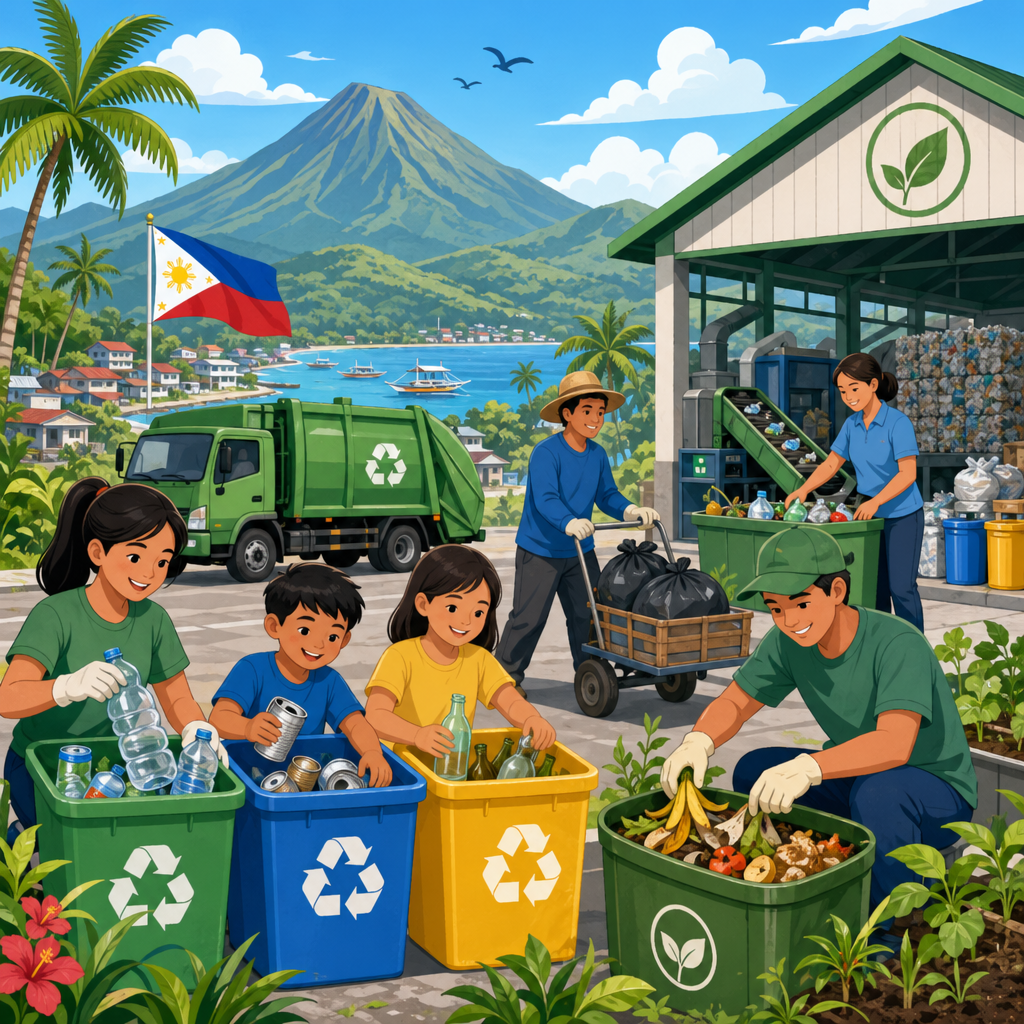
An effective Philippine integrated waste management system usually begins with segregation at source. Households, markets, schools, and businesses are asked to separate biodegradable waste, recyclables, residuals, and sometimes special waste. Collection schedules then match those streams. Biodegradables go to composting sites or processing centers. Recyclables move through barangay material recovery facilities, itinerant buyers, junk shops, or private aggregators. Residuals are hauled to sanitary landfills. This sequence sounds simple, but every link matters. If collection crews remix segregated waste, public compliance collapses. If compost has no buyer, facilities fill up and odors rise. If residual disposal is far away or expensive, illegal dumping returns. The best local programs pay attention to each operational detail.
Material recovery facilities, often called MRFs, are central to the system. In the Philippines, an MRF is not always a large mechanized plant. Many are modest barangay-level structures where workers receive, sort, bale, and temporarily store recyclables while biodegradables are shredded or composted. This small-scale design suits communities with limited budgets and creates local accountability. A functioning MRF reduces the waste sent for disposal, creates livelihoods, and provides a visible place where residents can see the value of segregation. In successful areas, MRF staff track inbound volumes and rejection rates, giving local officials data to improve collection and education campaigns.
Septage and wastewater management are another essential but underappreciated layer. Many Philippine households rely on septic tanks, yet tanks often fail because they are undersized, poorly designed, or never desludged. Several water districts and concessionaires changed this by introducing scheduled desludging and septage treatment plants. Once septage is collected and treated, biosolids can potentially be processed further, depending on local standards, treatment performance, and reuse rules. This approach aligns with EcoSan because it treats human waste as a managed resource stream rather than an invisible household burden. The public health gains are immediate: fewer overflows, less groundwater contamination, and reduced pathogen exposure.
| System element | Typical Philippine approach | EcoSan benefit | Main implementation risk |
|---|---|---|---|
| Source segregation | Household separation into biodegradable, recyclable, and residual waste | Cleaner material streams and higher recovery rates | Low compliance if rules are not enforced |
| Barangay MRF | Manual sorting, storage, and small-scale composting | Local jobs and reduced landfill dependence | Weak markets for recovered materials |
| Composting | Windrows, bins, shredding, and community gardens | Nutrient return to soils and lower hauling costs | Odor and contamination from mixed waste |
| Septage management | Scheduled desludging linked to treatment plants | Cleaner waterways and safer sanitation services | Poor fee collection or limited coverage |
| Residual disposal | Transfer to sanitary landfill | Controlled final disposal for non-recoverables | High transport costs for remote islands |
Case studies that show what success looks like
San Fernando in Pampanga is one of the most cited examples because it demonstrated that disciplined segregation and strong local enforcement can drive high diversion. The city invested in barangay-level systems, routinized collection, and public communication, then backed those efforts with ordinances and monitoring. Instead of treating waste as a sanitation afterthought, city leaders made it an administrative priority. The result was reduced disposal pressure and better participation at the neighborhood level. For other cities, the lesson is clear: a local government does not need the most advanced technology to improve performance, but it does need consistent rules and visible leadership.
Puerto Princesa in Palawan has also been recognized for environmental governance, including efforts tied to collection, segregation, and protection of its tourism-dependent ecosystem. In tourism economies, unmanaged waste quickly becomes an economic issue because beaches, waterways, and public spaces are part of the local brand. Programs there illustrate how environmental protection, sanitation, and destination management can reinforce one another. When market vendors and households separate organics, collection becomes more efficient and fewer mixed wastes leak into sensitive landscapes. This is a reminder that integrated waste management is not only about engineering; it is also about preserving livelihoods tied to clean surroundings.
On the sanitation utility side, Metro Manila’s concessionaires and several provincial water districts built septage management into customer billing and service delivery. Manila Water and Maynilad, despite serving very different service zones and operating under separate concession arrangements, helped normalize large-scale desludging and treatment. Their work showed that sanitation can be financed more reliably when bundled into utility structures rather than left to purely on-demand private emptying. Outside the capital, water districts in cities such as Dumaguete and Baliwag have also advanced septage programs. These examples matter in a global EcoSan discussion because they demonstrate how service-chain thinking works: containment, collection, transport, treatment, and safe end use or disposal must all be planned together.
Community-level organic recovery offers another class of success story. In municipalities where agriculture remains important, composting is often the most practical form of resource recovery. Market waste, yard trimmings, and kitchen organics can be converted into compost for public landscaping, tree planting, or sale to farmers. I have reviewed programs where the economics improved not because compost sold at a premium, but because the municipality avoided transport and tipping costs while extending landfill life. That is a realistic standard for success. EcoSan projects do not always need high-margin outputs; sometimes the major value lies in avoided costs, cleaner neighborhoods, and better soil management.
What the Philippines teaches other countries
The first major lesson is that national law is necessary but insufficient. RA 9003 created a durable mandate, yet outcomes still vary sharply by city and municipality. Places with active mayors, trained environmental staff, functioning local boards, and clear enforcement outperform places with the same legal obligations but weak follow-through. For practitioners elsewhere, this means governance capacity should be treated as core infrastructure. Budget lines, inspection routines, route design, complaint handling, and procurement rules are as important as bins and buildings.
The second lesson is that decentralized systems often fit better than large centralized ones, especially where geography is fragmented. Barangay MRFs, cluster composting sites, and local buy-back arrangements can outperform distant processing plants when transport is unreliable or fuel is costly. The Philippines, as an archipelago of more than seven thousand islands, makes this point vividly. Many communities cannot depend on one regional facility without paying a logistics penalty. Decentralized recovery shortens the chain, creates visibility, and makes participation more tangible for residents.
The third lesson is that the informal sector is not a side issue. Waste pickers, itinerant buyers, junk shops, and scrap dealers already recover value long before municipal systems intervene. Programs that ignore these actors usually lose efficiency and public legitimacy. Better models map existing recovery channels, improve worker safety, and integrate informal collectors into sorting or aggregation roles. This is especially important for plastics, metals, cardboard, and bottles, where private value chains are already active.
The fourth lesson concerns sanitation finance. Septage management works better when desludging is planned and paid for through predictable fees rather than sporadic emergency emptying. Utilities can spread costs across customers, schedule services, and maintain treatment facilities more reliably than fragmented private markets alone. Countries trying to improve fecal sludge management can learn from this service model, even if institutional structures differ.
Common barriers and the realistic path forward
Despite strong examples, the Philippines still struggles with inconsistent enforcement, contamination of segregated waste, limited landfill access, plastic leakage, disaster debris, and funding gaps. Some MRFs become underused storage sheds because residents are not separating properly or because there is no buyer for low-value materials. Composting programs fail when food waste arrives mixed with diapers and sachets. Septage treatment plants underperform when customers refuse desludging fees or illegal haulers dump loads elsewhere. These are not signs that integrated systems do not work. They show that every system needs incentives, monitoring, maintenance, and markets.
Climate and disaster risk add another layer. Floods can spread waste, damage facilities, and interrupt collection, while typhoons generate huge volumes of vegetative and construction debris. Resilient programs plan for temporary storage, debris segregation, backup hauling routes, and rapid public communication after storms. They also reduce baseline vulnerability by keeping drains clear and avoiding dump sites in flood-prone areas. In practical terms, better waste management is part of climate adaptation.
The most realistic path forward combines stricter segregation, better organics management, stronger market development for recyclables, and expanded safe sanitation services. Digital tools can help, but they are not the starting point. First come clear ordinances, collection reliability, facility operations, and transparent reporting. Then tools such as route optimization, QR-coded monitoring, weighbridge data, and customer service apps can raise efficiency. For readers exploring global EcoSan successes, the Philippine experience is valuable precisely because it is not a fairy tale. It is a working laboratory of progress, setbacks, and repeatable lessons.
The central takeaway is that the Philippines proves integrated waste management can deliver public health, cleaner communities, and resource recovery when systems are designed around local realities. Its strongest examples share the same fundamentals: segregation at source, functioning recovery facilities, dependable collection, safe treatment of septage, and leaders willing to enforce rules consistently. They also show that success is cumulative. One barangay composting site, one city ordinance, or one septage plant will not transform a region by itself, but connected interventions can. As a hub for showcasing global EcoSan successes, this case study offers a grounded template for evaluating what works elsewhere: look for governance, operational discipline, and viable end markets, not just technology. If you are building out this subtopic, use the Philippines as a benchmark case, then compare it with other countries’ models for organics diversion, fecal sludge management, recycling integration, and community participation. That comparison will reveal the most transferable practices and the conditions they need to succeed. Start with the Philippine examples, then follow the linked case studies to see how EcoSan principles perform across different economies, climates, and governance systems today worldwide.
Frequently Asked Questions
What does integrated waste management mean in the Philippines?
In the Philippine context, integrated waste management means treating waste not as a single sanitation issue but as a system of connected material streams that need to be managed together. Instead of separating solid waste, wastewater, septage, organics, and reusable byproducts into isolated government functions, an integrated approach looks at how each stream affects public health, environmental protection, land use, local budgets, and resource recovery. This is especially important in the Philippines, where dense urban areas, rapidly growing municipalities, climate risks, and uneven service coverage all make fragmented waste handling less effective and more expensive over time.
Practically, this approach connects household segregation, collection, treatment, reuse, disposal, and local governance. Organic waste may be diverted into composting or biogas systems. Septage and wastewater can be processed to reduce contamination of waterways while also creating opportunities for nutrient recovery or reclaimed water use, where appropriate. Recyclables can be sorted and returned to productive use, reducing pressure on disposal sites. Residual waste is then minimized rather than treated as the default endpoint. The result is a more efficient framework that supports sanitation, conserves resources, and helps local government units align policy with practical service delivery.
How does EcoSan fit into the Philippines’ integrated waste management strategy?
EcoSan, or ecological sanitation, is a natural fit within an integrated waste management strategy because it reframes waste as a potential resource rather than something to simply remove and discard. In the Philippines, this matters because many communities face overlapping challenges involving sanitation access, water pollution, landfill pressure, and the high cost of conventional treatment systems. EcoSan helps address these concerns by promoting safe processes that recover value from human waste, organic matter, and wastewater streams in ways that support both environmental protection and local resilience.
When properly designed and managed, EcoSan systems can produce useful outputs such as compost, soil conditioner, energy, and reclaimed water. These recovered materials can support agriculture, landscaping, soil rehabilitation, or non-potable water applications, depending on the treatment level and regulatory compliance. Just as importantly, EcoSan encourages better source separation and safer containment, which can reduce pathogen risks and improve treatment efficiency. In an integrated Philippine model, EcoSan is not a stand-alone technology trend; it is part of a broader operational system linking households, collection services, treatment facilities, reuse markets, and local oversight. Its value comes from combining sanitation outcomes with resource recovery in a way that is practical, safe, and adapted to local conditions.
Why is local governance so important to successful integrated waste management?
Local governance is central because even the strongest national policies only work when cities and municipalities can translate them into functioning systems on the ground. In the Philippines, local government units play a critical role in planning, financing, regulating, and coordinating waste services. They influence how segregation is enforced, how collection routes are organized, whether treatment infrastructure is maintained, how private operators are managed, and how communities are educated about proper waste handling. Without capable local leadership, integrated waste management often remains a policy goal rather than an operational reality.
Good governance also creates the conditions for long-term success. That includes clear ordinances, reliable budgets, performance monitoring, technical standards, partnerships with barangays and service providers, and accountability for outcomes. Because integrated waste management spans multiple streams, local governments must coordinate across departments that may traditionally work separately, such as sanitation, public works, environment, health, and agriculture. They also need to balance public health priorities with affordability and community acceptance. In practice, the best-performing systems are usually those where local leaders treat waste management as a public service ecosystem, not just a disposal problem, and where implementation is backed by routine operations, data, and community participation.
What are the main benefits of managing solid waste, wastewater, septage, and organics as connected streams?
Managing these streams together delivers benefits that are difficult to achieve when each one is handled separately. The first major benefit is better public health protection. Poorly managed solid waste can clog drainage and worsen flooding, while untreated wastewater and septage can contaminate rivers, groundwater, and coastal areas. Organic waste left to decompose unmanaged can create odors, attract pests, and generate methane. By linking systems, local authorities can reduce these overlapping risks and build cleaner, safer communities.
The second major benefit is improved resource efficiency. Organics can be composted, treated sludge may be processed into soil-enhancing products where safe and appropriate, recyclable materials can re-enter supply chains, and treated water may be reused for certain applications. This reduces dependence on raw materials, extends landfill life, and lowers environmental impact. There is also an economic benefit: integrated systems can create jobs in collection, sorting, treatment, recovery, and maintenance while helping local governments avoid the rising costs of unmanaged waste and environmental damage. Over time, a connected-stream approach supports climate resilience, strengthens service delivery, and turns sanitation investments into broader social and environmental gains.
What challenges does the Philippines face in implementing integrated waste management, and what helps make it work?
The Philippines faces several practical challenges in implementation. Infrastructure gaps remain a major issue, particularly in areas where collection systems, treatment plants, transfer facilities, or septage services are limited or inconsistent. Funding constraints can delay upgrades or reduce maintenance quality. Public participation is another critical variable, since segregation at source and proper disposal habits directly affect whether recovery systems work efficiently. Institutional fragmentation can also slow progress when responsibilities are split across agencies or departments without strong coordination. On top of that, geography matters: island settings, remote communities, flood-prone areas, and dense informal settlements all require tailored solutions rather than a one-size-fits-all model.
What helps make integrated waste management work is a combination of policy support and practical systems. That means realistic local planning, appropriate technology choices, reliable operations, trained personnel, and clear monitoring of results. Community education is essential, but it must be matched by services people can actually use. Market development also matters, because recovered outputs such as compost, recyclables, energy, or reclaimed water need viable end uses to sustain the system. The most durable progress usually happens when local governments, utilities, private operators, and communities work within a shared framework that prioritizes sanitation, environmental protection, and resource recovery together. In short, success depends less on a single flagship project and more on building connected, workable systems that communities can maintain over time.