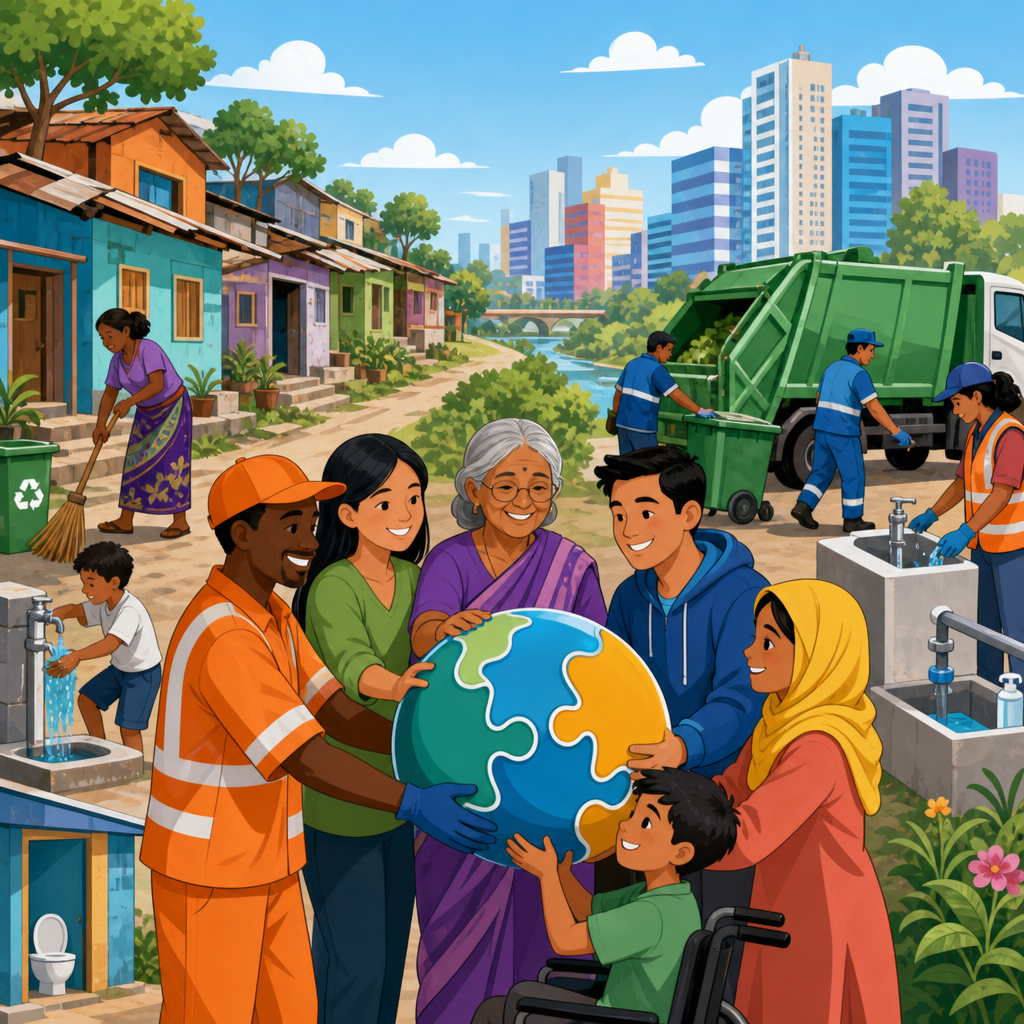
Innovative water purification in rural South Africa shows how practical engineering, community governance, and ecological sanitation can solve persistent health and water access problems at the same time. In this case studies and success stories hub, the focus is not only on clean drinking water, but on the wider EcoSan approach that treats water, sanitation, nutrients, and local maintenance capacity as one connected system. Rural communities across Limpopo, Eastern Cape, KwaZulu-Natal, and Mpumalanga face recurring challenges: dispersed settlements, aging boreholes, variable rainfall, contamination from pit latrines, long collection distances, and limited municipal budgets. I have worked with decentralized water and sanitation projects where the technical issue looked simple at first, yet the lasting solution depended on training operators, protecting catchments, and choosing equipment villagers could actually maintain. That is why South Africa offers valuable lessons for global EcoSan success stories. It combines severe service backlogs with strong local innovation, active research institutions, and practical pilot programs. Understanding these examples matters because waterborne disease, school absenteeism, failed infrastructure, and household poverty are tightly linked. When purification systems are paired with ecological sanitation principles, communities gain safer water, lower operating costs, nutrient recovery opportunities, and greater resilience during droughts and power disruptions.
Why Rural South Africa Has Become a Crucial Testing Ground
Rural South Africa is a meaningful laboratory for water purification because it contains nearly every constraint decentralized systems must survive. Many villages rely on groundwater with elevated turbidity after storms, microbial contamination from livestock or poorly sited sanitation, and intermittent electricity. National policy has long recognized the right to basic water, yet implementation differs sharply by district. In practice, centralized treatment plants often sit too far from scattered homes, while tanker delivery is expensive and unreliable. That gap pushed municipalities, universities, nonprofits, and social enterprises toward point-of-use and community-scale purification methods. The best projects do more than install a filter. They begin with source testing, seasonal mapping, and risk assessment under the Water Safety Plan approach endorsed by the World Health Organization. They also consider sanitation behavior. If pit latrines flood during heavy rain or urine-diverting toilets are poorly managed, upstream purification gains can be lost. South African case studies stand out because they document this systems thinking clearly. They show that successful EcoSan-related water purification depends on governance, spare parts, local ownership, and honest monitoring, not just on impressive technology. For readers exploring global EcoSan successes, these projects provide concrete evidence of what works, where it works, and why.
Core Technologies Delivering Results in Villages
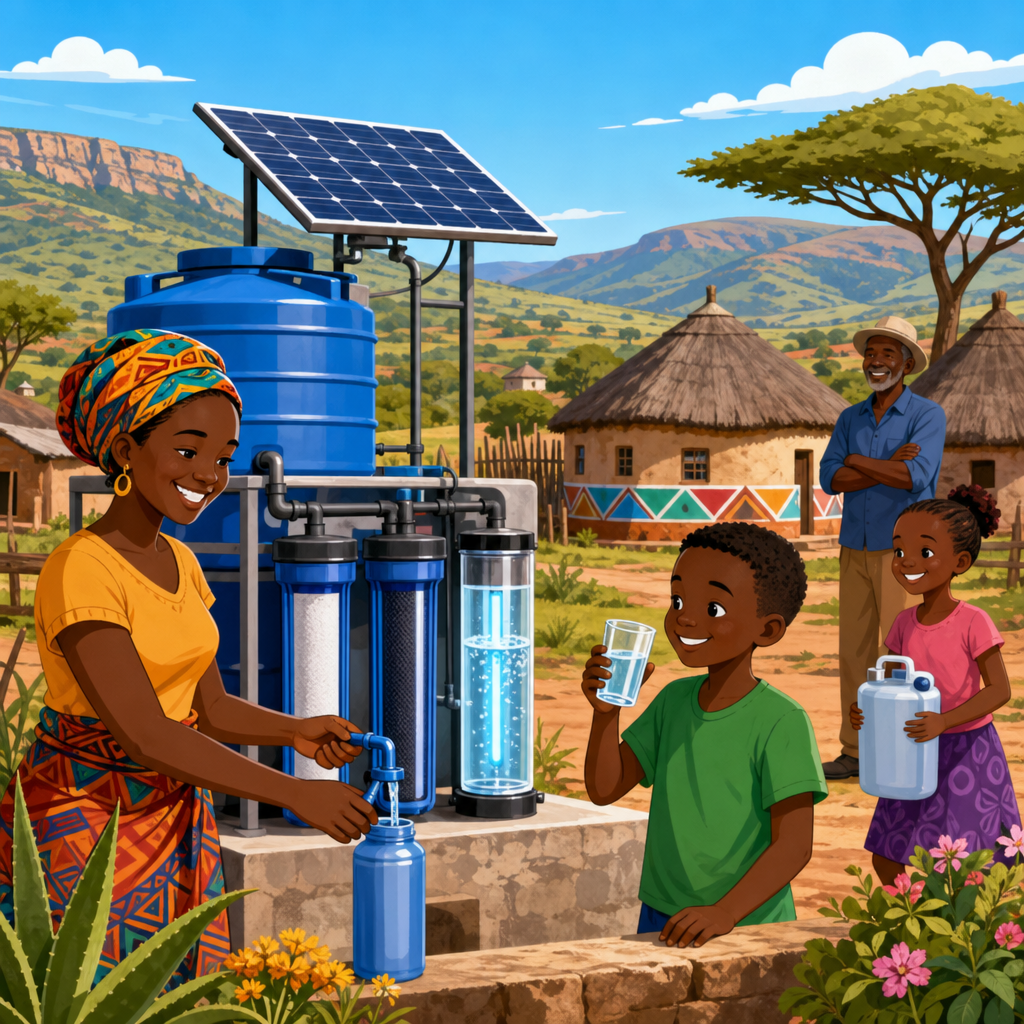
The most effective rural water purification technologies in South Africa are usually the simplest to operate and the easiest to repair. Biosand filters, ceramic pot filters, membrane ultrafiltration units, chlorination kiosks, solar disinfection support systems, and ultraviolet units powered by photovoltaic panels have all been used, but performance depends on water quality and management discipline. In my experience, communities trust systems more when they can see the treatment stages and understand what each one does. A protected spring feeding a roughing filter, then slow sand filtration, then chlorination, is easier to explain than a sealed black-box unit with imported parts. Where source water is brackish, reverse osmosis can work, but it is often too energy intensive and maintenance heavy for poorer villages unless paired with strong service contracts. Ultraviolet treatment gives excellent pathogen control when turbidity is low, yet lamps, sleeves, and power stability must be managed carefully. Chlorination remains indispensable because it provides residual protection in storage containers and distribution lines. Projects that combine physical filtration with a disinfectant barrier consistently outperform single-step systems. The lesson repeated across South African sites is straightforward: appropriate technology wins over advanced technology when operator skills, supply chains, and cost recovery are built into the design from day one.
Case Study Patterns: What the Strongest Projects Share
Across published examples and field programs, successful projects share a recognizable pattern. They start with a specific contamination problem, match treatment to that problem, train a local committee, and monitor water quality long after inauguration day. In parts of Limpopo, community purification kiosks using multistage filtration and chlorination improved access where households previously drew from rivers and unprotected wells. In KwaZulu-Natal, rainwater harvesting linked to first-flush diversion and household treatment reduced dependence on distant communal taps during dry months. In Eastern Cape schools, decentralized treatment paired with sanitation upgrades lowered absenteeism linked to diarrheal illness and made handwashing stations more reliable. A repeated feature is the use of local caretakers, often women already active in health or school nutrition programs. They become the real operators, collecting user fees, dosing chlorine, cleaning screens, and reporting faults before breakdowns escalate. Another common factor is transparent testing. The projects that retain community confidence usually publish or publicly display E. coli, turbidity, and residual chlorine results. When people can see improvements, they keep using the system. When test data is hidden, rumors spread quickly. These case studies matter globally because they prove EcoSan success is not one invention. It is disciplined implementation across water, sanitation, behavior change, and maintenance.
How Ecological Sanitation Strengthens Water Purification Outcomes
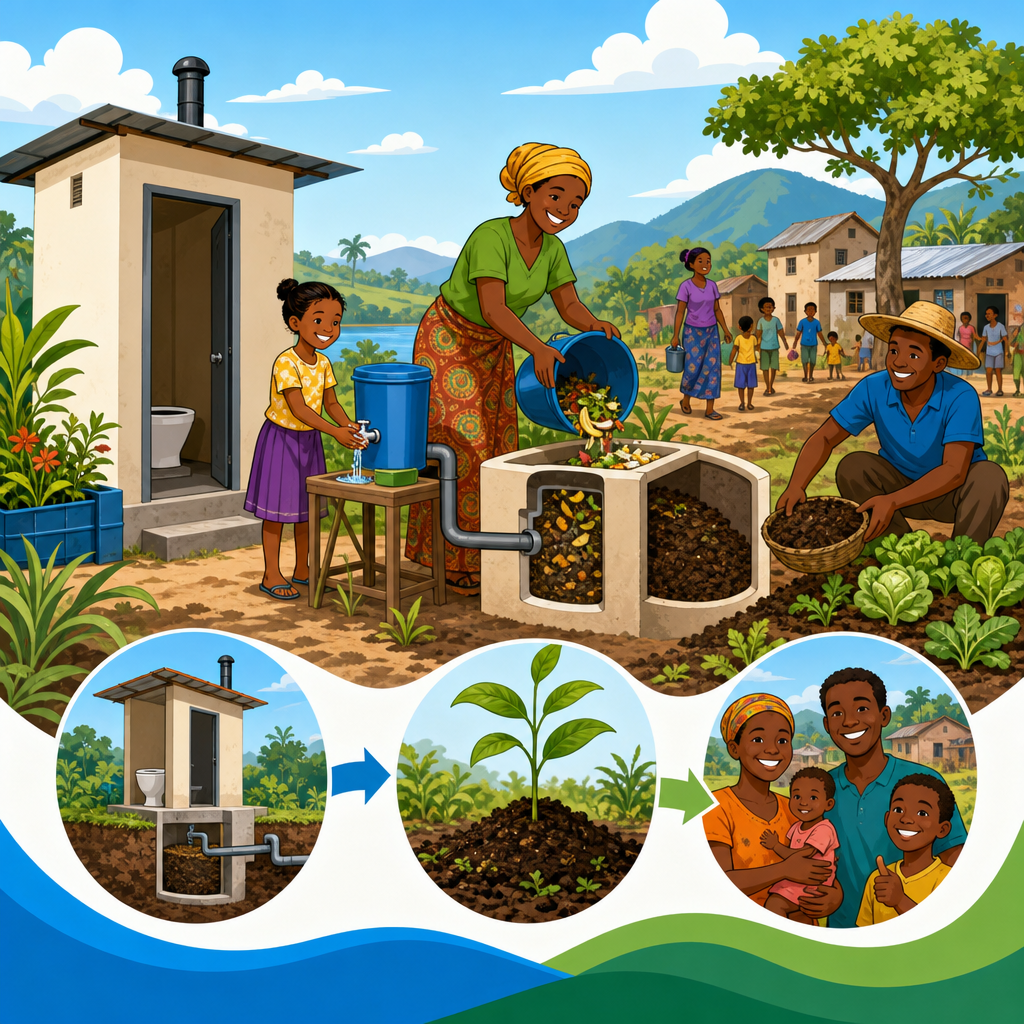
Water purification and ecological sanitation are often planned separately, but in rural South Africa the strongest outcomes appear when they are designed together. EcoSan principles reduce pollution at the source by separating waste streams, encouraging safe reuse where appropriate, conserving water, and limiting nutrient leakage into groundwater. In villages where urine-diverting dry toilets or well-managed composting systems are installed correctly, nearby water sources face less fecal contamination than areas with collapsing pits close to shallow wells. That reduces treatment burden and lowers pathogen risk after heavy rainfall. I have seen projects fail because water teams ignored sanitation realities. A borehole chlorination system cannot compensate indefinitely for latrines placed uphill in permeable soils. Conversely, sanitation programs underperform when they do not secure enough safe water for hygiene and cleaning. South African experience shows the value of integrated planning: map groundwater vulnerability, align toilet siting with hydrogeology, create greywater disposal pathways, and pair household purification messaging with sanitation maintenance. EcoSan also supports nutrient recovery for gardens, which improves food security and community buy-in. When families see sanitation not only as waste disposal but as part of a resource cycle, acceptance improves. This is why global EcoSan success stories increasingly feature water purification as a parallel intervention rather than a separate sector.
Examples of Technologies and Their Best Use Cases
Different villages need different combinations of treatment, storage, and sanitation support. The table below summarizes common options used in rural South Africa and where each tends to work best.
| Technology | Best Use Case | Main Strength | Key Limitation |
|---|---|---|---|
| Slow sand filtration plus chlorination | Community systems using surface water or turbid spring water | Reliable pathogen reduction with visible treatment steps | Needs regular scraping, flow control, and operator oversight |
| Ceramic or biosand household filters | Scattered homes with limited grid power | Low cost and easy household ownership | Performance drops without cleaning discipline and safe storage |
| Solar-powered UV units | Low-turbidity borehole supplies at clinics or schools | Fast disinfection without chemical taste | No residual protection after treatment |
| Ultrafiltration kiosks | Dense villages with fee-based water points | High microbial removal and good daily output | Membrane fouling and replacement costs |
| Rainwater harvesting with first-flush diversion | Homes and schools in seasonal rainfall zones | Reduces pressure on unsafe surface sources | Storage quality and dry-season reliability vary |
The practical insight is that technology selection should follow source water testing, settlement pattern, and maintenance capacity. That principle appears repeatedly in South African success stories and in strong EcoSan programs elsewhere, from India to Ethiopia.
Institutions, Funding Models, and Community Ownership
No rural purification project succeeds for long without a viable operating model. South African programs have used municipal grants, NGO demonstration funding, social enterprise kiosks, school partnerships, and hybrid models where the capital cost is subsidized but users pay for consumables and caretaking. The best arrangements make responsibilities explicit. Municipalities often retain ownership of major assets, while trained local operators handle daily tasks and report through a ward or village structure. Universities such as the University of KwaZulu-Natal, Stellenbosch University, and the Water Research Commission have contributed valuable piloting, water quality analysis, and technical validation. Their role matters because small projects frequently fail to document results in ways decision-makers can trust. Community ownership should not be romanticized, though. Volunteers burn out, committees can become inactive, and fee collection is politically sensitive where water has been promised as a right. I have found that projects last longer when they budget for paid local labor, even if the amount is modest. A caretaker with a checklist, a phone allowance, and access to spare chlorine or replacement taps is more reliable than an unpaid committee member expected to improvise. Strong programs also include refresher training and escalation pathways, so minor faults do not become system-wide failures after the original implementers leave.
Measured Impacts on Health, Time, and Local Resilience
The most important question is whether these interventions change daily life in measurable ways. Where purification is maintained well, the answer is yes. Studies across low-resource settings consistently associate improved microbiological water quality with lower diarrheal disease risk, especially when treatment is combined with safe storage and handwashing access. In rural South African settings, reported benefits often include fewer clinic visits for stomach illness, reduced school absenteeism, and less time spent collecting water from distant sources. Women and girls usually gain the most time back, which can shift household labor patterns in meaningful ways. Another major benefit is resilience. Solar-powered treatment and rainwater capture reduce dependence on unstable grid supply and tanker deliveries. Integrated EcoSan systems add resilience by reducing freshwater demand for sanitation and limiting groundwater contamination. During drought periods, communities with diversified sources and decentralized treatment cope better than those relying on a single municipal pipeline. Economic gains are harder to quantify, but they are real: lower spending on transport to fetch water, reduced purchase of bottled water, less lost work from illness, and stronger school attendance. These impacts explain why South African examples deserve attention in a global hub on EcoSan successes. They show that environmental design can produce practical social benefits quickly when implementation is disciplined.
Persistent Barriers and Lessons for the Next Generation of Projects
Despite clear successes, many rural systems still fail prematurely. The causes are familiar: weak source protection, poor procurement, lack of spare parts, intermittent monitoring, unrealistic treatment choices, and insufficient sanitation integration. Some projects install advanced membranes where a robust chlorinated gravity system would have been safer. Others neglect household storage, so purified water is recontaminated in open buckets. Climate variability also complicates planning. Intense storms increase turbidity and microbial loading, while drought concentrates demand on fragile boreholes. Future projects should therefore prioritize modularity, operator training, and lifecycle budgeting. They should also use mobile reporting tools, simple water quality dashboards, and regular sanitary inspections rather than relying on one-off commissioning tests. For this sub-pillar hub on showcasing global EcoSan successes, the key lesson from rural South Africa is balance. Innovation matters, but only when paired with context. The best systems are not the most sophisticated; they are the ones communities can govern, technicians can service, and health workers can explain confidently. If you are mapping related case studies, use South Africa as a reference point for integrated design, realistic financing, and measurable outcomes. Explore the linked stories in this topic cluster, compare technologies and governance models, and apply the lessons to your own EcoSan planning.
Frequently Asked Questions
What makes water purification in rural South Africa different from standard urban water treatment?
Water purification in rural South Africa often has to work under very different conditions from large urban systems. In many villages, households are spread out, infrastructure budgets are limited, electricity can be unreliable, and water sources may change with the season. Instead of relying only on centralized treatment plants and long pipe networks, rural solutions frequently combine smaller, locally managed technologies such as biosand filters, membrane systems, solar disinfection, chlorination units, protected boreholes, rainwater harvesting, and decentralized treatment kiosks. The goal is to create systems that are robust, affordable, and practical to maintain close to where people actually live.
Another important difference is that successful rural water purification is rarely just about removing contaminants from drinking water. In the South African context, especially in provinces such as Limpopo, Eastern Cape, KwaZulu-Natal, and Mpumalanga, the strongest case studies tend to connect purification with sanitation, hygiene education, water storage, and local governance. That is where the EcoSan perspective becomes especially valuable. Rather than treating water supply and sanitation as separate services, EcoSan looks at the whole cycle: water collection, safe treatment, toilet systems, nutrient recovery, environmental protection, and community maintenance capacity. This system-wide view helps reduce disease risk while also improving long-term resilience.
There is also a social dimension that makes rural projects distinct. A purification unit can be technically sound, but if replacement parts are unavailable, local operators are not trained, or management committees are weak, the system may fail quickly. Rural success stories in South Africa usually involve community ownership, local caretaker training, simple operating procedures, and governance structures that clarify who is responsible for repairs, fees, water quality testing, and hygiene promotion. In other words, what makes rural purification different is not just the technology itself, but the way engineering, public health, and community organization are integrated.
How does the EcoSan approach improve both clean water access and sanitation outcomes?
The EcoSan approach, short for ecological sanitation, improves outcomes by treating water, sanitation, nutrients, and environmental health as one connected system rather than as isolated problems. In many rural areas, unsafe drinking water and poor sanitation reinforce each other. Contaminated runoff, poorly located pit latrines, inadequate greywater management, and unsafe household storage can all undermine drinking water quality even when a purification intervention is introduced. EcoSan helps break that cycle by addressing contamination at multiple points, not only at the tap or collection point.
In practice, this can mean pairing water purification technologies with safer sanitation systems such as urine-diverting dry toilets, improved pit design, composting approaches, or managed waste reuse where appropriate and culturally acceptable. It can also include handwashing facilities, household water treatment education, protected storage containers, and drainage improvements that reduce stagnant wastewater around homes and communal spaces. By reducing fecal contamination in the environment, these interventions lower the burden placed on drinking water treatment and improve public health more broadly. This is especially important in areas where children are vulnerable to diarrheal disease, and where clinics may be far away.
EcoSan also brings an economic and agricultural benefit that is often overlooked. When nutrients in sanitation systems are safely managed instead of wasted, communities may be able to support soil improvement, home gardens, or local food production. While this requires careful training, monitoring, and acceptance, it demonstrates the broader strength of the EcoSan model: it turns water and sanitation planning into a long-term sustainability strategy. Instead of chasing one problem at a time, communities can strengthen health, protect local water sources, reduce environmental degradation, and build maintenance skills all within the same framework.
Which water purification technologies are most effective for rural communities in provinces like Limpopo, Eastern Cape, KwaZulu-Natal, and Mpumalanga?
There is no single best technology for every rural community, because the right choice depends on source water quality, settlement layout, local climate, budget, technical support, and user preferences. In some areas, borehole water may be available but contain microbial contamination, iron, manganese, or salinity concerns. In others, people may rely on rivers, springs, dams, roof catchment, or communal standpipes with inconsistent quality. That is why the most effective projects begin with water testing and local needs assessment before selecting a treatment approach.
For microbial contamination, common effective solutions include chlorination systems, ceramic or biosand filters, slow sand filtration, ultraviolet treatment where power is available, and membrane-based systems for higher-risk sources. Solar-powered purification units can be especially useful where grid power is unreliable, and container-based treatment kiosks can serve schools, clinics, or central collection points. Rainwater harvesting paired with first-flush systems and safe storage can reduce pressure on contaminated sources, particularly during the wet season. Where households are dispersed, point-of-use treatment options often work better than expensive centralized schemes. Where population density is higher, shared decentralized plants may be more efficient.
The most effective technology is usually the one that communities can realistically operate and sustain. A sophisticated system with imported parts may look impressive at launch but struggle after a few months if consumables are expensive or technicians are unavailable. By contrast, a simpler filtration and disinfection setup with local training, spare-part access, and clear management responsibilities may deliver safer water for years. In South Africa’s rural case studies, durable success tends to come from matching technology complexity to local maintenance capacity. That is why engineering decisions should always be paired with training, monitoring, and governance planning from the start.
Why is community governance so important in rural water purification success stories?
Community governance is one of the strongest predictors of whether a rural water purification project will continue working beyond the initial installation phase. Even the best-designed infrastructure needs day-to-day oversight. Someone has to check the system, manage user access, collect small maintenance contributions if needed, keep records, report faults, organize repairs, and communicate with households about safe use and hygiene. Without a local structure to handle these responsibilities, systems often deteriorate through neglect rather than through technical failure alone.
In successful South African examples, governance often takes the form of a water committee, village leadership partnership, school governing body, clinic management team, or trained local operators supported by municipalities, NGOs, or technical service providers. These groups help create accountability. They can decide how water is allocated, who responds to breakdowns, how financial transparency is maintained, and how the community participates in protecting water sources from contamination. Governance also helps manage expectations. When residents understand what a system can do, what it costs to maintain, and what behaviors are needed to keep water safe, long-term adoption is much stronger.
Good governance also supports inclusion and equity. Women and girls often carry the heaviest burden when water access is poor, so their participation in decision-making is essential. Schools, clinics, elderly residents, and households farther from collection points may have different needs that must be considered in system design and operation. Strong community governance makes these realities visible and helps turn water purification from a one-time engineering intervention into a shared public service. In rural South Africa, that local stewardship is often what transforms a pilot project into a genuine success story.
What are the biggest challenges to scaling innovative water purification and EcoSan solutions in rural South Africa?
The biggest challenge is not proving that innovative systems can work; it is creating the conditions for them to keep working across many different communities over time. Funding is a major issue. Pilot projects often receive support for installation, but long-term budgets for monitoring, replacement parts, operator stipends, water quality testing, and refresher training are much harder to secure. A system that appears affordable at the start may still fail if there is no clear plan for recurring costs and institutional responsibility.
Another challenge is variability. Rural South Africa is not one uniform context. Conditions differ widely between and within Limpopo, Eastern Cape, KwaZulu-Natal, and Mpumalanga. Water sources, settlement patterns, geology, rainfall, local governance capacity, and social acceptance of sanitation innovations can all vary substantially. A model that succeeds in one district may need significant adaptation elsewhere. That is why scaling should not mean copying a technology package unchanged. It should mean scaling principles such as source protection, fit-for-purpose treatment, local training, ecological sanitation integration, and community ownership while allowing technical details to be tailored.
Institutional coordination is also a common obstacle. Water, sanitation, health, environmental management, and rural development are often handled by different departments or organizations, each with its own budgets and timelines. EcoSan-based approaches are strongest when these sectors collaborate, but that coordination can be difficult in practice. On top of that, trust and behavior change take time. Communities may be cautious about new systems, especially if previous projects failed or if technologies were introduced without meaningful consultation. For scaling to be successful, technical innovation must be matched by patient engagement, transparent governance, local capacity building, and evidence that the system delivers reliable benefits in everyday life. That is ultimately what turns innovation into lasting rural infrastructure.