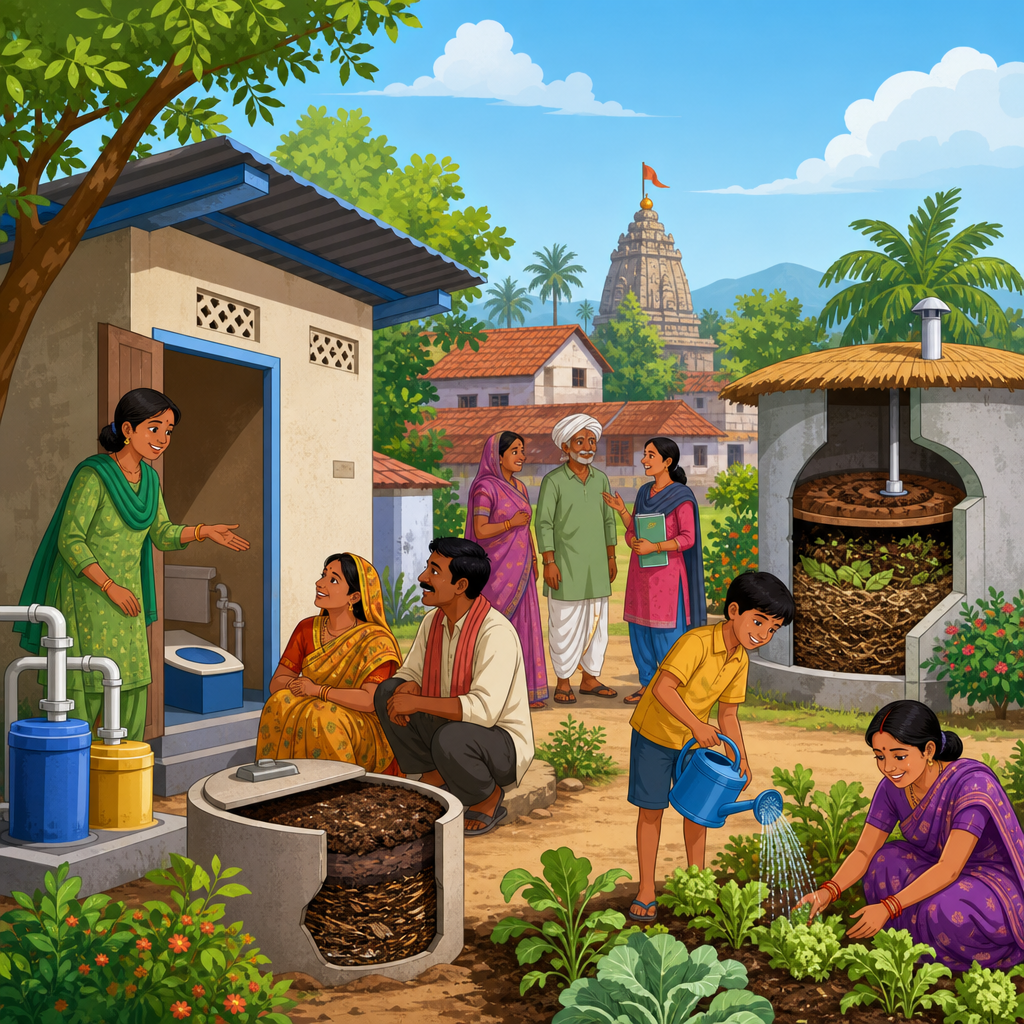
In the face of escalating global challenges such as population growth, climate change, and food scarcity, achieving sustainable agriculture has emerged as a critical goal. The path to sustainable agriculture is multifaceted, requiring innovative solutions that transcend traditional farming methods. One such promising approach is the integration of ecological sanitation (EcoSan) with agricultural systems. EcoSan is a sustainable sanitation solution that recycles nutrients from human waste, converting them into valuable compost for agricultural use. By integrating EcoSan with agricultural practices, we not only address sanitation issues but also significantly enhance food security and safeguard our environment. The methodology is both ecologically and economically advantageous, providing a dual solution that meets sanitation needs while improving soil fertility naturally. This article explores the transformative potential EcoSan offers to both sanitation and food security, discussing how it aligns with sustainable agricultural practices and highlighting its implications around the world.
EcoSan systems offer a closed-loop cycle that minimizes waste and maximizes resource utilization. They aim to protect the environment and promote sustainable resource management by treating human excreta as a resource rather than waste. These systems safely recycle urine and feces by treating and converting them into resources like compost or liquid fertilizer. In doing so, EcoSan directly contributes to enhancing soil fertility, increasing crop yields, and improving overall food security. This integrated approach reduces the dependency on chemical fertilizers, which are not only costly but also pose significant environmental risks. Moreover, by providing sanitation solutions in underdeveloped and developing regions, EcoSan significantly reduces the spread of diseases caused by unsanitary conditions. Thus, EcoSan lies at the intersection of promoting public health and economic development while bolstering food security.
Body Sections
The Science Behind EcoSan
The principle of ecological sanitation is derived from the natural nutrient cycle, wherein nutrients consumed by humans return to the soil to replenish and enrich it. Human excreta contains essential nutrients such as nitrogen, phosphorus, and potassium, often stripped from soils through intensive agricultural practices. EcoSan systems harness these nutrients, using them to produce organic matter that can significantly enhance soil quality. This not only improves crop yields but also contributes to healthier plant populations, which in turn support better nutrition for communities. By understanding and mimicking these natural processes, EcoSan systems create a sustainable, self-sufficient agricultural model that reduces reliance on artificial fertilizers and helps maintain ecological balance.
One of the fundamental mechanisms of EcoSan is the separation of urine and feces. Urine, which constitutes a significant percentage of excreted nutrients, can be diluted and used directly as a liquid fertilizer. It is rich in nitrogen and phosphates, which are critical for plant growth. On the other hand, feces are composted over time, where pathogens are destroyed through processes such as dehydration or high-temperature composting. The resulting compost is safe and nutrient-rich, enhancing soil quality and promoting sustainable crop production. This bifurcated approach ensures that all components of waste are effectively utilized, minimizing environmental impact and providing a sustainable resource for agriculture.
Linking EcoSan to Food Security
The integration of EcoSan into agricultural systems presents a potent solution for enhancing food security. By recycling human waste into valuable agricultural inputs, EcoSan reliably improves soil fertility. Healthy, nutrient-rich soil is the foundation of productive agriculture, which is critical for ensuring consistent food supplies. This is especially important in developing countries where the cost and availability of commercial fertilizers can limit agricultural productivity. EcoSan systems mitigate these barriers by providing a renewable, low-cost alternative that enhances yields naturally. As farmers increasingly adopt EcoSan practices, local food systems become more resilient and capable of sustaining larger populations.
The implementation of EcoSan can also empower communities by creating closed-loop systems for food and sanitation. Community-level EcoSan initiatives can create employment opportunities in sanitation management and compost production, fostering economic development. Moreover, by ensuring that more people have access to nutritious food, EcoSan systems contribute to improved health and wellbeing. This holistic approach supports the development of robust, self-sustaining communities less vulnerable to agricultural disruptions, environmental changes, and economic fluctuations. Thus, EcoSan’s value extends beyond just providing sanitation and soil improvement; it becomes a keystone in building sustainable, food-secure futures.
EcoSan and Environmental Sustainability
EcoSan systems contribute significantly to environmental sustainability by reducing reliance on synthetic fertilizers, which can lead to soil degradation and water pollution. Chemical fertilizers often contain harmful substances that leach into water bodies, causing eutrophication and damaging aquatic ecosystems. By reducing the necessity for these substances, EcoSan helps protect water resources and maintain healthy ecosystems. Furthermore, by recycling nutrients, EcoSan systems minimize the nutrient loads in wastewater, reducing the burden on urban sewage systems and decreasing the risk of groundwater contamination.
Another environmental benefit of EcoSan systems is their contribution to reducing greenhouse gas emissions. Traditional sanitation methods, particularly those involving untreated or inadequately treated waste, contribute significantly to methane and nitrous oxide emissions. EcoSan systems, by promoting the safe and effective treatment and reuse of excreta, help curb these emissions. Moreover, by reducing the need for synthetic fertilizers, which are energy-intensive in production, EcoSan reduces the carbon footprint of agricultural activities. This dual environmental and agricultural benefit positions EcoSan as a key component in strategies aiming for a low-carbon, sustainable future.
Case Studies: Real-World Applications of EcoSan
Several countries have successfully demonstrated the benefits of EcoSan in diverse agricultural contexts. In African nations such as Uganda and Malawi, EcoSan systems have been implemented in rural areas with limited access to conventional sanitation and agricultural inputs. These projects have reported significant improvements in both public health and agricultural productivity. Equipped with affordable, nutrient-rich fertilizers, farmers have seen an increase in crop yields, particularly in staple crops such as maize and beans. This has led to enhanced food security and elevated economic stability in these communities.
In Asia, countries like India and China have seen innovative applications of EcoSan in challenging environments. In India, where water scarcity poses a significant challenge, EcoSan systems have been integrated into water management strategies to provide an efficient, low-water-use solution. China, on the other hand, has incorporated EcoSan in its efforts to improve rural sanitation and reduce agricultural pollution. Both nations have recognized that EcoSan systems align well with their broader goals of sustainable development and environmental conservation, showcasing how these systems can be adapted to fit various cultural and environmental contexts.
Challenges and Considerations in Implementing EcoSan
While the benefits of EcoSan are clear, several challenges must be addressed to facilitate its widespread adoption. One primary concern is societal acceptance, as many people are hesitant to adopt systems involving human waste, primarily due to cultural taboos and health concerns. Effective education and awareness campaigns are crucial to overcoming these barriers, emphasizing the safety and benefits of EcoSan systems. Training and community engagement can facilitate a cultural shift, promoting acceptance and encouraging behavior change.
Another challenge lies in the initial investment and infrastructure development needed to establish EcoSan systems. Though the long-term benefits are substantial, initial costs can be prohibitive for low-income regions without external support or subsidies. Partnerships with governments, NGOs, and international organizations are often necessary to fund and support these initiatives. Additionally, EcoSan systems need to be tailored to local conditions, requiring technical expertise and adaptive management to ensure efficacy. Despite these hurdles, numerous successful case studies demonstrate that with adequate planning and community involvement, EcoSan systems can flourish and deliver on their promise.
Conclusion
EcoSan represents a transformative opportunity for achieving integrated solutions to some of the most pressing global challenges: sustainable agriculture, sanitation, and food security. By promoting the safe recycling of nutrients from human waste into valuable agricultural resources, EcoSan systems create a symbiotic relationship between sanitation and agriculture that enhances both environmental and human health. As a sustainable solution, EcoSan aligns with the principles of resource efficiency, ecological balance, and long-term viability, providing significant benefits for communities worldwide.
The successful integration of EcoSan into agriculture relies on a collaborative approach, involving communities, governments, and international organizations. It requires overcoming cultural barriers, investing in education, and supporting infrastructure development. With these elements in place, EcoSan can not only improve sanitation and food security but also enhance livelihoods and foster sustainable development. As the world continues to grapple with food scarcity, environmental degradation, and public health challenges, the adoption of EcoSan systems could prove pivotal in creating a more sustainable and equitable future for all.
Frequently Asked Questions
1. What is EcoSan, and how does it relate to sustainable agriculture?
EcoSan, or ecological sanitation, is a sustainable sanitation approach that focuses on recovering and recycling nutrients, and organic matter found in human waste. It’s designed to minimize environmental impact and maximize the reuse of resources. In the context of sustainable agriculture, EcoSan plays a vital role by transforming human waste into valuable compost and fertilizers that can enrich soil fertility, enhancing agricultural productivity while reducing dependency on synthetic fertilizers. This link between sanitation and agriculture not only helps close nutrient cycles but also supports food security, as it can contribute to better crop yields and more resilient farming systems.
2. How does integrating EcoSan with agriculture help address food security?
Integrating EcoSan with agriculture is a game-changer for food security in several ways. Firstly, it locally produces organic fertilizers that improve soil health, leading to better crop yields. Unlike synthetic fertilizers, which can contribute to soil degradation over time, EcoSan products enrich the soil by adding essential nutrients like nitrogen, phosphorus, and potassium in a natural and balanced manner. Secondly, the use of EcoSan can decrease reliance on chemical inputs, reducing costs for farmers, especially in low-resource settings. Furthermore, the closed-loop system of EcoSan minimizes nutrient run-off and pollution, improving environmental health, which is crucial for sustainable farming and long-term food production. By enhancing crop productivity and reducing costs, EcoSan helps ensure a reliable food supply, bolstering food security.
3. What are the environmental benefits of using EcoSan in agriculture?
EcoSan offers several environmental benefits crucial for sustainable agriculture. It effectively reduces reliance on chemical fertilizers, which when used excessively, can lead to soil degradation and pollution of waterways. By recycling nutrients, EcoSan helps decrease greenhouse gas emissions associated with synthetic fertilizer production and their subsequent use. Additionally, it aids in maintaining the biological diversity of agricultural land by promoting healthier soil ecosystems. EcoSan systems can also significantly conserve water when designed with water-saving toilets, which is vital in regions facing water scarcity. Overall, EcoSan contributes to a more integrated and environmentally friendly approach to farming that promotes long-term ecological balance and sustainability.
4. Are there any challenges associated with implementing EcoSan systems in agriculture?
As promising as EcoSan is for sustainable agriculture, certain challenges can impede its implementation. One of the most significant challenges is the cultural stigma and taboos surrounding the use of human waste products as fertilizers, which can limit its acceptance and adoption. Education and awareness campaigns can combat these perceptions by emphasizing the benefits and safety of EcoSan products. Additionally, the initial setup cost and infrastructure requirements for EcoSan systems can be a barrier, particularly for smallholder farmers or communities with limited resources. Technical support and subsidies may be necessary to facilitate wider adoption. Finally, ensuring the safe processing and handling of human waste is critical to prevent any health risks, requiring robust systems and guidelines to facilitate safe reuse practices.
5. How can communities be encouraged to adopt EcoSan practices for sustainable agriculture?
Encouraging the adoption of EcoSan in agriculture requires a multifaceted approach involving education, incentives, and community engagement. Educational campaigns can empower communities by displaying the efficacy and safety of EcoSan systems, breaking down misconceptions about human waste recycling. Providing success stories and case studies from regions that have already benefitted from EcoSan can foster inspiration and trust in the practice. Offering financial incentives or subsidies for the initial setup and providing ongoing technical assistance can lower barriers to entry. Furthermore, involving community members in the planning and implementation stages can foster ownership and commitment to maintaining and optimizing the systems. Partnerships with local farmers, agricultural NGOs, and governments can also strengthen the EcoSan initiative, ensuring it becomes a sustainable and widely embraced practice.