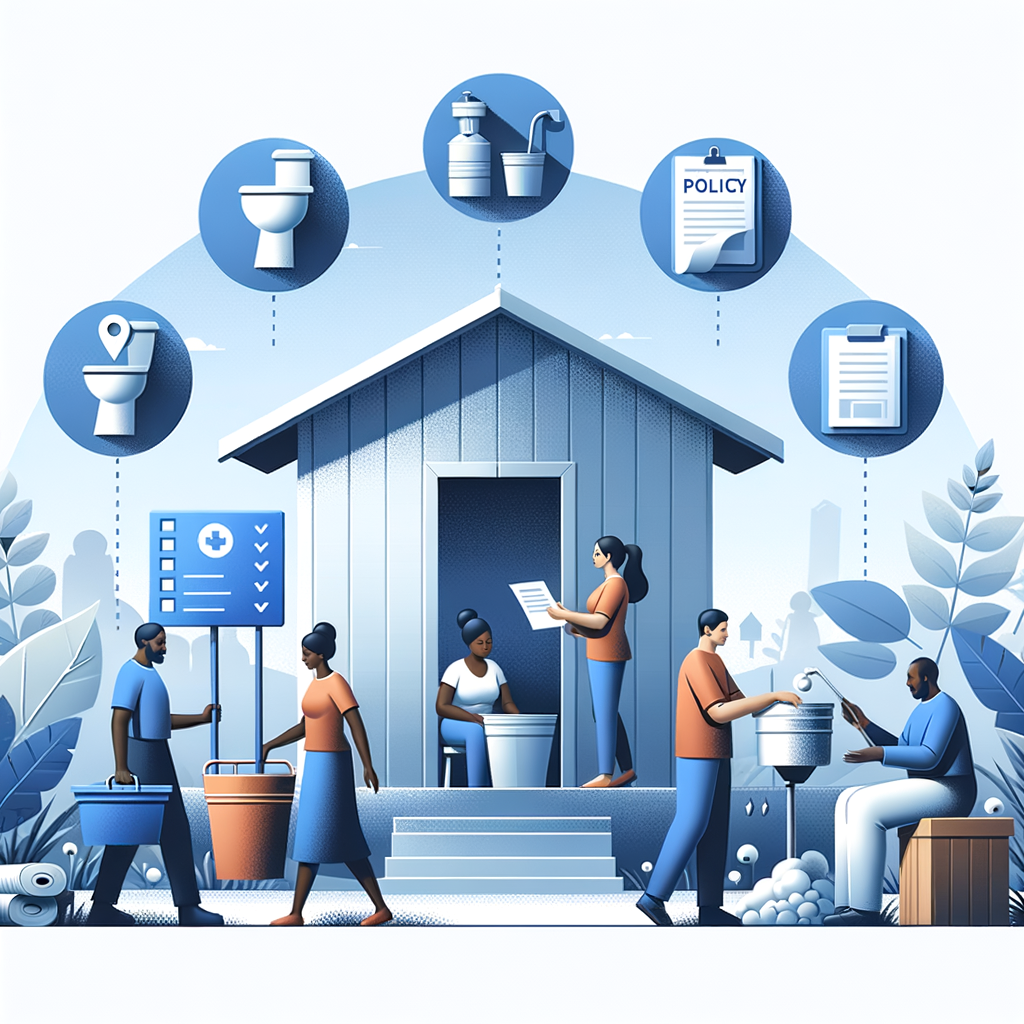
As the world continues to grapple with increasing environmental challenges, innovative solutions such as Ecological Sanitation (EcoSan) have emerged as promising approaches to enhancing sustainability and improving public health. EcoSan is an alternative sanitation approach that recycles human waste to minimize health risks, reduce water pollution, and promote resource recovery. Effective EcoSan policies can bridge the urban-rural divide, addressing unique challenges in both contexts. By encouraging collaboration between governmental, non-governmental, and community organizations, EcoSan policies can foster initiatives that manage urban and rural sanitation needs simultaneously.
The implementation of EcoSan policies involves a complex interplay of socio-economic, educational, and infrastructural factors. Understanding this complexity is crucial for ensuring successful EcoSan initiatives that are equitable, sustainable, and adaptable to changing conditions. This article examines how EcoSan policies can improve urban and rural balance, identifying key components of successful strategies and exploring the challenges and opportunities present in different geographical and socio-economic contexts.
Highlighting specific factors that affect EcoSan implementation, such as technological innovation, policy formulation, community participation, and financial investments, this exploration will offer a pathway to effective sanitation solutions. By adopting EcoSan policies, communities can significantly reduce their environmental footprint, improve public health outcomes, and contribute to the overall goal of sustainable development. This article offers insights into developing and applying EcoSan policies for balanced urban and rural development, ensuring that no community is left behind in achieving sustainable progress.
Importance of EcoSan Policies
The growing global population brings increased demand on sanitation systems, impacting public health and environmental sustainability. EcoSan policies are crucial because they provide a sustainable alternative to traditional sanitation systems while protecting natural resources. EcoSan principles prioritizing resource recovery and minimizing water usage provide economic benefits by reducing the need for costly wastewater infrastructure and decreasing freshwater consumption. Urban areas, often facing the constraints of limited space and increasing population density, benefit immensely from the reduced infrastructural demands of EcoSan systems. Similarly, in rural areas, where traditional sewage infrastructure might be lacking or economically unfeasible, EcoSan offers an accessible and affordable solution.
Adequate EcoSan policies promote sanitation that not only prevents environmental degradation but also enhances local agriculture through the conversion of sanitized waste into valuable fertilizers. The increase in agricultural productivity due to EcoSan interventions contributes to food security and financial stability for communities. Furthermore, EcoSan policies uphold public health by decreasing the incidence of waterborne diseases. With comprehensive EcoSan policies, it is possible to address numerous United Nations Sustainable Development Goals (SDGs), including those aimed at clean water and sanitation, good health and well-being, and life on land. The emphasis on holistic and adaptive sanitation solutions makes EcoSan policies a pivotal component of sustainable urban and rural development strategies.
EcoSan Implementation in Urban Areas
Implementing EcoSan policies in urban areas requires particular attention to infrastructural constraints and societal acceptance. Cities often struggle with limited space and high costs associated with traditional sewage systems. By capitalizing on EcoSan’s ability to minimize water dependency and promote onsite waste treatment, urban settings can innovate within existing limits. EcoSan systems such as composting toilets or dehydration toilets are particularly beneficial, as they require less space and lower costs compared to centralized sewage systems. Designing and implementing EcoSan solutions must involve local governments, urban planners, and stakeholders to ensure alignment with city development plans and regulations.
Educating urban populations regarding EcoSan benefits and usability is essential for widespread adoption. Overcoming social stigma attached to waste reuse is a significant barrier that requires cultural sensitivity and awareness campaigns. Community engagement initiatives, where success stories and positive outcomes are shared, can enable greater acceptance among urban dwellers. Aligning policies with green-building initiatives and recognizing EcoSan systems’ contributions to urban resilience to climate change and enhanced liveability can further incentivize adoption among urban policymakers.
EcoSan Implementation in Rural Areas
The implementation of EcoSan policies in rural areas can be instrumental in addressing both infrastructural gaps and supporting community-led solutions. Rural regions often face challenges such as lack of access to centralized wastewater systems, lower financial resources, and varied landscape conditions. EcoSan provides a decentralized approach that aligns well with rural requirements, allowing waste to be treated and reused locally as fertilizers, thus supporting agricultural-based livelihoods. The scalability and adaptability of EcoSan systems mean they can be customized to the local environmental context and resource availability, increasing their relevance and appeal in rural areas.
Community-based organizations and local governments in rural districts can act as vital partners in promoting EcoSan solutions. Investments in training and capacity-building for rural communities increase their ability to construct, manage, and maintain EcoSan systems. Additionally, leveraging rural communities’ existing knowledge in sustainable agricultural practices further embeds EcoSan systems into local traditions. EcoSan policies should prioritize partnerships that involve local NGOs and cooperatives, ensuring that community voices play a central role in the policy-making process and implementation strategy.
Financial support remains critical, and implementing innovative financing mechanisms such as micro-financing or community-managed funds can foster EcoSan adoption in rural communities. Governments can create supportive environments by offering financial incentives for EcoSan adoption or developing cost-sharing models to make systems affordable. Such financial mechanisms can provide the means for communities to invest in sanitation solutions, driving broader economic benefits through improved public health and agricultural productivity.
Policy Formulation and Challenges
The formulation of EcoSan policies requires comprehensive stakeholder engagement, consistent legal frameworks, and recognition of diverse cultural perspectives regarding sanitation practices. Successful policies depend on investment in research and development to innovate and refine EcoSan technologies, making them more effective and accessible. Addressing the lack of cohesive guidelines across regions poses a significant challenge, necessitating efforts towards harmonizing standards and regulations to ensure effective implementation and management at various scales.
Policy frameworks should actively promote public-private partnerships and collaborations with international organizations dedicated to sustainable development. These partnerships help mobilize resources, share technological expertise, and facilitate knowledge exchange between countries and regions. Global cooperation and support in EcoSan policy formulation are crucial in overcoming limitations faced by low-income countries, where the need for eco-friendly, affordable sanitation solutions is urgent.
Resistance to change and ingrained cultural perceptions around waste pose challenges to EcoSan policy implementation. Ensuring policies include educational components is necessary to shift perspectives and increase public acceptance of EcoSan systems. Developing policies that include clear, articulated benefits foster buy-in from key stakeholders, facilitating broader policy acceptance and effective rollout. Comprehensive policy approaches will balance regulation with incentives, ensuring that societal, economic, and environmental pillars of sustainability are addressed simultaneously.
Opportunities for Innovations and Solutions
EcoSan policies present numerous opportunities for innovative solutions that bridge urban and rural challenges. Advances in technology can play a role in transforming waste into resources, addressing challenges of traditional sanitation systems. Innovations such as biogas fermentation and nutrient recovery technologies can convert waste products into renewable energy and agriculture supplements, bolstering EcoSan’s attractiveness.
Incorporating smart technologies and digital platforms can enhance EcoSan system efficiency and monitoring. Data-driven approaches enable better resource allocation, system optimization, and impact tracking, ensuring that sanitation solutions remain adaptive to changing needs. Piloting and scaling successful models through innovation labs and incubation hubs can generate new EcoSan designs tailored to specific geographic and cultural contexts, accelerating EcoSan adoption across urban and rural settings.
The potential socio-economic impacts of expanded EcoSan policies highlight unique opportunities for job creation in sustainable resource management, construction, and maintenance of EcoSan systems. By integrating EcoSan solutions into education curricula, communities can foster the next generation of sustainability advocates, solidifying EcoSan’s role in supporting public health and environmental conservation initiatives.
Conclusion
EcoSan policies offer a strategic avenue for providing sustainable sanitation solutions that cultivate urban-rural balance, addressing distinct challenges and leveraging opportunities in both environments. As the focus on sustainable development intensifies globally, adopting EcoSan policies becomes even more pressing and relevant, creating a unique nexus at which environmental conservation, public health, and economic development converge.
Ensuring the success of EcoSan policies requires a collaborative, cross-sectoral approach involving governments, academia, communities, and businesses. By addressing infrastructural gaps, social acceptance, and financial constraints through targeted policy strategies, EcoSan can drive significant progress towards global sanitation goals. The benefits of EcoSan policies extend beyond sanitation, fostering resilient urban and rural communities that are better equipped to face future challenges such as climate change, population growth, and resource scarcity.
The insights and recommendations outlined in this article provide a foundation for future policy development and innovation, inspiring a new era of ecological sanitation. The integration of EcoSan practices into feasible, equitable, and adaptive policy frameworks underscores our collective responsibility towards achieving sustainable and inclusive development. Embracing EcoSan policies not only fulfills present needs but sets the stage for a healthier, resource-efficient future where urban and rural areas thrive symbiotically, supporting equally prosperous communities.
Frequently Asked Questions
1. What is Ecological Sanitation (EcoSan), and how does it work?
Ecological Sanitation, commonly referred to as EcoSan, is an innovative sanitation approach focused on the sustainable management of human waste. Unlike conventional systems which often burden the environment with pollutants, EcoSan treats waste as a resource. The process involves collecting and possibly separating human waste, safely treating it, and then utilizing it as compost in agricultural settings. The core idea is to close nutrient and water loops in sanitation, allowing for water, nutrients, and organic matter to be recycled into productive resources. This approach effectively minimizes health risks, reduces water pollution, conserves precious water resources, and promotes the recovery and reuse of critical nutrients. EcoSan is adaptable to varying urban and rural settings, providing tailor-made solutions that consider community scale, technology affordability, and cultural acceptability.
2. How can EcoSan policies help balance urban and rural challenges?
EcoSan policies play a crucial role in creating a balance between urban and rural sanitation challenges. Urban areas often face issues such as space limitations, high population density, and infrastructure constraints, leading to environmental pollution from untreated sewage. Conversely, rural areas might struggle with inadequate access to sewage infrastructure and the cultural acceptance of new technologies. By implementing comprehensive EcoSan policies, urban areas can integrate efficient recycling systems that reduce wastewater production and promote resource recovery, enhancing urban sustainability. In rural settings, EcoSan can facilitate community-based programs that promote low-cost, low-maintenance sanitation facilities, addressing shortages in sanitation infrastructure. Therefore, by crafting policies that are region-specific and culturally sensitive, the benefits of EcoSan can extend across diverse geographic and socioeconomic landscapes, ensuring equitable sanitation practice and resource management.
3. What are the key components of effective EcoSan policies?
An effective EcoSan policy should encompass several critical components to ensure its success and sustainability. Firstly, policy frameworks must establish clear guidelines for safe waste collection, treatment, and reuse standards. This includes supporting the technological innovation required for efficient waste processing and resource recovery. Secondly, community engagement and education are paramount, as they foster acceptance and understanding of EcoSan benefits, which in turn fuels policy adoption. Moreover, policies should emphasize collaboration between governmental bodies, non-governmental organizations, and private sectors to leverage resources and expertise. Efficient funding mechanisms and incentives can substantially encourage individuals and communities to adopt EcoSan practices. Additionally, continual monitoring and evaluation should be included to assess policy effectiveness and modify strategies as needed. Furthermore, policies should prioritize inclusivity and equity, ensuring sanitation solutions are accessible to all demographics, including marginalized groups. Overall, a balanced approach incorporating environmental, social, and economic considerations forms the backbone of successful EcoSan policies.
4. Are there any environmental risks associated with EcoSan, and how can they be managed?
While EcoSan offers numerous environmental benefits, potential risks must be adequately managed to ensure system safety and efficiency. One major concern is the potential for pathogen transmission if waste is not treated effectively. Implementing stringent treatment standards and leveraging advanced treatment technology can mitigate these health risks. Additionally, regular monitoring, thorough impact assessments, and community training on safe handling practices can enhance safety levels. Another possible risk is environmental contamination from improperly managed leachate or over-application of bio-solids. Comprehensive guidelines on soil absorption capacities, as well as robust application procedures, can prevent nutrient overloads in the environment. Ensuring proper integration of EcoSan systems within existing environmental frameworks through detailed site assessments and environmental protection protocols can further diminish risks. Through proactive risk management strategies and a commitment to ecological stewardship, EcoSan systems can remain safe, sustainable, and environmentally protective.
5. What role does community involvement play in the success of EcoSan policies?
Community involvement is crucial to the success of EcoSan policies, as it influences the acceptance, implementation, and long-term sustainability of these systems. By involving communities from the planning stages through to execution, residents can provide critical insights into local sanitation needs, cultural preferences, and potential barriers to adoption. This participatory approach fosters a sense of ownership and strengthens the commitment to maintaining and operating EcoSan systems. Educating the community about the benefits, safety measures, and proper use of EcoSan systems nurtures a positive perception and empowers individuals to champion the initiative within their locale. Regular workshops, hands-on training, and educational campaigns can further solidify the community’s role in EcoSan success. Furthermore, utilizing local labor and resources during the development and maintenance of EcoSan infrastructure promotes economic empowerment while ensuring solutions are contextually appropriate. Ultimately, community involvement ensures EcoSan policies are not only technically effective but also socially sustainable as grassroots endorsement becomes the driving force for achieving balanced urban and rural sanitation improvements.