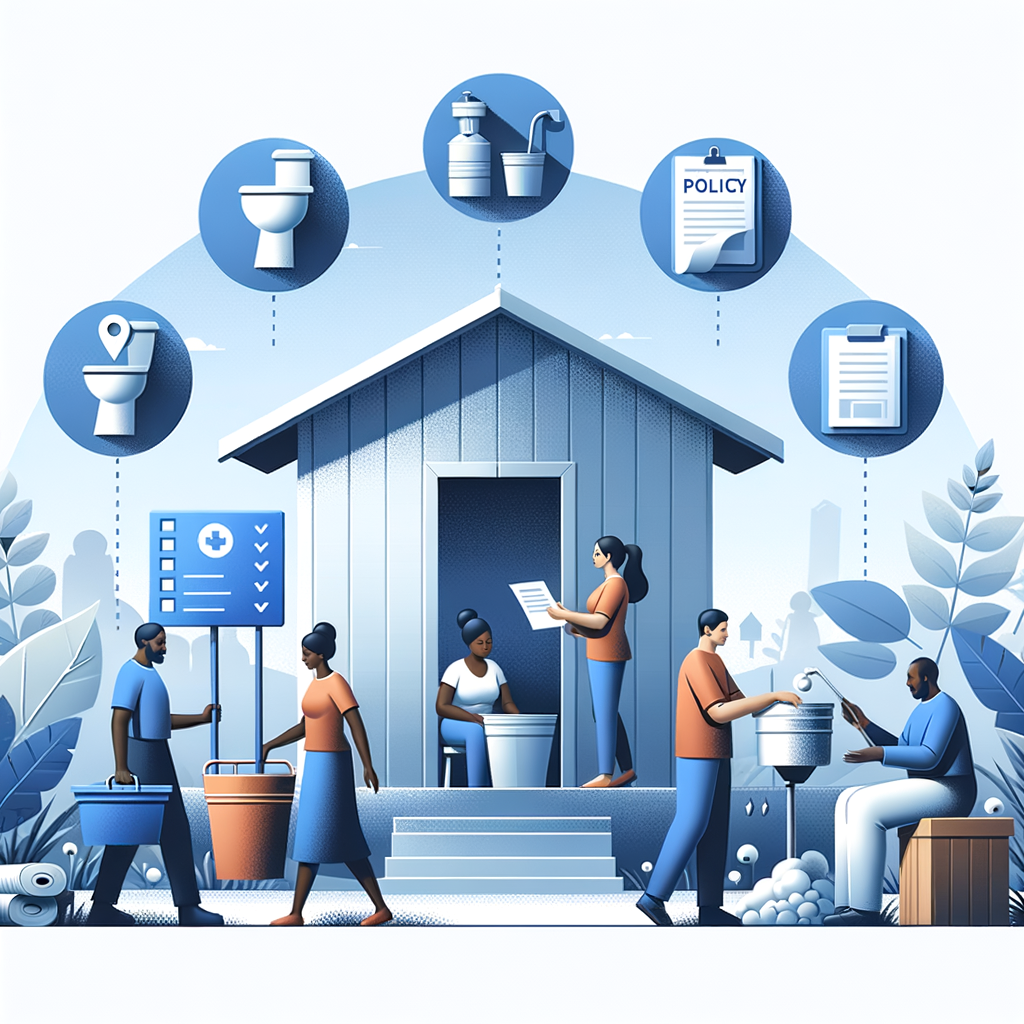
In recent years, the global sanitation crisis has garnered widespread attention. Millions around the world still lack access to basic sanitation facilities. This predicament primarily impacts vulnerable populations, exacerbating health disparities and hindering socio-economic development. Marginalized communities, including rural residents, women, girls, ethnic minorities, and people with disabilities, face unique challenges. To address these challenges effectively, fostering inclusive sanitation policies is imperative. Such policies ensure equitable access to safe sanitation services for all, regardless of socio-economic backgrounds or geographical location. This article delves deeply into the importance of inclusive sanitation policies and highlights strategies for implementing them successfully, aiming to empower vulnerable populations by providing the tools necessary for improved health and well-being. By scrutinizing current obstacles and exploring best practices, we can collectively advance toward a more equitable future where everyone benefits from improved sanitation.
To truly comprehend the gravity of the sanitation crisis and its effects on vulnerable populations, it’s essential to recognize sanitation’s fundamental role in public health as well as socio-economic development. Sanitation is not merely about infrastructure or waste management; it encapsulates dignity, privacy, and safety. For many marginalized groups, sanitation is a daily ordeal that endangers health and hampers opportunities for education and employment. Addressing these complexities requires a concerted effort from governments, organizations, and communities to establish policies that are comprehensive and inclusive. Through this, we lay a foundation for discussions that aim to identify pressing issues, viable solutions, and avenues for impactful change.
Understanding the Challenges
The challenges in achieving inclusive sanitation policies for vulnerable populations are multifaceted. One primary issue is the geographical inaccessibility experienced by rural and remote communities. Often, these areas lack the infrastructure investments seen in urban settings, amplifying their sanitation challenges. In densely populated informal settlements, commonly referred to as slums, residents face similar struggles due to overcrowding and inadequate facilities. These conditions lead to an increased risk of sanitation-related diseases, including cholera and dysentery, which often result in high mortality rates, especially among children.
Aside from geographical challenges, socio-cultural factors also play a critical role in how sanitation services are accessed and perceived. Gender disparities significantly affect access. Women and girls often bear the responsibility for water collection and sanitation in households, yet traditional taboos and unsafe sanitation facilities at schools and workplaces exacerbate gender inequality. The lack of safe, accessible, and private sanitation facilities can lead to missed school days for girls, reduced employment opportunities for women, and a greater risk of violence.
Furthermore, individuals with disabilities encounter additional hurdles. Most sanitation facilities are not designed to accommodate their specific needs, leading to exclusion. For those with mobility issues or sensory impairments, accessing and utilizing standard sanitation facilities can be particularly challenging. Limited consideration of disability in planning and policy formulation results in a disconnect between facilities provided and the actual needs of the disabled, leading to a gap in accessibility and usage.
Finally, socio-economic factors such as poverty and inequality inherently affect sanitation access. Financial constraints limit both household and community-level ability to invest in and maintain sanitation facilities. In many low and middle-income countries, policy implementation is hampered by inadequate financial resources and prioritization in national agendas. This creates a vicious cycle of underinvestment and neglect, which spans generations.
Policy Development and Inclusivity
Developing inclusive sanitation policies requires a nuanced understanding of the unique challenges faced by vulnerable populations. Governments must employ a participatory approach in policy-making, which involves engaging with marginalized communities to gain insights into their specific needs and preferences. Collaborative planning empowers communities, increasing the likelihood of policy success.
Financial investment in sanitation infrastructure is crucial. Limited funding hinders progress; thus, allocating sufficient resources for infrastructure development is vital. Governments should prioritize sanitation as a fundamental human right, driving the agenda within national budgets and seeking support from international donors. Sustainable financing models must ensure ongoing maintenance and improvement of sanitation facilities.
To address geographical barriers, decentralizing sanitation services can facilitate access in rural and remote areas. Community-driven models that incorporate local knowledge and resources can provide cost-effective and culturally appropriate sanitation solutions. Initiatives like Community-Led Total Sanitation (CLTS) have shown success by encouraging collective behavior change and fostering community ownership of sanitation practices.
Implementing Gender-Sensitive Approaches
Incorporating gender-sensitive approaches within sanitation policies is indispensable for achieving inclusivity. Policies must explicitly address the unique needs of women and girls, ensuring they have safe, accessible, and private sanitation facilities. This involves designing facilities that cater to menstrual hygiene management and providing education on menstrual health.
Women’s active participation in planning and decision-making processes is critical. Empowering women as leaders and advocates within communities can help reshape policies, making them responsive and sensitive to gender-specific needs. Additionally, targeted interventions such as providing microloans for women to run sanitary product enterprises can promote income generation and improve access to menstrual hygiene products.
Ensuring Accessibility for People with Disabilities
Policies must prioritize the needs of individuals with disabilities by emphasizing universal design principles in sanitation infrastructure. Inclusive design should feature facilities that are accessible, convenient, and equitable. This includes installing ramps, handrails, and wider entries to accommodate wheelchairs, as well as tactile signs for those with visual impairments.
Conducting inclusive training programs for construction workers and policy implementers can raise awareness and build skills to accommodate all users. Collaboration with disability advocates ensures policies align with the lived experiences of disabled individuals, paving the way for enhanced equity in sanitation access.
Enhancing Policy Implementation
Effective policy implementation demands more than planning; it requires monitoring, accountability, and adaptability. Establishing mechanisms for regular progress evaluations ensures that goals are met and challenges are addressed promptly. Utilizing technology, such as mobile surveys or geospatial mapping, provides valuable data for real-time monitoring.
Strengthening institutional frameworks and capacities is crucial for implementation. This includes training government and local officials, fostering partnerships with non-governmental organizations, and encouraging public-private partnerships that support innovation and scalability of sanitation solutions. Transparent governance and accountability mechanisms reinforce public trust and contribute to the sustainability of sanitation programs.
Conclusion
Fostering inclusive sanitation policies for vulnerable populations is not merely a matter of infrastructure development but a comprehensive commitment to human rights and dignity. Addressing the unique challenges faced by marginalized communities requires integrated, context-specific strategies that prioritize inclusivity and engagement. By securing equitable access to safe sanitation, we not only improve public health but also advance gender equality and social equity.
The journey toward inclusive sanitation is ongoing and necessitates the collective efforts of governments, civil society organizations, and the private sector. Through flexible, participatory, and accountable approaches, we can overcome barriers and achieve substantial progress in closing the sanitation gap. Empathy, inclusivity, and innovation serve as guiding principles to fostering policies that meet the diverse needs of all populations, paving the way for sustainable development and a more just and equitable world for everyone. This commitment must be unwavering, for it speaks to the very essence of our shared humanity and the right every person has to lead a life of dignity and opportunity.
Frequently Asked Questions
1. What is meant by ‘inclusive sanitation policies’ and why are they important for vulnerable populations?
Inclusive sanitation policies refer to strategies and measures that ensure all people, especially those from marginalized or vulnerable groups, have equitable access to safe and hygienic sanitation facilities. These policies are critical because they address the barriers faced by communities often overlooked in traditional sanitation efforts. Vulnerable populations, such as those living in rural areas, women and girls, ethnic minorities, and people with disabilities, often face unique challenges that can exclude them from access to proper sanitation. Inclusive policies aim to cater to these groups’ specific needs, helping reduce health disparities and improving overall well-being.
For example, women and girls may need access to facilities that provide privacy and cater to menstrual hygiene management, while persons with disabilities require accessible latrines that accommodate mobility aids. These considerations are integral to fostering environments where everyone can maintain their dignity and health. Ultimately, inclusive sanitation policies are essential for achieving sustainable development goals, as they empower communities, enhance public health, and support socio-economic progress.
2. What are the key challenges faced by rural communities in accessing sanitation facilities?
Rural communities face numerous obstacles in accessing proper sanitation facilities. One major challenge is geographical isolation, which can make it difficult for these communities to connect with infrastructure projects or receive governmental support for sanitation systems. Limited financial resources also hamper the capacity to construct and maintain sanitation facilities.
In many rural areas, there is often a lack of awareness or education about the importance of sanitation, leading to cultural perceptions that may not prioritize hygiene or discourage the use of latrines. Additionally, political neglect and the prioritization of urban areas can mean that rural populations are often left behind in sanitation upgrades and projects.
Efforts to overcome these challenges must focus on community engagement and participatory planning, ensuring that local voices are heard and that solutions are tailored to their specific contexts. This includes policies that promote education, funding for rural sanitation projects, and the development of affordable, sustainable solutions that can be maintained by the communities themselves.
3. How can sanitation policies empower women and girls specifically?
Sanitation policies can play a significant role in empowering women and girls by addressing the specific needs they face in accessing sanitation facilities. One of the primary concerns for women and girls is the need for privacy and safety. Inclusive sanitation policies advocate for the construction of gender-separated facilities that offer secure, private spaces for women.
Additionally, to fully empower women, these policies must include provisions for menstrual hygiene management. This means ensuring that there are facilities equipped with water, waste disposal bins, and space for changing. Addressing these needs can significantly reduce the stigma and challenges associated with menstruation, allowing girls to attend school more regularly and women to engage in community activities without interruption.
Moreover, inclusive sanitation policies can provide leadership opportunities by involving women in the planning, implementation, and management of sanitation projects. This not only helps ensure that their needs are met but can also lead to broader gender equality by promoting women’s leadership in community development.
4. How do inclusive sanitation policies benefit people with disabilities?
For people with disabilities, inclusive sanitation policies are vital to providing equitable access to facilities. Typically, sanitation facilities are not designed with accessibility in mind, which can severely limit the independence and inclusion of disabled individuals. By implementing inclusive policies, proper attention can be given to the design and construction of facilities that cater to diverse physical needs.
These policies advocate for features such as ramps, handrails, wider doorways, and appropriate furniture heights, adapting standard facilities to accommodate wheelchairs and other mobility aids. Additionally, it’s important to ensure that pathways to these facilities are accessible, and that staff and community members are aware and sensitive to the needs of individuals with disabilities.
Ultimately, these enhancements allow people with disabilities to use sanitation facilities safely and comfortably, which can have a profound impact on their quality of life, health, and social inclusion. It helps combat the stigma and isolation that often accompany living with a disability, fostering more inclusive and supportive communities.
5. What steps can be taken to integrate ethnic minorities into sanitation policy frameworks effectively?
Integrating ethnic minorities into sanitation policy frameworks requires a multidimensional approach that recognizes and values cultural diversity. Effective strategies should begin with in-depth consultations and participatory planning involving the ethnic minorities themselves to gain insights into their specific needs, cultural practices, and challenges.
It’s essential to ensure that communication is conducted in a language that is understood by all members of the community, which may involve translation services or materials in local dialects. Tailoring sanitation solutions to align with cultural practices and preferences will also encourage greater adoption and long-term sustainability.
Governmental and non-governmental organizations must champion policies that actively involve ethnic minorities in decision-making processes and empower them with roles in project implementation and management. By providing educational programs about the importance of sanitation and hygiene, these communities can build the necessary skills to maintain and advocate for improved sanitation infrastructure.
Policies should be inclusive of funding mechanisms that support the development of sanitation facilities in areas inhabited by ethnic minorities, acknowledging their unique economic situations and contributing to their socio-economic development. By adopting such inclusive measures, sanitation policy frameworks can ensure that ethnic minorities are not left behind and foster cohesive, well-maintained, and supported communities.