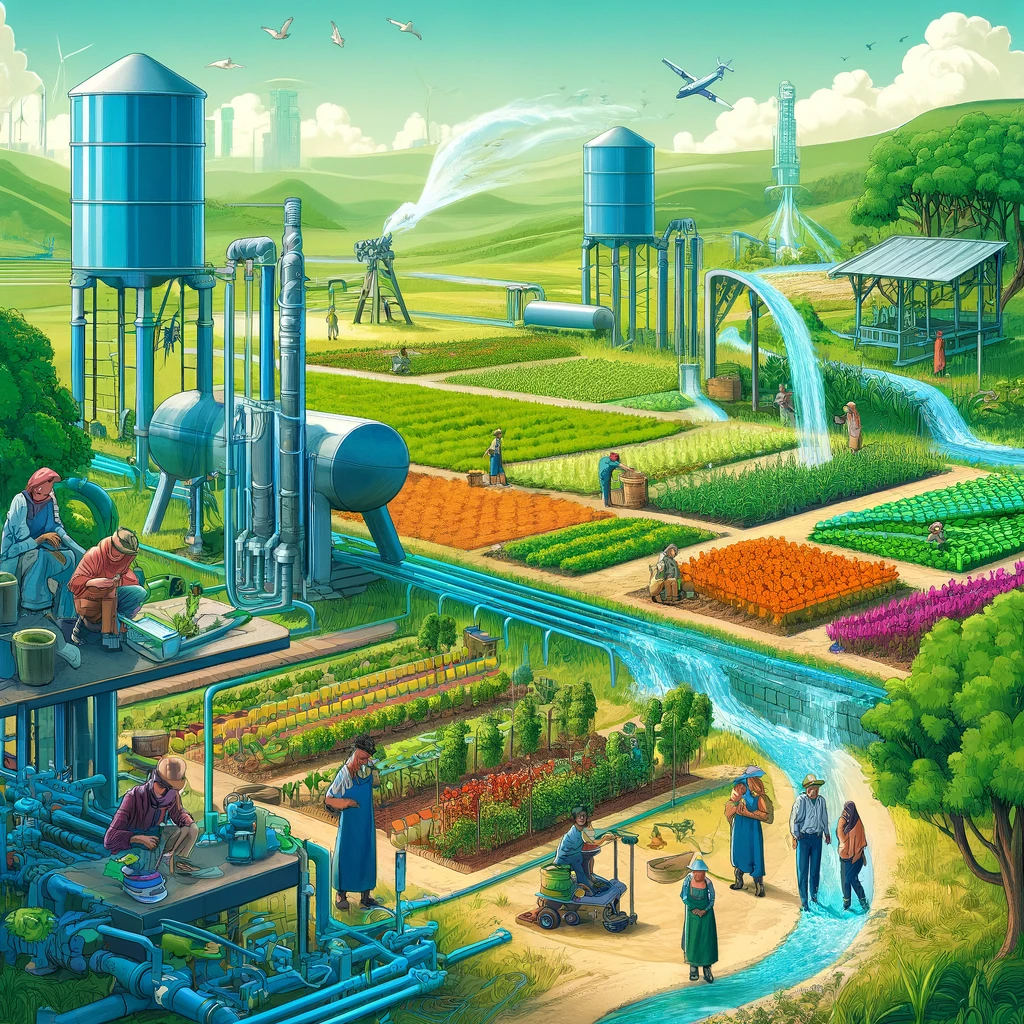
In our quest for sustainable living, the transformation of sanitation waste into a valuable resource is a crucial step. Ecological Sanitation (EcoSan) systems offer a promising pathway to this transformation, especially in regions grappling with water scarcity and nutrient management challenges.
The Global Sanitation Crisis
Globally, access to safely managed sanitation is a privilege not afforded to everyone. Approximately 4.2 billion people lack access to adequate sanitation, with 673 million practicing open defecation. This is not just a social issue but also a lost opportunity in nutrient management. The vast majority of nutrients present in human waste are released into the environment without treatment in low and middle-income countries. This release leads to severe health and ecological consequences.
Ecological Sanitation (EcoSan)
EcoSan, a concept of closed-loop management of human excreta, holds the potential to redefine our approach to sanitation and agriculture. It involves separating and treating urine and feces, often in non-sewered systems. The nutrients recovered from these processes can be reused in agriculture, increasing food security and improving soil health. The successful application of EcoSan in Haiti, where container-based toilets are paired with aerobic, thermophilic composting, demonstrates its feasibility and benefits.
Benefits of EcoSan
The EcoSan approach provides several environmental and economic benefits:
- It minimizes the introduction of pathogens into the water cycle.
- By conserving water and reducing reliance on non-renewable resources, it supports sustainable practices.
- The use of recovered nutrients as fertilizers can lessen our dependence on energy-intensive, mined phosphorus and other fertilizers.
Challenges and Considerations
While EcoSan offers numerous advantages, it is not without challenges. The system’s success depends on user acceptance, cost-effectiveness, and public health safety. It requires a multidisciplinary approach, combining technological, infrastructural, and educational efforts. The role of cognitive fixes, involving knowledge and information dissemination, is particularly crucial in fostering a positive attitude towards EcoSan.
Case Study: EcoSan in Ethiopia
A notable example of EcoSan’s impact is seen in Ethiopia, where it was introduced in 1996. The initiative focused on the safe recycling of all biodegradable household waste, including human excreta. This approach has not only improved sanitation but also empowered communities, particularly women, through urban agriculture and home gardening.
Nutrient Recovery and Recycling
One of the primary focuses of EcoSan is the recovery of crucial nutrients like phosphorus (P), nitrogen (N), and potassium (K) from human waste. These nutrients are indispensable for agriculture, yet their supply is finite and unevenly distributed globally. By recovering and recycling these nutrients, EcoSan contributes to a more sustainable agricultural practice.
Moving Forward
For EcoSan to be effective and widely adopted, it’s essential to address the economic, institutional, and political barriers. Additionally, understanding the effects of organic amendments from EcoSan on crop production, nutrient cycling, and water quality is crucial. Collaborative efforts involving governments, non-profits, and communities are key to advancing EcoSan practices.
Maximizing resource recovery from sanitation waste through EcoSan is more than a technical challenge; it’s a paradigm shift in how we view and manage waste. By embracing EcoSan, we take a significant step towards sustainable living, turning a sanitary problem into a productive resource. The journey is complex and requires a multifaceted approach, but the benefits for our environment, health, and economies are profound and far-reaching.

EcoSan Technologies and Applications
EcoSan systems are versatile, incorporating various technologies to achieve efficient waste management and resource recovery. The most common technology is the urine-diverting dry toilet, which keeps different waste streams separate. This separation facilitates easier treatment and safe reuse. Other technologies include biogas plants, constructed wetlands, and composting toilets. This flexibility allows for the development of optimal and economic solutions tailored to each specific situation.
Role of Educational Institutions
Universities and educational institutions play a vital role in the dissemination of knowledge and practices related to EcoSan and sustainable resource management. They can be instrumental in the cognitive fix, which involves spreading awareness and knowledge to support behavior change. This educational aspect is crucial for broader adoption and the successful implementation of EcoSan systems.
Scaling Up EcoSan Systems
Scaling up EcoSan systems to reach a larger population is a challenge that requires addressing various factors. These include technological advancements, infrastructural support, financial viability, and public acceptance. Additionally, ensuring the safety of these systems in terms of pathogen destruction is a continuous area of debate and research. Meeting these challenges is essential for the widespread adoption and success of EcoSan systems.
The Importance of Resource-Oriented Sanitation
Resource-Oriented Sanitation (ROS) systems, of which EcoSan is a part, emphasize the recovery and reuse of resources from sanitation waste. This approach differs from conventional sanitation methods that typically focus on waste disposal. ROS systems, particularly in EcoSan, aim to recover nutrients and other valuable substances, transforming waste into a resource for agricultural and other uses.
Geographical Variations in EcoSan Implementation
EcoSan’s implementation varies geographically. In developing countries, its decentralized character aligns well with local needs, while developed countries often adapt their conventional centralized systems toward sustainability. The specific needs and circumstances of each region dictate the type of EcoSan or sustainable sanitation system implemented.
Nutrient Recycling Technologies in EcoSan
EcoSan systems employ various technologies for nutrient recycling, with a strong focus on recovering phosphorus, nitrogen, and potassium. Technologies such as struvite and calcium phosphate precipitation enable the recovery of these nutrients from wastewater. These recycled nutrients can significantly contribute to agricultural productivity and soil health.
The Future of EcoSan and Sustainability
The future of EcoSan lies in overcoming its current challenges and expanding its reach. This includes addressing economic, social, and technological barriers and ensuring the systems are safe, efficient, and acceptable to users. By doing so, EcoSan can significantly contribute to achieving sustainable development goals, particularly those related to clean water and sanitation, responsible consumption, and production.
Final Thoughts
EcoSan presents a sustainable solution to the global sanitation crisis by turning a challenge into an opportunity. Its potential in nutrient recovery, water conservation, and environmental protection is immense. The success of EcoSan depends on collaborative efforts across various sectors, continuous research and development, and widespread public acceptance and participation.
Ecological Sanitation is not just a technical solution; it’s a movement towards a sustainable and resilient future. By valuing and reusing what was once considered waste, we move closer to a circular economy, where every resource is maximized for the benefit of our environment and societies.