Ensuring water security in Indian coastal plains demands practical sanitation systems that protect aquifers, reduce waste, and keep communities resilient through floods, salinity, and seasonal scarcity. Water security means reliable access to safe water of adequate quantity and quality for households, farming, ecosystems, and local economies. In coastal plains, that security is fragile because groundwater is often shallow, easily polluted, and vulnerable to seawater intrusion. Indian districts along the coasts of Odisha, Andhra Pradesh, Tamil Nadu, Kerala, Gujarat, and West Bengal face this pressure every year as monsoon variability, cyclones, rapid urban growth, and weak drainage systems strain water sources.
Lessons from EcoSan implementations matter here because sanitation and water are tightly linked. Ecological sanitation, commonly shortened to EcoSan, is a sanitation approach that treats human waste as a resource rather than something to flush away. In practice, EcoSan systems often separate urine and feces, reduce or eliminate water use for flushing, support safe composting or dehydration, and create opportunities to recover nutrients for agriculture. I have seen coastal settlements where a failed pit latrine contaminated a hand pump within one season, and I have also seen well-managed urine-diverting dry toilets continue working after floodwaters receded because the system was designed with elevation, lining, and user training in mind.
This article serves as a hub for case studies and success stories on EcoSan in Indian coastal plains. It explains what has worked, what has failed, and why. It also connects sanitation design to broader water security goals such as protecting shallow groundwater, reducing demand on freshwater supplies, improving public health, and lowering nutrient pollution in ponds, canals, and estuaries. For planners, NGOs, panchayats, utilities, architects, and researchers, the key question is not whether EcoSan is universally superior. It is where EcoSan fits best, under what operating conditions, and what implementation discipline is required for long-term success.
Across India, sanitation policy has often favored quick infrastructure delivery over life-cycle performance. Coastal areas expose the weakness of that approach. Conventional soak pits can fail where the water table rises close to the surface. Septic tanks without proper desludging chains leak. Sewer expansion is expensive in dispersed villages and flood-prone peri-urban edges. EcoSan enters this context as a targeted solution set, not a slogan. When adapted well, it can conserve water, reduce groundwater contamination, and support local nutrient reuse. When copied without user engagement, safe emptying plans, and climate-sensitive design, it struggles. The strongest lessons come from implementation details, community behavior, and institutional follow-through.
Why coastal plains need EcoSan-specific water security strategies
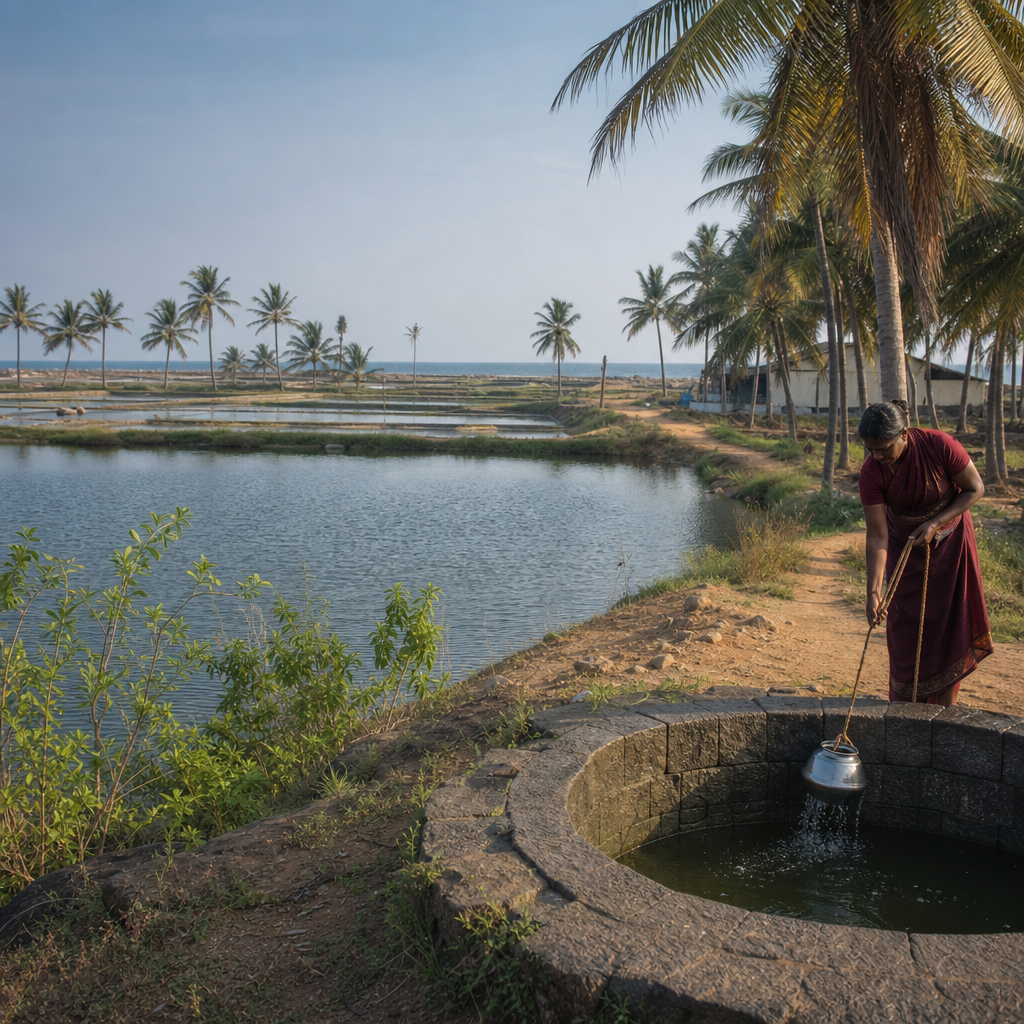
Indian coastal plains are hydrologically distinct. Much of the population depends on shallow aquifers, ponds, small piped schemes, and tanker supplementation during dry months. The same area may experience both waterlogging in the monsoon and drinking water scarcity in summer. Salinity intrusion is a recurring threat, especially where groundwater is overdrawn or where storm surges push saline water inland. In this setting, every sanitation choice affects water security. A leaky containment system can introduce pathogens and nitrates into aquifers already under stress. A flush-based system can increase freshwater demand where supply is intermittent.
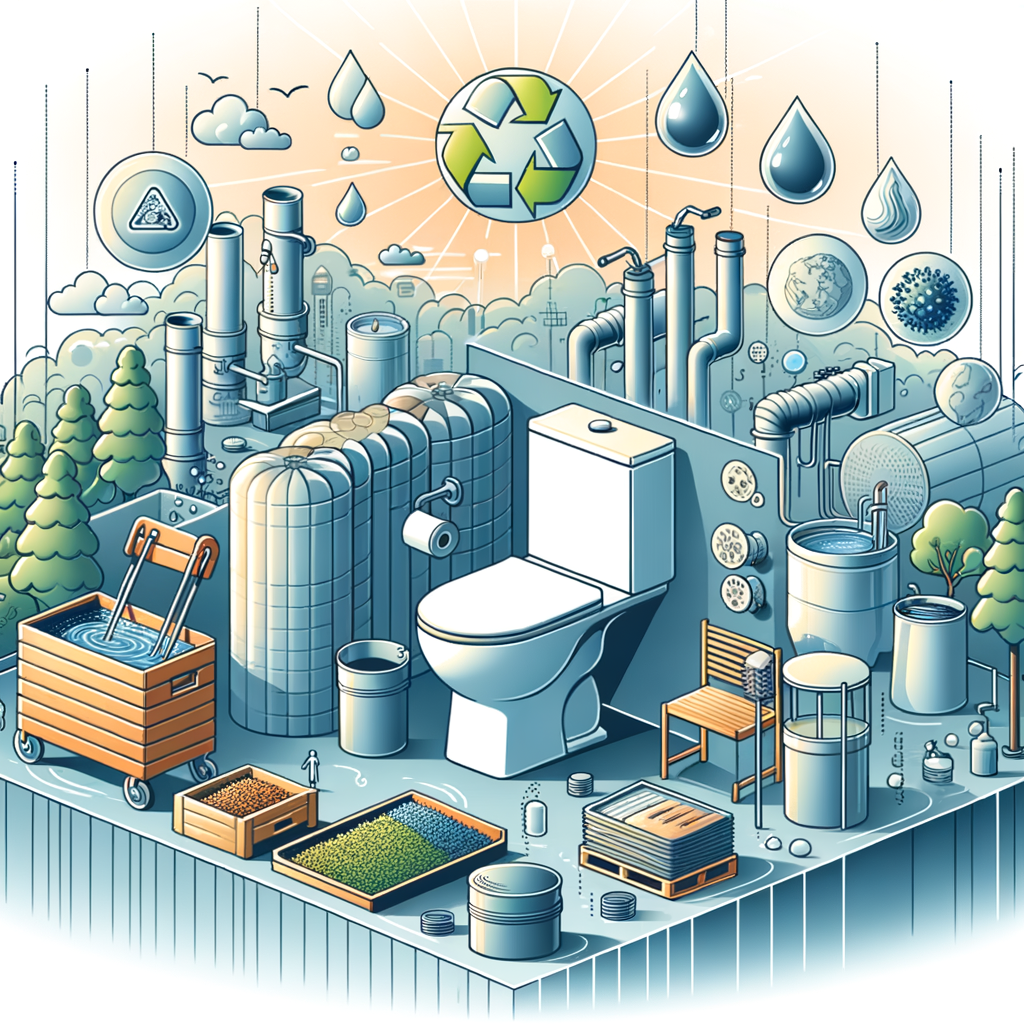
EcoSan is especially relevant where four conditions overlap: high water tables, flood risk, limited sewer feasibility, and agricultural interest in nutrient recovery. Urine-diverting dry toilets use little or no flush water. Above-ground or raised designs can perform better than pits in waterlogged zones. Dehydration vaults and container-based variants can be managed without depending on infiltration into saturated soils. These features do not automatically guarantee success, but they align with coastal constraints better than standard one-size-fits-all designs.
The public health rationale is direct. Fecal contamination in shallow groundwater increases the risk of diarrhea, enteric infections, helminths, and broader environmental pathogen loading. The water security rationale is equally direct. Every liter not used for flushing is water retained for drinking, washing, or productive use. Every kilogram of nitrogen and phosphorus recovered safely is fertilizer not discharged into canals or ponds. In villages near estuaries, this matters because nutrient runoff can worsen eutrophication and degrade fisheries.
What successful EcoSan implementations actually look like
The most successful EcoSan projects in coastal India share operational characteristics that are more important than the toilet superstructure itself. First, they are site-specific. Designers measure groundwater depth, flood levels, soil permeability, and household space constraints before selecting a model. Second, they establish a management chain. Someone is responsible for user training, ash or cover material supply, vault switching, safe emptying, storage, and reuse protocols. Third, they align with local livelihoods. Where agriculture or horticulture is present, nutrient reuse has an economic logic that households understand.
In Odisha and parts of Tamil Nadu, raised twin-vault urine-diverting systems have shown promise where pits would flood. Households that received clear guidance on adding ash, keeping urine and wash water separated, and allowing adequate storage time generally maintained the systems better than households given only construction support. In peri-urban belts, NGOs that paired installation with follow-up visits over six to twelve months achieved higher usage and lower abandonment. That pattern is consistent across sanitation programs: behavior support after construction is often the deciding factor.
Successful implementations also treat gender, privacy, and maintenance as core design requirements. I have observed projects fail because the toilet was technically sound but inconvenient for menstrual hygiene management, elderly users, or people with mobility limitations. Steps that are too steep, squatting pans that are hard to clean, or urine diversion bowls that clog quickly can turn a promising demonstration into a rejected asset. The best case studies show that EcoSan succeeds when user comfort is engineered into the system from day one.
| Implementation factor | What worked in practice | Common failure point |
|---|---|---|
| Site selection | Raised or above-ground units in high water table zones | Standard pits used in flood-prone areas |
| User training | Repeated demonstrations on ash use and vault switching | One-time orientation at handover |
| Operations | Named local caretaker or service provider | No plan for emptying or repairs |
| Reuse pathway | Linkage to home gardens or farms after safe storage | No demand for composted output |
| Design inclusion | Privacy, lighting, menstrual hygiene, elderly access | Technically correct but inconvenient design |
Lessons from case studies: what Indian coastal projects teach
One major lesson is that technology acceptance rises when communities understand the water connection. In several coastal blocks, households were more willing to try dry or low-water sanitation after seeing wells become turbid or saline after monsoon flooding. Framing EcoSan as a water protection measure, not only a toilet project, changed the conversation. Panchayat leaders responded more positively when contamination pathways were explained using local examples such as ponds near clustered latrines or hand pumps close to soak pits.
A second lesson is that nutrient recovery must be handled carefully. Urine can be a valuable nitrogen source, and treated fecal matter can improve soil organic content, but only if storage, handling, and application follow safe protocols. Projects that skipped this step faced resistance from farmers and health workers. The World Health Organization’s sanitation safety planning approach is useful here because it emphasizes risk identification from containment through reuse. In practice, that means storage time, protective equipment, restricted crop application where appropriate, and straightforward guidance that non-specialists can follow.
A third lesson is that capital subsidy alone does not create durable outcomes. Some early programs installed EcoSan units at speed, then discovered clogging, odor complaints, incorrect use, and vault misuse within months. By contrast, projects with post-installation service visits, local masons trained in EcoSan specifics, and visible troubleshooting channels had better retention. The implementation message is clear: sanitation hardware without maintenance software does not hold.
Case studies also show the importance of climate resilience. Cyclone-affected coastal regions need toilets anchored against high winds, elevated above likely flood levels, and designed so floodwater cannot carry excreta into living areas. Ventilation pipes, door fastenings, and roof materials matter more than brochures imply. A resilient EcoSan unit is not only a sanitation device; it is protective infrastructure that must remain safe under extreme weather.
Design, operation, and governance choices that determine results
Design starts with hazard mapping. Flood depth, duration of waterlogging, salinity exposure, and distance from drinking water points should inform the sanitation option. In dense coastal settlements, shared or cluster-based EcoSan facilities may work better than household units if a reliable operator is funded. In scattered villages with farming plots, household systems with reuse potential may be more acceptable. There is no single best model. The best choice is the one that fits hydrogeology, settlement form, user capacity, and service arrangements.
Operation is where many programs succeed or fail. Cover material such as ash, dry soil, or sawdust must be consistently available. Urine pipes need proper slope and periodic cleaning to prevent crystallization. Vaults need enough resting time before emptying. Handwashing stations still matter even in low-water systems. Monitoring should include not only construction counts but usage, cleanliness, smell, fly control, and safe end-use. In projects I have reviewed, simple monthly checklists used by self-help groups or village water and sanitation committees were more useful than complex dashboards that nobody updated.
Governance determines scale. Coastal water security planning should integrate sanitation, groundwater protection, and fecal sludge management instead of treating them as separate departments. State guidelines can allow EcoSan as an approved option in difficult terrains, but districts need technical cells that can review designs, train masons, and certify safe reuse practices. Financing should cover the life cycle: construction, training, maintenance, retrofits, and service support. Without this, even well-designed pilots remain isolated demonstrations.
For readers exploring related subtopics, the next logical areas include flood-resilient toilet design, nutrient reuse standards, behavior change in dry sanitation, and comparative economics of EcoSan versus septic systems in high water table zones. Together, these connected themes explain why some coastal sanitation projects become lasting water security assets while others become abandoned structures.
How to apply these lessons across coastal India
The most practical path forward is phased adoption. Start with villages, schools, fisheries settlements, and peri-urban wards where conventional containment clearly underperforms because of flooding, shallow groundwater, or water scarcity. Conduct baseline testing for groundwater quality, especially fecal indicators, nitrates, and salinity where relevant. Match the sanitation model to local risk. Train local masons, identify service responsibilities, and build a visible demonstration site that people can inspect after six months, one year, and one monsoon cycle.
Decision-makers should evaluate EcoSan using full-cost accounting rather than upfront construction cost alone. A cheaper pit that contaminates groundwater and fails in floods is not cheaper over time. A properly managed EcoSan unit may cost more initially, but it can lower water demand, reduce environmental contamination, and create usable soil amendment outputs. The economic case improves where freshwater is costly, desludging access is poor, or fertilizer prices are rising. The social case improves when designs are safe, private, easy to maintain, and supported by trusted local institutions.
Ensuring water security in Indian coastal plains requires sanitation systems that respect local hydrology instead of fighting it. EcoSan implementations offer a clear lesson from the field: when design matches terrain, users are trained, governance is assigned, and reuse is managed safely, sanitation can protect water rather than threaten it. The main benefit is not only cleaner toilets. It is safer groundwater, lower freshwater demand, better resilience in floods, and a more circular local economy. Use this hub as a starting point, then examine the linked case studies in detail and apply the lessons to your own coastal context with discipline.
Frequently Asked Questions
Why is water security especially difficult to maintain in Indian coastal plains?
Water security is more fragile in Indian coastal plains because the balance between freshwater, groundwater, surface water, sanitation, and the sea is unusually sensitive. Many coastal districts depend on shallow aquifers that recharge quickly during the monsoon but are also easily contaminated by leaking pits, poorly designed drains, open defecation, unmanaged wastewater, and solid waste dumping. Once pollution enters a shallow aquifer, it can spread through sandy or alluvial soils and affect handpumps, borewells, ponds, and irrigation sources used by entire communities. At the same time, these aquifers are vulnerable to seawater intrusion, especially when groundwater is extracted faster than it is replenished. This can make water brackish, reduce crop productivity, and raise treatment costs for households and local governments.
Climate variability adds another layer of risk. Coastal plains often face alternating extremes: intense rainfall and flooding during one season, followed by dry periods and local water scarcity in another. Floodwater can inundate toilets, septic systems, and waste storage areas, spreading pathogens into homes, fields, ponds, and wells. During dry months, reduced freshwater recharge and continued pumping can worsen salinity and concentrate contaminants. Because households, agriculture, fisheries, ecosystems, and small businesses all depend on the same limited water base, disruptions quickly become social and economic problems, not just technical ones. That is why water security in coastal India must be approached as a combined issue of sanitation, groundwater protection, flood resilience, land use planning, and community water management rather than as a simple matter of drilling more wells.
How do sanitation systems influence groundwater quality and long-term water security in coastal areas?
Sanitation systems play a central role in protecting or degrading groundwater in coastal plains. In areas with shallow water tables, conventional pits, damaged septic tanks, and poorly located soak pits can allow pathogens, nitrates, detergents, and other pollutants to move quickly into the subsurface. If toilets are built too close to drinking water sources or in soils with high permeability, the risk rises substantially. This is particularly serious in densely settled villages and peri-urban coastal belts, where many households rely on groundwater for drinking, cooking, and washing. A sanitation system that appears functional at the household level can still create a public health problem if it leaks into the local aquifer or overflows during heavy rains.
Practical sanitation for coastal settings should be designed around groundwater depth, flood exposure, soil conditions, settlement density, and fecal sludge management capacity. In some locations, raised toilets, sealed containment systems, twin-pit designs suited to local hydrogeology, or decentralized wastewater treatment can reduce contamination risks more effectively than standard pit solutions. Safe desludging, transport, treatment, and reuse or disposal are equally important, because containment alone is not enough if sludge is later dumped into drains, wetlands, or open land. When sanitation is planned correctly, it protects aquifers, reduces disease burden, improves dignity and safety, and lowers long-term pressure on already stressed water resources. In short, sanitation is not separate from water security in coastal plains; it is one of its foundations.
What are the most effective ways to reduce salinity and seawater intrusion in coastal groundwater?
Reducing salinity and seawater intrusion requires managing both water demand and freshwater recharge. The first priority is controlling excessive groundwater extraction, especially in zones where pumping has already lowered freshwater pressure and allowed saline water to move inland. This often means regulating high-volume borewells, improving irrigation efficiency, promoting less water-intensive crop choices where feasible, and shifting some water demand toward harvested rainwater, treated wastewater for non-potable use, or better-managed surface water supplies. If withdrawal continues unchecked, even good rainfall years may not be enough to restore aquifer balance.
The second priority is strengthening recharge and protecting the natural systems that help store freshwater. Rainwater harvesting, recharge ponds, percolation structures, managed aquifer recharge, restoration of tanks and canals, and conservation of wetlands can all support freshwater buffering if they are designed carefully and kept free from pollution. In coastal settings, recharge interventions must be paired with strict source protection, because recharging contaminated water simply pushes pollutants deeper into the aquifer. Land use controls also matter: paving over recharge zones, filling wetlands, and allowing polluted runoff into low-lying areas can undermine freshwater storage. Long-term success usually comes from integrated local planning that combines aquifer monitoring, salinity mapping, village water budgeting, flood-resilient sanitation, and seasonal water allocation. There is rarely a single engineering fix; durable results come from coordinated management of the whole freshwater system.
How can coastal communities stay water-secure during floods, cyclones, and seasonal water shortages?
Resilience begins with diversification. Communities that depend on only one source, such as a shallow handpump aquifer, are highly exposed when flooding, contamination, or salinity disrupts supply. A stronger approach combines multiple sources and safeguards: protected drinking water storage, elevated or sealed wells, rainwater harvesting, treated piped water where feasible, emergency tanker protocols, and separate planning for domestic, livestock, and agricultural needs. Critical infrastructure such as pumps, treatment units, toilets, sludge storage, and electrical components should be sited or elevated to remain functional during flood events. Water quality testing should also be routine before and after monsoon flooding so contamination is detected early rather than after illness spreads.
Seasonal resilience also depends on planning before scarcity begins. Communities can map water sources, identify vulnerable households, estimate dry-season demand, and create local rules for groundwater use and source protection. Farmer support is crucial, because agricultural withdrawals often shape the wider water balance. Efficient irrigation methods, crop scheduling aligned with rainfall, and use of lower-quality water for appropriate non-potable applications can reduce stress on drinking water sources. Public health preparedness matters as well: if floodwaters enter sanitation systems, the risk of diarrheal disease, skin infections, and vector breeding increases sharply. Local governments, panchayats, self-help groups, and water user committees are most effective when they coordinate water supply, drainage, sanitation maintenance, and emergency response as one system. That kind of preparedness turns water security from a reactive crisis response into an ongoing community resilience strategy.
What should policymakers and local planners prioritize to improve water security in Indian coastal plains over the long term?
Policymakers should start by recognizing that water security in coastal plains is an integrated governance challenge, not just an infrastructure gap. Long-term progress depends on linking water supply, sanitation, stormwater drainage, groundwater regulation, agriculture, public health, and ecosystem protection. Priority actions include mapping aquifers and salinity zones, identifying flood-prone sanitation risks, protecting recharge areas, and establishing reliable local water quality monitoring systems. Planning should be district-specific, because coastal hydrogeology, settlement patterns, and livelihood dependence vary widely across India. A strategy that works in one delta or estuary may fail in another if water tables, soil permeability, tidal influence, or sanitation density are different.
Investment priorities should favor systems that are practical to maintain locally and resilient to climate stress. That includes flood-safe sanitation, safe fecal sludge management, decentralized treatment where centralized networks are not feasible, restoration of ponds and wetlands, rainwater capture, and stronger operation and maintenance funding rather than only one-time construction budgets. Policymakers should also support community institutions with data access, technical training, and clear accountability mechanisms so residents can participate in source protection and monitoring. Importantly, success should be measured not only by infrastructure coverage but by outcomes: safe water quality, reduced contamination, lower salinity risk, improved service reliability, and better resilience through monsoons and dry seasons. When planning is preventive, science-based, and locally grounded, coastal districts are far better positioned to protect aquifers, reduce waste, and secure water for households, farms, ecosystems, and local economies.