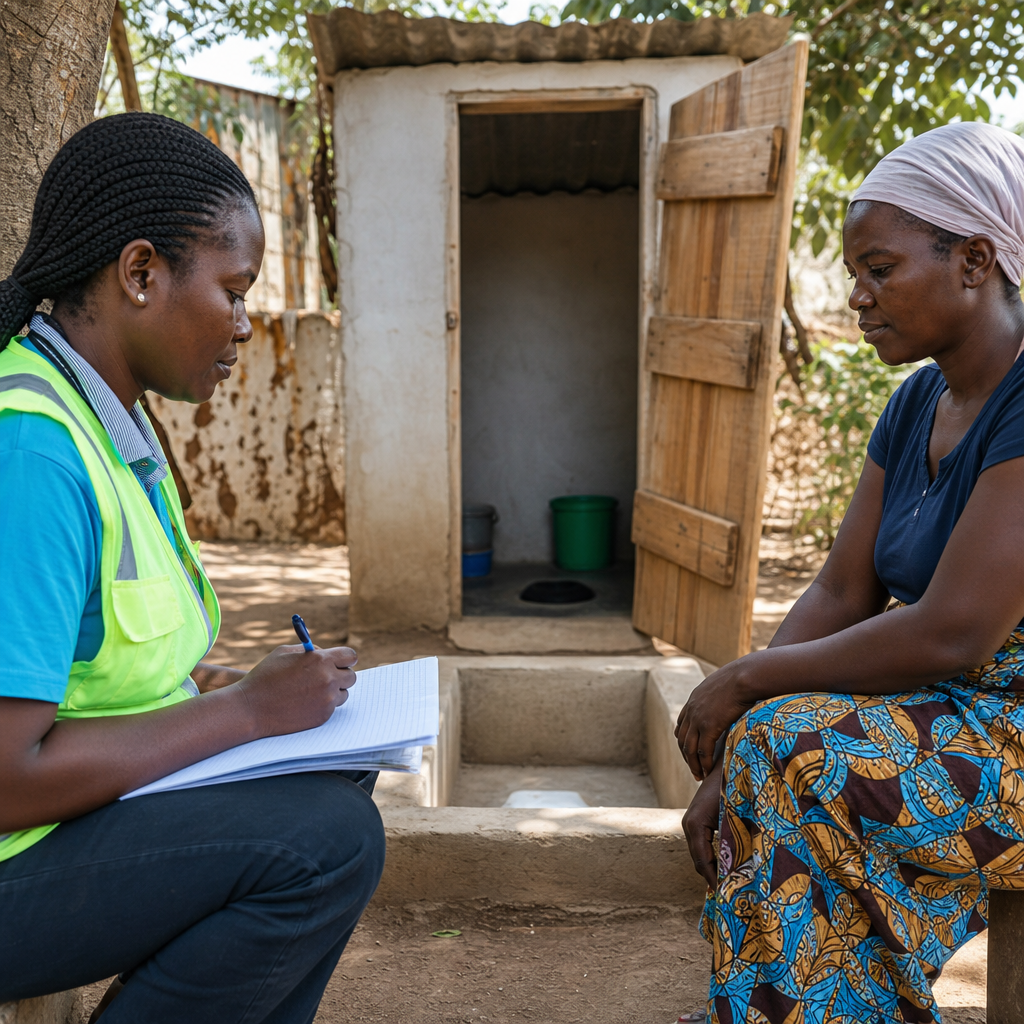
Community engagement in sanitation policy development determines whether toilets are used, drains are maintained, tariffs are accepted, and public health gains last beyond a single project cycle. In practice, sanitation policy means the rules, funding decisions, service standards, behavior change programs, and accountability systems that shape how human waste, wastewater, stormwater, and solid waste are safely managed. Community engagement is the structured involvement of residents, local leaders, schools, workers, civil society groups, and service users in defining problems, setting priorities, designing interventions, and monitoring results. Empowering communities through knowledge is the foundation of that process, because people participate effectively only when they understand health risks, service options, legal rights, budget constraints, and the tradeoffs between cost, convenience, and environmental protection.
I have seen sanitation plans fail when engagement began after decisions were already made. Engineers presented sewer alignments, consultants displayed behavior change posters, and officials expected quick approval. Residents instead raised concerns about flooding, unsafe communal toilets, menstrual hygiene needs, and fees they could not afford. The plans were technically sound on paper but socially weak. By contrast, the strongest sanitation policies start with shared evidence and local learning. When communities map open defecation areas, identify blocked drains, compare onsite and sewered systems, and review disease patterns together, policy discussions become practical rather than abstract. That shift matters because sanitation is not only infrastructure. It is also governance, trust, dignity, gender safety, and everyday maintenance. A strong hub on community engagement and education must therefore explain how knowledge is created, shared, verified, and turned into policy that people will actually support and sustain.
Why Knowledge Is the Starting Point for Effective Sanitation Policy
Knowledge turns residents from passive recipients into informed decision makers. In sanitation, that means understanding fecal contamination pathways, service chain failures, household economics, and institutional responsibilities. The most useful framework is the sanitation service chain: capture, containment, emptying, transport, treatment, and safe reuse or disposal. Communities often know one segment well, usually the toilet itself, but policy must cover the entire chain. If a pit latrine is improved but sludge is dumped into a canal, disease risk remains. When policy discussions clearly explain the full chain, people can evaluate realistic options and ask better questions about land availability, desludging schedules, treatment capacity, and operator licensing.
Knowledge also reduces conflict. In low income settlements, residents may resist desludging fees until they see the cost of vacuum trucks, treatment operations, fuel, labor, and compliance. In peri urban areas, households may demand sewers without understanding topography, connection costs, water supply limitations, or treatment plant operating requirements. Good engagement does not lower expectations by withholding information. It raises the quality of public debate by making technical facts accessible. Tools such as participatory mapping, transect walks, focus groups, school sanitation audits, and simple risk diagrams help translate engineering and public health concepts into local language. The result is better consent, stronger ownership, and policies with fewer implementation surprises.
Who Should Be Involved and What Meaningful Participation Looks Like
Meaningful participation in sanitation policy development goes far beyond a public meeting. It includes women and girls, tenants, landlords, people with disabilities, waste workers, market vendors, school administrators, health workers, youth groups, elders, religious leaders, neighborhood associations, and small scale service providers such as emptiers and plumbers. Each group sees a different part of the sanitation system. Women may highlight safety risks around shared toilets at night. Persons with disabilities can identify unusable facility designs. Informal workers know where waste is actually dumped. Health clinics can connect sanitation failures to diarrheal disease, helminth infections, and outbreaks after floods. If these voices are absent, policy will miss operational realities.
Participation should influence agenda setting, not only validation. The practical test is simple: can community input change service standards, technology choices, siting decisions, subsidy criteria, grievance mechanisms, or monitoring indicators? If the answer is no, the process is consultation theater. Strong policy processes establish representative committees, publish timelines, provide translation where needed, share draft documents before meetings, and explain which decisions are fixed by law versus open to local adaptation. In my experience, residents engage more seriously when officials are transparent about constraints. People may not like every limit, but they respect clarity. That trust is essential for difficult issues such as tariff reforms, land acquisition for treatment sites, and enforcement against unsafe dumping.
Methods That Turn Community Knowledge into Policy Evidence
Effective sanitation engagement uses methods that convert lived experience into evidence decision makers can act on. Community led total sanitation can be useful for triggering collective awareness about contamination, but policy development requires a broader toolkit. Household surveys reveal facility access, affordability pressures, and emptying frequency. Participatory GIS mapping identifies flood prone zones, illegal discharge points, and service gaps. Seasonal calendars show when pits fill faster, roads become inaccessible, or disease incidence rises. Social audits track whether budgets, contractor outputs, and maintenance commitments match what was promised. Citizen report cards compare user satisfaction across neighborhoods and service types. These methods do more than collect opinions; they generate structured data.
To make that data credible, triangulation is essential. I typically compare community findings with municipal records, utility logs, clinic data, school attendance trends, and environmental sampling where available. For example, if residents report that communal toilets fail during the rainy season, field inspections and maintenance logs can confirm whether flooding, overuse, poor drainage, or absent caretaking is the main driver. This matters because policy responses differ. One settlement may need raised toilet platforms and stormwater upgrades. Another may need revised cleaning contracts and better fee collection. When communities see their observations tested and reflected in final recommendations, confidence in the process increases and policy legitimacy improves.
| Engagement method | What it reveals | Best policy use |
|---|---|---|
| Participatory mapping | Open defecation sites, clogged drains, unsafe toilet locations, flood paths | Infrastructure siting, risk zoning, service gap targeting |
| Household surveys | Access levels, spending patterns, emptying behavior, user preferences | Tariff design, subsidy targeting, service standards |
| Focus groups | Gender safety, stigma, cultural barriers, maintenance concerns | Facility design, communication strategy, inclusion measures |
| Social audits | Budget use, contractor performance, maintenance compliance | Accountability rules, procurement oversight, monitoring plans |
| Citizen report cards | User satisfaction and comparative service quality | Performance benchmarks and public reporting |
Education Strategies That Build Long Term Sanitation Literacy
Empowering communities through knowledge requires ongoing education, not one time awareness campaigns. Sanitation literacy includes understanding disease transmission, hand hygiene, menstrual health, child feces management, safe pit emptying, wastewater risks, and rights to accessible services. It also includes civic literacy: how local budgets work, who regulates private emptiers, where complaints are filed, and how service levels are monitored. The most durable programs combine schools, health outreach, local media, peer educators, and demonstration sites. Schools are especially powerful because students carry messages home, but they should not be treated as message delivery channels alone. School sanitation clubs can conduct toilet usability audits, monitor handwashing stations, and participate in ward level planning.
Adult education works best when linked to immediate choices. A household deciding between a septic tank, twin pit system, or shared facility needs practical guidance on space requirements, desludging frequency, capital cost, and maintenance obligations. Visual aids, model latrines, and cost calculators are far more effective than slogans. In several municipal programs, I found that community workshops using simplified fecal sludge flow diagrams produced better decisions than generic hygiene talks. Residents began asking whether septic tanks were watertight, whether soak pits were safe near wells, and how licensed emptiers disposed of sludge. That level of questioning is exactly what good policy should encourage, because informed users create pressure for safer markets and more accountable institutions.
Inclusion, Equity, and the Politics of Whose Knowledge Counts
Sanitation policy often fails the people who bear the highest burden of poor services. Women manage household hygiene but may be excluded from land and finance decisions. Tenants rely on shared facilities but have little control over upgrades. Informal settlement residents are underserved because tenure is disputed. People with disabilities are consulted late, after designs are fixed. Waste workers handle the dirtiest tasks while facing stigma and weak labor protection. Community engagement must correct these imbalances by treating local experience as valid evidence, not anecdote. That means scheduling meetings at accessible times, providing childcare where possible, compensating transport costs for low income participants, and using facilitation methods that do not let elites dominate.
Equity also requires disaggregated data. Average access rates can hide severe exclusion. A city may report high sanitation coverage while schools lack private facilities for menstruating students or public toilets remain inaccessible to wheelchair users. Policy design should therefore ask direct questions: Who waits longest? Who pays more per liter or per visit? Who is exposed to harassment? Who is left out of sewer connections because of plot size or legal status? When communities help define these indicators, the policy conversation moves from infrastructure counts to service justice. That shift is essential for credible sanitation reform, because equitable systems are not created by technical standards alone. They are created by recognizing unequal risks and responding deliberately.
From Participation to Policy Instruments and Accountability
The point of engagement is better policy, so community input must be translated into enforceable instruments. These include sanitation bylaws, citywide inclusive sanitation strategies, desludging regulations, school WASH standards, tariff schedules, capital investment plans, and contracts with private operators. If residents identify unaffordable desludging as a major barrier, policy responses might include scheduled desludging financed through a monthly sanitation fee, targeted subsidies for low income households, or licensing reforms that reduce illegal dumping and stabilize prices. If women report safety concerns at communal blocks, standards can require lighting, locks, gender separated stalls, caretaker presence, and documented cleaning frequencies.
Accountability mechanisms are equally important. Public dashboards, grievance hotlines, ward committees, and annual service reviews give communities ways to track whether policy commitments are being met. Recognized tools such as stakeholder mapping, results frameworks, service level indicators, and key performance indicators help organize this process. The strongest systems publish baseline data, define who is responsible for each action, and set review intervals. In one city program, citizen monitors compared scheduled pit emptying records with actual service delivery and treatment plant receipts. That simple cross check exposed leakages in the chain and prompted corrective action. Policies improve when communities are not only consulted at the beginning but empowered to verify performance over time.
Building a Knowledge Hub That Supports Every Related Topic
As a sub pillar hub under community engagement and education, this topic should connect readers to the full sanitation learning journey. A strong hub explains how participation informs behavior change, school sanitation, public health communication, hygiene promotion, fecal sludge management, urban planning, gender responsive design, and local governance. It should answer practical questions quickly: What is community engagement in sanitation? Why does education matter? Who should be involved? Which methods work? How do you measure impact? From there, supporting pages can go deeper into participatory mapping, social accountability, inclusive toilet design, financing options, and risk communication during outbreaks or floods. Clear internal pathways help readers move from overview to action.
To remain useful, the hub should be updated as standards, technologies, and urban conditions change. Citywide inclusive sanitation has broadened policy thinking beyond sewers alone. Climate pressures now make drainage, flood resilience, and wastewater management inseparable from sanitation planning. Digital tools such as mobile reporting apps, GIS dashboards, and SMS grievance channels are improving responsiveness, but they do not replace face to face trust building. The central lesson remains constant: communities are not obstacles to sanitation policy. They are co producers of evidence, legitimacy, and long term system performance. Build policy with them, support them with clear knowledge, and the results are safer, fairer, and more durable.
Community engagement in sanitation policy development works when knowledge is shared early, translated clearly, and linked to decisions that people can see and influence. The most effective policies explain the full sanitation service chain, include those who face the greatest risks, use structured methods to turn lived experience into evidence, and convert that evidence into standards, budgets, contracts, and monitoring systems. Education is not a side activity within that process. It is the mechanism that allows households, workers, schools, and local leaders to understand tradeoffs, challenge weak assumptions, and support solutions that protect health and dignity.
The main benefit of this approach is durability. Infrastructure can be built quickly, but safe sanitation only lasts when communities know how systems work, why rules matter, where to raise concerns, and how to hold institutions accountable. If you are building content, programs, or policy in this area, use this hub as the starting point: map the stakeholders, define the knowledge gaps, create clear participation channels, and connect every recommendation to measurable accountability. Then expand into the linked topics across community engagement and education so every sanitation decision is informed, inclusive, and practical.
Frequently Asked Questions
Why is community engagement so important in sanitation policy development?
Community engagement is essential because sanitation policies only work when they reflect how people actually live, move, pay for services, and use infrastructure every day. A policy may look technically strong on paper, but if it ignores local habits, settlement patterns, land tenure issues, safety concerns, affordability limits, or social norms around waste disposal and toilet use, adoption will be weak and results will fade quickly. In sanitation, this matters at every level: whether households connect to services, whether public toilets are used and maintained, whether drains are kept clear, whether tariffs are seen as fair, and whether local government can sustain operations after a project ends.
Structured community engagement improves policy quality by bringing lived experience into decision-making. Residents can identify barriers that planners may miss, such as the location of flooding hotspots, the times when women and girls feel unsafe accessing toilets, the challenges faced by people with disabilities, or the informal practices used where formal collection systems are inconsistent. Local leaders, service users, health workers, school staff, and neighborhood groups also help policymakers understand what messages will influence behavior, what payment systems are realistic, and where trust in institutions is weak. This leads to policies that are more practical, more equitable, and more likely to achieve lasting public health outcomes.
Just as importantly, engagement builds legitimacy and accountability. When communities see that their concerns shape funding decisions, service standards, maintenance plans, and complaint systems, they are more likely to support implementation and monitor performance over time. That support can be the difference between infrastructure that deteriorates and systems that remain functional. In short, community engagement turns sanitation policy from a top-down administrative exercise into a shared governance process that improves usage, maintenance, compliance, and long-term resilience.
Who should be involved in community engagement for sanitation policy, and why does broad representation matter?
Effective community engagement should involve far more than a small group of vocal residents or formal local leaders. Sanitation affects everyone, but not everyone experiences sanitation systems in the same way. A strong process includes households from different income levels, tenants and landlords, women and men, youth, older adults, people with disabilities, sanitation workers, informal settlement residents, local businesses, school representatives, health professionals, religious or traditional leaders, civil society organizations, and utility or municipal service providers. In many places, it is especially important to include groups that are often excluded from formal consultations, such as migrants, people living in flood-prone areas, waste pickers, and communities with insecure tenure.
Broad representation matters because sanitation burdens and benefits are unevenly distributed. For example, women and girls may face greater risks related to privacy, menstrual hygiene management, and safety. Children may be affected by school sanitation conditions and poor drainage near homes. People with disabilities may encounter inaccessible facilities that others do not notice. Low-income households may struggle with connection fees, monthly tariffs, or transport costs to reach shared facilities. Sanitation workers can highlight occupational hazards, equipment shortages, and disposal chain failures that are invisible to the public but critical to safe service delivery. If these perspectives are absent, policies can unintentionally reinforce inequality or fail in implementation.
Inclusive representation also improves the credibility of the policy process. When people recognize that different neighborhoods and user groups had a meaningful seat at the table, they are more likely to trust the outcomes, even if compromises are necessary. Broad engagement does not mean every decision is made by consensus or that technical standards are ignored. It means policymakers intentionally gather diverse evidence, test assumptions against lived realities, and make choices with a clear understanding of who will be affected and how. That approach leads to more durable, more defensible sanitation policy.
What are the most effective ways to engage communities in sanitation policy development?
The most effective community engagement methods are structured, inclusive, repeated over time, and designed to produce usable input for policy decisions. Public meetings can be helpful for transparency, but they are rarely enough on their own. Strong sanitation policy processes usually combine multiple methods, such as household surveys, focus groups, neighborhood mapping, stakeholder interviews, participatory planning workshops, community scorecards, social audits, town halls, school-based consultations, and digital feedback tools like SMS hotlines or mobile reporting platforms. Each method serves a different purpose, and the best results come from using them together rather than relying on a single event.
For example, participatory mapping can help identify overflowing drains, illegal dumping sites, unsafe public toilets, or areas where fecal sludge services cannot reach homes. Focus groups can uncover sensitive issues such as toilet-sharing conflicts, stigma around pit emptying, or the reasons behavior change messages are not working. Surveys can generate broader quantitative evidence on service levels, willingness to pay, and satisfaction with current arrangements. Community scorecards and grievance systems are useful once a policy is being implemented because they create ongoing accountability and allow residents to report whether service standards are being met. In sanitation, where infrastructure and behavior are closely linked, combining technical assessments with user experience is especially valuable.
Effective engagement also depends on how the process is designed. Meetings should be held at accessible times and locations, in local languages, and in formats that allow marginalized groups to speak safely and confidently. Facilitators should explain clearly what decisions are open for input, what constraints exist, and how feedback will be used. Just as important, authorities should report back to participants after consultations. Communities quickly lose trust when they are asked for opinions but never told what happened next. The strongest engagement processes close the loop by showing which recommendations were adopted, which were not, and why. That transparency turns consultation into a credible part of governance rather than a symbolic exercise.
What challenges commonly undermine community engagement in sanitation policy, and how can they be addressed?
Several common challenges weaken community engagement in sanitation policy development. One of the biggest is tokenism, where officials hold consultations mainly to satisfy a procedural requirement, not to shape real decisions. In these cases, engagement happens too late, after priorities and budgets have already been set, leaving communities with little influence. Another challenge is unequal participation. Meetings may be dominated by local elites, politically connected groups, or those with more time and confidence to speak, while the voices of women, low-income households, tenants, informal workers, and other marginalized groups remain unheard. Technical complexity can also be a barrier. Sanitation policy involves service chains, standards, financing mechanisms, environmental controls, and institutional roles that may not be easy for residents to evaluate without clear explanation.
Trust is another major issue. In places where communities have seen repeated promises without follow-through, residents may assume engagement is performative and choose not to participate. Low trust can also affect willingness to discuss sanitation openly, especially where topics related to waste, menstruation, open defecation, or unsafe disposal are stigmatized. In addition, local governments may face practical constraints such as limited staff, weak facilitation skills, poor data systems, and insufficient budgets for sustained engagement. These limitations often result in one-off consultations rather than continuous dialogue across planning, implementation, and monitoring.
Addressing these problems requires both institutional commitment and better process design. Engagement should begin early, before policy options are finalized, and continue through implementation and review. Authorities should use targeted outreach to include underrepresented groups, provide simple explanations of technical issues, and create safe spaces for sensitive discussions. Independent facilitators, trusted community-based organizations, and local health workers can help bridge gaps between officials and residents. It also helps to formalize feedback mechanisms, such as complaint channels, citizen oversight committees, and public reporting on service performance. Most importantly, governments need to demonstrate responsiveness. When communities see visible changes, clearer standards, or better communication as a result of their participation, engagement becomes more credible and more productive over time.
How can policymakers measure whether community engagement in sanitation policy is actually working?
Measuring success requires looking beyond attendance numbers. A crowded meeting does not automatically mean meaningful engagement took place. Policymakers should assess both process quality and practical outcomes. On the process side, useful indicators include who participated, whether marginalized groups were represented, how many engagement activities occurred at different stages of policy development, whether information was shared in accessible formats, and whether participants understood the issues being discussed. It is also important to track whether feedback was documented, analyzed, and incorporated into final decisions. A strong process leaves an evidence trail showing how community input influenced policy priorities, service standards, budget allocations, siting decisions, tariff approaches, or accountability mechanisms.
On the outcomes side, policymakers should examine whether engagement contributed to better sanitation performance. That may include higher toilet usage rates, improved customer satisfaction, stronger tariff acceptance, fewer service complaints, more regular desludging or waste collection, reduced drain blockages, lower open dumping, better operation and maintenance outcomes, and stronger compliance with health and environmental standards. In behavior change programs, success may be reflected in improved hygiene practices, cleaner public spaces, or increased use of approved disposal methods. In governance terms, it may show up as more active grievance systems, faster response times, stronger trust between service providers and communities, and more transparent reporting.
Qualitative evidence matters too. Interviews, focus groups, and case reviews can reveal whether residents feel heard, whether they understand their rights and responsibilities, and whether local leaders believe the policy process was fair. Over time, the best sign that engagement is working is that sanitation policy becomes more adaptive and accountable. Instead of relying on assumptions, policymakers regularly use community feedback to identify service failures, refine communication strategies