Harnessing Local Influence for Environmental Change
In the quest for environmental sustainability and improved public health, Ecological Sanitation (EcoSan) emerges as a pivotal solution. It’s not just a system but a philosophy, focusing on sustainable sanitation practices that recycle and reuse human waste as a resource rather than discarding it as waste. The success of EcoSan, however, hinges significantly on community buy-in and participation. At the forefront of this movement are community leaders, whose roles are crucial in steering this eco-friendly shift.
Understanding EcoSan: More Than Just Sanitation
Before delving into the role of community leaders, it’s essential to grasp what EcoSan entails. At its core, EcoSan is an approach that seeks to prevent the pollution of water sources from human waste, turning it instead into a resource. This is achieved through the use of composting toilets, urine-diverting dry toilets (UDDTs), and similar systems that treat human waste on-site, transforming it into compost or fertilizer. This process not only reduces the burden on conventional sewage systems but also provides a sustainable source of nutrients for agriculture, closing the nutrient loop in an eco-friendly manner.
The Leader as an Educator and Motivator
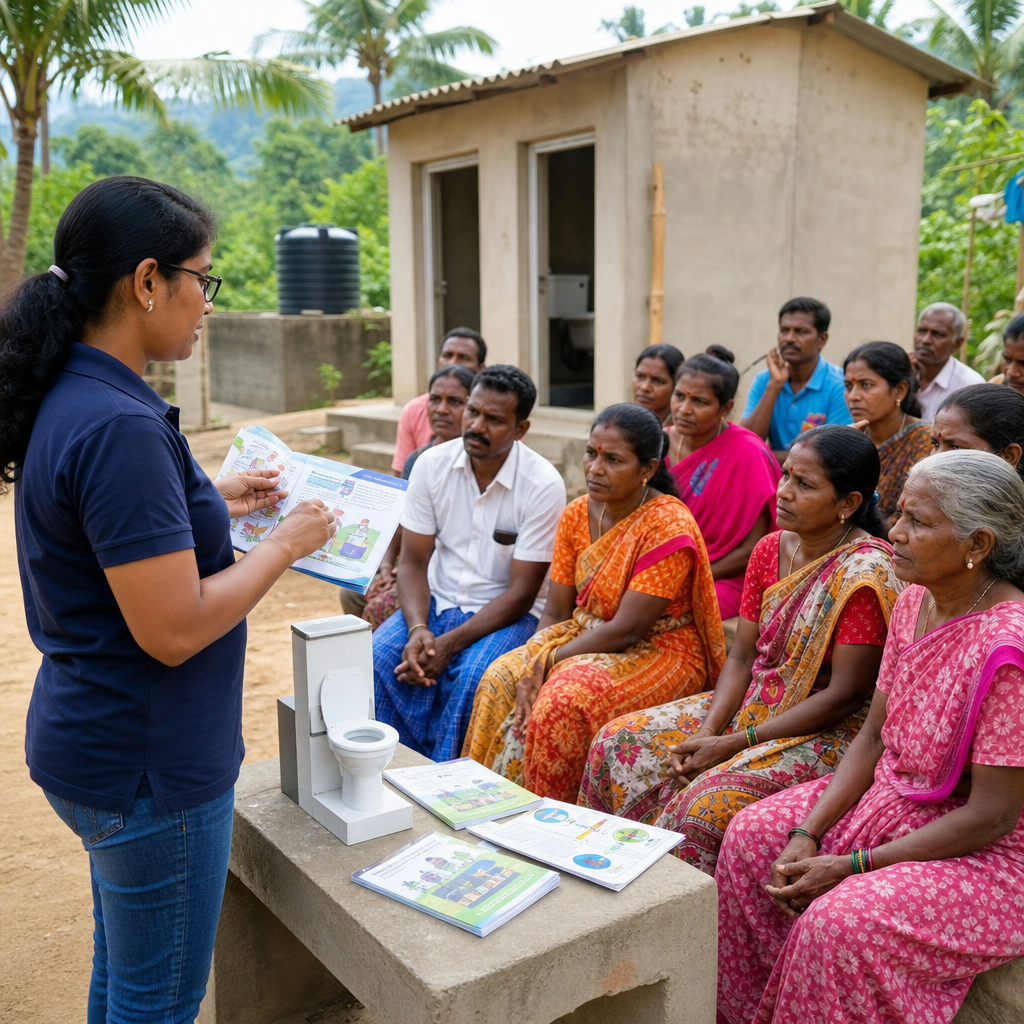
The journey begins with education. Community leaders are in a unique position to inform and inspire their constituents about the benefits of EcoSan. By simplifying the complex technical aspects into relatable benefits – like improved sanitation, reduced water pollution, and the potential for nutrient-rich compost – leaders can demystify EcoSan and make it more accessible. This education isn’t just about providing information; it’s about sparking discussions, answering questions, and addressing concerns, thereby building a foundation of understanding and support.
Facilitating Community Involvement
EcoSan projects thrive on community involvement. Leaders can mobilize local resources and volunteers for EcoSan initiatives, fostering a sense of ownership and responsibility within the community. Whether it’s participating in the construction of composting toilets or contributing to the maintenance of these systems, active community participation ensures the sustainability and effectiveness of EcoSan practices.
Overcoming Cultural and Social Barriers
Adopting new sanitation practices isn’t just a technical challenge; it’s often a cultural one. Community leaders, who are deeply rooted in the local culture, can play a pivotal role in addressing and overcoming these barriers. By respecting and understanding cultural sensitivities and leveraging traditional practices that align with EcoSan principles, leaders can facilitate a smoother transition to these new sanitation practices.
Building Partnerships for Broader Impact
The power of partnerships cannot be overstated in the realm of EcoSan. Community leaders can reach out to NGOs, government bodies, educational institutions, and private sectors to forge collaborations. These partnerships can bring in additional resources, expertise, and broader awareness, significantly amplifying the impact of EcoSan initiatives.
Leading by Example
Perhaps the most powerful tool in a leader’s arsenal is leading by example. When leaders adopt EcoSan practices in their own lives, they not only gain firsthand experience but also demonstrate their commitment to the cause. This can be a powerful motivator for community members, who often look up to their leaders for guidance and inspiration.
Monitoring and Feedback: Keys to Continuous Improvement
For any EcoSan project to succeed in the long term, regular monitoring and feedback are essential. Community leaders can organize forums for feedback and discussions, ensuring that the community’s voice is heard and that the EcoSan systems are meeting their needs. This feedback loop is vital for continuous improvement and adaptation of EcoSan practices.
Celebrating Successes and Learning from Challenges
Every small victory in the implementation of EcoSan should be celebrated, and every challenge should be seen as an opportunity to learn and grow. Community leaders can highlight these successes and lessons, maintaining momentum and keeping the community engaged and motivated.
Leaders as Catalysts for Sustainable Change
In the movement towards sustainable sanitation and environmental stewardship, community leaders play an indispensable role. Their ability to educate, engage, and empower their communities can turn the EcoSan vision into a tangible reality. By fostering a culture of participation, openness, and continuous learning, leaders can guide their communities towards a more sustainable and healthy future.
Through their efforts, the benefits of EcoSan – from improved public health and environmental protection to enhanced agricultural productivity – can be fully realized. The role of community leaders in promoting EcoSan is not just about implementing a system; it’s about championing a cause that has far-reaching benefits for both people and the planet.

Empowering Women and Youth: A Strategic Approach
In the realm of EcoSan, the empowerment of women and youth can be a game-changer. Community leaders have the opportunity to engage these often underrepresented groups actively. Women, traditionally the managers of household health and hygiene, can be formidable advocates for EcoSan practices. Similarly, involving youth not only prepares the next generation of EcoSan users but also brings fresh ideas and enthusiasm to the initiative. Leaders can organize workshops and educational programs specifically targeted at these groups, encouraging their active participation in decision-making and implementation processes.
Leveraging Technology and Innovation
In today’s digital age, technology plays a pivotal role in enhancing the effectiveness of EcoSan projects. Community leaders can promote the use of mobile apps for monitoring sanitation facilities, social media for awareness campaigns, and online platforms for training and resource sharing. Embracing technological solutions can lead to more efficient management and monitoring of EcoSan systems, and also helps in reaching a wider audience, especially the younger, tech-savvy generation.
Tailoring Solutions to Local Needs
One size does not fit all when it comes to EcoSan. Community leaders must ensure that EcoSan solutions are tailored to the specific needs, resources, and constraints of their community. This could involve adapting the design of sanitation facilities to suit local climates, using locally available materials, or aligning EcoSan practices with local agricultural practices. Engaging with the community to understand their unique context and needs is critical for the design and implementation of effective EcoSan solutions.
Encouraging Research and Development
For EcoSan to evolve and improve, ongoing research and development are essential. Community leaders can play a crucial role in encouraging local research initiatives, possibly in collaboration with academic institutions or NGOs. This research can focus on improving EcoSan technologies, studying the impact of EcoSan on public health and the environment, or developing new methods to recycle and reuse waste more effectively.
Fostering a Culture of Sustainability
Ultimately, the promotion of EcoSan is part of a broader goal of fostering a culture of sustainability within communities. Leaders should aim to integrate EcoSan into a larger conversation about environmental conservation, waste reduction, and sustainable living practices. By connecting the dots between EcoSan and these broader environmental goals, leaders can help community members see the bigger picture and embrace sustainability as a way of life.
Engaging with Policy Makers
To scale up the impact of EcoSan, engagement with policy makers is crucial. Community leaders can advocate for policies that support EcoSan, such as subsidies for the construction of eco-friendly sanitation facilities, regulations that promote waste recycling, or educational programs in schools about sustainable sanitation. By influencing policy, leaders can create an environment that is more conducive to the widespread adoption of EcoSan practices.
Celebrating Local Culture and Heritage
Integrating EcoSan with local culture and heritage can greatly enhance its acceptance. Community leaders can look for ways to connect EcoSan practices with local traditions and beliefs. For example, the use of compost from EcoSan systems in traditional farming practices can be framed as a way of honoring and preserving ancestral agricultural methods.
Continuous Learning and Adaptation
Finally, it’s important for community leaders to remain open to learning and adapting. The field of EcoSan is constantly evolving, with new technologies, methods, and insights emerging regularly. Leaders should stay informed about these developments and be willing to adjust their strategies accordingly. This adaptability ensures that the EcoSan initiatives remain effective and relevant to the community’s needs.
Conclusion: Pioneering a Sustainable Future
In conclusion, community leaders are more than just facilitators; they are catalysts for change in the journey towards sustainable sanitation. By embracing their roles as educators, motivators, innovators, and advocates, they can lead their communities in adopting EcoSan practices that contribute to a healthier, more sustainable world. Through their efforts, EcoSan can move from being a niche concept to a mainstream solution, marking a significant step forward in our collective pursuit of environmental sustainability and public health.
The journey of implementing EcoSan is as much about building resilient, informed communities as it is about improving sanitation. As community leaders champion this cause, they pave the way for a future where sustainable living is not just a choice but a deeply ingrained way of life.