Using social media to advocate for EcoSan means turning everyday digital conversations into practical education about ecological sanitation, public health, resource recovery, and community dignity. EcoSan, short for ecological sanitation, is an approach to sanitation that treats human waste not only as a disposal problem but also as a resource that can be safely managed, transformed, and reused under controlled conditions. In communities where sewer infrastructure is limited, water is scarce, or pollution from unmanaged waste is severe, EcoSan systems such as urine-diverting dry toilets, composting toilets, and decentralized reuse models can reduce contamination, conserve water, and support local agriculture. I have seen that the biggest barrier is rarely the technology alone; it is understanding, trust, and the willingness of people to change habits that are deeply social. That is exactly why social media matters.
For community engagement and education, social platforms function as a public classroom, a listening post, and a mobilization tool at the same time. A Facebook group can answer common concerns about odor, hygiene, and maintenance. Short videos on Instagram or TikTok can show how a urine-diverting toilet works in plain language. WhatsApp groups can coordinate local meetings, volunteer drives, and household demonstrations. YouTube can host expert interviews, case studies, and maintenance walkthroughs that remain searchable for years. When used strategically, these channels help communities move from curiosity to acceptance, and from acceptance to adoption. This hub article explains how to use social media to build community awareness around EcoSan, what messages work, which formats perform best, how to address resistance, and how to connect awareness campaigns to real-world education efforts.
Why social media is effective for building community awareness about EcoSan
Social media works for EcoSan advocacy because sanitation decisions are shaped by social proof, local identity, and repeated exposure to credible information. People rarely adopt a new sanitation model after seeing one brochure. They adopt after hearing a neighbor explain the benefits, watching a trusted local leader endorse the system, and seeing practical answers to concerns about cost, smell, safety, and maintenance. Digital platforms compress that process. They allow one successful household, school, or community center to become a visible example for hundreds or thousands of others.
In practice, the strongest awareness campaigns combine reach with relevance. A broad public post may introduce the problem of open defecation, groundwater contamination, or water-intensive flush systems. A follow-up post can localize the issue with community-specific facts, such as seasonal flooding spreading waste into drainage channels, rising fertilizer prices increasing interest in nutrient recovery, or women and girls facing safety risks when toilets are inaccessible. By connecting EcoSan to problems people already recognize, advocacy becomes concrete instead of abstract.
Another reason social media is effective is speed of feedback. When I have supported sanitation outreach, the comment section often revealed the real barriers faster than any formal survey. People asked whether compost from treated waste is safe for food crops, whether elderly residents can use urine-diverting toilets comfortably, whether containers need daily emptying, and whether religious practices permit reuse. Those questions are not noise; they are the campaign roadmap. Each recurring question should become a new piece of content, because awareness grows when information is responsive, not one-directional.
Core messages every EcoSan awareness campaign should communicate
Effective EcoSan messaging starts with clarity. Most audiences need direct answers to five questions: What is EcoSan, why does it matter, is it safe, who benefits, and what does adoption actually involve? If a campaign cannot answer those points simply, it will struggle to build trust. The most useful framing is to present EcoSan as a sanitation solution that protects health, saves water, prevents pollution, and recovers nutrients when managed correctly. The phrase “when managed correctly” matters, because trust depends on honesty about operation and maintenance.
Health protection should be the first message. According to the World Health Organization and UNICEF Joint Monitoring Programme, safely managed sanitation remains out of reach for billions of people worldwide, and inadequate sanitation contributes to diarrheal disease, environmental contamination, and lost productivity. EcoSan advocacy should explain that separating waste streams, containing pathogens, and treating materials before reuse can reduce exposure routes that contaminate hands, water, soil, and food. This is stronger than simply saying EcoSan is green.
Water conservation is the second message. In water-stressed areas, flush toilets can use several liters per flush, placing strain on scarce supplies and infrastructure. A dry or low-water EcoSan system can dramatically reduce household water demand. The third message is resource recovery. Urine contains significant amounts of nitrogen, phosphorus, and potassium, while treated fecal matter can contribute organic matter to soils. With fertilizer prices fluctuating globally, this point resonates strongly with farming households. The fourth message is dignity and local control. Decentralized systems can improve access where networked sewerage is unrealistic or unaffordable.
| Awareness goal | Key message | Best content format | Plain-language example |
|---|---|---|---|
| Explain the concept | EcoSan safely manages waste as a resource | Animated explainer video | “This toilet separates urine and solids so each can be treated properly.” |
| Address safety concerns | Treatment and handling rules protect health | Expert Q&A post | “Reuse only happens after storage, composting, or other approved treatment.” |
| Show practical benefits | EcoSan saves water and reduces pollution | Before-and-after photo story | “This school cut water use and stopped overflow near classrooms.” |
| Build local trust | Neighbors can operate the system successfully | Community testimonial clip | “We were skeptical at first, but odor dropped after proper training.” |
Choosing the right platforms for different community audiences
Not every platform serves the same purpose, and EcoSan campaigns perform better when channel choice matches audience behavior. Facebook remains useful for community groups, local government pages, school networks, and longer discussions. It supports mixed formats, event promotion, and comment-based education. For peri-urban and rural advocacy, Facebook can be especially effective where residents already use local buy-and-sell groups or neighborhood associations.
WhatsApp is often underestimated, yet it is one of the most powerful channels for community awareness. It works well for volunteer coordination, myth-busting voice notes, meeting reminders, and small-group troubleshooting. In many regions, people trust messages shared by known contacts more than public pages. That makes WhatsApp ideal for distributing short fact sheets, demonstration schedules, and locally translated maintenance guidance.
Instagram and TikTok are strong for visibility and behavior modeling. A 30-second video showing how ash or cover material is added correctly, how urine diversion prevents odor, or how handwashing stations complement EcoSan can make a technical process feel normal and manageable. YouTube is the best platform for evergreen educational assets such as installation overviews, interviews with health officers, farmer testimonials about nutrient reuse, and school sanitation projects. For professional audiences, LinkedIn can support partnerships with NGOs, public health specialists, engineers, municipal officials, and donors who influence implementation decisions.
The practical rule is simple: use public platforms for broad awareness, group messaging for trust-building, and video libraries for technical depth. A hub page like this one should connect those efforts by linking campaign planning, message development, school outreach, myth correction, and volunteer mobilization into one coherent community awareness strategy.
Content formats that make EcoSan understandable and shareable
EcoSan fails on social media when content is too technical, too defensive, or too abstract. The best-performing formats make the system visible, answer one question at a time, and use familiar settings such as homes, schools, farms, clinics, and markets. Short explainer videos are usually the highest-value format because they reduce uncertainty. When people can see a toilet design, the use steps, the cleaning routine, and the treatment process, fear drops quickly.
Testimonial content is equally important. A mother explaining why a school EcoSan toilet improved attendance, a caretaker describing lower water use, or a farmer discussing safe nutrient recovery gives the message local legitimacy. Infographics help summarize comparisons like water use, maintenance tasks, or pathogen risk pathways, but they should be simple and mobile-friendly. Dense diagrams rarely perform well in community settings.
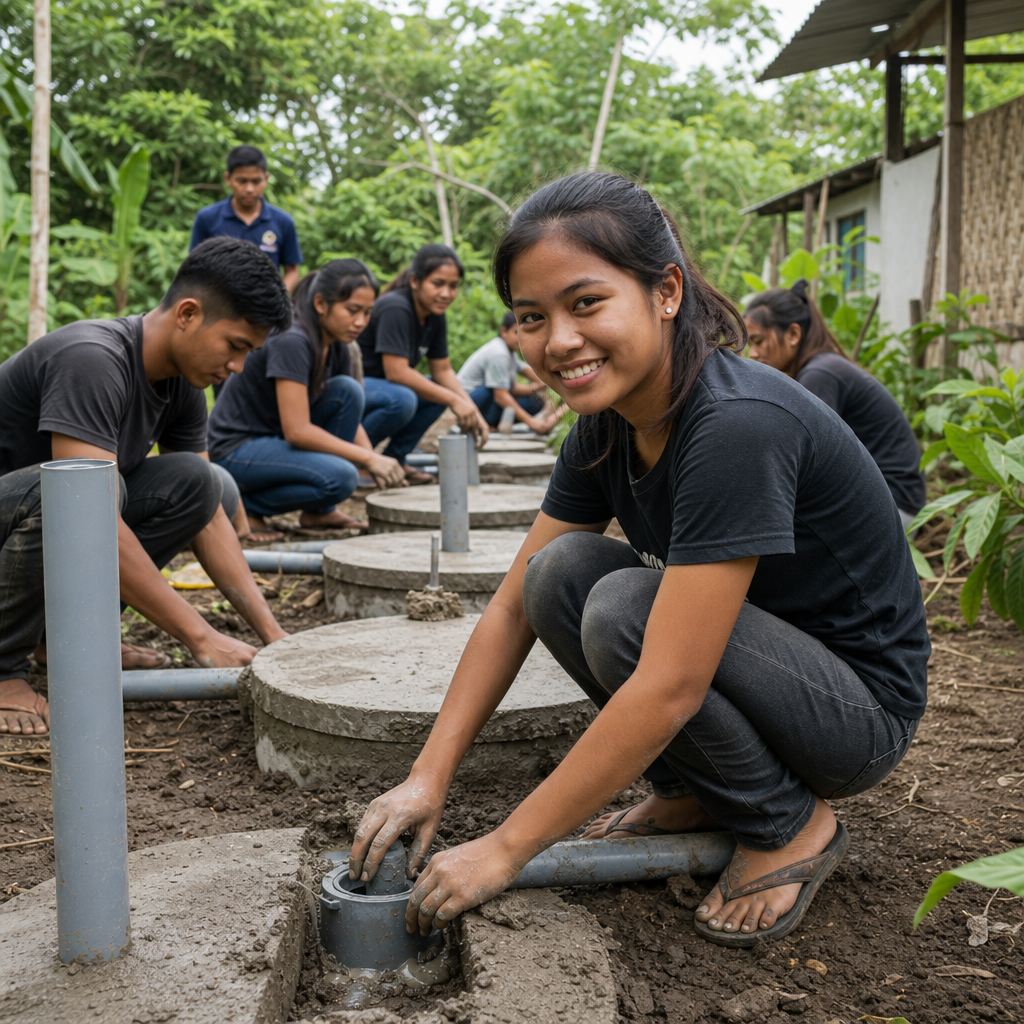
Photo essays are useful for documenting transformation. Show the old problem, such as overflowing pits, poor drainage, or unsafe toilet access. Then show the intervention, the training, and the outcome. Live sessions with health workers, sanitation engineers, or community leaders are ideal for handling difficult questions publicly. Polls can also be valuable. Asking “What is your biggest concern about EcoSan?” provides both engagement and research. Typical answers become the next educational series.
Consistency matters more than volume. One practical posting rhythm is three awareness posts per week, one myth-busting post, one local story, and one call to action tied to a meeting, demonstration, or training. That cadence keeps the topic visible without overwhelming audiences.
How to address stigma, myths, and resistance with credibility
Any serious EcoSan awareness campaign must plan for stigma. People may associate reuse with dirtiness, disease, poverty, or social inferiority. Those reactions should never be mocked. They must be addressed with respect, evidence, and repeated demonstration. The wrong approach is to tell people they are ignorant. The right approach is to explain how pathogen barriers work, which materials can be reused, under what conditions, and what standards or guidelines shape safe practice.
For example, if people say EcoSan toilets always smell, explain that odor usually comes from poor separation, excess moisture, inadequate cover material, or weak ventilation, not from the concept itself. If people say reuse is unsafe, explain that untreated waste is unsafe, while properly treated materials can be managed according to established health safeguards. If people think EcoSan is only for poor communities, show examples from schools, eco-lodges, water-scarce households, humanitarian settings, and sustainability-focused developments.
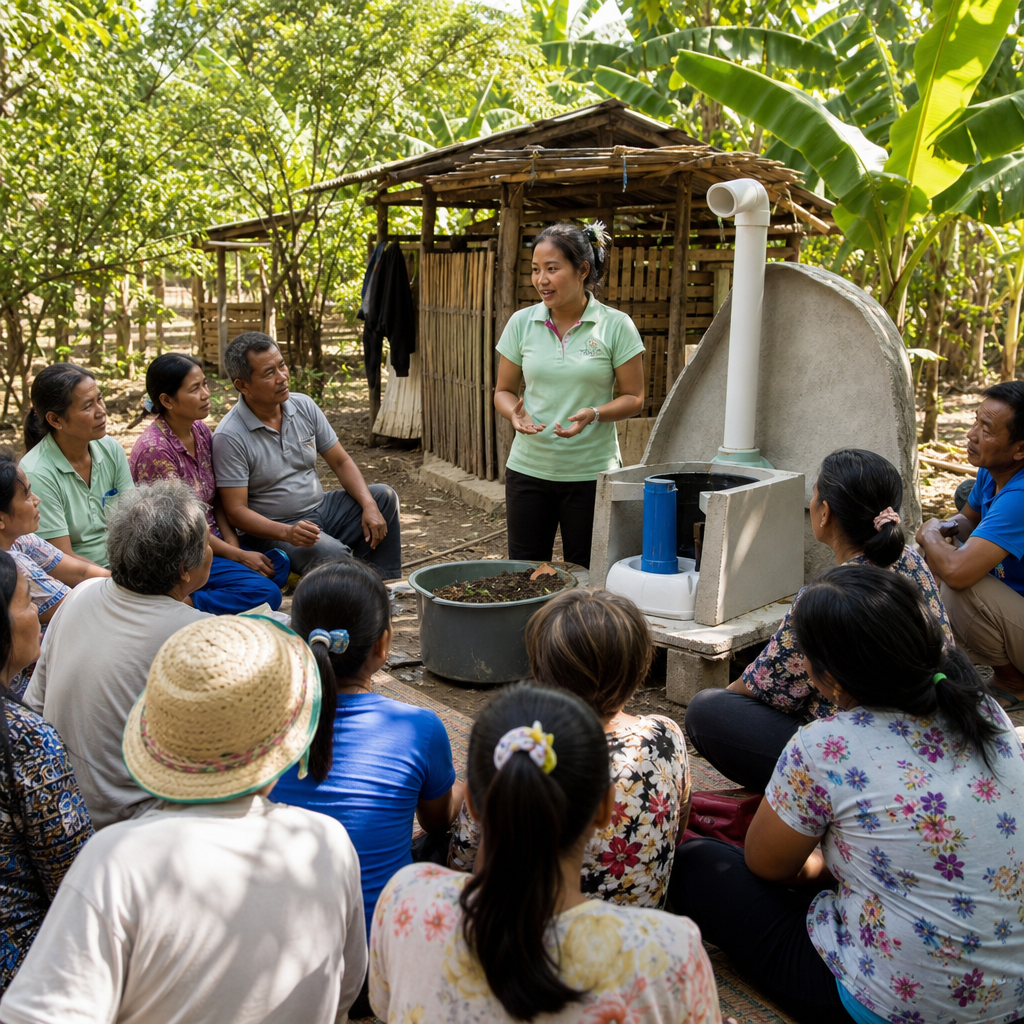
Local messengers are essential. Religious leaders, teachers, nurses, farmers, masons, and women’s group coordinators often persuade more effectively than institutional branding. In one campaign pattern that works repeatedly, a public health officer provides technical assurance, a local user provides lived experience, and a community organization provides the invitation to act. That combination reduces both technical doubt and social hesitation.
Credibility also depends on admitting limitations. EcoSan systems require user training, correct operation, periodic emptying or transfer, and clear responsibilities. They are not maintenance-free, and they are not ideal in every context. High groundwater, user preference, tenancy patterns, and weak supply chains can all complicate adoption. Balanced messaging makes campaigns more persuasive because communities can tell when advocates are being realistic.
Turning online awareness into offline community engagement
Awareness alone is not the goal. Social media should lead people toward real participation: attending a demonstration, joining a community discussion, visiting a pilot site, enrolling in caretaker training, or supporting a school sanitation project. The most successful EcoSan campaigns use digital content as the top of a ladder. First, they attract attention with simple educational posts. Second, they build trust with local stories and expert answers. Third, they ask for a specific action offline.
That action should be easy and visible. Invite residents to an open-house visit at a functioning EcoSan site. Promote a question-and-answer session with a health inspector and a local builder. Share sign-up links for youth ambassadors or neighborhood sanitation volunteers. Encourage schools to host student poster campaigns on water conservation and safe sanitation. Community awareness deepens when people physically see that the system is manageable and useful.
Measurement should go beyond likes and shares. Track attendance at events, direct messages requesting information, volunteer sign-ups, referrals from social posts to registration forms, and the number of community leaders willing to endorse the program. If one reel receives high views but no one attends the site visit, it raised curiosity but did not move behavior. If a WhatsApp reminder doubles turnout for a training session, that is a stronger indicator of awareness translating into action.
To strengthen this hub within a broader community engagement and education strategy, connect social advocacy to related resources on school engagement, household behavior change, local partnership building, sanitation training materials, and monitoring methods. That internal structure helps readers and project teams move from awareness to implementation without losing momentum.
Using social media to advocate for EcoSan is most effective when the goal is not simply posting more, but teaching better. Communities need clear explanations of what EcoSan is, why it protects health, how it conserves water, what safe reuse requires, and what daily operation actually looks like. They also need to hear those explanations from trusted local voices, supported by visible examples and honest answers to difficult questions. When advocacy combines practical education, community storytelling, and clear calls to action, social media becomes a bridge between sanitation concepts and community confidence.
As a hub for building community awareness, this topic should anchor every related effort under community engagement and education. Use it to guide message development, choose the right platforms, plan content formats, respond to myths, and connect online interest to offline participation. The main benefit is straightforward: stronger awareness leads to better acceptance, better participation, and a better chance that EcoSan systems will be used correctly and sustained over time. If you are planning an EcoSan outreach campaign, start by mapping your audience questions, choosing two or three core platforms, and publishing one local, practical explanation this week. Consistent education is what turns awareness into adoption.
Frequently Asked Questions
1. What is EcoSan, and why is social media a powerful tool for advocating for it?
EcoSan, or ecological sanitation, is an approach to sanitation that focuses on safely managing human waste in ways that protect public health, conserve water, recover nutrients, and support environmental sustainability. Instead of treating waste only as something to be flushed away or hidden, EcoSan recognizes that, when handled correctly, it can be transformed into useful resources such as soil amendments or composted material under controlled conditions. This is especially important in areas where sewer systems are limited, water supplies are unreliable, or communities need lower-cost, decentralized sanitation solutions that preserve dignity and improve health outcomes.
Social media is a powerful advocacy tool for EcoSan because it helps translate a topic that can seem technical, unfamiliar, or even uncomfortable into everyday language and relatable stories. Platforms like Facebook, Instagram, YouTube, WhatsApp, LinkedIn, and TikTok allow advocates to share visuals, short educational videos, myth-busting posts, interviews, community success stories, and practical demonstrations that show how EcoSan works in real life. Instead of relying only on reports or policy meetings, advocates can reach households, local leaders, teachers, health workers, journalists, and funders where they already spend time online.
Another major benefit is that social media makes two-way engagement possible. People can ask questions, express concerns, share local experiences, and learn from trusted experts and community voices. That interaction matters because sanitation advocacy is not just about awareness; it is about behavior change, trust, and local ownership. When EcoSan is presented clearly and respectfully through social media, it becomes easier to build public understanding around sanitation safety, resource recovery, climate resilience, and the connection between sanitation and human dignity.
2. What kinds of social media content work best when explaining EcoSan to the public?
The most effective EcoSan content is clear, practical, visual, and grounded in real community needs. Because sanitation can be misunderstood or stigmatized, content should focus on education without sounding overly academic or overly promotional. Short explainer videos, infographics, before-and-after project photos, animated diagrams, FAQs, and community testimonials tend to perform well because they make complex ideas easy to grasp. For example, a simple post showing how an ecological toilet saves water, reduces contamination, and supports safer waste treatment can often do more than a long technical explanation on its own.
Storytelling is especially valuable. Profiles of families, schools, health workers, farmers, or neighborhood organizations that have benefited from EcoSan can help audiences connect the concept to real people rather than abstract systems. A well-crafted story can highlight how EcoSan improves convenience, reduces exposure to unsafe waste, lowers dependence on expensive infrastructure, or supports local agriculture through nutrient recovery where appropriate and safely regulated. These human-centered messages build empathy and credibility, which are essential in advocacy work.
Educational series also work well. Instead of trying to explain everything in one post, advocates can create a sequence of content pieces such as “What EcoSan Means,” “How EcoSan Protects Water Sources,” “Common Myths About Reuse,” “How Safety Is Managed,” and “Why Community Participation Matters.” This helps audiences learn step by step. Content should also be tailored to the platform. Instagram and TikTok may favor short videos and carousels, Facebook may support longer community discussions, YouTube is useful for in-depth demonstrations, and LinkedIn is ideal for policy, research, and professional updates. The key is to keep the information accurate, respectful, and easy to share.
3. How can advocates address stigma, myths, and misinformation about EcoSan on social media?
Addressing stigma and misinformation requires a calm, factual, and respectful approach. EcoSan often raises questions because it involves topics that many societies do not openly discuss, including toilets, waste handling, smell, hygiene, and reuse. On social media, advocates should not dismiss these concerns. Instead, they should acknowledge that the questions are valid and then answer them with evidence, practical examples, and plain-language explanations. If people are worried about safety, for instance, explain the treatment processes, time requirements, protective measures, and standards that make safe resource recovery possible under controlled conditions. If they are worried about odor or cleanliness, show well-maintained systems and explain the operational practices that keep facilities sanitary and acceptable.
Myth-busting content can be highly effective when done carefully. Posts such as “Myth: EcoSan is dirty. Fact: Properly managed EcoSan systems are designed to improve hygiene and reduce contamination risks” can help correct false assumptions without sounding confrontational. It is also helpful to use visuals, expert quotes, field data, and case examples from schools, clinics, or communities that have successfully implemented EcoSan. When audiences see that the approach is already working elsewhere, it becomes easier to counter the idea that it is unrealistic or unsafe.
Consistency matters. Misinformation is rarely solved by a single post. Advocates should repeat core messages across formats and over time, especially around public health, maintenance, user training, and safe treatment. It is also wise to monitor comments and respond promptly to recurring misconceptions. Partnering with health professionals, engineers, environmental educators, local government representatives, and respected community leaders can strengthen credibility. When trusted voices reinforce the same message, social media advocacy becomes more persuasive and more resilient against misleading claims.
4. How do you create a social media advocacy strategy for EcoSan that actually leads to community engagement and action?
An effective EcoSan social media strategy starts with a clear objective. Advocacy can aim to raise awareness, shift public attitudes, encourage community participation, support fundraising, attract partners, influence policy, or promote adoption of specific sanitation practices. Defining the goal helps determine what content to create, who to target, and how success should be measured. For example, if the goal is community education, the strategy may focus on easy-to-understand videos and local-language posts. If the goal is influencing decision-makers, content may emphasize data, case studies, budget considerations, and policy relevance.
Audience identification is equally important. Different groups care about different aspects of EcoSan. Households may want to know about convenience, hygiene, and affordability. Farmers may be more interested in soil health and nutrient recovery where safe reuse is relevant. Local officials may focus on infrastructure gaps, public health outcomes, and cost-effectiveness. Donors and NGOs may look for evidence of impact, scalability, and community participation. A strong strategy adapts messaging for each audience while keeping the core facts consistent.
From there, advocates should build a content calendar that mixes education, engagement, and action-oriented posts. Educational content explains what EcoSan is and why it matters. Engagement content invites questions, runs polls, shares user stories, or hosts live sessions. Action-oriented content encourages people to attend a workshop, support a pilot project, join a campaign, or contact local leaders about sanitation needs. Posting consistently helps maintain momentum, but quality matters more than volume. Every post should serve a purpose.
Finally, measure results and adjust. Useful metrics include reach, shares, comments, watch time, click-throughs, event sign-ups, partnership inquiries, and direct community feedback. The most meaningful outcomes may be offline, such as increased attendance at sanitation meetings, stronger stakeholder support, or growing interest in EcoSan demonstrations. Social media works best when it is connected to real-world organizing, education, and implementation rather than treated as a stand-alone activity.
5. What are the most important best practices for communicating about EcoSan responsibly on social media?
Responsible communication about EcoSan begins with accuracy. Because sanitation directly affects health, water safety, environmental protection, and community trust, advocates should never exaggerate benefits or oversimplify technical realities. EcoSan is promising, but it depends on proper design, user education, operation, maintenance, and safe treatment protocols. Social media messaging should reflect that. It is better to explain both the opportunities and the conditions required for success than to make claims that are easy to challenge later. Credibility is one of the most valuable assets in sanitation advocacy.
Language and tone also matter. Conversations about sanitation should be respectful, culturally aware, and dignity-centered. Avoid language that shames communities for lacking infrastructure or frames users as uninformed. Instead, focus on shared goals such as health, safety, resilience, affordability, environmental stewardship, and dignity. When possible, communicate in local languages and use examples that reflect the daily realities of the communities you want to reach. People are more likely to engage when they feel seen and respected rather than lectured.
It is also important to protect privacy and represent communities ethically. If you share photos, interviews, or stories from households, schools, or sanitation sites, obtain consent and avoid content that could embarrass or exploit participants. Highlight community leadership, not just outside expertise. The strongest advocacy campaigns show people as active partners in problem-solving, not passive recipients of aid.
Finally, connect information to action. Responsible advocacy does more than generate likes or impressions; it helps people understand what they can do next. That may include learning more about ecological toilets, attending a community meeting, supporting maintenance training, participating in local planning, or collaborating with public health and WASH professionals. When social media communication is accurate, inclusive, practical, and action-oriented, it can play a meaningful role in advancing EcoSan in ways that are both effective and ethical.