Financial challenges shape every sanitation project, but they become especially important in ecological sanitation, where the goal is not only safe waste management but also resource recovery, climate resilience, and long-term affordability. Financial Challenges and Solutions in Sanitation Provision are therefore central to any serious discussion of Economic Strategies in EcoSan. In practice, EcoSan refers to sanitation systems designed to safely separate, treat, and reuse nutrients, water, and organic matter. These systems can include urine-diverting dry toilets, composting toilets, decentralized wastewater treatment, fecal sludge processing, and reuse pathways for fertilizer, soil conditioner, irrigation water, or energy. I have worked with sanitation cost models where a technically sound design failed because tariffs were unrealistic, operation budgets were absent, and reuse markets were assumed rather than built.
The financial side matters because sanitation is both a public service and an infrastructure investment with health, environmental, and agricultural effects. Conventional sewerage often depends on large capital budgets and long repayment horizons, while EcoSan can spread costs differently across households, service providers, municipalities, and end users of recovered products. Yet EcoSan is not automatically cheap. Upfront construction, behavior change, collection logistics, treatment quality assurance, and product marketing all create costs that many project appraisals understate. At the same time, the economic value of avoided disease, reduced fertilizer imports, lower water demand, and local job creation is frequently undervalued. A strong EcoSan financing strategy must therefore answer three questions directly: who pays, when do they pay, and what measurable value is created over time.
This hub article explains the main financial barriers in sanitation provision and the practical solutions used to overcome them in EcoSan programs. It covers capital expenditure, operating expenditure, tariffs, subsidies, blended finance, carbon and nutrient value, business models, risk allocation, and metrics that support better decisions. The objective is to give planners, utilities, NGOs, investors, and local governments a framework they can use to compare options, structure funding, and make systems last beyond the pilot phase.
Why sanitation financing is difficult in EcoSan
Sanitation financing is difficult because costs and benefits are distributed unevenly across time and institutions. A household may pay for a toilet today, a municipality may pay for transport and treatment later, and the health system may capture part of the benefit through lower disease burden. In EcoSan, another layer is added: the agricultural sector or informal market may benefit from compost, struvite, or treated water, but only if the products meet quality standards and a reliable supply chain exists. This fragmentation creates a classic financing gap. The actor bearing the cost is often not the same actor receiving the benefit.
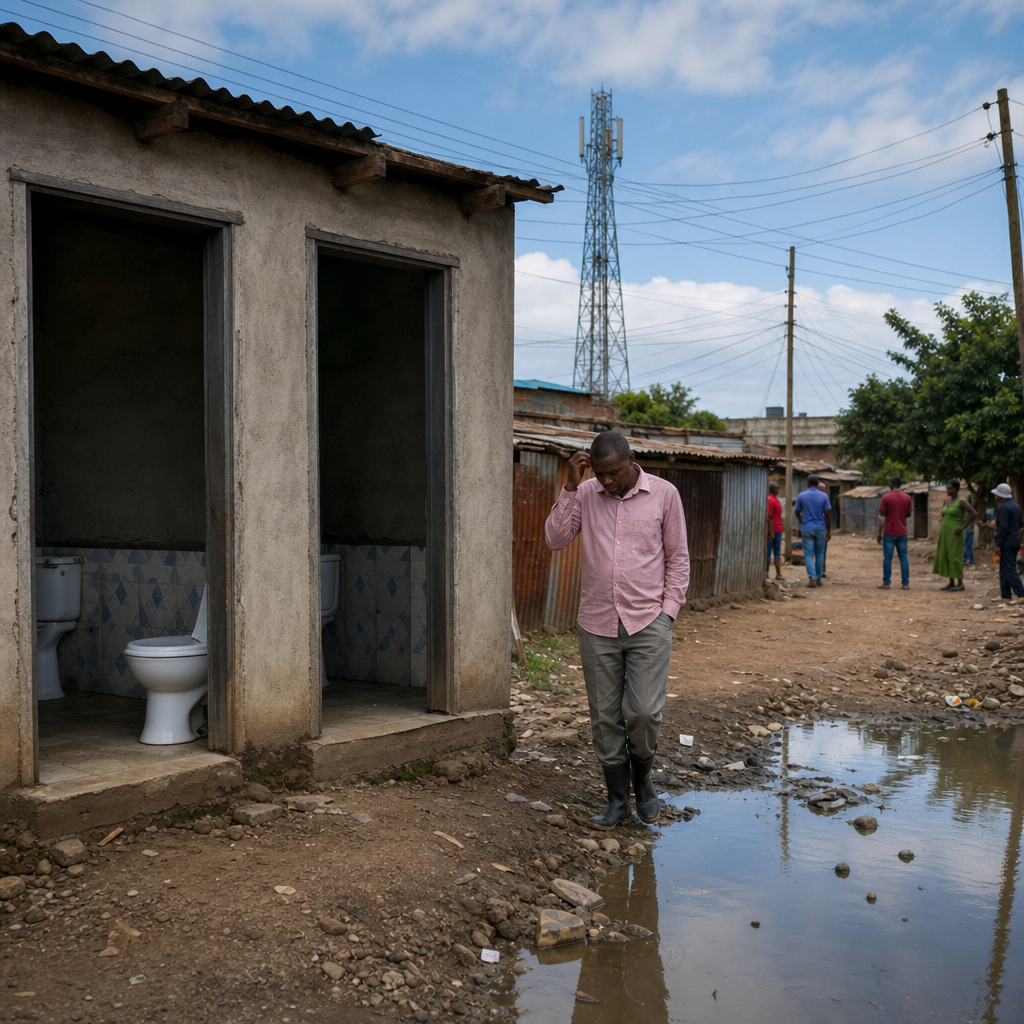
Another challenge is that sanitation revenue is usually weak relative to cost. Water utilities can bill metered consumption; sanitation services, especially off-grid ones, often rely on flat fees, property taxes, periodic desludging charges, or donor support. In many cities, willingness to pay is constrained by low incomes and by the fact that sanitation is less visible than water supply. I have repeatedly seen business plans assume universal fee collection rates above 90 percent when local collection performance for similar municipal services was under 60 percent. That gap turns a viable spreadsheet into a failing operation within a year.
EcoSan also faces a market development problem. Reuse products are frequently treated as automatic revenue streams, but fertilizer markets are competitive, farmers are cautious, and certification can be expensive. If compost quality varies, if transport to farms costs too much, or if social acceptance is low, expected sales collapse. Financial planning must therefore treat reuse revenue as conditional, not guaranteed, until product quality, logistics, and demand are demonstrated.
Understanding the real cost structure
The most common financial mistake in sanitation provision is focusing on toilet construction while neglecting the full service chain. For EcoSan, the complete chain includes containment, user interface, collection or emptying, transport, treatment, storage, quality monitoring, reuse distribution, and final safe disposal for residuals. Costs appear in capital expenditure and in operating expenditure, but they also arise through maintenance cycles, replacement of parts, compliance testing, operator training, and customer service.
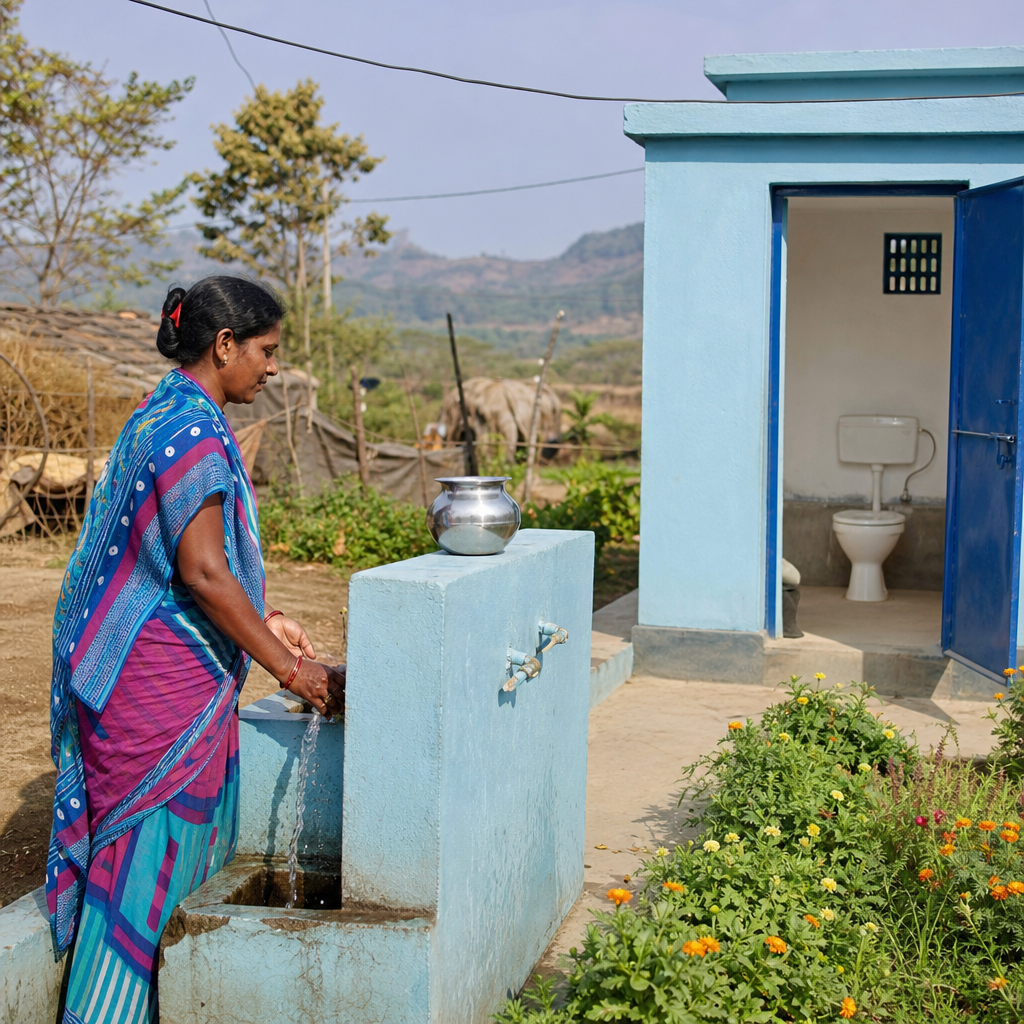
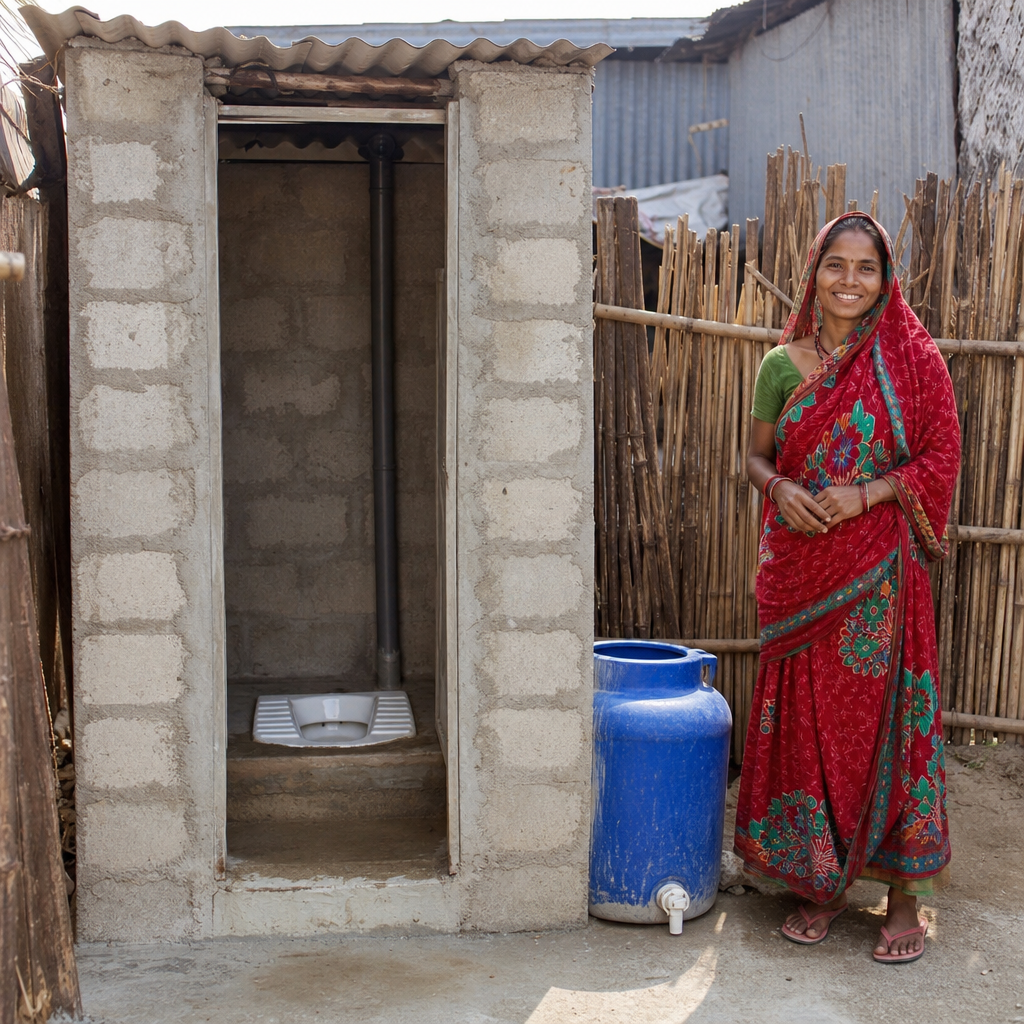
Capital expenditure can be lower than sewered systems in some settings because decentralized infrastructure avoids long pipe networks and large centralized plants. However, capital costs remain significant. Urine-diverting dry toilets require specialized pans, dual plumbing or storage provisions, superstructure, and training. Container-based sanitation requires sealed containers, transfer stations, and fleet systems. Small-scale treatment units may need lined drying beds, composting areas, reactors, dewatering equipment, or solar drying systems. The useful life of these assets differs, so depreciation schedules matter. Slabs may last fifteen years, but seals, carts, pumps, and protective gear may require replacement far earlier.
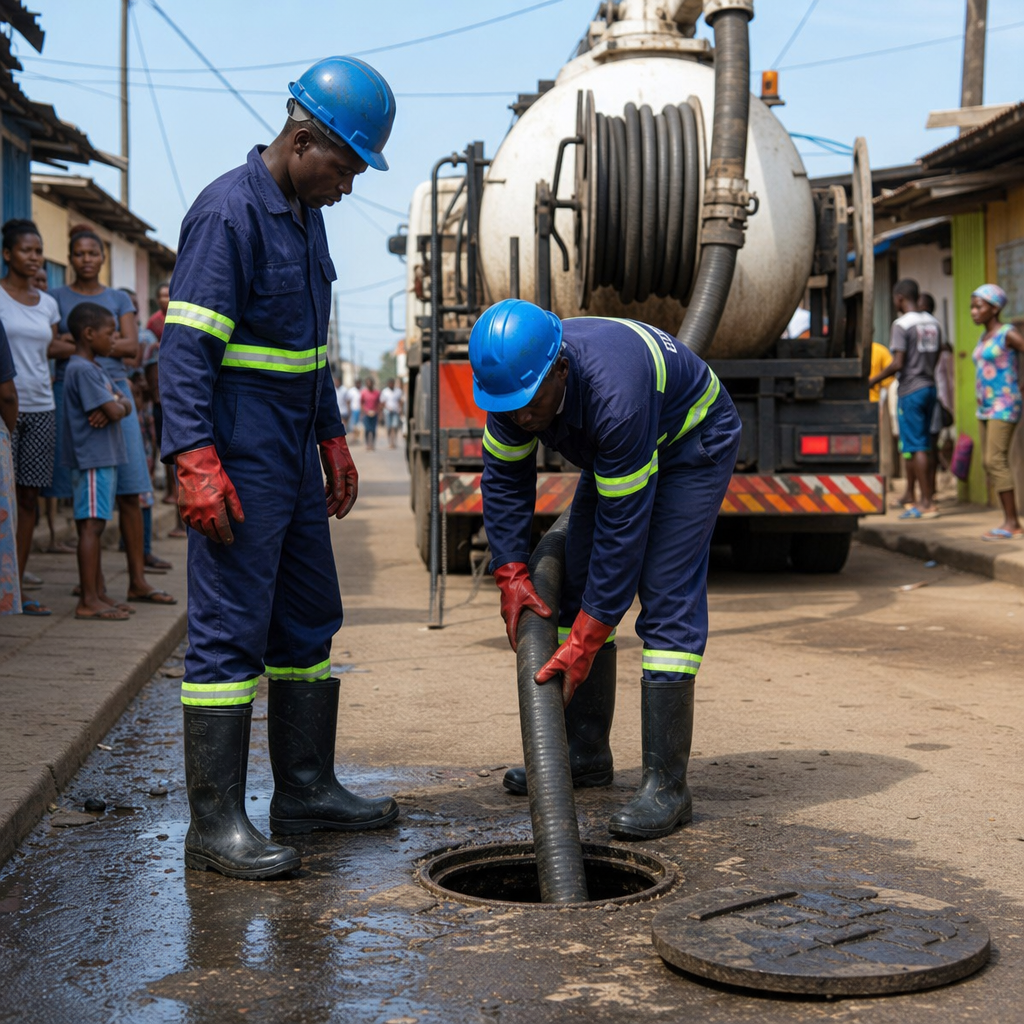
Operating expenditure is where many projects fail. Recurrent costs include labor, fuel, route management, treatment chemicals where applicable, laboratory testing, bulking agents for composting, bagging materials, marketing, and supervision. In dry systems, transport can dominate costs if collection density is low. In reuse models, product storage and seasonal demand mismatches can tie up working capital. Using life-cycle costing rather than upfront cost alone gives a much clearer picture of affordability and helps decision-makers compare EcoSan options fairly against septic tanks, simplified sewers, or conventional wastewater treatment.
| Cost component | Typical EcoSan issue | Financial implication | Practical response |
|---|---|---|---|
| Toilet construction | Higher unit cost for separation features | Upfront affordability barrier for households | Microfinance, targeted capital subsidy, phased upgrades |
| Collection and transport | Low density routes raise unit cost | High recurring operating expense | Route optimization, clustered service areas, transfer points |
| Treatment and monitoring | Need to prove pathogen reduction and product safety | Laboratory and compliance costs | Standard operating procedures and pooled testing contracts |
| Reuse product sales | Uncertain demand and price | Revenue volatility and inventory risk | Offtake agreements, product certification, diversified buyers |
Affordability, tariffs, and subsidy design
Affordability is not the same as low price. A sanitation service is affordable when users can pay without sacrificing essential needs and when the provider can sustain service quality. For EcoSan, tariff design must reflect actual service patterns. Some households need daily or weekly collection; others only periodic emptying. Some benefit from on-site reuse, while others depend on external service chains. A single flat fee often hides these differences and either under-recovers cost or excludes poorer users.
Well-designed subsidies are usually necessary, but they should be precise. Capital subsidies can help households adopt safe toilets where public health benefits justify support. Output-based aid can reimburse providers once verified service connections or safe treatment volumes are delivered. Cross-subsidies can shift part of the cost from higher-income users, commercial customers, or municipal tax bases. The key is to subsidize outcomes that have public value rather than permanently masking inefficient operations. In urban sanitation programs, I prefer separating social support from operational funding: help poor households access the service, but keep operator payments linked to measurable performance.
Tariffs also need a collection mechanism that works in the local economy. Mobile money, prepaid service bundles, rent-linked charges, and utility bill integration often perform better than occasional cash collection. Where households cannot bear full cost recovery, public finance must close the gap transparently. Hidden underfunding is not affordability; it is deferred system failure.
Blended finance and investment models
Most EcoSan systems need more than one funding source. Blended finance combines public funds, donor grants, concessional loans, commercial debt, equity, and household contributions so that each source covers the risk it is best suited to bear. Grants are useful for market creation, behavior change, and first-of-a-kind infrastructure. Concessional finance can support assets with public benefits and long payback periods. Commercial capital becomes more realistic when cash flow is proven through service contracts, municipal payments, or purchase agreements for reuse products.
Public-private partnership structures can work, but only if risks are allocated honestly. A small operator should not carry policy risk, land tenure risk, and demand risk simultaneously. Municipalities are usually better placed to handle regulation, land access, and minimum service obligations. Private operators may be more efficient in collection, treatment operations, product packaging, and customer management. Performance-based contracts are particularly valuable because they pay for outputs such as tons safely treated, households served, or compost meeting specification, rather than simply reimbursing inputs.
Microfinance and savings groups also have an important role. Household sanitation upgrades often stall because families cannot manage lump-sum payments even when long-term benefits are clear. Small loans tied to verified construction quality can unlock demand. In rural and peri-urban settings, cooperatives can pool borrowing for shared treatment or marketing infrastructure, reducing individual risk and improving scale.
Making resource recovery financially credible
Resource recovery is one of the strongest economic arguments for EcoSan, but it must be handled with discipline. Urine can supply nitrogen, phosphorus, and potassium. Compost and co-composted fecal sludge can improve soil organic matter. Anaerobic treatment can produce biogas. Dried sludge or biomass blends can become fuel in some markets. These outputs have value, yet that value depends on treatment quality, distance to users, nutrient concentration, moisture content, packaging, and regulation.
A credible business case starts with product-market fit, not engineering enthusiasm. If farmers currently buy urea and NPK blends, a recovered product must show either lower cost per nutrient unit, added soil benefits, or better availability. If transport costs exceed product value, sales will stagnate. I have seen composting sites with mountains of unsold material because planners assumed agriculture would absorb any volume. By contrast, the stronger projects begin with demand mapping, field trials, and offtake discussions before treatment capacity is finalized.
Quality assurance is the turning point between pilot novelty and dependable revenue. Standards from the World Health Organization, national fertilizer authorities, and biosolids regulations matter because buyers need proof of safety and consistency. Certification, nutrient analysis, and simple branding can raise prices, but only if the underlying process control is sound. EcoSan revenue from reuse should be treated as an enhancing income stream that improves resilience, not as the sole source of repayment unless long-term contracts already exist.
Managing risk, data, and long-term performance
Financial sustainability depends on risk management as much as funding volume. The main risks in EcoSan are construction defects, weak user adoption, irregular collection, treatment underperformance, regulatory change, commodity price shifts, and governance failure. Each risk should have an owner, a monitoring indicator, and a contingency plan. For example, if fuel price volatility threatens collection costs, contracts can include adjustment formulas or route redesign triggers. If product demand is uncertain, operators can maintain multiple sales channels rather than relying on one institutional buyer.
Good data changes financing terms. Lenders and public funders respond to evidence on service reliability, repayment behavior, sludge volumes, nutrient recovery rates, and customer retention. Digital tools such as GIS route planning, mobile work orders, remote fill-level monitoring, and simple enterprise resource planning systems can reduce leakage and improve reporting. Key performance indicators should include cost per household served, cost per ton safely treated, collection completion rate, downtime, laboratory compliance rate, and percentage of revenue from recurring contracts versus spot sales.
Scenario analysis is equally important. Decision-makers should test best case, base case, and stress case assumptions for tariffs, sales volumes, inflation, and replacement cycles. A sanitation model that works only under optimistic assumptions is not financeable. Long-term performance improves when asset management plans, reserve accounts, and scheduled reinvestment are included from the start rather than added after breakdowns occur.
Economic strategies that help EcoSan scale
The most effective Economic Strategies in EcoSan combine service-chain thinking with realistic finance. First, use life-cycle costing to compare alternatives, not just construction budgets. Second, match each cost to the party best able to pay: households for private convenience benefits, governments for public health and environmental externalities, and markets for verified resource recovery outputs. Third, build phased business models. Start in dense service zones, standardize operations, and prove quality before expanding. Fourth, secure policy alignment on standards, land, and procurement, because financial plans fail quickly in regulatory uncertainty.
Fifth, create demand on both sides of the system. Households need clear value, predictable fees, and trustworthy service. Farmers and industrial buyers need tested products, regular supply, and transparent specifications. Sixth, use targeted subsidies and results-based payments to support inclusion without distorting operations. Seventh, invest in management systems, because route discipline, maintenance routines, and revenue collection are as important as treatment technology.
EcoSan succeeds financially when it is treated neither as a charity project nor as a magic-profit venture. It is an essential public service with recoverable economic value, and the right structure recognizes both realities. For planners building the Economic Aspects hub, the practical lesson is simple: follow the money across the full sanitation chain, price risk honestly, verify value with data, and design finance around long-term service. Use that approach to assess your current model, then refine one financing decision at a time.
Frequently Asked Questions
Why is financing such a major challenge in sanitation provision, especially in ecological sanitation?
Financing is a major challenge in sanitation because the costs are spread across planning, construction, operation, maintenance, user training, monitoring, and long-term system upgrades, while the benefits often appear gradually and are shared across households, communities, utilities, farmers, and public health systems. In ecological sanitation, or EcoSan, this challenge is even more pronounced because the system is not limited to waste disposal. It is designed to recover nutrients, conserve water, reduce pollution, improve climate resilience, and create value from treated outputs. That broader purpose can produce important long-term returns, but it also means projects may require more careful design, stronger local capacity, and more coordination between sanitation, agriculture, environment, and public health stakeholders.
Another reason financing is difficult is that sanitation has historically been underpriced or treated as a low-visibility public service. Many users cannot afford high upfront costs, yet service providers cannot sustain reliable operations if tariffs are set too low. In low-income and informal settlements, this gap becomes especially severe. Households may rely on unsafe options because they are cheaper in the short term, even though they create much higher health, environmental, and economic costs over time. EcoSan systems can reduce these hidden costs, but investors and local governments still need practical ways to cover initial capital needs and manage financial risk.
The most effective response is usually a blended finance approach. This may combine public subsidies for public health outcomes, household contributions, microfinance for installation, donor or development finance for early-stage infrastructure, and revenue from resource recovery where feasible. Strong financial planning also requires life-cycle costing rather than focusing only on construction expenses. When decision-makers evaluate sanitation systems based on total cost of ownership, resilience, avoided medical costs, environmental protection, and possible reuse income, EcoSan often becomes much more financially credible and competitive.
What are the main cost barriers that prevent sanitation systems from being expanded or maintained successfully?
The main cost barriers include high upfront capital costs, weak revenue collection, inadequate maintenance budgets, poor cost recovery, and the frequent mismatch between who pays and who benefits. Infrastructure such as toilets, storage systems, treatment units, transport arrangements, and reuse facilities can require significant investment. Even where technologies are relatively simple, the supporting systems around them are not. Training operators, educating users, monitoring safety, organizing collection logistics, and maintaining equipment all create recurring expenses that are often underestimated during project planning.
A particularly common problem is the overemphasis on construction while neglecting operation and maintenance. Many sanitation projects receive funding to build facilities, but not enough to keep them functional over time. As a result, systems deteriorate, user trust declines, and communities may return to unsafe practices. In EcoSan, this issue can be especially important because source separation, safe handling, treatment quality, and reuse protocols all depend on consistent management. If financial plans do not include long-term service delivery costs, even technically sound systems can fail.
There are also affordability barriers at the household level. Families may not be able to pay for toilet construction, connection fees, emptying services, or regular user charges. For small municipalities and local service providers, the challenge is similar: they may lack access to credit, have limited technical staff, and face political pressure to keep tariffs unrealistically low. Solutions typically include phased investment models, targeted subsidies for vulnerable groups, pay-as-you-go service structures, output-based aid, and transparent tariff design linked to service quality. Successful sanitation finance depends on aligning capital investment with long-term maintenance funding and making sure that affordability measures support inclusion without undermining system sustainability.
Can ecological sanitation systems generate revenue and reduce long-term costs?
Yes, ecological sanitation systems can generate revenue and reduce long-term costs, but the results depend heavily on local markets, regulations, user acceptance, and the quality of system management. The core idea behind EcoSan is that human waste streams can be treated as resources rather than as materials to be discarded. Nutrients can potentially be recovered for agriculture, organic matter can contribute to soil improvement, and in some systems water can be reused for non-potable purposes. Where these outputs meet safety standards and there is real demand, they can offset part of the cost of sanitation services.
That said, it is important to be realistic. Resource recovery rarely pays for the entire sanitation system on its own, especially in the early years. Collection, treatment, storage, certification, transport, and market development all involve costs. In many places, the economic value of recovered nutrients is real but not immediately captured because supply chains are weak or regulations are unclear. Even so, EcoSan can still create major financial advantages by reducing dependence on water-intensive infrastructure, lowering fertilizer demand, decreasing waste transport burdens, and reducing environmental damage that would otherwise require expensive remediation.
The strongest financial case often combines direct and indirect benefits. Direct benefits may include revenue from compost-like products, treated urine, soil conditioners, or service fees. Indirect benefits can be even more important: lower disease burden, reduced groundwater contamination, improved agricultural productivity, better drought resilience, and avoided infrastructure strain. For this reason, the best financial assessments do not ask only whether EcoSan produces a saleable product. They ask whether the system improves total economic performance over time. In many contexts, the answer is yes, particularly when projects are integrated with agriculture, water management, and local circular economy strategies.
What financing models work best for sustainable and inclusive sanitation provision?
The most effective financing models are usually those that combine multiple funding sources rather than relying on a single payer. Sanitation generates both private and public benefits, so it makes sense for costs to be shared. Households benefit from convenience, safety, and dignity. Communities benefit from cleaner environments. Governments benefit from reduced public health burdens. Farmers and local enterprises may benefit from recovered resources. Because the value is distributed, sustainable sanitation finance often works best through blended models that reflect this shared benefit structure.
In practice, this can include public funding for infrastructure with strong public health value, concessional loans or grants for system development, microfinance for household facilities, and service-based tariffs for ongoing operation. Results-based financing can be useful where providers are rewarded for verified performance, such as safely managed containment, treatment compliance, or service coverage in underserved areas. Cross-subsidies can also help, with higher-income users or commercial customers supporting broader access. In urban areas, sanitation utilities may combine user fees, municipal support, and climate or environmental finance. In rural settings, community financing and cooperative ownership models can be effective if they are matched with technical support and clear governance.
For EcoSan specifically, financing models are strongest when they recognize resource recovery as one component of the business model rather than the sole one. Projects often become more bankable when sanitation services are linked with agricultural reuse programs, local enterprise development, or resilience initiatives. Climate adaptation funds, green investment programs, and circular economy financing can sometimes support EcoSan because these systems contribute to water conservation, nutrient recycling, and emissions reduction. The key is to structure finance around actual service delivery and life-cycle sustainability, not just construction targets. Inclusive sanitation succeeds when financial design is realistic, transparent, and tailored to the incomes, risks, and incentives of the people involved.
How can governments, utilities, and communities make sanitation projects financially resilient over the long term?
Long-term financial resilience starts with planning for the full life cycle of the sanitation system. That means budgeting not only for installation, but also for training, routine maintenance, repairs, replacement parts, monitoring, safe emptying or collection, treatment oversight, and adaptation as population needs change. Too many sanitation projects are designed around capital expenditure alone, which creates a short-term success story but a long-term financial problem. Resilient sanitation systems are those with dependable revenue streams, clear institutional responsibilities, realistic maintenance plans, and contingency funding for disruptions.
Governments play a central role by establishing policy frameworks, quality standards, subsidy rules, and financing mechanisms that encourage safe and affordable services. Utilities and service providers need cost accounting systems that show what service actually costs and where inefficiencies occur. Communities need to be involved early so that systems are acceptable, usable, and supported over time. In EcoSan, financial resilience also depends on protecting the value chain around resource recovery. If reuse products are part of the model, there must be standards, training, market development, and public communication to build trust and demand.
Practical strategies include indexing tariffs or service fees to inflation where appropriate, creating maintenance reserves, using digital payment systems to improve collection, and setting performance indicators tied to both technical and financial health. Diversifying income sources can also help. A sanitation provider that depends entirely on one subsidy stream or one user payment model is more vulnerable than one that combines fees, municipal transfers, targeted support, and reuse-related income. Finally, regular monitoring and financial review are essential. Sanitation systems operate in changing social, economic, and climate conditions. Projects remain financially resilient when stakeholders are willing to adjust tariffs, revise service models, strengthen partnerships, and invest in local capacity before small financial gaps become system failures.