Resource recovery in sanitation turns human waste from a disposal problem into a stream of usable products, and that shift has major economic and environmental consequences for cities, utilities, farmers, and households. In ecological sanitation, often shortened to EcoSan, the central idea is simple: nutrients, organic matter, water, and energy should be recovered wherever practical instead of being lost through linear sewerage and disposal systems. I have worked on sanitation business cases where the technical discussion focused too narrowly on toilets or treatment units, while the real success factors were market demand, collection logistics, pricing, regulation, and customer trust. That is why economic strategies in EcoSan deserve hub-level treatment. They connect engineering performance to bankable revenues, public savings, climate outcomes, and long-term service reliability. Resource recovery in sanitation matters because conventional sanitation is expensive, energy intensive, and often incomplete in low-income and rapidly urbanizing settings. At the same time, agriculture needs fertilizer, industry needs water, and energy systems need local feedstocks. Recovering compost, struvite, biogas, black soldier fly protein, reclaimed water, and soil amendments can reduce pollution loads, lower fertilizer imports, create jobs, and improve cost recovery. The economic question is not whether resources exist in waste streams; they do. The question is how to design viable value chains that capture them consistently, safely, and at a scale that fits local demand.
Why resource recovery changes sanitation economics
Traditional sanitation economics usually treats excreta management as a cost center. Utilities and municipalities budget for containment, emptying, transport, treatment, and disposal, then struggle to recover enough tariff or tax revenue to cover operating costs. Resource recovery in sanitation changes that equation by introducing products and avoided costs. The products may include compost, pelletized fertilizer, struvite, irrigation water, biogas, biomethane, electricity, biochar, larvae meal, or construction materials made from ash or dried sludge. Avoided costs can be just as important: lower landfill tipping fees, reduced nutrient discharge penalties, lower synthetic fertilizer purchases, and reduced fuel spending where biogas replaces LPG, diesel, or firewood.
In practice, the strongest business cases combine several value sources instead of depending on a single product. A fecal sludge treatment plant that sells only compost may struggle if seasonal demand fluctuates. The same facility can perform better when gate fees, municipal service payments, carbon benefits, and year-round contracts with farmer cooperatives are added. I have seen projects fail when planners assumed compost revenue would finance the whole chain. Compost is often a useful revenue supplement, but collection efficiency, treatment uptime, and downstream market development usually determine whether the model survives. Good economic strategy starts by mapping every cost and every recoverable value across the full sanitation service chain.
Core economic strategies in EcoSan
Economic strategies in EcoSan can be grouped into six practical levers: cost reduction, revenue diversification, market shaping, risk allocation, policy support, and service integration. Cost reduction means selecting technologies that fit local operating capacity and feedstock characteristics. Urine diversion, source separation, decentralized drying, and low-energy treatment can sharply reduce transport and processing costs when settlement patterns make sewerage unrealistic. Revenue diversification means building multiple customer groups and payment mechanisms. A utility may earn from user fees, municipal contracts, fertilizer sales, power export, and tipping fees rather than from one fragile source.
Market shaping is essential because recovered products often enter markets already dominated by subsidized alternatives. Farmers compare recovered fertilizer against urea, DAP, manure, and compost from other sources. Industrial users compare reclaimed water against freshwater abstraction. To compete, EcoSan operators need quality assurance, reliable supply, and product formats that fit existing buying habits, such as bagged pellets instead of loose compost. Risk allocation matters because sanitation infrastructure is capital intensive and demand can be uncertain. Public-private partnerships work best when governments retain policy and service obligation risk while private operators handle performance risk they can actually control. Policy support includes procurement rules, discharge standards, reuse guidelines, and tax treatment for recycled products. Service integration links sanitation with agriculture, solid waste, water reuse, and energy planning so that recovered outputs have stable off-take channels.
The hub role of this topic is to frame those levers systematically. Every EcoSan project, whether it is a urine-diverting toilet program, a biogas plant using sludge co-digestion, or a non-sewered sanitation service model, eventually comes back to the same strategic questions: Who pays for collection? What product will buyers trust? How is quality verified? Which costs are fixed, which are variable, and which can be shared with another service? Sound answers create resilient economics.
Revenue models and value chain design
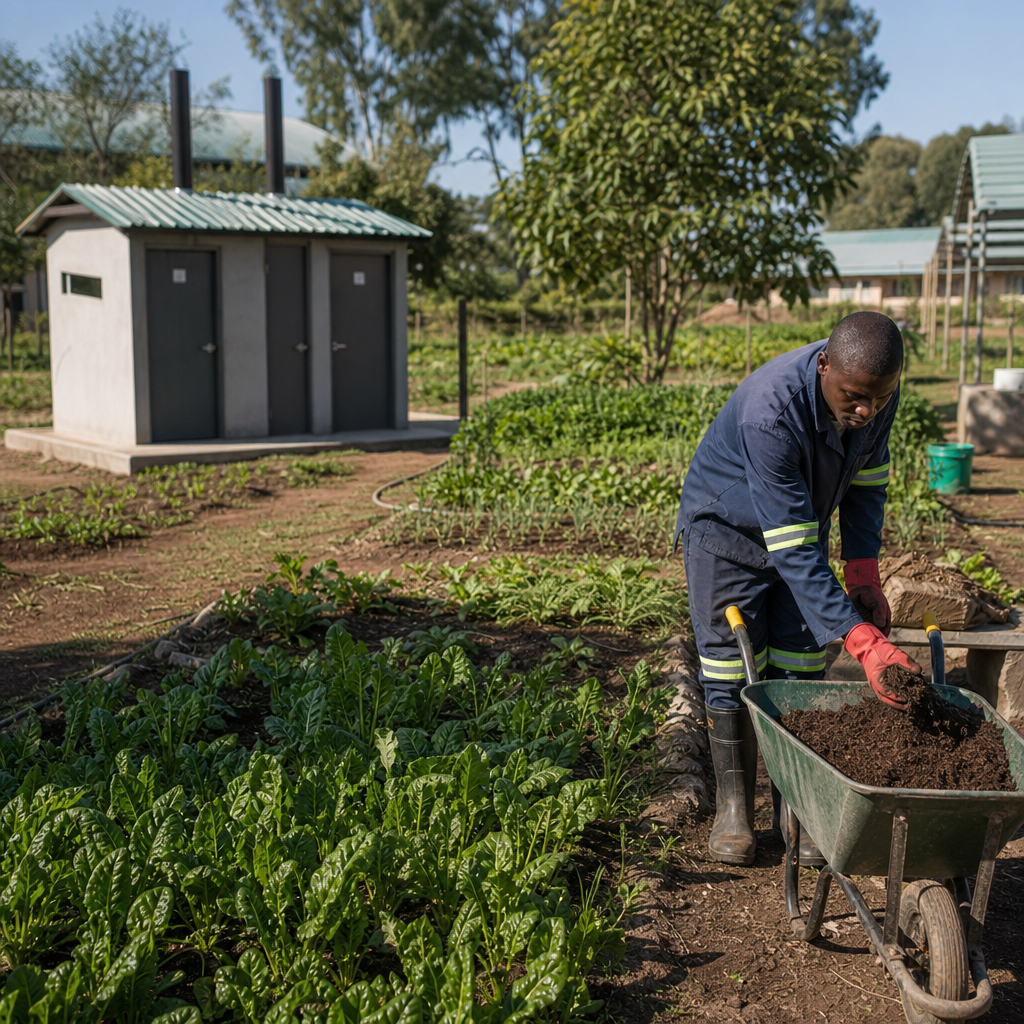
The most bankable resource recovery systems start with value chain design, not equipment selection. Begin by identifying feedstock quantity, contamination risk, transport distance, processing requirements, and realistic buyers. Then define who captures value at each step. In fecal sludge composting, for example, households pay for emptying, transporters earn service fees, treatment operators receive tipping or treatment payments, and distributors sell the final amendment to farms, nurseries, or landscaping firms. In urine recovery, value may lie in concentrated nutrient products, but only if collection containers, storage, and application protocols are acceptable to users and farmers.
Named business model tools help structure this analysis. The business model canvas clarifies customer segments, channels, key activities, and cost structure. A levelized cost analysis shows the full cost per ton of sludge treated, per cubic meter of reclaimed water sold, or per kilogram of nutrient recovered. Net present value and internal rate of return matter for investors, but in sanitation I also insist on public finance metrics such as cost per person safely served and avoided health or environmental expenditure. These systems deliver private and public value simultaneously, and reducing the analysis to commercial sales alone understates their benefit.
Examples from practice illustrate the point. Sanergy in Kenya built a container-based sanitation and resource recovery model around dense urban settlements, combining toilet franchising, waste collection, and conversion into agricultural inputs and insect-based products. In Senegal, structured fecal sludge management has shown that coordinated emptying, transfer, and treatment can improve both service quality and financial performance. In Europe, struvite recovery at wastewater plants has been justified not only by fertilizer sales but by reduced scaling in pipes and digesters, which cuts maintenance costs. Each case works because the revenue model fits a specific operational context rather than an abstract ideal.
Environmental returns that strengthen the economic case
Environmental benefits are not side effects; they are core economic assets when measured properly. Resource recovery in sanitation reduces nutrient pollution, lowers greenhouse gas emissions, conserves freshwater, and returns carbon and organic matter to soils. These outcomes have direct economic implications. Preventing nitrogen and phosphorus discharge reduces eutrophication damage in rivers and lakes, protecting fisheries, tourism, and drinking water treatment budgets. Capturing methane through anaerobic digestion avoids uncontrolled emissions and can displace fossil fuels. Reclaimed water reduces pressure on aquifers, a growing concern in water-scarce regions. Soil amendments improve water retention, which matters financially where climate variability is increasing irrigation costs and crop risk.
Life-cycle assessment is useful here because it compares whole-system impacts instead of focusing only on plant boundaries. A treatment option with low capital cost may create higher emissions or nutrient losses across the chain. Conversely, a source-separating system may look more complex upfront but produce better long-term results if it avoids dilution, preserves nutrient concentration, and lowers pumping energy. I have used life-cycle costing alongside life-cycle assessment to show decision-makers that the lowest bid is rarely the lowest total cost. Once fertilizer substitution, emission reductions, and water savings are included, recovery-oriented systems become much more competitive.
| Recovered output | Main environmental gain | Economic implication | Typical constraint |
|---|---|---|---|
| Compost or co-compost | Returns nutrients and organic matter to soil | Improves yields and soil moisture retention, reduces fertilizer spending | Bulk transport and variable quality |
| Struvite | Captures phosphorus in concentrated form | Creates a premium fertilizer product and reduces pipe scaling | Chemical dosing and market familiarity |
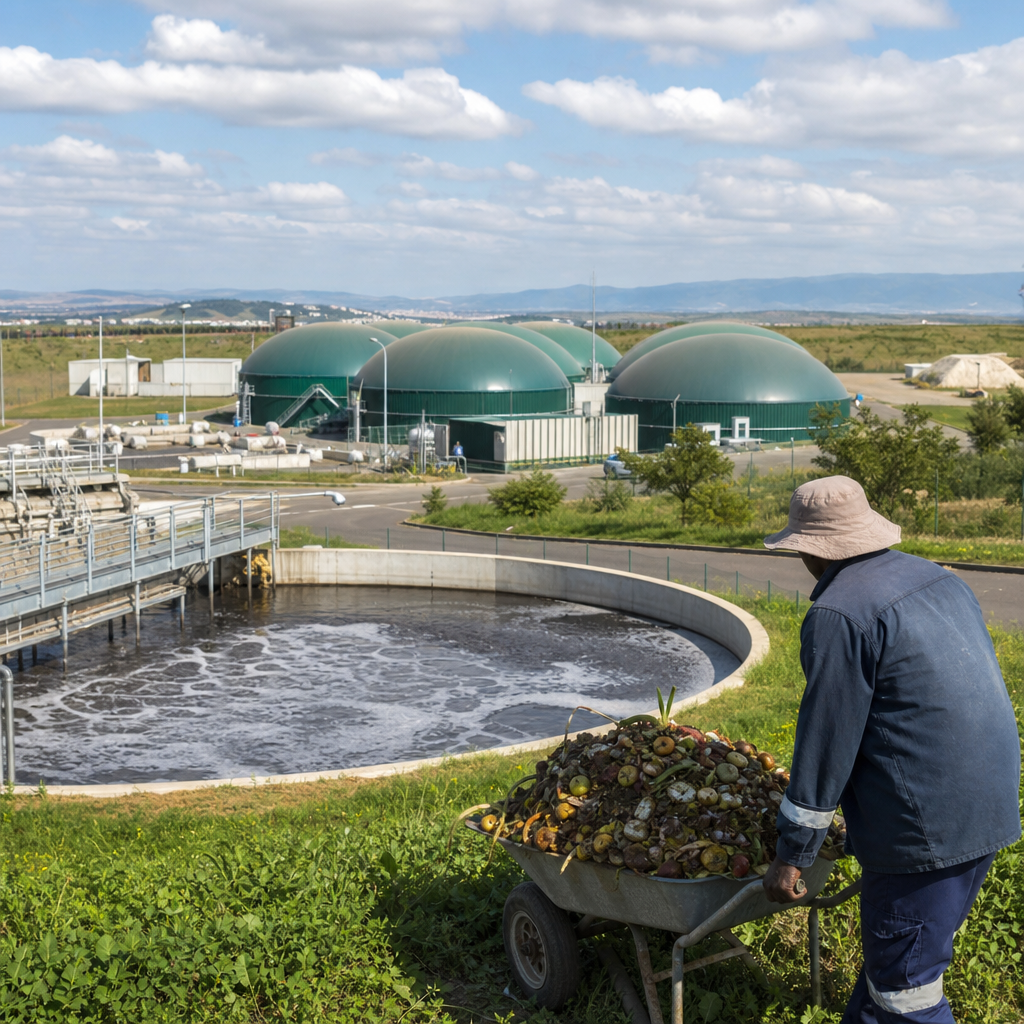
| Biogas | Captures methane and displaces fossil fuel use | Provides heat, cooking fuel, electricity, or vehicle fuel | Feedstock consistency and gas use infrastructure |
| Reclaimed water | Reduces freshwater abstraction and discharge | Supports irrigation and industrial reuse where water is scarce | Distribution networks and user acceptance |
Financing, pricing, and policy instruments
Financing EcoSan requires blending capital sources because sanitation delivers mixed public and private benefits. User tariffs alone rarely fund network expansion, treatment capacity, and product market development. Common capital sources include municipal budgets, development finance, concessional loans, climate funds, and private equity for commercially promising segments. Results-based financing can work when outputs are measurable, such as tons treated, toilets maintained, or cubic meters of water reused. Carbon finance has selective potential, especially for methane capture or fuel substitution, though verification costs and price volatility mean it should be treated as upside, not the foundation of the model.
Pricing strategy must reflect willingness to pay on both the sanitation and product side. Households generally pay for convenience, reliability, and status more than for abstract treatment outcomes. Farmers pay for nutrient value, consistency, and field performance. That is why certification, packaging, and extension support matter. A recovered fertilizer with clear nutrient labeling and application guidance will sell better than an undefined soil product, even if the agronomic value is similar. For utilities, tariff design can include cross-subsidies, fixed service charges, and sanitation surcharges on water bills where legal frameworks allow. For non-sewered systems, subscription models often stabilize cash flow better than pay-per-emptying arrangements.
Policy instruments determine whether recovered products can compete fairly. Governments can set reuse standards aligned with World Health Organization guidance, define biosolids quality classes, support public procurement of compost for parks and roadside greening, and remove unnecessary regulatory barriers for safe recycled inputs. They can also price pollution credibly. When nutrient discharge is free, recovery products are forced to compete against a distorted market. When environmental externalities are partially internalized through permits, standards, or incentives, the economics improve materially. Strong policy does not replace operational discipline, but without it many promising systems remain pilot projects.
Implementation challenges and how to manage them
The biggest implementation challenge is usually not technology failure but weak coordination across institutions and markets. Sanitation departments, agricultural agencies, environmental regulators, and private operators often pursue different objectives with different budgets. A hub strategy for economic aspects therefore needs governance design. Clear roles for licensing, monitoring, service payments, land allocation, and product approval reduce transaction costs and investor uncertainty. Digital tools can help. Route optimization for sludge transport, mobile payment platforms for subscriptions, and laboratory information systems for product quality tracking all improve operational control.
Quality assurance is non-negotiable. Recovered products must meet safety standards for pathogens, heavy metals, moisture, and nutrient content where applicable. One contamination incident can damage market confidence for years. Demand development is equally important. Farmers may accept recovered products once they see side-by-side field trials, understand nutrient release characteristics, and trust the supplier. Urban customers buying briquettes or energy products need simple proof that they are affordable, reliable, and safe. Supply chain discipline matters because missed collection schedules, variable moisture content, or inconsistent packaging can destroy repeat business even when the underlying recovery concept is sound.
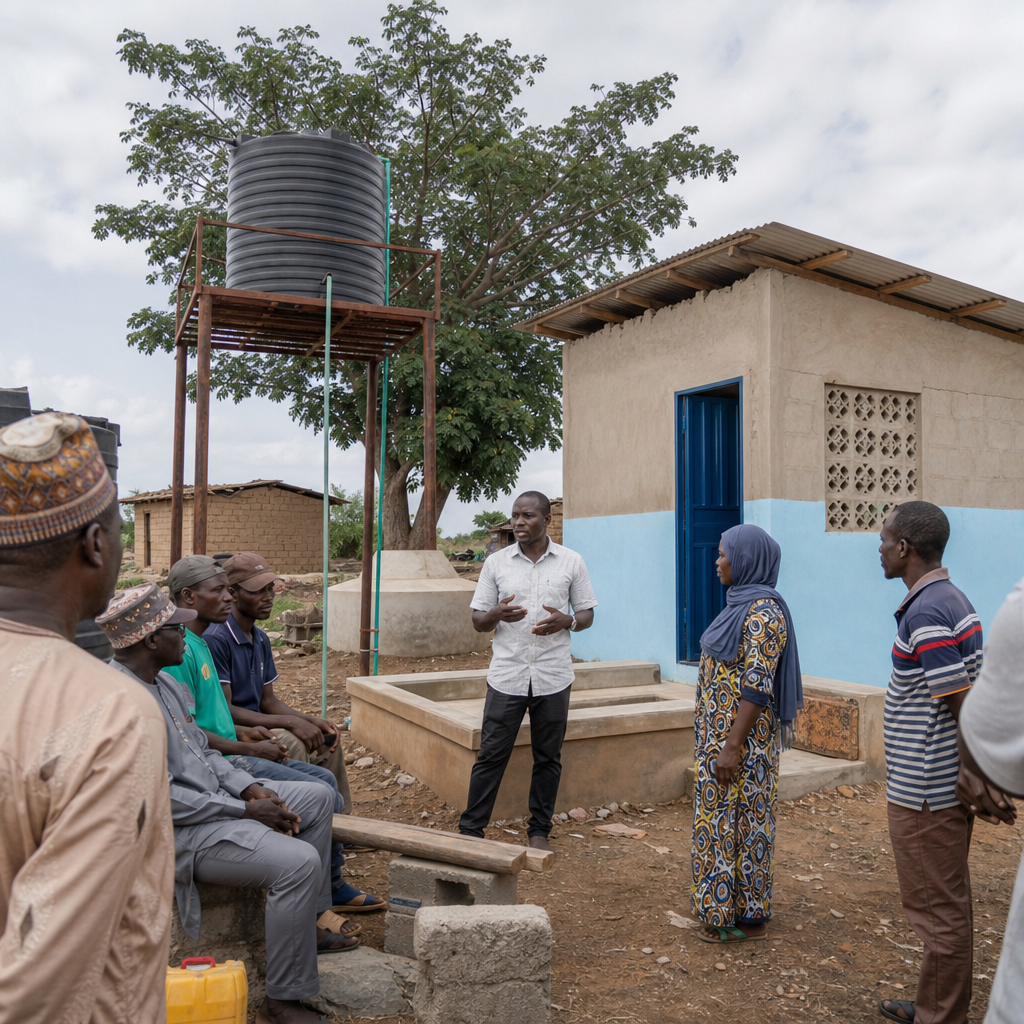
Scale should be chosen carefully. Centralized plants benefit from economies of scale but depend on reliable transport and feedstock volumes. Decentralized systems can match local reuse demand and reduce haulage, yet they require stronger distributed management. There is no universal best model. Dense informal settlements may favor container-based sanitation or transfer stations linked to regional treatment. Secondary towns with nearby agriculture may support composting and co-composting. Industrial parks may justify high-grade water reuse. The right EcoSan strategy starts with settlement form, market geography, regulation, and operator capacity, then selects technology accordingly.
Building a durable EcoSan economic roadmap
A durable roadmap for resource recovery in sanitation begins with baseline data and ends with adaptive management. First, quantify current waste flows, service gaps, treatment performance, disposal costs, environmental liabilities, and nearby demand for nutrients, water, and energy. Second, identify priority recovery pathways based on feasibility, not trend. Third, run scenario analysis that compares business-as-usual against phased recovery investments. Fourth, secure early off-take agreements and quality protocols before commissioning infrastructure. Fifth, monitor both service and market indicators: collection coverage, plant uptime, pathogen reduction, unit treatment cost, sales conversion, repeat buyers, and customer complaints.
For decision-makers, the key takeaway is straightforward: economic strategies in EcoSan succeed when sanitation is planned as an integrated service business with measurable environmental returns, not as an isolated treatment asset. The strongest models combine public finance for core health protection with commercial discipline for product development and operations. They recognize tradeoffs, price risk honestly, and build trust through standards and consistent delivery. If you are developing this subtopic, start by mapping your local sanitation value chain, quantify recoverable products, and test one market-backed recovery pathway with rigorous performance data. That is how resource recovery moves from concept to durable economic value.
Frequently Asked Questions
What does resource recovery in sanitation actually mean, and why is it economically important?
Resource recovery in sanitation means treating human waste and wastewater not simply as material to be disposed of, but as a source of valuable outputs such as fertilizer nutrients, soil amendments, reclaimed water, biogas, heat, and in some cases electricity or marketable fuels. In practical terms, this shifts sanitation from a purely cost center into a system that can generate economic value. Nutrients like nitrogen, phosphorus, and potassium can be recovered and reused in agriculture. Organic matter can be converted into compost or soil conditioners. Sludge and other organic wastes can be digested to produce biogas for cooking, heating, or power generation. Water can be treated for irrigation, industry, or groundwater recharge where regulations and infrastructure allow.
The economic importance comes from both revenue creation and cost reduction. Utilities and municipalities may lower disposal costs, reduce landfill dependence, cut energy bills through on-site generation, and offset purchases of chemical fertilizers or freshwater. Farmers may gain access to locally available nutrient sources that are often less exposed to global price volatility than imported fertilizers. Households and service providers may benefit from sanitation business models built around collection, treatment, product processing, and resale. In growing cities, these savings can be significant because conventional sewer expansion, centralized treatment, and sludge disposal are all capital-intensive. Resource recovery can improve the financial case for sanitation investments by creating products with market value while also lowering long-term operating costs.
What kinds of products can be recovered from sanitation systems, and who typically benefits from them?
Sanitation systems can produce a surprisingly wide range of recoverable products, depending on the technology, level of treatment, and local market conditions. The most common categories are nutrients, organic matter, water, and energy. Nutrient recovery may result in compost, urine-based fertilizers, struvite, or treated biosolids that return phosphorus, nitrogen, and micronutrients to soil. Organic matter recovery can improve soil structure, water retention, and carbon content, which is especially valuable in degraded agricultural areas. Water recovery can support irrigation, landscaping, industrial cooling, or other non-potable uses, easing pressure on scarce freshwater supplies. Energy recovery often takes the form of biogas from anaerobic digestion, which can be used directly or upgraded for electricity and heat.
The beneficiaries vary across the value chain. Farmers benefit from lower-cost nutrient and soil amendment products. Utilities benefit from reduced sludge handling costs, energy offsets, and in some cases product sales. Cities benefit when sanitation systems become more financially resilient and environmentally compliant. Households may benefit through improved service coverage, lower public health risks, and access to decentralized sanitation options where sewer networks are unrealistic or unaffordable. Private operators, social enterprises, and informal service providers may benefit by participating in collection, transport, treatment, processing, and distribution. The key point is that resource recovery works best when these benefits are clearly linked to viable local demand, quality standards, and logistics that connect sanitation outputs to actual end users.
How does resource recovery in sanitation help the environment?
The environmental benefits are substantial because resource recovery reduces the amount of waste that is discharged, dumped, or lost without productive use. When nutrients from human waste enter rivers, lakes, or coastal waters untreated, they contribute to eutrophication, algal blooms, oxygen depletion, and long-term ecosystem damage. Recovering those nutrients before discharge helps prevent pollution while putting them back into productive use. Similarly, diverting organic matter into composting or anaerobic digestion reduces uncontrolled decomposition, which can otherwise release methane and odors in unmanaged disposal sites.
Resource recovery also supports circular economy principles by replacing virgin inputs with reused materials. Recovered fertilizers can reduce dependence on mined phosphorus and energy-intensive synthetic nitrogen production. Reclaimed water can lessen withdrawals from groundwater or surface water sources, an increasingly important advantage in water-stressed regions. Energy recovery from sanitation can reduce fossil fuel use and lower greenhouse gas emissions, especially when biogas replaces diesel, charcoal, or grid electricity with a high carbon footprint. Beyond emissions and pollution control, there are also land-use and resilience benefits. Healthier soils from organic amendments can improve water retention, reduce erosion, and support more stable crop production. In short, the environmental case is not only about safer waste management; it is about reducing resource depletion, cutting emissions, and building more regenerative urban and agricultural systems.
What are the main economic challenges to making sanitation resource recovery projects work at scale?
The biggest challenge is that technical feasibility does not automatically translate into commercial viability. Many sanitation-derived products have real value, but turning that value into stable revenue requires the right conditions. Collection and transport can be expensive, especially in dense informal settlements or dispersed rural areas. Treatment systems must consistently produce products that meet quality standards for safety, nutrient content, moisture, and usability. If products are inconsistent, customers will not buy them repeatedly. Market development is often the hardest part: farmers need confidence that recovered products perform well, industries need dependable water quality, and energy users need reliable supply.
There are also institutional and policy barriers. In many places, sanitation budgets are designed around disposal rather than recovery, so incentives are misaligned. Regulations may be unclear, overly restrictive, or not enforced consistently. Utilities may not have the legal authority or commercial capacity to sell recovered products. Upfront capital costs for treatment upgrades, digesters, drying facilities, or storage infrastructure can be high, while returns may take years to materialize. Another challenge is pricing. Recovered products often compete with subsidized chemical fertilizers, cheap freshwater, or low-cost disposal practices that do not reflect their environmental damage. That makes it harder for circular sanitation products to compete on price alone. Successful scaling usually depends on a realistic business model that combines product revenues with avoided costs, public financing, climate or environmental benefits, service fees, and strong operational management.
What conditions make EcoSan and other resource recovery approaches most successful in cities and communities?
The most successful projects are designed around local realities rather than imported as one-size-fits-all solutions. Demand for recovered products must exist or be developed. If nearby farmers need affordable soil amendments, nutrient recovery may be a strong fit. If a utility has high electricity costs and a steady organic feedstock, biogas recovery may make sense. If water scarcity is severe, reclaimed water may provide the strongest economic and environmental return. In other words, success depends on matching the recovery pathway to local needs, infrastructure, regulations, climate, and user behavior.
Strong performance also depends on service-chain thinking. It is not enough to install toilets or treatment units; the full chain must function, including collection, transport, processing, quality assurance, marketing, and end use. Public acceptance matters as well. Communities, farmers, and regulators need confidence in safety, product quality, and health protections. That requires clear standards, monitoring, operator training, and transparent communication. Financially, projects do better when they recognize all value streams, not just direct product sales. Avoided sludge disposal costs, reduced pollution liabilities, energy savings, improved soil productivity, and public health gains are all part of the equation. The most effective EcoSan systems are therefore not simply sanitation technologies. They are integrated service and resource systems that connect urban waste management with agriculture, water management, energy planning, and local economic development.