Sanitation shapes children’s health, safety, dignity, and ability to learn, yet it is often treated as background infrastructure rather than a direct driver of human development. In practical terms, sanitation includes the safe containment, transport, treatment, and reuse or disposal of human waste, along with handwashing facilities and hygiene behaviors that break disease transmission. When these systems fail, children bear the heaviest burden. They miss school because of diarrhea, intestinal worm infections, urinary tract problems linked to toilet avoidance, and the stress of using unsafe or dirty facilities. When sanitation works, children gain healthier bodies, more consistent attendance, better concentration, and a school environment that supports growth rather than undermines it.
I have worked on sanitation communication projects where the most striking pattern was not technical failure alone, but the way small improvements changed daily routines for families and teachers. A clean, private toilet near the classroom reduced absenteeism almost immediately. Reliable handwashing stations cut the spread of seasonal illness. In communities using ecological sanitation, or EcoSan, schools and households also began to see sanitation as a resource system instead of a waste problem. That shift matters because it improves maintenance, local ownership, and long-term use.
EcoSan refers to sanitation approaches designed to safely separate, treat, and reuse nutrients and organic matter from human waste. Common models include urine-diverting dry toilets, composting toilets, and systems that convert sanitized waste into agricultural inputs. The public health goal remains the same as in any effective sanitation program: isolate pathogens from people and water sources. The difference is that EcoSan also values resource recovery, water efficiency, and resilience in places where sewer expansion is unrealistic, water is scarce, or soils need fertility inputs. For children, the result can be cleaner school grounds, fewer exposures to fecal contamination, and more reliable facilities in low-resource settings.
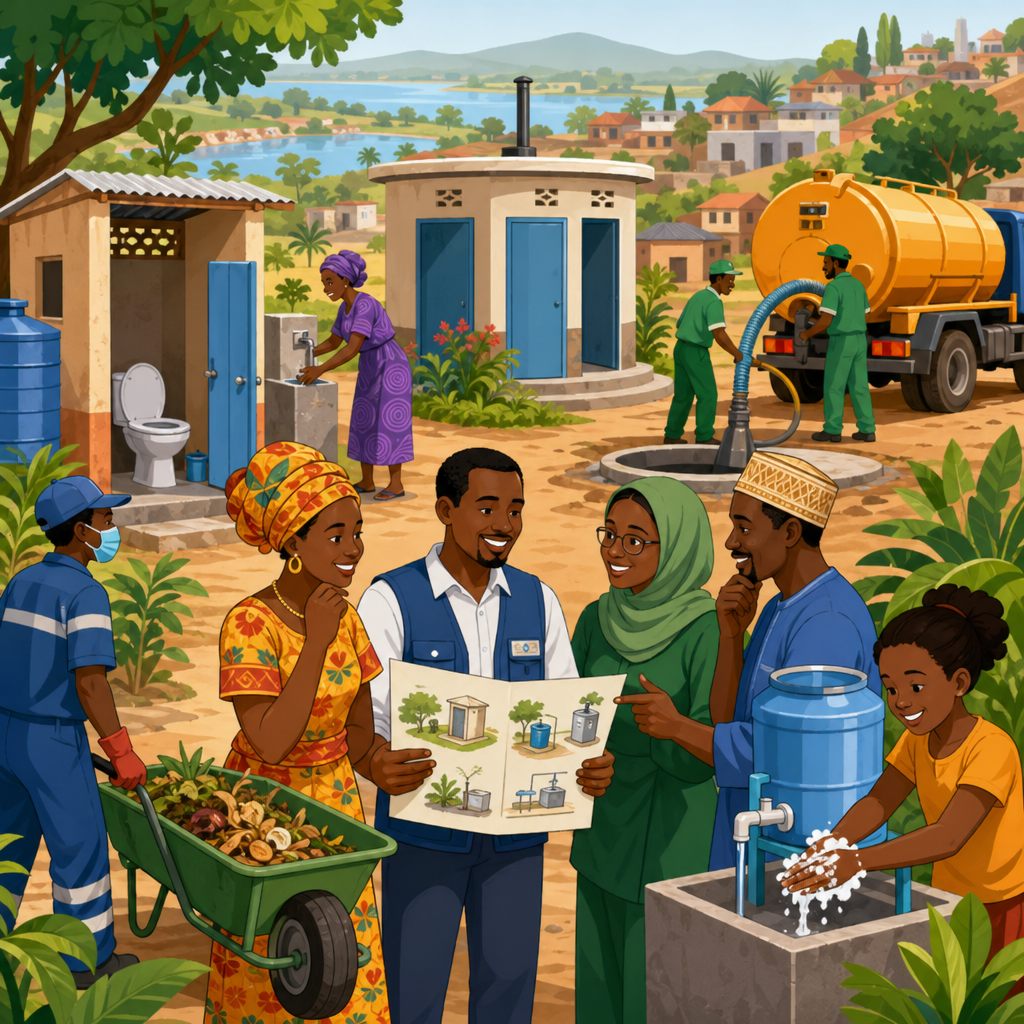
This article serves as a hub for diverse EcoSan success stories under case studies and success stories because one model never fits every community. Rural schools, peri-urban settlements, flood-prone villages, refugee settings, and farming communities each face different constraints. The strongest lessons come from comparing contexts: what worked, why it worked, what had to be adapted, and where tradeoffs remained. Understanding those patterns helps parents, educators, public health planners, NGOs, and local governments make better sanitation decisions that improve children’s health and education in measurable ways.
How Poor Sanitation Harms Children’s Health and Learning
The link between sanitation and child health is direct and well established. Fecal pathogens spread through contaminated hands, water, soil, food, flies, and surfaces. Where toilets are absent or poorly managed, children face higher exposure to diarrheal disease, helminth infections, and environmental contamination that contributes to undernutrition. The World Health Organization and UNICEF have repeatedly shown that inadequate water, sanitation, and hygiene remain major contributors to preventable illness worldwide. In schools, the effect is not abstract. A child with recurring diarrhea or worm burden is more likely to be absent, fatigued, dehydrated, and less able to focus in class.
Education impacts are equally concrete. In many schools I have reviewed, students avoided drinking water because toilets were unusable, which increased headaches and reduced concentration through the day. Younger children delayed toilet use until they got home, while older girls sometimes stayed home during menstruation if facilities lacked privacy, water, and disposal options. Teachers lose instructional time managing illness outbreaks and escorting children to distant toilets. Unsafe or foul-smelling latrines also create fear, especially for smaller children. In effect, poor sanitation reduces learning hours, increases stress, and lowers the quality of the school experience.
These harms accumulate. Repeated enteric infections are associated with growth and cognitive impacts, while chronic absenteeism lowers literacy and numeracy gains. That is why sanitation should be understood not as a side project, but as part of the education system itself. A school toilet can influence attendance rates as surely as a textbook or teacher does.
Why EcoSan Matters in Children’s Environments
EcoSan approaches matter because they solve problems that conventional systems often leave unresolved in low-resource settings. Flush toilets depend on water supply, pipe networks, and treatment capacity that many communities do not have. Pit latrines can collapse in flood-prone zones, contaminate shallow groundwater, or fill quickly in dense settlements. EcoSan systems, when correctly designed and maintained, can reduce water use, keep excreta contained above groundwater level, and create a practical reason to maintain facilities through safe nutrient recovery.
For schools and child-centered programs, reliability is the main advantage. A urine-diverting dry toilet can remain functional where piped water is intermittent. A composting system can be maintained locally with trained caretakers. In agricultural communities, sanitized compost or urine, used according to health guidance and crop restrictions, can support school gardens or household farming. That creates visible value from sanitation investments. I have seen maintenance improve when communities could explain exactly why ash was added, why urine had to be separated, and how compost curing protected users while producing a useful soil amendment.
EcoSan is not automatically superior. It requires behavior change, user training, clear cleaning routines, and strong management. If chambers are misused, if urine diversion fails, or if treated outputs are handled unsafely, the system loses both health and education benefits. The best success stories are the ones where hardware and habits were planned together from the start.
Diverse EcoSan Success Stories Across Contexts
The most useful EcoSan success stories show adaptation to local realities rather than strict replication. In rural Uganda and Kenya, school urine-diverting dry toilets gained acceptance where water scarcity and pit emptying costs made conventional options unreliable. The strongest programs paired toilet installation with hygiene education, caretaker training, and parent committees. Attendance improved not because the technology alone was innovative, but because toilets stayed cleaner, more private, and operational through dry seasons when water-based systems failed.
In Bangladesh and parts of India, flood-prone and high-water-table areas pushed communities toward raised latrines and container-based or composting approaches. Here, the public health benefit was protection from groundwater contamination and pit overflow during monsoon periods. Schools reported fewer days lost to facility closures after storms because above-ground systems were easier to inspect and restore. These examples illustrate a core lesson: resilience matters for education continuity. A toilet that works only in ideal weather is not a child-friendly sanitation solution.
Southern Africa offers another pattern. In Zimbabwe, EcoSan systems such as arborloos and urine-diverting models were promoted in farming communities where soil fertility was an economic concern. Where training was robust, households saw the agricultural value of sanitized outputs, which increased ownership and upkeep. Children benefited indirectly through reduced open defecation, cleaner compounds, and household savings on fertilizer inputs. In schools with gardens, the sanitation system became part of environmental learning, linking biology, soil health, and hygiene in a practical way.
Peri-urban projects in Latin America demonstrated a different benefit: service flexibility. In dense settlements where sewer expansion was too slow or expensive, decentralized sanitation reduced dependence on major infrastructure. Programs in Ecuador and Peru have shown that ecological and dry systems can work where local management structures are strong and user support continues after installation. The educational lesson is straightforward. Facilities last when there is a maintenance pathway, spare parts access, and someone clearly responsible for daily cleanliness.
| Context | EcoSan approach | Main child health benefit | Main education benefit | Critical success factor |
|---|---|---|---|---|
| Water-scarce rural schools | Urine-diverting dry toilets | Less fecal exposure from broken or overflowing pits | More reliable daily toilet access | Caretaker training and cleaning routines |
| Flood-prone communities | Raised composting or above-ground systems | Lower contamination during heavy rains | Fewer school closures after storms | Climate-resilient design |
| Farming households | Composting toilets with safe reuse | Cleaner home environments | Reduced absenteeism from sanitation-related illness | User acceptance of treated outputs |
| Dense peri-urban settlements | Decentralized ecological sanitation | Safer containment where sewers are absent | Longer facility functionality | Ongoing service and accountability |
What Successful School Sanitation Programs Consistently Include
Across case studies, successful school sanitation programs include the same operational elements. First, they design for children, not for average adults. That means smaller seats or pans for early grades, accessible features for children with disabilities, doors that lock from the inside, lighting or visibility that improves safety, and handwashing stations placed close enough that children actually use them. Second, they define maintenance before construction begins. A toilet with no budget line for soap, cleaning supplies, minor repairs, and sludge or chamber management is already at risk of failure.
Third, they connect infrastructure to behavior. Teachers need scripts and routines for handwashing, toilet etiquette, and reporting faults. Students need orientation, especially when using urine-diverting or composting systems that differ from familiar latrines. Fourth, they monitor outcomes that matter: attendance by sex and age, days of facility downtime, soap availability, odor complaints, cleanliness scores, and incidents of misuse. The JMP service ladder for school sanitation and WHO sanitation safety planning principles are useful references because they keep attention on service quality, not just installation counts.
Finally, strong programs involve caregivers and local government. In my experience, school toilets fail fastest when responsibility is fragmented. They last longer when a committee knows who cleans, who buys supplies, who calls for repairs, and how students can report problems without embarrassment. Governance is as important as engineering.
Challenges, Tradeoffs, and What the Best Case Studies Teach
EcoSan success stories are most credible when they acknowledge limitations. User acceptance can be difficult where dry systems conflict with established toilet habits. Some communities object to handling treated outputs even when pathogen reduction standards are met. Misalignment between design and local cleaning practices can lead to odors, flies, or chamber contamination. Schools may struggle with staff turnover, leaving no one trained to manage the system correctly. These are not minor issues; they are the reasons some sanitation projects fail after ribbon-cutting ceremonies.
The best case studies respond with practical adjustments. They simplify user instructions, use clearer signage, separate child and adult facilities when needed, provide refresher training, and budget for post-installation support. They also avoid exaggerated claims. EcoSan does not replace the need for safe water, handwashing, menstrual health support, and waste management. It works as part of an integrated child health strategy. Where groundwater protection, water scarcity, or agricultural reuse are major local priorities, EcoSan can be especially effective. Where user acceptance is low and management capacity is weak, another safely managed sanitation model may be more appropriate.
For readers exploring related case studies and success stories, the key is to compare operating conditions rather than copy a design image. Look at climate, soil, water access, school management, cultural norms, supply chains, and local agricultural practices. That is how diverse EcoSan success stories become genuinely useful decision tools instead of promotional anecdotes.
Sanitation affects children’s health and education every day, often in ways that families and schools feel immediately: fewer stomach illnesses, cleaner compounds, safer toilet use, less absenteeism, and better concentration in class. The evidence from diverse EcoSan success stories is clear. When sanitation systems are adapted to local conditions, properly maintained, and paired with hygiene education, they do more than manage waste. They protect childhood development and strengthen learning environments.
The most important lesson from this hub page is that successful sanitation is not defined by a single technology. It is defined by safe containment, consistent use, reliable upkeep, and fit with the community’s realities. EcoSan has proved valuable in water-scarce schools, flood-prone settlements, farming communities, and peri-urban areas because it can combine public health protection with resilience and resource recovery. Yet the strongest results come only when training, governance, and child-friendly design are treated as essential parts of the system.
If you are building out your understanding of case studies and success stories, use this article as your starting point for evaluating EcoSan models across contexts. Focus on what improved children’s health, what increased attendance, what kept facilities working, and what local teams did to sustain results. Then apply those lessons carefully. Better sanitation is not only an infrastructure goal. It is a practical investment in healthier children, stronger schools, and more equitable futures.
Frequently Asked Questions
1. Why is sanitation so important for children’s health and education?
Sanitation is far more than a basic public service. It directly shapes whether children can grow, stay healthy, attend school regularly, and learn effectively. Safe sanitation includes toilets that hygienically separate human waste from contact, systems for safe waste transport and treatment, reliable handwashing facilities with soap and water, and everyday hygiene practices that reduce disease transmission. When these elements are in place, children are less likely to be exposed to bacteria, viruses, and parasites that spread through contaminated water, soil, food, and surfaces.
For children, the consequences of poor sanitation are immediate and serious. Repeated exposure to unsanitary conditions contributes to diarrhea, intestinal worm infections, skin and eye infections, and other preventable illnesses. These health problems can lead to dehydration, malnutrition, fatigue, and slowed physical development. Over time, frequent sickness affects concentration, energy levels, and cognitive development, making it harder for children to participate fully in class and keep up academically.
The education impact is just as significant. Children who are sick miss school days, fall behind in lessons, and may eventually disengage from learning altogether. Even when they are physically present, children dealing with stomach pain, weakness, embarrassment, or anxiety about unsafe or unusable toilets are not in the best condition to learn. In this way, sanitation is not background infrastructure. It is a foundational condition that supports attendance, dignity, safety, and educational success.
2. How does poor sanitation contribute to illness in children?
Poor sanitation creates multiple pathways for disease to spread. When human waste is not safely contained and treated, germs enter the environment through open defecation, leaking latrines, overflowing drains, or poorly managed waste systems. Children then come into contact with these pathogens through contaminated drinking water, dirty hands, food prepared in unhygienic conditions, or play areas where waste has seeped into the soil. Because children often play outdoors and may not always wash their hands effectively, they are especially vulnerable to these exposures.
One of the most common outcomes is diarrheal disease, which remains a major threat to child health in many communities. Although diarrhea may seem temporary, repeated episodes can be extremely damaging. They can cause dehydration, reduce nutrient absorption, weaken immunity, and contribute to undernutrition. Poor sanitation is also linked to intestinal worm infections, which can lead to anemia, stomach pain, reduced appetite, and chronic tiredness. These conditions can quietly undermine a child’s physical strength and capacity to learn.
The effects are often cumulative rather than isolated. A child who experiences repeated infections may miss meals, absorb fewer nutrients, and recover more slowly from illness. This creates a cycle in which poor sanitation contributes to poor health, poor health contributes to weaker school participation, and weaker school participation can limit long-term opportunities. That is why sanitation is widely recognized as a central public health intervention, especially for protecting children during their most important developmental years.
3. In what ways does sanitation affect school attendance and learning outcomes?
Sanitation influences education through both direct and indirect channels. The most obvious impact is absenteeism. Children who develop diarrhea, worm infections, or other sanitation-related illnesses are more likely to stay home from school, sometimes repeatedly. Even short absences can interrupt reading, numeracy, and classroom routines. When illness becomes frequent, children can lose confidence, struggle to catch up, and become more likely to drop out over time.
There is also a less visible but equally important effect on learning while students are in school. Schools without safe, clean, private toilets can create stress and distraction. Children may avoid using the toilet for long periods, drink less water to prevent needing the toilet, or feel embarrassed by bad smells, lack of privacy, or unsafe facilities. These conditions make it harder to focus, participate, and remain comfortable throughout the school day. A child who is anxious, dehydrated, or physically uncomfortable is not in an ideal state for learning.
Good sanitation infrastructure improves the educational environment in practical ways. Reliable toilets, handwashing stations, soap, menstrual hygiene support, and regular maintenance all help students feel safer and more respected. This can improve attendance, attention, and school retention, especially for older girls who may otherwise miss classes when facilities do not meet their needs. In this sense, sanitation is deeply connected to educational equity. It helps create schools where children are not simply enrolled, but genuinely able to learn.
4. Why are sanitation, dignity, and child safety so closely connected?
Sanitation affects how children experience everyday life, not just whether they avoid disease. Safe, private, and accessible toilets support dignity by allowing children to manage basic bodily needs without shame, fear, or humiliation. When facilities are dirty, broken, exposed, or too far away, children may feel stressed and vulnerable. This is especially important in schools, where the quality of sanitation can shape a child’s sense of belonging and willingness to attend consistently.
Safety is also a major concern. In communities or schools without adequate toilets, children may need to walk long distances, use isolated areas, or wait until dark to relieve themselves. These situations can expose them to accidents, harassment, or violence. Younger children and children with disabilities face additional barriers if toilets are inaccessible, unstable, or not age-appropriate. A sanitation system that works for adults but excludes children is not truly safe or effective.
Dignity and safety become even more important during adolescence. Girls, in particular, may struggle when schools lack privacy, water, disposal options, or facilities that support menstrual hygiene. This can lead to missed school days, discomfort, stigma, and reduced participation in class. When sanitation is designed with dignity in mind, it protects health while also promoting confidence, inclusion, and equal opportunity. That broader human impact is one reason sanitation should be treated as a core part of child development, not just a technical service.
5. What sanitation improvements make the biggest difference for children?
The most effective improvements are those that address the full sanitation chain rather than only one piece of it. Building toilets matters, but toilets alone are not enough if waste is not safely contained, emptied, transported, treated, and disposed of or reused properly. For children, the biggest gains come from integrated systems that reduce exposure to waste at home, in schools, and across the wider community. That includes child-friendly toilets, dependable handwashing stations with soap, clean water for hygiene, routine maintenance, and safe waste management beyond the toilet itself.
Behavior and education are also essential. Teaching children and caregivers about handwashing, toilet use, menstrual hygiene, and safe hygiene habits helps transform infrastructure into health protection. Schools play a particularly important role because they can model good practices daily and reinforce lifelong behaviors. When sanitation and hygiene education are combined with functioning facilities, the results are much stronger than either approach alone.
Equity should guide every sanitation improvement. The best solutions are affordable, inclusive, and designed for real use by girls, boys, younger children, and children with disabilities. Facilities should be private, safe, easy to clean, and accessible throughout the day. Governments, schools, community leaders, and families all have a role to play in sustaining these systems over time. Lasting progress happens when sanitation is recognized as a public health priority, an education priority, and a child rights priority all at once.