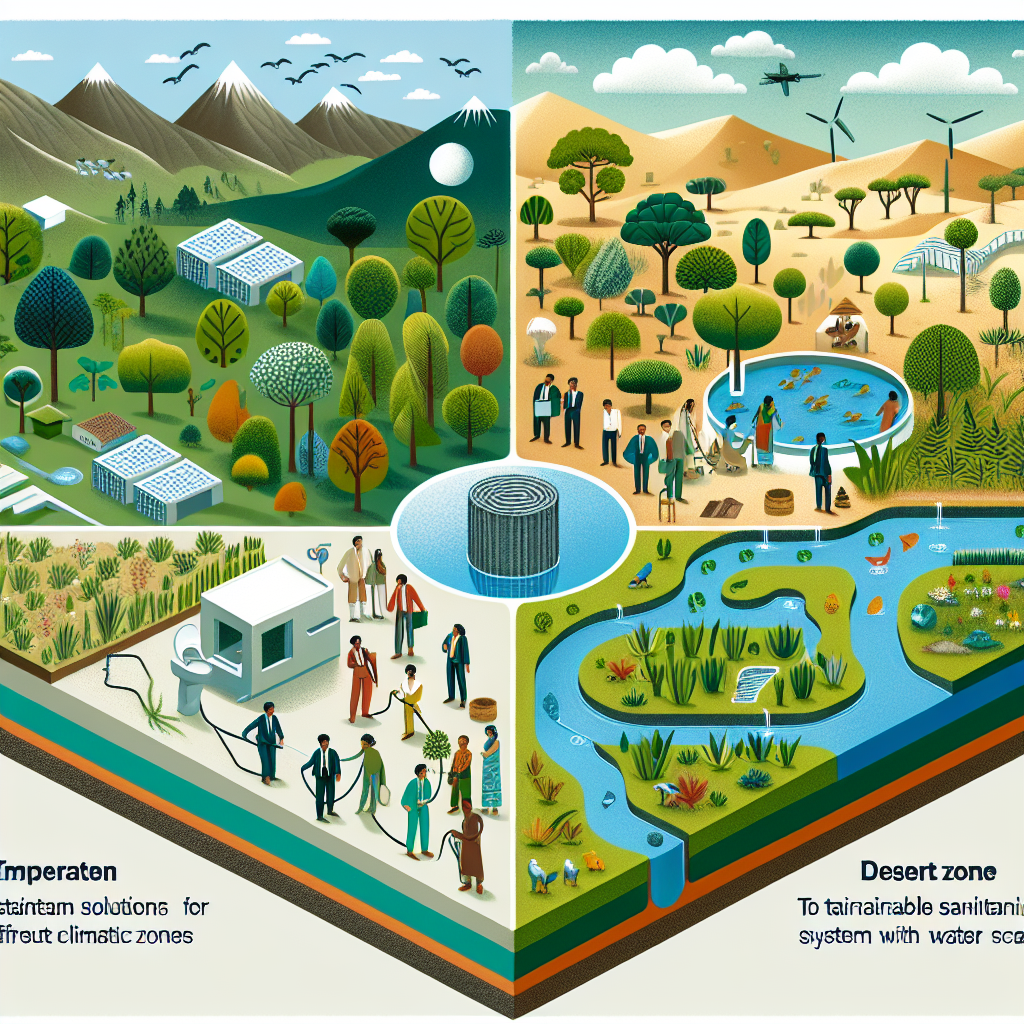
Climate change is one of the most pressing issues of our time, demanding innovative and sustainable solutions to mitigate its effects. One area where significant impact can be made is in the realm of sanitation. Traditional sanitation systems, while functional, often pose substantial environmental burdens, from water consumption to pollution. Enter Ecological Sanitation, or EcoSan—a paradigm shift in how we manage human waste.
EcoSan principles revolve around not only treating human waste but transforming it into a resource through natural biological processes. By implementing EcoSan practices, we can reduce greenhouse gas emissions, conserve water, and recycle nutrients back into the environment, thus creating a more sustainable loop.
In this article, we will delve into the principles and concepts of EcoSan, exploring how innovative EcoSan practices can address climate change and contribute to a healthier planet. We will discuss the various technologies and approaches within EcoSan, provide real-world examples of successful implementation, and highlight the environmental and economic benefits associated with these practices.
The Principles of Ecological Sanitation
At its core, EcoSan is driven by a set of guiding principles aimed at maximizing environmental and public health benefits while minimizing societal costs. These principles include:
- Resource Recovery: Unlike conventional systems that focus on waste removal, EcoSan places a strong emphasis on recovering valuable resources from waste, such as nutrients, energy, and water.
- Separation at Source: By separating urine and feces at the source, each waste stream can be treated differently, allowing for more efficient nutrient recovery and pathogen removal.
- No Waste Concept: EcoSan operates under the paradigm that what is traditionally considered waste can be repurposed as a valuable resource.
- Localization: EcoSan systems often rely on decentralized, local solutions, reducing the need for extensive infrastructure and promoting community engagement.
- Sustainability: EcoSan practices are designed to be environmentally sustainable, conserving water and energy and reducing emissions.
These principles guide the design and implementation of EcoSan systems, ensuring that they not only address immediate sanitation needs but also contribute to long-term environmental sustainability.
Technological Innovations in EcoSan
To effectively implement EcoSan principles, a range of innovative technologies and approaches have been developed:
- Urine Diversion Toilets (UDTs): These toilets separate urine from feces, allowing for the separate collection and treatment of each. Urine, which is rich in nitrogen and phosphorus, can be used as a fertilizer, while feces can be composted.
- Composting Toilets: These systems convert human waste into compost through aerobic decomposition. The resulting compost is a nutrient-rich soil amendment.
- Biogas Digesters: Anaerobic digesters treat human waste to produce biogas, which can be used for cooking or electricity generation, and digestate, a nutrient-rich fertilizer.
- Constructed Wetlands: These engineered ecosystems use natural processes to treat wastewater, making it safe for reuse or discharge.
- Dry Toilets: Also known as dehydrating or desiccating toilets, these systems remove moisture from feces, significantly reducing volume and pathogen load, and producing a stable end product.
These technologies can be adapted to various contexts, from rural areas with limited infrastructure to urban settings seeking more sustainable alternatives to traditional sewage systems.

Case Studies of Successful Implementation
Numerous success stories from around the world illustrate the potential of EcoSan practices to address both sanitation challenges and climate change:
In Sweden, the city of Malmö has implemented urine diversion toilets in several neighborhoods, achieving significant reductions in nitrogen and phosphorus pollution in local water bodies. The collected urine is safely treated and used as a fertilizer, closing the nutrient loop.
In rural India, biogas digesters have been installed in thousands of households, converting human waste into biogas for cooking. This not only reduces methane emissions from traditional pit latrines but also decreases reliance on firewood, preserving local forests and reducing carbon emissions.
Ghana has seen the successful deployment of composting toilets in peri-urban areas, where traditional sanitation infrastructure is lacking. These toilets have improved public health by reducing the spread of pathogens while providing valuable compost for local agriculture.
In each of these cases, EcoSan practices have demonstrated their ability to address sanitation needs while also delivering substantial environmental benefits. These case studies provide valuable insights and inspiration for other communities seeking sustainable solutions.
Environmental Benefits of EcoSan Practices
The environmental benefits of EcoSan practices are multifaceted and contribute directly to climate change mitigation:
- Reduction in Greenhouse Gas Emissions: By diverting human waste from traditional sewage systems and landfills, EcoSan systems reduce methane emissions, a potent greenhouse gas. Additionally, biogas production from waste reduces reliance on fossil fuels.
- Water Conservation: EcoSan practices, such as urine diversion and composting toilets, require significantly less water than conventional flush toilets, preserving this precious resource.
- Nutrient Recycling: EcoSan systems recover valuable nutrients, such as nitrogen and phosphorus, from human waste, reducing the need for synthetic fertilizers. This contributes to a more sustainable agricultural system and prevents nutrient pollution in water bodies.
- Soil Health Improvement: The compost and digestate produced from EcoSan systems improve soil structure, fertility, and overall health, supporting more resilient agricultural practices.
These environmental benefits make EcoSan not only a viable alternative to traditional sanitation systems but a proactive measure in the fight against climate change.
Economic Advantages of EcoSan Systems
Beyond the environmental benefits, EcoSan systems can offer significant economic advantages:
- Cost Savings: EcoSan systems can reduce the costs associated with water treatment, sewage infrastructure, and synthetic fertilizers. Communities can save money by reusing treated waste products locally.
- Job Creation: The implementation and maintenance of EcoSan systems can create jobs in local communities, especially in areas related to waste collection, composting, and biogas production.
- Agricultural Benefits: Farmers benefit from access to affordable, nutrient-rich fertilizer produced from human waste, which can increase crop yields and reduce the need for expensive chemical inputs.
- Public Health Improvement: By reducing exposure to untreated waste and improving hygiene, EcoSan systems can lower health care costs and increase productivity.
These economic benefits underscore the value of investing in EcoSan practices as part of a sustainable development strategy.
Overcoming Challenges and Barriers
Despite the clear benefits of EcoSan practices, several challenges and barriers must be addressed to ensure their widespread adoption:
- Cultural Acceptance: Changing long-standing perceptions and behaviors regarding sanitation requires education and community engagement. Tailoring EcoSan solutions to fit cultural contexts can increase acceptance.
- Initial Costs: While EcoSan systems can provide long-term cost savings, the initial investment can be a barrier, especially in resource-limited settings. Financial support and innovative financing mechanisms can help overcome this hurdle.
- Technical Capacity: Implementing EcoSan technologies requires technical knowledge and expertise. Capacity-building programs and training can equip communities with the skills needed for successful implementation and maintenance.
- Policy and Regulatory Frameworks: Supportive policies and regulations are essential for the widespread adoption of EcoSan practices. Governments and institutions must recognize the benefits and integrate EcoSan into their sanitation strategies.
By addressing these challenges, we can create an enabling environment for the adoption and scaling of EcoSan practices, driving positive change at both local and global levels.
Conclusion
EcoSan practices represent a transformative approach to sanitation, offering a viable solution to address the dual challenges of inadequate sanitation and climate change. By embracing EcoSan principles, we can turn human waste into a valuable resource, promoting environmental sustainability, public health, and economic resilience.
The technologies and approaches within EcoSan provide flexible, adaptable solutions that can be tailored to diverse contexts, from urban centers to rural communities. Real-world examples demonstrate the success and impact of EcoSan practices, highlighting the potential for widespread adoption.
As we face the urgent need to mitigate climate change and protect our environment, innovative EcoSan practices offer hope and a path forward. By investing in and supporting EcoSan systems, we can create a more sustainable and resilient world for future generations.
It’s time to rethink our approach to sanitation. It’s time to embrace EcoSan.