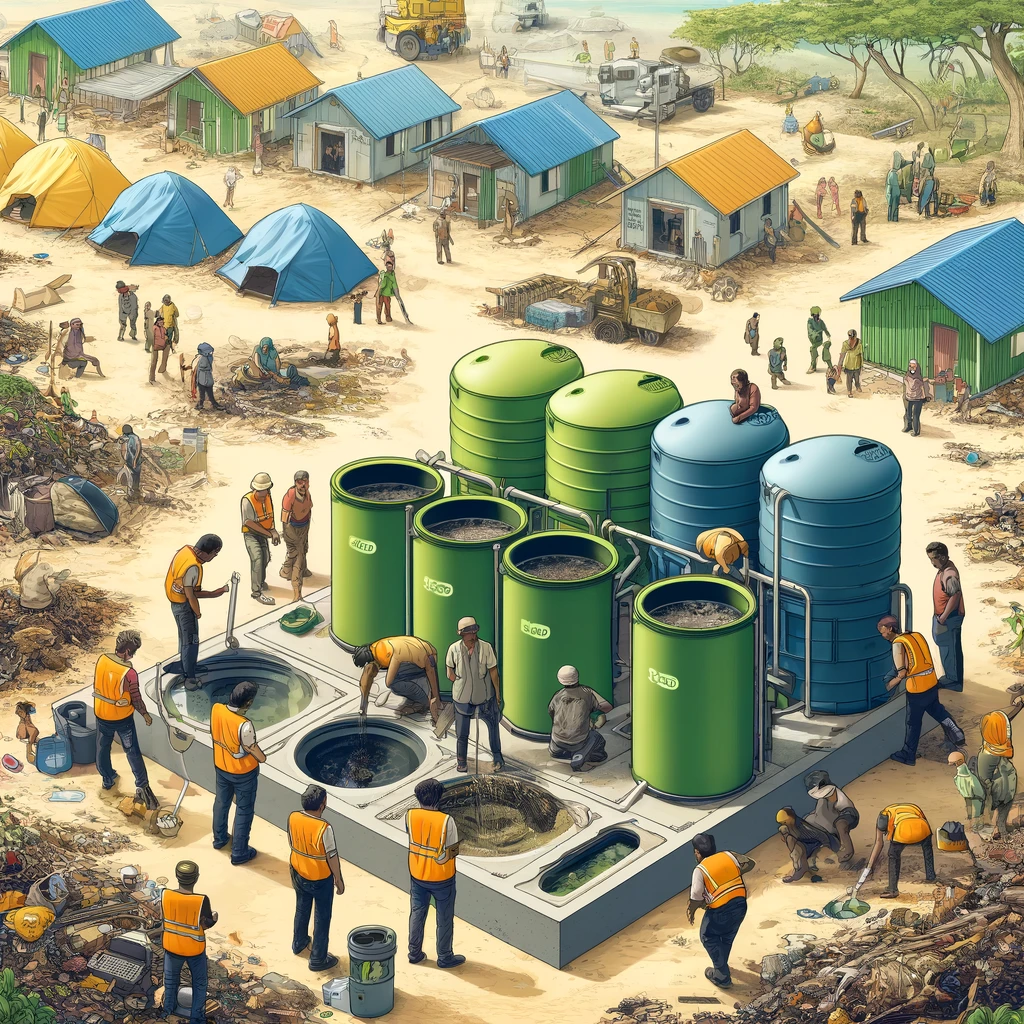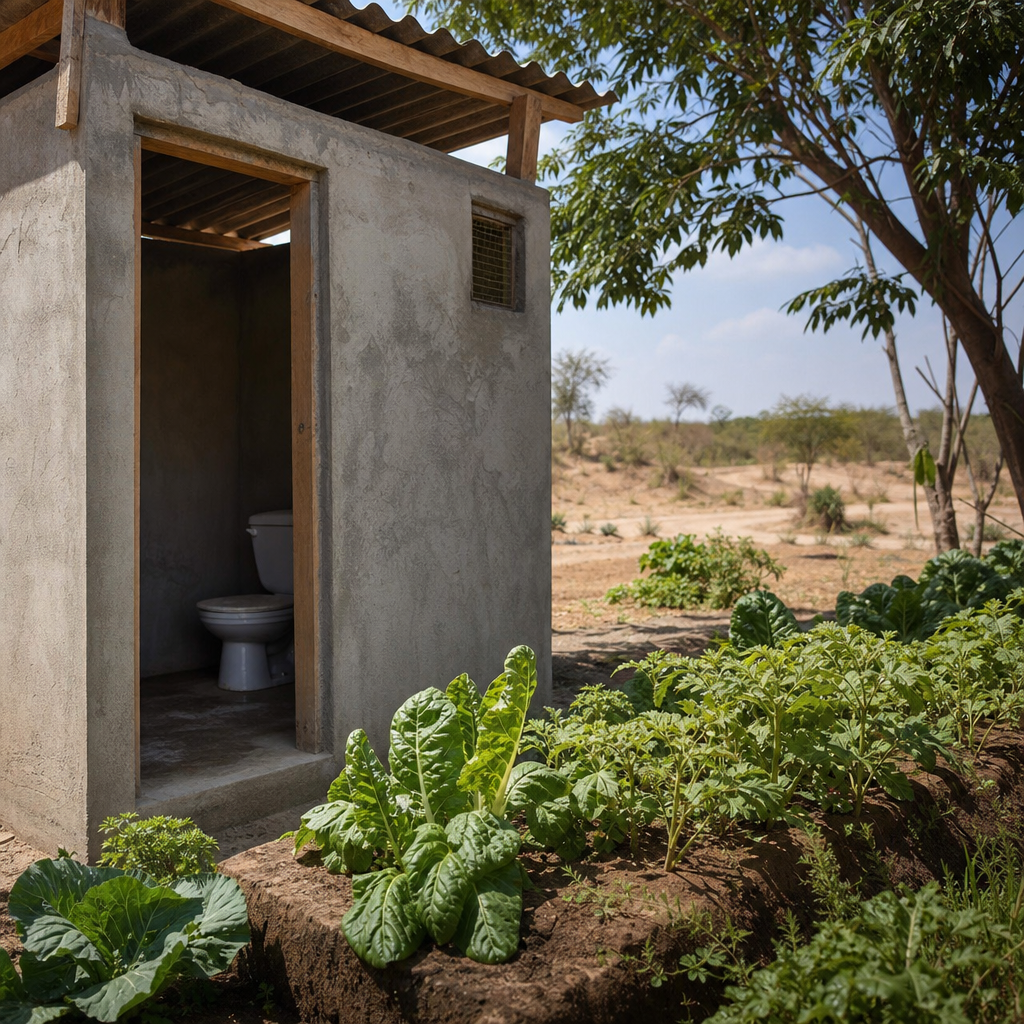
EcoSan, short for ecological sanitation, has moved from a niche development concept to a practical response to global water scarcity because it treats human waste as a resource, not only as something to dispose of. In standard sewered sanitation systems, large volumes of clean water are used to move excreta through pipes, then more energy and infrastructure are required to treat that wastewater safely. EcoSan systems break that pattern by conserving water, recovering nutrients, and reducing pollution at the source. In regions facing drought, rapid urbanization, failing sanitation networks, or rising fertilizer costs, that shift matters immediately.
Global water scarcity is no longer a future risk. The United Nations has repeatedly warned that billions of people experience severe water stress for at least part of the year, while the World Health Organization and UNICEF continue to track major sanitation gaps through the Joint Monitoring Programme. At the same time, roughly half the world lacks safely managed sanitation. These two pressures are deeply connected. Where sanitation depends on water-intensive flushing, every toilet becomes part of the water demand problem. Where sanitation is inadequate, contaminated water sources drive disease, ecosystem damage, and high treatment costs. EcoSan addresses both sides of that equation.
In practice, EcoSan includes systems such as urine-diverting dry toilets, composting toilets, dehydrating vaults, container-based sanitation linked to off-site treatment, and other source-separating designs. The common principle is circular resource management. Urine contains most of the nitrogen and much of the phosphorus excreted by humans, while fecal matter contains organic material and additional nutrients that can be treated and reused under controlled conditions. I have seen projects succeed when planners stopped treating sanitation as a single engineering asset and started managing it as part of water security, public health, agriculture, and climate resilience at once.
This matters globally because sanitation cooperation now depends on more than building latrines or sewer lines. Governments, development banks, city utilities, nongovernmental organizations, research institutes, and private operators are collaborating on financing, regulation, behavior change, nutrient recovery, and service delivery models. As the hub for global initiatives and collaborations in sanitation, this article explains how EcoSan fits into that wider landscape, where it works best, what limitations must be addressed, and why it deserves serious attention in water-scarce regions.
Why EcoSan fits the global sanitation agenda
EcoSan is relevant to the global sanitation agenda because it solves several linked problems with one systems approach. First, it reduces freshwater use by avoiding or minimizing flush water. Second, it lowers nutrient losses by recovering nitrogen, phosphorus, and potassium that would otherwise be diluted in wastewater or discharged into rivers and coastal zones. Third, it can expand access in places where sewers are unaffordable, groundwater is vulnerable, or terrain makes centralized systems difficult. That combination aligns closely with the sanitation and water targets embedded in international development policy, especially the push for safely managed sanitation under Sustainable Development Goal 6.
Global initiatives increasingly recognize that sanitation is a service chain, not a toilet installation. The service chain includes user interface, containment, emptying, transport, treatment, reuse, and final disposal. The Sanitation and Water for All partnership, the SuSanA network, UNICEF, the World Bank, and many national ministries now frame progress in those terms. EcoSan fits this service-chain logic well because it makes each stage visible. Instead of hiding waste in water and distance, it forces proper planning for collection, treatment, and reuse. That can strengthen accountability, provided institutions are ready for the operational demands.
In water-scarce countries, the case becomes stronger. Jordan, Namibia, parts of India, South Africa, Peru, and dry regions across the Sahel have all explored variants of dry sanitation, wastewater reuse, or nutrient recovery because conventional sewer expansion is expensive and water supplies are constrained. The lesson from these efforts is not that EcoSan replaces every sewer. It does not. Dense city centers, high-rise districts, and some industrial contexts still need robust centralized systems. The lesson is that diversified sanitation portfolios are more resilient than one-model strategies, especially under climate stress and budget pressure.
How EcoSan systems work in real terms
EcoSan systems are often misunderstood as a single toilet type, but they are better described as a family of sanitation approaches built around source separation and safe reuse. A urine-diverting dry toilet separates urine and feces at the seat or pan level. Urine can be stored to reduce pathogen risks and then used as fertilizer according to local guidelines. Feces are collected in sealed vaults or containers, then dehydrated, composted, or otherwise treated before agricultural or forestry use. Composting toilets accelerate biological breakdown under managed moisture, carbon balance, aeration, and temperature conditions. Container-based systems use sealed cartridges or bins collected by service providers and treated off-site.
From an engineering standpoint, the key variables are pathogen reduction, user acceptance, maintenance frequency, odor control, vector control, and logistics. Those details determine whether a project becomes a durable sanitation service or a failed pilot. For example, urine diversion only works when pedestals, pans, and plumbing are designed for local habits, including how people wash, squat, sit, or clean. Fecal vaults require sufficient drying material such as ash, lime, or sawdust when the chosen treatment pathway depends on dehydration. Off-site processing needs trained operators, protective equipment, and clear quality standards for end products.
One reason I favor EcoSan in hub discussions is that it encourages realistic design conversations early. If an area has seasonal flooding, high groundwater, low piped water coverage, and nearby peri-urban farming, dry source-separating systems may outperform pit latrines and be far cheaper than sewers. If a municipality already has vacuum trucks, transfer stations, and composting operations, container-based EcoSan can integrate with existing fecal sludge management. Good planning starts with local constraints and service capacity, not ideology.
Global initiatives, collaborations, and leading institutions
The strongest sanitation progress now comes from collaboration across sectors. SuSanA, the Sustainable Sanitation Alliance, has been especially important in building a shared technical language around reuse, system selection, and circular sanitation. It links researchers, implementers, utilities, and civil society organizations and has helped move EcoSan beyond isolated demonstration projects. The World Bank and regional development banks increasingly support citywide inclusive sanitation frameworks that allow multiple technologies, including non-sewered and decentralized solutions, where they make economic and environmental sense. That shift is crucial because financing rules often determine which technologies are considered legitimate.
UNICEF and the WHO Joint Monitoring Programme provide the comparative data that shape national priorities, while UN-Water keeps water scarcity and sanitation connected in policy discussions. The Gates Foundation has also had outsized influence by funding reinvented toilet research, non-sewered sanitation technologies, treatment innovations, and market-shaping activities. ISO 30500, the international standard for non-sewered sanitation systems, has helped create clearer performance expectations for pathogen reduction, emissions, and operational reliability. Standards matter because cities and ministries are unlikely to procure unfamiliar systems at scale without recognized benchmarks.
Collaboration is also happening at the city and utility level. In Durban, eThekwini Municipality has long been cited for work on urine-diverting dry toilets in peri-urban settlements where full sewer service was not immediately feasible. In Haiti, Kenya, and Ghana, container-based sanitation enterprises have partnered with municipalities and donors to prove service models for dense low-income settlements. In Sweden, Germany, and Switzerland, nutrient recovery research has advanced treatment protocols and fertilizer-use standards that make reuse more credible to regulators and farmers.
| Initiative or Institution | Main Contribution | Why It Matters for EcoSan |
|---|---|---|
| SuSanA | Knowledge sharing, case studies, working groups | Builds technical consensus and spreads practical lessons |
| WHO/UNICEF JMP | Global sanitation monitoring | Shows where water scarcity and sanitation gaps overlap |
| World Bank | Financing and citywide sanitation frameworks | Legitimizes mixed-technology service models |
| Gates Foundation | Research and innovation funding | Accelerates non-sewered sanitation development |
| ISO 30500 | Performance standard for non-sewered systems | Supports procurement, regulation, and scale-up |
Water savings, nutrient recovery, and climate resilience
The most direct answer to the question, “How does EcoSan help with water scarcity?” is simple: it reduces or eliminates the need to flush toilets with potable water. In conventional urban systems, toilets can account for a large share of household indoor water use, often around one quarter to one third depending on fixture efficiency and user behavior. Replacing flush dependence with dry or low-water systems preserves scarce water for drinking, hygiene, food preparation, and productive uses. In drought-prone cities, those savings can be significant at neighborhood scale even before systemwide expansion.
Nutrient recovery is the second major benefit. Synthetic nitrogen fertilizer is energy intensive to produce, while phosphorus is mined from finite reserves concentrated in a few countries. Human urine contains the majority of excreted nitrogen and a substantial share of phosphorus and potassium. When properly collected and treated, it can substitute for part of the fertilizer demand in agriculture, landscaping, or tree planting. This is not theory. Trials in countries including Finland, Nepal, South Africa, and Uganda have shown that sanitized urine can support crop growth effectively when application rates are managed carefully.
Climate resilience strengthens the case further. Sewer systems are vulnerable to power outages, storm surges, flood infiltration, pipe breaks, and treatment-plant overload. Pit latrines and septic tanks can fail in floods and contaminate groundwater. Well-designed EcoSan systems can reduce those risks because they decouple sanitation from heavy water flows and can be adapted for off-grid operation. They also lower wastewater volumes, which can reduce energy demand for pumping and treatment. The climate benefit is not automatic, however. Transport emissions, poor treatment, and methane from badly managed organic processing can erode gains, so operations must be designed carefully.
What makes EcoSan projects succeed or fail
EcoSan succeeds when it is delivered as a managed public service with strong user support, not when it is treated as a one-time hardware donation. The most common failure point is not the toilet itself but the missing middle of the service chain: collection, treatment, financing, monitoring, and maintenance. I have seen technically sound units fail because households were never shown how to separate urine properly, because spare parts were unavailable, or because no institution owned the treatment site. Conversely, modest designs can perform well for years when local governments, community groups, and operators share clear responsibilities.
User experience is decisive. Toilets must be safe, private, easy to clean, and acceptable for women, children, older adults, and people with disabilities. Odor, flies, inconvenience, and confusion about reuse can quickly undermine adoption. Cultural perceptions matter as much as engineering. In some communities, agricultural reuse is welcomed because it saves money on inputs. In others, any association with human excreta creates resistance unless treatment standards and communication are exceptionally strong. Behavior change programs therefore need to be practical, respectful, and long term.
Economics also require honesty. EcoSan can reduce capital costs compared with sewers in many settings, but it is not maintenance free. Collection logistics, operator training, treatment facilities, and quality control all cost money. The right comparison is not between a free latrine and an ideal sewer; it is between complete service models over time. Tools such as life-cycle costing, sanitation safety planning, and citywide inclusive sanitation assessments are essential because they reveal where EcoSan is genuinely competitive and where another option may be better.
The policy path for scaling global sanitation collaboration
For EcoSan to contribute meaningfully to global water scarcity solutions, policy must catch up with technical possibility. The first requirement is regulatory clarity on reuse, pathogen reduction targets, sludge and urine handling, product certification, and occupational safety. Without this, municipalities hesitate, farmers remain uncertain, and investors stay away. The WHO Sanitation Safety Planning approach provides a practical risk-management framework, and many countries can adapt existing biosolids, wastewater reuse, or public health rules to include source-separated streams. The second requirement is procurement reform so public agencies can buy sanitation outcomes, not only conventional infrastructure categories.
National and city strategies should also connect sanitation to water planning, food systems, and climate adaptation. This is where collaboration becomes most valuable. Water ministries, health agencies, agricultural extension services, urban planners, utilities, and local enterprises rarely share budgets or indicators, yet EcoSan depends on their alignment. A city trying to reduce water demand, improve fecal sludge management, and support peri-urban agriculture has a strong case for pilot corridors that combine source-separating toilets, safe treatment hubs, and nutrient reuse agreements with farmers. Those pilots should be monitored openly and expanded only where performance is proven.
As a hub topic, global initiatives and collaborations in sanitation are best understood as a move away from one-size-fits-all infrastructure thinking. EcoSan is not a universal replacement for sewers, septic tanks, or treatment plants. It is a strategic option within a broader sanitation portfolio, especially powerful where water is scarce, nutrients are valuable, and centralized networks are slow to reach underserved populations. The core takeaway is straightforward: sanitation systems that save water, recover resources, and protect health deserve a central place in global planning. If you are shaping policy, funding projects, or evaluating local sanitation options, put EcoSan on the shortlist and assess it seriously.
Frequently Asked Questions
What is EcoSan, and why is it considered a response to global water scarcity?
EcoSan, or ecological sanitation, is an approach to sanitation that is designed to safely manage human waste while minimizing water use and recovering valuable resources such as nutrients and organic matter. Unlike conventional sewer-based systems, which rely on significant amounts of clean water to transport waste through pipes, EcoSan systems are built around the idea that excreta should be treated as a resource stream rather than simply a disposal problem. This is especially important in a world facing growing water stress, where freshwater supplies are under pressure from population growth, climate change, urbanization, and agriculture.
EcoSan is considered a practical response to global water scarcity because it breaks the direct link between sanitation and heavy water consumption. In a standard flush toilet system, every use can require several liters of potable water just to move waste away from the household. That means communities are effectively using treated drinking water for transport, not for hydration, cooking, or hygiene. EcoSan systems reduce or eliminate that need, depending on the technology used. This makes them highly relevant in drought-prone areas, rural regions with limited infrastructure, informal settlements, and any place where water is too scarce or too expensive to waste.
Beyond saving water, EcoSan also helps reduce the environmental burden associated with wastewater treatment. Conventional systems often require extensive pipe networks, pumping stations, treatment plants, and ongoing energy inputs. EcoSan can lower dependence on that infrastructure while also decreasing pollution risks when systems are designed and managed correctly. In short, EcoSan addresses water scarcity not only by using less water, but also by creating a more circular, resilient, and resource-efficient sanitation model.
How does EcoSan save water compared to conventional sanitation systems?
The most direct way EcoSan saves water is by avoiding or minimizing the use of flush-based waste transport. In conventional sanitation, toilets are designed to move excreta away with water, which means every flush consumes clean water that has already been collected, treated, and delivered. After that, even more infrastructure and energy are needed to handle the wastewater safely. EcoSan systems interrupt this cycle by using dry or low-water alternatives that manage waste closer to the source.
Many EcoSan designs, such as urine-diverting dry toilets and composting toilets, operate with little to no flushing water at all. Instead of relying on water to carry waste through long sewer networks, these systems separate, store, compost, dehydrate, or otherwise treat waste onsite or near the point of generation. This can save thousands of liters of water per household each year, depending on family size and local toilet habits. In regions where water must be hauled, pumped from deep groundwater, or rationed during dry seasons, those savings are especially meaningful.
Water savings also extend beyond the toilet itself. Because less wastewater is produced, there is less need for centralized treatment and less strain on drainage systems. This can reduce the demand for water-intensive treatment operations and lower the pressure on fragile urban infrastructure. In places where conventional sewerage is incomplete or failing, EcoSan can prevent additional contamination of groundwater, rivers, and coastal ecosystems that often occurs when wastewater is not properly managed. So the value of EcoSan is not just in reducing flush water use, but in reshaping the entire sanitation chain to be more water-wise and sustainable.
What are the main environmental and agricultural benefits of EcoSan?
One of the defining strengths of EcoSan is that it turns a sanitation challenge into an opportunity for resource recovery. Human waste contains nutrients such as nitrogen, phosphorus, and potassium, which are the same core elements used in agricultural fertilizers. In conventional sanitation systems, these nutrients are often diluted in wastewater and then treated as contaminants to remove. EcoSan takes a different approach by capturing and processing these nutrients so they can potentially be returned to the soil in safe and productive ways.
From an environmental standpoint, this nutrient recovery supports a circular economy and helps reduce pollution. When untreated or poorly treated sewage enters waterways, it can contribute to eutrophication, algal blooms, fish kills, and broader ecosystem damage. EcoSan systems, when well managed, reduce the likelihood of those impacts by containing waste more effectively and promoting treatment at or near the source. They can also reduce greenhouse gas emissions associated with large-scale wastewater pumping and treatment, especially in places where centralized infrastructure is energy intensive or inefficient.
Agriculturally, EcoSan can improve soil fertility and reduce dependence on synthetic fertilizers, which are often costly and energy-intensive to manufacture. In some settings, treated urine can be used as a nutrient-rich fertilizer, while composted fecal matter can help build soil structure and organic content. This can be particularly valuable for smallholder farmers and water-scarce communities seeking lower-cost, locally available agricultural inputs. Of course, these benefits depend on proper treatment, storage, and application practices to protect public health. But when implemented responsibly, EcoSan offers both environmental protection and tangible gains for food production systems.
Is EcoSan safe, and what conditions are necessary for it to work effectively?
Yes, EcoSan can be safe and highly effective, but like any sanitation system, its success depends on correct design, operation, maintenance, and user education. Safety in EcoSan is achieved through systems that separate waste streams when appropriate, promote pathogen reduction through storage, dehydration, composting, or other treatment processes, and ensure that any recovered products are handled according to health guidelines. The goal is not simply to avoid flushing, but to create a sanitation chain that protects people and the environment from contamination.
Several conditions are important for EcoSan to work well. First, the technology must match the local context. Soil conditions, climate, population density, water availability, cultural practices, and space constraints all influence which EcoSan system is most suitable. Second, users need clear guidance and practical support. A system may be technically sound, but if people are not comfortable using it or do not understand maintenance requirements, performance can suffer. Third, there must be a plan for safe end-use or disposal of treated outputs. Resource recovery only becomes a true advantage when it is managed in a hygienic, acceptable, and regulated way.
It is also important to recognize that EcoSan is not a one-size-fits-all solution. In some places, it works best at the household level; in others, community-based or institutional systems may be more appropriate. Ongoing monitoring, maintenance services, and public health oversight are essential. When those elements are in place, EcoSan can provide sanitation that is not only water-efficient, but also safe, durable, and well suited to regions where conventional sewerage is impractical or unsustainable.
Can EcoSan be scaled for cities and communities, or is it only suitable for rural areas?
EcoSan is often associated with rural development projects, but it is not limited to rural settings. While some EcoSan technologies are especially practical in villages, farms, and low-density communities, the broader EcoSan philosophy can also be adapted for peri-urban neighborhoods, schools, institutions, and even parts of dense urban areas. The key is choosing systems that fit local infrastructure, land use patterns, governance capacity, and service models. In other words, EcoSan is scalable, but scaling it successfully requires thoughtful planning rather than simple replication.
In rural areas, EcoSan can be particularly attractive because it reduces dependence on expensive sewer construction, supports local nutrient recycling, and can be managed near the point of use. In urban and peri-urban areas, the model may shift toward container-based sanitation, decentralized treatment, urine diversion, neighborhood-scale recovery systems, or hybrid arrangements that combine source separation with organized collection and processing services. These models can be valuable in informal settlements and rapidly growing cities where conventional sewer networks are too costly, too slow to expand, or unreliable under water stress conditions.
The future potential of EcoSan lies in integrating it into broader water, sanitation, food, and climate strategies. As cities look for resilient infrastructure and communities seek solutions that conserve water and recover resources, EcoSan offers a compelling alternative to purely linear sanitation systems. It is not a universal replacement for all sewered systems, but it is a serious and increasingly relevant option in the global response to water scarcity. With supportive policies, investment, public engagement, and professional management, EcoSan can move far beyond niche applications and become part of mainstream sanitation planning.