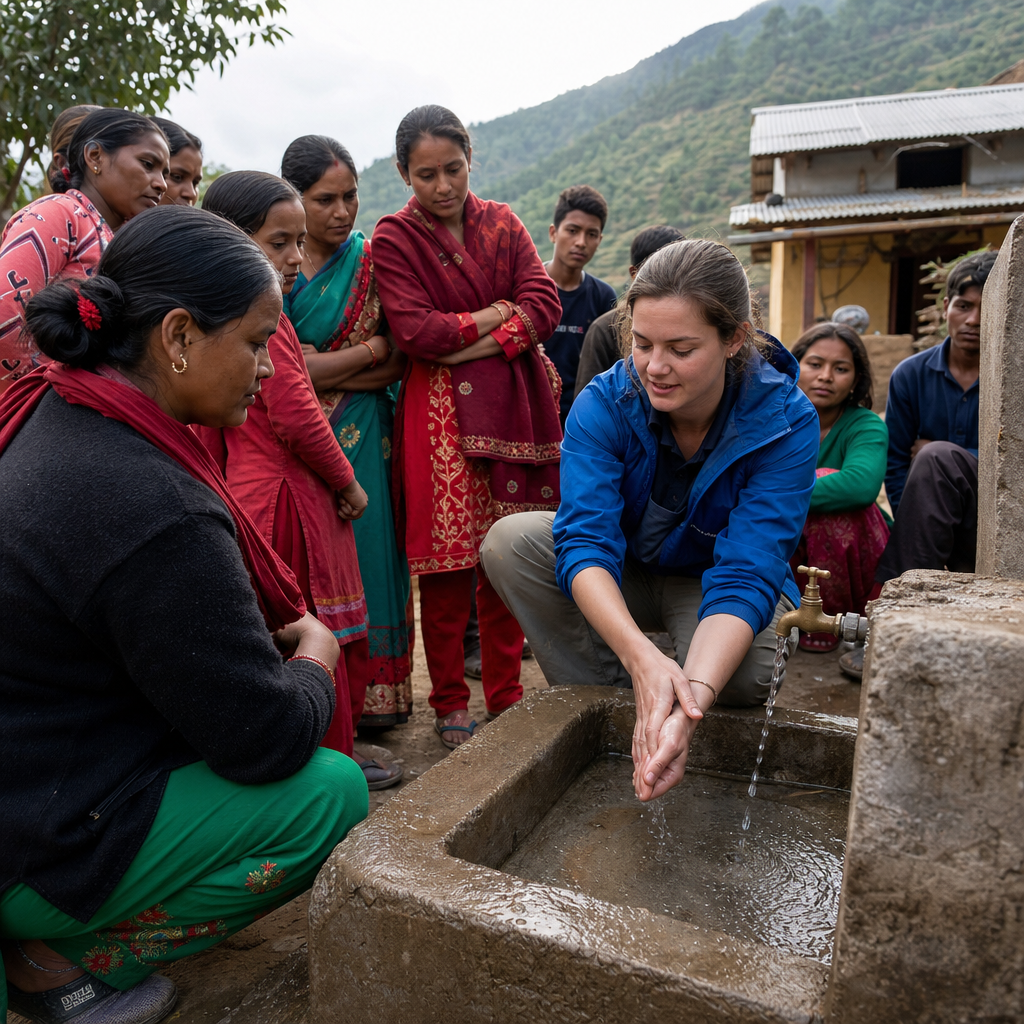
International cooperation in sanitation is entering a decisive period, shaped by climate stress, urban growth, public health risks, and the recognition that safe sanitation underpins dignity, education, economic productivity, and environmental protection. Sanitation means the systems and services that safely manage human waste, wastewater, stormwater, and hygiene conditions, from toilets and sewer networks to fecal sludge treatment, reuse, regulation, and behavior change. When countries, development banks, cities, utilities, researchers, and community organizations coordinate their efforts, sanitation improvements happen faster, financing becomes more effective, and proven models spread across borders. That is why the future of international cooperation in sanitation matters not only for low-income regions with major service gaps, but also for middle-income and high-income countries facing aging infrastructure, contamination, migration pressures, and more frequent climate shocks.
The need is clear. According to WHO and UNICEF Joint Monitoring Programme reporting, billions of people still lack safely managed sanitation, and hundreds of millions continue to practice open defecation or rely on unsafe services. Poor sanitation contributes to diarrheal disease, stunting, school absence, gender-based safety risks, and polluted rivers, coasts, and groundwater. I have worked on sanitation content and program analysis long enough to see that technical solutions alone do not solve these problems. The real breakthroughs usually come when governance, finance, operations, and community trust align. International cooperation makes that alignment more likely by creating common standards, pooled funding, shared data, and regional learning networks that help countries avoid repeating costly mistakes.
This hub article maps the global initiatives and collaborations in sanitation that are shaping the next decade. It explains how multilateral institutions, national governments, nongovernmental organizations, utilities, and private innovators are working together; which funding and policy models are gaining traction; where cooperation is succeeding; and what barriers still limit progress. It also serves as a foundation for deeper articles on sanitation finance, wastewater innovation, humanitarian WASH response, climate resilience, city utility reform, and circular economy models. If you want to understand where sanitation cooperation is headed, start with the major forces now redefining partnership: measurable outcomes, local capacity, inclusive service delivery, climate adaptation, and resource recovery.
Why international sanitation cooperation is changing
International sanitation cooperation is changing because the old model, where donors funded isolated infrastructure projects and then moved on, has repeatedly underperformed. Toilets built without maintenance plans fall into disuse. Sewer lines installed without treatment capacity shift pollution downstream. Subsidies issued without targeting can miss low-income households. In my experience reviewing sanitation initiatives, the strongest programs now begin with service-chain thinking: containment, emptying, transport, treatment, disposal, and, where viable, reuse. That systems approach has become standard across leading institutions because it measures whether waste is safely managed end to end, not whether a single facility was constructed.
Another reason for change is the global development agenda. Sustainable Development Goal 6, especially target 6.2 on sanitation and hygiene, gave governments and funders a common language for accountability. It pushed the sector beyond counting access toward assessing safety, equity, and sustainability. At the same time, public health emergencies such as cholera outbreaks and the COVID-19 pandemic reminded policymakers that sanitation is not a side issue. It is part of national resilience. Climate change has reinforced that lesson. Flooding can overwhelm pit latrines, drought can limit water-dependent systems, and sea-level rise can salinize groundwater and damage treatment assets in coastal settlements.
Urbanization also demands new forms of collaboration. Informal settlements grow faster than conventional sewer systems can expand, especially in cities across sub-Saharan Africa and South Asia. As a result, city governments increasingly work with international partners on non-sewered sanitation, fecal sludge management, public toilet networks, utility regulation, and digital monitoring. The future of cooperation will depend less on exporting one ideal model and more on matching technologies and institutions to context. Dense neighborhoods may need container-based services or condominial sewers; secondary towns may rely on decentralized treatment; water-scarce regions may prioritize reuse. Shared learning across countries is what turns these local adaptations into scalable practice.
The institutions leading global sanitation initiatives
Several institutions define the current architecture of global sanitation collaboration. UNICEF and WHO provide the most widely used monitoring framework through the Joint Monitoring Programme, which guides how countries classify sanitation service levels and compare progress. The World Bank supports policy reform, utility strengthening, and infrastructure investment through lending and advisory programs, often linking sanitation outcomes to poverty reduction and human capital goals. Regional development banks, including the African Development Bank, Asian Development Bank, and Inter-American Development Bank, play a similar role but tailor support to regional regulatory environments and city networks.
UN-Water helps align the broader United Nations system, while UN-Habitat contributes expertise on urban services, informal settlements, and municipal planning. On the advocacy and partnership side, Sanitation and Water for All has become a significant global platform because it brings together finance ministers, water ministers, civil society groups, development partners, and utilities around mutual accountability. The Toilet Board Coalition has focused attention on market-based sanitation, especially business models around non-sewered systems and resource recovery. The Gates Foundation has also had outsized influence by funding research, city pilots, reinvented toilet technologies, and fecal sludge management innovation that traditional donors once considered too experimental.
Nongovernmental organizations remain essential operational partners. WaterAid, SNV, World Vision, CARE, and many local organizations help translate national strategies into district and community delivery. They often lead on behavior change, gender inclusion, disability access, and local government capacity. Research bodies such as the International Water Association, Stockholm Environment Institute, and university-based WASH centers provide evidence on treatment performance, economics, and public health impacts. The future is not one institution replacing another. It is tighter orchestration among data agencies, financiers, implementers, and regulators so that planning, funding, and service delivery reinforce each other rather than compete.
What effective collaboration looks like in practice
Effective global collaboration in sanitation has several recognizable features. First, it is country-led rather than donor-led. External partners can finance and advise, but ministries, municipalities, and regulators need ownership over standards, budgets, and operations. Second, it combines hardware and software. Infrastructure matters, yet sanitation projects perform far better when paired with tariff reform, operator training, hygiene promotion, and asset management. Third, it uses comparable metrics. Without agreed indicators, partners cannot tell whether treatment plants function, sludge is safely disposed, or low-income households are actually reached.
A good example is citywide inclusive sanitation, a planning approach adopted in many international programs. Instead of assuming every city should pursue universal sewerage, it starts with the goal that everyone in the city receives a safely managed sanitation service. That opens space for multiple technologies, public and private operators, and phased investment. Another practical model is results-based financing, where disbursements depend on verified outputs such as household connections, treatment volumes, or open defecation free status maintained over time. I have seen this improve discipline in procurement and monitoring because everyone knows the payment trigger in advance.
| Collaboration model | How it works | Typical advantage | Main limitation |
|---|---|---|---|
| Multilateral lending | Development banks fund national or city sanitation programs | Large capital volumes for infrastructure and reform | Preparation can be slow and compliance heavy |
| Technical assistance partnerships | Agencies and NGOs provide planning, training, and data support | Builds local capacity and policy quality | Impact may fade without domestic budget follow-through |
| Results-based financing | Funds released after verified service outcomes | Stronger accountability for performance | Needs reliable verification systems |
| South-South cooperation | Peer countries exchange practical operating experience | Solutions often fit similar institutional contexts | Knowledge transfer still needs funding and facilitation |
Real-world collaboration usually blends these models. For example, a country may use a development bank loan for treatment works, grant-funded technical assistance for utility reform, and peer learning with another country on fecal sludge regulation. That layered structure is likely to define future sanitation cooperation because no single instrument solves financing, governance, and service quality at the same time.
Financing the next generation of sanitation partnerships
Sanitation has historically been underfinanced because its benefits are diffuse and long term, while political leaders often prefer visible projects with quick payoffs. International cooperation is changing that by framing sanitation as an economic investment. The World Bank, WHO, and multiple national studies have shown that inadequate sanitation generates losses through disease burden, health spending, lower productivity, and environmental damage. Once ministries of finance see sanitation as growth protection rather than narrow social spending, capital allocation improves. This is why stronger collaboration between water ministries and finance ministries is now a central trend.
The next generation of funding will mix public finance, concessional lending, climate finance, and carefully structured private participation. Public money remains indispensable, especially for pro-poor subsidies, trunk infrastructure, and rural service delivery. But external grants alone are too small to close the gap. Utilities and municipalities therefore need better revenue systems, realistic tariffs, ring-fenced sanitation budgets, and creditworthiness improvements. Blended finance can help where revenue streams exist, particularly for wastewater treatment, industrial reuse, or waste-to-energy components. However, private capital is not a cure-all. Investors require predictable regulation, enforceable contracts, and evidence that users or governments can pay.
Climate-related finance is becoming more relevant as sanitation projects increasingly include flood resilience, water reuse, methane reduction, and nature-based treatment. Green bonds and resilience funds may support eligible components if project developers quantify emissions reductions or adaptation benefits credibly. I expect stronger links between sanitation and carbon accounting, especially where sludge management reduces methane or wastewater reuse lowers freshwater withdrawals. The most promising partnerships will be those that package sanitation outcomes with health, climate, and urban resilience benefits in ways that treasury departments and development finance institutions can justify at scale.
Innovation, data, and the rise of circular sanitation
The future of international cooperation in sanitation will be more technical, more data-driven, and more circular. Technology is not replacing governance, but it is expanding what cooperation can achieve. Digital mapping tools now help cities identify unserved neighborhoods and illegal discharge points. Remote sensors can monitor treatment performance. Mobile payment systems improve pit-emptying service collection. Shared data platforms allow ministries and donors to compare district performance and target support more accurately. In well-run programs, data is not collected for reporting alone; it informs budgeting, maintenance schedules, and emergency response.
Non-sewered sanitation is one of the most important innovation areas. ISO 30500, which covers certain non-sewered sanitation systems, has given manufacturers and regulators a clearer technical reference point. That matters because many fast-growing urban areas cannot wait decades for full sewer coverage. Container-based sanitation, urine-diverting dry toilets, small-bore sewers, and modular treatment units are being tested and refined in diverse settings. Some approaches will remain niche, but others are already proving cost-effective in dense, low-income settlements where conventional systems are impractical.
Circular sanitation is another major shift. Instead of treating waste only as a hazard, leading programs recover value through compost, biogas, biosolids, heat, nutrients, and reclaimed water. Dakar’s fecal sludge management improvements, Windhoek’s long-running potable reuse leadership, and wastewater-to-resource projects in India and Latin America show how cooperation can move beyond disposal. Still, reuse requires strict quality control and market realism. Not every city can sell compost or generate enough energy to offset costs. The sound principle is this: resource recovery should strengthen sanitation economics where feasible, but public health protection always comes first.
Equity, local capacity, and the barriers that still matter
The hardest sanitation problems are usually institutional, not mechanical. International cooperation often stumbles when local governments lack staff, utilities lack autonomy, land tenure is disputed, or rural supply chains for repairs are weak. Capacity building therefore needs to go beyond workshops. It should include embedded technical support, operator certification, procurement reform, and training budgets that remain after donor programs end. I have seen expensive facilities deteriorate quickly where spare parts, desludging schedules, and operator incentives were never built into routine management.
Equity must also stay central. Women and girls face disproportionate burdens from unsafe sanitation, including safety risks, menstrual hygiene barriers, and school absenteeism. People with disabilities are still excluded by poorly designed facilities. Refugees, informal settlers, and remote rural communities are often missed because they are harder or more expensive to serve. The most credible international partnerships now require disaggregated data, inclusive design standards, and explicit service targets for vulnerable groups. That is a practical necessity, not just a moral statement, because national averages can improve while high-risk populations remain unserved.
Political economy remains the most persistent barrier. Sanitation responsibilities are often fragmented across ministries of water, health, education, housing, and local government. Budgets are split, mandates overlap, and no single agency owns the whole service chain. Future cooperation will succeed where partners help governments clarify roles, strengthen regulation, and create accountability for results at city and district level. The path forward is clear: invest in institutions as seriously as infrastructure, build partnerships around measurable service outcomes, and support local leadership so progress continues after external funding ends. Governments, funders, and practitioners should use this hub as a starting point, then explore the linked sanitation finance, climate resilience, innovation, and governance topics needed to turn cooperation into lasting public health gains.
Frequently Asked Questions
1. Why is international cooperation becoming more important for the future of sanitation?
International cooperation is becoming more important because sanitation challenges are no longer isolated within national borders. Climate change is intensifying floods, droughts, sea-level rise, and water contamination, all of which directly affect toilets, sewer systems, wastewater treatment plants, drainage networks, and hygiene services. Rapid urban growth is also placing pressure on sanitation infrastructure, especially in informal settlements and fast-expanding cities where local resources often cannot keep pace with demand. At the same time, public health threats such as cholera, antimicrobial resistance, and waterborne disease outbreaks can spread quickly when sanitation systems fail, making sanitation a shared regional and global concern.
Cooperation allows countries to pool technical knowledge, finance, data, and policy experience so they do not have to solve the same problems alone. One country may have strong expertise in fecal sludge management, another in wastewater reuse, and another in low-cost service delivery for rural communities. Through partnerships, these lessons can be adapted and scaled more quickly. International cooperation also supports common standards, coordinated emergency response, and stronger accountability around development goals. In practical terms, the future of sanitation depends on cross-border collaboration because safe sanitation is tied to health security, environmental protection, education, economic productivity, and human dignity in every region.
2. What major global trends will shape international sanitation partnerships in the coming years?
Several major trends will define how international sanitation partnerships evolve. The first is climate resilience. Sanitation systems must increasingly be designed to withstand extreme weather, shifting rainfall patterns, prolonged dry periods, and rising groundwater levels. This means future partnerships will focus more on adaptive infrastructure, decentralized systems, resilient drainage, wastewater reuse, and integrated water-sanitation planning. Rather than treating sanitation as a narrow engineering issue, international actors are beginning to see it as part of broader climate adaptation and urban resilience strategies.
The second trend is urbanization, especially in low- and middle-income countries where cities are growing rapidly. Many urban areas are expanding faster than sewer networks and treatment systems can be built, so future cooperation will likely prioritize inclusive service models for dense settlements, peri-urban communities, and underserved neighborhoods. A third trend is digitalization. Tools such as remote monitoring, geospatial mapping, utility management platforms, and data dashboards are making it easier to track service gaps, target investment, and improve operations. A fourth trend is circular economy thinking, which treats wastewater and fecal sludge not only as waste streams but also as potential sources of water, energy, and nutrients when managed safely. Finally, there is a growing emphasis on equity, meaning sanitation partnerships are expected to address affordability, gender, disability inclusion, and the needs of schools, healthcare facilities, and vulnerable populations rather than focusing only on infrastructure coverage numbers.
3. How can international cooperation help low-income and rapidly growing countries improve sanitation systems more effectively?
International cooperation can help these countries by combining funding, technical assistance, institutional strengthening, and long-term planning support. In many places, the main challenge is not just building toilets or treatment plants, but creating complete systems that actually work over time. That includes regulation, utility capacity, trained operators, sludge collection services, maintenance budgets, land use planning, community engagement, and public health oversight. International partnerships can support governments in designing these full service chains, from containment and collection to transport, treatment, safe disposal, and reuse.
Cooperation is also valuable because it can lower the risk of costly mistakes. Countries facing rapid urban growth often need to make infrastructure decisions that will shape public health and the environment for decades. Lessons from other regions can help policymakers avoid overreliance on systems that are too expensive to maintain or poorly suited to local conditions. Development banks, multilateral agencies, research institutions, and city networks can provide financing models, pilot programs, training, and evidence on what has worked elsewhere. Just as importantly, effective cooperation increasingly supports locally led solutions instead of one-size-fits-all approaches. The most successful international sanitation efforts are those that strengthen national ownership, respect local realities, and build durable institutions that can continue delivering safe sanitation well after external support ends.
4. What role will innovation and technology play in the future of international sanitation cooperation?
Innovation and technology will play a major role, but their value will depend on how well they are integrated into real service delivery. The future of international sanitation cooperation is likely to include more investment in climate-resilient toilets, container-based sanitation in dense urban areas, modular wastewater treatment, nature-based solutions, smart monitoring systems, and improved fecal sludge treatment technologies. These innovations can reduce costs, improve reliability, and extend services to communities that conventional sewer systems may not reach for many years. Technology can also help utilities and municipalities better understand where service gaps exist, where systems are failing, and how resources should be prioritized.
That said, international cooperation will need to ensure that innovation serves public needs rather than becoming an end in itself. A highly advanced system that cannot be repaired locally or paid for sustainably is unlikely to deliver lasting sanitation gains. This is why future cooperation will increasingly focus on appropriate technology: solutions that are affordable, maintainable, scalable, and tailored to local geography, income levels, water availability, and governance capacity. International partnerships can accelerate innovation by supporting research, testing new models across different contexts, and helping countries exchange practical experience. The most promising future is one where technology supports inclusive, resilient sanitation systems and where innovation is paired with policy reform, operator training, behavior change, and strong institutions.
5. What would successful international cooperation in sanitation look like over the next decade?
Successful international cooperation in sanitation over the next decade would look less like isolated construction projects and more like coordinated, system-wide progress. It would mean countries and partners aligning around long-term goals that connect sanitation to health, climate resilience, education, economic development, and environmental sustainability. Success would include more predictable financing, stronger public institutions, better regulation, improved service quality, and measurable reductions in open defecation, untreated wastewater discharge, and sanitation-related disease. It would also mean that schools, healthcare facilities, informal settlements, and rural communities are no longer left behind in sanitation planning.
In practical terms, success would be visible in cities and communities where sanitation services are safe, affordable, inclusive, and resilient to climate shocks. Wastewater and fecal sludge would be managed through complete service chains rather than fragmented interventions. Data would be used to guide decisions, track outcomes, and strengthen accountability. International partnerships would be more balanced, with local governments, utilities, civil society, and communities having a stronger voice in shaping solutions. Over time, truly successful cooperation would not just expand access to toilets; it would build systems that protect water resources, support public health, preserve dignity, and create long-term social and economic value. That is the real promise in the future of international cooperation in sanitation.