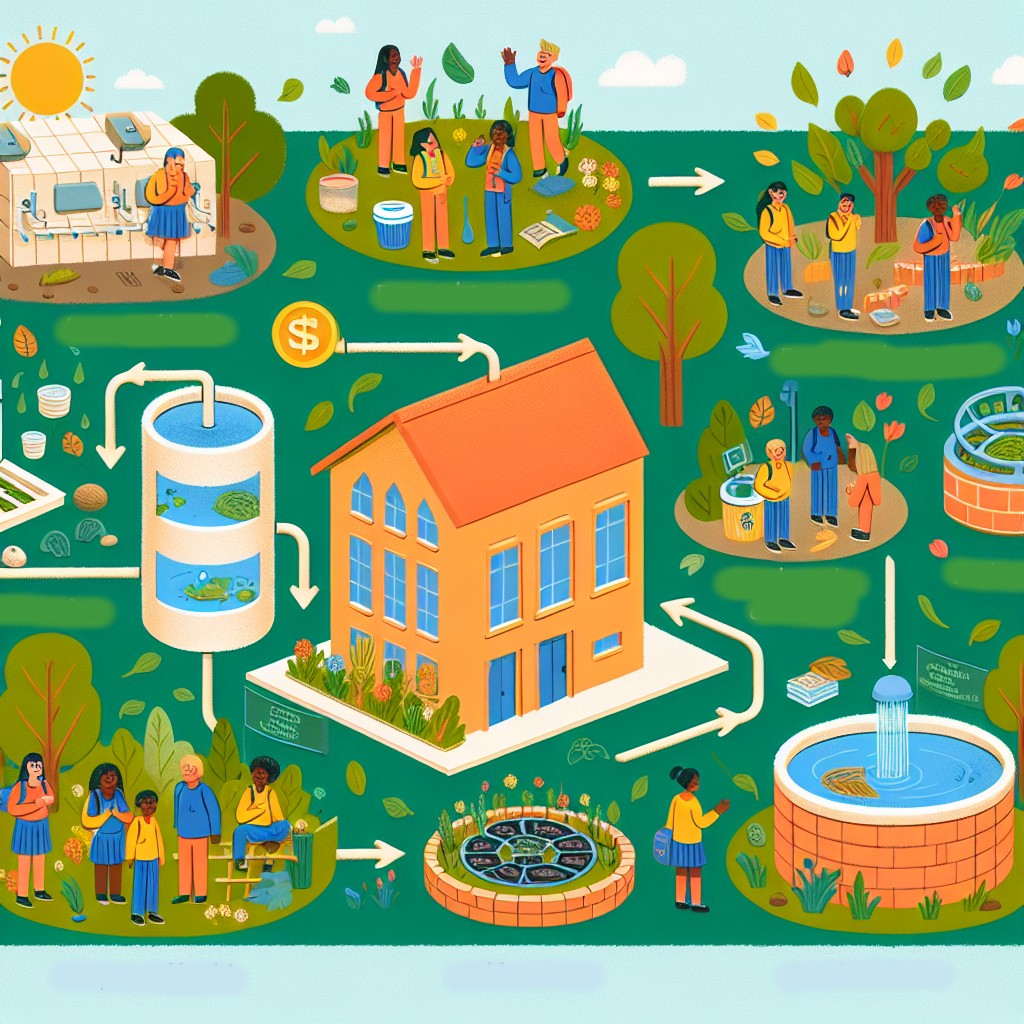
EcoSan for climate resilience is no longer a niche planning topic; it is a practical sanitation strategy for communities facing drought, flooding, heat, water contamination, and infrastructure disruption. EcoSan, short for ecological sanitation, treats human excreta and household organic waste as resources that can be safely managed, sanitized, and returned to productive use rather than flushed away as waste. In implementation work, that definition matters because climate resilience depends on systems that keep functioning under stress, protect health, and conserve water, nutrients, energy, and money. I have seen sanitation projects fail not because the toilet technology was inherently weak, but because planners ignored flood levels, soil behavior, user habits, maintenance capacity, and the changing local climate baseline.
Preparing EcoSan systems for environmental changes means designing for variability instead of average conditions. A composting toilet that works in a temperate dry season may struggle in prolonged humidity; a urine-diverting dry toilet installed in a floodplain can become unsafe if vaults are not raised and sealed; a reuse program can stall if storage times, handling protocols, and crop guidance are not aligned with public health rules. Climate resilience in this context means the ability of the sanitation chain to absorb shocks, continue service, recover quickly, and reduce future risk. That includes containment, collection, treatment, reuse, operations, financing, user behavior, and governance. For implementation teams, the core question is simple: how do you build EcoSan systems that still work when weather becomes less predictable?
This hub article answers that question by covering the implementation techniques that matter most: climate risk assessment, site selection, technology choice, nutrient recovery, pathogen control, water management, operations, monitoring, financing, and community adoption. It also sets the foundation for deeper articles across the implementation strategies topic, linking field realities with established guidance from the World Health Organization, ISO 30500 performance thinking, and fecal sludge management practice. The goal is not to present EcoSan as a universal solution. The goal is to show where EcoSan performs well, what conditions it needs, and how to adapt it so sanitation services remain safe, practical, and productive as environmental pressures intensify across both rural and urban settings.
Climate risk assessment is the first implementation step
Advancing EcoSan implementation techniques starts with a site-specific climate and hazard assessment. Before selecting a toilet model, map flood recurrence, groundwater depth, seasonal rainfall intensity, drought periods, heat exposure, soil permeability, slope stability, and stormwater flow paths. In practice, I treat this as a sanitation service risk exercise, not a construction checklist. The same toilet can be resilient in one ward and fragile in the next. For example, raised urine-diverting toilets often perform well in high-water-table zones because they reduce infiltration risk, while unlined pits become contamination pathways during flood events. In arid regions, dry or low-water systems can outperform flush systems by avoiding dependence on scarce water and failing pipe networks.
Implementation teams should combine local knowledge with simple technical tools. Community hazard mapping, historical flood markers, handheld GPS, soil tests, and municipal drainage plans usually reveal enough to make good first decisions. More advanced projects can add rainfall return-period analysis, groundwater monitoring, and vulnerability scoring by neighborhood. The important point is to choose design parameters for extremes, not long-term averages. If annual precipitation is becoming more erratic, storage sizing, roof drainage diversion, and access paths for service crews must reflect peak events. If heat waves are lengthening, dehydration rates, odor control, insect pressure, and operator safety need attention. A resilient EcoSan program begins when climate data influences the sanitation chain from day one.
Technology selection should match local exposure and service capacity
The best EcoSan technology is the one local users and service providers can operate safely under expected environmental conditions. Common options include urine-diverting dry toilets, composting toilets, arborloo-style systems, container-based sanitation with resource recovery, and hybrid decentralized units that separate urine, feces, and graywater. Selection should be based on exposure, density, cultural acceptance, maintenance skills, and reuse demand. In flood-prone settlements, sealed above-ground vaults or removable containers are usually safer than below-ground pits. In water-scarce schools or peri-urban areas with unreliable supply, urine diversion reduces water dependence and enables nutrient capture. In dense informal settlements, shared or serviced models may be more realistic than household systems if space for treatment is limited.
Good implementation avoids the trap of choosing technology by brochure appeal. I have seen composting toilets installed where users had no bulking material, no training, and no management plan for wet-season moisture, which predictably led to odors and abandonment. By contrast, container-based EcoSan can work well in constrained urban settings because treatment is shifted to a managed off-site facility with controlled conditions. Tradeoffs are real. Dry systems reduce water use, but they demand disciplined operation and handling. Urine diversion improves nutrient recovery, but pipe slopes, scaling control, and user instructions must be right. Choosing the technology is therefore inseparable from choosing the service model, including who empties, transports, treats, monitors, and pays for the system over time.
Design details determine whether EcoSan survives droughts, floods, and heat
Climate-resilient EcoSan is won or lost in design details. Raised plinths, sealed vaults, wide roof overhangs, stormwater diversion drains, durable venting, insect screens, non-slip access, and protected storage areas all reduce climate-related failure. In humid climates, vault ventilation and moisture management are essential because wet fecal matter slows dehydration and increases odor and fly breeding. In very dry zones, designs should preserve user comfort and prevent excessive dust while still maintaining desiccation. Material choice also matters: reinforced concrete, stabilized blocks, corrosion-resistant fixtures, and UV-stable plastics hold up better under repeated weather stress than low-grade components that crack, warp, or leak.
Implementation teams should standardize core resilience features so every installation does not reinvent them. The table below shows how common environmental pressures affect EcoSan design choices.
| Environmental change | Primary EcoSan risk | Recommended implementation technique | Example |
|---|---|---|---|
| Flooding | Inundation, pathogen spread, structural damage | Raised units, sealed vaults, anchored superstructure, drainage swales | Coastal settlements elevating toilets above known flood marks |
| Drought | Water scarcity, failed flush dependence | Urine-diverting dry systems, graywater separation, low-water cleaning protocols | Schools replacing pour-flush units with dry diversion systems |
| Heat waves | Odor, user discomfort, faster material degradation | Shading, heat-resistant materials, improved ventilation | Markets using insulated roofing and larger vent stacks |
| Intense rainfall | Water ingress, slippery access, erosion | Roof extension, splash control, raised walkways, erosion protection | Hillside sites installing stone pitching and gutter drainage |
These measures are not expensive compared with rebuilding failed facilities. They also improve everyday usability, which is critical because a technically sound toilet that users avoid delivers no resilience at all.
Safe resource recovery turns sanitation into an adaptation asset
One reason EcoSan matters for climate resilience is that it can recover nutrients and organic matter at the point where conventional sanitation often loses them. Properly stored urine can provide nitrogen, phosphorus, and potassium for agriculture. Treated fecal compost or co-composted biosolids can improve soil structure and moisture retention, which is especially valuable under drought and erratic rainfall. In farming communities, that makes sanitation part of adaptation planning rather than a stand-alone service. I have worked with projects where farmers accepted urine fertilizer more readily when extension officers demonstrated application rates on maize or vegetable plots and compared input costs with commercial fertilizer prices.
However, resource recovery only strengthens resilience when treatment and reuse protocols are clear. The World Health Organization’s sanitation safety planning approach is useful here because it identifies hazards along the entire chain and sets control measures for exposure. Urine storage duration, dilution practices, crop restrictions, composting temperatures, maturation time, vector control, and personal protective equipment must be specified. Reuse also depends on logistics: containers, transport schedules, storage sheds, application equipment, and seasonal demand. In some urban programs, the better business case is not direct household reuse but centralized processing into marketable compost blends for landscaping, tree crops, or peri-urban agriculture. Nutrient recovery is therefore both a public health task and a supply-chain design task.
Operations, maintenance, and monitoring keep systems resilient over time
EcoSan implementation often underperforms because projects focus on construction and underbudget for operations. Climate resilience requires routine inspection, cleaning, moisture management, repairs, and performance tracking. Every site needs an operations manual that states who adds cover material, who checks urine lines for blockage, how full vaults are assessed, when containers are exchanged, where treatment records are kept, and how complaints are handled. For institutions such as schools, clinics, and markets, assigning named caretakers is more effective than assuming shared responsibility. Digital tools can help: simple mobile forms, QR-coded service logs, and GPS-tagged maintenance visits create accountability and reveal failure patterns before they become health risks.
Monitoring should cover both service quality and environmental safety. Useful indicators include toilet functionality rate, user satisfaction, odor and fly complaints, vault moisture level, urine volume captured, compost curing time, overflow incidents, groundwater proximity, and final reuse destination. For larger programs, periodic testing for helminth eggs, E. coli, moisture, pH, or compost maturity may be warranted depending on regulations and intended reuse. Weather-linked triggers also improve resilience. After extreme rain, inspect drainage, seals, and access immediately. During drought, verify cover material supply and handwashing water arrangements. Data does not need to be complicated; it needs to inform action. The most durable EcoSan systems I have seen were run like services, not like static infrastructure.
Community adoption, financing, and governance determine scale
Advancing EcoSan implementation techniques ultimately depends on people, institutions, and money. Community adoption improves when users understand not just how to use the toilet, but why specific behaviors matter, such as separating urine correctly, keeping wash water out of dry vaults, and using cover material consistently. Demonstration units, peer champions, and follow-up visits work better than one-off training sessions. Language matters too. Programs framed around cleanliness, reliability, and lower water demand often gain wider acceptance than programs framed only around waste reuse, which can trigger cultural resistance unless handled carefully and respectfully.
Financing models should match the service chain. Household purchase may work for simple rural systems with local masons and farm reuse, while fee-for-service models fit container collection and centralized treatment. Public institutions often need ring-fenced maintenance budgets, not just capital grants. Municipalities can support scale by approving standard designs, setting reuse rules, integrating EcoSan into climate adaptation plans, and coordinating sanitation with agriculture, drainage, and solid waste departments. Governance is especially important in peri-urban growth areas, where informal construction, flood exposure, and weak service coverage create compounded risk. The strongest hub strategy is to treat EcoSan as an implementation portfolio: different technologies, financing methods, and operating models linked by clear safety standards and climate-aware design principles.
EcoSan for climate resilience works when implementation is disciplined, local, and service-focused. The central lesson is straightforward: ecological sanitation is not only a toilet choice, but a resilient sanitation system that can conserve water, protect public health, and recover valuable nutrients under environmental stress. To achieve that result, teams must begin with climate risk assessment, choose technologies that fit exposure and operational reality, build in flood, drought, and heat protections, and manage reuse with clear safety controls. They must also invest in operations, monitoring, user training, and governance, because climate-ready sanitation fails without reliable day-to-day management.
As a hub for advancing EcoSan implementation techniques, this article points to the subtopics that deserve deeper planning attention: site assessment, design standardization, service-chain logistics, treatment validation, agricultural reuse, institutional management, and financing for scale. Each area affects whether EcoSan becomes a durable adaptation asset or a short-lived pilot. The practical benefit is significant. Well-implemented EcoSan can reduce dependence on water-intensive sewerage, lower contamination risk in vulnerable areas, and support local soil fertility where climate pressure is already undermining food production. If you are shaping an implementation strategy, start by auditing your local climate risks and current sanitation chain, then use that evidence to select and adapt the right EcoSan model for long-term resilience.
Frequently Asked Questions
What is EcoSan, and why is it important for climate resilience?
EcoSan, or ecological sanitation, is an approach to sanitation that safely manages human waste and related organic materials as resources rather than treating them as something to simply flush away and forget. Instead of relying entirely on centralized sewer networks, high volumes of water, or energy-intensive treatment systems, EcoSan systems are designed to contain, sanitize, and in many cases reuse nutrients and organic matter in productive ways. This is especially important in the context of climate resilience because climate change is placing growing pressure on conventional sanitation infrastructure through drought, flooding, heat stress, water contamination, and service interruptions.
In practical terms, EcoSan helps communities build sanitation systems that can continue functioning under difficult environmental conditions. During drought, for example, waterless or low-water EcoSan systems reduce dependence on scarce freshwater supplies. In flood-prone areas, well-designed contained sanitation can lower the risk of sewage overflow and contamination of wells, surface water, and living areas. In places where storms or heat damage infrastructure, decentralized systems may be easier to maintain, repair, and adapt than large centralized networks. EcoSan also supports long-term resilience by returning nutrients to soils, improving local resource efficiency, and reducing waste-management burdens. That makes it more than a sanitation option; it becomes part of a broader strategy for health protection, environmental management, and community adaptation.
How does EcoSan help communities prepare for drought and water scarcity?
One of the strongest advantages of EcoSan in a changing climate is its ability to reduce water demand. Conventional flush toilets can use large amounts of clean water every day, which becomes increasingly difficult to justify in regions facing chronic drought, erratic rainfall, or pressure on groundwater supplies. EcoSan systems, especially dry or low-flush designs, allow households, schools, health posts, and community facilities to maintain sanitation services without depending on high volumes of water. That can make a major difference in both rural and urban areas where water access becomes unreliable during dry periods.
Beyond direct water savings, EcoSan contributes to drought resilience by supporting more circular local resource use. When waste is safely treated and nutrients are recovered, communities may be able to use resulting products to support soil fertility and improve moisture retention in agriculture or landscaping, depending on the specific system, safety process, and regulatory context. Health protection is also part of drought preparedness. When water is scarce, people often reduce handwashing, cleaning, or toilet flushing, which can increase sanitation-related disease risks. EcoSan systems designed for low-water conditions help prevent the breakdown that often happens when conventional systems become too expensive or impractical to operate. The overall result is a sanitation approach that aligns better with long-term water security planning rather than competing against it.
Can EcoSan systems perform well in areas affected by flooding and extreme weather?
Yes, but performance depends heavily on design, siting, construction quality, and maintenance. Flooding creates serious sanitation risks because it can spread untreated waste into homes, streets, fields, and water sources. Traditional pit systems and damaged sewer systems are especially vulnerable when groundwater rises or heavy rainfall overwhelms infrastructure. EcoSan can improve resilience in these settings when systems are specifically designed to prevent inundation, leakage, and uncontrolled discharge. That may include elevated structures, sealed containment, diversion of stormwater, reinforced foundations, and placement in locations less exposed to runoff or seasonal flooding.
The key point is that EcoSan is not automatically flood-resilient just because it is ecological; it must be engineered and managed for the local hazard profile. Communities need proper risk assessment before installation, including soil conditions, flood history, drainage patterns, and groundwater levels. Operation and maintenance protocols are equally important, especially for safe handling during and after extreme weather events. When those elements are in place, EcoSan can offer a more robust alternative to sanitation systems that fail catastrophically under climate stress. It can also reduce recovery time after disasters because decentralized units are often easier to inspect, clean, repair, or replace than large damaged networks. For climate adaptation planning, that flexibility is a major benefit.
Is EcoSan safe, and what does it require to protect public health?
EcoSan can be very safe when it is properly designed, used, monitored, and maintained. Public health protection is the foundation of any credible EcoSan program. The goal is not simply to reuse waste, but to safely interrupt disease transmission while managing nutrients and organic matter responsibly. That means systems must include effective containment, treatment, or storage processes that reduce pathogens to acceptable levels before any handling, transport, or reuse takes place. Safety also depends on user behavior, cleaning practices, protective equipment where needed, and clear operational guidance for households, institutions, and service providers.
Successful EcoSan implementation requires more than hardware. Communities need training, culturally appropriate communication, and ongoing support so people understand how the system works and why each step matters. Local governments, engineers, public health teams, and service operators should also have defined roles for inspection, desludging or removal where applicable, and compliance with health and environmental standards. Reuse options must follow established safety rules and should never be assumed to be appropriate without treatment verification and context-specific assessment. In short, EcoSan is safe when treated as a professional sanitation solution rather than a shortcut. With proper safeguards, it can protect health even in climate-stressed settings where conventional systems are unreliable or unaffordable.
What should communities consider before adopting EcoSan as part of a climate resilience strategy?
Communities should begin by viewing EcoSan as both a technical and social system. The first step is to understand local climate risks and sanitation challenges together rather than separately. Decision-makers should assess water availability, flood exposure, land conditions, population density, waste-service capacity, cultural preferences, agricultural practices, and existing sanitation gaps. A system that works well in a drought-prone rural area may not be the right fit for a dense settlement with different space constraints, governance capacity, or user expectations. Matching the technology to the local context is essential.
It is also important to consider long-term management, not just installation. EcoSan performs best when there is a plan for user education, maintenance, financing, monitoring, and safe end-product handling or disposal. Communities should ask who will maintain the system, how replacement parts or services will be accessed, what regulations apply, and how performance will be monitored over time. Pilot programs can help test acceptance and technical suitability before larger rollout. When integrated into broader planning for water security, public health, disaster preparedness, and local livelihoods, EcoSan can become a highly practical climate resilience tool. The most successful programs are usually the ones that combine sound engineering with strong community engagement and realistic service planning from the beginning.