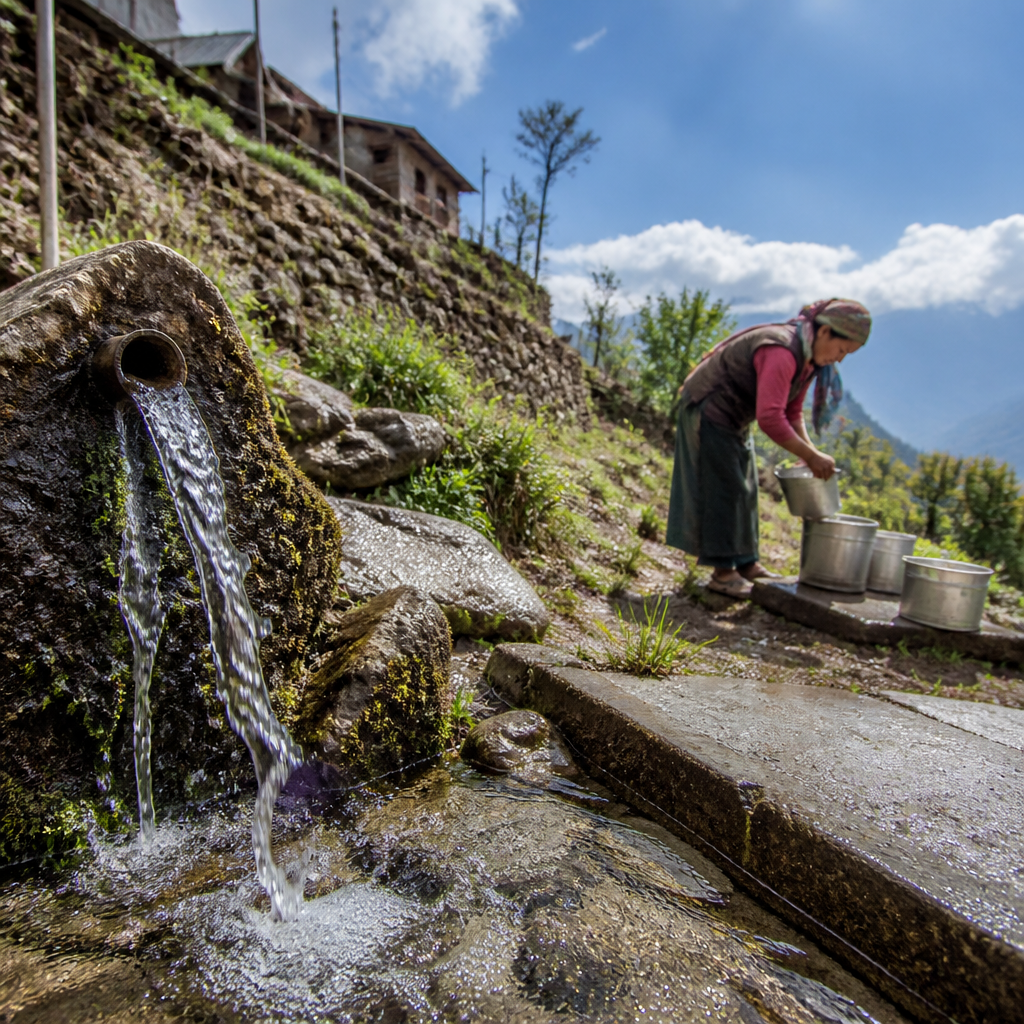
Spring rejuvenation for water supply in Sikkim has become one of India’s most important mountain water management stories because it links rural drinking water security, climate resilience, watershed science, and community action in a single practical model. In Sikkim, most rural households depend on dharas, khels, and small spring-fed systems rather than large surface reservoirs, so when spring discharge declines, the effect is immediate: longer collection times, unreliable piped schemes, crop stress, and added pressure on women who manage household water. Spring rejuvenation means restoring the underground recharge processes that feed a spring, not merely repairing the outlet structure. That distinction matters. A spring is the visible point where groundwater naturally emerges, while the recharge area may lie upslope across forests, farms, roads, and settlements. Over the past decade, I have seen that the most successful projects in the eastern Himalaya begin by treating springs as hydrogeological systems rather than isolated taps. Sikkim matters nationally because its experience shows how local recharge mapping, trenching, staggered pits, drainage correction, vegetative treatment, and village institutions can revive flows in difficult terrain. This hub article reviews the leading case studies and success stories, explains what worked, where limits remain, and how lessons from Sikkim can guide future water supply planning across mountain India.
Why Sikkim became a leading laboratory for spring rejuvenation
Sikkim is uniquely suited to demonstrate spring rejuvenation because its steep slopes, fractured rock geology, high rainfall concentration, and dispersed settlements create both dependence on springs and vulnerability to their decline. Although the state receives substantial monsoon rain, much of it runs off quickly. Springs fail not because rainfall disappears entirely, but because infiltration pathways are disrupted by land-use change, road cutting, drainage concentration, compaction, and reduced soil moisture storage. Several studies in the Himalaya have documented drying springs, and Sikkim’s policy response stood out because departments and civil society groups moved beyond complaint to diagnosis and treatment. The state’s rural water supply systems often draw from spring sources through gravity schemes, which makes spring flow reliability central to public service delivery.
What set Sikkim apart was early acceptance of a springshed approach. Instead of assuming that a spring could be revived by cleaning catchpits or replacing pipes, practitioners started identifying recharge zones, infiltration barriers, and discharge behavior. The concept was simple enough for communities to adopt and rigorous enough for hydrogeologists to support. State departments, local governments, and organizations such as ACWADAM helped translate groundwater science into mountain practice. This shift created case studies that are now referenced far beyond Sikkim because they connect watershed treatment to measurable drinking water outcomes, not just plantation targets or soil conservation indicators.
How the springshed method worked on the ground
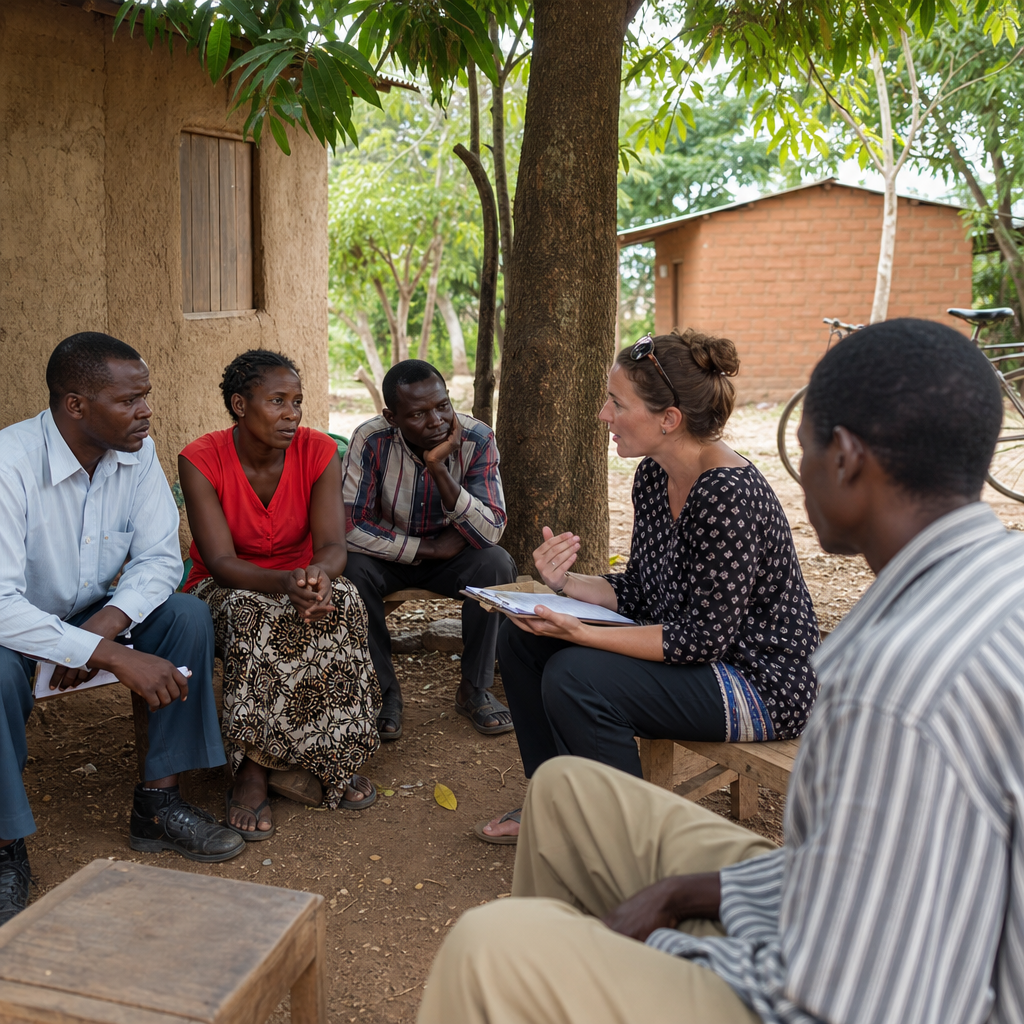
The core method in Sikkim’s success stories followed a repeatable sequence. First came social mobilization and spring inventory: identifying which spring mattered most for domestic use, who depended on it, and how discharge changed seasonally. Second came hydrogeological mapping. Teams walked the slope, examined lithology, fractures, slope breaks, seepage lines, and existing drainage, then delineated a probable recharge area. Third came baseline measurement, often using simple volumetric discharge methods in lean season and monsoon to establish variability. Fourth came treatment design. Depending on site conditions, interventions included contour trenches, staggered trenches, percolation pits, recharge ponds, loose boulder checks, vegetative barriers, drain diversion, and protection of infiltration zones from excavation or grazing.
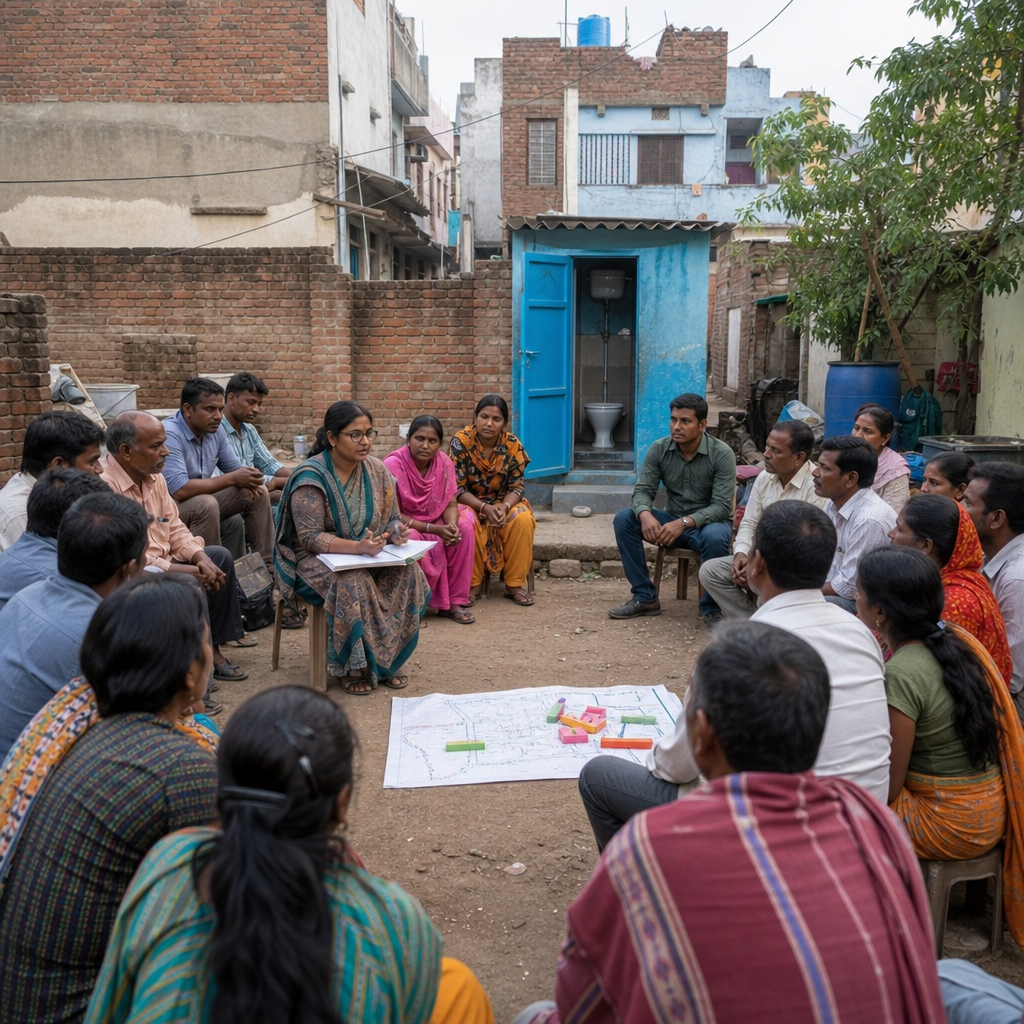
Fifth came governance. Villages were asked to manage land-use rules in recharge areas, maintain structures, and monitor flow after treatment. This is where many mountain water projects usually weaken, but Sikkim’s better examples linked technical action with local responsibility. In places where recharge lay on private farmland, success depended on negotiation and visible benefit sharing. The final step was measurement over several seasons. In my experience, claims of spring revival become credible only when supported by pre- and post-treatment discharge records, household access data, and observation over at least two lean seasons. Sikkim’s strongest cases generally met that standard better than typical watershed projects elsewhere.
Case studies that shaped the Sikkim model
One frequently cited set of cases emerged from drought-prone villages in South and West Sikkim, where declining spring discharge had begun undermining rural water supply schemes. In these sites, hydrogeological assessment showed that roads and unplanned drains were channeling runoff away from recharge zones. Treatment packages combined contour trenches on upper slopes, recharge pits in suitable permeable zones, and drainage correction to slow water movement. Communities also protected key patches from open disturbance. Reported results included improved lean-season discharge, reduced walking distance for women collecting water, and greater reliability in gravity-fed systems serving clustered households. What made these cases persuasive was not a miracle increase overnight, but gradual stabilization after one to three monsoon cycles.
Another important cluster of success stories came through the Dhara Vikas initiative, which helped popularize spring-shed development in Sikkim. The program linked spring revival with employment generation and climate adaptation, allowing treatment works to be implemented at scale. Villages selected stressed springs, technicians mapped recharge zones, and labor-intensive measures such as trenches and pits were constructed across those zones. The practical advantage was administrative: spring rejuvenation moved from a niche pilot idea into a recognizable public program. In many villages, households reported that sources which had become seasonal regained flow for longer periods, improving both drinking water access and small irrigation support. That outcome mattered because water security in Sikkim is never only about domestic taps; it shapes fodder, kitchen gardens, sanitation, and health.
A third category of success involved institutional learning rather than one dramatic source revival. Some panchayats and line departments became better at source sustainability planning for piped schemes. Instead of designing infrastructure solely around current discharge, they began asking whether the spring could sustain projected demand in April and May, whether recharge areas were protected, and whether catchment treatment should precede capital investment. These administrative case studies deserve attention because they changed how water supply projects were conceived. A stable source often provides greater long-term value than a new storage tank attached to a declining spring.
What the best success stories have in common
Across Sikkim, the most durable spring rejuvenation results shared a common pattern: correct diagnosis, local ownership, modest but targeted engineering, and patient monitoring. They did not rely on heavy concrete structures at the spring mouth. Instead, they restored infiltration and subsurface storage uphill. They also recognized that not every drying spring responds equally. Springs issuing from shallow weathered zones may show quicker recovery than deep fracture-controlled springs with complex recharge paths. In village after village, I found that expectation management was essential. Successful teams told communities that spring treatment improves probability and resilience; it does not guarantee identical flow every month in every year.
Another common element was multi-benefit design. A trench in the recharge zone was not justified only as a groundwater measure; it also reduced slope erosion, improved soil moisture, and supported vegetation. This broadened support from departments concerned with forests, rural development, and climate resilience. Importantly, the best projects used low-cost methods that matched mountain maintenance realities. A recharge pit that a village can desilt is more useful than a sophisticated structure no one will repair after one landslip. Success in Sikkim has therefore depended as much on appropriateness as on innovation.
| Success factor | What it looked like in Sikkim | Why it mattered for water supply |
|---|---|---|
| Recharge mapping | Walking the slope, identifying fractures, drains, and infiltration zones | Ensured treatment happened where water actually entered the aquifer |
| Seasonal discharge monitoring | Measuring lean-season and monsoon flow before and after works | Showed whether revival improved reliable supply, not just wet-season abundance |
| Community agreements | Rules on grazing, excavation, and maintenance in recharge areas | Protected treatment investments and reduced recurring damage |
| Convergence funding | Using public works and water supply programs together | Allowed springshed treatment at a scale large enough to affect discharge |
| Source sustainability planning | Linking spring health to scheme design, not treating them separately | Reduced failure risk in gravity-fed rural systems |
Limits, tradeoffs, and unresolved challenges
Not every intervention in Sikkim produced strong results, and those weaker cases are equally instructive. Some projects overestimated recharge area boundaries and treated only a small visible patch near the source. Others lacked baseline data, making later claims impossible to verify. In certain sites, road construction or fresh slope cutting offset gains from recharge work. There are also hydrogeological limits. Springs controlled by deep faults, very thin soils, or heavily disturbed aquifers may not respond quickly to surface infiltration measures. This does not mean treatment was wrong; it means response time and scale were mismatched with expectations.
Another challenge is governance of private land. Recharge zones often span multiple holdings, and source users are not always the same as landowners. Without negotiated incentives, protection can weaken over time. Climate variability adds further uncertainty. More intense rainfall can increase total annual precipitation while still reducing recharge efficiency because water runs off faster. Monitoring remains inconsistent, and many success stories rely on household testimony supported by only limited hydrological records. That evidence is valuable but should be strengthened. For Sikkim’s model to remain credible, future work needs standardized discharge measurement, spring typology classification, water quality testing, and long-term maintenance budgets.
Lessons for the wider India water security agenda
Sikkim’s case studies matter beyond the state because they show that mountain drinking water security can be improved through source-focused planning rather than endless extension of supply hardware. For Himalayan states such as Uttarakhand, Himachal Pradesh, Nagaland, and Meghalaya, the key lesson is that spring revival must be built into rural water supply policy, watershed programs, and climate adaptation plans from the start. The approach is replicable, but not by copying structures blindly. Replication requires hydrogeological capacity, village engagement, and patience to work at spring scale rather than district abstraction.
For practitioners, the takeaway is clear. Start with a spring inventory, prioritize high-dependence sources, map recharge scientifically, treat runoff pathways, protect infiltration zones, and measure outcomes over time. For policymakers, the Sikkim experience shows the value of converging employment, natural resource management, and drinking water funds around a single source sustainability objective. For researchers, it offers a living field laboratory on how fractured mountain aquifers respond to land treatment. As a hub for case studies and success stories, Sikkim demonstrates that spring rejuvenation is neither folklore nor a quick civil works package. It is disciplined groundwater management adapted to mountain communities. The main benefit is durable water supply from sources people already trust and use. The next step is practical: document every spring systematically, invest in recharge area protection, and scale proven springshed methods across vulnerable Himalayan settlements.
Frequently Asked Questions
1. What does spring rejuvenation mean in the context of water supply in Sikkim?
Spring rejuvenation in Sikkim refers to the process of understanding, protecting, and restoring the natural recharge systems that feed mountain springs used for drinking water, irrigation, and household needs. Unlike regions that depend mainly on large dams or major rivers, many rural communities in Sikkim rely on dharas, khels, and small spring-fed gravity systems. That makes springs the frontline water source for daily life. When a spring weakens or dries up, the consequences are felt immediately through reduced household water access, longer collection times, stress on women and elderly residents, disruption to piped village systems, and lower water availability for kitchen gardens and livestock.
In practical terms, rejuvenation is not just about cleaning a spring outlet or constructing a tank near it. It involves identifying the recharge area upslope, studying local geology and slope behavior, examining land use changes, and then applying watershed treatments that help rainwater soak into the ground rather than run off quickly. These treatments can include contour trenches, staggered pits, percolation measures, vegetative planting, protection of forest patches, drainage correction, and careful land management in the recharge zone. The goal is to increase infiltration, improve subsurface storage, and support more reliable base flow to the spring over time.
What makes Sikkim’s experience especially important is that it shows how mountain water security can be improved by combining hydrogeology, local knowledge, and community participation. Spring rejuvenation is therefore both a scientific and social process. It helps villages secure drinking water closer to home while also strengthening climate resilience in a region where rainfall patterns are becoming less predictable and pressure on local water systems is increasing.
2. Why have springs in Sikkim declined, and how is climate change affecting them?
Spring decline in Sikkim is usually caused by a combination of natural and human-driven factors rather than a single problem. One major issue is changing rainfall behavior. Even where total annual rainfall appears high, water may arrive in shorter, more intense bursts instead of being spread gradually across the season. Heavy rain often runs off steep slopes quickly, leaving less time for infiltration into the ground. Since springs depend on stored groundwater moving slowly through soil and fractured rock, reduced infiltration can lead to lower discharge in the dry months.
Land use change is another important driver. Road cutting, slope disturbance, construction, poorly managed drainage, deforestation, conversion of vegetated land, and compaction of soil can all interfere with recharge. In mountain environments, small disturbances in the right place can have large effects on spring hydrology. If a recharge zone is damaged, the spring below may become seasonal, erratic, or much weaker than before. In some cases, communities notice that springs once considered perennial now fall sharply during pre-monsoon months or fail entirely during dry periods.
Climate change adds another layer of uncertainty. Warmer temperatures, changing monsoon timing, longer dry spells, and more frequent extreme rainfall events can alter how water moves through the landscape. Instead of slowly recharging aquifers and fractured hill systems, rainfall may leave the catchment rapidly as surface runoff. This creates the paradox often seen in mountain regions: intense rain events on one hand, but growing water scarcity on the other. For rural households, the result can be unreliable piped systems, increased time spent fetching water, crop stress, and higher vulnerability during dry seasons.
That is why spring rejuvenation has become so central in Sikkim. It directly addresses the hydrological gap between rainfall and usable local water supply. By restoring recharge areas and improving how landscapes absorb and store rainwater, communities can reduce the impact of both local degradation and broader climate-related stress.
3. How does the spring rejuvenation process actually work on the ground?
On the ground, spring rejuvenation usually begins with mapping and diagnosis rather than construction. Teams first identify the spring source, measure seasonal discharge, document community dependence, and locate the likely recharge area that feeds the spring. This often involves field observation, contour analysis, local interviews, and hydrogeological interpretation of slope, rock type, fractures, soil depth, vegetation, and drainage lines. In mountain terrains like Sikkim, understanding subsurface flow paths is essential because a spring may be influenced by conditions far above or beside the visible outlet.
Once the recharge area is identified, the next step is to analyze why the spring is underperforming. Is runoff leaving too quickly? Has a forest patch been degraded? Is road drainage diverting water away from infiltration zones? Are there erosion scars, landslip-prone sections, or compacted fields reducing percolation? Based on these findings, a treatment plan is designed for the specific site. There is no universal template because each spring system behaves differently depending on geology, slope, and land use.
Treatment measures typically focus on slowing runoff, increasing infiltration, and protecting the recharge landscape. This can include contour trenches, staggered trenches, infiltration pits, recharge ponds where feasible, vegetative barriers, plantation with suitable native species, slope stabilization, check structures in minor drainage paths, and better drainage planning along roads or footpaths. In some locations, social protection measures are just as important as physical works, such as restricting disturbance in recharge zones, managing grazing, or agreeing on community rules for land use around the spring catchment.
Monitoring is a critical but sometimes overlooked phase. Spring discharge should be tracked across seasons to understand whether the interventions are improving flow, especially in lean months. Water quality, sediment load, and community access also matter. Effective programs in Sikkim emphasize that rejuvenation is not a one-time engineering project; it is an adaptive watershed management process. Results may take time, but when recharge improves, the benefits can support drinking water systems, reduce pressure on women and children who collect water, and increase village confidence in local water security.
4. Why is Sikkim’s spring rejuvenation model considered important for rural water security and climate resilience?
Sikkim’s spring rejuvenation model is widely seen as important because it addresses water supply at the scale where rural people actually experience scarcity: the local source. In many mountain villages, water does not primarily come from large centralized infrastructure. It comes from springs and small gravity-fed systems tied directly to the health of surrounding slopes and forests. That means rural water security cannot be solved only through more pipes or storage tanks if the source itself is failing. Sikkim’s experience highlights a more durable approach: protect and restore the hydrological engine behind the source.
This model is also important because it connects multiple policy goals that are often treated separately. It supports drinking water access, reduces drudgery in water collection, helps sustain small agriculture and livestock, improves ecosystem management, and builds resilience to rainfall variability and climate stress. In other words, spring rejuvenation is not just an environmental activity; it is a public service strategy with direct social and economic value. It can improve the performance of rural water schemes by stabilizing the source rather than repeatedly responding to seasonal failure.
Another reason Sikkim’s work stands out is its integration of science and community action. Hydrogeology helps identify recharge zones and suitable interventions, but local residents contribute historical knowledge about spring behavior, land changes, seasonal patterns, and practical feasibility. This combination creates solutions that are more grounded and more likely to be maintained. In mountain settings, locally informed planning is especially valuable because terrain, access, and hydrology can vary dramatically over short distances.
From a climate resilience perspective, the model offers a realistic adaptation pathway. Communities cannot control changing rainfall patterns, but they can improve how their landscapes capture and store water. By increasing infiltration and protecting recharge areas, villages strengthen their capacity to cope with dry spells and uncertain seasonal flows. That is why Sikkim’s spring rejuvenation story is increasingly seen as a replicable lesson for Himalayan and other mountain regions facing similar water stress.
5. What are the long-term benefits and challenges of spring rejuvenation in Sikkim?
The long-term benefits of spring rejuvenation are substantial when the work is done carefully and maintained over time. The most immediate gain is improved reliability of local drinking water sources, especially during lean seasons when households are most vulnerable. This can reduce the time and physical burden of water collection, which often falls disproportionately on women and girls. More stable spring flow can also improve the functioning of rural piped schemes, lower emergency water transport needs, and support water availability for hygiene, livestock, and household-level cultivation.
Beyond water access, rejuvenation can create broader ecological and economic benefits. Recharge-oriented watershed treatment often reduces erosion, improves slope stability, supports vegetation recovery, and strengthens local ecosystem health. In agricultural areas, better moisture retention can help small farms and kitchen gardens withstand seasonal dry periods more effectively. At the community level, spring-focused planning can promote cooperation around common resources, sharpen awareness of land-water relationships, and encourage more informed local governance.
However, there are also real challenges. Springs are complex hydrogeological systems, and not every intervention will produce rapid results. If recharge areas are identified incorrectly, investments may have limited effect. In steep mountain landscapes, construction quality, maintenance, and access can also be difficult. Land ownership or use rights in recharge zones may complicate protection efforts, especially when the people benefiting from the spring are not the same as those controlling the land above it. This makes