Community-based research on sanitation practices turns public health from a top-down campaign into a shared process in which residents define problems, test solutions, and measure change. In practical terms, it means studying how people access toilets, manage wastewater, wash hands, store water, and handle menstrual hygiene by working with the community rather than merely collecting data from it. I have seen sanitation projects fail when surveys were translated poorly, local norms were ignored, or findings were never returned to residents. I have also seen rapid gains when schools, health workers, women’s groups, landlords, and youth leaders helped design the research itself. That difference matters because sanitation is not only about infrastructure; it is about behavior, trust, governance, affordability, and education. When communities participate in research, the evidence is usually more accurate, the recommendations are more realistic, and the resulting education programs are easier to adopt and sustain.
Sanitation practices include toilet use, fecal sludge management, handwashing with soap, safe child feces disposal, drainage maintenance, and hygiene habits in homes, schools, clinics, and public spaces. Community-based research is the structured collection and interpretation of information with residents as active partners. It often combines household surveys, focus groups, observation checklists, participatory mapping, and local health data. This approach matters within community engagement and education because effective teaching starts with understanding what people already know, what they believe, and what prevents healthier routines. A family may understand disease transmission yet still share an unsafe latrine because rent is high or space is limited. A school may promote handwashing but lack water during part of the year. Research that captures these realities helps educators move beyond slogans toward practical change. As a hub topic, educating for change links sanitation knowledge to social learning, local leadership, and evidence-based action.
Why community-based research improves sanitation education
Community-based research improves sanitation education because it identifies the gap between recommended practice and daily reality. Standard health messaging often assumes that noncompliance comes from ignorance. Fieldwork shows a more complicated picture. In one peri-urban settlement I worked in, nearly every caregiver could explain that diarrhea spreads through contaminated hands and water, yet shared compounds had only one broken tap and irregular soap access. Telling residents to wash hands more often was not enough; the educational response had to include low-cost tippy taps, compound cleaning schedules, and landlord engagement. Research made those barriers visible.
It also reveals whose voices are missing. Women and girls may experience sanitation differently because of safety concerns, privacy needs, and menstrual hygiene management. People with disabilities may face inaccessible toilet designs. Children may avoid school toilets if they are dirty, dark, or stigmatized. Older adults may need handrails or closer facilities. When research includes these groups directly, educational materials become more relevant. Instead of generic posters, communities can co-create demonstrations, peer sessions, radio segments, and school activities that address actual concerns in plain language.
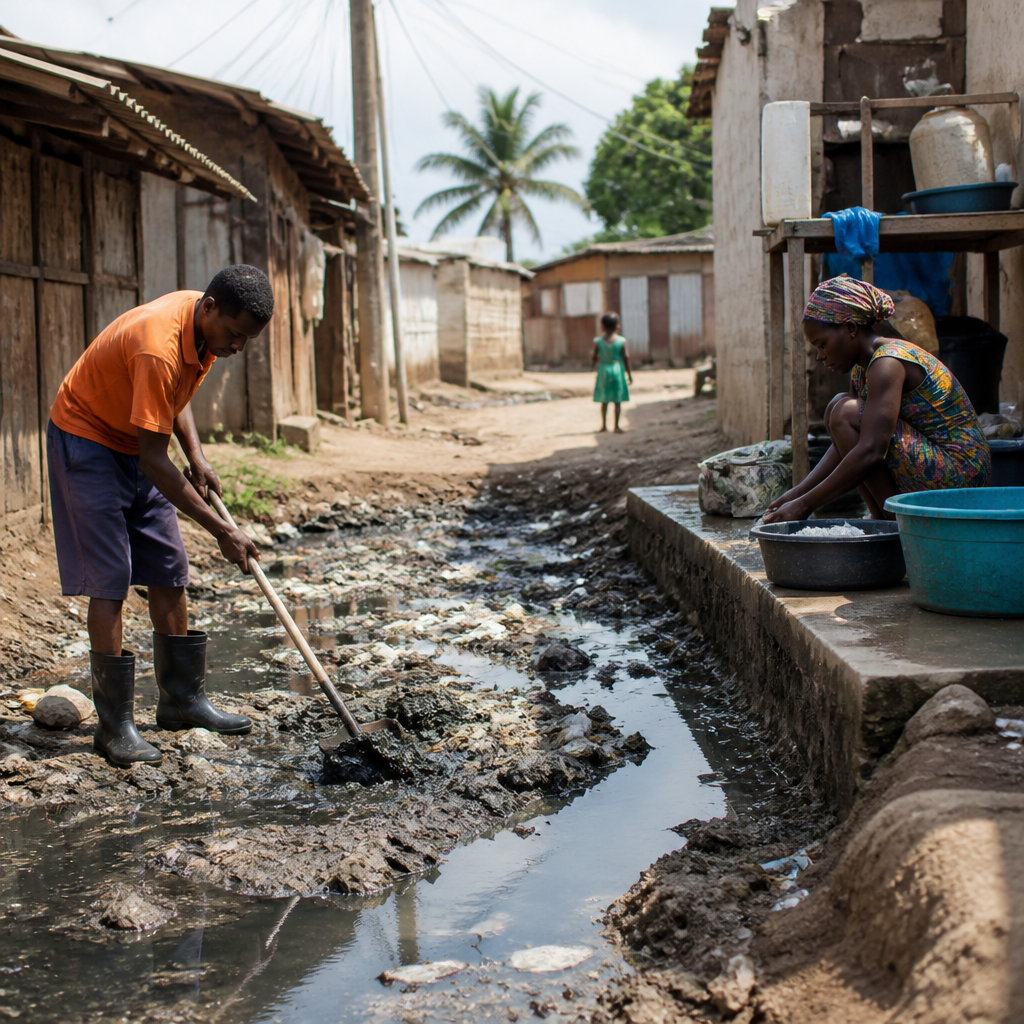
Another advantage is credibility. Residents are more likely to trust findings when they participated in collecting or validating them. This trust supports behavior change because sanitation education depends on repeated reinforcement. If a community mapping exercise shows where wastewater pools after rain and residents confirm that children play nearby, the risk is immediate and concrete. That evidence can motivate local clean-up campaigns, safer drainage practices, and stronger support for maintenance rules.
Core methods used in community-based sanitation studies
The strongest community-based sanitation studies use mixed methods. Quantitative data shows scale, while qualitative data explains why patterns exist. Household surveys can measure toilet access, handwashing station availability, shared facility use, desludging frequency, and knowledge of disease prevention. Structured observation often catches the difference between reported and actual conditions. For example, a respondent may state that soap is always present, but an observer may record an empty dish and no water at the station. This is not dishonesty in every case; soap may be moved, rationed, or unavailable that week. Good research notes the context.
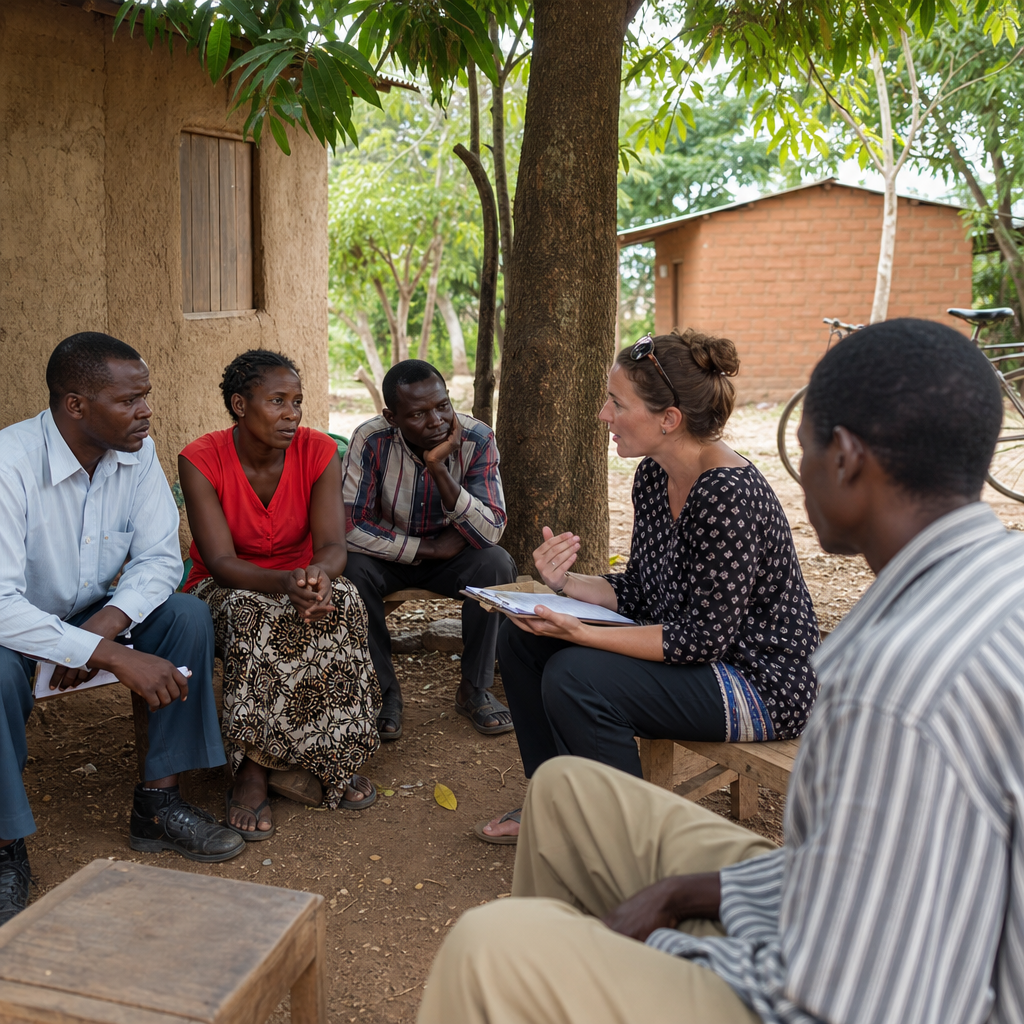
Qualitative methods add the missing detail. Focus group discussions with mothers, schoolchildren, caretakers, sanitation workers, and local leaders uncover norms and constraints that surveys miss. Participatory mapping helps residents identify open defecation sites, overflowing drains, unsafe paths to public toilets, and places where waste collection breaks down. Transect walks give researchers and residents a shared view of drainage channels, pit latrines, solid waste accumulation, and flood-prone areas. Key informant interviews with teachers, clinic staff, utility providers, and local government officers clarify policy and service bottlenecks.
Sampling matters. A sanitation study that only interviews household heads may miss the people most responsible for caregiving and hygiene management. In dense urban neighborhoods, tenancy status can shape access to toilets and responsibility for repairs. In rural settings, distance to water points, seasonal flooding, and livestock proximity may influence sanitation risk. Good community-based research stratifies respondents by gender, age, disability status, income level, and housing arrangement where possible. Tools such as KoboToolbox, ODK, SurveyCTO, and GIS-based mapping make data collection more reliable, but only when field teams are trained to use them consistently.
Designing education programs from research findings
Research becomes useful only when it informs education design. The most effective sanitation education programs translate findings into specific learning goals, audience segments, communication channels, and measurable behaviors. If baseline data shows low rates of handwashing after child feces disposal, the education plan should focus on that exact moment, not only on toilet use. If school observations show that girls avoid latrines during menstruation, the intervention should address privacy, disposal bins, and supportive school policies alongside hygiene instruction.
I usually organize sanitation education around a behavior pathway: awareness, motivation, ability, and reinforcement. Awareness answers what and why. Motivation addresses social norms, perceived benefits, and emotional drivers such as dignity, safety, and care for children. Ability covers access to water, soap, toilets, repairs, and practical know-how. Reinforcement comes from reminders, role models, school routines, and visible community standards. This structure keeps education grounded in behavior science rather than information overload.
Message testing is essential. A technically correct message can fail if it sounds accusatory, conflicts with local beliefs, or ignores literacy levels. In one school program, students responded better to handwashing demonstrations tied to protecting younger siblings than to abstract disease diagrams. In another setting, landlord-focused messages about property value and tenant satisfaction generated quicker toilet repairs than moral appeals. Research identifies which frames work for which audience.
| Research finding | Educational response | Expected behavior change |
|---|---|---|
| Shared toilets are dirty by evening | Resident-led cleaning rota with visual reminders | More frequent cleaning and higher toilet use |
| Soap is missing near handwashing points | Demonstrate low-cost soap holders and refill plans | More consistent handwashing with soap |
| Girls avoid school latrines during menstruation | Privacy upgrades, disposal bins, teacher guidance | Higher attendance and safer menstrual hygiene |
| Caregivers dispose of child feces in drains | Home visits showing safe disposal and cleanup steps | Reduced fecal contamination near homes |
Schools, local leaders, and households as change agents
Educating for change works best when multiple community actors reinforce the same sanitation practices. Schools are powerful because they reach children repeatedly and can normalize routines such as handwashing before meals and after toilet use. However, school-based sanitation education fails if facilities are unusable. The WHO and UNICEF Joint Monitoring Programme has consistently shown that service quality matters as much as access. A school may technically have toilets, but if they are not sex-separated, accessible, private, or supplied with water, educational gains will be limited. Research in schools should therefore assess infrastructure, supervision, cleaning systems, student perceptions, and absenteeism patterns together.
Local leaders help convert findings into collective action. Religious leaders, ward representatives, neighborhood committees, and traditional authorities can legitimize sanitation discussions that might otherwise feel sensitive or embarrassing. When leaders use community-generated evidence, they can advocate more effectively for drainage repairs, safer desludging, and enforcement of local sanitation bylaws. Their role is especially important in settlements where sanitation depends on collective maintenance rather than individual ownership.
Households remain the center of daily practice. Caregivers decide where children defecate, how water is stored, when toilets are cleaned, and whether soap is prioritized in tight budgets. Education programs informed by community-based research recognize the pressures households face. A mother managing several children in a one-room rental without a private toilet needs different support than a homeowner with a yard. Tailored household outreach, peer educators, women’s savings groups, and community health workers often bridge that gap. In my experience, repeated short interactions work better than one-time campaigns because sanitation habits depend on routine and follow-up.
Ethics, data quality, and common research pitfalls
Community-based sanitation research carries ethical responsibilities. Researchers often ask about private practices, observe household facilities, and discuss conditions linked to shame or stigma. Consent must be clear, privacy protected, and expectations managed honestly. Communities should not be led to believe that participation guarantees immediate infrastructure funding. At the same time, extractive research damages trust. Findings should be shared back in understandable formats such as community meetings, simple dashboards, school presentations, or local language briefs.
Data quality problems are common and preventable. Social desirability bias is a major issue in sanitation studies because respondents know the “right” answer. Combining self-reports with spot checks and structured observation reduces error. Enumerator training is equally important. A poorly trained team may classify an unimproved pit as improved, fail to notice whether a handwashing station actually has soap and water, or skip probing on shared facility maintenance. Using standard definitions aligned with recognized frameworks improves comparability across studies.
Another pitfall is treating the community as a single unit. Sanitation burdens are unevenly distributed. Renters, informal workers, female-headed households, people with disabilities, and sanitation laborers often experience the greatest risks. If research averages away those differences, education programs will miss the people who most need support. Finally, many projects measure knowledge gains but not behavioral outcomes. Better indicators include observed handwashing facilities, toilet cleanliness scores, school attendance during menstruation, safe child feces disposal, desludging records, and reported diarrheal episodes interpreted carefully alongside seasonal trends.
Measuring impact and building long-term change
Impact measurement should start before education begins. A baseline establishes current practices, service levels, and perceptions. Midline checks show whether messages are being understood and whether enabling conditions are improving. Endline measurement assesses behavior change and program reach. Where possible, sanitation education should be linked to operational indicators such as water availability, facility uptime, waste collection frequency, and maintenance budgets. If those systems are failing, behavior gains may not last.
Strong evaluation asks direct questions. Did toilet use increase? Are handwashing stations functional at key times? Are school latrines cleaner, safer, and used by girls and boys? Have community committees met regularly and acted on findings? Are landlords or local authorities investing more in repairs? In several projects, I found that the most durable improvements came when education was paired with accountability. Public scorecards, school sanitation clubs, compound cleaning rosters, and feedback channels to local government created a loop between knowledge and action.
Long-term change depends on local ownership. Community members should help interpret results, set priorities, and monitor progress. That is what makes this topic a hub within community engagement and education. Educating for change is not a poster campaign or a one-day training. It is a cycle of listening, researching, teaching, adapting, and measuring. Community-based research on sanitation practices provides the evidence for that cycle and keeps interventions grounded in lived experience. If you are building a sanitation program, start by asking residents how sanitation works in daily life, study the barriers with them, and design education that solves real problems they recognize. That is how healthier habits take root and last.
Frequently Asked Questions
What is community-based research on sanitation practices?
Community-based research on sanitation practices is a collaborative approach to studying sanitation in which local residents are active partners in the research process rather than passive subjects. Instead of outside experts arriving with fixed assumptions, the community helps identify the most urgent sanitation challenges, shape the questions being asked, interpret what the findings mean, and guide the solutions that are tested. This approach is especially important in sanitation because behaviors related to toilet use, handwashing, wastewater disposal, water storage, and menstrual hygiene are closely tied to daily routines, cultural norms, safety concerns, gender roles, cost, and local infrastructure. A practice that appears simple on paper may not be realistic in a particular village, neighborhood, or informal settlement.
In practical terms, community-based sanitation research often includes participatory mapping, household discussions, observation, focus groups, co-designed surveys, and ongoing feedback sessions. Residents may help document where toilets are located, which facilities are safe to use, when water is available, why open defecation persists, or how people manage sanitation during floods, school hours, menstruation, or periods of water scarcity. Because the community is involved throughout the process, the research tends to produce findings that are more accurate, more nuanced, and more actionable. It also helps build local trust, improves the quality of data collection, and increases the chance that any recommended intervention will actually be used and maintained over time.
Why is community participation so important in sanitation research?
Community participation matters because sanitation is not only a technical issue; it is also a social, behavioral, economic, and cultural one. A sanitation system can be well designed from an engineering standpoint and still fail if it does not match how people live, what they can afford, what they believe is acceptable, or what risks they face. For example, a toilet may go unused if it is too far from the home, feels unsafe at night, lacks privacy for women and girls, is difficult for older adults or people with disabilities to access, or conflicts with local beliefs about waste and cleanliness. Without community participation, researchers can easily miss these practical barriers and wrongly conclude that the problem is awareness alone.
Participation also improves the reliability of the research itself. When local residents help shape survey language and discussion topics, the questions are more likely to make sense in the local dialect and cultural context. This reduces misunderstandings, especially in places where sanitation terms do not translate cleanly or where direct discussion of bodily functions is sensitive. Community involvement can also reveal hidden issues that standard surveys often overlook, such as seasonal changes in toilet access, school sanitation challenges, informal payment systems for public toilets, menstrual hygiene stigma, or tensions between tenants and landlords over facility maintenance. In short, participation leads to better evidence and better solutions. It transforms sanitation research from a one-time extraction of information into a process of shared learning and problem-solving.
What sanitation topics are typically studied in community-based research?
Community-based research on sanitation usually looks at the full chain of sanitation behavior and service delivery, not just whether a toilet exists. Researchers and community members may examine access to household or shared toilets, how often facilities are used, whether they are clean and functional, and who is excluded from using them safely. They may study handwashing practices, including whether soap and water are consistently available and when people are most and least likely to wash their hands. Water storage and handling are also common research areas because contamination often happens after water is collected, especially when containers are uncovered, difficult to clean, or shared by many users.
Other major topics include wastewater management, drainage, fecal sludge disposal, and the environmental conditions that affect disease exposure. In some communities, residents may identify standing water, blocked drains, flooding, or overflowing pits as bigger problems than toilet access alone. Menstrual hygiene management is another essential area of study, particularly in schools, workplaces, and low-resource settings where privacy, water, disposal options, and social stigma can shape health and dignity. Community-based research may also explore sanitation affordability, maintenance responsibilities, landlord-tenant dynamics, child feces disposal, disability access, safety for women and girls, and how sanitation practices change during emergencies or seasonal water shortages. By covering these interconnected issues, the research creates a much more realistic picture of sanitation conditions and helps communities prioritize what needs to improve first.
How do researchers make sure sanitation studies are accurate and respectful of local norms?
Accurate and respectful sanitation research begins with listening before measuring. Researchers need to understand local language, social structures, gender dynamics, and cultural sensitivities before they finalize questions or methods. One of the most important steps is working with community members, local leaders, health workers, or trained resident researchers to review the wording of surveys and interview guides. Poor translation can distort meaning, especially for terms related to hygiene, menstruation, waste disposal, or toilet use. A question that sounds clear to an outside team may be confusing, embarrassing, or offensive in another setting. Pretesting tools with a small group from the community helps identify these problems early.
Respect also requires attention to who is being asked, who is present during interviews, and whether people can speak freely. Women, adolescents, people with disabilities, sanitation workers, and lower-status groups may have very different experiences from those voiced by formal leaders. Good community-based research creates safe and appropriate ways for these groups to participate, sometimes through separate focus groups, same-gender interviewers, private conversations, or visual and participatory methods that do not rely only on written surveys. Researchers should also be transparent about why data is being collected, how it will be used, and what limits the project has. When people feel respected and understand the purpose of the study, they are more likely to share honest information. The result is data that is not only ethically collected, but also far more valid and useful for designing sanitation improvements that fit the local reality.
How does community-based research lead to better sanitation solutions and long-term impact?
Community-based research leads to better sanitation outcomes because it connects evidence directly to local decision-making and ownership. When residents help define the problem, they are more likely to support the response. Instead of assuming that a community needs a standard toilet construction program, the research may show that the real barriers are water shortages, poor maintenance, unsafe access at night, lack of menstrual hygiene facilities, or the cost of emptying pits. This kind of insight allows interventions to be much more targeted. In some places, the most effective solution may be behavior change support combined with facility repairs; in others, it may be improved drainage, better handwashing station placement, school sanitation upgrades, or community-managed maintenance systems.
Long-term impact also depends on whether the community can continue using and adapting the solution after the research team leaves. Because community-based methods build local capacity, people often gain skills in monitoring, recordkeeping, problem identification, and advocacy. Local governments, health committees, schools, and resident groups can use the findings to push for funding, track progress, and hold service providers accountable. Just as importantly, shared research creates a stronger sense that sanitation is a collective issue tied to health, dignity, safety, and everyday life. That shift matters. Sustainable sanitation improvements rarely come from infrastructure alone; they come from solutions that are socially accepted, practically manageable, and supported by the people who rely on them every day.