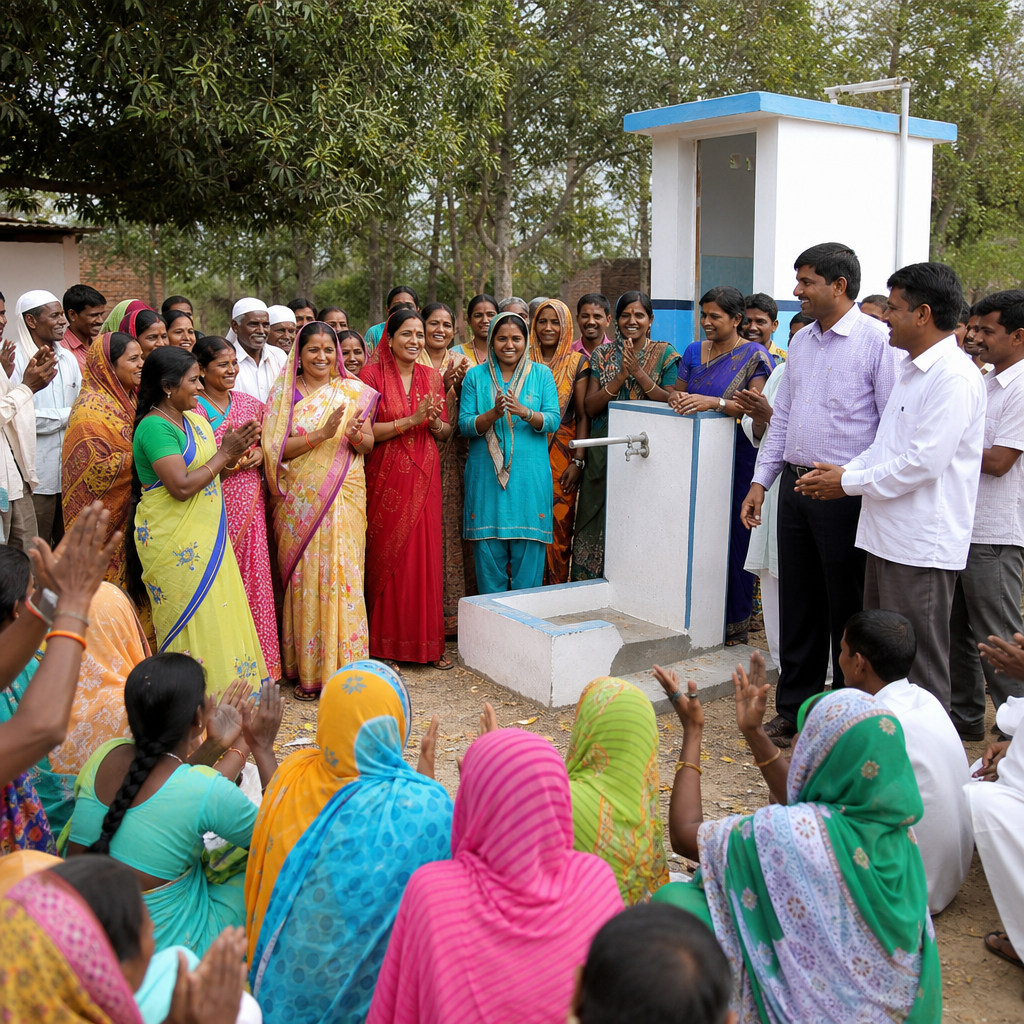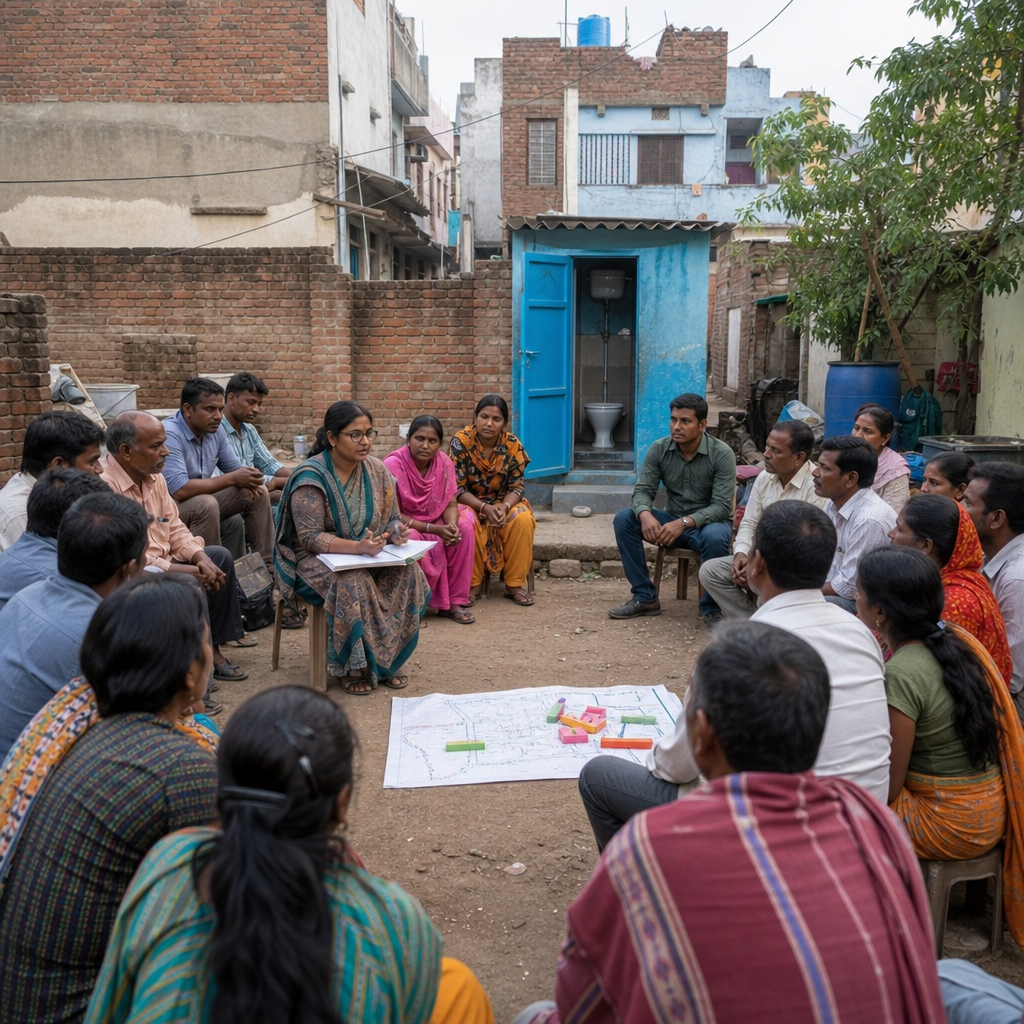
EcoSan in urban development depends on one factor more than pipes, pits, or treatment units: informed people who trust the process enough to participate in it. Ecological sanitation, often shortened to EcoSan, is an approach to sanitation that treats human waste as a resource to be safely managed, recovered, and reused rather than simply discarded. In cities, that idea intersects with land scarcity, aging sewer systems, informal settlements, water stress, public health risks, and rising pressure to build circular infrastructure. Community forums and dialogues are the mechanisms that turn EcoSan from a technical proposal into a civic practice. They create space for residents, planners, health workers, landlords, utilities, waste workers, and local leaders to ask hard questions, compare options, challenge assumptions, and agree on workable standards.
I have seen technically sound sanitation projects stall because residents were briefed late, tenants were ignored, or facilitators treated odor, privacy, and cultural norms as minor concerns. I have also seen modest projects succeed because dialogue started early and stayed practical. People want direct answers: Will it smell? Who empties it? Is urine diversion safe? What does it cost compared with sewers or septic systems? What regulations apply? How will women, children, older adults, and people with disabilities use it safely? A strong community engagement and education hub must answer those questions clearly, connect related subtopics, and give readers a path from awareness to action. That is what empowering communities through knowledge means in the context of EcoSan in urban development.
Urban sanitation decisions have long-term consequences. The World Health Organization links safely managed sanitation to lower diarrheal disease, reduced environmental contamination, and stronger community resilience. UN-Habitat and the Sustainable Development Goals have also pushed cities to think beyond simple toilet counts toward whole-service-chain management. EcoSan fits that shift because it addresses containment, collection, treatment, and potential reuse together. Yet the approach only works when people understand both its benefits and its limits. Community forums and dialogues matter because they convert abstract policy into shared understanding, local accountability, and better operating habits. As a hub article within community engagement and education, this page maps the core issues residents and practitioners need to understand before they evaluate detailed guidance on training, outreach, school programs, behavior change, maintenance planning, and public participation tools.
Why community knowledge determines whether EcoSan works in cities
EcoSan succeeds in urban development when communities understand the full sanitation chain, not just the toilet interface. In dense neighborhoods, one weak link can undermine the rest: a well-designed urine-diverting toilet fails if users do not separate streams correctly; a composting unit fails if bulking material is unavailable; a fecal sludge transfer point becomes a nuisance if operators lack protective equipment and schedules. Community forums surface these operational realities before construction. Residents explain where flooding occurs, which lanes vacuum trucks cannot enter, when markets generate peak use, and why shared facilities often fail at night. Those details are not peripheral. They determine technology fit, maintenance budgets, and health outcomes.
Knowledge also changes the quality of consent. Public meetings that simply announce a completed design are usually performative. Effective dialogues begin earlier, when alternatives are still open. In practice, that means explaining the sanitation service ladder, presenting decentralised and centralised options, clarifying capital versus lifecycle costs, and showing who will own each task. In one municipal workshop I supported, residents initially rejected urine-diverting dry toilets because they associated dry systems with neglect. Once facilitators compared water demand, emptying frequency, pathogen barriers, and maintenance roles side by side, the discussion became more precise. Some blocks still preferred simplified sewers, but others recognized that water-scarce, flood-prone areas needed a different solution. The shift happened because the forum moved from slogans to evidence.
Urban communities are not homogeneous, so education must account for power differences. Tenants may care about fees and cleanliness, landlords about compliance and asset value, women about privacy and menstrual hygiene management, sanitation workers about occupational safety, and urban farmers about nutrient quality. Good forums acknowledge those priorities instead of forcing a single narrative. They also address distrust directly. If residents have seen previous projects abandoned after ribbon-cutting, they will ask who pays for repairs in year three, not just installation. Credible dialogue therefore includes service agreements, contact points, reporting channels, and visible performance metrics. When knowledge is specific, communities can hold agencies and operators accountable.
What effective EcoSan forums and dialogues look like
The most productive EcoSan forums are structured, inclusive, and decision oriented. They do not rely on one presentation followed by a rushed question period. They combine baseline education with listening, small-group problem solving, and public commitments. A strong session usually starts by defining the local sanitation problem in measurable terms: groundwater contamination, overflowing pits, sewer overloading, unreliable water supply, high desludging costs, or lack of toilets in rental compounds. Facilitators then explain the EcoSan concept using plain language and actual operating examples from comparable neighborhoods. People need to hear not only the ideal system design but also what routine use looks like on a Tuesday morning in a crowded settlement or apartment block.
Skilled facilitation is essential. Technical experts should be present, but they should not dominate the conversation. Public health officers can explain pathogen transmission and hygiene barriers. Engineers can discuss urine diversion, dehydration, composting conditions, leachate control, and transfer logistics. Community organizers can translate those concepts into everyday choices around cleaning, payment collection, and household responsibility. The best dialogues make tradeoffs explicit. A dry system may reduce water use and support nutrient recovery, but it may require stronger user discipline and supply chains for cover material. A sewer connection may feel familiar, but in some districts it can be prohibitively expensive or physically impossible. Clear comparison builds trust.
| Forum Element | What It Answers | Good Practice in Urban EcoSan |
|---|---|---|
| Problem framing | Why change the current system? | Use local data on flooding, desludging frequency, contamination, and household costs |
| Technology explanation | How does the system work day to day? | Show interfaces, storage, emptying steps, treatment barriers, and user responsibilities |
| Stakeholder mapping | Who does what? | Define roles for households, landlords, utilities, workers, health teams, and municipal agencies |
| Risk discussion | What could go wrong? | Address odors, misuse, vector control, product safety, and complaint response procedures |
| Cost transparency | What will residents pay now and later? | Separate capital costs, maintenance, emptying, treatment, and subsidy arrangements |
| Feedback loop | How will concerns be handled after launch? | Create hotlines, caretakers, review meetings, and public performance reporting |
Dialogue quality improves when information is visual and localized. Maps of flood zones, diagrams of service chains, odor-control demonstrations, and maintenance calendars make concepts concrete. So do site visits. When residents can inspect a functioning EcoSan installation and speak with actual users, resistance often becomes more nuanced. They may still object, but their objections become solvable: access for elderly users, secure cubicle lighting, cleaning rosters, fees for shared compounds, or timing of collection. This is the level at which urban sanitation planning becomes real.
Empowering communities through knowledge across the full service chain
Empowerment in sanitation is not achieved by distributing flyers alone. It comes from giving people enough understanding to shape decisions, use systems correctly, monitor service quality, and advocate for improvements. For EcoSan, that means education across the full service chain. Households need practical guidance on use, cleaning, handwashing, and separation rules. Caretakers and building managers need operational checklists, spare-part plans, and escalation contacts. Emptying crews need training in containment, personal protective equipment, spill response, and transport documentation. Municipal staff need competency in permitting, inspection, and performance monitoring. If one group is educated while another is neglected, the chain breaks.
Knowledge must also be staged. At the awareness stage, communities need clear definitions and reasons for considering EcoSan. During planning, they need comparative data, design options, and an honest explanation of responsibilities. During construction and rollout, they need hands-on demonstrations, signage, and household-level orientation. During operation, they need refresher sessions, troubleshooting support, and channels to report recurring issues. This staged model is more effective than one-off campaigns because sanitation behavior and trust develop over time. In rental housing and informal settlements with high turnover, periodic reorientation is not optional; it is a maintenance requirement.
This hub topic should therefore connect readers to the wider community engagement and education ecosystem. Subtopics include behavior change communication, school and youth education, gender-responsive sanitation outreach, landlord and tenant engagement, sanitation worker inclusion, participatory planning, conflict resolution, and community monitoring. Each one supports EcoSan adoption in a different way. For example, school programs can normalize safe nutrient cycles for younger residents; women’s groups can identify privacy and safety concerns missed by standard designs; neighborhood committees can track cleaning and collection performance; digital complaint systems can shorten response times and preserve trust. Knowledge is empowering when it is organized into tools people can actually use.
Common concerns residents raise and how credible dialogue addresses them
Any serious EcoSan forum must answer common objections directly. The first is safety. People want to know whether handling separated urine or treated compost exposes them to disease. The answer is that safety depends on treatment, storage time, handling protocols, and compliance with recognized guidance, including WHO risk-based sanitation principles. Untreated excreta is hazardous. Properly managed EcoSan systems use barriers such as dehydration, composting temperatures, storage periods, controlled application, and hygiene practices to reduce risk. Forums should never imply that all recovered products are automatically safe. They should explain the exact conditions required and who verifies them.
Odor is another predictable concern, especially in dense urban settings. In my experience, odor complaints usually stem from poor ventilation, excess moisture, incorrect use, or neglected containers rather than from the concept itself. That distinction matters because it turns a vague fear into an operational checklist. Residents need to know what proper use looks like, what maintenance frequency is required, and who is accountable if problems occur. Accessibility, privacy, and dignity are equally important. A system that is technically efficient but difficult for children, older adults, or disabled users will fail socially. Forums should discuss cubicle dimensions, handrails, lighting, menstrual waste handling, and nighttime safety as core design issues, not optional extras.
Cost and fairness can be even more contentious than technology. Communities often ask whether EcoSan is being proposed because authorities want a cheaper solution for low-income neighborhoods. That question deserves a direct answer. In some places EcoSan is selected because it is more feasible than sewer expansion under conditions of water scarcity, rocky ground, flooding, or dispersed settlement. In other places cost is a factor, but lifecycle analysis may still favor non-sewered sanitation when treatment and recovery are well organized. Trust increases when planners share assumptions openly: who subsidizes capital expenditure, how tariffs are set, what happens if a landlord refuses maintenance, and how worker safety costs are covered. Honest dialogue does not promise perfection. It demonstrates that constraints are understood and managed.
Building lasting participation, accountability, and local ownership
Community forums should not end when construction starts. The strongest urban EcoSan programs build permanent participation into operations. That includes resident committees with defined mandates, caretaker training, public dashboards, periodic health promotion, and documented review meetings with municipal agencies or service providers. Accountability works best when every actor can see where responsibility starts and stops. If a urine-diverting block develops persistent odor, residents should know whether the issue belongs to user behavior, cleaning contracts, ventilation design, or collection frequency. Vague responsibility erodes trust; documented responsibility strengthens it.
Local ownership also grows when communities can measure results. Simple indicators matter: downtime, complaints resolved, frequency of emptying, handwashing station functionality, user satisfaction, and incidence of illegal dumping. More advanced programs track nutrient recovery volumes, water savings, and operating cost per household. Digital tools can help, but low-tech methods still work well. Notice boards, SMS hotlines, community scorecards, and monthly compound meetings are practical in many settings. The key is consistency. Residents are far more likely to support an unfamiliar sanitation model when they can see evidence that performance is improving and concerns trigger action.
Partnerships make this sustainable. Urban EcoSan needs collaboration between municipalities, public health departments, housing authorities, civil society organizations, universities, and private operators. Training institutions can standardize curricula for caretakers and emptiers. Health agencies can align messaging with infection prevention guidance. Universities can support monitoring and product quality testing. Community-based organizations can convene trusted dialogues in local languages. When these links are visible, communities understand that EcoSan is not an experiment imposed on them; it is part of a managed urban service system with oversight and support.
EcoSan in urban development becomes durable when community forums and dialogues are treated as infrastructure, not outreach afterthoughts. Knowledge gives residents the power to question, compare, decide, use, and improve sanitation systems over time. That is the central lesson of empowering communities through knowledge. For this community engagement and education hub, the main takeaway is simple: successful EcoSan depends on informed participation across the whole service chain, from household use to municipal oversight. If you are planning, funding, or advocating for urban sanitation, start with structured dialogue, publish clear responsibilities, and build education into every phase. Then explore the related subtopics in this hub to turn awareness into long-term community capacity.
Frequently Asked Questions
What does EcoSan mean in the context of urban development, and why do community forums matter so much?
In urban development, EcoSan refers to ecological sanitation systems designed to manage human waste in ways that protect public health, conserve water, recover nutrients, and reduce pressure on overstretched infrastructure. Instead of treating waste as something to move away as quickly as possible, EcoSan treats it as a resource that can be safely processed and, where appropriate, reused. In cities, that has major implications. Dense neighborhoods, aging sewer networks, limited land, water shortages, and informal housing patterns often make conventional sanitation systems expensive, slow to expand, or difficult to maintain. EcoSan offers an alternative or complementary path, but its success depends heavily on public understanding and participation.
That is where community forums and dialogues become essential. Sanitation systems are not adopted by engineering alone. They are adopted when people understand how they work, trust that they are safe, believe they are fair, and see how they fit into everyday life. Community forums give residents, local leaders, planners, health workers, and technical experts a structured way to discuss concerns openly. They create space to explain issues such as odor control, maintenance responsibilities, pathogen safety, user behavior, and the practical benefits of nutrient recovery or water savings. They also help identify barriers that outside planners might miss, including stigma, gendered safety concerns, accessibility needs, affordability, and tenancy issues.
Just as importantly, forums build legitimacy. Urban sanitation projects often fail when communities feel decisions were imposed on them. Dialogue shifts the process from consultation as a formality to participation as a genuine planning tool. When residents help shape siting, design preferences, maintenance rules, and communication strategies, they are more likely to support the system and use it correctly. In short, community forums matter because EcoSan in cities is not just a technical upgrade. It is a social transition that works best when people are informed, heard, and actively involved.
How can community dialogues improve public trust in EcoSan systems in dense urban neighborhoods?
Public trust is often the deciding factor in whether an EcoSan initiative moves from pilot stage to long-term success. In dense urban areas, people are naturally cautious about anything related to sanitation because the risks of poor management are immediate and visible. If residents worry that toilets will smell, collection will be irregular, treatment will be unsafe, or reuse practices will expose families to disease, they may reject the system outright. Community dialogues improve trust by replacing uncertainty with clear, repeated, credible information delivered in ways that respond to local realities rather than abstract planning language.
Effective dialogues do several things at once. First, they make the technology understandable. Residents need practical explanations of how waste is separated, stored, transported, treated, and monitored. They also need honest discussion of what users must do, what service providers must do, and what happens if either side fails. Second, they create transparency. People are more likely to trust EcoSan when officials and project teams clearly explain health safeguards, treatment standards, odor control measures, fees, maintenance schedules, and accountability mechanisms. Third, they allow skepticism to be voiced publicly. Questions that might otherwise circulate as rumors can be addressed directly in meetings, demonstrations, question-and-answer sessions, or small group discussions.
Trust also grows when dialogues are inclusive. Women, tenants, landlords, sanitation workers, market traders, people with disabilities, youth, and residents of informal settlements often experience sanitation differently. If only a narrow group is consulted, the resulting system may be technically sound but socially fragile. Inclusive forums signal that the project is serious about serving the whole community, not just the most visible stakeholders. Over time, trust deepens when dialogue is paired with action: pilot demonstrations that work, complaints that receive responses, service standards that are enforced, and updates that continue after installation. People trust EcoSan not because they are told to, but because they can see, question, and verify how the system performs.
What topics should urban community forums cover before an EcoSan project is introduced or expanded?
Before an EcoSan project is introduced or scaled up, community forums should cover a broad set of technical, social, health, financial, and governance issues. One of the biggest mistakes in sanitation engagement is focusing too narrowly on the hardware. Residents need a full picture of how the system will affect daily life, who will manage it, and what protections are in place. A strong forum agenda should begin with the local sanitation problem itself: current gaps in service, drainage or sewage failures, contamination risks, water use pressures, flood-related sanitation challenges, and the limitations of existing infrastructure. When people understand the problem clearly, they can better evaluate whether EcoSan is a sensible response.
Forums should then explain the EcoSan model being proposed. This includes the type of toilets or collection systems involved, whether waste is separated at source, how often materials are collected, where treatment takes place, how pathogens are reduced, and whether any products such as compost, soil conditioner, or recovered nutrients will be reused. It is important to discuss public health protections in detail, including safe handling protocols, monitoring systems, emergency procedures, and the role of trained operators. Cost is another critical topic. Residents want to know who pays for installation, operation, repairs, and long-term service, and whether user charges will be affordable and predictable.
Equally important are social and governance questions. Forums should address who is responsible for maintenance, how complaints will be handled, what happens in rental housing, how facilities will be designed for women and girls, what provisions exist for elderly or disabled users, and how sanitation workers will be protected and respected. Cultural concerns, privacy expectations, and stigma around waste reuse should be discussed openly rather than avoided. Finally, forums should cover how success will be measured. Communities should know what indicators matter, whether that is reduced open dumping, improved toilet access, lower water consumption, fewer blockages, better neighborhood cleanliness, or safer waste handling. A thorough forum prepares the ground for informed consent, stronger adoption, and more resilient implementation.
What are the main challenges cities face when using forums and dialogues to promote EcoSan adoption?
Cities often recognize the value of participation but still face real obstacles in turning forums and dialogues into meaningful drivers of EcoSan adoption. One common challenge is low baseline trust in institutions. In many urban areas, residents have heard promises about sanitation upgrades before and seen little follow-through. When services are unreliable or unevenly distributed, communities may view new proposals with suspicion, especially if they involve unfamiliar technologies or behavior changes. In that environment, a public meeting alone is not enough. Engagement has to be consistent, transparent, and supported by visible commitments.
Another challenge is the complexity of urban populations. Cities are not single communities with one shared viewpoint. They are made up of tenants and owners, formal and informal residents, different language groups, commuters, street vendors, local businesses, and vulnerable populations with competing priorities. A forum held at the wrong time, in the wrong place, or in the wrong language can exclude the very people most affected by sanitation problems. There is also the issue of participation fatigue. Communities facing multiple urban pressures such as housing insecurity, flooding, unemployment, or rising living costs may not treat sanitation meetings as urgent unless the relevance is made clear.
There are also content-related challenges. EcoSan can trigger strong reactions because it asks people to think differently about human waste. Misconceptions about smell, hygiene, and reuse can spread quickly if communication is weak or overly technical. At the same time, oversimplifying the message can backfire if residents later discover operational demands they were not told about. Cities must strike a careful balance between promotion and honesty. They also need to ensure that engagement is not tokenistic. If communities raise valid concerns about maintenance, affordability, or safety and those concerns are ignored, forums can actually deepen distrust rather than reduce it.
Finally, institutional coordination is a frequent barrier. EcoSan sits at the intersection of planning, public health, water services, environmental regulation, waste management, and community development. If agencies deliver conflicting messages, residents may lose confidence quickly. The most effective urban dialogues are backed by clear roles, dependable service models, and follow-up mechanisms that show participation leads to decisions, not just discussion. The challenge is not simply getting people into a room. It is creating a process that is inclusive, credible, responsive, and linked to practical implementation.
How can city planners and local leaders make EcoSan forums more effective, inclusive, and action-oriented?
To make EcoSan forums effective, city planners and local leaders should treat them as part of project design, not as a box to tick after technical decisions are already made. The strongest forums start early, before sites are finalized and budgets are locked in, so that community input can genuinely influence outcomes. Organizers should define clear goals for each engagement stage: identifying sanitation problems, comparing options, reviewing pilot results, refining management plans, or evaluating performance after rollout. When people understand the purpose of a meeting and see how their participation fits into decision-making, engagement becomes more focused and constructive.
Inclusion requires deliberate planning. Forums should be held at accessible times and locations, with language support where needed and formats that allow participation beyond formal speeches. Small-group discussions, household outreach, women-led meetings, youth sessions, and engagement through trusted local organizations can reach residents who might not speak in larger public settings. It is especially important to include sanitation workers, informal settlement residents, tenants, and people