EcoSan for Disaster Preparedness and Response connects sanitation planning with community resilience, public health protection, and practical education before, during, and after emergencies. Ecological sanitation, often shortened to EcoSan, is a sanitation approach that treats human waste as a resource stream rather than a disposal problem. In disaster settings, that distinction matters because broken sewers, flooded pit latrines, and overwhelmed camps can quickly turn waste into a vector for cholera, dysentery, hepatitis E, and other outbreaks. I have worked with community training teams and emergency WASH planners, and the same lesson repeats across earthquakes, floods, cyclones, and conflict displacement: sanitation fails fastest where people have not been taught what safe alternatives look like.
As a hub page under Community Engagement and Education, this article focuses on educating for change. That means more than handing out leaflets on toilet use. It includes risk communication, school-based preparedness, volunteer training, practical demonstrations, household behavior change, and clear local protocols that people can apply under stress. EcoSan is especially relevant because it can operate without full sewer networks, reduce water demand, support temporary or decentralized installations, and create safer recovery pathways when infrastructure is damaged. Key terms are important. Urine diversion separates urine from feces at the source. Dehydration and composting are treatment pathways that reduce pathogens over time. Containment means keeping waste isolated from people, water, food, and vectors. Safe reuse means using treated outputs only when health criteria, handling practices, and local regulations are met.
Why does this matter now? Climate-driven flooding, rapid urbanization, protracted displacement, and fragile utility systems are increasing sanitation risk. According to global humanitarian experience, sanitation gaps are among the fastest amplifiers of post-disaster disease. Communities that understand emergency toilet options, handwashing priorities, sludge handling, and household messaging recover faster and protect dignity better. Educating for change turns EcoSan from a technical idea into a usable disaster preparedness system.
Why EcoSan Education Belongs in Disaster Preparedness
Disaster preparedness usually emphasizes evacuation, food stocks, shelter, and first aid. Sanitation is often discussed too late, after contamination has already spread. In practice, the most effective communities build sanitation awareness into preparedness education long before a crisis. EcoSan fits this work because it offers decentralized, modular options that can be taught, adapted, and maintained locally. A urine-diverting dry toilet, for example, can keep functioning when water service is interrupted. A raised container-based toilet can remain usable in flood-prone settlements where pits collapse or overflow. These are not abstract concepts. They are concrete tools that households, schools, and local responders can understand through drills and demonstrations.
Education changes outcomes because people under stress revert to familiar habits. If residents have never seen a dry toilet, they may misuse it by adding water, mixing cleansing materials incorrectly, or abandoning it after odors develop. If volunteers have never been trained in safe emptying intervals, PPE use, and ash or cover material management, a good design can still fail operationally. In emergency settlements, I have seen technically sound latrine blocks become health hazards simply because users did not know how to separate waste streams or where to dispose of anal cleansing materials. Training closes that gap.
Preparedness education also supports social acceptance. EcoSan systems can challenge existing beliefs about purity, smell, reuse, and maintenance. Community discussions led by trusted local facilitators are essential for identifying taboos early, adapting messages for different faith or cultural groups, and explaining the health logic behind design choices. This is where educators, health workers, teachers, and local leaders become central to disaster sanitation planning, not peripheral to it.
The Core Topics Every Community Should Learn
An effective EcoSan education program for disaster preparedness should cover a defined set of competencies. People need to know what system types exist, how each one works, when each is appropriate, and what mistakes create health risks. They also need clear, simple decision rules. If floodwater is rising, avoid pits in saturated ground. If water is scarce, prioritize dry or low-water systems. If households are displaced, use portable or container-based containment until stable treatment arrangements exist.
The educational content should include pathogen pathways, hand hygiene, toilet siting, gender and accessibility needs, odor control, vector control, safe temporary storage, and who is responsible for operation and maintenance. It should explain why feces require stricter handling than urine, why children’s feces need the same caution as adult waste, and why treatment time matters before reuse. WHO sanitation safety planning principles are useful here because they frame risk from source to end use and help communities identify control measures rather than rely on guesswork.
| Training topic | What learners must understand | Disaster example |
|---|---|---|
| System selection | Choose dry, raised, container, or urine-diverting options based on water, soil, and displacement conditions | Flooded settlement shifts from pits to raised container-based toilets |
| Safe use | Separate waste streams correctly, add cover material, protect handwashing points | Camp users reduce smell and flies by adding ash after each use |
| Operation and maintenance | Assign cleaning, monitor fill levels, use PPE, secure transport and storage | School shelter team empties sealed containers on a fixed schedule |
| Risk communication | Explain health reasons, counter rumors, adapt messages for local norms | Community leaders address fears about dry toilets during cyclone recovery |
| Recovery and reuse | Treat outputs safely, follow waiting periods, comply with local guidance | Post-emergency compost applied only to non-food trees after verified treatment |
These topics should be taught through repeated formats: school lessons, women’s group meetings, youth volunteer sessions, municipal workshops, and emergency drills. One-off awareness campaigns rarely change sanitation behavior. Repetition, demonstration, and local ownership do.
Teaching Methods That Actually Change Behavior
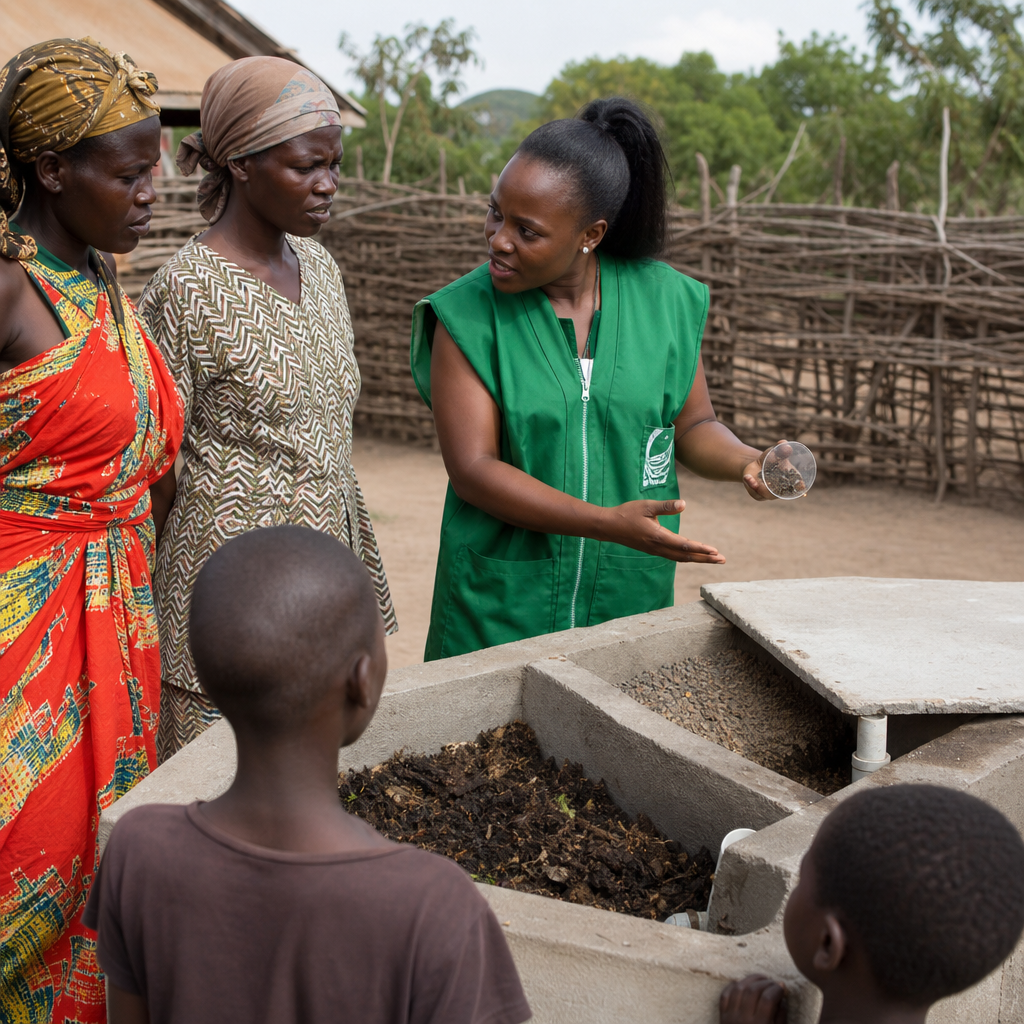
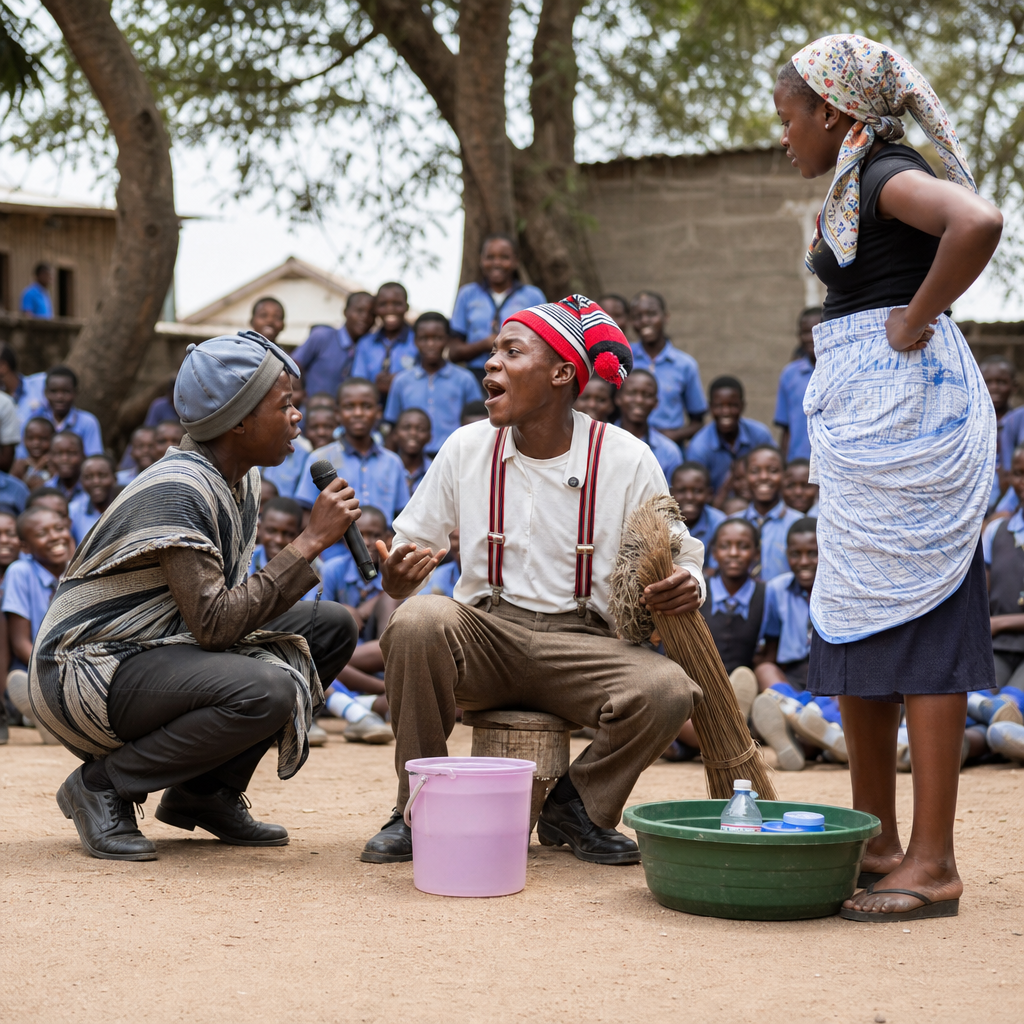
Educating for change is not a poster campaign. It is a structured behavior change process grounded in adult learning, public health communication, and community facilitation. The most successful programs combine explanation with physical practice. When people assemble a urine-diverting pedestal, identify the correct cover material, or role-play a flood evacuation that includes household toilet planning, retention improves sharply. Visual aids help, but hands-on learning matters more.
Plain language is essential. Instead of saying “fecal-oral transmission pathways,” trainers should explain that germs from feces move to hands, cups, food, and water, then into people’s mouths. Instead of saying “desiccation,” say “keeping feces dry helps reduce germs and smell over time.” Technical precision still matters, but jargon should never block action. I have found that communities respond best when facilitators move between clear health explanations and practical instructions they can test immediately.
Trusted messengers matter as much as content. Teachers can normalize sanitation habits for children. Religious leaders can address dignity and purity concerns. Community health workers can reinforce household routines during home visits. Local masons and artisans can demonstrate affordable designs using available materials. In disaster-prone areas, drills should include sanitation scenarios: what to do if pits flood, where to place emergency toilets, how to protect handwashing stations, and how to report failures. Preparedness is strongest when sanitation is practiced like evacuation, not discussed as an afterthought.
Adapting EcoSan Education to Different Disasters
Not every hazard creates the same sanitation problem, so the education strategy must be hazard-specific. Flood preparedness should emphasize raised structures, sealed storage, protection of wells from runoff, and rapid switching away from pits in waterlogged ground. Earthquake preparedness should cover what to do when sewer lines crack, treatment plants stop working, or buildings collapse around existing toilets. Cyclone and storm preparedness should include securing lightweight superstructures, storing cover material in waterproof containers, and preserving access routes for waste collection. In conflict or displacement settings, the priority is often portable containment, privacy, lighting, menstrual hygiene integration, and clear management roles in crowded sites.
Urban and rural contexts differ too. Dense informal settlements may need compact container-based systems with organized collection. Rural households may have more space for composting or dehydration vaults, but they may also face lower access to PPE and formal oversight. Schools, clinics, and evacuation centers require another layer of instruction because they operate as public facilities under pressure. In those sites, signage, caretaker rosters, cleaning plans, and user orientation are not optional. They are the operating system.
Adaptation also means designing for inclusion. Women, older adults, children, and people with disabilities experience sanitation barriers differently during disasters. Education must address privacy, lighting, accessible entrances, menstrual materials disposal, and caregiver support. A technically efficient toilet that excludes a segment of users is not resilient sanitation.
Linking Community Education With Local Systems
Community engagement works best when it is linked to institutions that can support continuity. Municipal disaster offices, public health departments, school systems, local NGOs, water committees, and neighborhood associations should share a common sanitation preparedness framework. That framework should specify approved emergency toilet options, local supply chains for containers and cover materials, trigger points for deploying alternatives, and responsible actors for transport, treatment, and communication. When these links are absent, communities receive mixed messages and improvised solutions create avoidable contamination.
A practical hub model helps. The main education page should connect users to detailed guidance on school preparedness, household emergency sanitation kits, camp management, menstrual hygiene, sludge handling, and safe agricultural reuse after treatment. Internal topic links like these improve navigation for readers and mirror how communities actually learn: from broad awareness to specific action. For implementers, this structure makes training scalable. A municipality can adopt the hub as a curriculum map, then assign each supporting article to a department or partner organization.
Monitoring is part of education, not separate from it. Communities should track whether households know emergency toilet options, whether schools maintain cover material stocks, whether volunteers can explain safe emptying steps, and whether post-training behavior actually changes. Useful indicators include correct toilet use rates, handwashing availability, user satisfaction, odor and fly complaints, and contamination incidents. Data from these indicators should feed back into training design. If users keep adding water to dry systems, the issue may be messaging, not hardware.
From Preparedness to Recovery: Building Long-Term Change
The strongest reason to invest in EcoSan education is that it improves both emergency response and long-term sanitation resilience. A community that learns decentralized sanitation before a disaster is better positioned to recover after one. Temporary systems can evolve into durable household or institutional improvements. Skills gained through preparedness training, such as safe siting, urine diversion, compost management, and caretaker scheduling, remain useful when reconstruction begins. This is especially important where repeated flooding or chronic water scarcity makes a return to conventional sanitation unrealistic or too expensive.
Recovery, however, requires discipline. Not all emergency systems should transition into permanent use without redesign. Temporary containers may need more robust service chains. Composting processes require verified storage times, moisture control, and restricted end uses until treatment is complete. Reuse should never be promoted as a shortcut around health protection. The safer message is straightforward: contain first, treat properly, verify conditions, then consider beneficial use where regulations and local acceptance permit. That balance builds trust because it respects both health evidence and practical constraints.
EcoSan for disaster preparedness and response succeeds when education is treated as infrastructure. Toilets, containers, and vaults matter, but informed people make systems work. Communities need clear guidance, repeated practice, trusted trainers, and strong links to local institutions. Start by mapping hazards, identifying realistic emergency sanitation options, and turning this hub into a training pathway for households, schools, and responders. Educating for change is how sanitation preparedness becomes community resilience.
Frequently Asked Questions
1. What is EcoSan, and why is it important for disaster preparedness and response?
Ecological sanitation, or EcoSan, is an approach to sanitation that sees human waste not simply as something to be discarded, but as a resource stream that can be safely managed, treated, and, in some cases, reused. In disaster preparedness and response, that perspective is especially valuable because emergencies often damage or overwhelm conventional sanitation systems. Sewer lines can rupture, pit latrines can flood, and temporary shelters can quickly become overcrowded. When that happens, unmanaged waste can contaminate water sources, spread diarrheal disease, attract pests, and create unsafe living conditions for already vulnerable populations.
EcoSan matters because it offers practical, resilient alternatives when standard infrastructure fails. Many EcoSan systems are designed to separate waste streams, reduce water dependence, support decentralized treatment, and limit direct environmental contamination. That makes them particularly useful in floods, earthquakes, displacement settings, and remote emergency operations where water, fuel, and construction materials may be limited. Instead of relying entirely on large underground networks or water-intensive flush systems, communities can use adaptable sanitation options that are easier to deploy, maintain, and repair under pressure.
Just as important, EcoSan supports public health and community resilience before, during, and after a crisis. Before a disaster, it encourages planning, training, and risk reduction. During an emergency, it helps contain pathogens and preserve dignity through safer sanitation access. Afterward, it can contribute to recovery by restoring basic services in a way that is more sustainable and less vulnerable to repeat disruption. In short, EcoSan is important not only because it manages waste, but because it strengthens the entire chain of sanitation preparedness, disease prevention, and local self-reliance.
2. How does EcoSan help protect public health during emergencies?
EcoSan protects public health during emergencies by interrupting the pathways through which human waste spreads disease. In disaster settings, the risk of contamination rises quickly. Floodwater can carry fecal matter into homes, food preparation areas, wells, and surface water. Crowded shelters may lack enough toilets or handwashing stations. If waste is not contained and treated properly, pathogens that cause cholera, dysentery, typhoid, hepatitis, and other illnesses can spread rapidly. EcoSan systems reduce that risk by prioritizing controlled collection, separation, storage, and treatment of excreta rather than allowing it to mix freely with floodwater, storm runoff, or damaged sewage systems.
One of the strongest public health benefits of EcoSan is that many systems use little or no water for conveyance. That is critical when clean water is scarce or when wastewater systems are broken. Dry or low-water sanitation options can continue functioning without placing added pressure on limited emergency water supplies. Some EcoSan designs also separate urine and feces, which can simplify treatment, reduce odor, and make containment more manageable. In practical terms, that means fewer opportunities for direct contact with untreated waste and a lower chance of widespread contamination in unstable conditions.
EcoSan also improves health protection by making sanitation planning more deliberate and educational. Effective emergency sanitation is not only about installing toilets; it is about training users, maintenance teams, and local leaders to operate systems safely. Communities that understand hand hygiene, safe emptying practices, protective equipment use, and proper treatment timelines are better equipped to prevent outbreaks. This educational component is a major strength of EcoSan. It helps people understand why sanitation choices matter and how everyday behaviors can either increase or reduce health risks during a disaster response.
Finally, EcoSan supports dignity and consistent access, both of which are closely tied to health outcomes. When sanitation facilities are safe, private, accessible, and culturally acceptable, people are more likely to use them consistently. That reduces open defecation, lowers contamination in shared environments, and improves conditions for women, children, older adults, and people with disabilities. Public health protection in emergencies depends on systems people can and will use, and EcoSan helps create those systems under difficult circumstances.
3. What types of EcoSan systems are most useful in disaster-prone or emergency settings?
The most useful EcoSan systems in disaster-prone or emergency settings are those that are simple, modular, low-water, easy to maintain, and appropriate for local conditions. There is no single solution that fits every emergency. The right choice depends on the type of disaster, soil conditions, flood risk, population density, climate, available materials, cultural preferences, and how long the sanitation solution will be needed. That said, urine-diverting dry toilets, container-based sanitation systems, raised latrines for flood-prone areas, and other decentralized treatment models are often among the most practical EcoSan options.
Urine-diverting dry toilets are especially valuable where water is limited or where flooding makes pit systems unsafe. By separating urine from feces, these toilets can reduce smell, lower moisture in the fecal chamber, and support safer treatment or storage. They can often be built above ground, which is a major advantage in areas with high water tables or recurrent flooding. Container-based systems are also highly relevant in camps, dense settlements, and rapidly changing emergency environments. Waste is collected in sealable containers, then transported for treatment at a designated site. This approach can work well where digging pits is not feasible or where mobility and fast deployment are essential.
In flood-prone regions, raised and sealed sanitation units are often better than conventional pits because they reduce the chance that waste will leak into standing water. In earthquake zones or conflict-affected areas, systems that do not rely on fragile underground pipes may be more resilient and easier to restore. For longer-term recovery, communities may transition from temporary emergency toilets to more durable EcoSan installations that include planned treatment, composting, dehydration, or nutrient recovery processes where regulations and capacity allow.
The key is matching the system to the operational context. A technically sound toilet that no one can maintain, empty, or accept culturally will fail in practice. The most effective EcoSan systems for emergencies are not only safe on paper; they are manageable in real-world conditions, supported by training, supplied with maintenance materials, and integrated into broader disaster planning. That is what makes them useful rather than merely innovative.
4. How can communities prepare EcoSan systems before a disaster strikes?
Communities can prepare EcoSan systems before a disaster strikes by treating sanitation as a core part of resilience planning rather than an afterthought. Preparation starts with risk assessment. Local leaders, health officials, engineers, and community organizations should identify what types of hazards are most likely, whether flooding, storms, earthquakes, displacement, or infrastructure failure, and then evaluate how existing sanitation systems would perform under those conditions. If pit latrines are likely to overflow, if sewer connections are unreliable, or if water access is fragile, those weaknesses should be addressed before an emergency happens.
From there, communities can develop contingency sanitation plans that include EcoSan options suited to local risks. That may mean pre-positioning materials for urine-diverting toilets, identifying safe locations for raised or portable units, mapping treatment or storage areas, and establishing protocols for waste collection and handling during disruptions. Preparedness also includes ensuring access to essential supplies such as ash, cover material, containers, cleaning equipment, protective gear, soap, and handwashing infrastructure. A well-designed EcoSan system is only as effective as the support system around it.
Training is another critical piece. Households, school staff, shelter managers, community health workers, and emergency response teams all need practical guidance on how to use and maintain sanitation systems safely. That includes user education, cleaning routines, separation practices where applicable, safe handling procedures, and clear communication about why the system works the way it does. Drills and demonstrations can be especially helpful. When people encounter a sanitation system for the first time during a crisis, confusion and misuse are more likely. Familiarity built in advance can make emergency deployment much smoother.
Communities should also build governance and coordination into preparedness. Roles need to be clear: who monitors facilities, who replenishes supplies, who handles transport, who oversees treatment, and who communicates health guidance. Partnerships with local government, humanitarian actors, schools, and neighborhood groups can strengthen continuity when formal systems are disrupted. In many cases, the strongest preparedness strategy is not just installing hardware, but building local ownership. When communities understand EcoSan and have practiced using it, they are much better positioned to maintain sanitation, protect health, and recover faster after a disaster.
5. What are the biggest challenges of using EcoSan in disaster response, and how can they be addressed?
EcoSan offers clear benefits in emergencies, but it also comes with real challenges that need to be addressed honestly. One major challenge is user acceptance. In many places, people are more familiar with flush toilets or conventional pit latrines and may be skeptical of systems that separate waste, require cover material, or involve temporary storage and treatment. In a high-stress emergency context, unfamiliar systems can be misunderstood or misused. The best way to address this is through early education, clear signage, culturally sensitive design, and community engagement in planning and implementation. People are far more likely to use a system properly when they understand its purpose and have had a voice in how it is introduced.
Another challenge is operations and maintenance. EcoSan systems are not self-managing. They require regular cleaning, monitoring, emptying or collection, and safe downstream