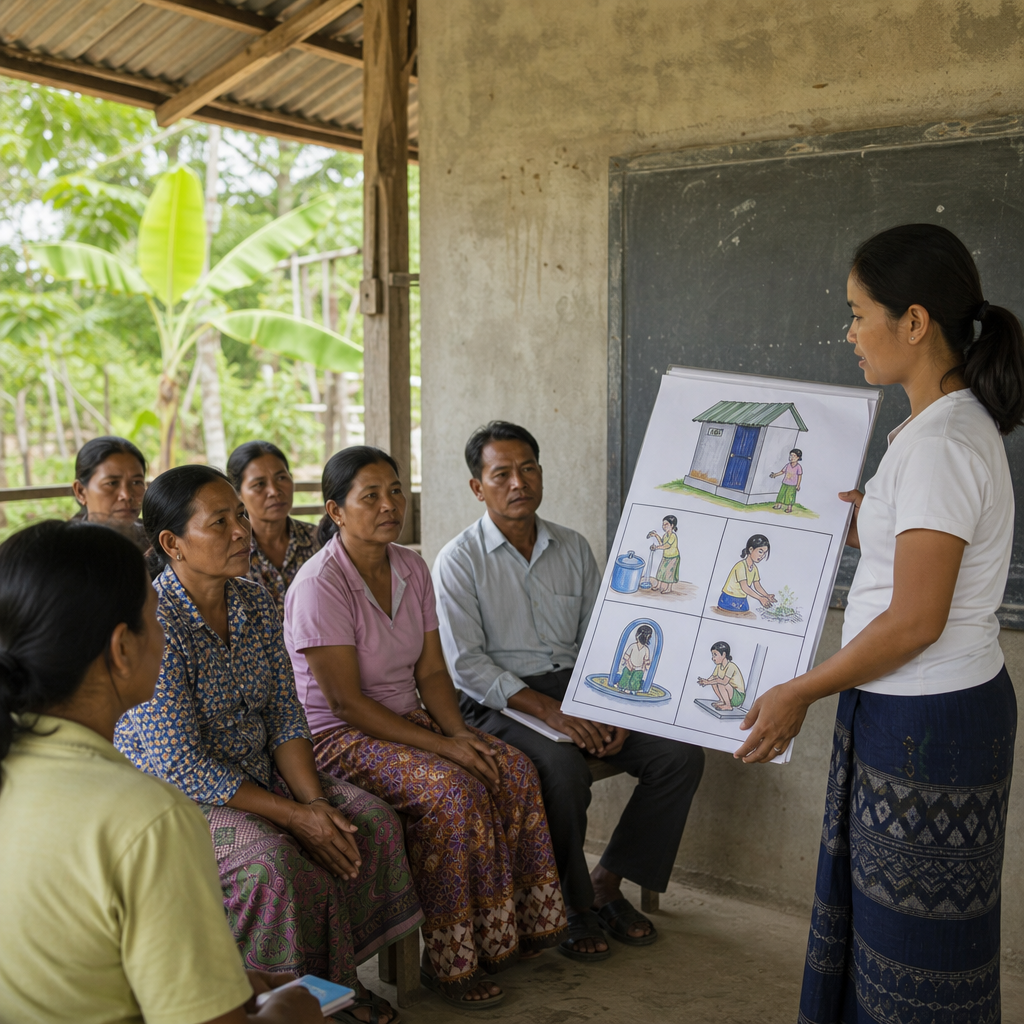
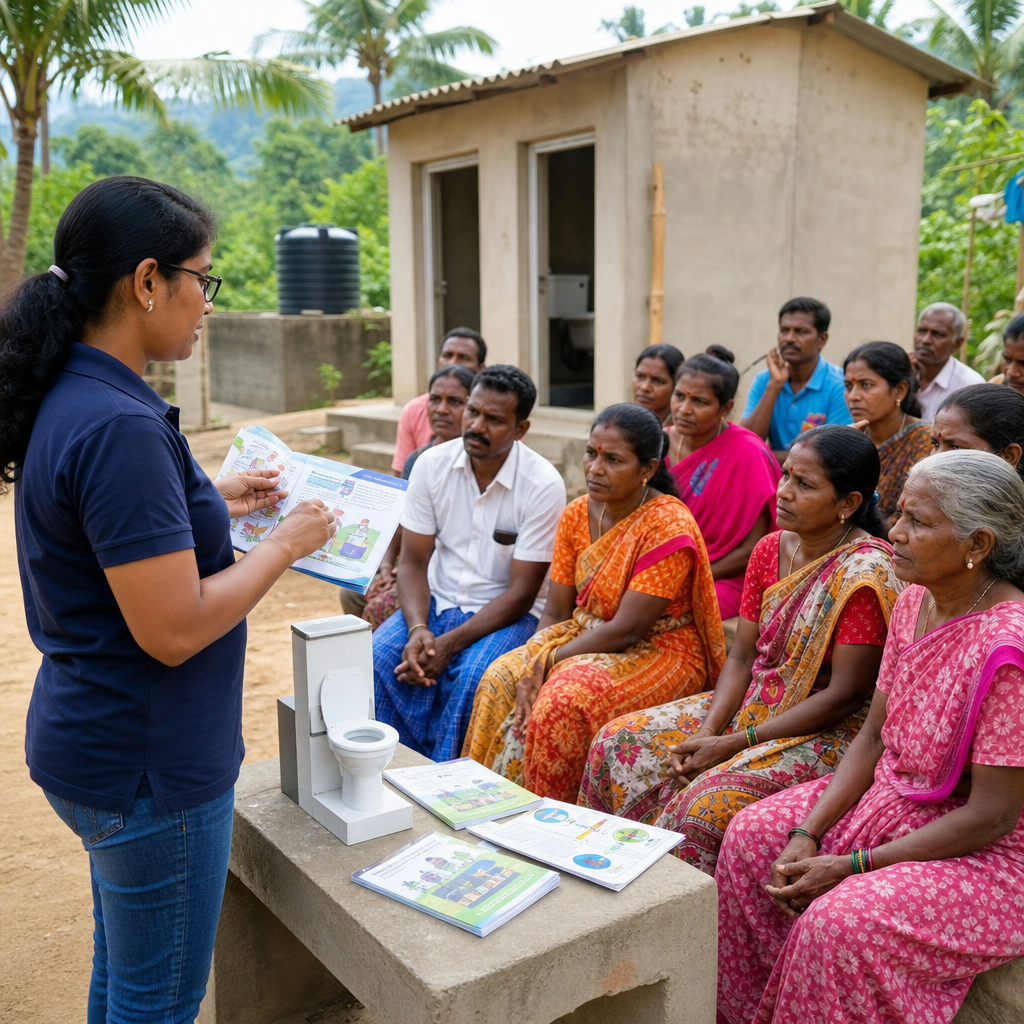
Community theatre for advocacy in sanitation turns public health education into a shared local experience, helping communities discuss toilets, hygiene, drainage, waste, and dignity in ways that posters and lectures rarely achieve. In practice, it uses scripted or improvised performance created with residents to explain sanitation risks, challenge harmful norms, and motivate action. I have seen meetings stall when technical staff talk about fecal sludge management, then come alive when actors show a family choosing between convenience, cost, and safety. That difference matters because sanitation behavior is social before it is technical. People adopt or reject new practices based on trust, pride, fear, gender roles, disability access, and what neighbors accept. Theatre reaches those drivers directly. It can translate specialist language into ordinary speech, surface local misconceptions, and make sensitive topics discussable without shaming anyone. As a hub within community engagement and education, this article maps how community theatre supports educating for change, where it fits in wider sanitation programming, which methods work best, and how practitioners can measure results responsibly while respecting culture, evidence, and community ownership.
Why Community Theatre Works in Sanitation Education
Sanitation advocacy succeeds when people understand risk, feel personally connected to the issue, and believe change is possible. Community theatre supports all three. A performance can show contamination pathways more clearly than a leaflet by dramatizing how unwashed hands, unsafe child feces disposal, leaking pits, or blocked drains affect a household. Audiences do not need advanced literacy to follow the message, which makes theatre especially valuable where printed materials exclude part of the population.
The format also reduces resistance. In many places, open defecation, menstruation, toilet sharing, desludging, and solid waste disposal are tied to embarrassment or taboo. Theatre creates emotional distance: people can discuss the character’s problem before admitting it is also their own. That is one reason participatory drama has been used in public health campaigns for HIV prevention, gender violence awareness, and vaccination outreach. In sanitation, the same principle helps communities examine practical barriers such as cost, distance, safety at night, and inaccessible toilet design.
Another strength is memorability. Audiences often forget statistics but remember a strong scene, a repeated line, or a comic misunderstanding that gets corrected on stage. I have watched residents quote performance dialogue weeks later during planning sessions. When a sanitation message becomes a story people repeat, it has moved from information into community conversation.
Core Models: Forum Theatre, Street Theatre, and Peer Performance
Not all theatre for sanitation advocacy works the same way. The strongest programs choose a model that fits local goals, audience size, and available time. Forum theatre is useful when the objective is problem solving. Actors present a conflict, such as a landlord refusing to repair shared toilets or a family resisting handwashing because water is scarce. The audience then intervenes, suggesting or acting out different choices. This method exposes real constraints and allows communities to test solutions safely.
Street theatre is better for broad awareness. Performed in markets, school yards, transport hubs, or village squares, it reaches people who would not attend a workshop. It works well for focused messages: why septic tanks need regular emptying, why children’s feces are not harmless, or how flooding spreads contamination from poorly managed waste. Because attention is limited in public spaces, scripts should be short, visual, and repetitive.
Peer performance is often the most credible option for behavior change. Adolescents speaking to adolescents about school toilets and menstrual hygiene, workers performing for workers about workplace sanitation, or residents dramatizing neighborhood drainage issues can outperform outside actors because they sound authentic. This matters in sanitation advocacy, where the messenger can be as important as the message.
| Model | Best use | Strength | Limitation |
|---|---|---|---|
| Forum theatre | Community problem solving | High participation and local solutions | Needs skilled facilitation |
| Street theatre | Mass awareness in public spaces | Large reach and low barriers | Limited depth per performance |
| Peer performance | Targeted behavior change | High credibility with audiences | Requires strong local training |
Designing Sanitation Messages That People Can Act On
Effective sanitation theatre starts with one rule: dramatize decisions, not slogans. A script that simply says “use toilets” is weak because audiences already know the expected answer. A stronger script shows why someone does not use a toilet, what tradeoffs they face, and what practical option changes the outcome. For example, a scene about a pregnant woman avoiding a distant latrine at night can open discussion about lighting, locks, proximity, and family support. The message then becomes actionable.
Good scripts focus on a few priority behaviors linked to the local sanitation chain: containment, access, use, cleaning, emptying, transport, treatment, and safe reuse or disposal. In dense settlements, the issue may be shared toilet maintenance and fecal sludge removal. In rural areas, it may be sustained toilet use, child feces disposal, and handwashing with soap after contact with feces. In flood-prone communities, drainage and solid waste blocking channels may be central.
Message development should use formative research. Household interviews, transect walks, focus groups, and observation reveal barriers that outsiders miss. I have seen teams plan plays about ignorance when the real problem was that women avoided communal toilets because locks were broken and harassment was common. Theatre can correct knowledge gaps, but it should not pretend behavior is irrational when infrastructure and power are the true constraints.
Language matters too. Scripts should use local terms for toilets, waste, drains, and hygiene while avoiding words that humiliate. Humor helps when it clarifies the issue, not when it mocks poverty or disability. A well-tested script leaves the audience with two or three concrete actions, where to get help, and who in the community can support follow-through.
Co-Creation, Inclusion, and Safeguards
Community theatre is most credible when residents help create it. Co-creation can involve story circles, improvised scenes based on lived experience, script reviews by local health workers, and rehearsals with community feedback. This process improves accuracy and ownership. It also prevents one of the biggest mistakes in sanitation communication: imposing outsider assumptions about what people should care about.
Inclusion must be planned, not assumed. Women and girls often experience sanitation differently because of safety concerns, caregiving roles, and menstrual hygiene needs. People with disabilities may face steps, narrow doors, or inaccessible washing points. Tenants may have less control over facility improvement than landlords. Informal settlement residents may be blamed for poor sanitation while lacking legal service access. A hub article on educating for change should make this explicit: advocacy theatre works best when these perspectives shape both content and casting.
Safeguards are equally important. Performers should never pressure individuals to disclose traumatic experiences publicly. Children can participate, but scripts and rehearsal schedules need child protection standards, parental consent where appropriate, and trained adult supervision. If a performance invites audience interaction, facilitators must be ready to manage conflict, political tension, or misinformation. Sanitation may seem neutral, yet it quickly intersects with land rights, municipal neglect, caste or class exclusion, and gendered labor.
Linking Theatre to Broader Sanitation Campaigns
Theatre should not stand alone. Its strongest role is as the engagement engine inside a broader community education strategy. After a performance, people need a next step: a demonstration of handwashing station setup, a meeting with desludging providers, a sign-up for compound cleaning rotations, a school sanitation club session, or a referral to subsidy and financing information. Without that bridge, awareness rises but behavior may not shift.
Integration with existing systems improves results. Community health workers can answer questions after performances. Teachers can adapt scenes into school activities. WASH committees can use theatre findings to prioritize repairs. Municipal sanitation teams can attend events to explain service schedules, complaint channels, and safe emptying rules. In urban settings, theatre can support campaigns on source segregation and drain protection by connecting household choices to visible neighborhood flooding and disease risk.
This hub also sits naturally with related subtopics in community engagement and education: participatory learning methods, school-based hygiene promotion, social and behavior change communication, youth leadership, and monitoring community feedback. Internal navigation across those areas helps readers understand that theatre is one tool in a coordinated education ecosystem, not a substitute for infrastructure, policy, or service delivery.
Measuring Impact Without Overclaiming
Community theatre can influence knowledge, attitudes, discussion, and intentions quickly, but long-term sanitation outcomes require careful measurement. Counting audience size alone is not enough. Better indicators include recall of key messages, reported confidence to discuss sanitation, requests for services, attendance at follow-up meetings, observed maintenance of shared facilities, or uptake of safe emptying and handwashing practices where services and supplies are available.
Mixed methods work best. Short pre- and post-performance surveys can test learning. Facilitated audience debriefs reveal what people actually understood. Observation checklists can document whether the play was audible, inclusive, and factually correct. Over several months, programs can compare neighborhoods exposed to repeated performances with similar areas that received standard outreach. Even then, claims should stay realistic because sanitation behavior is influenced by price, seasonality, water access, politics, and infrastructure reliability.
Named tools can help structure evaluation. The COM-B model is useful for checking whether theatre addressed capability, opportunity, and motivation. The Behavior Change Wheel can guide intervention design. Outcome mapping helps track shifts in relationships and local leadership, which are often the first signs that advocacy is working. Where governments or donors require rigorous evidence, programs can combine theatre with routine WASH monitoring rather than inventing separate reporting systems.
Common Pitfalls and Practical Recommendations
The most common failure is turning theatre into one-way messaging. If actors lecture, audiences disengage. The second is weak technical content. I have reviewed scripts that confused septic tanks with sewers, overstated disease claims, or implied that any pit emptying is unsafe. Public trust drops when messages are inaccurate. Scripts should be checked against national sanitation guidelines, WHO sanitation and hygiene guidance, and local service realities.
Another pitfall is ignoring incentives and constraints. Telling people to clean shared toilets without addressing cleaning supplies, payment arrangements, or management responsibility rarely works. Likewise, promoting toilet construction in flood zones without discussing raised designs or containment protection can be counterproductive. Theatre should reveal barriers and connect audiences to feasible options.
For practitioners, the practical recommendations are straightforward. Start with local research. Build scripts around recognizable dilemmas. Rehearse with community reviewers. Use skilled facilitation for audience discussion. Pair every performance with a service, meeting, or action pathway. Repeat performances over time instead of running one-off events. Document what changed, not just how many people attended. When done well, community theatre for advocacy in sanitation is not entertainment attached to a project. It is a disciplined education method that helps communities name problems, test solutions, and build the social momentum needed for cleaner, safer, and more dignified sanitation. If you are developing a community engagement plan, make theatre part of the sanitation education mix and connect it to the next article in this hub.
Frequently Asked Questions
What is community theatre for advocacy in sanitation, and why does it work so well?
Community theatre for advocacy in sanitation is a participatory approach that uses live performance to help people understand, discuss, and act on sanitation issues such as toilet use, handwashing, drainage, waste disposal, menstrual hygiene, fecal sludge management, and the broader connection between sanitation and dignity. Instead of relying only on posters, lectures, or technical presentations, it turns public health education into a shared local experience. Residents may help shape the script, contribute stories, improvise scenes, or respond directly during the performance. That local involvement is a major reason it works: people are more likely to listen when they recognize their own language, daily routines, conflicts, and priorities on stage.
It works especially well because sanitation is not only a technical issue; it is also social, cultural, emotional, and political. Many communities already know some of the facts about hygiene or waste, but behavior does not always change simply because information is available. Theatre makes hidden barriers visible. A short scene can show why a family avoids a latrine that feels unsafe at night, why a drain remains blocked when no one accepts responsibility, or why shame prevents open discussion about menstruation or open defecation. These are realities that technical messages often miss. Performance creates a safe way to examine sensitive topics without directly accusing individuals, which reduces defensiveness and opens space for honest conversation.
Another reason community theatre is effective is that it is memorable. People remember stories, characters, humor, conflict, and emotion better than they remember abstract instructions. A well-crafted performance can demonstrate cause and effect in a way that feels immediate: contaminated water leads to illness, poor waste handling affects the whole neighborhood, or an inaccessible toilet excludes older adults and people with disabilities. Because the audience sees the consequences play out in familiar settings, the message becomes practical rather than theoretical. In many cases, a performance does more than inform; it prompts discussion, collective problem-solving, and public commitments that can lead to real sanitation improvements.
How can community theatre help change sanitation behavior and social norms?
Community theatre helps change sanitation behavior by making everyday habits visible and discussable. In many places, sanitation practices are shaped by routine, social pressure, gender roles, local beliefs, cost, infrastructure gaps, and longstanding stigma. A lecture may explain why handwashing matters, but theatre can show what prevents it: no soap near the washing station, children copying adults, caregivers overwhelmed by time, or a belief that visible cleanliness is enough. When audiences see these situations acted out, they can recognize not just what should change, but what must be addressed for change to become realistic.
It also shifts social norms by showing alternative behaviors as normal, achievable, and respected. For example, a performance might present a family that maintains a clean shared toilet, a landlord who invests in sanitation because tenants demand dignity, or local youth who organize a drain-cleaning campaign. These scenes matter because people often change behavior when they believe others in their community support or expect that change. Theatre can challenge the idea that poor sanitation is inevitable and replace it with the idea that improvement is possible, collective, and locally owned.
Importantly, theatre creates dialogue rather than one-way messaging. After a performance, audiences can question the characters, speak about similar experiences, or suggest different decisions. That interaction helps surface real objections: affordability, water scarcity, fear of embarrassment, weak local services, or confusion about responsibilities. Once those concerns are voiced publicly, advocates and community leaders can address them more directly. In this way, theatre does not simply tell people to behave differently; it helps communities negotiate what behavior change means in practice and what support systems are needed to sustain it.
When done well, the approach can also reduce stigma around topics people hesitate to discuss openly. Sanitation is closely tied to privacy, shame, and dignity, so many issues remain hidden until they become serious. Theatre uses humor, empathy, and storytelling to lower that barrier. It can help communities talk about toilet access for women and girls, disability-friendly facilities, safe child feces disposal, or the burden of living near unmanaged waste. By bringing these concerns into a public yet respectful format, it helps shift both attitudes and expectations.
What sanitation topics can be addressed through community theatre?
Community theatre can address a wide range of sanitation topics, from household hygiene to system-level service delivery. At the most immediate level, performances can cover toilet use and maintenance, handwashing with soap, safe water handling, menstrual hygiene management, child feces disposal, and household waste segregation. These topics are well suited to performance because they involve visible behaviors, family dynamics, and daily decision-making. Scenes can illustrate common mistakes, practical improvements, and the health consequences of neglect in ways that are easy for audiences to understand and remember.
It is equally useful for broader environmental sanitation issues such as drainage, flooding, wastewater disposal, solid waste accumulation, and neighborhood cleanliness. A performance can show how blocked drains contribute to stagnant water, odors, mosquito breeding, and disease risk, while also exploring why drains stay blocked in the first place. Perhaps the issue is poor waste collection, unclear municipal responsibility, lack of tools, weak enforcement, or the assumption that someone else will act. By dramatizing these interconnected problems, theatre helps communities move beyond blaming individuals and toward collective solutions.
Community theatre is also highly effective for discussing more technical or less familiar topics when they are translated into everyday language. Fecal sludge management is a strong example. Technical staff may explain containment, emptying, transport, treatment, and disposal, but those terms can feel distant to residents. A performance can instead show what happens when pits overflow, when unsafe emptying contaminates surroundings, or when informal dumping harms downstream communities. It can connect the technical system to real people, making the issue understandable without oversimplifying its importance.
In addition, theatre can address sanitation as a matter of rights, inclusion, and dignity. It can explore who is excluded when facilities are unsafe, unaffordable, inaccessible, or poorly located. Women, girls, older adults, renters, people with disabilities, waste workers, and low-income households often experience sanitation challenges differently. By placing these perspectives at the center of the story, community theatre helps advocacy efforts speak not only about infrastructure, but also about fairness, public accountability, and the human impact of weak sanitation services.
How do you create an effective community theatre program for sanitation advocacy?
An effective community theatre program for sanitation advocacy begins with listening. Before any script is developed, organizers should spend time understanding the local sanitation reality: what facilities exist, what services are missing, what people believe, what language they use, and which issues are too sensitive or too urgent to ignore. This usually involves conversations with residents, community leaders, health workers, sanitation staff, teachers, youth groups, women’s groups, and others directly affected. The strongest performances are rooted in local evidence and local experience, not generic messaging. If the story does not feel authentic, it will not build trust or motivate action.
Next, the creative process should be participatory. Scripts can be written with residents, adapted from real stories, or built through guided improvisation. The goal is not only to educate the audience but to ensure the performance reflects how people actually speak, argue, decide, and solve problems. Characters should feel believable, not symbolic. A neighbor who throws waste into the drain should not simply be portrayed as irresponsible; the scene should explore why that happens and what would make better behavior possible. Nuance matters because communities respond best when theatre reflects complexity rather than moralizing.
Good sanitation theatre also needs clear objectives. Some performances are designed to raise awareness, others to challenge stigma, encourage specific behaviors, gather feedback, mobilize a cleanup, increase demand for improved toilets, or push local authorities toward action. Being clear about the purpose helps shape the format, tone, and call to action. For instance, a performance aimed at improving handwashing habits may end with a demonstration and public pledge, while a performance focused on municipal waste management may lead into a facilitated discussion with local officials. Theatre is most effective when it is connected to a practical next step.
Delivery matters as much as content. The venue should be accessible, the language familiar, and the timing convenient for the intended audience. Performances in marketplaces, schools, courtyards, transport hubs, or community meeting spaces often work well because they meet people where they already gather. Facilitated discussion after the performance is essential. That is where people interpret the message, challenge it, relate it to their own lives, and identify solutions. Without that discussion, even a strong performance may inspire emotion but not action.
Finally, effective programs link theatre to wider sanitation efforts. Performances should not stand alone if the goal is sustained impact. They work best when connected to available services, local leadership, hygiene promotion, school activities, advocacy campaigns, or infrastructure planning. If a play encourages pit emptying, people need to know what safe options exist. If it encourages reporting blocked drains, there should be a functioning mechanism for response. Theatre can open minds and build momentum, but that momentum must be supported by systems, resources, and follow-through.
How can you measure the impact of community theatre on sanitation advocacy and public health outcomes?
Measuring the impact of community theatre on sanitation advocacy requires looking at more than audience size or applause. A strong evaluation considers whether the