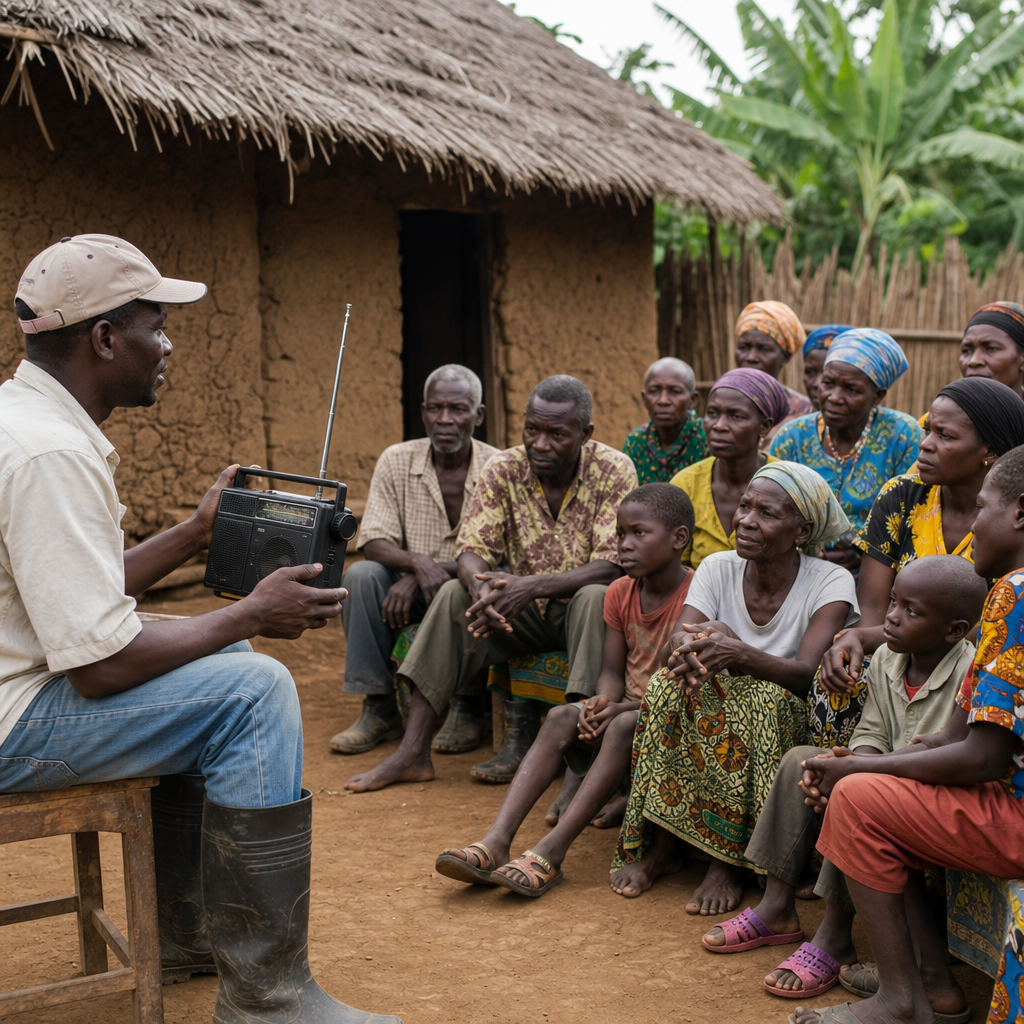
Community feedback mechanisms in sanitation projects determine whether toilets are used, handwashing stations are maintained, drains stay clear, and service providers respond before small failures become public health risks. In practice, a feedback mechanism is any structured way for residents to report needs, preferences, complaints, and satisfaction to the people designing, funding, operating, or regulating sanitation services. That can include household surveys, community scorecards, grievance desks, village meetings, SMS hotlines, school sanitation clubs, social audits, participatory mapping, and digital dashboards that track response times. Building community awareness sits at the center of these systems because people cannot give useful feedback on services they do not understand, rights they do not know, or channels they do not trust. I have seen technically sound sanitation programs underperform simply because residents were never clearly told who empties pits, where fecal sludge goes, what fee is legitimate, or how to escalate unresolved complaints. A strong hub page on building community awareness must therefore connect education, participation, accountability, and behavior change into one operational model.
Sanitation projects matter because they shape disease exposure, dignity, school attendance, safety, and local environmental quality. According to the World Health Organization and UNICEF Joint Monitoring Programme, safely managed sanitation requires not only access to improved facilities but also safe containment, emptying, transport, treatment, and disposal or reuse. Feedback mechanisms help communities judge each link in that chain. They also reveal hidden barriers: women may avoid public toilets after dark, persons with disabilities may find ramps unusable, tenants may be excluded from decision-making, and low-income households may not report overflowing pits if they assume nothing will happen. When awareness-building is done well, communities understand service standards, know multiple ways to respond, and can distinguish between one-off inconvenience and systemic failure. That makes feedback more actionable, more representative, and more likely to improve sanitation outcomes over time.
Why awareness-building is the foundation of community feedback
Building community awareness in sanitation projects means more than delivering hygiene messages. It means helping people understand the full service pathway, their role in maintaining facilities, the responsibilities of service providers and local government, the health risks linked to poor management, and the specific channels through which they can influence decisions. In field implementation, I separate awareness into four layers: service literacy, rights awareness, channel awareness, and response awareness. Service literacy explains how toilets, septic tanks, sewers, drains, and fecal sludge services actually function. Rights awareness clarifies what residents should reasonably expect, such as safe access, respectful treatment, fair pricing, and transparent schedules. Channel awareness tells people where and how to submit concerns. Response awareness shows what happens next, including timelines and escalation steps.
These layers are essential because communities rarely engage consistently when feedback feels symbolic. If a household reports a blocked drain three times and never hears back, participation collapses. If residents do not know whether desludging is municipally managed or privately contracted, they direct complaints to the wrong place. If awareness campaigns focus only on handwashing while ignoring maintenance budgets, tariff structures, or complaint routes, they may improve knowledge without improving services. Effective awareness-building closes that gap. It equips residents to give specific feedback, such as reporting that a school latrine has no menstrual hygiene bins, that a public toilet cleaner is absent on market days, or that an emptying truck is discharging waste into a canal. Specific feedback is what turns community engagement into operational improvement.
Core feedback mechanisms used in sanitation projects
The best sanitation programs do not rely on one channel. They combine high-touch, inclusive mechanisms with faster reporting tools and public accountability processes. Community meetings remain useful for introducing projects, explaining service standards, and hearing concerns in open discussion, but they are not enough on their own because they can be dominated by local elites. Household surveys provide representative data on satisfaction, willingness to pay, and barriers to use, especially when disaggregated by gender, disability, age, tenure status, and neighborhood. Suggestion boxes can work in schools, clinics, and public toilet blocks, but only when someone checks them routinely and posts visible responses. Toll-free lines and SMS systems are powerful for urban settings where mobile access is high. In informal settlements, I have seen WhatsApp groups become de facto maintenance channels, especially when caretakers share photos of faults and municipal teams respond publicly.
Participatory tools are particularly valuable for building awareness while collecting data. Community scorecards let residents rate cleanliness, accessibility, affordability, safety, and responsiveness, then compare those ratings with provider perspectives. Social audits open budgets, contracts, and performance records to public review. Transect walks and sanitation mapping help residents identify contamination points, illegal dumping sites, broken infrastructure, and neighborhoods with poor service coverage. School-led monitoring can surface issues adults overlook, such as lack of soap, damaged locks, or unsafe paths to toilets. The common lesson is that mechanisms work best when they are routine, visible, and linked to named actions rather than one-time consultations.
| Mechanism | Best use | Main strength | Key limitation |
|---|---|---|---|
| Community meetings | Project launch, standards explanation, open discussion | Builds shared awareness quickly | Can exclude quieter groups |
| Household surveys | Baseline, satisfaction tracking, equity analysis | Produces structured data | More expensive to repeat often |
| SMS or hotline | Rapid fault reporting and complaints | Fast and traceable | Depends on phone access and follow-up |
| Community scorecards | Service quality review with providers | Turns perceptions into action points | Needs skilled facilitation |
| Social audits | Budget and contract transparency | Improves accountability | Can face political resistance |
How to design feedback systems that communities actually use
Usable systems are designed backward from user realities, not forward from institutional convenience. That means starting with who needs to participate, what they need to know, when they are most likely to engage, and what barriers stand in the way. For example, a hotline is weak if public toilet users are mostly elderly women with limited phone credit, or if tenants fear conflict with landlords for reporting septic failures. In one municipal sanitation upgrade I supported, reported complaints increased only after we changed outreach from posters to door-to-door briefings by community health workers who explained service standards in local language and showed residents the exact complaint format. Awareness content must be practical: fee schedules, desludging intervals, cleaning rosters, operating hours, disability access features, and the name of the office responsible.
Trust is just as important as access. People participate when they believe feedback is safe, fair, and worth the effort. That requires clear service commitments, a visible case-handling process, and regular public reporting. Even simple practices help: assign complaint numbers, acknowledge receipt within 24 hours, classify severity, set target resolution times, and publish monthly summaries on notice boards or local radio. Anonymous channels are useful for reporting corruption, harassment, or illegal dumping. However, anonymity should not replace community dialogue. The strongest systems combine private reporting for sensitive issues with public forums where common problems and solutions are discussed. They also train frontline staff to handle complaints respectfully. A rude response at a facility desk can undermine months of awareness-building.
Reaching underserved groups and correcting participation bias
Sanitation feedback is often skewed toward residents with social confidence, literacy, political connections, or digital access. That distorts decision-making because the people facing the greatest risks may be least represented. Inclusive awareness-building therefore requires deliberate segmentation. Women and girls may prioritize privacy, lighting, menstrual hygiene management, and safety on the route to shared toilets. Persons with disabilities often focus on door width, handrails, transfer space, surface conditions, and caregiver access. Children can identify maintenance failures in schools faster than administrators. Migrants, informal tenants, and residents of unrecognized settlements may avoid official channels if they fear eviction or penalty. These differences are not edge cases; they shape whether sanitation services are usable.
Practical inclusion methods are well established. Use mixed engagement formats, not just public meetings. Hold separate focus groups where needed, partner with disabled persons organizations, use visual materials for low-literacy audiences, and gather feedback at times that do not conflict with market work or care responsibilities. In urban sanitation programs, geotagged complaint maps often reveal underreporting in peripheral settlements. That does not always mean fewer problems; it may indicate lower awareness or lower trust. To correct for this, pair passive channels such as hotlines with active outreach such as enumerator visits, school campaigns, and clinic-based information desks. Measure representation directly. If few complaints come from women, low-income blocks, or people with disabilities, the solution is not to assume satisfaction. The solution is to improve awareness and access until participation reflects the community.
Turning feedback into awareness, behavior change, and service improvement
A feedback mechanism should not act only as a complaints pipeline. It should also function as a learning loop that strengthens community awareness and improves behavior. When residents report repeated clogging in a shared toilet, the response may require both maintenance and better user education on what should not be flushed. When households complain about pit emptying costs, authorities may need to review subsidy policy, licensing, and safe disposal options, while also explaining the true cost of compliant service. When schoolchildren report lack of soap, the issue may be procurement, theft, or poor budgeting, each demanding a different response. The point is that feedback becomes valuable when categorized, analyzed for root causes, and translated into both corrective action and targeted communication.
Successful programs create visible feedback-to-action cycles. Post maintenance logs at facilities. Announce resolved issues during community meetings. Share before-and-after photos of drain cleaning or toilet rehabilitation. Publish common questions and answers in local language. Where possible, connect sanitation feedback with broader public health outreach. For instance, if neighborhoods report frequent flooding of latrines, awareness campaigns can explain contamination risks during rainy seasons and promote temporary protective measures while infrastructure upgrades are underway. I have found that communities remain engaged when they see evidence that reporting leads to fixes, and when educational messages clearly reflect the problems they themselves raised. That reciprocity is what turns awareness from one-way messaging into sustained civic participation.
Measuring performance and linking this hub to wider community engagement
The quality of a sanitation feedback system can be measured. Track awareness indicators such as the percentage of households that know where to report a problem, can name the responsible provider, or understand basic service standards. Track process indicators such as complaint volume, acknowledgment time, resolution time, share of anonymous reports, and proportion of cases closed with user confirmation. Track equity indicators by gender, disability, age, settlement type, and income proxy. Track outcome indicators such as facility uptime, cleanliness scores, desludging compliance, school attendance linked to sanitation conditions, and reduction in illegal dumping reports. Tools like KoboToolbox, CommCare, DHIS2 integrations, GIS dashboards, and simple Excel service registers can all support this work when matched to local capacity.
As a hub page under community engagement and education, building community awareness should connect readers to deeper articles on behavior change communication, school and youth engagement, participatory planning, grievance redress systems, social accountability, sanitation marketing, and monitoring methods. The main takeaway is straightforward: community feedback mechanisms in sanitation projects succeed when awareness is treated as infrastructure, not as outreach after the fact. People need clear information, trusted channels, respectful responses, and visible action. When those elements are in place, communities report problems earlier, use services more confidently, and help keep sanitation systems safe and functional. If you are planning or improving a sanitation program, start by mapping what residents know, how they speak up, and what happens when they do. Then build awareness and feedback together, because effective sanitation services are co-produced with the community, not delivered at a distance.
Frequently Asked Questions
1. What are community feedback mechanisms in sanitation projects?
Community feedback mechanisms are the formal and informal systems that allow residents to share their experiences, concerns, priorities, and satisfaction levels with the people responsible for sanitation services. In a sanitation project, this can include tools such as household surveys, community scorecards, public meetings, complaint desks, suggestion boxes, SMS hotlines, mobile apps, social audits, and grievance redress systems. The purpose is not simply to collect opinions, but to create a reliable channel through which users can influence how toilets, handwashing facilities, drainage systems, fecal sludge services, and waste management operations are planned and maintained.
These mechanisms matter because sanitation only works when it fits local realities. A toilet that is technically well built but poorly located, unsafe for women at night, inaccessible for older adults, or difficult to keep clean may be rejected by the community. In the same way, blocked drains, broken taps, missing soap, irregular desludging, or poor responsiveness from service providers can quickly undermine public trust and create serious health risks. Feedback mechanisms help project teams identify these problems early, before they become entrenched failures.
Effective community feedback is structured, consistent, and actionable. That means residents know where to report issues, project staff know who is responsible for responding, and communities can see that their input leads to changes. When designed well, feedback systems strengthen accountability, improve service quality, increase usage of sanitation facilities, and make projects more equitable by bringing in voices that are often overlooked, including women, renters, people with disabilities, informal settlement residents, and lower-income households.
2. Why is community feedback so important for the success of sanitation projects?
Community feedback is essential because sanitation outcomes depend on everyday human behavior and service reliability, not just infrastructure delivery. A project can install toilets, drains, and handwashing stations, but if people do not use them, cannot access them safely, or lose confidence in the service, the public health benefits quickly decline. Feedback gives project teams real-world information about whether facilities are acceptable, affordable, safe, convenient, and functioning as intended.
It also helps reveal operational problems that technical monitoring alone may miss. For example, facility inspections might confirm that toilets were constructed, but residents may report that they are too far from homes, poorly lit, locked at certain times, lacking water, or not cleaned regularly. Similarly, official records may show that drains were cleared on schedule, while community members can point out recurring flooding, illegal dumping, or areas where stagnant wastewater remains a daily hazard. This user-level insight is critical for improving performance.
Another major reason feedback matters is accountability. Sanitation projects often involve multiple actors, including local governments, utilities, contractors, NGOs, community-based organizations, and private operators. Without a clear mechanism for residents to raise complaints and track responses, responsibility becomes blurred and problems linger. Feedback systems create a direct line between users and decision-makers, making it easier to assign follow-up actions, monitor response times, and build trust.
Finally, community feedback improves long-term sustainability. Projects that listen and adapt are more likely to maintain infrastructure, secure community ownership, reduce conflict, and support lasting hygiene behavior change. In short, feedback turns sanitation from a one-time construction effort into a responsive public service.
3. What are the most effective ways to collect community feedback in sanitation programs?
The most effective feedback methods are usually those that combine accessibility, regularity, inclusiveness, and follow-through. No single tool works in every setting, so strong sanitation programs often use a mix of approaches. Household surveys can capture broad patterns in satisfaction, usage, and service gaps. Community meetings and focus groups can explore detailed issues such as privacy concerns, maintenance barriers, or cultural preferences. Complaint hotlines, SMS systems, and WhatsApp channels can make it easier for residents to report urgent failures like overflowing toilets, blocked drains, or broken handwashing stations.
Community scorecards are especially useful because they bring users and service providers together around agreed performance indicators. Residents may rate cleanliness, water availability, safety, accessibility, responsiveness, and affordability, while providers explain constraints and commit to improvements. This creates a shared accountability process rather than a one-way complaint stream. Grievance redress mechanisms are also important, particularly for serious issues such as exclusion, discrimination, unsafe conditions, or contractor misconduct. These systems should have clear timelines, appeal options, and confidentiality safeguards where needed.
For feedback collection to be effective, the process must be easy to use. That means offering multiple entry points, using local languages, minimizing cost to users, and ensuring people with different literacy levels can participate. It also means reaching groups who are often excluded from public forums, such as women, adolescent girls, people with disabilities, sanitation workers, migrants, and residents of informal settlements. In many cases, separate consultations or targeted outreach are necessary to capture concerns that may not surface in mixed public meetings.
Most importantly, collection methods only work if they are tied to action. Residents will stop participating if complaints disappear into a system with no visible response. The strongest programs acknowledge reports, classify issues, assign responsibility, communicate timelines, and publicly share what was fixed. The collection tool is only the first step; the response system is what determines credibility.
4. How can sanitation projects make sure feedback systems are inclusive and trustworthy?
Inclusive and trustworthy feedback systems are built intentionally. They do not assume that everyone has equal time, confidence, literacy, mobility, or access to technology. In sanitation projects, this is particularly important because the people most affected by poor services are often the least likely to be heard through standard channels. Women may have safety and privacy concerns that men do not raise. People with disabilities may encounter physical barriers to using facilities. Tenants, lower-income households, and informal settlement residents may fear retaliation or assume their complaints will not matter.
To make feedback systems inclusive, project teams should provide several ways to participate, including in-person, paper-based, phone-based, and digital options. Meetings should be held at accessible locations and times that work for caregivers and workers. Information should be offered in local languages and in formats suitable for people with limited literacy. Anonymous complaint options can help residents report sensitive concerns, especially where power dynamics, stigma, or fear of punishment may discourage open participation.
Trust also depends on transparency. Communities need to know what kind of feedback can be submitted, who receives it, how it will be reviewed, how long responses should take, and what happens if the issue is not resolved. Publishing simple service standards and response timelines helps set expectations. So does sharing summary data, such as the number of complaints received, the types of issues raised, and the percentage resolved. This shows that the mechanism is real, active, and not just a symbolic exercise.
Another key factor is respectful engagement. Frontline staff and local representatives should be trained to receive complaints professionally, avoid dismissive behavior, protect confidentiality, and treat all users fairly. When residents see that their concerns are acknowledged and acted upon, trust grows. When they are ignored, blamed, or forced to repeat the same complaint multiple times, trust collapses. In sanitation, where sustained user participation is essential, credibility is one of the most valuable assets a project can have.
5. How should project teams respond to community feedback and measure whether the mechanism is working?
Responding to community feedback should be treated as a core management function, not an optional communications task. The first step is to log feedback systematically and categorize it by issue type, location, urgency, and responsible party. For example, reports might relate to toilet cleanliness, drainage blockages, soap shortages, fecal sludge collection delays, broken locks, lighting failures, user fees, or staff conduct. Once categorized, each issue should be assigned to the relevant team or service provider with a clear deadline for response.
Good response systems distinguish between immediate fixes and longer-term improvements. A blocked drain, overflowing toilet, or missing water supply may require urgent operational action, while repeated complaints about facility design, lack of accessibility, unsafe siting, or unaffordable tariffs may call for policy or budget decisions. In both cases, the community should receive updates. Closing the loop is crucial. Even if a problem cannot be solved immediately, residents should be told what is being done, why delays exist, and when the next update will come.
To measure whether the feedback mechanism is working, project teams should track both process indicators and outcome indicators. Process indicators include the number of reports received, the share acknowledged within a target timeframe, average response time, resolution rate, user satisfaction with complaint handling, and participation rates across different social groups. Outcome indicators look at whether feedback is actually improving sanitation performance, such as increased toilet use, cleaner facilities, fewer drainage complaints, more reliable handwashing supplies, reduced service interruptions, or stronger trust in providers.
It is also important to assess equity. A mechanism is not successful if it generates many reports but only from the easiest-to-reach groups. Teams should examine who is participating and who is missing. If women, people with disabilities, low-income households, or marginalized neighborhoods are underrepresented, the system needs adjustment. Ultimately, a strong community feedback mechanism is one that residents know about, can access safely, trust enough to use, and can point to as a reason services improved.