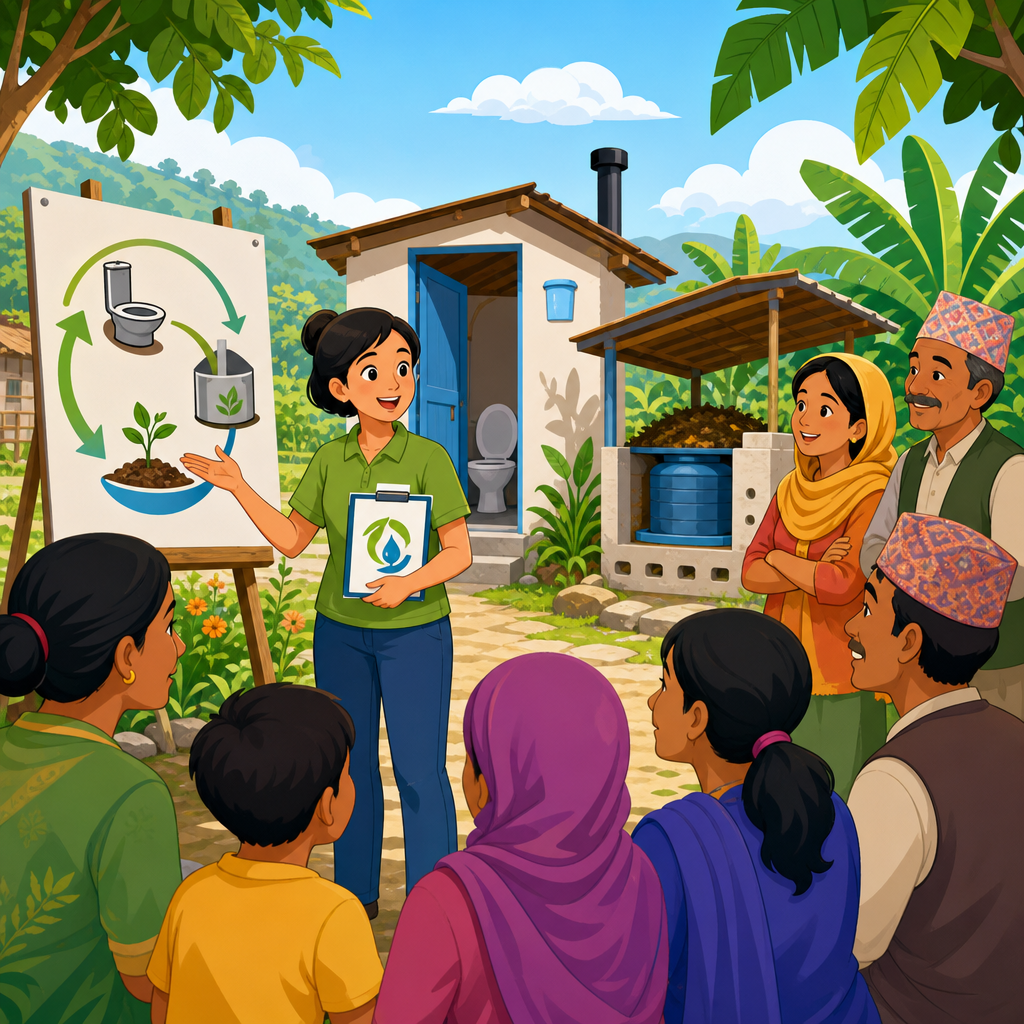
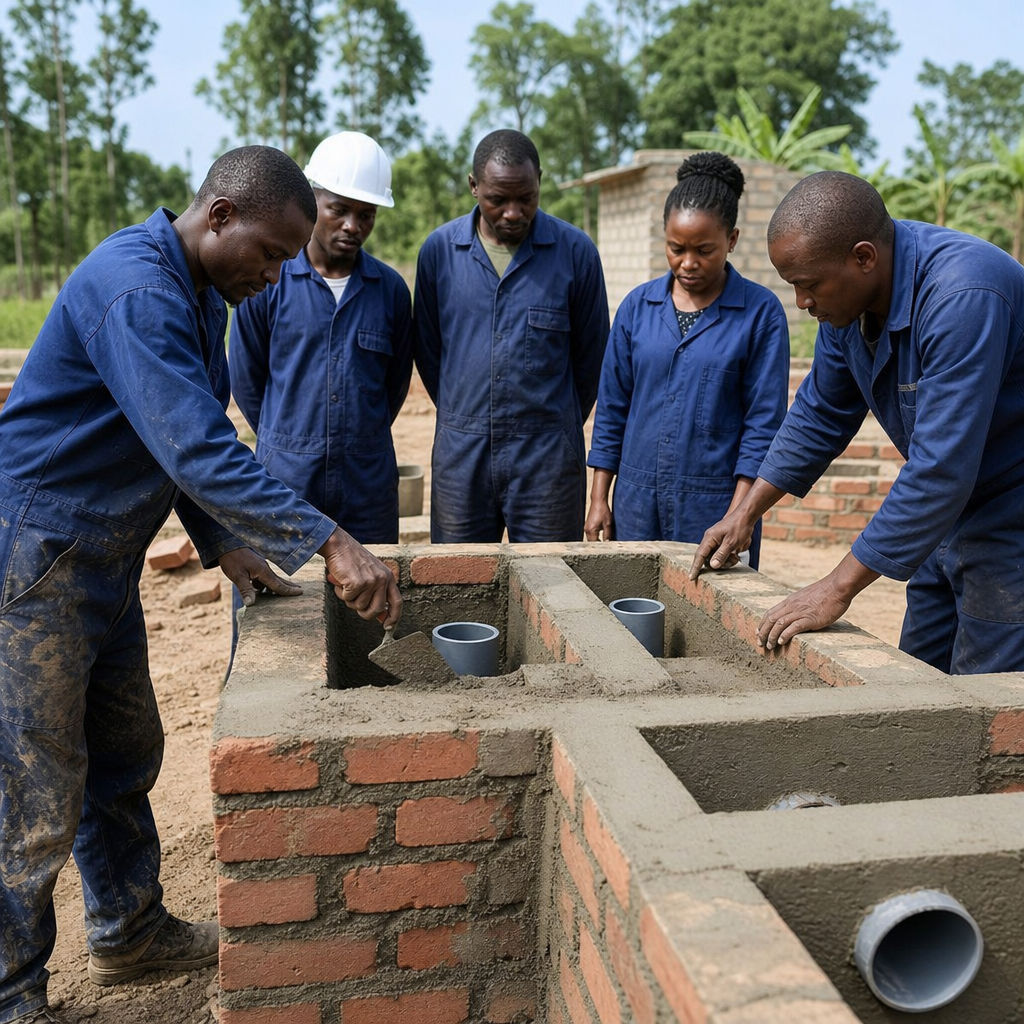
EcoSan and community health are inseparable because the way a community manages human waste directly affects disease risk, water quality, household dignity, and long-term environmental resilience. EcoSan, short for ecological sanitation, is an approach that treats human excreta as a resource to be safely managed, sanitized, and, where appropriate, reused rather than simply discarded. In practice, EcoSan systems often separate urine and feces, reduce water use, encourage on-site treatment, and support nutrient recovery for agriculture. Community health, in this context, includes not only the prevention of diarrheal disease, cholera, typhoid, helminth infections, and groundwater contamination, but also mental well-being, gender safety, school attendance, and social inclusion.
I have worked with sanitation outreach teams in communities where new toilets failed not because the technology was poor, but because awareness was shallow, myths spread faster than facts, and no one explained how daily habits connect to public health. That experience shapes one clear lesson: building community awareness is the decisive factor between an EcoSan facility that becomes a valued local asset and one that sits unused. Awareness is more than a poster campaign. It means shared understanding of why sanitation matters, what EcoSan systems do, how they are maintained, who benefits, what risks exist, and how those risks are controlled.
This hub article covers building community awareness comprehensively because awareness is the foundation for every other educational effort under community engagement and education. Households need plain-language explanations. Local leaders need evidence to support adoption. Teachers need age-appropriate health messages. Farmers need confidence in treatment standards before reuse. Health workers need a framework to answer concerns about smell, pathogens, cost, and cultural acceptability. When awareness is built systematically, communities are more likely to use toilets correctly, maintain them consistently, support inclusive access, and demand better sanitation governance. The result is better health outcomes and stronger local ownership.
Why community awareness determines EcoSan success
Community awareness determines EcoSan success because sanitation behavior is collective, not individual. One household using an EcoSan toilet correctly helps, but a whole settlement understanding safe containment, handwashing, cleaning, and sludge handling creates a public health barrier. The World Health Organization links safely managed sanitation with reduced exposure to pathogens in the domestic environment, while UNICEF and the WHO Joint Monitoring Programme continue to show that sanitation progress depends on both infrastructure and use. In other words, a toilet is only protective when people understand why and how to use it safely every day.
Awareness also reduces resistance. In many projects, residents initially associate dry toilets or urine diversion with inconvenience, odor, or poverty. Those concerns are real and must be addressed directly. A well-run awareness program explains design features such as ventilation pipes, ash or dry cover material, diversion pans, sealed storage chambers, and resting periods that lower pathogen risks. It also clarifies that different EcoSan models fit different contexts. A urine-diverting dry toilet may work well in water-scarce areas, while a composting toilet may require stronger household management capacity. Clear awareness prevents oversimplified messaging and helps communities choose systems that match local realities.
Most importantly, awareness links sanitation to outcomes people already care about: fewer sick children, lower medical spending, cleaner yards, safer access for women at night, improved school attendance for girls, and more reliable crop production where nutrient reuse is acceptable and regulated. When these benefits are concrete, EcoSan stops being a technical concept and becomes a practical community health strategy.
Core messages every awareness campaign should teach
Effective community awareness starts with a small set of repeatable messages. First, human waste can transmit disease when it contaminates hands, water, soil, food, and surfaces. Second, EcoSan systems break that transmission pathway by containing waste, supporting treatment, and encouraging safer handling. Third, correct operation matters: urine and feces may need to be separated, chambers kept dry, cover material added, and handwashing practiced after every toilet visit. Fourth, maintenance is routine, not optional. Fifth, any reuse of treated outputs must follow recognized health protections, including storage time, restricted crop application where needed, and use of personal protective equipment during handling.
People also need to know what EcoSan is not. It is not a shortcut that makes fresh excreta instantly safe. It is not one single toilet design. It is not appropriate for every site without adaptation. It does not remove the need for local regulations, trained masons, supply chains, and service arrangements. I have found that communities trust awareness programs more when educators openly explain limitations along with benefits. That honesty matters because residents quickly notice if a project promises too much.
Messages should be adapted for audience segments. For parents, emphasize disease prevention and child growth. For schoolchildren, teach hand hygiene, toilet respect, and stigma reduction. For local government, focus on public health savings, climate resilience, and service sustainability. For farmers, explain nutrient cycles, treatment safeguards, and agronomic value. For landlords, stress asset durability and lower water dependence. A hub page like this should connect these messages so readers can move from general understanding to more detailed guidance in supporting articles on hygiene behavior, school engagement, maintenance, and safe reuse.
Methods for building awareness that communities actually trust
The most effective awareness methods are participatory, visible, and sustained over time. One-off sensitization events rarely change habits. In successful programs, I have seen community mapping, household visits, school demonstrations, health-clinic talks, market-day exhibits, and peer educator networks outperform generic lectures. Participatory mapping is especially useful because residents identify open defecation areas, flooded zones, shallow wells, and paths children use daily. Once those links are visible, the sanitation-health connection becomes local rather than abstract.
Trusted messengers matter as much as technical content. Community health workers, respected elders, teachers, women’s savings groups, youth leaders, religious leaders, and trained sanitation champions often carry more influence than outside project staff. Demonstration toilets are another powerful tool. When people can see a clean, odor-controlled EcoSan unit, understand the user steps, and ask candid questions about emptying, cleaning, and cost, adoption barriers fall. Social proof is important: households are far more willing to try a system when neighbors they respect can describe actual daily experience.
| Awareness method | How it works | Best use | Common limitation |
|---|---|---|---|
| Household visits | One-on-one discussion on use, hygiene, and maintenance | Correcting misconceptions and supporting new users | Labor intensive for large areas |
| School programs | Lessons, clubs, demonstrations, handwashing practice | Reaching children and influencing families | Needs teacher commitment and materials |
| Community meetings | Group discussion with leaders and residents | Launching campaigns and addressing collective concerns | Quiet voices may be excluded |
| Demonstration toilets | Physical model showing design and operation | Building confidence in unfamiliar systems | Requires upkeep to remain credible |
| Radio and local media | Repeated health messages in local language | Broad awareness across dispersed communities | Limited ability to teach practical steps |
Good programs combine several methods. For example, a district campaign might launch with a public meeting, follow with radio messages, reinforce lessons through school clubs, and then use household visits for families installing new units. Repetition across channels helps turn information into habit.
Addressing myths, stigma, and cultural concerns
EcoSan awareness fails when it ignores deeply held beliefs. In some communities, handling any product derived from human waste is considered taboo. In others, people assume dry toilets are inherently dirty, or they fear that stored material remains infectious forever. Some men may reject new toilet practices they see as inconvenient, while women may worry about privacy, menstrual hygiene management, and cleaning burdens. These concerns should never be dismissed. They should be surfaced early and answered with evidence, empathy, and examples from similar settings.
A practical way to address myths is to separate questions into health, cultural, and operational categories. Health questions include pathogen survival, vector control, odor, and crop safety. Cultural questions include purity beliefs, gender norms, and who is expected to maintain the toilet. Operational questions include ash supply, emptying schedules, water availability for handwashing, and what to do when users make mistakes. Once concerns are categorized, educators can respond more precisely. WHO sanitation safety planning principles are helpful here because they focus on identifying hazards at each step and applying control measures rather than assuming one message fits all.
Language matters. Terms such as “treated material,” “safe storage,” “nutrient recovery,” and “barrier measures” are often better received than jargon or overly promotional claims. Community dialogues should also include households that tried EcoSan and can speak honestly about both benefits and annoyances. When people hear that a family needed several weeks to learn correct urine diversion, or that adding dry cover material consistently was the key to odor control, the message feels credible. Trust grows when awareness reflects real use conditions.
Linking awareness to schools, clinics, and local leadership
Building community awareness works best when it is anchored in institutions people already use. Schools are critical because children learn hygiene behavior early and often influence household practices. A strong school-based program covers toilet use, handwashing with soap, menstrual hygiene support, water conservation, and respect for shared facilities. Teachers can integrate sanitation into science, health, and civic lessons, while student clubs can monitor cleanliness and lead community events. Schools also reveal whether messages are practical: if children cannot explain how an EcoSan toilet works, adult uptake will usually be weak as well.
Clinics and community health posts add medical credibility. Nurses and health workers can connect sanitation awareness to local disease patterns such as diarrhea spikes during rainy seasons, worm infections among school-age children, or skin problems linked to unsafe wastewater exposure. They can also reinforce messages for pregnant women, caregivers of young children, and households with immunocompromised members. In my experience, awareness campaigns gain momentum when health staff explain that sanitation is preventive care, not just infrastructure spending.
Local leadership is the third anchor. Village councils, ward committees, municipal sanitation officers, and traditional leaders can help set expectations for maintenance, inclusion, and safe siting. Their support is especially important for shared facilities, by-laws, tariff discussions, and conflict resolution. A hub resource on building community awareness should therefore connect readers to related topics such as behavior change communication, community-led planning, inclusive sanitation design, and monitoring participation outcomes. Awareness becomes durable when it is embedded in school routines, health advice, and local governance rather than treated as a stand-alone campaign.
Measuring whether awareness is improving community health
Awareness should be measured by behavior and health indicators, not attendance alone. High turnout at a launch event proves little if toilets are misused two months later. Better indicators include correct toilet use, handwashing station presence, availability of soap or ash, cleanliness scores, user confidence with maintenance steps, and safe emptying practices. For shared or institutional facilities, track downtime, cleaning frequency, and whether women, children, older adults, and people with disabilities can use the facility safely and comfortably.
Health outcomes usually change more slowly, but they still matter. Programs can monitor self-reported diarrheal episodes, school absenteeism, clinic data on sanitation-related illness, water quality trends where groundwater contamination is a concern, and reduction in visible fecal contamination near homes. Qualitative evidence is also valuable. Focus groups may reveal that women feel safer at night, landlords receive fewer tenant complaints, or farmers have gained confidence in treated nutrient products. These are meaningful public health gains even before longer-term epidemiological changes are documented.
Use simple baseline and follow-up tools. A short knowledge survey, structured observation checklist, and facility inspection form often provide more useful management data than a complicated evaluation system. Review results publicly with the community, then adjust messages where confusion remains. If people understand disease links but still avoid emptying chambers safely, the next phase should focus on service arrangements and practical demonstrations. Awareness is not a one-time objective. It is a continuous cycle of teaching, listening, measuring, and improving.
EcoSan and community health come together most powerfully when awareness turns sanitation from a hidden private issue into a shared public good. The core lesson is straightforward: technology alone does not protect people. Communities need clear information, trusted messengers, visible examples, and ongoing support to use EcoSan systems safely and consistently. When awareness is built well, households understand disease prevention, schools reinforce healthy habits, clinics validate the health benefits, leaders support accountability, and local users gain the confidence to maintain systems over time.
As the hub for building community awareness under community engagement and education, this page establishes the foundation for deeper articles on behavior change, school outreach, stakeholder mobilization, inclusive participation, maintenance training, and safe resource reuse. The main benefit of strong awareness is not simply higher toilet adoption. It is healthier families, cleaner environments, lower exposure to sanitation-related disease, and stronger community ownership of essential services. Awareness creates the conditions for EcoSan to work as intended and to keep working after the initial project team has left.
If you are planning an EcoSan program, start by mapping what your community already believes, who people trust, and where misinformation is blocking progress. Build messages around real health concerns, demonstrate the system in practical terms, and measure behavior change regularly. Then use this hub as your starting point for a broader community education strategy that makes sanitation safer, understood, and locally owned.
Frequently Asked Questions
1. What is EcoSan, and why is it important for community health?
EcoSan, or ecological sanitation, is a sanitation approach that views human waste not simply as something to dispose of, but as a material that can be safely managed, treated, and in some cases reused in ways that protect both people and the environment. Unlike conventional sanitation systems that often rely on large amounts of water and centralized sewage infrastructure, EcoSan systems are designed to reduce water use, support local treatment, and prevent harmful contamination of soil and water sources. Many EcoSan models separate urine and feces so each can be handled more safely and efficiently.
Its importance to community health is direct and significant. Poorly managed human waste can spread diarrheal diseases, intestinal worms, cholera, typhoid, and other infections that thrive where sanitation is weak. When sanitation systems fail or are unavailable, waste often ends up contaminating drinking water, food-growing areas, and shared living spaces. EcoSan helps break this cycle by promoting containment, treatment, hygiene awareness, and safer handling practices. In practical terms, that means fewer disease outbreaks, cleaner neighborhoods, improved household dignity, and stronger public confidence in local health conditions.
EcoSan also matters because it supports long-term resilience. Communities facing water scarcity, rapid urban growth, poor drainage, or limited infrastructure need sanitation solutions that are affordable, adaptable, and environmentally sound. By reducing pollution and encouraging responsible waste management, EcoSan contributes to healthier families and more sustainable communities over time.
2. How does EcoSan reduce disease risk in a community?
EcoSan reduces disease risk by interrupting the pathways through which pathogens move from human waste into the environment and then back into people. This is one of the most important public health benefits of the approach. In communities where sanitation is inadequate, rainwater runoff, open defecation, leaking pits, overflowing latrines, and poor waste disposal can carry harmful bacteria, viruses, parasites, and worm eggs into wells, streams, gardens, and living areas. EcoSan systems are designed to contain waste more effectively and treat it before it can create health hazards.
A key feature in many EcoSan systems is source separation, where urine and feces are managed separately. This allows better control over moisture, odor, storage, and treatment. Fecal matter can be dried, composted, or otherwise sanitized, depending on the system design, while urine may be stored and diluted for agricultural use where local guidelines and safety practices allow. When treatment is done properly, the number of harmful organisms is greatly reduced, lowering the chance of exposure.
EcoSan also encourages behavior change, which is essential for disease prevention. A sanitation system alone is not enough if households do not wash hands, maintain facilities, or understand safe handling procedures. Awareness programs linked to EcoSan often teach families about handwashing, toilet maintenance, child feces disposal, water protection, and the safe reuse of treated byproducts. As a result, communities benefit not just from better infrastructure, but from healthier daily practices. This combination of safe containment, treatment, and education is what makes EcoSan a powerful tool for reducing sanitation-related illness.
3. In what ways does EcoSan improve water quality and environmental health?
EcoSan improves water quality by preventing untreated human waste from entering groundwater, surface water, drainage channels, and flood-prone areas. In many communities, conventional pit latrines and poorly built toilets can leak, overflow, or collapse, especially in areas with high water tables, heavy rains, or unstable soils. When this happens, disease-causing organisms and excess nutrients can pollute water sources used for drinking, cooking, bathing, and farming. EcoSan systems are generally designed to reduce these risks by containing waste more securely and requiring more deliberate treatment before release or reuse.
Another environmental advantage is reduced water consumption. Conventional flush systems can use large amounts of clean water to move waste away, which is not always practical or responsible in water-scarce settings. EcoSan systems often work with little or no water, which helps conserve local water supplies and reduces pressure on already limited resources. This is especially valuable in rural areas, informal settlements, and climate-vulnerable regions where water must be carefully managed.
EcoSan can also support nutrient recovery when handled safely and in line with health standards. Human excreta contain nutrients such as nitrogen, phosphorus, and potassium. Rather than allowing these nutrients to become pollutants in rivers or lakes, EcoSan systems can turn them into useful resources for soil improvement or agriculture after proper treatment. This helps close the nutrient loop, reduce environmental contamination, and support more sustainable land use. In this way, EcoSan strengthens environmental health while also offering practical local benefits.
4. Why is community awareness so important for the success of EcoSan programs?
Community awareness is essential because EcoSan is not just a technology; it is a system that depends on understanding, trust, and consistent participation. Even the best-designed sanitation facility can fail if users do not know how to use it properly, maintain it regularly, or follow safe hygiene practices. EcoSan often involves different habits from those associated with conventional toilets, such as separating waste streams, adding drying material, keeping chambers dry, or waiting for treatment periods before handling byproducts. Without clear explanation and local engagement, these steps can be misunderstood or ignored.
Awareness also helps address cultural concerns, social stigma, and misconceptions. Sanitation is deeply connected to privacy, dignity, tradition, and beliefs about cleanliness. Some communities may hesitate to adopt EcoSan if they think it is unsafe, complicated, or unfamiliar. Open education campaigns, household demonstrations, school programs, and local leadership involvement can make a major difference in acceptance. When people understand how EcoSan protects children, reduces contamination, and improves neighborhood health, they are more likely to support and sustain the system.
In addition, community awareness creates shared responsibility. Sanitation outcomes are collective, not just individual. One poorly managed toilet or one contaminated drainage point can affect many households. That is why awareness efforts should involve residents, health workers, teachers, local governments, and community-based organizations. When the whole community understands the link between sanitation and health, EcoSan becomes easier to maintain, monitor, and expand. Strong awareness turns a sanitation project into a public health movement.
5. What are the main challenges communities face when adopting EcoSan, and how can they overcome them?
Communities adopting EcoSan may face several challenges, including limited awareness, concerns about cost, weak technical support, cultural resistance, and uncertainty about maintenance responsibilities. For some households, the idea of handling or reusing treated human waste may feel uncomfortable at first. Others may worry that EcoSan toilets are too complex compared to traditional systems. In low-income settings, even affordable sanitation improvements can still feel financially out of reach without external support or flexible payment options.
These challenges can be overcome through practical planning and strong local engagement. First, awareness and training are critical. People need clear, respectful education on how the system works, why it matters, and what steps are needed for safe operation. Demonstration sites are especially effective because they allow residents to see functioning EcoSan systems in real-life settings. Second, communities need access to technical guidance for construction, maintenance, and troubleshooting. Poor design or improper installation can quickly damage confidence in the approach, so quality matters from the beginning.
It also helps to involve the community in decision-making rather than introducing EcoSan as a one-size-fits-all solution. Local preferences, climate conditions, soil type, water availability, and cultural practices should shape the design. Financial barriers can be reduced through subsidies, microfinance, phased implementation, or community cost-sharing models. Finally, long-term success depends on monitoring and support. Follow-up visits, user feedback, and local sanitation champions can help ensure systems remain functional and safe. When communities are informed, included, and supported, EcoSan adoption becomes far more practical and sustainable.