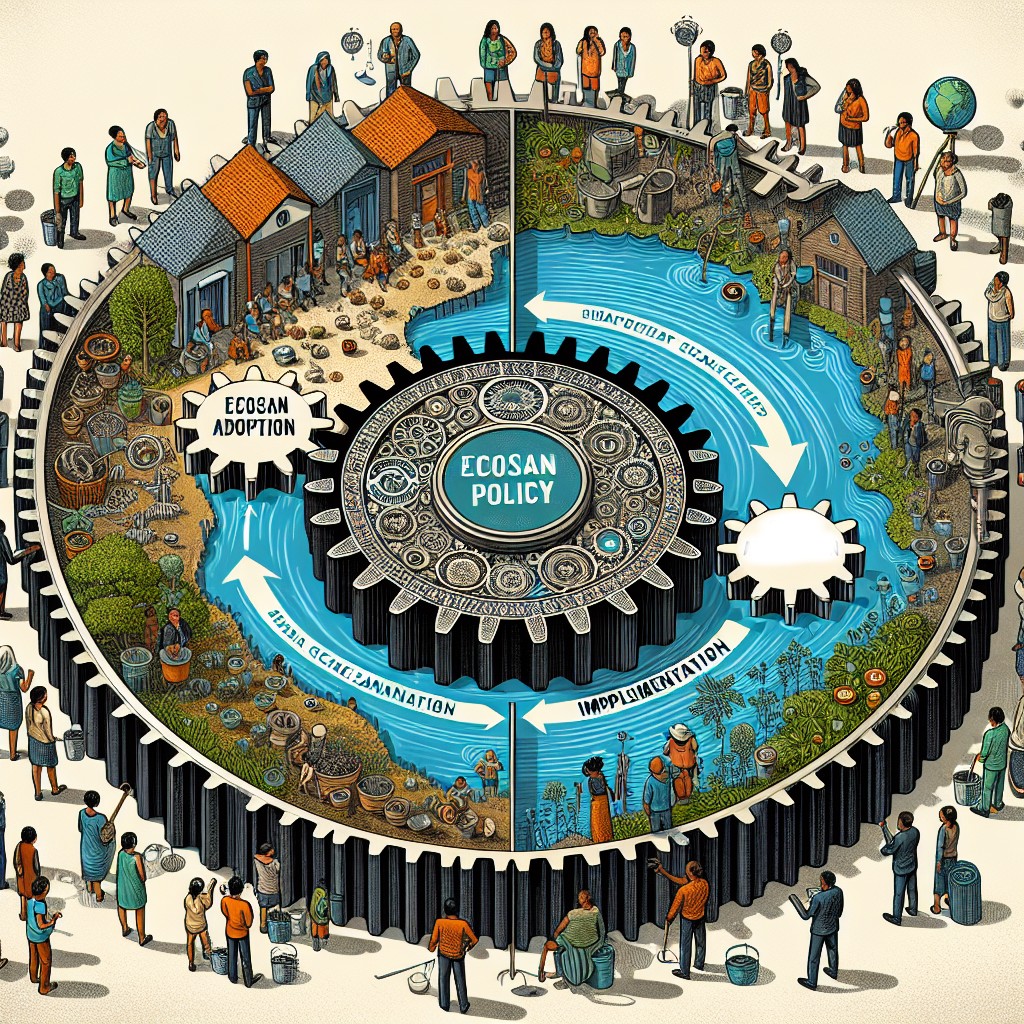
In this era of growing environmental consciousness, ecological sanitation (EcoSan) stands out as a crucial approach to sustainable water and sanitation management. With elevated awareness and emphasis on sustainable living, EcoSan practices have gained widespread acceptance. This comprehensive guide aims to shed light on the principles, concepts, and practices integral to EcoSan.
Introduction
Ecological sanitation, or EcoSan, is an innovative approach designed to recognize human excreta as a resource rather than a waste. The primary objective of EcoSan is to mimic the natural nutrient cycle by safely recycling nutrients and organic matter from human excretions back into the ecosystem. This efficient recycling ensures that agriculture, horticulture, and landscaping benefit from enriched soil, promoting sustainable food production while preserving valuable water resources.
Adopting EcoSan practices inherently supports health and hygiene standards by working on three crucial fronts: reducing water contamination, preventing the spread of disease, and promoting efficient waste management. By addressing these fronts, EcoSan’s integrative approach aims to protect public health and enhance environmental sustainability.
The fundamentals of EcoSan revolve around the management of human waste through safe containment, efficient decomposition, and reuse. Let’s explore the key principles and concepts that form the backbone of effective EcoSan practices, and how these principles help in ensuring health and hygiene.
Principles of Ecological Sanitation
The core principles of EcoSan include hygienic safety, environmental sustainability, recycling of nutrients and organic matter, and affordability and resilience. These principles are designed to provide a comprehensive approach required for the sustainable management of sanitation.
Hygienic Safety: EcoSan ensures that human waste is managed in a way that prevents human contact with pathogens. The treatment processes are designed to deactivate harmful microorganisms, making the end-products safe for reuse.
Environmental Sustainability: By employing methods that require minimal use of water and energy, EcoSan practices help in preserving these precious resources. The focus is on using locally available materials and resources to build sustainable sanitation systems.
Recycling of Nutrients and Organic Matter: EcoSan aims to replicate the natural nutrient cycle by converting waste into valuable resources like fertilizers, thereby reducing dependence on synthetic fertilizers and improving soil health.
Affordability and Resilience: One of the essential goals of EcoSan is to develop cost-effective sanitation solutions that can withstand environmental and economic challenges. These systems are designed to be adaptable to various local contexts, ensuring resilience in the face of change.
Concepts Integral to EcoSan
Separation at Source: EcoSan advocates the separation of urine and feces at the source to enhance the treatment efficiency and safety of the end-products. Urine can be collected separately to be used as a nutrient-rich fertilizer, while feces can be composted or subjected to anaerobic digestion.
Resource-Oriented Sanitation: Unlike conventional sanitation systems that view waste as a nuisance, EcoSan treats excreta as a valuable resource. By optimizing treatment processes, valuable resources like biogas, compost, and urine fertilizers are recovered and reused, closing the loop in ecological cycles.
Decentralized Systems: EcoSan promotes small-scale, decentralized sanitation solutions tailored to community needs. These systems encourage community involvement and ownership, resulting in better maintenance and sustainability of the systems.
Adaptability and Diversification: EcoSan principles emphasize adaptable solutions that can cater to diverse environmental conditions and socio-economic contexts. The diversity allows for integration with local agricultural practices, enhancing the acceptability and effectiveness of EcoSan systems.

Applications of EcoSan Practices
EcoSan practices have been successfully implemented in various settings, including urban, rural, and peri-urban areas. These applications demonstrate the versatility and practicality of EcoSan systems across different contexts.
Urban Settings: In densely populated urban areas, decentralized sanitation systems like dry composting toilets and urine-diverting dry toilets (UDDTs) are becoming popular. These systems reduce the need for extensive sewer networks, conserve water, and provide valuable compost and urine fertilizer for urban gardening.
Rural Areas: Rural communities benefit significantly from EcoSan practices due to the availability of space and the integration with agricultural activities. Composting toilets and biogas digesters are common in rural settings, providing sanitary waste treatment and valuable by-products like biogas for cooking and compost for farming.
Emergency and Disaster Relief: EcoSan-based emergency sanitation systems, such as portable UDDTs and composting toilets, offer quick and safe sanitation solutions in crisis scenarios. These systems prevent disease outbreaks by ensuring hygienic waste disposal and providing temporary relief until permanent solutions are established.
Challenges in Implementing EcoSan
Despite the numerous benefits, several challenges hinder the widespread implementation of EcoSan practices. Addressing these challenges is crucial to increase the adoption and effectiveness of EcoSan systems.
Socio-Cultural Acceptance: One of the significant barriers to EcoSan adoption is the socio-cultural perception of human excreta. Educating communities on the benefits and safety of EcoSan practices is vital to overcome these cultural hesitations.
Technical Knowledge and Skills: Developing and maintaining EcoSan systems require technical know-how, which may be lacking in many communities. Providing technical training and support is essential to ensure the successful implementation and sustainability of these systems.
Financial Constraints: While EcoSan systems are designed to be affordable, initial investment and maintenance costs can still be a challenge, especially in low-income regions. Financial assistance, subsidies, or community-based funding models can help ease this burden.
Regulatory Support and Policy Framework: Supportive policy frameworks and regulations are necessary to promote EcoSan practices. Governments and local authorities need to develop policies that encourage the adoption of EcoSan systems and provide the necessary infrastructure and support.
Health and Hygiene Implications of EcoSan
The implications of EcoSan practices on health and hygiene standards are profound. By effectively managing waste, EcoSan systems help in reducing the incidence of sanitation-related diseases and improving overall public health.
Reduction in Waterborne Diseases: EcoSan systems, particularly in areas lacking proper sewer systems, help prevent the contamination of water sources with pathogens from human excreta, thereby reducing the spread of waterborne diseases like cholera and dysentery.
Improved Soil and Food Safety: The use of treated urine and compost enhances soil fertility and crop production. By ensuring the safe treatment of human waste, EcoSan practices guarantee that the nutrients applied to the soil are free from harmful pathogens, promoting safer food production.
Hygienic and Comfortable Sanitation Facilities: Properly designed EcoSan facilities provide a hygienic and user-friendly environment for sanitation, enhancing the comfort and dignity of users, particularly women and children.
Community Health Benefits: Community-based EcoSan projects foster increased awareness and collective responsibility for maintaining sanitation standards. This sense of ownership can lead to better community health outcomes.
Future Prospects and Innovations
The future of EcoSan lies in continuous innovation and the adaptation of advanced technologies to create more efficient, user-friendly, and scalable systems. Some promising trends and innovations can shape the future of EcoSan practices globally.
Smart Sanitation Technologies: Integrating IoT and sensor technologies into EcoSan systems can help in monitoring and managing sanitation facilities in real-time, enhancing efficiency and maintenance.
Resource Recovery Innovations: Advancements in resource recovery technologies, like improved biogas production processes and nutrient recovery systems, can further enhance the efficiency and sustainability of EcoSan systems.
Community Participation and Education: Engaging communities through education and participatory approaches will be crucial in ensuring the widespread adoption and sustainability of EcoSan practices. Building local capacity and encouraging innovation at the community level can drive significant progress.
Policy and Institutional Support: Strengthening policy frameworks and institutional support for EcoSan practices will be critical in scaling up successful models. Governments and organizations must commit to promoting environmental sanitation and investing in sustainable solutions.
Conclusion
Ecological sanitation offers a promising approach to addressing the global sanitation challenge. By recycling nutrients, conserving water, and ensuring hygienic treatment of human waste, EcoSan practices pave the way for sustainable and healthy communities. While challenges exist, the growing recognition of EcoSan’s benefits and continuous innovation in the field are driving its adoption across diverse contexts.
Protecting public health and promoting environmental sustainability are at the heart of EcoSan principles. With concerted efforts from communities, governments, and stakeholders, EcoSan can transform our approach to sanitation and contribute to the achievement of global sustainable development goals. Embracing ecological sanitation is not merely an option but a necessity for a sustainable and resilient future.