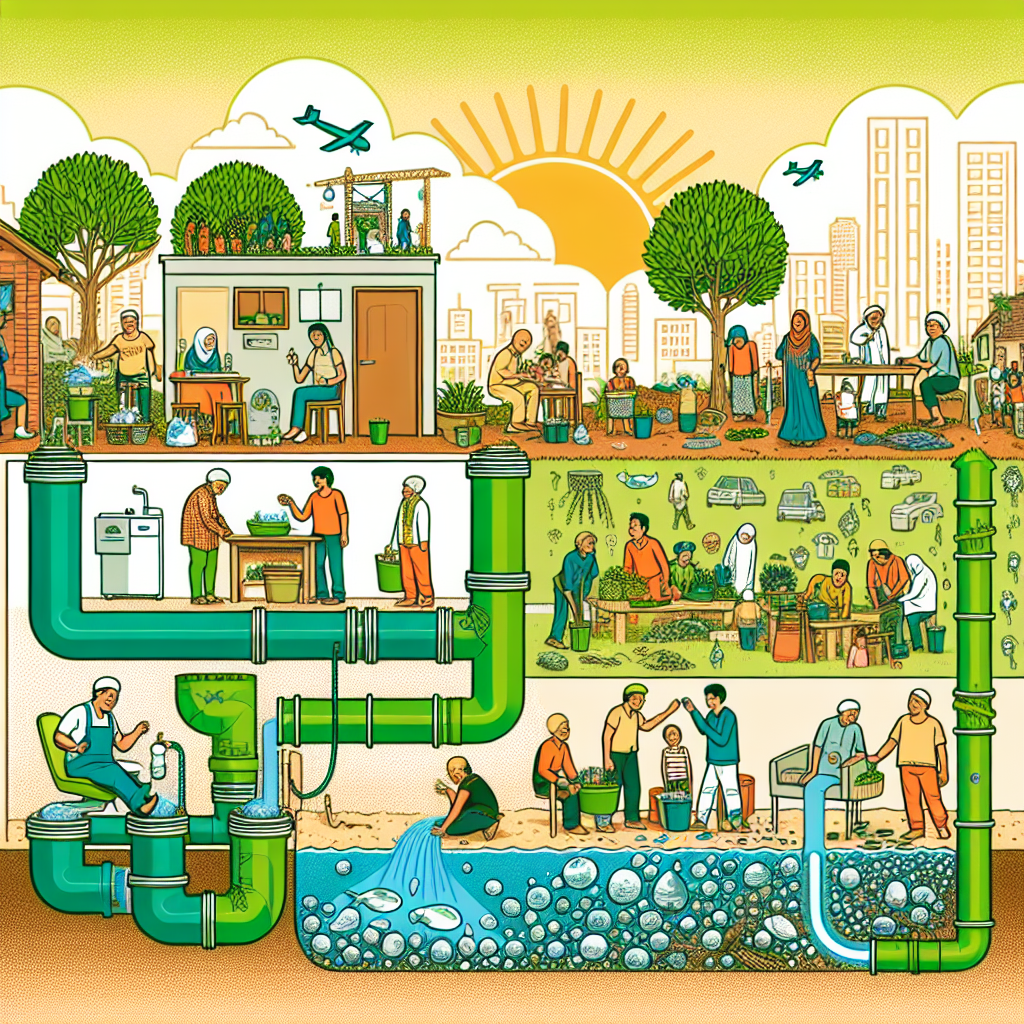
Ensuring access to clean water and adequate sanitation remains a pressing global challenge. Ecological Sanitation (EcoSan) principles and concepts provide a sustainable and economically viable solution. EcoSan focuses on converting human waste into resources, such as fertilizer and biogas, thereby benefiting the environment and the economy. This article delves into the economic advantages of implementing EcoSan and explores the principles and concepts that make it a model for sustainable sanitation.
Introduction
Sanitation is a fundamental human right and a critical public health issue. Traditional sanitation systems, such as flush toilets and centralized sewage systems, have served cities and communities for centuries. However, these systems can be resource-intensive, expensive, and environmentally harmful. Ecological Sanitation (EcoSan) emerges as a revolutionary approach that rethinks waste as a resource rather than a nuisance. By re-purposing human waste, EcoSan provides opportunities for cost savings, resource efficiency, and environmental conservation.
The concept of EcoSan revolves around the principle of closing the nutrient loop. Instead of flushing waste away and contaminating water sources, EcoSan technologies treat and recycle waste into usable products like fertilizers and biogas. This not only reduces the burden on wastewater treatment plants but also helps communities achieve sustainability goals. EcoSan is not just an environmental necessity; it has profound economic implications that can benefit societies worldwide.
One of the most compelling reasons for advocating EcoSan is its potential for economic savings and revenue generation. Traditional sanitation infrastructures are costly to build and maintain. Moreover, they often require significant energy and water resources, raising utility bills and operational expenses. In contrast, EcoSan systems can be more cost-effective, particularly in developing countries where resources are limited, and the need for affordable sanitation solutions is critical.
Implementing EcoSan can lead to significant financial savings for municipalities, communities, and households. Additionally, the by-products of EcoSan technologies, such as compost and biogas, can be marketed or used to offset expenses. This article will explore these economic benefits in greater detail, shedding light on why EcoSan is an intelligent investment for sustainable development.
Cost-Effectiveness of EcoSan Systems
Traditional sanitation systems typically require extensive underground piping, large treatment plants, and a continuous supply of water to flush waste. These infrastructure projects can be prohibitively expensive for many communities. In contrast, EcoSan systems are often simpler, cheaper, and quicker to implement. Technologies such as composting toilets, urine-diverting dry toilets, and anaerobic digesters can be set up with lower initial capital investment and reduced maintenance costs.
Initial deployment costs for EcoSan systems may vary depending on the specific technology and local context. However, over time, the reduced operating costs of these systems can result in substantial savings. For example, composting toilets do not require water for flushing, reducing household water bills and easing the strain on water supply systems.
Furthermore, EcoSan systems are adaptable and can be scaled up or down based on community needs. In many developing regions, EcoSan offers a pragmatic solution where conventional sewage infrastructure is either non-existent or inadequate. By decentralizing sanitation solutions, EcoSan can eliminate the need for costly sewage networks and large treatment plants, localizing waste management and enabling community-driven sanitation initiatives.
The durability of EcoSan systems also contributes to their cost-effectiveness. Many components used in EcoSan technologies are designed to have a long lifespan with minimal maintenance required. This increases their economic viability, especially in areas that do not have the means to finance frequent repairs or replacements.

Resource Recovery and Revenue Generation
One of the unique economic advantages of EcoSan systems is their ability to convert waste into valuable resources. Human excreta contain essential nutrients, such as nitrogen, phosphorus, and potassium, which are important for plant growth. Through processes like composting and anaerobic digestion, these nutrients can be harnessed to produce organic fertilizers, which can be used in agriculture to improve soil fertility and crop yields.
The production of organic fertilizers from EcoSan systems presents a potential revenue stream. In rural areas, where agriculture is a primary livelihood, this access to cost-effective fertilizers can significantly reduce farming costs and enhance productivity. Additionally, selling compost and treated urine can generate income for communities, creating economic opportunities and supporting local economies.
Biogas production is another noteworthy advantage. Anaerobic digestion of human waste produces biogas, which consists primarily of methane and can be used as a clean source of energy for cooking, heating, and electricity generation. Biogas systems reduce the reliance on conventional fuels such as wood, charcoal, and fossil fuels, which can be expensive and environmentally detrimental.
Communities adopting EcoSan solutions witness decreased energy costs and an increase in energy security. The sale of biogas or its use in local enterprises can also contribute to income generation. Moreover, the residual slurry from biogas production can be used as a high-quality fertilizer, providing a dual benefit and further enhancing the economic viability of EcoSan solutions.
Environmental and Public Health Benefits
The environmental advantages of EcoSan, while often considered from an ecological sustainability perspective, have direct economic implications as well. Proper waste management prevents contamination of water bodies, reducing the incidence of diseases and health care costs associated with waterborne diseases such as cholera and dysentery.
The capacity of EcoSan to minimize environmental damage translates into savings for public health systems. Healthier communities mean a reduced burden on healthcare facilities and resources, allowing governments to allocate finances more efficiently. Additionally, the treatment and reuse of waste prevent the release of pollutants into the environment, preserving ecosystems and maintaining the natural resources upon which many economies depend, such as fisheries and agriculture.
By promoting healthier environments and communities, EcoSan can enhance overall economic productivity. A healthier workforce tends to be more effective and less likely to miss workdays due to illness. This increased productivity contributes positively to economic growth, reinforcing the economic advantages of implementing EcoSan systems.
Poverty Alleviation and Social Equity
EcoSan has significant implications for poverty alleviation and social equity. Access to affordable sanitation is a key factor in improving the quality of life for marginalized communities. Traditional sanitation systems are often inaccessible or unaffordable for the poor, perpetuating cycles of poverty and inequality.
EcoSan systems, due to their cost-effectiveness, can be implemented in low-income areas, providing essential sanitation services and improving public health. The reduction in health care costs and the ability to generate income through resource recovery contribute to lifting these communities out of poverty.
Additionally, EcoSan solutions can empower women and girls, who are often disproportionately affected by inadequate sanitation. Improved sanitation facilities reduce the time spent collecting water and improve school attendance among girls, promoting gender equality and social development. By addressing sanitation needs in a sustainable and economically viable manner, EcoSan fosters inclusive growth and social equity.
Policy and Institutional Support
The success of EcoSan systems relies significantly on supportive policies and institutional frameworks. Governments play a crucial role in creating an enabling environment for EcoSan by integrating ecological sanitation into national sanitation strategies and providing financial incentives for adoption.
Government policies can include subsidies for EcoSan technologies, tax breaks for businesses involved in recycling human waste, and funding for research and development. Additionally, education and awareness campaigns are critical to overcome social and cultural barriers to EcoSan adoption. By informing the public about the benefits of EcoSan and providing training on maintaining these systems, policymakers can bolster community acceptance and participation.
International organizations and NGOs also contribute by providing technical assistance, funding, and facilitating partnerships between stakeholders. Institutional support ensures the sustainability of EcoSan initiatives, enabling them to scale up and reach more communities.
Conclusion
EcoSan represents a paradigm shift in sanitation, turning waste management challenges into opportunities for economic, environmental, and social benefits. The economic advantages of EcoSan are evident in its cost-effectiveness, resource recovery potential, and contribution to public health, environmental sustainability, poverty alleviation, and social equity.
By adopting EcoSan principles and concepts, communities and governments can realize significant financial savings, generate new revenue streams, and create a healthier and more sustainable future. The journey to implementing EcoSan may require initial investments, policy support, and societal willingness to embrace change, but the long-term benefits far outweigh these considerations.
In conclusion, as the world continues to grapple with growing sanitation needs, EcoSan offers a viable and economically advantageous solution that aligns with sustainable development goals. Embracing EcoSan will not only address sanitation challenges but also pave the way for a more resilient and prosperous global community.